
Choose cave adjectives by naming the feature first. Words such as narrow, echoing, rugged, and dim describe details a visitor may observe; words such as eerie, peaceful, or awe-inspiring describe a response. Pair an impression with the detail that prompted it, and avoid presenting one visitor’s reaction as a property every cave has.

How to choose precise cave adjectives
A cave can be described by its scale, passage shape, surfaces, light, sound, and water. A vast chamber is large; a narrow passage is limited in width; a sloping floor describes its angle. Cavernous suggests a large, open-feeling space, while claustrophobic usually describes a person’s uncomfortable response to an enclosed space. Give the reader the feature that supports your word.
| What you notice | Useful adjectives | Example |
|---|---|---|
| Scale and shape | vast, low-ceilinged, narrow, winding | “The low-ceilinged passage narrowed after the broad entrance chamber.” |
| Light and visibility | dim, shadowed, sunlit, unlit | “The sunlit entrance gave way to a dim passage.” |
| Surface and water | jagged, smooth, damp, dry, reflective | “A reflective pool mirrored the pale mineral deposits.” |
| Sound and movement | echoing, quiet, dripping, still | “An echoing chamber carried each drip across the room.” |
| Personal impression | eerie, tranquil, awe-inspiring | “The silent, unlit passage felt eerie to the first-time visitor.” |
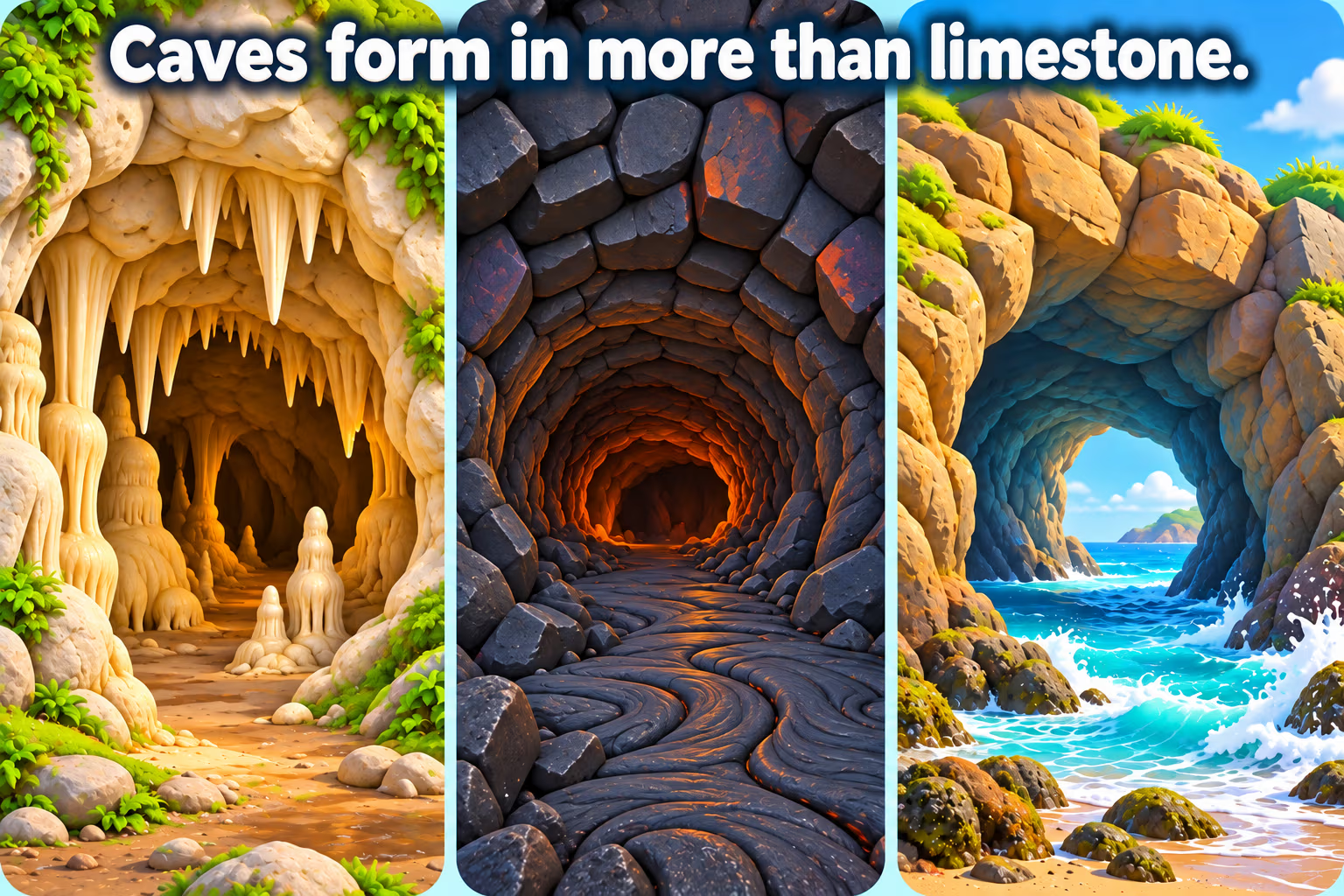
These examples describe one imagined setting; actual cave conditions vary. A cave is not necessarily limestone: caves occur in different rock types and include solution caves, lava caves, sea caves, and glacier caves. Name a cave’s origin or rock only when it is known.
Use cave-formation terms accurately
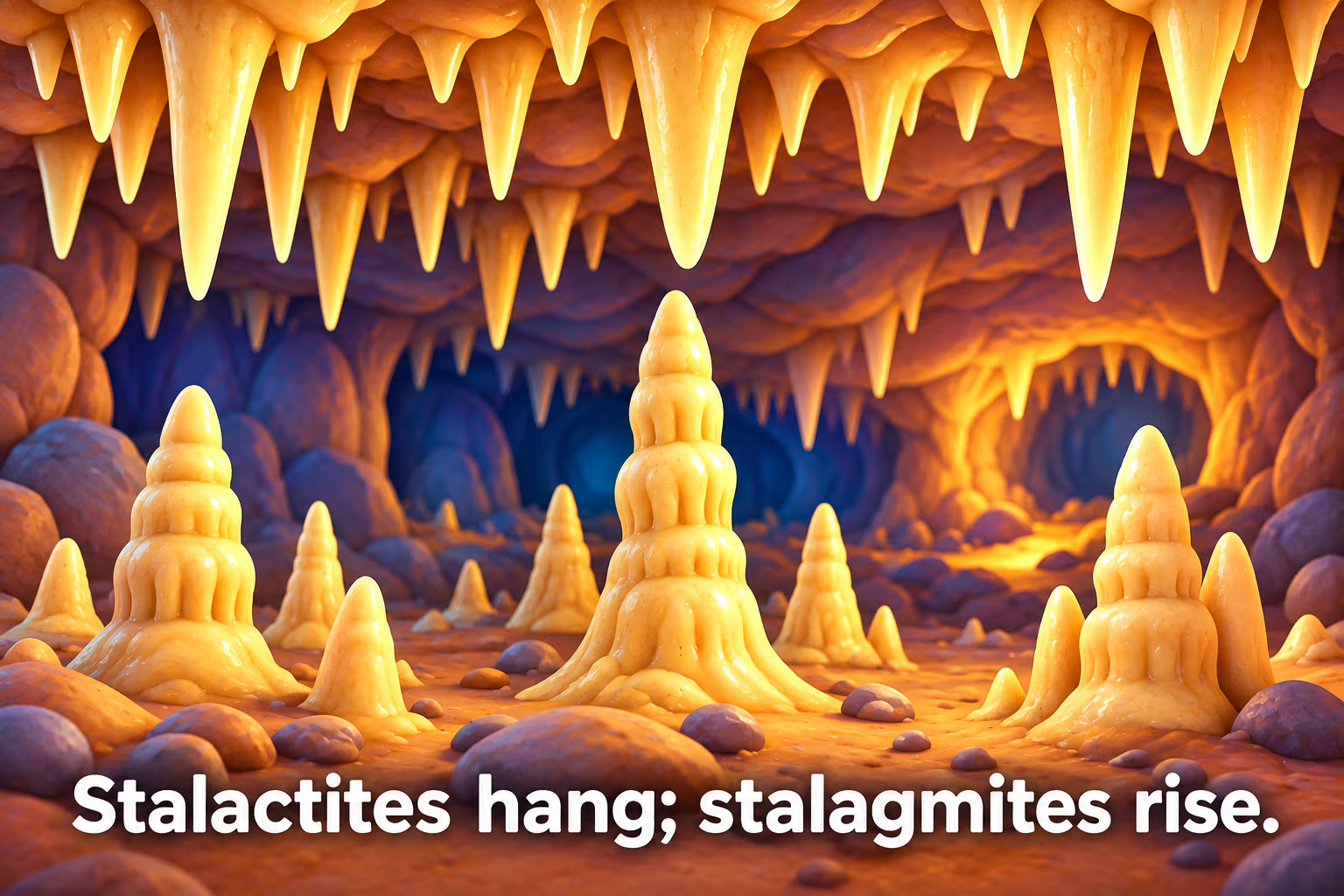
Stalactites hang from cave ceilings; stalagmites grow upward from floors where dripping water deposits minerals. If the two meet, they may form a column. These are specific formations, not general synonyms for a cave. Speleothem is the broader term for a mineral deposit formed in a cave.
Distinguish a cave from nearby or associated places
Cavern can refer to a large cave or chamber, and grotto to a small picturesque cave or recess. A den is an animal’s shelter, and a lair is a place where an animal or fictional character rests or hides; either may be imagined as being in a cave, but neither is a strict synonym for every cave. Likewise, a meadow, field, or clearing can contrast with an enclosed cave, but these are different places rather than dictionary antonyms of “cave.”
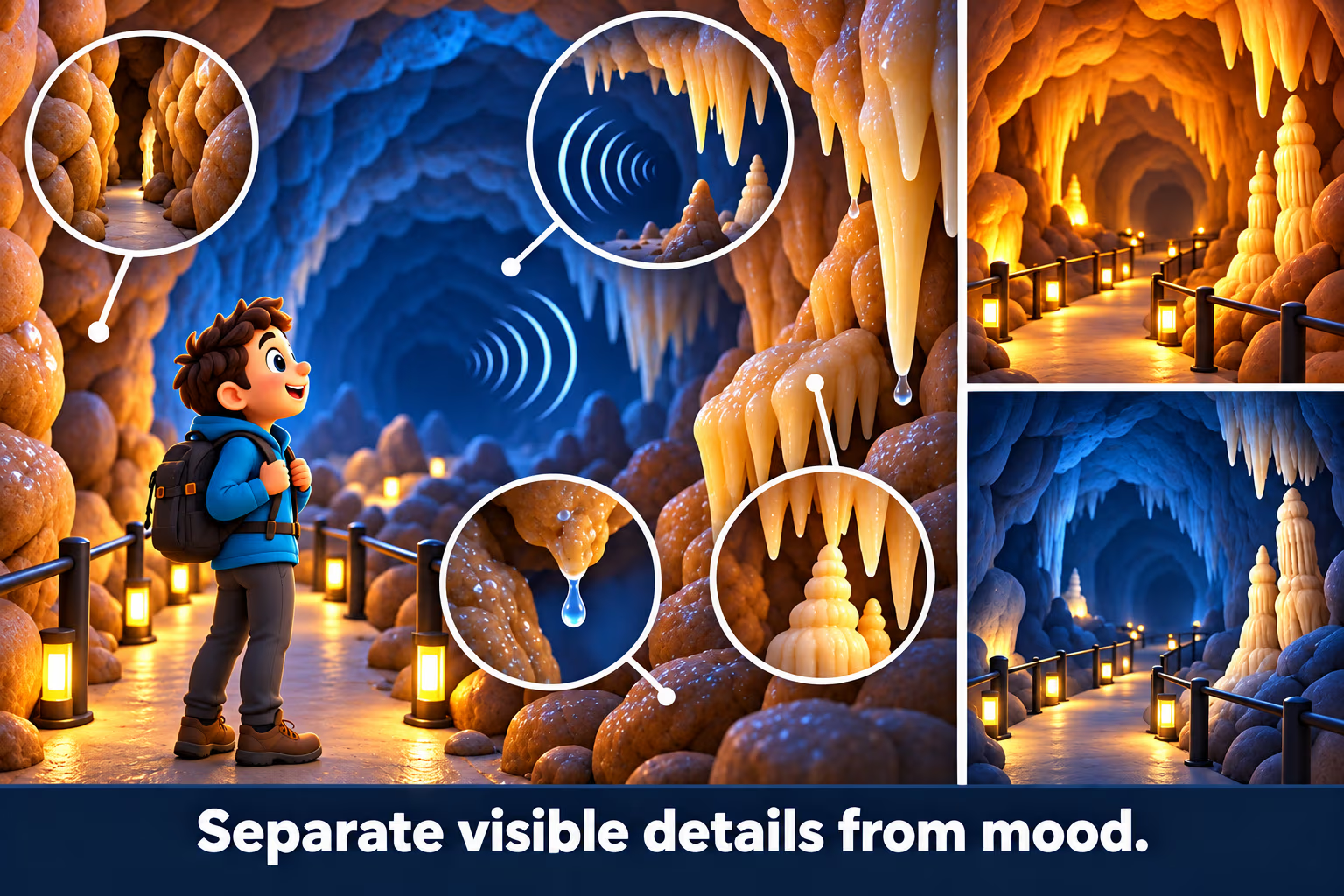
When writing creatively, contrast can still be useful: “They left the echoing cavern and entered a sunlit meadow.” For a factual description, separate what is visible from how a person interprets it. A dark passage may feel eerie to one visitor and intriguing to another.
Sources for cave terms and geology
The National Park Service guide to cave formations describes stalactites, stalagmites, columns, flowstone, and other speleothems. The NPS overview Caves and Aquifers explains how solution caves form in soluble rock and notes that caves occur in varied karst settings. The NPS Caves overview describes caves across rock types and identifies solution, lava, sea, and glacier caves.
Word-form and tone note: Stalactite and fossil are nouns; use forms such as stalactite-bearing or fossil-bearing only when those features are present. “Bat squeaks” is a noun phrase; squeaking or echoing can describe a sound. A phrase such as torch-lit modifies a place but is not a single-word adjective.
Eerie, tranquil, ominous, and claustrophobic express an impression or effect, not a reaction every visitor must share. Claustrophobic can describe a person affected by claustrophobia or a space that induces that response. Cavernous suggests a large or hollow space; it does not inherently mean echoing or unsettling. Serpentine describes a winding form, while grandiose can suggest excessive or showy grandeur. For neutral size, choose large or vast. Use light, water, animals, fossils, crystals, and sounds as factual details only when observed; otherwise label them as possibilities in an imagined scene. Tone labels such as “positive” or “negative” depend on context. Merriam-Webster on claustrophobic; Merriam-Webster on cavernous; Cambridge on eerie; Cambridge on tranquil.
Caves have always fascinated me with their mysterious allure and hidden wonders. Exploring the depths of a cave is like stepping into another world, where stalactites hang from the ceiling and stalagmites rise from the floor. But how do we capture the essence of these natural marvels in words? In this article, I’ll be sharing a collection of adjectives that can be used to describe caves, along with examples to help paint a vivid picture in your mind. Whether you’re a writer looking to create a captivating scene or simply curious about the language used to describe these underground wonders, you’re in the right place.
When it comes to describing caves, adjectives play a crucial role in conveying the atmosphere, size, and geological features. From the eerie darkness to the awe-inspiring formations, each cave has its own unique characteristics that deserve to be captured in words. In this article, I’ll be showcasing a variety of adjectives that can be used to bring the essence of a cave to life. So whether you’re envisioning a hauntingly beautiful cavern or a rugged, untouched underground landscape, get ready to expand your vocabulary and transport yourself to the enchanting world of caves.
How to Describe cave? – Different Scenarios
When it comes to describing a cave, there are various scenarios that can help you capture its essence. Each scenario offers a unique perspective and allows you to paint a vivid picture in the reader’s mind. Let’s explore some different scenarios for describing caves:
1. Size and Scale:
- Immense: A cathedral of rock, dwarfing visitors with its vastness.
- Claustrophobic: Tight passageways press in, creating a sense of suffocation.
- Serpentine: Twisting corridors wind endlessly, disorienting and mysterious.
- Intimate: A hidden pocket, cozy and sheltered, offering refuge from the outside world.
- Grandiose: Soaring chambers with cathedral-like ceilings, echoing with whispers of the past.
2. Atmosphere and Mood:
- Eerie: Shadows dance, silence amplifies every sound, and ancient secrets seem to linger.
- Tranquil: Crystal-clear pools reflect the moonlight, creating a sense of serenity and peace.
- Awe-inspiring: Sparkling formations glitter like jewels, igniting wonder and fascination.
- Mystical: An air of ancient magic hangs heavy, whispering stories of lost civilizations.
- Ominous: Oppressive darkness shrouds the cave, hinting at hidden dangers.
3. Geological Features:
- Jagged: Teeth-like stalactites drip from the ceiling, mirroring the stalagmites rising from the floor.
- Smooth: Flowstone drapes the walls like waterfalls, frozen in time.
- Sparkling: Crystals glint like scattered diamonds, catching the light in a mesmerizing display.
- Sculpted: Wind and water have carved fantastical shapes, leaving behind an otherworldly landscape.
- Fossils: Whispers of the past, embedded in the rock, telling stories of prehistoric times.
4. Lighting and Shadows:
- Torch-lit: Dancing flames cast flickering shadows, playing tricks on the mind.
- Sunlight filtered: Slender beams pierce the darkness, highlighting hidden wonders.
- Inky blackness: An absence of light amplifies other senses, creating a sense of primal awareness.
- Eerie glow: Bioluminescent creatures cast an ethereal light, illuminating the darkness with an otherworldly magic.
- Dappled light: Sunbeams filter through cracks, creating a kaleidoscope of light and shadow.
5. Sound and Echoes:
- Water dripping: A rhythmic serenade, echoing through the caverns and amplifying the silence.
- Bat squeaks: High-pitched chirps fill the air, adding to the mysterious atmosphere.
- Silence: An oppressive quiet, broken only by the sound of your own breath.
- Thunderous echoes: A single shout rebounds off the walls, creating a symphony of sound.
- Wind whistling: Through cracks and passages, carrying forgotten melodies and whispers of faraway lands.
Describing Words for cave in English
When it comes to describing a cave, there are a multitude of adjectives that can help bring the scene to life. Here, I’ll guide you through a selection of descriptive words that will paint a vivid picture of a cave in your mind, whether you’re an avid writer or simply curious about the language used to describe these natural wonders.
- Majestic: Caves have a certain grandeur that can’t be denied. Use this adjective to convey the awe-inspiring nature of a cave’s size and presence. For example, “the majestic cave loomed before me, its immense walls reaching towards the sky.”
- Eerie: Caves often have a mysterious atmosphere that can give you chills. Capture this feeling with the word “eerie”. For instance, “as I ventured deeper into the cave, the eerie silence enveloped me, sending shivers down my spine.”
- Stalactite: These calcite formations hang from the ceilings of caves and come in various shapes and sizes. When describing a cave, make sure to mention the unique and captivating stalactites that adorn its ceiling.
- Glimmering: Some caves are known for their stunning mineral deposits, which reflect light and create a shimmering effect. Use the adjective “glimmering” to describe these breathtaking displays. For example, “the walls of the cave were adorned with glimmering crystals, casting a surreal glow.”
- Damp: Many caves have a damp, humid environment due to water seepage. Emphasize this characteristic by describing the cave as “damp”. For instance, “as I ventured into the depths of the cave, the air grew increasingly damp, clinging to my skin.”
- Echoing: One of the defining features of a cave is its echo. When sound bounces off the walls, it creates a unique auditory experience. Use the word “echoing” to convey this phenomenon. For example, “my voice echoed through the cave, bouncing off the walls and creating an ethereal symphony.”
Remember, these adjectives are just a starting point. Feel free to combine them and explore other descriptive words to truly capture the essence of a cave. Whether you’re writing a captivating scene or simply looking to expand your vocabulary, these words will help create a vivid and engaging description.
Adjectives for cave
Positive Adjectives for Cave with Examples
When describing caves, there are several positive adjectives that can help bring them to life. Here are twelve examples of positive adjectives you can use to vividly describe a cave:
| Adjective | Example Sentence |
|---|---|
| Majestic | The cave was majestic, with its towering walls. |
| Enchanting | The cave was enchanting, with its hidden treasures. |
| Breathtaking | The cave offered breathtaking views of stalactites. |
| Awe-inspiring | The cave was awe-inspiring, with its immense size. |
| Magical | The cave had a magical glow from the mineral deposits. |
| Serene | The cave had a serene atmosphere, perfect for meditation. |
| Captivating | The cave had a captivating sense of mystery. |
| Tranquil | The cave had a tranquil ambiance, inviting peacefulness. |
| Fascinating | The cave was fascinating, with its unique formations. |
| Stunning | The cave was stunning, with its shimmering walls. |
| Mesmerizing | The cave had a mesmerizing effect on the visitors. |
| Exquisite | The cave was an exquisite display of nature’s beauty. |
Negative Adjectives for Cave with Examples
While caves can be magnificent, there are also negative adjectives that can be used to describe certain aspects of these natural formations. Here are five examples of negative adjectives you can use when discussing caves:
| Adjective | Example Sentence |
|---|---|
| Claustrophobic | The narrow passages in the cave were incredibly claustrophobic. |
| Treacherous | The slippery rocks made the cave treacherous to navigate. |
| Uncomfortable | The damp and cold cave was an uncomfortable place to explore. |
| Cavernous | The cavernous cave echoed every sound, making it unsettling. |
| Dark | The deep, dark cave gave an eerie feeling. |
By using these adjectives, you can create engaging descriptions of caves that will captivate your readers and transport them into the mysterious depths of these natural wonders. Experiment with combining different adjectives and be creative with your descriptions to truly paint a vivid picture of caves.
Synonyms and Antonyms with Example Sentences
In the previous section, we explored a range of positive and negative adjectives that can be used to describe caves. Now, let’s take it a step further and delve into synonyms and antonyms for the word “cave.” Synonyms are words that have a similar meaning, while antonyms are words that have the opposite meaning. By incorporating these different words into your descriptions, you can enhance your vocabulary and create a more engaging narrative.
Synonyms for Cave
When we think of synonyms for the word “cave,” several alternatives come to mind. These synonyms can help add variety and depth to your descriptions. Here are a few examples:
Synonym
- Cavern
- Grotto
- Hollow
- Den
- Lair
Using synonyms like these allows you to capture the essence of a cave while offering different nuances in your descriptions. Let’s look at some example sentences:
- “The adventurers ventured deep into the cavern, mesmerized by the stalactites hanging from above.”
- “The hidden grotto revealed a breathtaking world of shimmering crystals and mysterious rock formations.”
- “The hollow echoed with the sound of dripping water, creating an eerie atmosphere.”
- “The mother bear led her cubs back to their cozy den within the mountain.”
- “The ancient dragon rested in its lair, surrounded by the remnants of countless treasures.”
Incorporating these synonyms into your writing not only adds variety but also allows you to paint a more vibrant picture in the reader’s mind.
Antonyms for Cave
Let’s explore some antonyms for the word “cave.” These antonyms can help you describe open spaces or areas that are the opposite of a cave. Consider using these words in your descriptions to provide contrast:
Antonym
- Clearing
- Meadow
- Field
- Plain
- Expanse
Here are some example sentences to illustrate their usage:
- “Emerging from the dark depths of the cave, they found themselves in a sunlit clearing.”
- “Beyond the cave’s entrance, a vast meadow stretched out as far as the eye could see.”
- “Leaving the damp cavern behind, they stepped onto a lush green field, bathed in sunlight.”
- “The rocky walls of the cave gave way to a wide open plain with no end in sight.”
- “As they exited the narrow cave, they were greeted by an expansive expanse of blue sky.”
By incorporating these antonyms into your descriptions, you can create a vivid contrast between enclosed spaces like caves and open areas.
Remember, experimenting with different words and combinations is key to capturing the essence of a cave. Whether you choose positive or negative adjectives, synonyms or antonyms, let your imagination roam free to create captivating descriptions that transport your readers to the mystical world of caves.
Conclusion
Describing caves can be a captivating and immersive experience. By exploring synonyms and antonyms for the word “cave,” we can add depth and variety to our descriptions. Words like “cavern,” “grotto,” and “hollow” paint vivid pictures of the mysterious and awe-inspiring nature of caves. On the other hand, using antonyms like “clearing,” “meadow,” and “field” allows us to create a stark contrast between the enclosed spaces of caves and the open expanses of the outside world.
Experimenting with different words and combinations is key to capturing the essence of a cave. It allows us to transport our readers to these enchanting underground realms and engage their senses. Whether it’s the dampness, the echoes, or the darkness, the right adjectives can bring a cave to life on the page.
So, next time you’re writing about a cave, don’t settle for generic descriptions. Dive into the rich tapestry of adjectives and let your words transport your readers into the depths of these extraordinary natural wonders.


