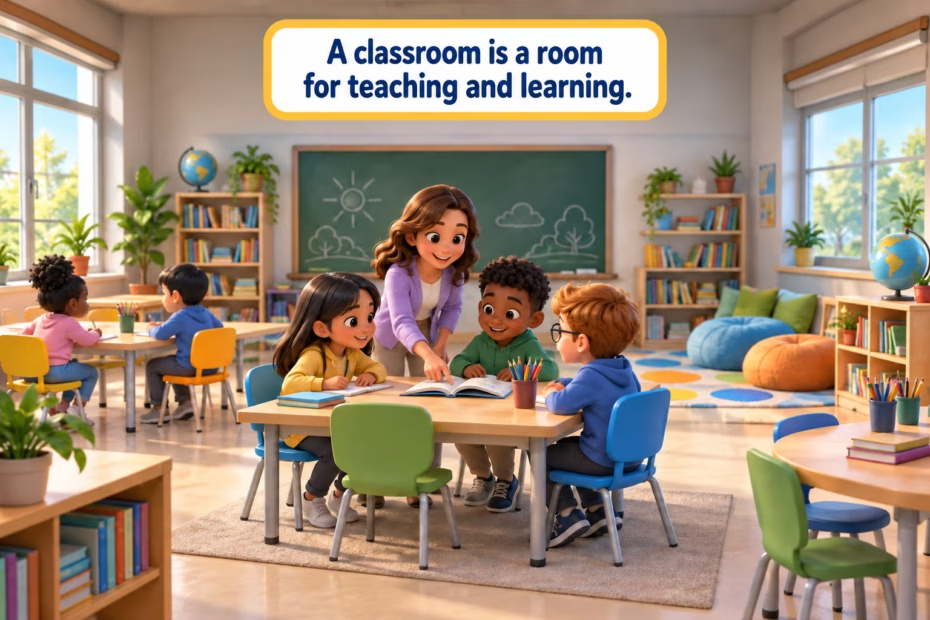
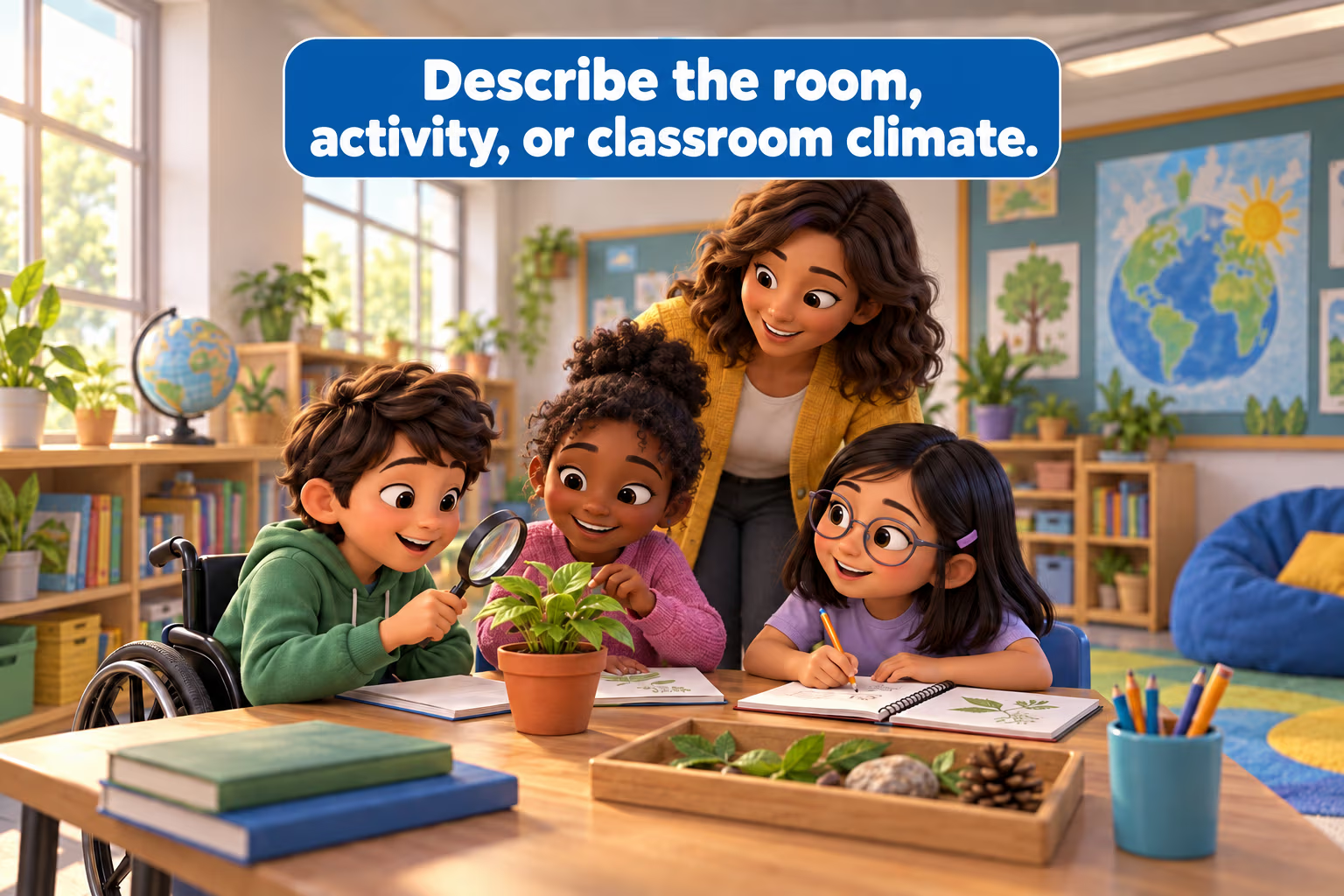
Classroom adjectives describe what is observable about a teaching room, a lesson taking place there, or the classroom climate. Start by naming that target: “bright room,” “busy activity,” or “welcoming classroom climate.” Words such as quiet describe sound; they do not prove how engaged any student feels.
Quick guide
- Use physical-room adjectives for visible features: bright, spacious, organized, or uncluttered.
- Use activity words for what is happening: busy, collaborative, or hands-on.
- Use climate words for the social or instructional setting: welcoming, inclusive, or supportive.
- Say what the adjective modifies. Quiet describes sound; movement or silence alone does not establish attention or learning.
- No single activity format suits every learner or context. Describe a room’s layout and color as features without assuming they benefit everyone.
What Does a Classroom Adjective Describe?
First decide whether you mean the physical room, an activity happening there, or the broader classroom climate. Cambridge defines a classroom as a room where groups of students are taught. Its grammar guide distinguishes a classroom (the room) from a class (a group of learners or a lesson). The target noun helps readers understand what an adjective means.
| Target | Useful descriptors | Observable example |
|---|---|---|
| Room layout | spacious, compact, organized | “The organized room has labeled supply shelves and a clear aisle.” |
| Light and color | bright, colorful, plain | “Colorful student artwork hangs on the back wall.” |
| Materials and access | well-stocked, accessible, uncluttered | “The accessible reading corner has books within reach and a clear path.” |
| Sound | quiet, noisy, lively | “The room was noisy during the group discussion.” |
| Activity | active, collaborative, hands-on | “The collaborative activity asked each group to compare two designs.” |
| Social climate | welcoming, supportive, inclusive | “The teacher invited questions and offered more than one way to respond.” |
These examples describe different things. “A bright classroom” points to light; “a collaborative activity” points to how a task is arranged; “a supportive climate” describes interactions or routines. State the feature, action, or practice behind an evaluative word so readers can tell what you observed.
Does a Quiet Classroom Mean Students Are Engaged?
No. Quiet describes sound level. A quiet room might contain a discussion-free reading period, a written task, a test, or an empty room; the adjective does not reveal what an individual student thinks or does. In the same way, a noisy room could contain task-related discussion, unrelated chatter, or several sounds at once. Describe the sound separately from any claim about attention or learning.
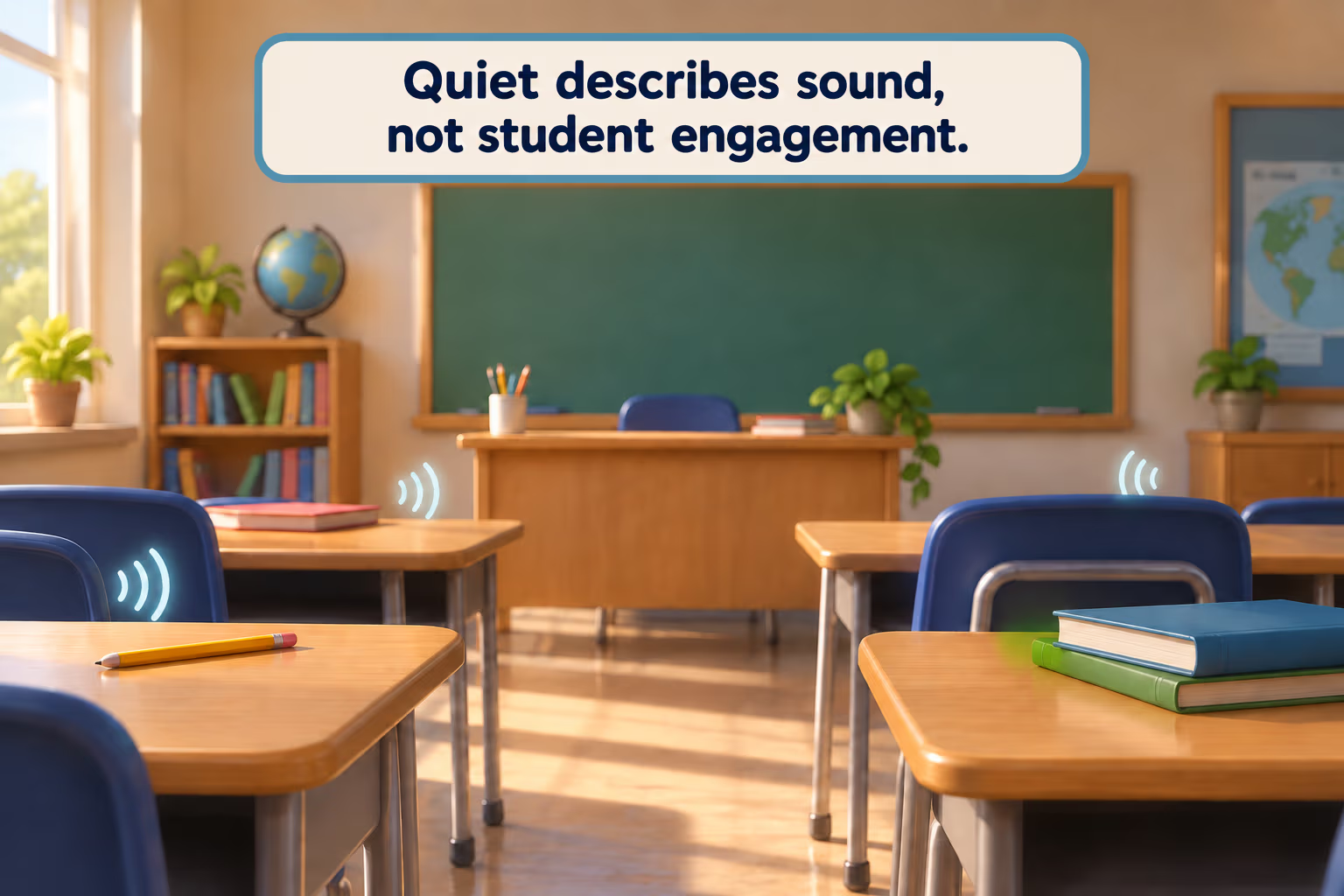
Instead of writing that “the quiet students were focused,” state what can be observed: “The room was quiet while students read,” or “three groups discussed their experiment.” If a participation or learning claim matters, identify the relevant task and evidence. Avoid treating silence, movement, or a seating arrangement as proof of a student’s internal state.
Is a Classroom the Same as a Learning Environment?
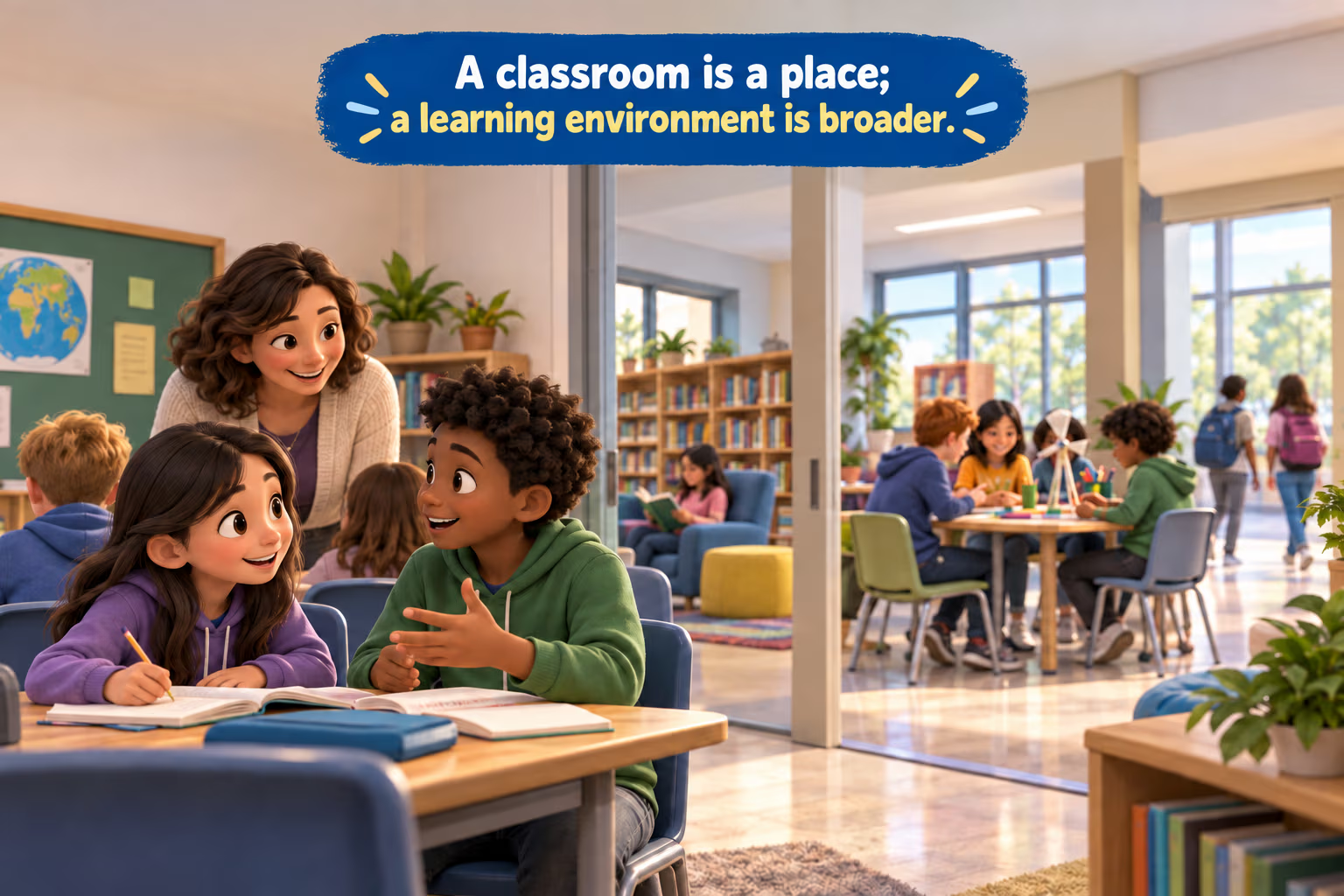
They are related, but not exact synonyms. A classroom is a physical teaching room. A learning environment can include physical spaces as well as practices, routines, relationships, and the wider climate in which learning happens. The Institute of Education Sciences’ school-environment review protocol discusses facilities and physical space alongside policies and practices that shape school climate. Use the broader phrase when that larger context is what you mean.
No single activity format suits every learner or context. Describe a room’s layout and color as features without assuming they benefit everyone. CAST’s Universal Design for Learning guidance recognizes learner variability and recommends offering options for engagement. The Education Endowment Foundation describes calm, predictable environments as potentially helpful in some contexts, including for some pupils with additional needs; that is qualified guidance, not a guarantee that every learner will prefer a quiet room.
How Should You Use the Original Classroom Word Lists?
The source article below is preserved in full. Its “Synonyms for classroom” table contains related settings or descriptions, such as learning environment and study area; these are not strict substitutes for the physical noun classroom. Its “Antonyms for classroom” entries—including chaotic, dull, and uninviting—are qualities that may describe a room, activity, or climate, not opposites of the noun. The source headings and entries remain unchanged in the preserved block.
The source also links quietness with focused students and makes broad claims about how room features affect learning. Treat those statements as examples of the source’s wording, not as evidence about any particular learner or a universal outcome. “Positive” and “negative” are often evaluations: give the specific feature or interaction that supports the judgment.
The complete original article follows without edits.

How to Describe classroom? – Different Scenarios
As a teacher, it’s essential to have a variety of adjectives to effectively describe a classroom environment. In different scenarios, the choice of words can help create a clear picture and set the right tone for the learning space. Let’s explore some examples of how to describe a classroom in various situations:
1. Organized Classroom:
- The classroom hummed with focused energy. Each desk boasted meticulously arranged notebooks and pencils, while charts and resources adorned the walls in a clear and systematic layout. A sense of calm efficiency pervaded the room.
- Order reigned supreme. Supplies resided in labeled bins, papers lived in dedicated trays, and every corner seemed to have its own purpose. Moving seamlessly through the space, students knew exactly where to find what they needed.
2. Colorful Classroom:
- A vibrant symphony of colors assaulted the senses in the best way possible. Rainbow chairs surrounded mismatched tables, walls painted in cheerful hues, and student artwork showcased a kaleidoscope of creativity. The liveliness sparked joy and imagination.
- Like a child’s cherished dream brought to life, the classroom burst with color. Bold murals climbed the walls, construction paper mobiles danced from the ceiling, and even the teacher’s desk sported a hand-painted welcome sign. It was a feast for the eyes and a playground for the mind.
3. Quiet Classroom:
- A hushed serenity blanketed the room. Sunlight streamed through the windows, illuminating focused students quietly reading or diligently completing tasks. The murmur of pencils scratching paper and the occasional page turn were the only sounds interrupting the contemplative silence.
- Like a hidden library nestled within the school, the classroom offered a sanctuary of tranquility. Soft whispers and gentle background music created a calming atmosphere, allowing students to concentrate and delve deep into their work without distractions.
4. Active Classroom:
- Buzzing with energy, the classroom resembled a beehive in its prime. Groups of students huddled around tables, engaged in animated discussions and collaborative projects. Movement filled the air as they participated in experiments, role-playing scenarios, and actively exploring new concepts.
- Far from the stereotype of silent desks, the classroom pulsated with a vibrant dance of learning. Students moved freely, using the space to express themselves, explore ideas, and engage in hands-on activities that brought lessons to life.
5. Creative Classroom:
- Stepping into the classroom was like entering a portal to a world fueled by imagination. Paints, clay, and other creative tools lay readily available, inviting students to express themselves through various mediums. Finished projects adorned the walls and shelves, showcasing the boundless creativity within.
- The air crackled with creative energy. Unconventional seating arrangements encouraged collaboration, while open-ended prompts and diverse materials sparked students’ imaginations. It was a space where thinking outside the box was not just encouraged, it was expected.
6. Cooperative Classroom:
- A spirit of teamwork permeated the air. Students worked together on projects, their voices weaving a tapestry of shared ideas and laughter. Encouragement and support flowed freely, as each member contributed their unique strengths to the collective effort.
- Gone were the days of individual desks and silent competition. Instead, circular tables buzzed with collaborative learning, where students learned from and supported one another, fostering a sense of community and shared responsibility.
It’s important to choose the right adjectives depending on the situation you want to describe. Using appropriate descriptive words can help engage students, create a positive learning environment, and set a productive atmosphere for learning.
Remember, as teachers, we play a crucial role in nurturing young minds and shaping their educational experience. By using descriptive words effectively, we can create a classroom environment that fosters growth, creativity, and a love for learning.
So, the next time you want to describe your classroom, think about the scenario and the atmosphere you want to portray. Choose adjectives that accurately reflect the environment and engage students in the learning process.
Note: Just remember not to overuse adjectives or rely solely on descriptions. It’s important to combine them with actions, examples, and engaging teaching methods to create a well-rounded and effective learning environment.
Describing Words for classroom in English
As an experienced educator, I understand the importance of using descriptive adjectives to create an engaging and effective classroom environment. By carefully selecting the right words, we can paint a clear picture of the atmosphere we want to cultivate for our students. Here are some descriptive words that can help you bring your classroom to life:
- Organized: A well-organized classroom is essential for smooth day-to-day operations. Everything in its place, neatly arranged, and easily accessible. This promotes a sense of structure and helps students focus on their tasks.
- Colorful: Injecting vibrant colors into the classroom can make it an exciting and stimulating space for learning. Incorporate colorful bulletin boards, posters, and artwork to create an visually appealing environment that sparks curiosity.
- Quiet: Sometimes, a peaceful and calm atmosphere is needed for concentration and reflection. Encourage students to work quietly and provide quiet zones where they can retreat and work without distractions.
- Active: On the flip side, an active classroom is one where students are engaged, participating, and collaborating. Incorporate group activities, hands-on experiments, and interactive discussions to keep students actively involved in their learning.
- Creative: Fostering creativity is important in any classroom. Make space for artistic expression, provide opportunities for imaginative thinking, and encourage students to think outside the box.
- Cooperative: Collaboration is a crucial skill for students to develop. Create opportunities for teamwork, group projects, and peer-to-peer learning. Encourage a supportive and cooperative atmosphere where students can learn from one another.
Remember, using descriptive adjectives is just one part of creating an effective learning environment. It’s important to back up these words with actions, examples, and engaging teaching methods. By combining descriptive adjectives with hands-on activities and thought-provoking discussions, you can create a classroom that not only sounds exciting but also engages and empowers your students.
Adjectives for classroom
As a seasoned educator, I understand the importance of creating an engaging and effective classroom environment. One way to achieve this is by using descriptive adjectives that set the tone for a positive and conducive learning space. In this section, I will share a list of both positive and negative adjectives that can be used to describe a classroom.
Positive Adjectives for Classroom with 12 Example Sentences
Creating a positive classroom environment is essential for fostering a love of learning among students. By incorporating positive adjectives, we can paint a picture of an ideal classroom setting. Let’s take a look at some examples:
| Adjective | Example Sentence |
|---|---|
| Organized | I always keep my classroom clean and organized, so students can easily find their materials. |
| Colorful | The walls of my classroom are adorned with colorful artwork created by my students. |
| Quiet | During independent reading time, my students are always quiet and focused. |
| Active | We engage in various active learning activities, such as hands-on experiments and group discussions. |
| Creative | I encourage my students to express their creativity through art projects and storytelling. |
| Cooperative | Students work together in a cooperative manner during group projects, ensuring everyone’s voice is heard. |
| Positive | I create a positive classroom culture by praising students for their efforts and achievements. |
| Inclusive | My classroom is inclusive, welcoming students from diverse backgrounds and fostering a sense of belonging. |
| Empathetic | I teach my students to be empathetic towards their peers, promoting a caring and supportive environment. |
| Engaging | I use interactive technology and multimedia resources to make lessons engaging for my students. |
| Supportive | I provide a supportive learning environment where students feel comfortable asking questions and seeking help. |
| Encouraging | My classroom is filled with words of encouragement and motivational quotes to inspire my students. |
By incorporating these positive adjectives into your classroom, you can create an environment that is conducive to learning and positive growth.
Negative Adjectives for Classroom with 5 Example Sentences
While it’s important to focus on positive adjectives, it’s equally important to be aware of the negative ones that can hinder a productive learning environment. Here are a few examples:
| Adjective | Example Sentence |
|---|---|
| Disorganized | A disorganized classroom can make it difficult for students to find what they need and create a sense of chaos. |
| Dull | A dull classroom lacking visual stimuli can result in decreased student engagement and attention. |
| Noisy | Excessive noise in the classroom can disrupt learning and make it difficult for students to concentrate. |
| Uncooperative | When students are uncooperative, it can lead to tension and conflicts within the classroom. |
| Discouraging | A discouraging classroom environment can demotivate students and hinder their learning progress. |
While these negative adjectives should be acknowledged, it’s important to focus on creating a positive and productive classroom culture. By using descriptive adjectives that reflect the ideal environment, teachers can foster a love for learning and create a space where students feel supported and motivated.
Synonyms and Antonyms with Example Sentences
Synonyms for classroom
As an experienced educator, I understand the importance of using a variety of adjectives to create an engaging and effective classroom environment. When it comes to describing our classrooms, there are numerous options to choose from. Here are some synonyms for classroom that can help create a vivid and descriptive picture:
Synonyms
- Learning environment
- Educational space
- Study area
- Instructional setting
- Academic room
For example:
- “My classroom is a vibrant learning environment where students feel inspired to explore and discover.”
- “In our educational space, students collaborate and grow both academically and socially.”
- “The study area in my classroom is designed to foster concentration and focus.”
By incorporating these synonyms into our descriptions, we can paint a more detailed and engaging picture of our classrooms, capturing the essence of the learning environment.
Antonyms for classroom
Just as it is important to highlight the positive aspects of our classrooms, it is equally important to be aware of the negative adjectives that can hinder a productive learning environment. By understanding the antonyms for classroom, we can work towards creating a more positive and engaging atmosphere. Here are some antonyms to be mindful of:
Antonyms
- Chaotic
- Dull
- Uninviting
- Unstimulating
- Discouraging
For example:
- “A chaotic classroom can disrupt the learning process and hinder student engagement.”
- “It is important to avoid a dull classroom environment, as it can dampen students’ enthusiasm and curiosity.”
- “An uninviting classroom can discourage students from actively participating in class activities.”
By being aware of these antonyms, we can strive to create a classroom environment that is organized, engaging, and fosters learning.
Utilizing synonyms and being mindful of antonyms when describing our classrooms allows us to create a more engaging and effective learning environment. By selecting the right adjectives, we can paint a vivid picture of our classrooms and engage students in their educational journey. Remember, a positive and descriptive classroom environment sets the stage for a successful learning experience. So let’s choose our adjectives wisely and create a classroom that inspires and empowers our students.
Conclusion
In this article, I have discussed the significance of using a wide range of adjectives to cultivate an engaging and effective classroom setting. By exploring synonyms for the word “classroom” such as “learning environment,” “educational space,” and “study area,” I have provided example sentences that demonstrate how these words can be used to describe the learning space. Additionally, I have highlighted antonyms for the word “classroom” such as “chaotic,” “dull,” and “uninviting,” and shared example sentences that depict these negative qualities.
By carefully selecting the right adjectives, educators can create a positive and descriptive classroom environment that inspires and empowers students. These adjectives help to set the tone for learning, fostering a sense of excitement, curiosity, and engagement among students. Whether it’s a vibrant and energetic learning environment or a calm and focused study area, the adjectives used to describe the classroom play a crucial role in shaping the overall learning experience.
By utilizing a diverse range of adjectives, teachers can create a classroom atmosphere that is conducive to learning, encourages active participation, and ultimately enhances the educational journey for all students.
How Can You Choose a More Precise Adjective?
Name the noun first, then check whether the adjective describes a visible feature, a sound, an activity, or an interpretation. For example, uncluttered room describes the arrangement of materials; busy lesson describes activity; welcoming climate describes an interpersonal or instructional quality. Adding a concrete detail makes the description easier to evaluate.
Words such as engaging, discouraging, and stimulating can imply an effect on learners. If you use one, give context or evidence and avoid treating the result as automatic. A colorful wall may be visually vivid, but that alone does not show that every student is interested or learning. Quietness alone does not show that students are more attentive than they would be during a collaborative activity.
What Do Classroom, Class, and Learning Environment Mean?
Cambridge’s entry for classroom describes a room in a school or college where groups of students are taught. Its class-or-classroom guide explains that class can refer to learners or a lesson, while classroom names the room. The terms study area and instructional setting can describe related places or contexts, but their scope differs with use.
The IES school-environment review protocol includes physical conditions and facilities as well as policies and practices that shape school climate. That broader usage helps explain why learning environment can refer to more than one room. For instructional choices, CAST’s UDL engagement guidance addresses learner variability, while the EEF’s universal approaches describe environmental supports with qualifications about context and learners.
Frequently Asked Questions
Is classroom a noun or an adjective?
Classroom is a noun naming a room where teaching happens. In “a bright classroom,” bright is the adjective and classroom is the noun it modifies. The same word can sometimes modify another noun, as in “classroom door,” but it still names the kind of door rather than describing a quality such as color or size.
Is “learning environment” a synonym for classroom?
It can be a related description, but it is often broader than a physical classroom. “Classroom” names a teaching room; “learning environment” may include spaces, routines, relationships, instructional practices, and climate. Choose the phrase that matches your meaning, and avoid calling every related setting a strict synonym for the room.
Does a quiet classroom show that students are focused?
No. Quiet describes sound, not a person’s attention, understanding, or motivation. Students may be listening, writing, resting, or working on different tasks, and sound alone cannot distinguish those activities. Describe the quiet room as quiet; use specific observations or appropriate evidence for a separate claim about engagement or learning.
What are positive adjectives for a classroom?
Bright, organized, welcoming, accessible, and supportive can be useful when they fit the feature being described. Their value depends on context and perspective. Explain what you mean—for example, labeled shelves, clear walkways, or a routine that invites questions—instead of treating a judgment as a universal fact.
How do I choose an adjective for a classroom?
Start with the noun or feature, then choose a word that matches what you observed. Say whether you mean the room, sound, activity, or social climate. “Three groups compared their designs” is more specific than “the classroom was active,” and a concrete detail lets readers understand the adjective without guessing at outcomes.


