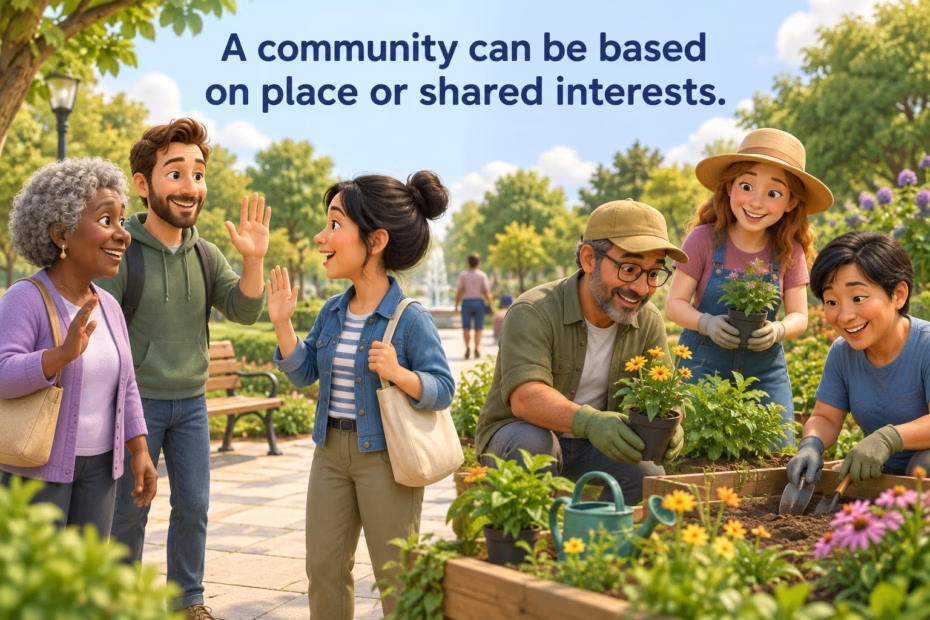
Adjectives for a community can describe the place, its activity, the relationships among people, or the impression a writer experiences. “Tree-lined,” “busy,” “neighborly,” and “culturally diverse” point to different qualities. Support impressions such as “welcoming” with an observation, and use current evidence for factual claims such as safety or growth.
Quick guide
- A community can mean people in a shared place or people connected by a common interest, identity, or social group.
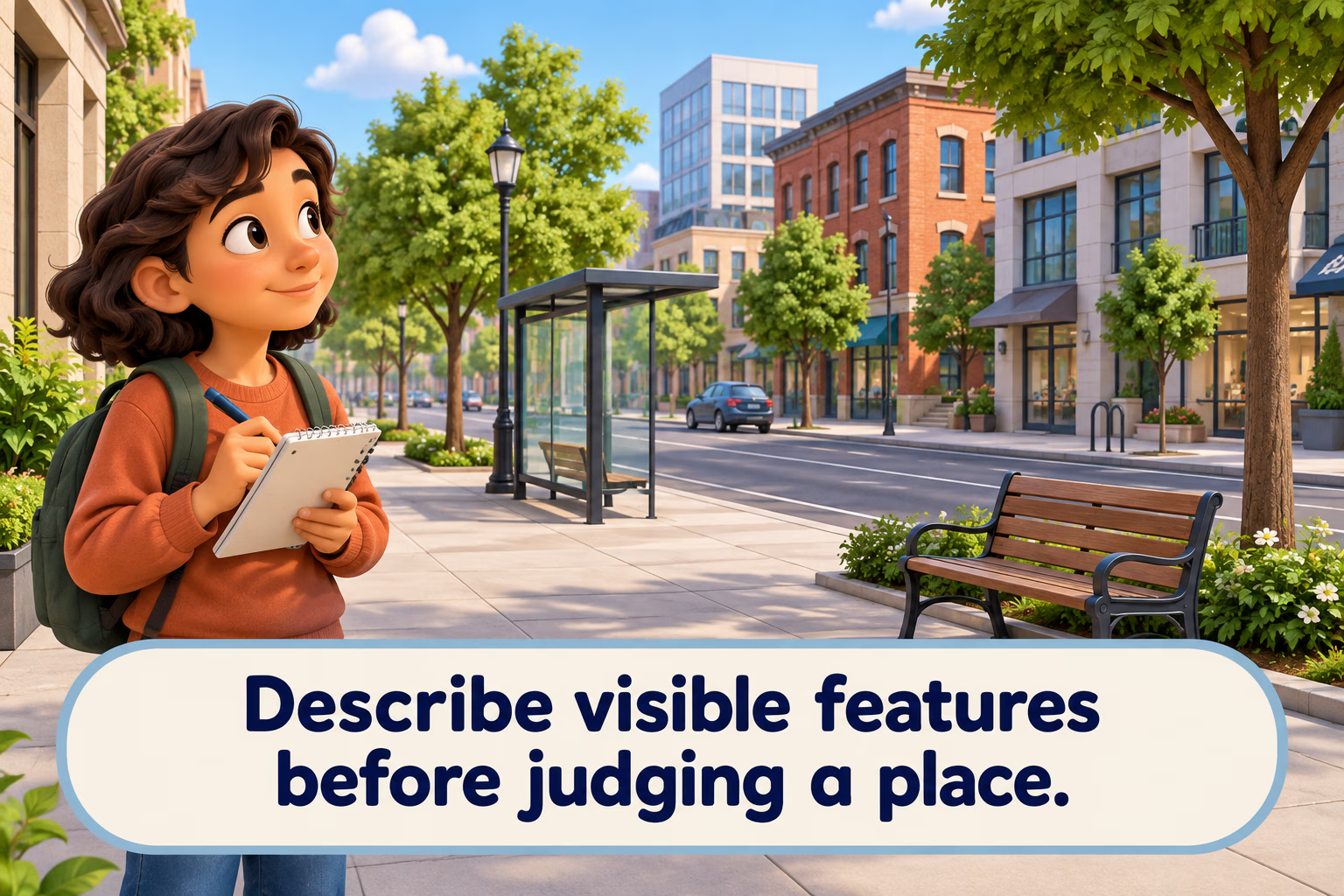
- Separate features you can observe, such as low-rise buildings, from impressions such as peaceful or welcoming.
- Give impressions a location, time, or point of view; verify claims about safety, growth, or demographics with relevant evidence.
- Urban, rural, and suburban are not universal descriptions of how every person experiences a place. Census geography uses its own criteria and does not specifically define “suburban.”
- Diversity describes a mix of backgrounds or perspectives; inclusion concerns whether people can take part and feel welcome.
What Kind of Community Are You Describing?
The word community can refer to people living in an area, or to people grouped by a shared interest, social group, or background. The Cambridge Dictionary entry for community includes both geographic and social meanings. First decide whether your sentence is about a place, the people connected to it, or a group organized around an activity; the best adjectives will differ.
For a place, begin with visible details: buildings, streets, parks, services, activity, or sound. For a social group, describe a specific relationship or practice and say whose perspective you are reporting. These choices keep one adjective from standing in for every person’s experience.
| What you mean | Adjectives to consider | Specific example |
|---|---|---|
| Place and built features | tree-lined, compact, low-rise, riverside | “A tree-lined main street connects the library, market, and riverside path.” |
| Activity and pace | busy, lively, quiet, event-filled | “The market square is busy on Saturday mornings and quiet after closing.” |
| Social relationships | neighborly, supportive, close-knit, welcoming | “Residents interviewed for the town plan described the volunteer network as supportive.” |
| Culture and participation | multilingual, culturally diverse, accessible, inclusive | “The library hosts multilingual story hours and offers step-free access.” |
A neighborhood is one kind of place-based community, while a community can also form around an interest or shared activity. When your subject is a specific area, our guide to neighborhood adjectives gives more place-focused examples.
How Can You Describe Rural, Urban, and Suburban Places Carefully?
Geographic labels have specific meanings in some systems, but they do not predict a place’s atmosphere or residents’ relationships. In U.S. Census geography, urban areas are delineated using criteria that include housing and population density; rural areas cover territory outside those urban areas. The criteria are tied to a census and may change. See the Census Bureau’s Urban and Rural guidance.
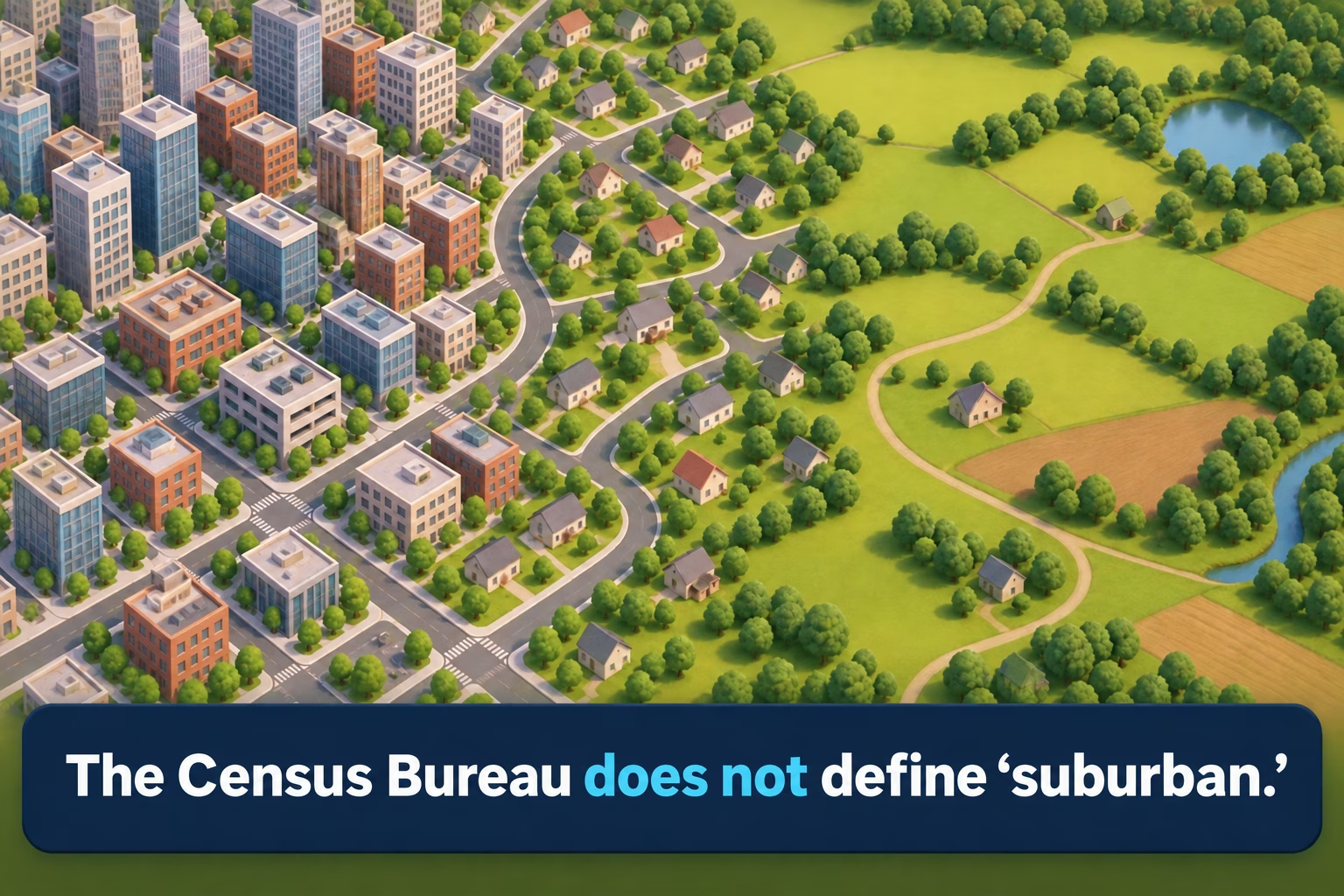
The Census Bureau’s geography glossary says it does not specifically define “suburban”; for 2010 Census and American Community Survey tabulations, land use, population, and housing people often consider suburban could fall within the Census urban definition. Check the geography and year for a particular data set rather than treating “suburban” as a formal Census category. Other countries, agencies, and local communities may use different terms or boundaries.
Words such as serene, idyllic, and quaint can create a romantic image of a rural place; vibrant or cosmopolitan can imply a particular urban atmosphere; and family-friendly may suggest a judgment about who belongs. These can work as a writer’s impression when supported by detail, but they are not inherent traits of rural, urban, or suburban communities. A city can have quiet blocks, and a rural town can have busy public spaces.
When Is a Community Adjective an Impression or a Claim?
Some adjectives mainly express a response. Peaceful, bustling, welcoming, and picturesque may mean different things to different people, so tie them to a scene, time, source, or viewpoint. Other words can sound like factual assessments. If you call an actual community safe, thriving, or well-planned, explain the measure, evidence, and period behind the description.
| Adjective | What it can suggest | How to make it specific |
|---|---|---|
| Quiet | Low sound or activity at a particular time | “The side street has little traffic on weekday mornings.” |
| Welcoming | A personal impression of being received or included | Attribute the impression or name the access feature or practice that prompted it. |
| Safe | A claim about risk, which varies by activity, place, time, and person | Use current, local evidence and name its measure and geographic scope. |
| Thriving | A broad judgment about activity, services, or economic conditions | State what is thriving and give a dated, relevant indicator rather than generalizing about residents. |
| Quaint | A subjective, often charming or old-fashioned tone | Name the details that create that impression, such as older shopfronts or a narrow main street. |
For a neutral description, write “the town has a year-round farmers’ market and two public parks” instead of “the town is thriving” when those are the facts you know. If you describe how people feel, attribute it: “Several residents interviewed for the plan called the library welcoming” does not claim that everyone shares the experience.
How Are Diversity and Inclusion Different?
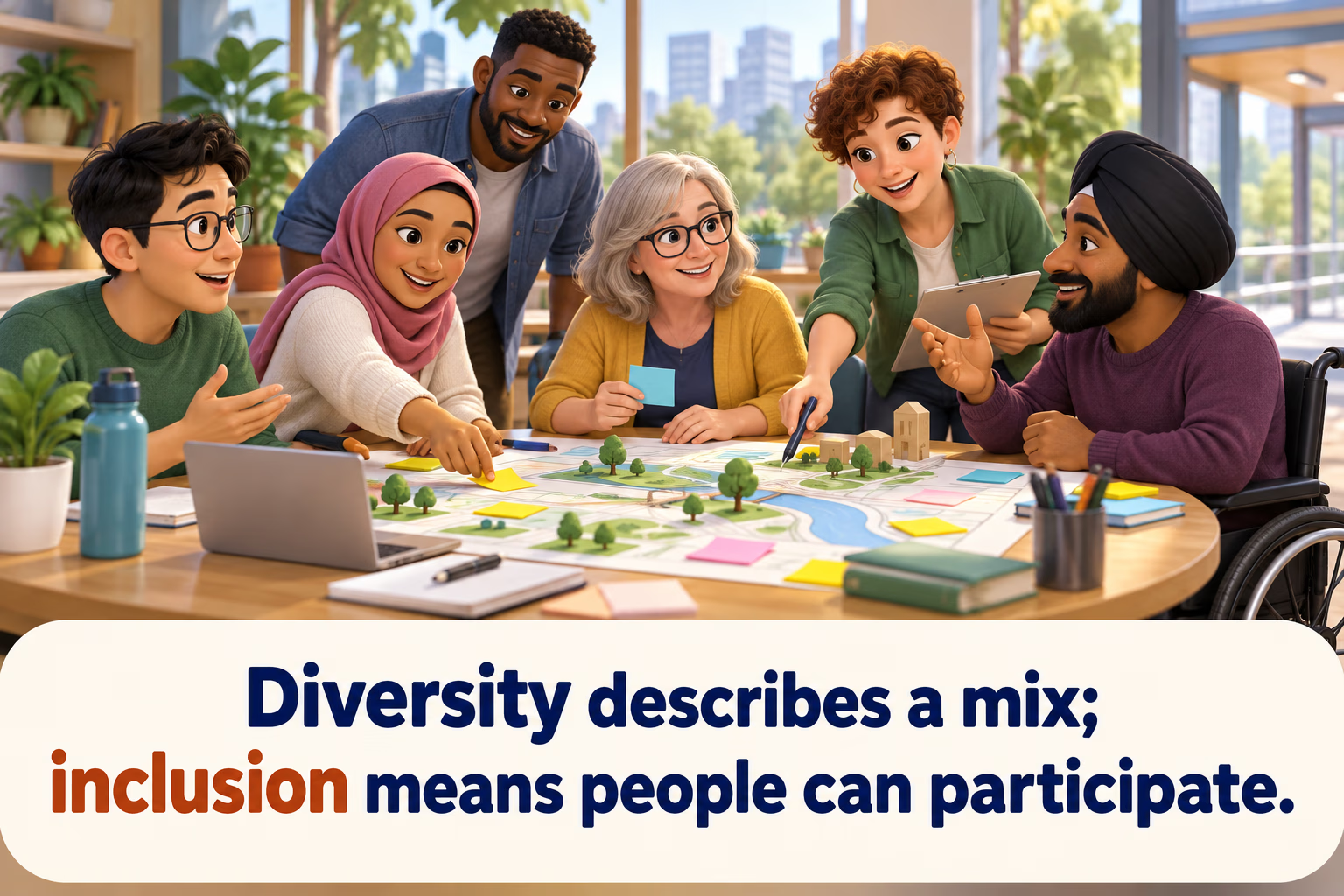
Diverse or multicultural describes the presence of different backgrounds, experiences, or perspectives; it should not be used to infer residents’ identities from a brief visit. Inclusive describes access, welcome, belonging, or the opportunity to participate. These ideas are related but not interchangeable: a group can include many perspectives and still have barriers to participation. The Cambridge University Press discussion of inclusion language emphasizes that these terms are complex and change with use.
Social connection is another useful angle. The CDC describes social connection through the structure, function, and quality of relationships. So close-knit might describe frequent ties in a group, while supportive points to help people give one another. Attribute those descriptions to a source or example: a community is rarely experienced in exactly the same way by all its members.
A Simple Way to Choose the Right Word
- Name your subject: a place, group, relationship, activity, or atmosphere.
- Choose what the word describes: a visible feature, an action, a relationship, or your impression.
- Add context: say where, when, or whose point of view matters.
- Check broad claims: use current, relevant evidence for safety, demographic, economic, or planning statements.
- Check tone and grammar: make sure the adjective fits the noun and carries the meaning you intend.
For example, “The community is vibrant” leaves a reader to guess what that means. “The plaza is lively on Thursday evenings, when the market and outdoor concert are open” names the place, time, and activity behind the impression.
Using the Original Adjective Lists
The original lists and examples below are retained in full as vocabulary prompts. Their positive, negative, synonym, or antonym labels may not fit every context: related words can differ in tone or meaning, and an opposite depends on the quality being contrasted. Check a word’s part of speech and definition before using it as an adjective for a real group or place.
When it comes to describing a community, the right adjectives can paint a vivid picture of its character and spirit. From bustling metropolises to tight-knit neighborhoods, each community has its own unique qualities that make it special. In this article, I’ll be sharing a collection of descriptive words that capture the essence of different types of communities.
Whether you’re a writer looking to add depth to your storytelling or a curious individual seeking to understand the diverse nature of communities, these adjectives will help you bring your words to life. From vibrant and multicultural to peaceful and serene, you’ll discover a range of adjectives that perfectly encapsulate the atmosphere and vibe of various communities.
How to Describe community? – Different Scenarios
As a writer, I often find myself needing to describe a community in my storytelling. It’s crucial to capture the essence and atmosphere of a place to create an immersive experience for the reader. Similarly, individuals seeking to understand the diverse nature of communities may find it useful to have a range of adjectives at their disposal. In this section, I will provide different scenarios and examples of how you can effectively describe a community.
Describing a Rural Community
When describing a rural community, you can use adjectives that evoke a sense of tranquility, closeness to nature, and slower pace of life. Here are some examples:
| Adjective | Example sentence |
|---|---|
| Serene | The serene rural community was surrounded by picturesque landscapes. |
| Idyllic | The idyllic village was a place where time seemed to stand still. |
| Quaint | The quaint country town had charming cottages and winding cobblestone streets. |
| Peaceful | Life in the peaceful farming community was filled with a sense of harmony and simplicity. |
Describing an Urban Community
In contrast, urban communities are bustling with energy, diversity, and opportunities. Here are some adjectives that can help you aptly describe an urban community:
| Adjective | Example sentence |
|---|---|
| Vibrant | The vibrant city thrived with a mix of cultures, art, and commerce. |
| Cosmopolitan | The cosmopolitan neighborhood was a melting pot of diverse identities. |
| Dynamic | The dynamic metropolis was constantly evolving and buzzing with activity. |
| Thriving | The thriving urban community was a hub of innovation and creativity. |
| Adjective | Example sentence |
|---|---|
| Quiescent | The quiescent suburban neighborhood provided a peaceful retreat from the city. |
| Family-friendly | The family-friendly community had spacious parks and excellent schools. |
| Neighborly | Life in the neighborly suburb was characterized by a strong sense of community and support. |
| Well-planned | The well |
Describing Words for community in English
When it comes to describing different types of communities, there is a wide range of adjectives that can be used. Each type of community has its own unique characteristics and qualities that set it apart. In this section, I’ll be discussing some descriptive words for communities and providing examples to help you understand their meanings.
Rural Communities
Rural communities are often associated with peaceful and picturesque surroundings. Here are some adjectives that can be used to describe these types of communities:
- Serene: characterized by a calm and tranquil atmosphere.
- Idyllic: conveying a sense of rustic beauty and simplicity.
- Quaint: having a charming and old-fashioned appeal.
- Peaceful: marked by a lack of disturbance or noise.
For example, imagine a rural community nestled amidst rolling green hills, with quaint cottages scattered across the landscape. It’s a serene and idyllic setting, providing a peaceful escape from the hustle and bustle of city life.
Urban Communities
Urban communities are known for their vibrant and bustling nature. Here are some adjectives that can be used to describe these types of communities:
- Cosmopolitan: representing a mix of cultures and lifestyles.
- Dynamic: full of energy, activity, and constant change.
- Thriving: characterized by growth, development, and prosperity.
- Culturally diverse: showcasing a wide range of ethnic backgrounds and traditions.
Imagine a vibrant cityscape with towering skyscrapers, bustling streets filled with people from different cultures, and a dynamic nightlife. This is what makes urban communities so cosmopolitan and exciting.
Suburban Communities
Suburban communities offer a balance between the tranquility of rural areas and the amenities of urban living. Here are some adjectives that can be used to describe these types of communities:
- Quiescent: quiet and peaceful, offering a sense of calmness.
- Family-friendly: designed with families in mind, offering various amenities and services.
- Neighborly: characterized by a strong sense of community and friendly interactions.
- Well-planned: thoughtfully designed with organized infrastructure and amenities.
Imagine a suburban neighborhood with neatly lined houses, friendly neighbors who gather for block parties, and parks where children can safely play. Suburban communities are known for their quiescent and neighborly atmosphere.
Adjectives for community
Positive Adjectives for Community with 12 Example Sentences
When it comes to describing communities, there are numerous positive adjectives that can paint a vibrant picture. Here are twelve positive adjectives that beautifully capture the essence of different types of communities:
- Inclusive: A community that embraces diversity and fosters a sense of belonging for everyone.
- Example: “My neighborhood is incredibly inclusive, with families from different cultures and backgrounds.”
- Supportive: A community that offers help and encouragement to its members.
- Example: “I’m grateful to live in a supportive community where neighbors always lend a helping hand.”
- Safe: A community that prioritizes the well-being and security of its residents.
- Example: “Parents love this community because it’s known for being safe, with excellent security measures.”
- Close-knit: A community that has strong bonds among its members.
- Example: “Living in a close-knit community means we always have people to rely on and celebrate with.”
- Welcoming: A community that warmly invites newcomers and makes them feel at home.
- Example: “As soon as we moved in, our neighbors made us feel so welcome in this tight-knit community.”
- Active: A community that engages in various activities and events.
- Example: “One of the things I love about this community is how active and involved everyone is in local initiatives.”
- Caring: A community that shows genuine concern and support for one another.
- Example: “The caring nature of this community was evident when they organized a fundraiser for a local family in need.”
- Progressive: A community that embraces innovation and forward-thinking ideas.
- Example: “Living in this progressive community allows me to be part of exciting advancements in technology and sustainability.”
- Generous: A community that is quick to offer help, resources, and donations.
- Example: “Even during tough times, this generous community always comes together to support charitable causes.”
- Connected: A community that fosters strong connections among its members.
- Example: “The regular community gatherings and events help us stay connected and build lasting friendships.”
- Beautiful: A community that boasts stunning natural landscapes or architectural features.
- Example: “Living in this coastal community means waking up to beautiful ocean views every day.”
- Empowering: A community that encourages and uplifts individuals to reach their full potential.
- Example: “This empowering community provides numerous opportunities for personal and professional growth.”
Negative Adjectives for Community with 5 Example Sentences
While we often focus on the positive aspects of communities, it’s important to acknowledge that negative aspects can exist as well. Here are five negative adjectives that describe certain community characteristics:
- Divided: A community that is split by differences and lacks unity.
- Example: “Sometimes this community feels divided because of disagreements over local policies.”
- Neglected: A community that lacks proper attention and resources.
- Example: “Unfortunately, the neglected state of this community has resulted in deteriorating infrastructure.”
- Exclusive: A community that is selective and doesn’t welcome outsiders easily.
- Example: “The exclusive nature of this community can make it difficult for newcomers to feel included.”
- Isolated: A community that is geographically or socially detached from other areas.
- Example: “Living in such an isolated community can sometimes make it challenging to access certain amenities.”
- Disengaged: A community that lacks active participation and involvement from its members.
- Example: “The disengaged nature of this community has made it difficult to initiate positive change.”
Synonyms and Antonyms with Example Sentences
Let’s explore some synonyms and antonyms for the word “community.” These adjectives will help us describe different types of communities and provide more variety in our language.
Synonyms for community
When it comes to describing communities, we have a range of synonyms to choose from. Each synonym carries its own unique meaning and connotation. Let me share with you some examples:
| Synonym | Definition |
|---|---|
| Inclusive | An inclusive community welcomes and embraces people from all backgrounds and walks of life. |
| Supportive | A supportive community offers help, encouragement, and assistance to its members. |
| Safe | A safe community prioritizes the well-being and security of its residents. |
| Close-knit | A close-knit community has strong bonds and connections among its members. |
| Welcoming | A welcoming community greets newcomers with open arms and makes them feel at home. |
These synonyms allow us to paint a richer picture of what a community can be like. They highlight the positive aspects that make communities thrive.
Antonyms for community
While communities are primarily positive and beneficial, there may be some antonyms that describe negative or contrasting qualities. Let’s take a look at some antonyms for the word “community”:
| Antonym | Definition |
|---|---|
| Divided | A divided community experiences conflict and lacks unity among its members. |
| Neglected | A neglected community is one that has been ignored or not given proper attention. |
| Exclusive | An exclusive community restricts access or membership to a select few, often resulting in isolation. |
| Isolated | An isolated community is physically or emotionally distant from other communities, leading to a lack of connection. |
| Disengaged | A disengaged community lacks active participation and involvement among its members. |
While these antonyms represent the less desirable qualities, it’s important to note that they are not indicative of all communities. Many communities embody inclusivity, support, and connectedness.
By using these synonyms and antonyms, we can better describe and understand the different dimensions of communities. Now, let’s move on to the next section to explore more descriptive adjectives for communities.
Conclusion
In this article, I have explored various adjectives that can be used to describe different types of communities. By discussing synonyms and antonyms for the word “community,” I have provided a range of descriptive words to help paint a more nuanced picture of what a community can be.
From inclusive and supportive to safe and close-knit, these adjectives highlight the positive aspects of communities. They showcase the sense of belonging, support, and security that can be found within a community. On the other hand, words like divided, neglected, exclusive, isolated, and disengaged represent negative or contrasting qualities that some communities may possess.
It’s important to note that while these antonyms exist, they do not define all communities. Each community is unique and can exhibit a combination of these characteristics.
By using these adjectives, we can better understand and describe the different dimensions of communities. Whether we are discussing a vibrant and thriving community or one that faces challenges, these words allow us to capture the essence of what makes a community special.
Remember, the language we use to describe communities can shape our perceptions and understanding. So, let’s choose our words wisely and celebrate the diverse and wonderful communities that exist all around us.
Frequently Asked Questions About Community Adjectives
What are good adjectives to describe a community?
Useful choices depend on what you mean: “tree-lined” describes a visible setting, “busy” describes activity, “supportive” describes a relationship, and “culturally diverse” describes a mix of backgrounds. Add a concrete detail or attributed perspective when a word expresses an impression rather than a verifiable feature.
What is the difference between a community and a neighborhood?
A neighborhood is generally a place-based community, while a community can also be a group connected by interests, identity, social ties, or shared activity. Choose adjectives that fit the subject: “low-rise” may describe buildings, while “close-knit” describes relationships among people.
Does the U.S. Census Bureau define “suburban”?
The Census Bureau glossary says it does not specifically define “suburban.” Its urban and rural classifications use geographic criteria, and the glossary notes that land use, population, and housing often considered suburban may fall within its urban definition for the cited 2010 Census and American Community Survey tabulations. Check the year and geography for the data you use.
Are diversity and inclusion the same thing?
No. Diversity describes a mix of backgrounds, experiences, or perspectives; inclusion concerns welcome, access, belonging, and participation. A description of a diverse group does not by itself show that everyone can take part or feels included, so discuss the two qualities separately.
How can I describe a community as safe or welcoming?
For “safe,” identify current evidence, the activity or risk being measured, and the geographic area and period. For “welcoming,” attribute the impression to a person or group, or describe the concrete feature that shaped it. Avoid presenting either word as a universal experience shared by everyone.
Choose the adjective that matches the feature, relationship, or impression you mean. The retained lists offer vocabulary options; a specific observation, careful attribution, and relevant evidence help make the description clearer and fairer.


