
Adjectives for couples describe a relationship, a shared moment, or observable behavior between two people. Words such as affectionate, supportive, and playful communicate different qualities; choose one that fits the evidence and the occasion.

At a glance
- Use affectionate for expressed warmth, devoted for strong loyalty, and supportive for practical or emotional help.
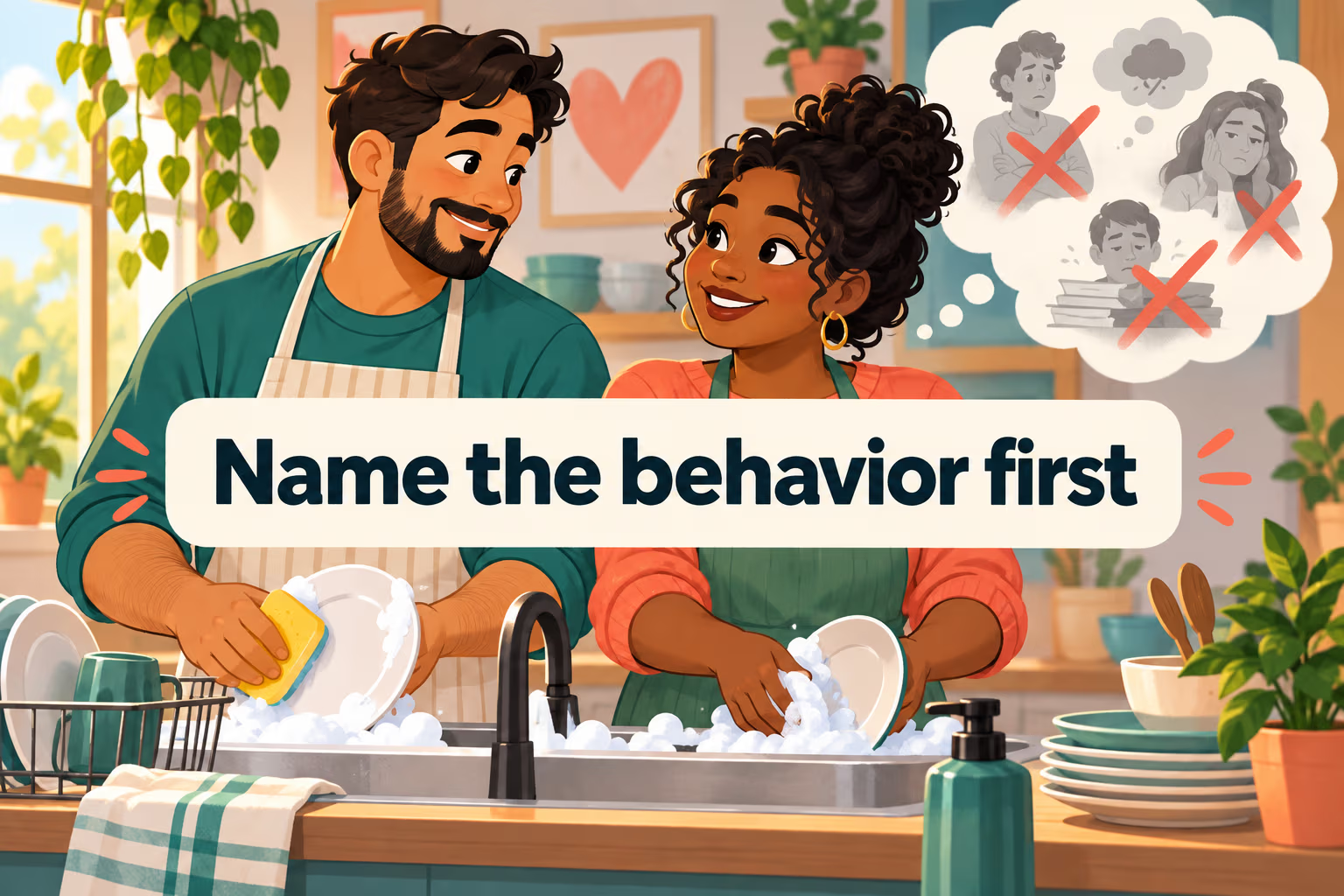
- Describe what a couple says or does before inferring what they feel or what their whole relationship is like.
- Complementary means different qualities work well together; complimentary means praising or free of charge.
- Words such as perfect and everlasting make broad claims, so use them as personal opinions or aspirations rather than observable facts.
- Relationship status, family role, gender, and marital status do not prove a couple’s personality or level of closeness.
How to Choose an Adjective for a Couple
Choose an adjective by naming the quality you want to convey, then checking whether the word describes a feeling, a behavior, a shared style, or your personal reaction. A short toast, character sketch, and neutral report need different levels of intimacy and certainty.
- Decide what you are describing. Is the subject their affection, teamwork, humor, communication, or one specific event?
- Match the word to evidence. “They took turns listening and planning” supports cooperative; one affectionate photograph alone does not establish that a couple is always devoted.
- Fit the audience. A wedding toast can sound warm and celebratory. A workplace biography usually needs restrained words such as collaborative or well matched.
- Check the scope. Prefer “They were patient with one another during the delay” to a permanent label such as “They are always patient.”
In practice, the most useful description is often a concrete sentence followed by one adjective: “They divided the planning, checked in with each other, and stayed flexible—cooperative.” This gives readers a reason for the label instead of asking the adjective to do all the explaining.
Couple Adjectives by Meaning
The table separates commonly useful words by the kind of quality they describe. These are writing choices, not a checklist for diagnosing a relationship; context determines whether an adjective sounds accurate, affectionate, or judgmental.
| Quality | Adjectives | Example | Use with care |
|---|---|---|---|
| Warmth and affection | affectionate, loving, tender, fond | “The affectionate couple greeted each other with a hug.” | Use only when warmth is visible or known. |
| Commitment and loyalty | devoted, loyal, committed, steadfast | “They remained committed to the plan they made together.” | These imply more than a single pleasant interaction. |
| Mutual care and teamwork | supportive, considerate, cooperative, dependable | “The supportive partners shared the extra work.” | Describe the action when possible. |
| Ease and shared enjoyment | playful, companionable, easygoing, lively | “Their playful banter kept the long drive enjoyable.” | Easygoing can suggest a temperament, not just a scene. |
| Strength through difficulty | resilient, patient, adaptable, persistent | “The adaptable pair changed plans when the train was canceled.” | Avoid romanticizing hardship or assuming both experienced it the same way. |
| Shared fit or style | compatible, complementary, harmonious, well-matched | “Their complementary skills helped them organize the event.” | Difference can be useful without making either person a ‘missing half.’ |

Positive Words Without Overstating
Positive adjectives work best when they are specific. Affectionate points to warmth; supportive points to help; compatible suggests a good fit in a particular respect. The adjective perfect is an expression of praise, not a measurable description, so a specific example usually sounds more sincere.
- Affectionate: “The affectionate couple held hands during the walk.”
- Supportive: “They were supportive when each took a turn covering the other’s shift.”
- Considerate: “The considerate pair checked that the restaurant worked for everyone.”
- Playful: “Their playful teasing made the game night lively.”
- Resilient: “The resilient couple adjusted their travel plans after the storm.”
- Complementary: “Their complementary skills made the project easier to organize.”
For a card or toast, combine one adjective with one detail: “Your patient, generous way of making room for each other is a joy to see.” The example keeps a warm tone while avoiding a generic string of superlatives.

Neutral and Critical Descriptions
Neutral adjectives help when a writer needs to describe a couple without praising or criticizing them. Words such as private, reserved, independent, and newly engaged describe a stated preference, visible manner, or life stage more precisely than labels such as cold or unconventional.
Critical words need more care because they can turn a moment into a fixed judgment. Instead of calling a couple argumentative, specify that “the pair disagreed sharply about the schedule.” Instead of distant, describe the observable situation: “They spoke little during the dinner.” A brief observation cannot establish the reasons behind someone’s behavior.
Relationship labels should not be inferred from appearance. A couple can be married, unmarried, dating, queer, straight, co-parenting, or privately partnered without displaying any one personality or family pattern. The American Psychological Association’s guidance on avoiding heterosexual bias recommends clear, accurate language that does not rely on stereotypes or assume that marital status reveals other facts about a relationship.
Commonly Confused Words for Couples
Complementary means different things work well together, while complimentary means expressing praise (or provided free). For example, two partners can have complementary strengths, and one partner can make a complimentary remark. Cambridge Dictionary distinguishes these meanings.
Compatible is broader: it means that people or things can exist or work together successfully. Complementary focuses on a useful fit between differences. A couple might be compatible in their long-term plans and have complementary skills in a shared project; the terms are related but not interchangeable.
Frequently Asked Questions About Adjectives for Couples
What is a good adjective for a couple?
Supportive is a useful choice when the couple helps one another; affectionate fits visible warmth, and playful fits shared humor. No single adjective is best for every couple. Pair the word with a specific example so the description reflects the people rather than a generic ideal.
How do I describe a couple in one sentence?
Name one observable quality and give a small example: “The considerate couple checked in with each other before changing the plan.” This sentence is clearer than a list of broad compliments because the action shows why the adjective fits. For formal writing, choose a neutral word and avoid guessing at private feelings.
What is the difference between complementary and compatible?
Compatible describes people or things that can work or exist well together. Complementary describes distinct qualities that fit together usefully, such as one partner’s planning skills and the other’s design skills. A couple may be both, but the words emphasize different aspects of the match.
Can I use “perfect” to describe a couple?
Yes, when “perfect” is clearly personal praise, as in a celebratory toast. In an objective description, it overstates what a writer can know about someone else’s relationship. A concrete phrase such as “thoughtful with each other” or “quick to share responsibilities” usually conveys more meaning.
Should I call a couple unconventional?
Use unconventional only when the couple’s arrangement is relevant and the people would recognize that description. The word measures them against a presumed norm, so a more specific phrase—such as “a long-distance couple” or “co-parents who live separately”—may be more accurate and respectful.
Sources and Further Reading
- Cambridge Dictionary: couple
- Cambridge Dictionary: devoted
- Cambridge Dictionary: complementary
- Cambridge Dictionary: complimentary
- American Psychological Association: Avoiding heterosexual bias in language
When it comes to describing a couple, finding the right words can be a challenge. How do you capture the essence of their relationship in just a few words? That’s where adjectives come in. Adjectives have the power to paint a vivid picture and evoke emotions. In this article, I’ll be sharing a list of adjectives that can be used to describe a couple, along with examples to help you understand how to use them effectively. Whether you’re writing a love letter, a wedding toast, or simply want to express your admiration for a couple, these adjectives will help you find the perfect words to describe their bond.
Love is a complex and multifaceted emotion, and it can be difficult to find the right words to describe the unique connection between two people. That’s why having a diverse range of adjectives at your disposal is invaluable. From affectionate to passionate, from supportive to adventurous, there are countless adjectives that can be used to describe a couple. In this article, I’ll be exploring some of the most commonly used adjectives for couples, providing examples to illustrate their usage. Whether you’re a writer looking to add depth to your characters or a friend trying to find the perfect words for a couple in your life, this list will serve as a valuable resource. So let’s dive in and discover the adjectives that can truly capture the essence of a couple’s relationship.
How to Describe couple? – Different Scenarios
Describing a couple can be a fun and creative task. There are various scenarios in which we may want to capture the essence of a relationship between two people. Whether you’re a writer, a friend, or someone looking to express admiration for a couple, choosing the right adjectives can make all the difference. Let’s explore different scenarios and examples of adjectives for couples.

Engaged Couples
When describing an engaged couple, you may want to emphasize their excitement and anticipation for their upcoming marriage. Here are some adjectives that can help paint a vivid picture:
- Blissful
- Hopeful
- Radiant
- Enthusiastic
- Committed
Long-Term Couples
For couples who have been together for a long time, you may want to describe their deep connection and enduring love. Here are some adjectives that capture the essence of a long-term relationship:
- Devoted
- Enduring
- Harmonious
- Intimate
- Everlasting
Newlywed Couples
Newlyweds are often filled with joy and a sense of adventure as they embark on their journey together as a married couple. Here are some adjectives that describe the excitement and freshness of a newlywed couple:
- Elated
- Amorous
- Adorable
- Complimentary
- Adventurous
Parent Couples
When a couple becomes parents, their relationship takes on a new dimension. You may want to use adjectives that convey their nurturing and loving nature as parents:
- Caring
- Supportive
- Doting
- Patient
- Nurturing
Unconventional Couples
Not all couples fit into traditional molds. Describing unconventional couples requires thinking outside the box. Here are some adjectives that can capture the uniqueness and individuality of unconventional couples:
- Eclectic
- Free-spirited
- Nonconformist
- Independent
- Fearless
Remember, these adjectives are just a starting point. Each couple is unique, and it’s important to choose adjectives that accurately reflect their relationship and personalities. By using a diverse range of adjectives, you can capture the true essence of a couple’s connection.
In the next section, I’ll provide even more examples of adjectives for couples in different scenarios. So, stay tuned!
Describing Words for couple in English
As a language expert, I’ve compiled a list of adjectives that can be used to describe couples in various scenarios. Whether you’re talking about engaged couples, long-term couples, newlywed couples, parent couples, or unconventional couples, it’s important to choose adjectives that accurately reflect their unique relationship and personalities.

When describing engaged couples, it’s common to use adjectives that highlight their excitement and commitment, such as “eager,” “devoted,” “hopeful,” or “dreamy.” These words capture the anticipation and joy of a couple embarking on their journey towards marriage.
For long-term couples who have weathered the ups and downs of life together, adjectives like “steadfast,” “enduring,” “strong,” or “loyal” can be fitting. These words convey the depth of their bond and the strength of their love.
Newlywed couples, who are still basking in the glow of their recent union, can be described with adjectives like “blissful,” “radiant,” “honeymoon,” or “smitten.” These words capture the joy and happiness that comes with the beginning of a new life together.
Parent couples, who navigate the challenges of raising a family, can be described as “nurturing,” “devoted,” “patient,” or “loving.” These words highlight the selflessness and dedication that comes with the role of being parents.
Lastly, unconventional couples, who defy societal norms and expectations, can be described with adjectives like “unique,” “bold,” “unorthodox,” or “adventurous.” These words celebrate their individuality and the courage it takes to forge their own path.
By carefully choosing adjectives that align with the specific scenario and couple you’re describing, you can paint a vivid picture of their relationship. Remember, each couple is unique, and it’s important to choose words that accurately capture their story.
| Engaged Couples | Long-term Couples | Newlywed Couples | Parent Couples | Unconventional Couples |
|---|---|---|---|---|
| Eager | Steadfast | Blissful | Nurturing | Unique |
| Devoted | Enduring | Radiant | Devoted | Bold |
| Hopeful | Strong | Hone |
Adjectives for couple
As an expert blogger with years of experience, I understand the challenge of finding the right words to describe a couple. Whether it’s engaged couples, long-term couples, newlywed couples, parent couples, or unconventional couples, each relationship is unique and deserves the perfect words to encapsulate its essence.

Positive Adjectives for Couple with 12 Example Sentences
When it comes to describing couples, positive adjectives can effectively convey the joy, love, and harmony between two people. Here are some examples of positive adjectives that can be used to describe a couple, along with example sentences illustrating their usage:
| Adjective | Example Sentence |
|---|---|
| Adorable | They are such an adorable couple, always smiling and holding hands. |
| Affectionate | This couple is so affectionate towards each other; they’re always hugging and kissing. |
| Blissful | The newlywed couple looked blissful as they danced and celebrated their love. |
| Committed | They are a committed couple, supporting each other through thick and thin. |
| Harmonious | Their harmonious relationship is evident in their shared interests and effortless communication. |
| Loyal | As a long-term couple, their loyalty to each other has never wavered. |
| Passionate | This couple’s passionate love for each other is unmistakable in their fiery gazes and tender gestures. |
| Radiant | The couple’s radiant smiles brightened the entire room. |
| Supportive | They are an incredibly supportive couple, always cheering each other on and offering a helping hand. |
| Thoughtful | This couple is so thoughtful, constantly surprising each other with small gestures of love. |
| Vibrant | The vibrant energy between this couple is contagious; they bring life to every room they enter. |
| Warm-hearted | This warm-hearted couple radiates kindness wherever they go. |
Negative Adjectives for Couple with 5 Example Sentences
While we often focus on positive adjectives, it’s important to acknowledge that relationships can have their challenges too. Here are some examples of negative adjectives that might be used to describe a couple, along with example sentences:
| Adjective | Example Sentence |
|---|---|
| Argumentative | They can be quite argumentative at times, but they always find a way to resolve their conflicts. |
| Distant | Lately, there seems to be a distance between them; they don’t communicate as much as they used to. |
| Incompatible | This couple is truly incompatible, with contrasting values and interests. |
| Jealous | Their relationship is plagued by jealousy; they need to work on building trust. |
| Unsupportive | Unfortunately, this couple is unsupportive of each other’s dreams and goals. |
It’s important to choose adjectives that accurately reflect the unique story of each couple. The right words can capture the essence of their relationship, whether it’s positive or negative. By carefully selecting the right adjectives, we can paint a vivid picture of the couple and their unique journey together. So the next time you need to describe a couple, choose your words wisely and let their love story shine.
Synonyms and Antonyms with Example Sentences

Synonyms for couple
When it comes to describing couples, there are various synonyms that can be used to add depth and nuance to our description. Here are a few synonyms for the word “couple” that you can use:
- Pair
- Duo
- Twosome
- Tandem
- Match
- Partner
Using these synonyms can bring variety and richness to your writing. For example:
- “John and Sarah make a great pair on the dance floor.”
- “The duo showcased their musical talents at the concert.”
- “The twosome enjoyed a romantic dinner under the stars.”
- “Working together, they formed a strong tandem that led to success.”
- “They are the perfect match, complementing each other in every way.”
- “As business partners, they make an exceptional partnership.”
Antonyms for couple
On the other hand, if you want to express the opposite meaning or contrast, here are some antonyms for the word “couple”:
- Single
- Alone
- Individual
- Solo
- Unaccompanied
These antonyms can be used to create a sense of contrast or to highlight the uniqueness of a particular individual. For example:
- “She prefers being single and independent.”
- “He cherished the moments of being alone, finding solace in his solitude.”
- “Each person has their own individual strengths and weaknesses.”
- “She embarked on a solo adventure, discovering a world of possibilities.”
- “He confidently walked into the room, unaccompanied by anyone.”
By using these synonyms and antonyms, you can add variety and depth to your writing when describing couples. Whether you want to emphasize the bond between two people or highlight the individuality of a person, choosing the right words can make your descriptions more vivid and engaging.
Conclusion
Describing a couple can be a challenge, but with the right words, we can bring their story to life. In this article, I have discussed the importance of choosing the right adjectives to accurately capture the essence of each unique couple’s story. By using synonyms and antonyms for the word “couple”, we can add variety and depth to our writing.
Through examples, I have shown how these descriptive words can paint a vivid picture of a couple’s dynamic. Whether it’s highlighting their compatibility, their differences, or their journey together, the right adjectives can make all the difference in conveying their story.
So, the next time you find yourself struggling to find the right words to describe a couple, remember the power of synonyms and antonyms. Choose your adjectives carefully, and watch as your writing comes alive with the essence of their love and connection.


