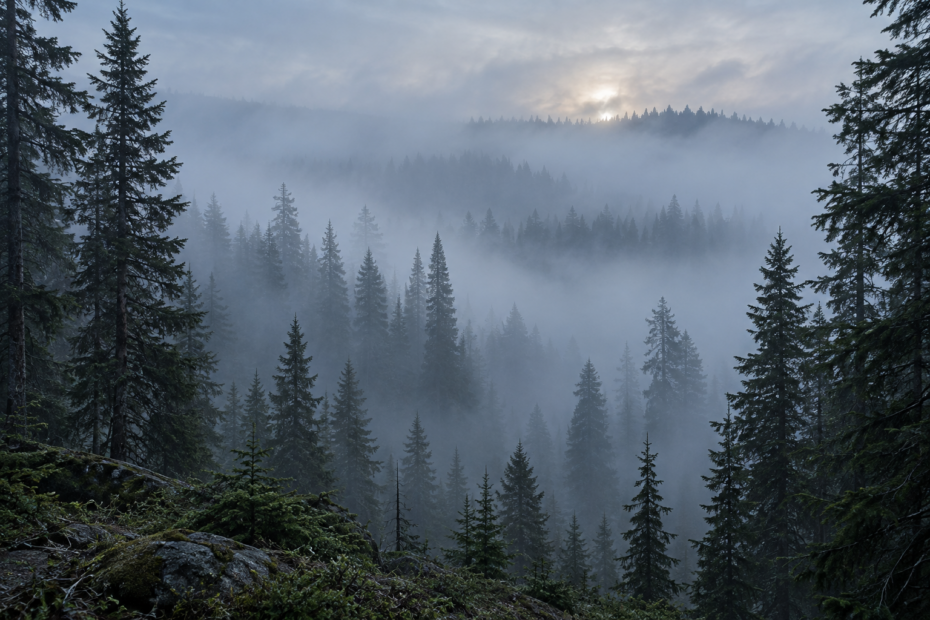
As a lover of nature and all its mysterious wonders, I have always been captivated by the ethereal beauty of fog. The way it envelops everything in its gentle embrace, creating an air of mystique and intrigue. But how do you describe something as intangible as fog? Well, fear not, for I have compiled a list of adjectives that will help you paint a vivid picture of this atmospheric phenomenon.
When it comes to describing fog, the possibilities are endless. From the thick and impenetrable to the wispy and elusive, there is a wide range of adjectives that can capture the essence of this natural marvel. Whether you’re a writer looking to add depth to your descriptions or simply a curious soul seeking to expand your vocabulary, these adjectives will surely come in handy. So, without further ado, let’s dive into the world of adjectives for fog and explore the enchanting realm of mist and haze.
How to Describe fog? – Different Scenarios
When it comes to describing fog, there are endless possibilities. The ethereal nature of fog lends itself to a wide range of adjectives that can bring depth and richness to your descriptions. Whether you’re writing a captivating story or trying to create a vivid picture in your readers’ minds, here are some adjectives to help you describe fog in different scenarios:
- Thick: Picture fog so dense that it seems to swallow everything in its path. It engulfs the landscape, obscuring even the closest objects from view. It’s like being surrounded by a wall of mist.
- Immersive: Imagine being enveloped in fog, as if you’re walking through a cloud. It’s an experience that can make you feel lost or disconnected from the world around you. You can’t see more than a few feet in front of you, and the air feels damp and cool against your skin.
- Mysterious: Fog has a way of transforming the familiar into something strange and otherworldly. It shrouds the landscape in an air of mystery, making even the simplest objects appear eerie and unknown. It’s the perfect setting for a haunting or suspenseful tale.
- Wispy: When fog is thin and delicate, it takes on a wispy quality. It hangs in the air like a thin veil, barely there but still present. It creates an atmosphere of tranquility, almost like walking through a dream.
- Evasive: Sometimes, fog seems to play tricks on us. It moves and shifts, making it difficult to pin down its exact location. It’s elusive and unpredictable, appearing and disappearing as if it has a mind of its own.
Remember, these are just a few examples of how you can describe fog in different scenarios. Don’t be afraid to get creative and experiment with your descriptions. Use vivid language and sensory details to transport your readers into the misty world of fog. Happy writing!
Describing Words for fog in English
Fog, with its ethereal beauty, is a phenomenon that captivates the senses. Describing fog using the right adjectives allows us to paint a vivid picture and transport our readers into the misty world. Here are some adjectives that perfectly capture the essence of fog:
- Thick: When fog is dense and impenetrable, it engulfs everything in its path, creating an eerie atmosphere. It’s like walking through a mystical blanket of gray.
- Mysterious: Fog can transform the familiar into something unknown and foreboding. It shrouds objects in a veil of secrecy, leaving us to wonder what lies beyond its misty embrace.
- Wispy: Occasionally, fog takes on a delicate and ethereal quality. It becomes wispy, like a fairy’s breath, gently floating and creating a tranquil atmosphere.
- Evasive: Fog has a way of appearing and disappearing unpredictably, making it elusive and hard to grasp. It adds an element of surprise and intrigue, keeping us on our toes.
- Enveloping: Fog wraps its tendrils around everything, blurring the lines between reality and imagination. It creates a cocoon-like effect, making us feel both protected and disoriented.
- Silent: Fog brings with it a sense of stillness and tranquility. It muffles sounds and creates an atmosphere of peaceful serenity, as if the world is holding its breath.
Remember, when describing fog, it’s important to use sensory details and vivid language to fully immerse your readers in the misty realm. Use these adjectives as a starting point to spark your creativity and transport your readers into a world veiled in fog.
Examples of Adjectives for Fog
| Adjective | Description |
|---|---|
| Thick | Dense and impenetrable |
| Mysterious | Transforming the familiar into something unknown |
| Wispy | Delicate and ethereal |
| Evasive | Appearing and disappearing unpredictably |
| Enveloping | Wrapping around everything, blurring reality |
| Silent | Creating a sense of stillness and tranquility |
Remember, captivating your readers means using descriptive words effectively. So, let your creativity flow, and use these adjectives to bring your fog-filled scenes to life.
Adjectives for fog
Positive Adjectives for fog with 12 Example Sentences
Fog can be a fascinating weather phenomenon, creating a mysterious ambiance wherever it appears. Here are some positive adjectives that can be used to describe the alluring qualities of fog along with example sentences:
- Enchanting: The enchanting fog draped the landscape in a soft, ethereal veil.
- Serene: The serene fog transformed the bustling city into a tranquil oasis.
- Mystical: The mystical fog held secrets of the unseen world within its misty embrace.
- Dreamy: The dreamy fog blurred the boundaries between reality and imagination.
- Peaceful: The peaceful fog filled the air with a soothing sense of calm.
- Ethereal: The ethereal fog cast a spellbinding glow over the landscape.
- Whimsical: The whimsical fog danced and twirled through the trees, creating a magical atmosphere.
- Mesmerizing: The mesmerizing fog captured the attention of all who beheld its beauty.
- Enigmatic: The enigmatic fog concealed the true nature of the landscape, inviting curiosity and exploration.
- Tranquil: The tranquil fog enveloped the surroundings in a gentle embrace.
- Soft: The soft fog whispered its presence, making the environment feel hushed and serene.
- Romantic: The romantic fog set the stage for an enchanting evening stroll through the misty streets.
Negative Adjectives for fog with 5 example sentences
While fog can be enchanting, it can also have a more ominous and unsettling feel. Here are some negative adjectives that can be used to describe the eerie and unsettling aspects of fog, accompanied by example sentences:
- Dismal: The dismal fog cast a gloomy shadow over the landscape, obscuring any trace of brightness.
- Haunting: The haunting fog draped the area in an eerie silence, filling the air with an otherworldly presence.
- Foreboding: The foreboding fog gave an unnerving sense that something mysterious was about to happen.
- Oppressive: The oppressive fog seemed to press down on everything, creating a suffocating atmosphere.
- Disorienting: The disorienting fog made it difficult to see clearly, causing a sense of confusion and unease.
Remember, when describing fog, you have a wide range of adjectives at your disposal to convey its various moods and effects. By using vivid language, you can transport your readers into the enchanting and mysterious world of fog.
Synonyms and Antonyms with Example Sentences
Synonyms for Fog
When it comes to describing fog, there are several synonyms that can help you capture its ethereal beauty and mysterious nature. Here are some words you can use as alternatives to “fog”:
- Mist: A light, thin fog that gives the atmosphere a hazy appearance.
- Haze: A slight fog that obscures visibility but is not as dense as traditional fog.
- Smog: A combination of fog and air pollutants that often occurs in heavily industrialized areas.
- Vaporous: Describes fog that appears to be made of mist or vapor.
- Murk: A thick fog that creates a dark, gloomy atmosphere.
- Opalescence: Used to describe fog that displays a shifting range of colors.
- Obscuration: Refers to fog that prevents clear visibility of objects or landscape features.
- Clammy: Describes a damp and sticky fog that leaves a cold and moist feeling.
Here are some example sentences to help you understand how to use these synonyms:
- I walked through the dense mist, feeling as if I had entered a different world.
- The city was enveloped in a thick haze, creating an eerie and surreal atmosphere.
- The smog blanketed the entire town, making it difficult to see even a few feet ahead.
- As I looked out the window, I saw the vaporous fog slowly roll in from the sea.
- The forest was shrouded in a murk that made it impossible to see more than a few steps ahead.
- The opalescent fog transformed the landscape into a mesmerizing and otherworldly scene.
- The obscuration caused by the fog made it challenging to navigate through the city streets.
- I wrapped myself in a warm jacket to protect against the clammy fog that hung in the air.
Antonyms for Fog
While fog can create an enchanting and mysterious atmosphere, there are times when you may want to describe clear and unobstructed weather conditions. Here are some antonyms for “fog”:
- Clear: Describes the absence of fog, with a sky that allows for a high level of visibility.
- Sunny: Indicates a bright and clear day without any fog or haze.
- Bright: Refers to a well-lit environment with no foggy or misty conditions.
- Transparent: Describes a situation where there is no fog blocking the view.
- Luminous: Indicates a radiant and well-lit environment with no foggy obstructions.
Here are example sentences demonstrating the use of these antonyms:
- The fog lifted, revealing a clear blue sky and a beautiful view of the mountains.
- We enjoyed a sunny day at the beach, with no sign of fog in sight.
- The bright morning allowed us to see the city in all its glory, with no trace of fog.
- The transparent windows offered an unobstructed view of the cityscape, unaffected by fog.
- As the fog dissipated, the luminous landscape brightened, revealing its natural beauty.
By incorporating these synonyms and antonyms into your writing, you can effectively describe the captivating qualities of fog or contrast it with clear conditions.

Choosing Adjectives for Fog
The most useful fog adjective tells readers what they would notice first: how much it hides, how it moves, how light changes it, or what feeling it creates. Pair one observable detail with one mood word rather than piling on several near-synonyms. For example, “thin fog drifted across the field” gives a clearer picture than “beautiful, lovely, magical fog.”
| What you notice | Useful adjectives | What they suggest |
|---|---|---|
| Density | dense, thick, light, thin, patchy | How much of the landscape disappears |
| Movement | drifting, rolling, swirling, lingering, rising | Whether the mist seems still or in motion |
| Light and color | silvery, pale, gray, glowing, shadowy | How the fog looks at a particular time of day |
| Feeling | eerie, peaceful, damp, chilly, oppressive | The atmosphere or physical sensation it creates |
| Visibility | obscuring, veiling, low-lying, far-reaching | What can still be seen and what is hidden |

Some words describe a measurable quality, while others express a writer’s reaction. Dense and patchy describe coverage; haunting or dreamlike describe mood. Making that distinction helps a description stay vivid without implying that every foggy scene feels the same.
Fog, Mist, and Haze: Which Word Fits?
In everyday writing, mist often suggests a lighter, softer veil than fog, while haze can suggest a less distinct atmospheric veil. Weather agencies use defined visibility thresholds, and conventions can vary by country: for example, the U.S. National Weather Service glossary describes fog as suspended water droplets at the surface and notes visibility of a quarter mile or less as a common hazard threshold, while the U.K. Met Office uses visibility below 1,000 metres for fog reporting. These are reporting conventions, not a rule that every conversation must follow. Use foggy for ordinary description, and name the measured visibility only when you actually know it.
Fog is made of tiny water droplets suspended near the ground; it is essentially a cloud at the surface. Haze is a broader term for reduced clarity and may involve tiny dry particles as well as moisture. Because appearance alone does not always reveal the cause, a writer can safely describe what is visible—“a pale haze softened the skyline”—without claiming a specific pollutant or weather process.
Fog Types and Descriptive Words
When the cause matters, pair the name of a fog type with sensory details instead of treating a mood adjective as a scientific label:
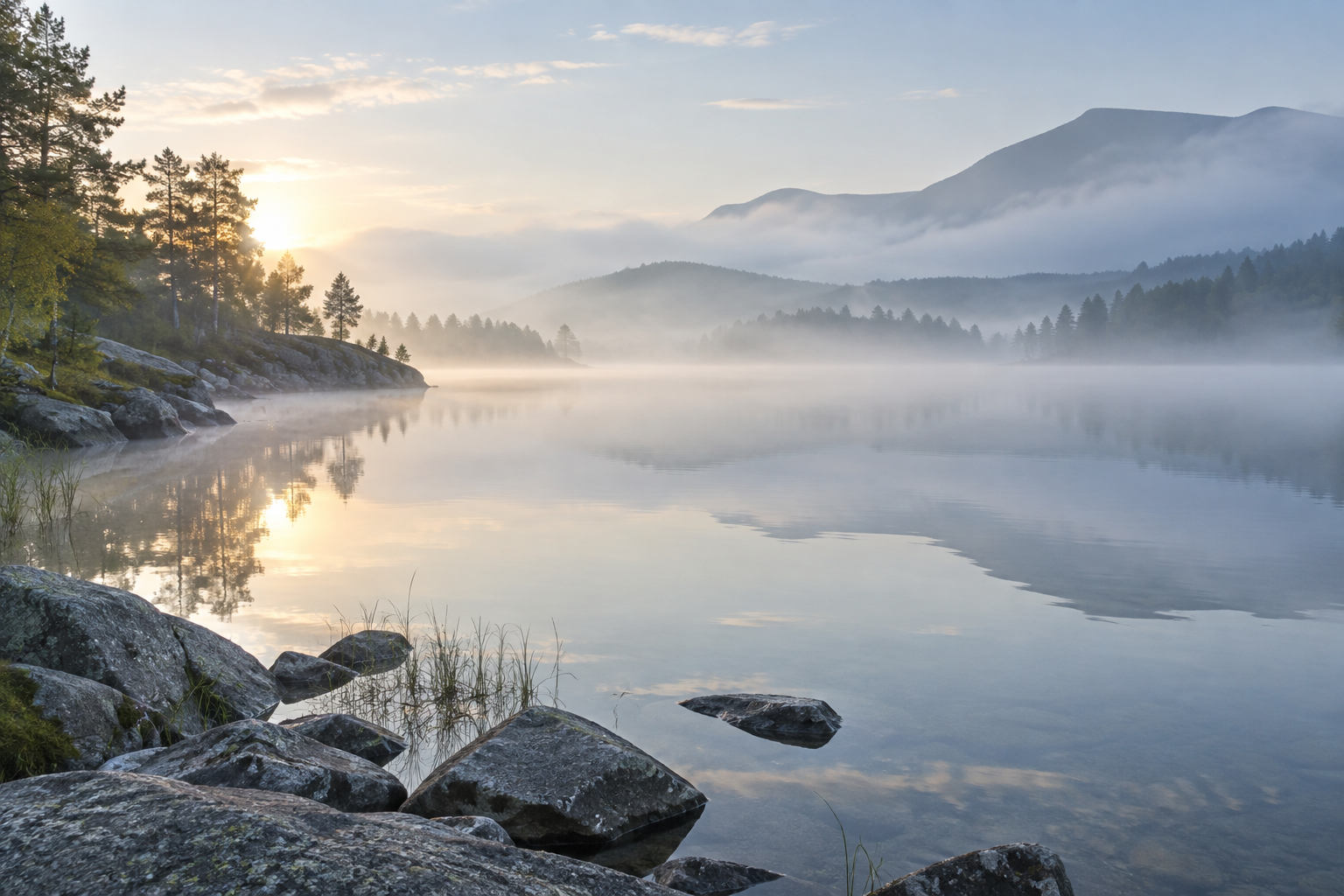
- Radiation fog forms as the ground loses heat and cools nearby air; it is often described as still, shallow, or morning fog.
- Advection fog develops when moist air moves over a colder surface; coastal, spreading, or persistent may fit the scene.
- Upslope fog forms as moist air rises along higher terrain; it may be clinging or mountainous in a landscape description.
- Freezing fog contains droplets that freeze on exposed surfaces; icy describes its effects, but use the technical label only when conditions support it.
These descriptions are starting points, not guarantees: local wind, terrain, moisture, and temperature affect how fog looks and lasts. The National Weather Service glossary defines radiation and advection fog by how they form, and its fog safety guidance explains that fog can sharply reduce visibility. In a creative passage, the physical detail can remain simple: “A cold, clinging fog silvered the fence rails.”
More Example Sentences with Fog Adjectives
- A patchy fog left the church steeple visible while hiding the fields below it.
- Silvery mist gathered over the pond as the first light reached the reeds.
- A dense fog swallowed the far end of the bridge and muted the traffic sounds.
- Wispy strands of fog slipped between the orchard trees.
- The chilly, damp morning fog beaded on the garden gate.
- A low-lying fog filled the valley while the ridge above remained clear.
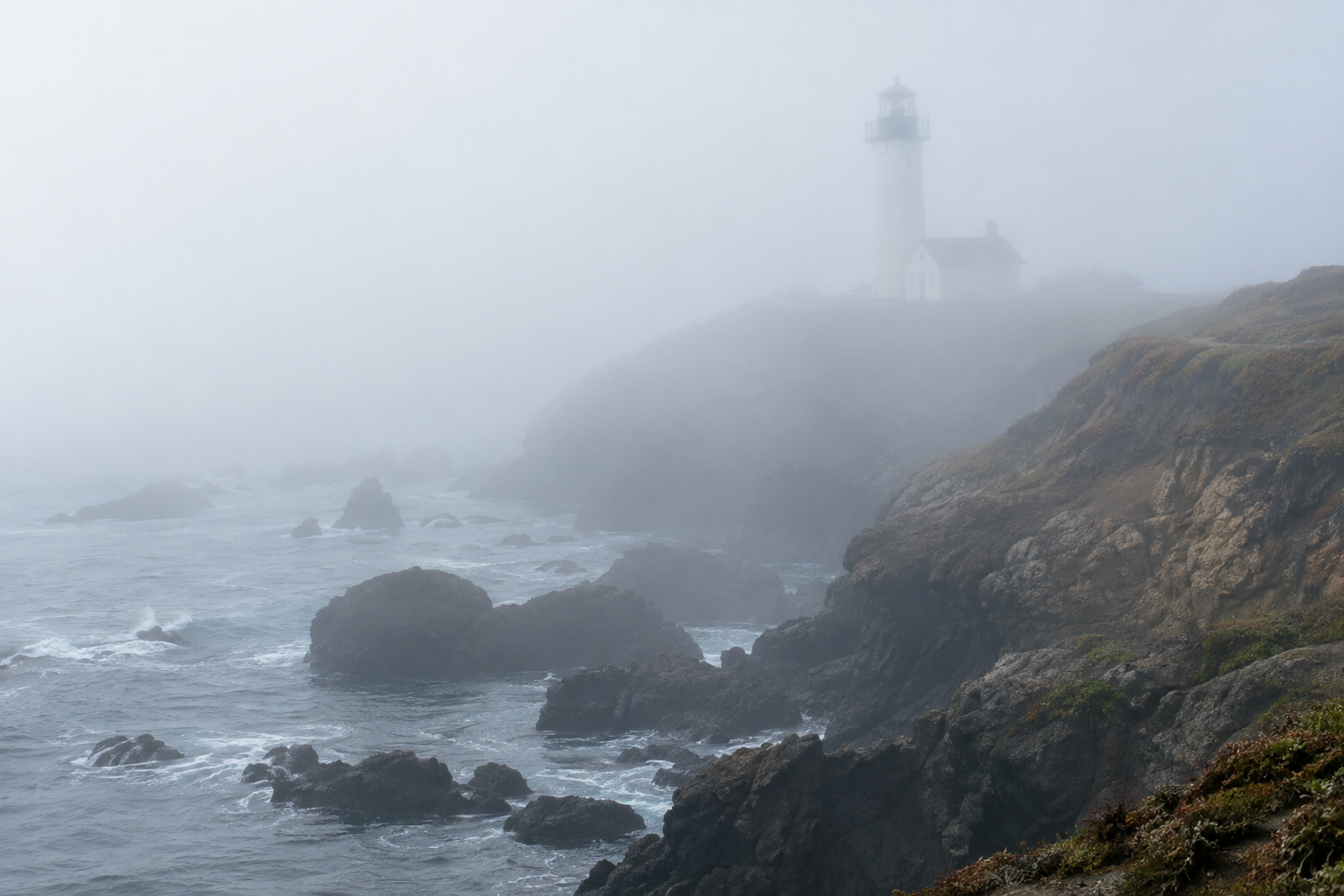
- Rolling fog moved inland from the coast, briefly veiling the headland.
- The eerie fog made the empty station platform seem unfamiliar.
- A soft, gauzy mist blurred the outlines of the distant hills.
- By noon, the lingering fog had thinned enough to reveal the rooftops.
For a sharper sentence, choose a concrete subject and verb as well as an adjective: fog can curl around a hill, pool in a hollow, veil a shoreline, or lift from a meadow. These verbs show how the scene changes and keep the description from relying on adjectives alone.
Using Fog Adjectives Well
Choose an adjective that matches the amount and shape of the fog in the scene. Banked suggests a broad mass gathered in one place; curling or swirling implies visible movement; thin and translucent suggest that outlines still show through. Smoky is a visual comparison, not proof that the air contains smoke, and smoggy should be reserved for polluted air rather than used as a general synonym for fog.
Adjectives can also shift a sentence’s tone. Serene and peaceful make a landscape feel calm, while foreboding and sinister make the same low visibility feel threatening. When writing for younger readers or language learners, choose familiar words first—thick, light, gray, and cold—then introduce more specific options such as gauzy, veiled, or oppressive with a sentence that makes their meaning clear.
A quick revision trick is to replace a vague phrase such as “the fog was nice” with one visible detail: “a thin veil of mist softened the orange streetlights.” That revision gives the reader a texture, an effect, and a source of light in a few words.
Conclusion
In this article, we have explored the enchanting world of fog and discovered a plethora of adjectives that can be used to describe its ethereal beauty. From mist and haze to smog and vaporous, these words paint a vivid picture of the atmospheric phenomenon. We have also explored antonyms such as clear, sunny, and bright, which can be used to contrast fog with clear conditions.
By incorporating these descriptive words into our writing, we can effectively convey the unique qualities of fog and create a captivating atmosphere for our readers. Whether we want to transport them to a mysterious, opalescent landscape or contrast the gloominess of fog with the brightness of a sunny day, these adjectives provide us with the tools to do so.
So, the next time you find yourself gazing at the foggy horizon, remember the power of words to capture its essence. Let your writing come alive with the descriptive magic of these adjectives, and watch as your readers are transported into the misty realm of imagination.


