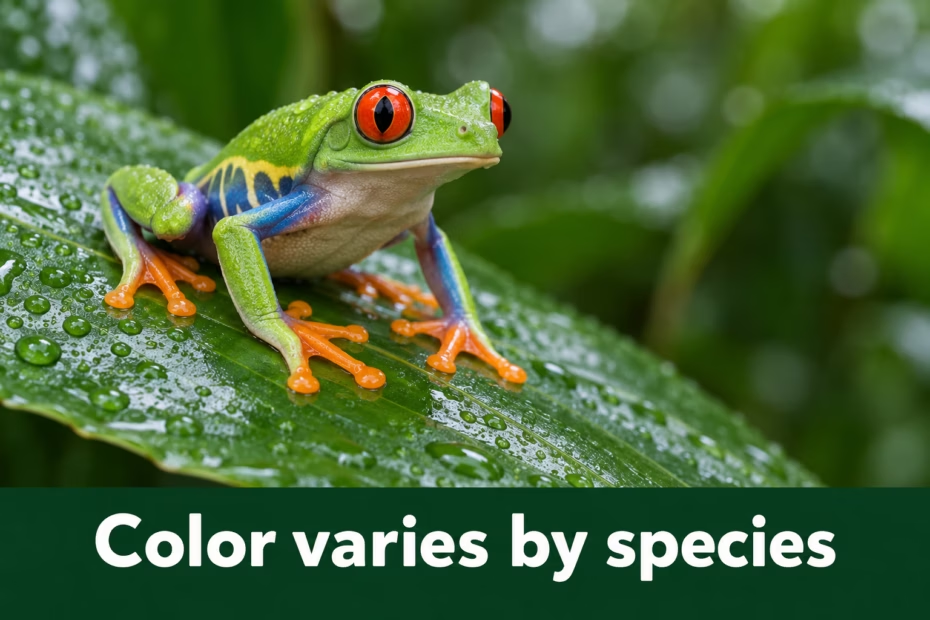
Frogs are fascinating creatures that have captivated the imagination of people for centuries. From their unique appearance to their incredible abilities, frogs are truly a wonder of the animal kingdom. In this article, I’ll be exploring the world of adjectives for frogs, providing you with a comprehensive list of describing words that perfectly capture the essence of these amphibians.
When it comes to describing frogs, there are a plethora of adjectives that come to mind. From the vibrant colors of their skin to their remarkable abilities, each adjective paints a vivid picture of these remarkable creatures. Whether you’re looking to describe a frog’s appearance, behavior, or habitat, this article will provide you with a wide range of examples to choose from.
How to Describe frog? – Different Scenarios
When it comes to describing frogs, there are several scenarios to consider. Let’s take a look at how we can use adjectives to describe these fascinating creatures in different contexts:
1. Appearance
Frogs come in a wide range of shapes, sizes, and colors. Here are some adjectives that can be used to describe their appearance:
- Slimy: Frogs have moist skin that can feel slimy to the touch.
- Bumpy: Many frogs have textured skin, covered in bumps or warts.
- Sleek: Some frog species have smooth and shiny skin.
- Colorful: Frogs can display vibrant colors, ranging from greens and yellows to reds and blues.
- Camouflaged: Certain frogs have the ability to blend into their surroundings, making them difficult to spot.
2. Behavior
Frogs have some interesting behaviors that make them unique. Here are a few adjectives to describe their behavior:
- Hopping: Frogs are known for their ability to hop long distances.
- Jumping: Similar to hopping, frogs can also make impressive jumps.
- Croaking: Male frogs produce a distinct croaking sound, especially during the breeding season.
- Swimming: Some frog species are great swimmers and spend a lot of time in the water.
- Climbing: Certain frogs have the ability to climb trees or other structures using their sticky toe pads.
3. Habitat
Frogs inhabit a variety of habitats, from rainforests to deserts. Here are some adjectives to describe their habitat:
- Aquatic: Many frog species live in or near bodies of water, such as lakes, ponds, or streams.
- Terrestrial: Some frogs prefer to live on land, in forests, grasslands, or even deserts.
- Amphibious: Frogs have the unique ability to live both in water and on land.
- Tropical: Many frogs thrive in warm and humid tropical environments.
- Nocturnal: Some frog species are more active during the nighttime, while others are active during the day.
Describing Words for frog in English
Frogs are fascinating creatures that come in various shapes, sizes, and colors. When it comes to describing frogs, there are many adjectives that can capture their unique characteristics. In this section, I’ll provide you with a list of adjectives that you can use to describe frogs in different ways.
Appearance
Frogs can have a wide range of appearances, from sleek and vibrant to camouflaged and patterned. Here are some adjectives to describe their appearance:
- Slimy: Frogs have a moist and slippery skin.
- Bumpy: Some frogs have rough and textured skin.
- Colorful: Many frogs boast bright and vibrant colors.
- Camouflaged: Some frogs have the ability to blend in with their surroundings.
- Sleek: Certain frog species have smooth and glossy skin.
Behavior
Frogs are known for their distinctive behaviors. Here are some adjectives to describe their behavior:
- Hopping: Frogs are excellent hoppers, using their powerful hind legs to make great leaps.
- Jumping: Frogs can also jump long distances with their strong legs.
- Croaking: Male frogs produce a distinct croaking sound to attract mates.
- Sticky: Frogs have sticky tongues that they use to catch prey.
- Webbed: Frogs have webbed feet that make them excellent swimmers.
Habitat
Frogs can be found in a variety of habitats, from aquatic to terrestrial environments. Here are some adjectives to describe their habitat:
- Aquatic: Many frogs live in or near water, such as ponds, lakes, and marshes.
- Terrestrial: Some frogs prefer to live on land, in forests or grasslands.
- Tropical: Certain frog species thrive in warm and humid tropical regions.
- Aquatic: Frogs that dwell in water have adaptations like webbed feet to navigate their aquatic surroundings.
- Nocturnal: Some frogs are active primarily at night.
By using these adjectives, you can vividly describe the appearance, behavior, and habitat of frogs. Whether you’re teaching young children about frogs or simply fascinated by these amphibians yourself, these descriptive words will help bring them to life in your writing or storytelling.
Adjectives for frog
Positive Adjectives for Frogs with Example Sentences
Frogs are fascinating creatures that come in a variety of shapes, sizes, and colors. Here are some positive adjectives to describe them, along with example sentences:
| Adjective | Example Sentence |
|---|---|
| Cute | Look at that tiny, adorable frog! |
| Playful | The little frog was leaping and jumping around. |
| Graceful | The frog moved through the water with elegance. |
| Colorful | This frog has bright green and yellow markings. |
| Sly | The frog watched its prey with a cunning look. |
| Curious | The frog hopped closer to investigate the sound. |
| Agile | With lightning-fast reflexes, the frog caught a fly. |
| Friendly | The frog allowed me to gently stroke its smooth skin. |
| Resilient | Despite its small size, the frog survived harsh conditions. |
| Rare | I was lucky to spot a rare species of frog in the wild. |
| Graceful | The frog gracefully glided across the lily pad. |
| Majestic | The vibrant colors of the frog made it look majestic. |
Negative Adjectives for Frogs with Example Sentences
While frogs have many positive traits, there are also some negative adjectives that can be used to describe them. Here are a few, along with example sentences:
| Adjective | Example Sentence |
|---|---|
| Slimy | I hesitated to touch the frog because it looked slimy. |
| Noisy | The frogs in the pond kept croaking loudly all night. |
| Ugly | Some people might find certain frogs to be ugly, but I think they’re unique. |
| Aggressive | This particular species of frog can be quite aggressive in defending its territory. |
| Poisonous | Be careful not to touch the colorful frogs, as they can be poisonous. |
It’s important to remember that negative adjectives may not accurately reflect the overall nature of frogs. They are amazing creatures with their own unique characteristics and play an important role in our ecosystems.
By using these descriptive adjectives, you can help bring frogs to life in your writing or storytelling.
Synonyms and Antonyms with Example Sentences
Synonyms for frog
When it comes to describing frogs, there are several synonyms that can be used to add variety and depth to your writing. Here are some examples with their definitions:
| Synonym | Definition | Example Sentence |
|---|---|---|
| Amphibian | A cold-blooded vertebrate animal that lives both on land and in water | I learned about amphibians, like frogs, in science class. |
| Croaker | A frog or toad that makes a deep, hoarse sound | The croakers in the pond were serenading us with their chorus. |
| Toad | A squat, tailless amphibian with rough, bumpy skin | The children found a toad hiding under a rock. |
| Anuran | A term used to describe any member of the order Anura, which includes frogs and toads | The anuran population in the wetlands is thriving. |
Using these synonyms can help make your writing more engaging and avoid repetition. For example, instead of using “frog” multiple times in a paragraph, you can use “amphibian” or “anuran” to add variety.
Antonyms for frog
Antonyms, or words with opposite meanings, can also be used to describe frogs. Here are some examples:
| Antonym | Definition | Example Sentence |
|---|---|---|
| Reptile | A cold-blooded vertebrate animal that has scaly skin and lays eggs on land | Reptiles, unlike frogs, do not need to live near water. |
| Mammal | A warm-blooded vertebrate animal that feeds its young with milk | Frogs are not mammals since they do not nurse their young. |
| Bird | A warm-blooded vertebrate animal with feathers and beak that can fly | Birds soar through the sky, while frogs hop on the ground. |
| Fish | A cold-blooded vertebrate animal that lives exclusively in water | Frogs are not fish, but they can swim in water. |
Using antonyms can provide a contrasting perspective when discussing frogs and highlight their unique characteristics.
Remember, using a combination of synonyms and antonyms can make your writing more interesting and help capture the attention of your readers, whether they are preschoolers or kindergarten students.
Conclusion
By exploring the various adjectives that can be used to describe frogs, we have uncovered a world of possibilities when it comes to writing about these fascinating creatures. The synonyms we have discussed, such as “amphibian,” “croaker,” “toad,” and “anuran,” offer alternative ways to refer to frogs, adding depth and variety to our writing. On the other hand, the antonyms we have explored, such as “reptile,” “mammal,” “bird,” and “fish,” provide contrasting perspectives that help highlight the unique characteristics of frogs.
Incorporating these adjectives into our writing not only makes it more engaging and interesting, but also captures the attention of our readers. By avoiding repetitive language and utilizing a combination of synonyms and antonyms, we can create a vivid and captivating description of frogs that will leave a lasting impression.
So, the next time you find yourself writing about frogs, remember to explore the world of adjectives. Embrace the power of synonyms and antonyms to bring your words to life and make your writing truly stand out. Happy writing!

How to choose accurate adjectives for frogs
The strongest frog descriptions name a visible feature or a behavior you can support. Begin with one concrete observation—such as olive skin, a pale stripe, a crouched posture, or a frog clinging to bark—then choose an adjective that tells the reader exactly what that detail looks like. “Speckled” is more useful than “pretty” when the frog has distinct spots.
- For appearance: green, olive, mottled, speckled, striped, smooth-skinned, bumpy, compact, long-legged, bright-eyed, or webbed-footed.
- For movement: crouching, poised, leaping, hopping, swimming, climbing, or burrowing, when that action is actually shown.
- For sound: high-pitched, raspy, trilling, booming, or repetitive, when describing a particular call.
- For mood in fiction: wary, comical, curious, regal, or grumpy; these describe the narrator’s impression rather than a scientific trait.
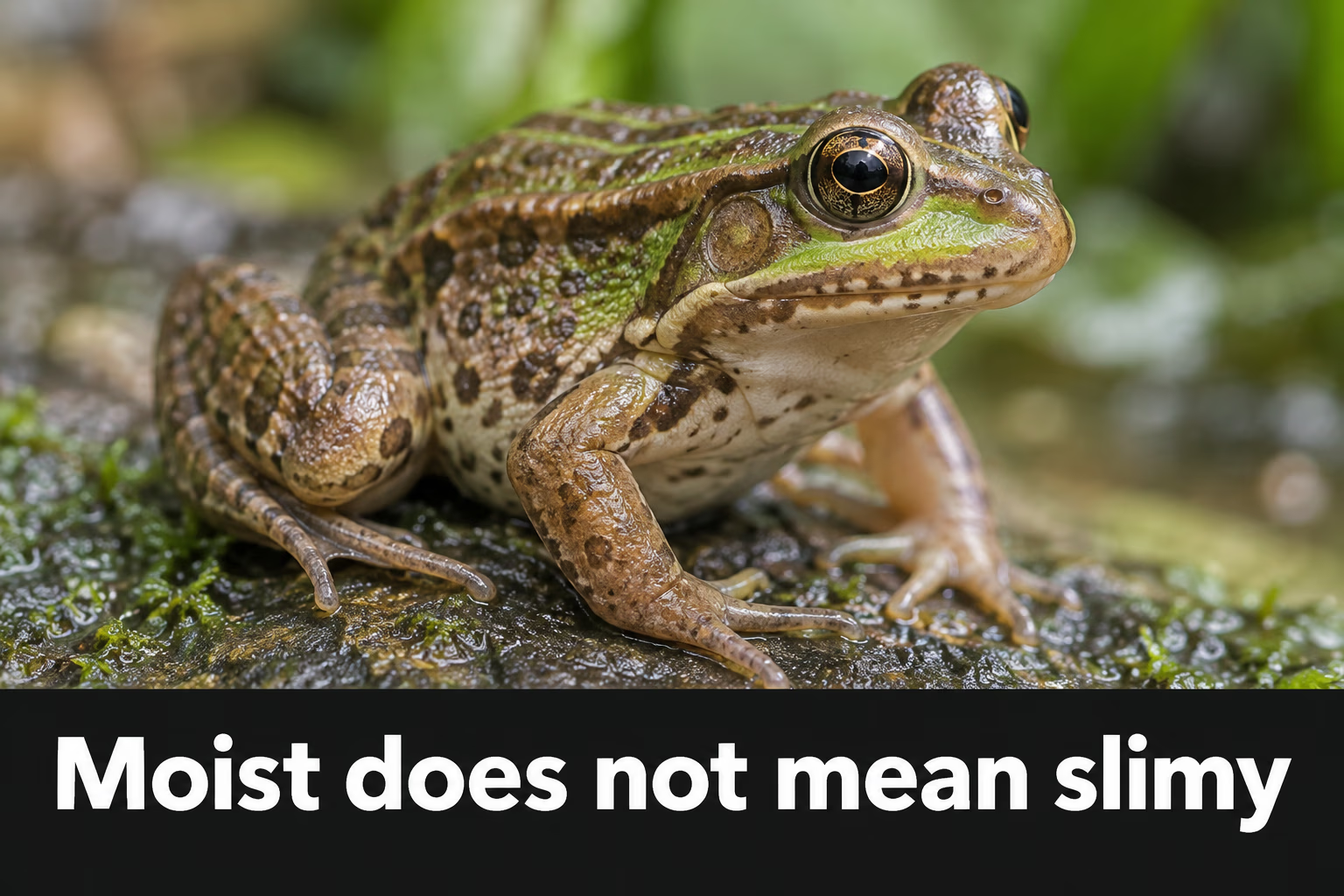
Which words describe a frog’s appearance?
Use color, pattern, shape, skin texture, and posture words separately so a description stays specific. Frogs vary widely: the American Museum of Natural History notes that the group spans many habitats and forms, and the Smithsonian’s White’s tree frog profile describes a single species whose back color can range from light blue to emerald green or gray. Color is therefore an observation about this frog, not a universal frog trait.
| Feature | Useful adjectives | Example |
|---|---|---|
| Color | olive, emerald, golden, russet, gray, blue-green | An olive frog rested beside the pond. |
| Pattern | spotted, speckled, mottled, banded, striped | Dark speckles covered its pale back. |
| Shape | compact, broad-bodied, slender, long-legged | The long-legged frog crouched at the water’s edge. |
| Skin and feet | moist, smooth, bumpy, granular, webbed, adhesive-toed | Its adhesive toe pads held it to the leaf. |
| Posture | crouched, tucked, upright, poised, clinging | The poised frog faced the open water. |
Match a word to the evidence. “Striped” means visible stripes; “mottled” describes irregular patches of different colors; “speckled” points to small spots. “Webbed-footed” is a structural description, but the amount of webbing differs across species. The Western Australian Museum’s profile of the green tree frog, for example, describes fully webbed toes and expanded toe discs, a useful species-specific detail rather than a claim about every frog.
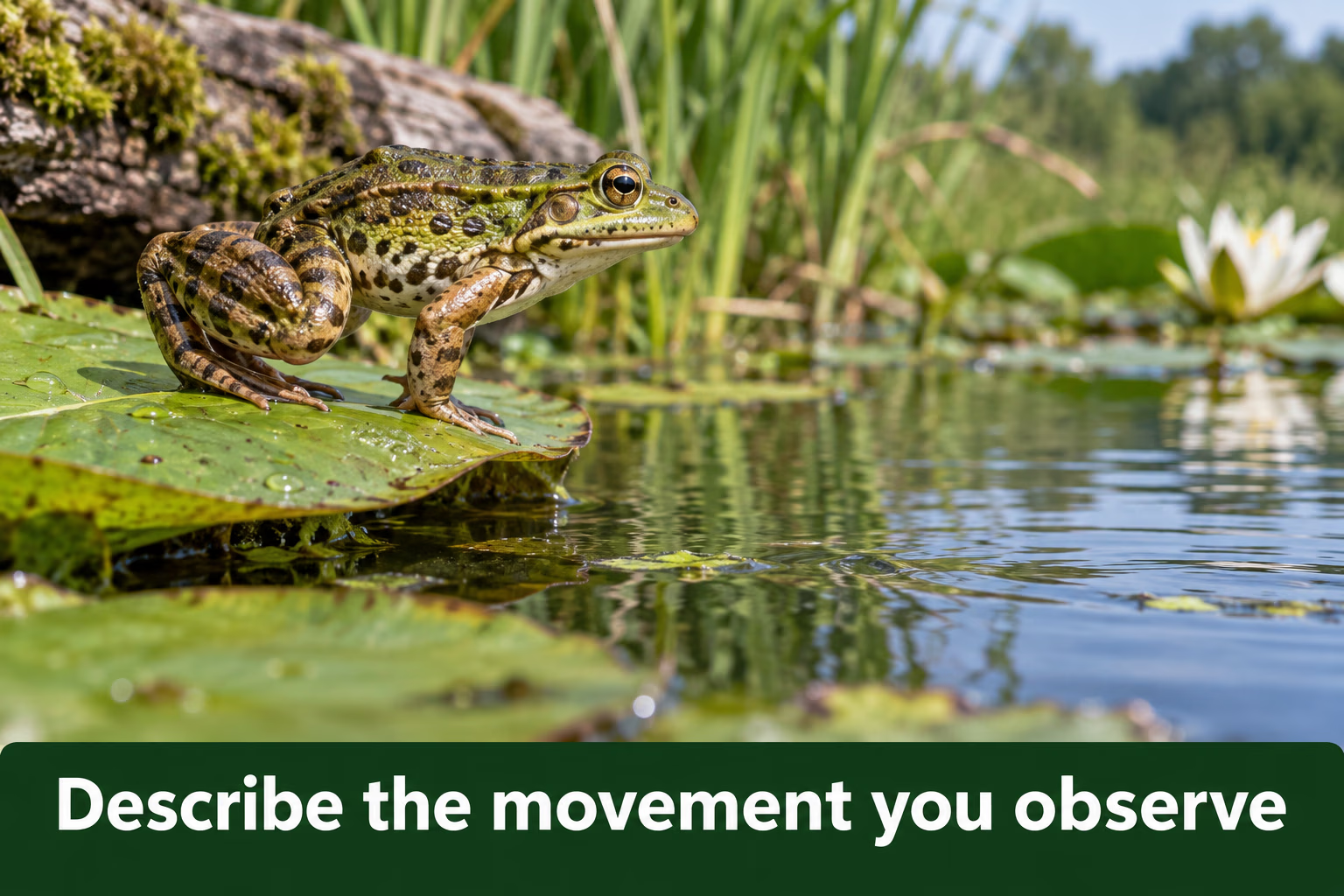
What adjectives describe frog movement and sound?
Choose an action word from what the frog is doing and a sound adjective from what you hear. A frog can be motionless in one moment and leaping in the next; “still,” “crouched,” and “leaping” describe states or actions, not permanent personality traits.
For movement, hopping and leaping suggest movement by jumps; swimming identifies movement through water; climbing suits a frog moving up plants or another surface. Tree frogs may have toe pads that help them cling to vegetation, while aquatic species can have extensive webbing. Avoid writing “all frogs climb trees” or “all frogs swim well,” because limb and toe traits vary by species and habitat.
For calls, words such as trilling, raspy, peeping, booming, and repetitive describe different qualities. Name the sound you hear rather than saying every frog “croaks”: calls vary from short peeps to longer pulses and other species-specific sounds. If no call is present in the scene, do not assign one just because the animal is a frog.
Is “slimy” the best adjective for a frog?
“Slimy” can express a character’s reaction, but “moist,” “smooth,” “bumpy,” or “glossy” is often more precise for a factual description. Many frogs have moist skin, but skin appearance and texture vary, and a photograph alone cannot establish how a frog would feel.
For a science report, describe the visible surface: “The frog’s green skin looked moist and smooth.” For a story, “slimy” may deliberately make the encounter feel unpleasant, but it conveys the observer’s impression. Do not handle a wild frog to test an adjective; amphibian skin is delicate and handling can harm the animal.
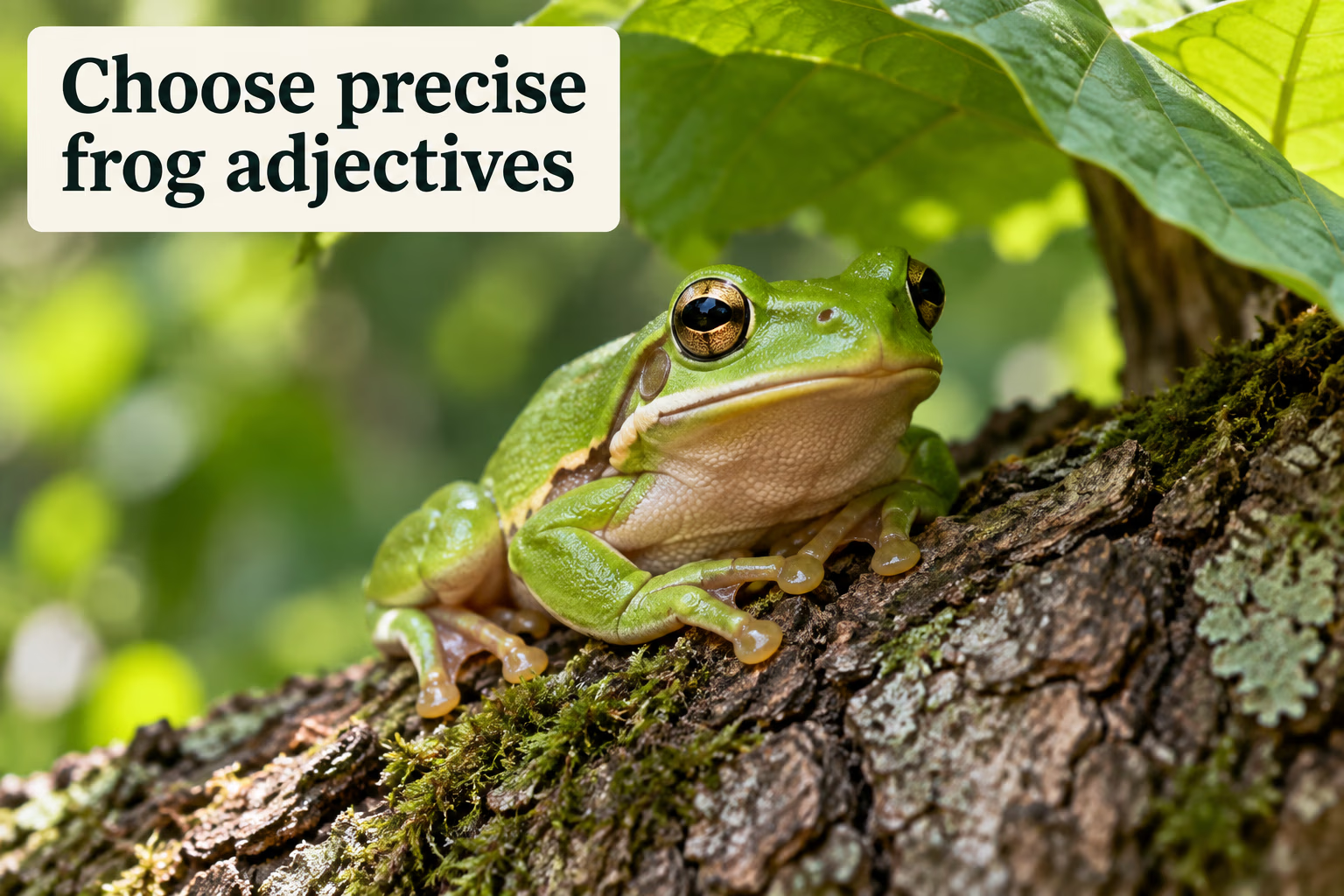
How do you use frog adjectives in a sentence?
Put the adjective close to the noun it describes, then make the example reveal a specific detail. “The small frog” is grammatically correct but generic; “The small, copper-spotted frog clung to a reed” gives size, pattern, and action in one clear image.
- For a school report: “The green tree frog has broad toe pads and a pale underside.” Use the species name when you know it.
- For a nature journal: “A mottled brown frog stayed motionless beside the wet stones.” This records visible color and behavior without guessing at motive.
- For a story: “The wary frog crouched beneath a curled leaf.” “Wary” adds a fictional point of view; it is not an objective measurement.
- For a sound description: “A low, repetitive call echoed from the pond after sunset.” This describes the call and setting without claiming every frog is nocturnal.
When you use multiple adjectives, order them naturally and avoid stacking near-synonyms. “A tiny, green, speckled frog” works because the words add size, color, and pattern. “A tiny, little, small frog” repeats the same idea and makes the sentence weaker.
Frequently asked questions about adjectives for frogs
What is the adjective form of frog?
Frog-like is a clear compound adjective meaning resembling a frog. Froggy is an informal alternative often used for a playful look, sound, or character; it is less suitable for formal scientific writing.
What are positive adjectives for a frog?
For a favorable or affectionate tone, try charming, bright-eyed, colorful, agile, or graceful. These words include a point of view, so use them in creative writing or opinion rather than presenting them as scientific categories.
What adjectives describe a frog’s skin?
Depending on the visible surface, use moist, smooth, bumpy, granular, or glossy. Avoid assuming that every frog is slimy or has the same texture; describe the individual animal or identified species.
Can “amphibious” describe a frog?
Yes, “amphibious” can describe an animal associated with life in water and on land, and frogs are amphibians. For a precise sentence, name the context—such as a frog’s aquatic tadpole stage or a terrestrial adult—because species differ in how they use water and land.


