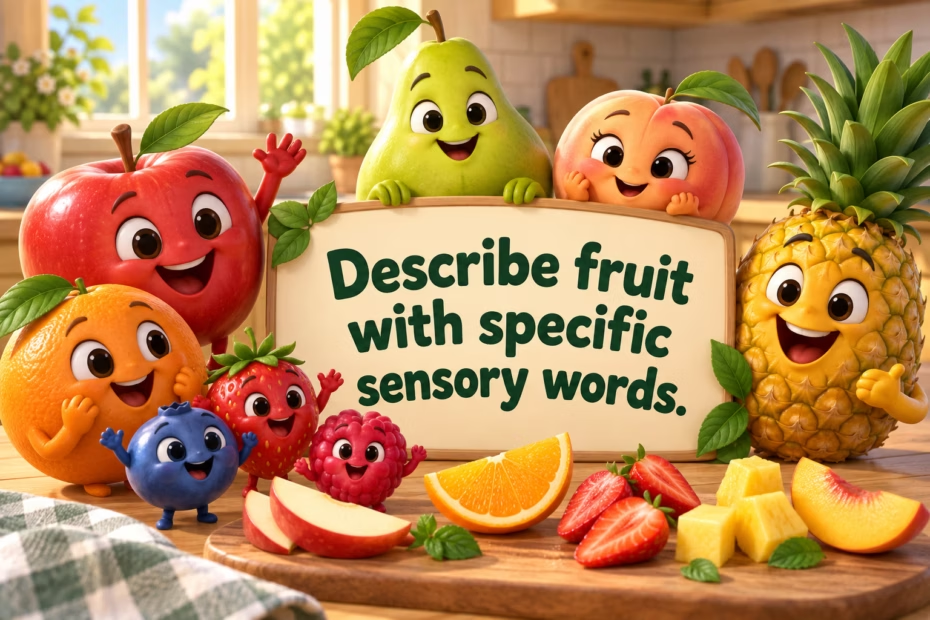
Fruit adjectives make a description clearer when they identify a feature you can see, smell, taste, or feel. Instead of calling every piece of fruit “delicious,” name what stands out: a glossy red apple, a fragrant orange, a tart lemon, or a crisp pear. The best word depends on the particular fruit and the detail you want the reader to imagine.

How do you describe fruit precisely?
Start with the fruit itself, then add one or two details that fit. A phrase such as “a fragrant, golden peach with tender flesh” gives readers more information than a stack of general compliments. If you are writing about a specific fruit, let its condition and your own observation guide the adjective; color, aroma, flavor, and texture do not always point to the same conclusion.
| Feature | Possible adjectives | Example |
|---|---|---|
| Appearance | golden, glossy, speckled, deep-red, pale-green | “The speckled pear has a pale-green skin.” |
| Aroma | fragrant, floral, citrusy, mild, earthy | “A fragrant orange releases a bright citrus scent when peeled.” |
| Taste | sweet, tart, tangy, mellow, mildly bitter | “The tart berries balance the sweetness of the yogurt.” |
| Texture | crisp, crunchy, juicy, tender, fibrous, mealy | “The crisp apple snaps cleanly when bitten.” |
| Condition | ripe, unripe, firm, soft, overripe, bruised | “The firm avocado needs more time before it is ready to eat.” |
These are examples, not fixed properties of every variety. A fruit’s cultivar, growing conditions, maturity, ripening, and storage can affect how it looks or feels. When accuracy matters, describe what is present rather than assuming that a familiar color or shape proves how it tastes.
What is the difference between sweet, sour, and tart?
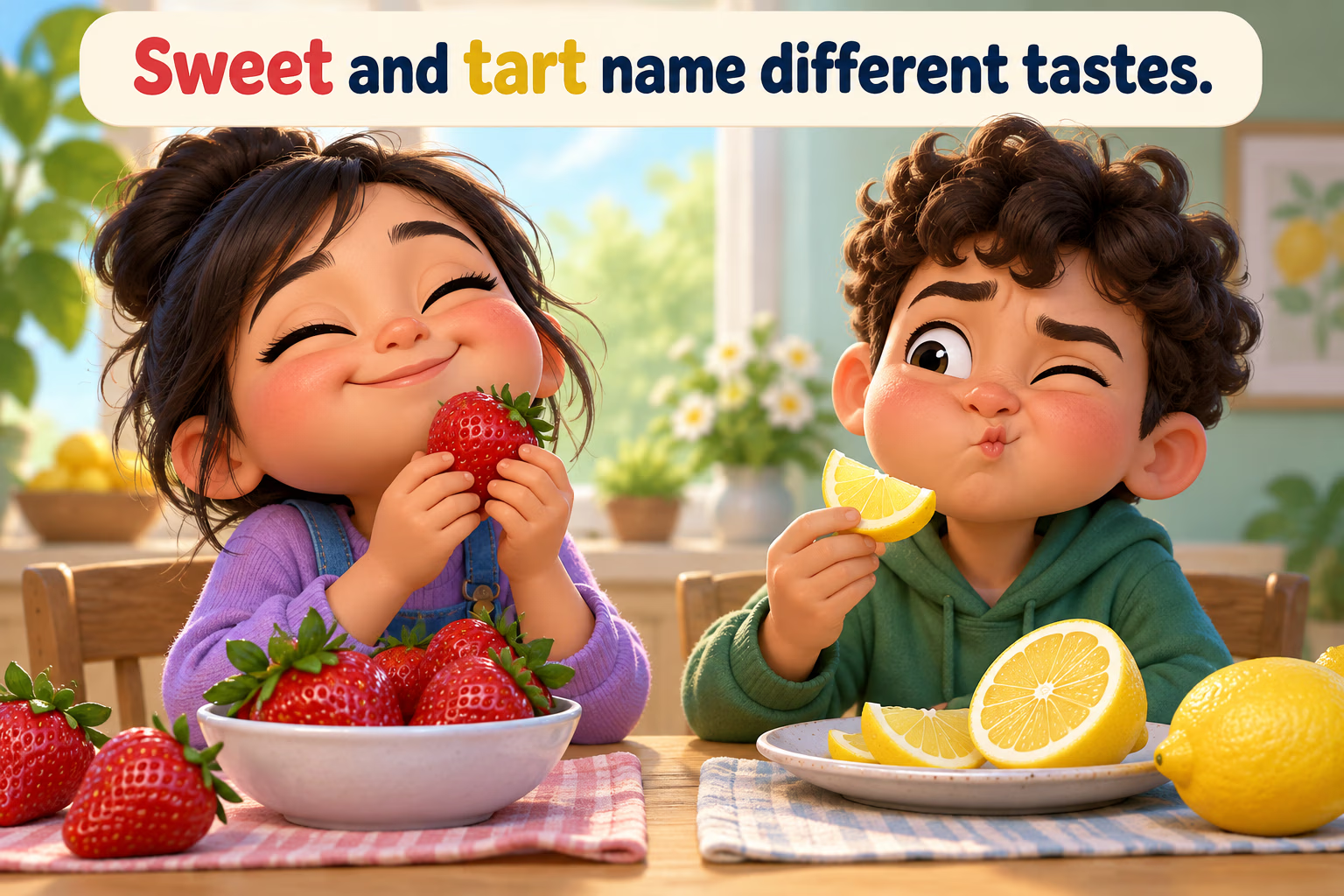
Sweet describes a sugary taste. Sour and tart both refer to a sharp acidic taste, though tart often sounds more appetizing or balanced in food writing. Tangy suggests a lively, distinctive sharpness, while mild or mellow describes less intense flavor. These words express taste; they do not by themselves tell you whether a fruit is ripe or good quality.
Likewise, bitter identifies a taste, not a complete judgment of a fruit. Pair a taste adjective with the fruit or a comparison when helpful: “the grapefruit tastes pleasantly bitter beside the sweeter orange.” This keeps a subjective impression grounded in the example.
Which adjectives describe fruit texture?
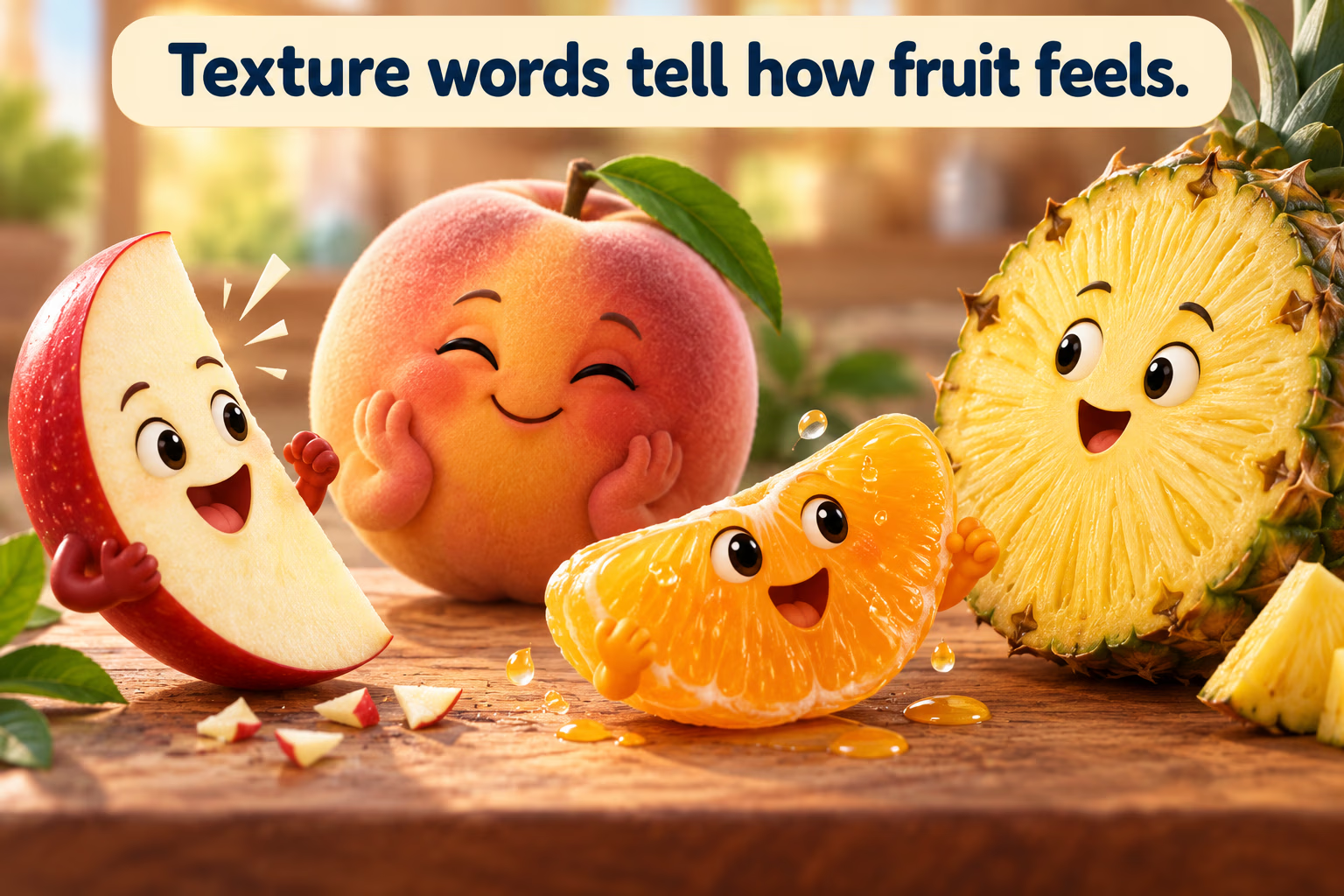
Texture words help readers imagine how a fruit feels when handled or eaten. Crisp and crunchy suggest a firm break; juicy emphasizes liquid released as you bite; tender suggests that the flesh gives easily; and fibrous points to noticeable strands. Mealy describes a dry, grainy texture and is usually a criticism. Different fruits and varieties naturally have different textures, and ripening can change firmness, as the University of Maryland Extension explains.
Are ripe and mature the same thing?
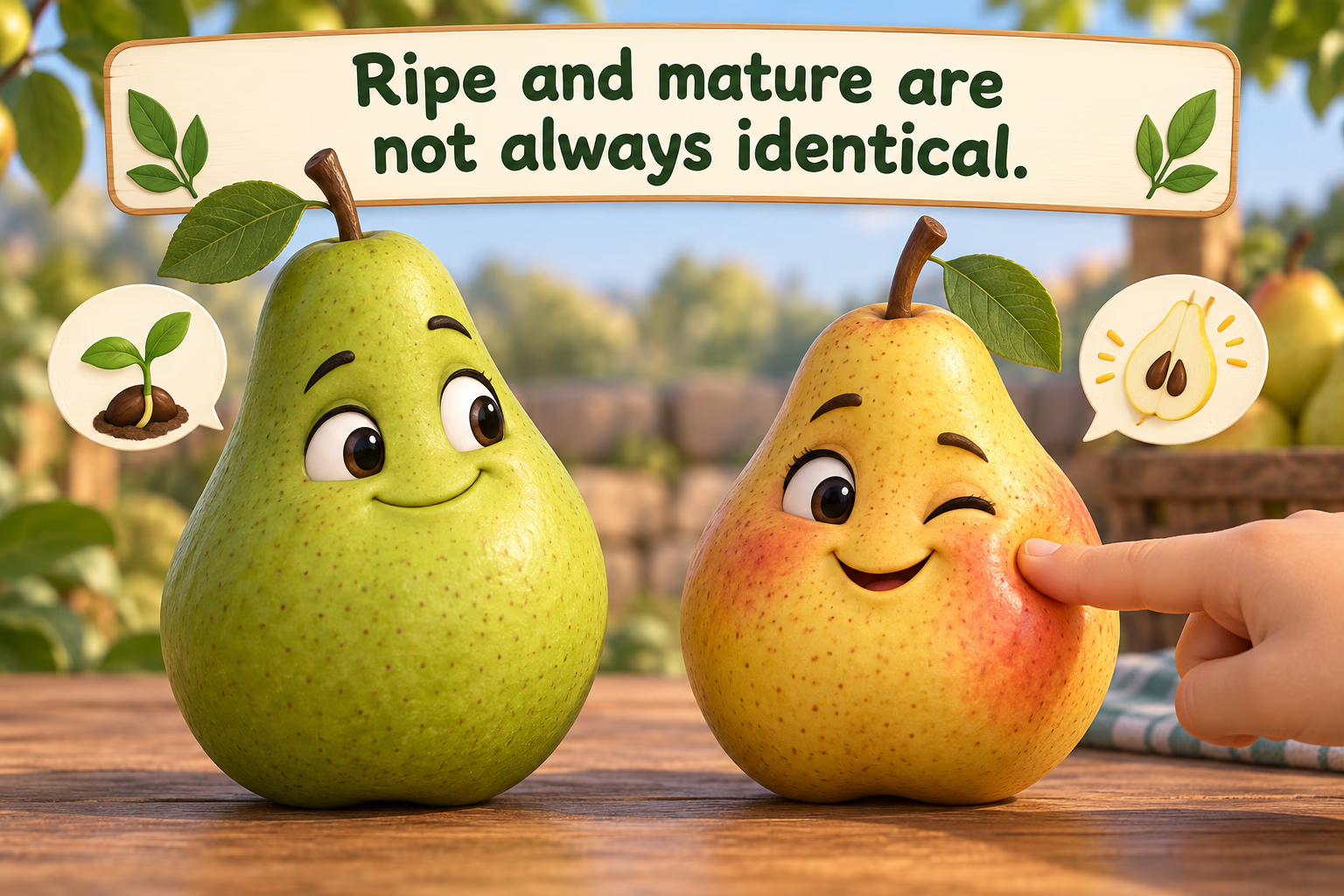
They are related, but they are not always interchangeable. In USDA produce-inspection terminology, mature concerns whether development is complete, while ripe commonly means ready or fit for use. A fruit can be developed without yet being ready to eat. The exact indicators differ by fruit, so color alone is not a dependable universal test.
For everyday descriptions, use ripe when you mean ready to eat, unripe when the fruit is not yet there, and overripe when it has become excessively soft or past its preferred eating stage. Avoid treating these words as safety advice: a description of softness or flavor does not establish whether food is safe.
Is fruit synonymous with produce, and does it have an antonym?
Fruit is ordinarily a noun; it can modify another noun, as in “fruit salad,” but that does not make it an adjective in the phrase. Produce can include fruits and vegetables in grocery or market usage, so it is broader rather than an exact synonym in every context. Vegetable is not an antonym of fruit; the terms group foods in different ways, and the distinction can depend on whether the context is culinary or botanical. Iowa State Extension explains this difference using tomatoes as an example. For adjective practice, it is more useful to contrast particular qualities, such as ripe and unripe, or fresh and spoiled, when those conditions actually apply.
Some descriptions are positive or negative opinions rather than opposites. Delicious, tasty, and mouthwatering express approval, while bland, overripe, or bruised identify a taste or condition. These words do not make every fruit universally appealing or undesirable. State the specific feature and, if useful, make clear that a taste judgment is your impression.
Note on the preserved original article below: It is included unchanged for reference. Its “synonyms for fruit” list contains related nouns such as crop, harvest, and delicacy, not interchangeable synonyms; its “antonyms” list gives conditions or qualities rather than opposites of the noun fruit. Treat its descriptive sentences as illustrative, subjective examples, not claims about every fruit or cultivar. The source’s first-person “expert blogger with years of experience” claim is not verified here. In particular, the preserved sentence calling spoiled fruit “no longer safe to eat” is not a food-safety assessment supported by this article; do not use an adjective example to judge whether food is safe.
When it comes to describing fruit, the right adjectives can make all the difference. From the vibrant hues of a ripe strawberry to the refreshing taste of a juicy watermelon, adjectives help paint a vivid picture of the sensory experience that awaits. In this article, I’ll be sharing a variety of descriptive words to enhance your fruit descriptions, along with examples to illustrate their usage. Whether you’re a food blogger, a student working on a descriptive writing assignment, or simply someone who appreciates the beauty of nature’s bounty, this guide will help you find the perfect words to capture the essence of any fruit.
From tart and tangy to sweet and succulent, the world of fruit is bursting with flavors and textures just waiting to be explored. By using adjectives, we can delve deeper into the nuances of each fruit, uncovering the subtle differences that set them apart. Whether you’re trying to convey the mouthwatering juiciness of a ripe peach or the zesty citrus notes of a lemon, the right adjectives can elevate your descriptions and transport your readers to a world of sensory delight. So, let’s dive in and discover the colorful array of adjectives that will bring your fruit descriptions to life.
How to Describe fruit? – Different Scenarios

When it comes to describing fruit, there are so many words that can help capture their unique qualities and characteristics. Whether you’re teaching young kids or just want to add some flair to your descriptions, here are different scenarios where descriptive adjectives can come in handy:
- Colorful and Vibrant: One way to describe fruit is by focusing on its vivid colors. Here are some examples:
Describing the color of the fruit helps create a visual image and adds depth to your description.
- Flavor and Taste: Another important aspect of fruit is its flavor. Describing the taste can enhance the sensory experience. Consider these adjectives:
By using words that describe taste, you can paint a picture of the delicious flavors that fruits have to offer.
- Texture and Feel: The texture of fruit can vary greatly, and using adjectives can help convey this aspect. These examples can help:
Words that describe texture bring a tactile element to your description, allowing readers to imagine the feel of the fruit.
- Smell: The aroma of fruit can also play a role in its description. Here are a few words to describe the smell of fruit:
Including words that evoke scent can help create a more immersive description.
Describing Words for fruit in English

When it comes to describing fruit, there is a wide range of adjectives to choose from. These descriptive words can enhance your descriptions and make them more engaging and appealing. Let’s explore some of the adjectives that can be used to describe the color, flavor, texture, and smell of different types of fruit.
Color
- Vibrant: Juicy oranges are so vibrant in color, it’s hard to resist them!
- Golden: The golden hue of ripe pineapples is a delight to the eyes.
- Crimson: Strawberries have a beautiful crimson color that makes them irresistible.
Flavor
- Sweet: Nothing beats the sweet taste of a ripe mango on a hot summer day.
- Tangy: Lemons have a tangy flavor that adds a zing to any dish.
- Juicy: Watermelons are so juicy, you can’t help but take a big bite.
Texture
- Crunchy: Apples have a crunchy texture that gives a satisfying bite.
- Silky: The silky smoothness of a ripe banana is a pleasure to savor.
- Firm: Some fruits, like peaches, have a firm texture with a slight give when you bite into them.
- Fragrant: The fragrant aroma of ripe strawberries fills the room.
- Citrusy: Oranges have a fresh, citrusy smell that is invigorating.
- Aromatic: The aromatic fragrance of a ripe pineapple is hard to resist.
Remember, these adjectives are just a starting point. Feel free to explore and experiment with different words to create vivid and captivating descriptions of fruit. The more colorful and descriptive your language, the more engaging and enjoyable your descriptions will be.
| – | Color | Flavor | Texture | Smell |
|---|---|---|---|---|
| Adjectives | Vibrant, Golden, Crimson | Sweet, Tangy, Juicy | Crunchy, Silky, Firm | Fragrant, Citrusy, Aromatic |
Adjectives for fruit
As an expert blogger with years of experience writing high-quality articles, I understand the importance of using descriptive adjectives to bring fruit descriptions to life. In this section, I will provide a list of positive and negative adjectives for fruit, along with example sentences, to help you create engaging and accurate descriptions.

Positive Adjectives for fruit with 12 Example Sentences
When it comes to describing fruit, positive adjectives can help evoke a sense of freshness, sweetness, and deliciousness. Here are 12 example sentences showcasing positive adjectives for fruit:
| Adjective | Example Sentence |
|---|---|
| Juicy | The watermelon is juicy and refreshing. |
| Ripe | The banana is perfectly ripe, with just the right amount of sweetness. |
| Sweet | The strawberries are sweet and bursting with flavor. |
| Tasty | The mango is incredibly tasty, with a hint of tropical flavor. |
| Fresh | The apple is crisp and fresh, just picked from the orchard. |
| Luscious | The peach is luscious and juicy, with a velvety skin. |
| Succulent | The grapes are succulent, with a burst of flavor in every bite. |
| Delicious | The pineapple is deliciously tangy and sweet. |
| Fragrant | The orange is fragrant, filling the room with its citrusy aroma. |
| Mouthwatering | The cherries are mouthwatering, with their plump and juicy texture. |
| Exquisite | The pear is exquisite, with its delicate flavor and smooth texture. |
| Scrumptious | The blueberries are scrumptious, with their burst of sweetness. |
Negative Adjectives for fruit with 5 example sentences
While positive adjectives highlight the appealing qualities of fruit, negative adjectives can be used to describe less desirable characteristics. Here are 5 example sentences showcasing negative adjectives for fruit:
| Adjective | Example Sentence |
|---|---|
| Sour | The lemon is sour, making it perfect for adding a tangy kick to dishes. |
| Bitter | The grapefruit is bitter, but some people enjoy its unique taste. |
| Tart | The green apple is tart, with a sharp, acidic flavor. |
| Overripe | The banana is overripe, with brown spots on the skin and a mushy texture. |
| Watery | The melon is watery and lacks flavor, disappointing in taste. |
By using a combination of positive and negative adjectives, you can create vivid and engaging descriptions of different fruits. Experiment with these adjectives and explore the diverse vocabulary available to capture the essence of each fruit in your descriptions.
Synonyms and Antonyms with Example Sentences

Synonyms for Fruit
When it comes to describing fruit, using a variety of synonyms can add depth and richness to your descriptions. Here are some synonyms for fruit along with example sentences to help you incorporate them into your writing:
| Synonym | Example Sentence |
|---|---|
| Fruit | I enjoy eating different types of fruit every day. |
| Produce | The farmers market offers a wide selection of fresh produce. |
| Harvest | Fall is the season for enjoying the bountiful harvest of apples and pears. |
| Crop | The orchard is filled with ripe crops waiting to be picked. |
| Delicacy | Pineapple is considered a tropical delicacy due to its sweet and tangy flavor. |
By using these synonyms, you can add variety and elegance to your descriptions of fruit, capturing the essence of each fruit in your writing.
Antonyms for Fruit
While it’s important to focus on the positive aspects of fruit, sometimes it can be helpful to also describe the less desirable characteristics. Here are some antonyms for fruit that can be used to provide a balanced perspective:
| Antonym | Example Sentence |
|---|---|
| Rotten | Be careful not to buy rotten fruit as it can be a disappointment. |
| Unripe | The unripe banana had a slightly bitter taste. |
| Spoiled | We had to throw away the spoiled fruit as it was no longer safe to eat. |
| Overripe | The overripe strawberries were too mushy to enjoy. |
| Blemished | Despite its blemishes, the apple still had a delicious flavor. |
Exploring these antonyms can help to round out your descriptions and provide a more nuanced perspective on fruit.
Remember, by using a variety of synonyms and antonyms, you can create engaging and accurate descriptions of fruit that capture their unique qualities.
Conclusion
Descriptive adjectives are essential when it comes to describing fruit. In this article, I have provided a comprehensive list of synonyms and antonyms for fruit, along with example sentences, to help you create more vivid and varied descriptions. By incorporating these descriptive words into your writing, you can add depth and richness to your descriptions of different fruits.
The synonyms I have shared allow you to capture the unique qualities of each fruit, highlighting their flavors, textures, and appearances. On the other hand, the antonyms provide a balanced perspective by describing the less desirable characteristics of fruit, such as bitterness or overripeness.
I encourage you to explore these adjectives and experiment with incorporating them into your writing. By doing so, you can elevate your descriptions of fruit and engage your readers with more nuanced and captivating language.
Remember, the right choice of adjectives can make all the difference in creating compelling and memorable descriptions of fruit. So go ahead, explore the world of adjectives and let your words paint a vibrant picture of the fruits you are describing.
Sources and further reading
See the USDA Agricultural Marketing Service General Market Manual for commodity-specific maturity and ripeness terminology, University of Maryland Extension’s Fruit Texture and the Science Behind It for texture and ripening variation, and USDA’s fruit grades and standards for uniform quality and condition vocabulary. Cambridge Dictionary’s produce entry and Iowa State Extension’s explanation of culinary and botanical fruit/vegetable categories support the category distinction.


