
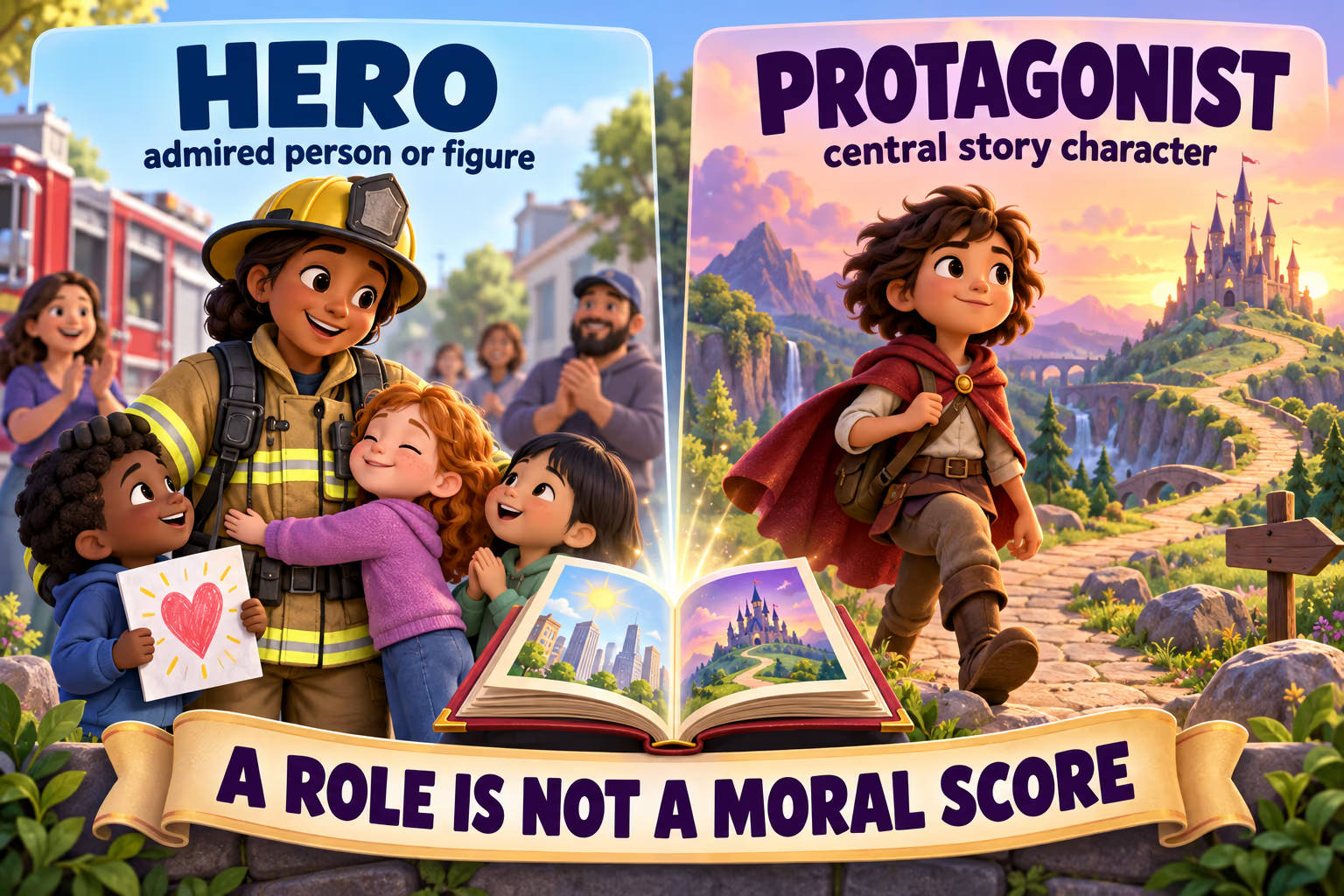
Adjectives for a hero name a specific quality, such as brave, compassionate, resourceful, or steadfast. First decide whether “hero” means a real person admired for an action or skill, or a central figure in a story. A protagonist is a narrative role, so a main character need not be morally heroic; the right adjective depends on what they do.
At a glance: choose the sense first
Admired person: describe the action or quality people value. Admired skill: use words such as gifted, inventive, or skillful. Story role: use protagonist for the central character, whether admirable, flawed, or villainous. A person or character does not need every heroic trait on a list.
Three meanings behind the word “hero”
Dictionary entries distinguish someone admired for brave or good actions, a person admired for a particular quality or skill, and a story’s central character. Oxford Learner’s Dictionaries lays out these separate senses; Cambridge Dictionary likewise distinguishes admiration from the story role. These meanings overlap, but they do not make every “hero” a flawless person or every main character a moral example.
A person admired for an action
For a real person, hero often expresses admiration for brave, generous, or consequential action. Choose an adjective that identifies what earned that respect rather than treating “hero” as proof that someone is perfect. A quiet act of care may be compassionate; a risky rescue may be courageous; consistent support may be dependable.
Example: “The neighbors called the bus driver courageous after she guided passengers away from danger.” The sentence gives the reason for the praise rather than implying courage describes every part of her character.
A person admired for a skill or quality
Someone can be a hero to another person because of a particular ability, influence, or example—not because of a dramatic rescue. For this sense, gifted, inventive, skillful, insightful, or inspiring may be more exact than “brave.” If admiration is personal, explain the connection.
Example: “My aunt is my cooking hero: her patient teaching made me confident in the kitchen.” Here hero signals a valued model, while patient identifies the quality being admired. For related leadership vocabulary, see adjectives for leadership.
A hero in a story versus its protagonist
A protagonist is a central character in a story; that is a role in the plot, not a certificate of goodness. Oxford and Cambridge define the story sense of hero around the main character, often with traditional wording that foregrounds a male character. In actual writing, hero is also widely used for characters of any gender. Heroine remains a valid word when a person or writer prefers it; protagonist is a useful gender-neutral term for the role.
A protagonist may be selfish, mistaken, or morally ambiguous; a story may also have a brave supporting character who is not its protagonist. A reluctant or flawed hero can still act courageously in a particular moment. Describe the character’s decisions and consequences instead of assuming that narrative centrality equals virtue.
Example: “The novel’s protagonist begins as a cautious rule-breaker; a medic who risks a rescue becomes the story’s most heroic figure.” The central role and the reader’s ethical judgment belong to different parts of the description.
Adjectives grouped by the quality you want to express
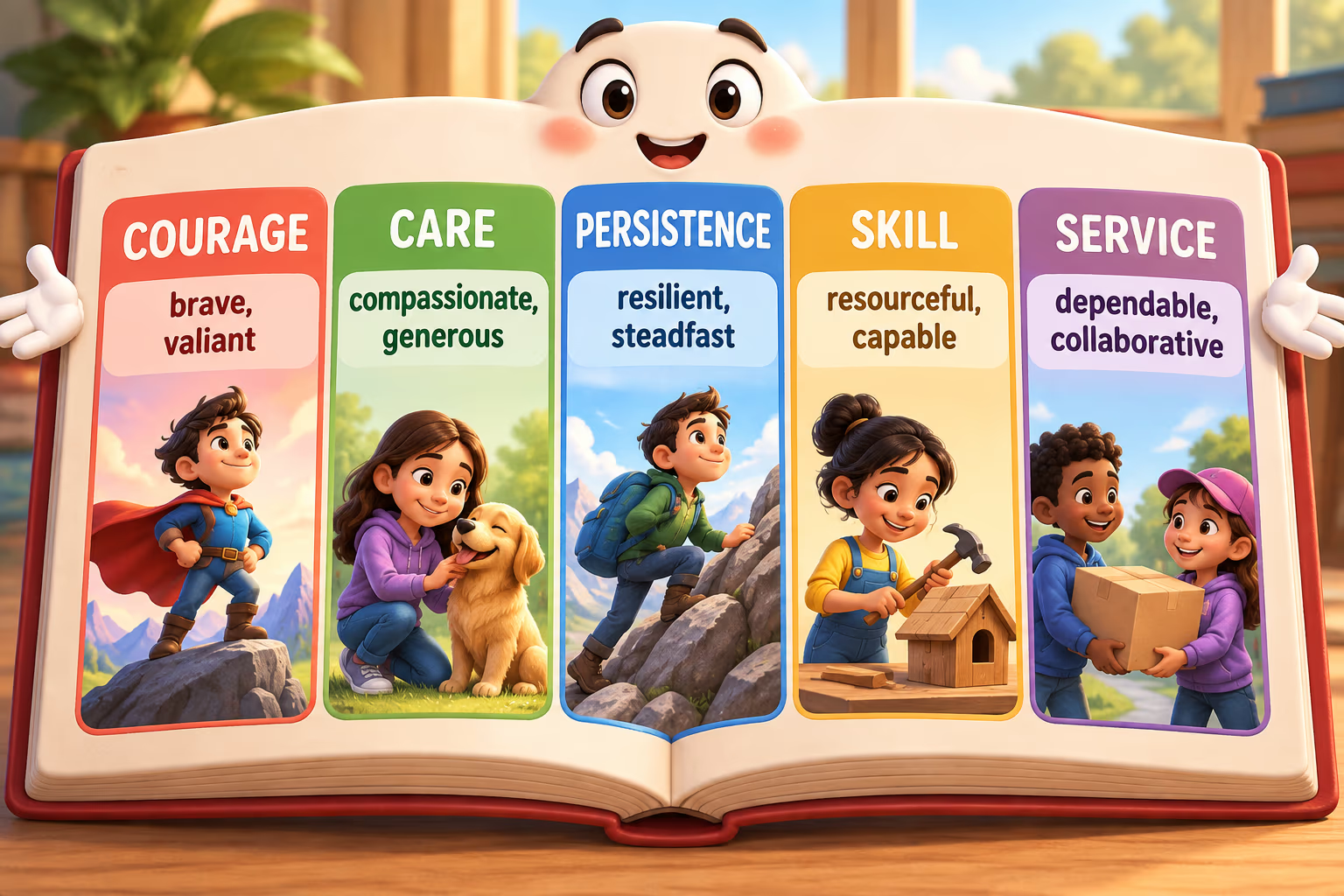
These words describe different strengths, not a single ranking. Select one or two that match the action, skill, or character you have in mind.
Courage and action
Brave is direct and familiar; courageous emphasizes facing fear or risk; valiant sounds more formal or literary; and fearless is emphatic, sometimes suggesting an absence of fear that may overstate what happened. Bold can mean confident or daring, but boldness is not always wise or admirable.
Example: “The volunteer made a brave choice to alert the team, then followed the safety plan.” This wording praises a specific act without implying that recklessness is a requirement for heroism.
Compassion and integrity
Compassionate and empathetic emphasize attention to other people’s needs or feelings. Principled suggests acting according to values; honorable carries a strong moral tone; and selfless praises putting others first, though it can flatten a person into one idealized trait. Use the word that fits the choice being described.
Example: “Her compassionate response began by listening to what the family said they needed.” The action supplies context for the adjective.
Persistence through difficulty
Determined signals a firm intention; steadfast suggests remaining loyal to a purpose; tenacious emphasizes persistent effort; and resilient describes adapting or recovering after hardship. These words are related but not identical. Resilience does not mean a person is unaffected by difficulty or must endure without help.
Example: “The organizer stayed determined through several delays and changed the plan when the first approach failed.” That sentence shows persistence and adaptation rather than using “resilient” as a demand to bounce back quickly.
Practical skill and judgment
Resourceful means able to find workable solutions; capable is a broad statement of ability; perceptive highlights noticing important details; and quick-thinking describes responding effectively in the moment. Use expert or skilled when a specific ability—not moral heroism—is what you admire.
Example: “The resourceful stage manager found a safe substitute when a prop failed minutes before the performance.” The adjective names a practical skill without turning routine competence into a superhuman claim.
Leadership, service, and reliability
Dependable emphasizes follow-through; decisive describes making a choice; generous highlights giving time or resources; and collaborative credits working with others. Inspirational describes an effect on an audience. These qualities can matter as much as dramatic bravery, and none is required in every person called a hero.
Example: “The mutual-aid team was dependable because it kept delivering supplies and coordinated with residents about what was needed.” This makes the praise concrete and recognizes collective effort.
Narrative tone and scale
Noble gives praise a moral or elevated tone; legendary suggests a reputation that has grown large; and larger-than-life means presented as unusually vivid or impressive. These are expressive choices, not neutral evidence. Reluctant, unlikely, and flawed can make a fictional hero more specific by showing tension, limits, or change.
Example: “The reluctant hero accepts the task only after realizing the village has no other help.” The adjective describes the character’s attitude and leaves the reader to judge the decision.
Use “hero” and “heroic” in clear sentences
Hero is usually a noun; heroic is the related adjective. Compare “They thanked the hero” with “They praised a heroic decision.” For accurate writing, identify whether you are describing a person, an action, a valued skill, or a character’s plot role. Avoid presenting an opinion as universal: “She is my hero for her mentorship” is clearer than “Everyone knows she is a hero.”
In North American English, hero can also mean a submarine sandwich. In a phrase such as “adjectives for a hero,” the intended sense is normally a person or character; surrounding context resolves the occasional ambiguity.
Using the original adjective lists below
The original lists and examples are preserved below. Treat them as a vocabulary resource, not a universal test of heroism. Some words praise an action, others a skill or story tone, and a negative adjective may describe a flawed character without denying that the character is the protagonist. Keep the noun and context in view when choosing a word.
When it comes to describing heroes, words have the power to paint a vivid picture of their bravery, strength, and selflessness. In this article, I’ll be exploring a range of adjectives that perfectly capture the essence of a hero. From courageous and noble to resilient and compassionate, these words will help you articulate the awe-inspiring qualities that define a true hero. So, whether you’re writing a tribute, crafting a story, or simply looking to appreciate the heroes in your life, this list of adjectives will serve as your ultimate guide to capturing their extraordinary nature.
Heroes come in all shapes and sizes, each with their own unique set of qualities that make them exceptional. In this article, I’ll be sharing a collection of adjectives that will help you bring these extraordinary individuals to life through your words. From valiant and selfless to determined and honorable, these adjectives will allow you to paint a vivid picture of the heroism that lies within. So, whether you’re writing a heartfelt tribute or seeking inspiration for your own heroic journey, this comprehensive list of adjectives will enable you to convey the true essence of a hero with precision and eloquence.
How to Describe hero? – Different Scenarios
When it comes to describing a hero, the right choice of adjectives can capture their extraordinary qualities. Whether you are writing a tribute, crafting a story, or simply appreciating the heroes around you, here are some adjectives that can help you articulate their heroic nature:
- Courageous: Heroes are known for their courage, the ability to face challenges and overcome adversity. They display bravery in the face of danger, inspiring those around them.
- Noble: Heroes possess a sense of honor and dignity. They embody virtues such as honesty, integrity, and righteousness, setting an example for others to follow.
- Resilient: Heroes demonstrate resilience, the ability to bounce back from setbacks and persevere through difficult times. They inspire hope and show us that we can overcome any obstacle.
- Compassionate: Heroes exhibit compassion, showing kindness and empathy towards others. They understand the importance of helping those in need and make a positive impact on the lives of others.
- Valiant: Heroes are valiant, displaying bravery and determination in the face of danger. They are willing to risk their own safety for the greater good, inspiring others to do the same.
- Selfless: Heroes are selfless individuals who put the needs of others before their own. They prioritize the well-being of others and make sacrifices to help those in need.
- Determined: Heroes are driven by a strong sense of purpose and determination. They persevere in their mission, refusing to give up until they have achieved their goals.
- Honorable: Heroes exemplify honor and integrity. They hold themselves to high ethical standards, always doing what is right, even when it is not easy.
These adjectives can be used in a variety of scenarios to describe heroes. Whether you are writing a children’s book, teaching a lesson on heroes, or even giving a speech, incorporating these words will help paint a vivid picture of the heroic qualities that define these extraordinary individuals.
Remember, heroes come in all shapes and sizes, each with their own unique qualities. By using these adjectives, you can capture the awe-inspiring nature of heroes and inspire others to recognize and appreciate the heroes in their own lives.
Describing Words for hero in English
When it comes to describing heroes, it’s important to find the right words that truly capture their extraordinary qualities. In this section, I’ll share with you some powerful adjectives that can help convey the essence of a hero. Whether you’re a preschool teacher looking to introduce easy words to kids or just someone who wants to appreciate the heroes in your life, these adjectives will come in handy.
- Courageous: Heroes are known for their bravery and willingness to face challenges head-on. They inspire others with their courageous acts.
- Noble: Heroes possess a sense of dignity, honor, and morality. Their actions are guided by ethical principles and a desire to do what is right.
- Resilient: Heroes show incredible strength in the face of adversity. They don’t give up easily and bounce back from setbacks with determination.
- Compassionate: Heroes have a deep empathy and care for others. They show kindness and understanding, offering support to those in need.
- Valiant: Heroes exhibit bravery and determination in the face of danger. They fearlessly protect and defend others, embodying the true spirit of heroism.
- Selfless: Heroes are driven by a selfless desire to help others. They put the needs of others before their own and make sacrifices for the greater good.
- Determined: Heroes have a strong sense of purpose and unwavering determination. They set goals, work hard, and never give up until they achieve them.
- Honorable: Heroes have a strong moral compass and adhere to principles of honesty, integrity, and loyalty. They are respected for their integrity and honorable actions.
Now that you have a list of descriptive words for heroes, you can use them in various ways. For example, when writing a children’s book about heroes, you can use these adjectives to give life to your characters. If you’re teaching a lesson on heroes, you can use these words to inspire your students. When giving a speech or writing a tribute to a hero in your life, these adjectives will help you convey your admiration and appreciation.
Remember, heroes come in all forms and sizes. They can be everyday individuals or larger-than-life figures. Describing their qualities using these adjectives will enable you to express their profound impact on our lives and inspire others to recognize and appreciate the heroes around them.
Adjectives for hero
As an expert blogger with years of experience, I understand the importance of finding the right words to describe heroes. Adjectives play a crucial role in capturing the extraordinary qualities of these remarkable individuals. In this section, I will provide you with a list of powerful adjectives for heroes, along with example sentences to demonstrate their usage.
Positive Adjectives for Hero
When we think of heroes, we often associate them with positive qualities that inspire and motivate us. Here are some adjectives that perfectly capture the essence of a hero:
| Adjective | Definition | Example Sentence |
|---|---|---|
| Courageous | Showing bravery in the face of danger | The firefighter displayed great courage while entering the burning building. |
| Noble | Having high moral qualities and honorable intentions | She always puts others’ needs before her own, truly a noble hero. |
| Resilient | Able to withstand or recover quickly from difficult conditions | Despite facing numerous setbacks, he remains resilient and never gives up. |
| Compassionate | Showing empathy and care towards others | The nurse provided compassionate care to the patients in the hospital. |
| Valiant | Brave and determined in the face of adversity | The soldier fought with valiant determination to protect his country. |
| Selfless | Concerned more with the needs of others rather than oneself | They dedicated their lives to helping the less fortunate, demonstrating selfless heroism. |
| Determined | Having a firm resolve to achieve a goal | She overcame all obstacles through sheer determination and became a true hero. |
| Honorable | Having a strong sense of integrity and moral character | He always acts with honor and is widely regarded as a hero in the community. |
These positive adjectives beautifully capture the various qualities that define a hero. By incorporating them into our descriptions, we can truly express the profound impact heroes have on our lives.
Negative Adjectives for Hero
While heroes are often associated with positive qualities, it is important to acknowledge that even heroes are not perfect. Here are some negative adjectives that can be used to highlight certain flaws or challenges faced by heroes:
| Adjective | Definition | Example Sentence |
|---|---|---|
| Flawed | Having imperfections or weaknesses | Despite his flaws, he continues to be an inspiration to many as a hero. |
| Vulnerable | Susceptible to being harmed physically or emotionally | She may be strong, but even heroes have their moments of vulnerability. |
| Indecisive | Unable to make decisions easily or confidently | The superhero often struggles with being indecisive when faced with challenging situations. |
| Impulsive | Acting without thinking carefully beforehand | Sometimes, heroes act impulsively in an effort to protect others, even if it puts them in danger. |
| Overbearing | Excessively domineering or controlling | Despite having good intentions, the hero can sometimes come across as overbearing in their actions. |
Including these negative adjectives allows us to present a more well-rounded and realistic portrayal of heroes. It reminds us that heroes, like all of us, are human beings with their own set of imperfections.
By using these adjectives, we can create vivid and engaging descriptions of heroes. Whether we are writing children’s books, teaching lessons on heroes, or giving speeches, these words will help us express the profound impact heroes have on our lives. So, let’s celebrate the heroes in our own lives, recognize their extraordinary qualities, and aspire to be heroes ourselves.
Synonyms and Antonyms with Example Sentences
Synonyms for Hero
When it comes to describing a hero, there are several powerful synonyms that can capture their extraordinary qualities. These synonyms not only provide variety in language but also help to paint a fuller picture of what it means to be a hero. Here are some synonyms for hero, along with example sentences showcasing their usage:
| Synonym | Example Sentence |
|---|---|
| Brave | The firefighter showed incredible bravery while rescuing the child from the burning building. |
| Courageous | The soldier displayed courageousness by charging into battle without any hesitation. |
| Valiant | The knight’s valiant actions ensured the safety of the kingdom. |
| Noble | The queen’s noble deeds earned her the respect and admiration of her subjects. |
| Selfless | The volunteer’s selfless act of donating her kidney saved a stranger’s life. |
| Resilient | Despite facing numerous setbacks, the athlete remained resilient and eventually achieved success. |
| Determined | The scientist was determined to find a cure for the rare disease, and her perseverance paid off. |
| Compassionate | The doctor showed great compassion towards her patients, always going above and beyond to provide care. |
These synonyms not only convey strength and bravery but also highlight the important qualities of kindness, resilience, and determination that heroes possess. Using these words can help create a well-rounded portrayal of heroes in children’s books, lessons, or speeches.
Antonyms for Hero
While heroes are often portrayed as strong and courageous, it’s essential to remember that they are not perfect. Including antonyms for hero in your descriptions can add depth and realism to the characters. Here are some antonyms for hero along with example sentences:
| Antonym | Example Sentence |
|---|---|
| Flawed | The protagonist in the story is a flawed character who learns from their mistakes. |
| Vulnerable | Despite his hero status, the superhero has moments of vulnerability that make him relatable. |
| Indecisive | The leader’s indecisiveness during the crisis caused confusion among the team members. |
| Impulsive | The impulsive actions of the main character often lead to unforeseen consequences. |
| Overbearing | The antagonist in the story is portrayed as an overbearing character who abuses their power. |
Including these antonyms in your descriptions helps create well-rounded and realistic portrayals of heroes. It shows that even heroes have their flaws and vulnerabilities, making them relatable to children and teaching them valuable lessons about the complexities of character.
Using synonyms and antonyms for heroes not only adds variety and depth to descriptions but also helps create well-rounded and realistic portrayals. By incorporating a mix of these words in children’s books, lessons, or speeches, we can better express the profound impact heroes have on our lives and inspire young minds to aspire to heroism themselves.
Conclusion
Describing heroes is an art form that requires careful consideration of the words we choose. Throughout this article, we have explored the significance of selecting the right adjectives to capture the essence of these extraordinary individuals. By utilizing the powerful adjectives and synonyms provided, we can paint vivid portraits of heroes that resonate with readers.
It is important to remember that heroes are not flawless beings. They possess a unique blend of strengths and weaknesses that make them relatable and inspiring. Incorporating antonyms into our descriptions adds depth and realism to the portrayal of heroes, allowing us to create well-rounded and authentic characters.
Whether we are writing children’s books, crafting lessons, or delivering speeches, the words we use to describe heroes have the ability to evoke emotions and inspire others. By harnessing the power of these descriptive words, we can effectively convey the profound impact heroes have on our lives and ignite the spark of heroism in others.
Let us embrace the power of adjectives and synonyms to bring heroes to life on the page. With a thoughtful selection of words, we can celebrate the remarkable qualities of these individuals and inspire a new generation of heroes.
Frequently asked questions about hero adjectives
What are good adjectives to describe a hero?
Choose the quality that fits the action or skill: courageous for facing risk, compassionate for responding to others’ needs, resourceful for finding solutions, or steadfast for remaining committed. A specific example makes the adjective clearer than a long string of broad praise.
Is “hero” gender-neutral?
In current English, hero is commonly used for a person or character of any gender, and heroine remains an established option some people prefer. For the central role in a story, protagonist is precise and gender-neutral. Follow an individual’s chosen wording when writing about them.
Is a protagonist always a hero?
No. A protagonist is one of the story’s central characters; the word identifies narrative position, not virtue. The protagonist may act selfishly or cause harm, while another character may behave heroically. Use hero when you mean an admired figure or the story’s heroic character, and protagonist when you mean its central role.
What is the difference between “hero” and “heroic”?
Hero is usually a noun for an admired person or a story figure. Heroic is an adjective that describes an action, effort, or quality as brave or admirable. For example, “the hero acted heroically” uses the noun for the person and the adjective form for the action.
Does someone need every quality on a hero list?
No. Adjectives describe particular qualities in a particular context; they are not a checklist for judging people. Someone may be admired for one brave choice, a valued skill, or steady service without being fearless, selfless, or perfect in every part of life.


