
How to choose the right adjectives for a holiday
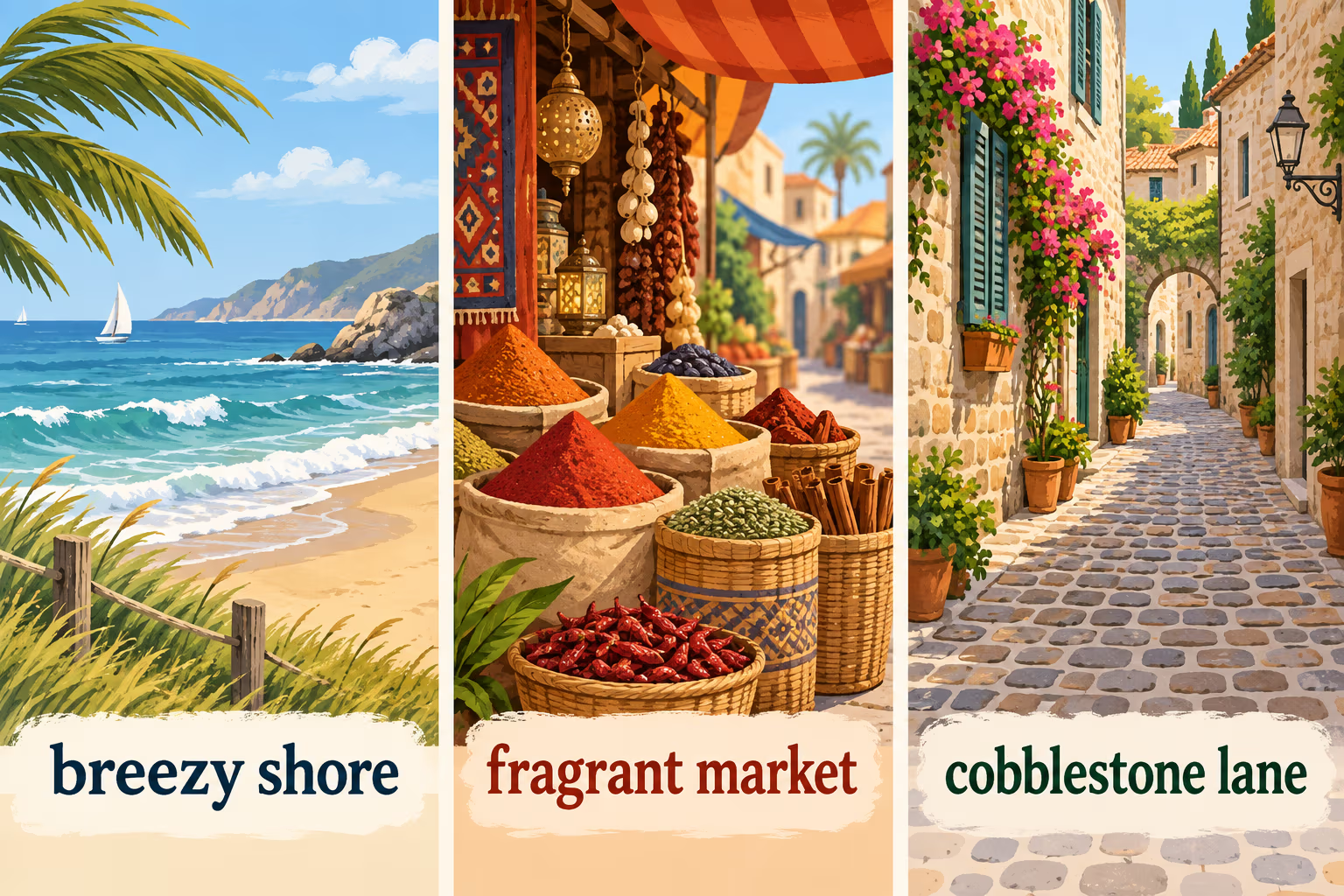
The best holiday adjectives tell readers what stood out: the setting, pace, activities, or your response to them. Instead of stacking general words such as nice and good, pair one precise adjective with a detail: “a breezy shore,” “a fragrant market,” or “a cobblestone lane.” This gives a reader something specific to picture.
Use the lists and examples below to describe a trip, write a travel journal, or explain how a vacation felt. The word holiday commonly means a leisure trip in British English, while American English usually uses vacation for that sense; in American English, holiday more often means a special day or season. Cambridge Dictionary’s holiday entry notes this regional distinction.

Holiday adjectives by mood and experience
Choose an adjective that matches the part of the experience you want to describe. A destination can be picturesque while the schedule is hectic; one word does not have to summarize the whole trip.
| What you want to describe | Useful adjectives | Example |
|---|---|---|
| Rest and quiet | tranquil, peaceful, restful, unhurried, restorative | “We spent an unhurried week beside the lake.” |
| Scenery and place | picturesque, dramatic, sun-drenched, coastal, mountainous | “A dramatic cliff path led to a quiet cove.” |
| Activity and excitement | adventurous, exhilarating, energetic, action-packed, challenging | “The challenging hike ended with a panoramic view.” |
| Culture and discovery | immersive, thought-provoking, enriching, historic, eye-opening | “A guided walk made the city’s historic quarter feel immersive.” |
| Company and connection | convivial, sociable, welcoming, family-friendly, intimate | “The welcoming hosts made our family stay feel easy.” |
| Comfort and service | comfortable, luxurious, convenient, well-organized, hospitable | “Convenient transport made the well-organized itinerary relaxing.” |
| A difficult or disappointing trip | hectic, exhausting, overcrowded, unpredictable, disappointing | “The overcrowded ferry made the final day stressful.” |
Several words are close in meaning but not interchangeable. Tranquil suggests a calm place or atmosphere; restful emphasizes that it helps you rest. Picturesque describes an attractive, often charming-looking place, whereas dramatic suggests a striking or powerful scene. Exhilarating describes an experience that makes you feel excited and happy; it suits a fast descent or a difficult summit more than a quiet afternoon. These distinctions follow the usage in Cambridge’s entry for tranquil, picturesque, and exhilarating.
Describe what you noticed, not just how you felt
Adjectives become more vivid when they connect to sensory evidence. Ask what you saw, heard, smelled, tasted, or felt: a misty harbor at dawn, fragrant spices in a market, crunchy snow underfoot, or a breezy terrace. Then add your reaction if it matters: “The cool, salt-scented evening air felt restorative after a hot day.” Purdue OWL’s guidance on descriptive writing similarly recommends choosing relevant, vivid words and drawing on sensory detail.
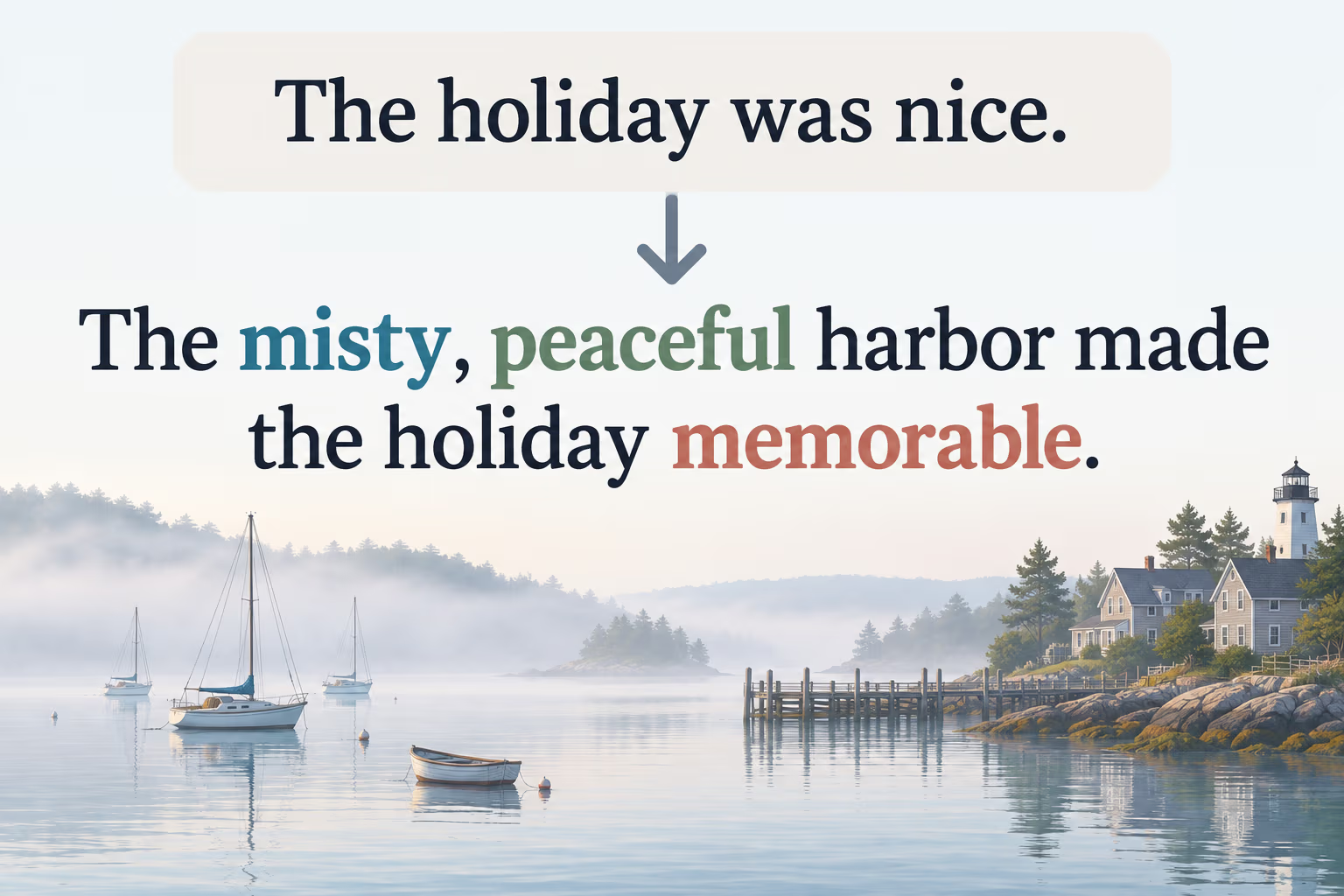
Try this simple pattern: adjective + specific noun + useful detail. For example, “a lively night market filled with music and lantern light” gives more information than “a fun place.” You can also describe a change: “The windy morning became a sunny afternoon.” One or two well-chosen adjectives usually create a clearer impression than a long chain of near-synonyms.
Use holiday adjectives naturally in a sentence
An adjective can come before a noun (“a memorable holiday”) or after a linking verb (“the holiday was memorable”). Keep the adjective close to the thing it describes so the meaning stays clear. Use a hyphen in many compound modifiers before a noun, such as family-friendly resort or well-planned itinerary; when the phrase comes after the noun, it is commonly open: “the resort is family friendly.” Follow the style guide you are writing for when its rules differ.
- For a travel review: “The small, spotless guesthouse was peaceful, and its helpful staff made our stay comfortable.”
- For a journal: “We took a winding coastal road to a secluded beach where the water looked glassy.”
- For a thank-you note: “Thank you for a warm, memorable holiday filled with generous meals and easy conversation.”
- For an honest account: “Our itinerary was ambitious, but the repeated delays made the trip tiring rather than exhilarating.”
Take care with adjectives ending in -ed and -ing. The -ing form usually describes what causes a feeling: “The boat tour was exciting.” The -ed form describes how a person feels: “We were excited about the boat tour.” Likewise, an exhausting schedule can leave travelers exhausted.

Quick questions about describing a holiday
What is a good adjective for a relaxing holiday?
Restful, peaceful, tranquil, and unhurried are useful choices. Use restful when the trip helped you recover, and tranquil when you are emphasizing a quiet atmosphere.
How can I describe a holiday that had good and bad moments?
Describe each part separately: “The coastal village was picturesque, but the travel day was exhausting.” This is more precise than labeling the entire holiday simply good or bad.
What is the difference between an exciting and an excited holiday?
Exciting describes an activity or trip that creates excitement; excited describes a traveler’s feeling. You might write, “The exciting excursion left the children excited to explore more.”
For a strong description, choose words that fit the setting and the feeling, then support them with one concrete detail. Purdue OWL recommends relevant, vivid language and sensory details in its guide to descriptive writing.

Are you planning your next holiday and looking for the perfect words to describe your experience? Well, you’re in luck! In this article, I’ll be sharing a comprehensive list of adjectives that will help you vividly describe your holiday adventures. From breathtaking landscapes to mouthwatering cuisine, these adjectives will capture the essence of your vacation and bring your memories to life.
Whether you’re lounging on a pristine beach or exploring bustling city streets, finding the right words to describe your holiday can be a challenge. That’s why I’ve compiled a diverse range of adjectives that will help you paint a picture with your words. From serene and tranquil to exhilarating and adventurous, these adjectives will allow you to convey the emotions and experiences that make your holiday truly unforgettable.
How to Describe holiday? – Different Scenarios
When it comes to describing a holiday, finding the right words can be a challenge. Each holiday experience is unique, and there are various scenarios in which we may want to describe them. In this section, I’ll explore different scenarios and provide you with a range of adjectives to help you vividly capture the essence of your holiday memories.
- Relaxing on the Beach:
Imagine the feeling of warm sand between your toes and the sound of gentle waves lapping against the shore. When describing a relaxing beach holiday, you can use adjectives like: - Adventure-filled Trip:
For those seeking thrills and excitement, an adventure-filled holiday may be just the ticket. Use these adjectives to bring your adrenaline-pumping experiences to life: - Cultural Exploration:
Exploring a new culture and immersing yourself in its traditions and customs can be a truly enriching experience. Here are some adjectives to describe a holiday centered around cultural exploration: - Family-Friendly Vacation:
Family holidays are special moments that create lasting memories. Use these adjectives to describe a holiday that is perfect for the whole family:
Remember, the adjectives you choose should reflect the specific emotions and experiences of your holiday. Whether you were basking on a tranquil beach or embarking on an electrifying adventure, these adjectives will help you paint a vivid picture of your holiday memories.
Describing Words for holiday in English
When it comes to describing holidays, finding the right words can be challenging. It’s important to choose adjectives that vividly convey the emotions and experiences that make a holiday unforgettable. Whether you’re relaxing on the beach, going on an adventure-filled trip, engaging in cultural exploration, or enjoying a family-friendly vacation, there are adjectives that can help bring these experiences to life. Let’s explore some describing words for holidays in English:
Tranquil Holidays
- Serene
- Peaceful
- Calm
- Relaxing
- Tranquil
- Idyllic
Imagine yourself on a secluded beach, with the sound of gentle waves crashing against the shore, and the warm sun kissing your skin. These adjectives capture the essence of tranquility, making your holiday a truly peaceful and rejuvenating experience.
Adventurous Holidays
- Thrilling
- Exciting
- Action-packed
- Adrenaline-fueled
- Daring
- Exhilarating
For those seeking excitement and adventure, these describing words will paint a picture of a holiday filled with thrilling experiences. Whether it’s bungee jumping, skydiving, or exploring uncharted territories, these words will accurately convey the adrenaline rush of an adventurous holiday.
Cultural Holidays
- Enriching
- Educational
- Eye-opening
- Insightful
- Authentic
- Inspiring
Are you someone who loves immersing yourself in different cultures, traditions, and histories? These adjectives beautifully capture the essence of a holiday that revolves around cultural exploration and learning. Imagine visiting museums, heritage sites, and engaging in local traditions – these words embody the enriching experiences of a cultural holiday.
- Fun-filled
- Enjoyable
- Memorable
- Bonding
- Exciting
- Joyful
Family holidays are all about creating lasting memories and strengthening bonds. These adjectives perfectly describe the joy and happiness that come with a family-friendly holiday. From building sandcastles on the beach to going on theme park rides, these words evoke the sense of togetherness and fun.
Remember, when describing your holiday, choose adjectives that reflect the specific emotions and experiences you had. By selecting the right words, you can vividly convey the essence of your holiday, making the reader feel as if they were right there with you.
Adjectives for holiday
When it comes to describing holidays, finding the perfect words can be challenging. How do you capture the essence of an unforgettable vacation in just a few adjectives? In this section, I’ll provide you with a diverse range of adjectives that can help vividly describe holiday experiences. Whether you’re lounging on a sandy beach, exploring a new city, or enjoying quality time with your family, these adjectives will help convey the emotions and experiences that make a holiday truly special.
Positive Adjectives for Holiday with Examples
Here are 12 positive adjectives that can beautifully capture the essence of a holiday. These words will help you paint a picture of the joy, excitement, and relaxation that come with the perfect vacation:
| Adjective | Definition | Example Sentence |
|---|---|---|
| Breathtaking | Awe-inspiring, stunning | The view from the mountaintop was breathtaking. |
| Serene | Calm, peaceful | I felt so serene as I watched the sunset. |
| Adventurous | Daring, thrilling | Our hike through the rainforest was adventurous. |
| Enchanting | Charming, captivating | The old town was filled with enchanting alleyways. |
| Blissful | Happy, joyful | We spent a blissful day at the spa. |
| Picturesque | Beautiful, scenic | The countryside was truly picturesque. |
| Exhilarating | Exciting, thrilling | The roller coaster ride was exhilarating. |
| Tranquil | Quiet, peaceful | The beach offered a tranquil escape. |
| Lively | Energetic, vibrant | The city’s nightlife was vibrant and lively. |
| Luxurious | Elegant, indulgent | We stayed in a luxurious five-star hotel. |
| Memorable | Unforgettable, noteworthy | Our trip to Paris was truly memorable. |
| Rejuvenating | Refreshing, revitalizing | The spa treatments were rejuvenating. |
Negative Adjectives for Holiday with Examples
While holidays are often times of joy and relaxation, there can also be negative aspects that we may need to describe. Here are 5 negative adjectives that can help convey negative experiences that might occur during a holiday:
| Adjective | Definition | Example Sentence |
|---|---|---|
| Stressful | Anxiety-inducing, demanding | The long lines at the amusement park were stressful. |
| Disappointing | Not meeting expectations, unsatisfactory | The hotel room was disappointing with its dirty carpets. |
| Chaotic | Disorderly, hectic | The crowded market was chaotic. |
| Unpleasant | Not enjoyable, disagreeable | Our flight delay made for an unpleasant start to the trip. |
| Frustrating | Annoying, aggravating | The constant traffic jams were frustrating. |
Remember, when describing a holiday, it’s essential to choose adjectives that accurately reflect the specific emotions and experiences you encountered. By using these adjectives, you can paint a vivid and engaging picture of your holiday experiences without the need for a concluding paragraph.
Synonyms and Antonyms with Example Sentences
Synonyms for holiday
When it comes to describing holidays, having a diverse set of adjectives at your disposal is essential. Here are some synonyms for “holiday” that can help you vividly convey your experiences:
| Synonym | Definition | Example Sentence |
|---|---|---|
| Vacation | A period of time spent away from home or work for relaxation | I enjoyed a relaxing vacation on a tropical island. |
| Getaway | A short trip or escape | We went on a romantic getaway to the countryside. |
| Retreat | A quiet and secluded place for relaxation | The mountain cabin was the perfect retreat for our family. |
| Break | A time of rest or respite from daily routine | I went on a much-needed break to recharge my batteries. |
| Excursion | A short journey or trip, usually for pleasure or adventure | We took an exciting excursion to the Grand Canyon. |
Antonyms for holiday
Not all holiday experiences are positive, and sometimes it’s necessary to describe the negative aspects. Here are some antonyms for “holiday” that can help you capture those less-than-ideal moments:
| Antonym | Definition | Example Sentence |
|---|---|---|
| Work | Activities performed in exchange for a living | Unfortunately, my holiday turned into a stressful work assignment. |
| Routine | A regular and fixed sequence of activities | The monotonous routine of my holiday left me feeling bored. |
| Mundane | Lacking interest or excitement | Our holiday was far from extraordinary; it was quite mundane. |
| Obligation | A duty or commitment that must be fulfilled | With all the family events, the holiday became an obligation rather than fun. |
| Stress | Mental or emotional strain resulting from demanding circumstances | The holiday ended up causing more stress than relaxation. |
Remember, choosing the right adjectives is crucial in accurately describing your holiday experiences. Whether they’re positive or negative, use adjectives that reflect your emotions and experiences to paint a vivid and engaging picture for your readers.
Conclusion
Describing a holiday can be a daunting task, as finding the right words to convey the emotions and experiences can be challenging. However, this article has provided a comprehensive list of adjectives that can help paint a vivid and engaging picture of your holiday experiences.
Whether you’re relaxing on the beach, embarking on an adventure-filled trip, immersing yourself in cultural exploration, or enjoying a family-friendly vacation, there are adjectives to suit every scenario. By choosing adjectives that accurately reflect your specific emotions and experiences, you can bring your holiday memories to life.
It’s important to remember that not all holiday experiences are positive, and this article also offers a list of negative adjectives to describe any negative experiences that may occur during your holiday.
Expanding your vocabulary is crucial in accurately describing your holiday experiences, and this article even provides synonyms and antonyms for the word “holiday” to help you do just that.
So, whether you’re reminiscing about a past holiday or planning your next adventure, let these adjectives guide you in capturing the essence of your holiday experiences.


