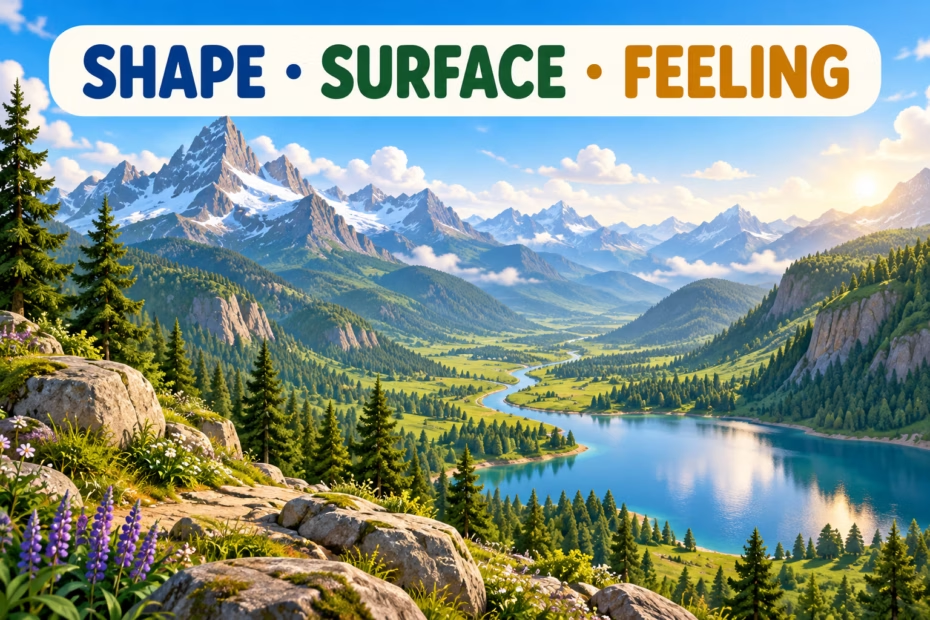
Adjectives for landscape help readers picture what a place looks and feels like. Choose a word for something specific—its shape, plant cover, weather, or atmosphere—then support impressions such as beautiful or bleak with details the reader can imagine.
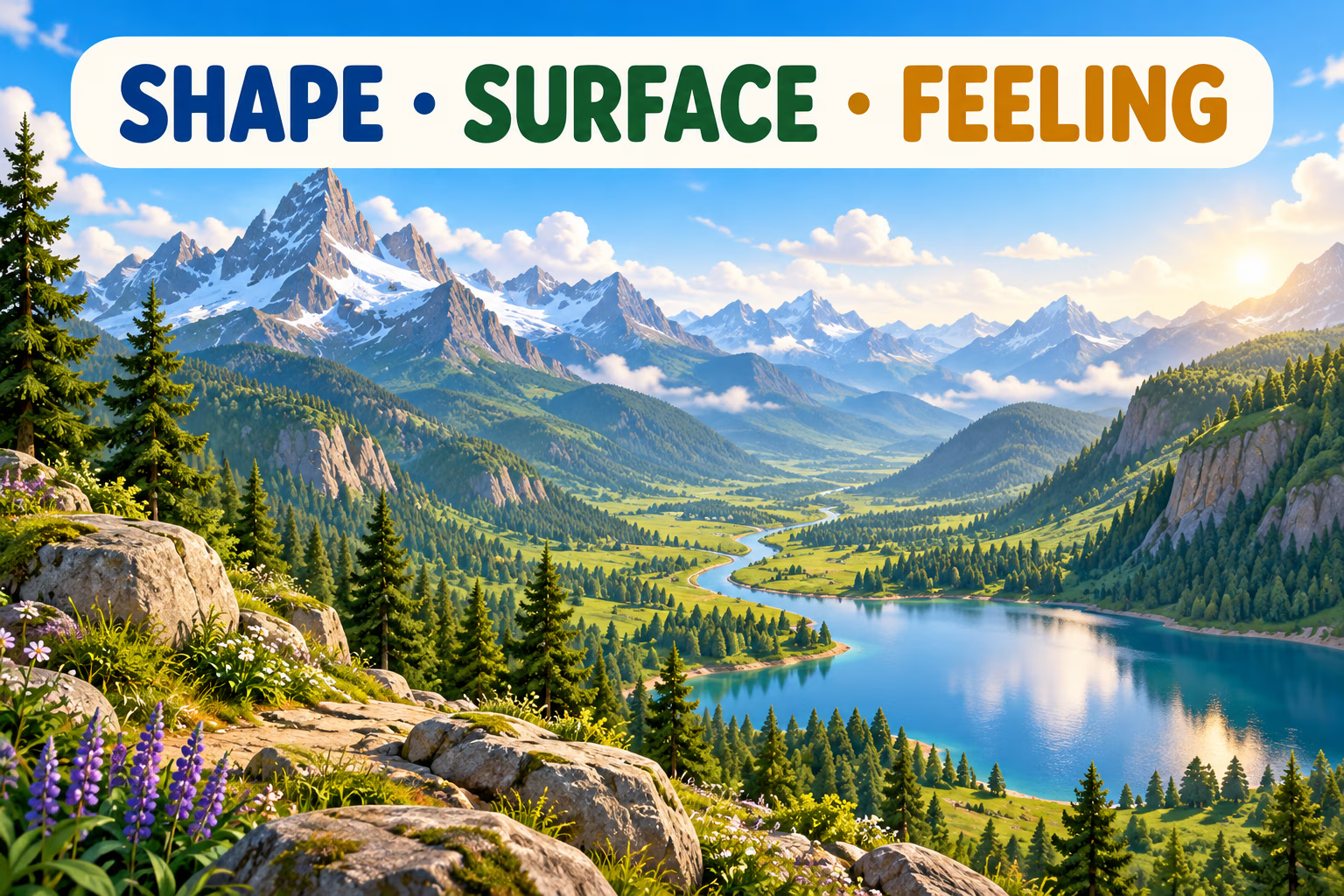
How to choose adjectives for landscape
Start with the feature you want to describe. A landform, a covering of plants, the weather, and a viewer’s impression call for different words. The same place can be rugged in shape, verdant with vegetation, and serene in mood.
| Feature | Adjectives to consider | Example |
|---|---|---|
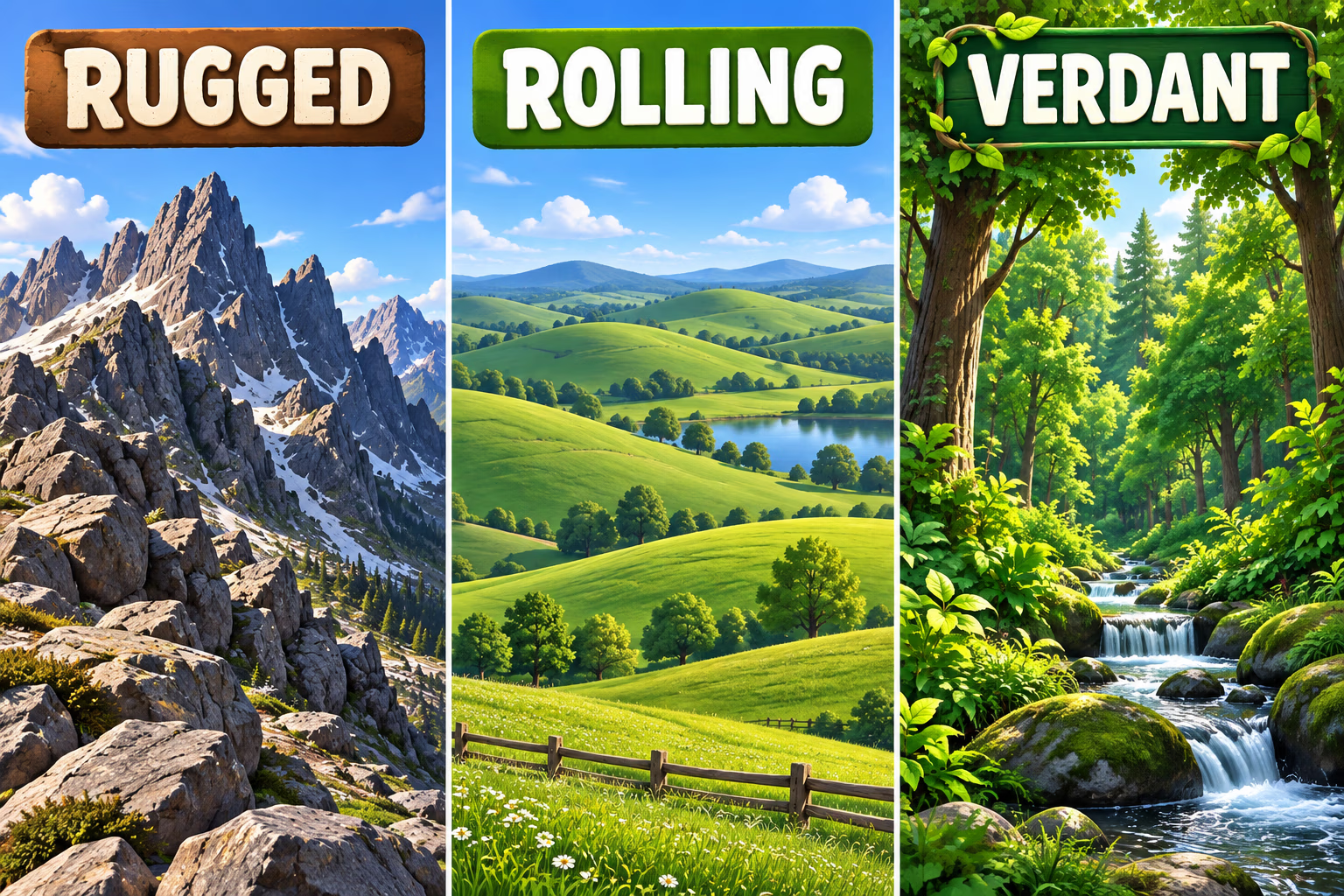
| Land shape and surface | rugged, rolling, steep, flat, mountainous | “A rugged ridge rose above the gently rolling pasture.” |
| Vegetation and cover | verdant, wooded, lush, barren, sparse | “Verdant slopes gave way to a barren, rocky summit.” |
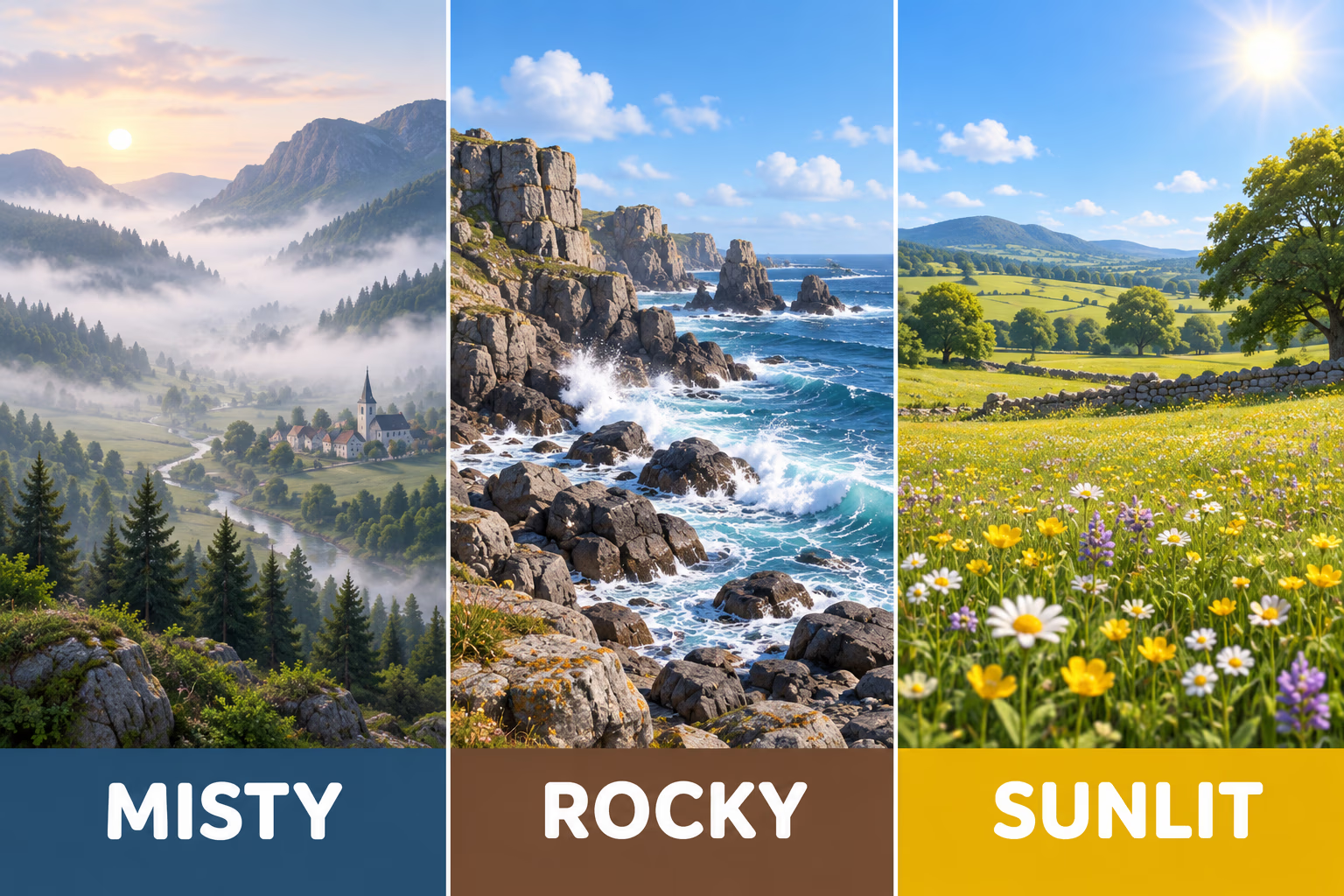
| Weather and light | misty, sunlit, windswept, shadowy, rain-soaked | “A misty morning softened the outlines of the distant hills.” |
| Appearance or atmosphere | picturesque, scenic, serene, dramatic, bleak | “The scenic overlook gave us a broad view of the valley.” |
What do common landscape adjectives mean?
Rugged suggests rough, uneven land; rolling describes rounded rises and dips; and verdant points to healthy green vegetation. Cambridge defines verdant as covered with healthy green plants or grass. Use barren for little or no plant growth, but name what you observe rather than implying that every barren place is lifeless.
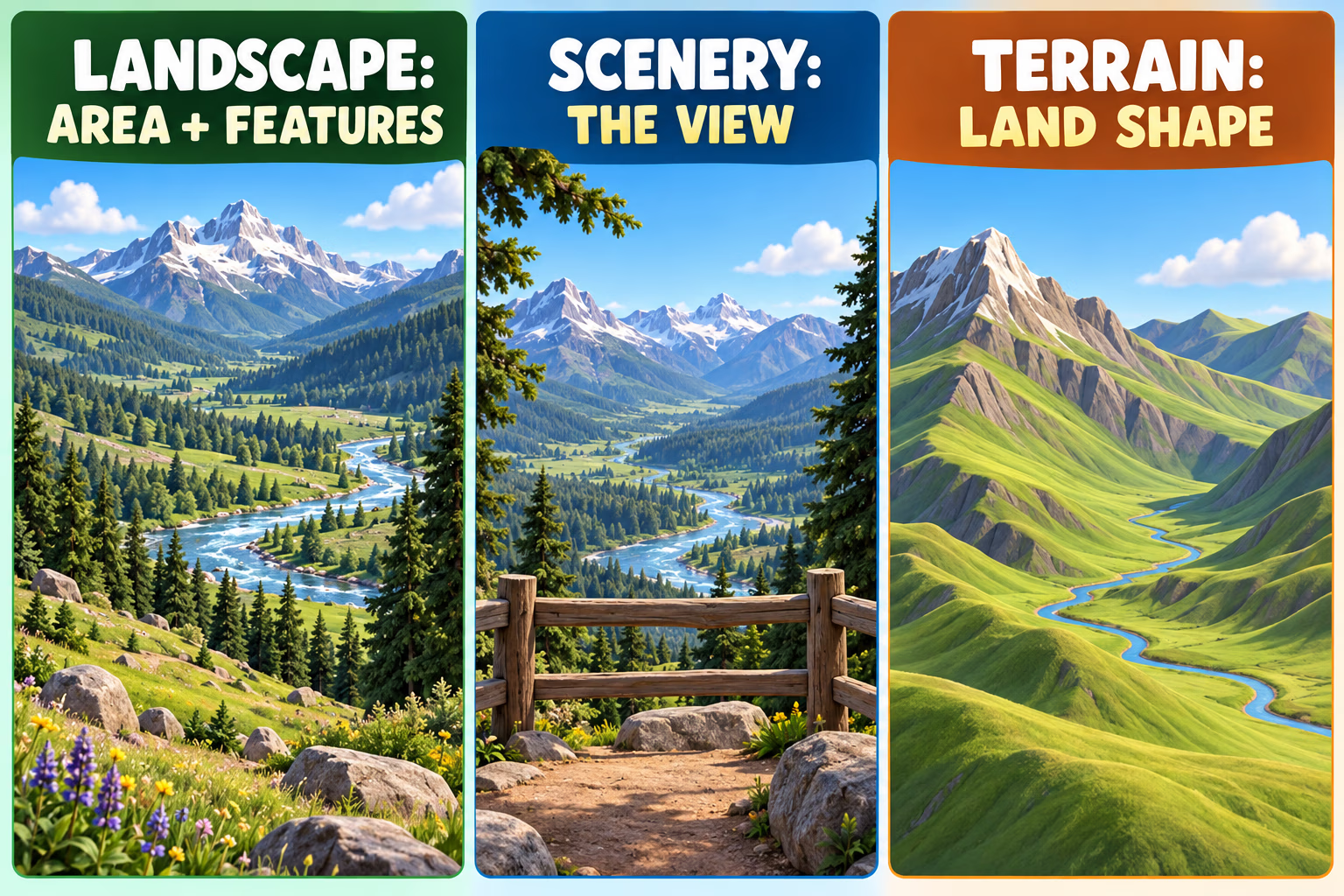
Scenic emphasizes an attractive view; picturesque describes something attractive in appearance, often in a way that seems picture-worthy. Both convey an observer’s judgment, so add the feature that prompted it. Serene means calm and peaceful, while serenity is the related noun. Oxford Learner’s Dictionaries also distinguishes landscape, scenery, and terrain: landscape is what you see across an area, scenery highlights natural features as a view, and terrain focuses on the land’s natural form, such as rough or flat ground (Oxford: landscape; Oxford: serene; Cambridge: scenic; Cambridge: picturesque).
How do landscape adjectives work in sentences?
An adjective can come before a noun—“a rugged coastline,” “verdant hills”—or after a linking verb: “The coastline looks rugged,” “The hills are verdant.” A compound such as snow-capped combines words to describe a noun: “snow-capped peaks.” Keep the adjective tied to the thing it describes.
Some words in landscape lists name qualities or conditions rather than functioning as adjectives in every sentence. For example, serenity is a noun (“The lake’s serenity was striking”), while serene is an adjective (“The lake looked serene”).
Are landscape adjectives exact synonyms or opposites?
Most adjectives do not mean exactly the same thing. Verdant and barren can contrast when the topic is vegetation; rugged and smooth can contrast when describing a surface. Polluted describes a condition of a particular place or feature, while serene describes a calm impression; neither is a general opposite of landscape. Choose contrasts on the same dimension.
Frequently asked questions
What are positive adjectives for a landscape?
Depending on the place and the writer’s perspective, words such as scenic, verdant, picturesque, and serene may be positive. Pair them with visible details so the description is specific rather than a universal verdict.
What adjectives describe a mountain landscape?
Try rugged, steep, rocky, snow-capped, or wooded, choosing only words that fit the mountain or view you mean.
What is the difference between landscape and terrain?
Landscape can refer to the overall view across an area; terrain emphasizes the physical features and surface of the land, such as a steep slope or rough ground.
Strong adjectives for landscape connect a reader to a visible feature or a clearly signaled impression. Name the landform, cover, or condition first, then choose the word that fits.
Note on the original source: The original text below is preserved unchanged. Its “synonyms” mostly include adjectives that describe a landscape rather than synonyms for the noun landscape; its “antonyms” are context-dependent conditions, not true opposites of the noun. It also lists serenity, a noun, among adjectives. Treat those entries as brainstorming prompts and check each word’s meaning and grammatical role before using it.
When it comes to describing the beauty of a landscape, words have the power to transport us to breathtaking vistas and evoke a sense of wonder. As a writer and avid traveler, I have always been fascinated by the variety and richness of landscapes around the world. In this article, I’ll be sharing with you some of the most captivating adjectives that can be used to describe landscapes, along with examples that will bring these words to life.
From the rugged peaks of majestic mountains to the serene tranquility of rolling meadows, landscapes offer a myriad of experiences for our senses to feast upon. As we explore the descriptive power of adjectives, we’ll uncover words that capture the essence of these natural wonders. Whether you’re a fellow wordsmith looking to enhance your writing or simply an admirer of the beauty of nature, this article will provide you with a treasure trove of adjectives that will help you paint vivid pictures with your words.
So, without further ado, let’s delve into the world of adjectives for landscapes and discover the perfect words to describe the awe-inspiring beauty that surrounds us. Get ready to be inspired and transported to the most breathtaking corners of the Earth through the power of words.
How to Describe landscape? – Different Scenarios
When it comes to describing landscapes, there are endless possibilities. Each landscape has its own unique features and characteristics that can be captured using different adjectives. Here are a few scenarios where you can use specific adjectives to paint a vivid picture of the landscape:
1. Majestic Mountains
Mountains evoke a sense of grandeur and awe. To describe mountains, you can use adjectives that highlight their impressive size, ruggedness, and beauty. Some examples include:
- Towering: The towering mountains loomed over the valley, casting a shadow on the landscape.
- Majestic: The majestic peaks of the mountains seemed to touch the sky.
- Serene: The serene mountain range stood in silent contemplation, with snow-capped summits glistening in the sunlight.
2. Tranquil Lakes
Lakes are known for their calm and peaceful aura. To describe a lake, you can use adjectives that emphasize its tranquility, clarity, and reflective nature. Here are a few examples:
- Crystal-clear: The crystal-clear lake mirrored the surrounding trees, creating a breathtaking reflection.
- Serene: A gentle breeze ruffled the surface of the serene lake, creating ripples that expanded outward.
- Tranquil: The tranquil lake offered a peaceful respite from the hustle and bustle of everyday life.
3. Lush Rainforests
Rainforests are teeming with life and greenery. To describe a rainforest, you can use adjectives that convey its lushness, biodiversity, and vibrant atmosphere. Consider these examples:
- Verdant: The verdant rainforest was a vibrant tapestry of shades of green, dotted with colorful tropical flowers.
- Teeming: The rainforest teemed with life, from birds chirping in the trees to monkeys swinging through the branches.
- Dense: The dense canopy of the rainforest blocked out much of the sunlight, creating a mysterious and captivating atmosphere.
- Idyllic: The idyllic beach stretched as far as the eye could see, with the gentle waves lapping at the shore.
- Paradise-like: The paradise-like beach offered a slice of heaven with its soft white sand and crystal-clear waters
Describing Words for landscape in English
When it comes to describing the beauty of landscapes, the right choice of adjectives can bring them to life in our minds. As a writer, I understand the importance of finding the perfect words to paint a vivid picture of a landscape. In this section, I will provide you with a variety of describing words that you can use to enhance your descriptions and transport your readers to the wonders of nature.
Majestic Mountains
- Towering peaks
- Snow-capped
- Breath-taking
- Majestic
- Grand
Tranquil Lakes
- Crystal-clear
- Serene
- Peaceful
- Reflective
- Calm
Lush Rainforests
- Verdant
- Dense
- Exotic
- Vibrant
- Teeming with life
Idyllic Beaches
- Pristine
- Sandy
- Sun-kissed
- Tranquil
- Picturesque
Using these adjectives will help you create a sensory experience for your readers, making them feel like they are right there, soaking in the beauty of the landscape you’ve described. But don’t just take my word for it, let’s look at some examples to see how these words can be used effectively:
| Example Sentences |
|---|
| The towering peaks of the mountains framed the landscape, creating a majestic sight. |
| I dipped my toes into the crystal-clear lake, feeling a sense of peace and serenity wash over me. |
| As I wandered through the verdant rainforest, the air was alive with the sounds of exotic birds and the scent of vibrant flowers. |
| The pristine beach stretched out before me, its sandy shore sparkling under the sun’s golden rays. |
By incorporating these describing words into your writing, you can bring your landscapes to life and captivate your readers. Remember, choosing the right adjectives is the key to transporting your audience to the beauty of nature.
Adjectives for landscape
In this section, I’ll provide you with a list of positive and negative adjectives that can be used to describe landscapes. These adjectives will help you create vivid and engaging descriptions of various natural settings. Let’s dive in!
Positive Adjectives for Landscape
- Breathtaking: The view from the mountain top was absolutely breathtaking.
- Serene: The tranquil lake reflected the serene beauty of the surrounding trees.
- Picturesque: The small, picturesque village nestled in the lush green hills.
- Majestic: The majestic mountains stood tall and proud against the clear blue sky.
- Idyllic: The idyllic countryside was dotted with vibrant wildflowers.
- Enchanting: The enchanting forest was filled with the melody of singing birds.
- Captivating: The captivating sunset painted the sky with hues of orange and pink.
- Exquisite: The exquisite waterfall cascaded down the mossy rocks.
- Serenity: The landscape exuded a sense of serenity, allowing me to recharge.
- Verdant: The verdant meadow was a carpet of lush green grass.
- Scenic: The scenic coastal drive offered breathtaking ocean views.
- Radiant: The radiant sunrise painted the sky with shades of gold and pink.
- Barren: The barren desert stretched for miles, devoid of any signs of life.
- Grim: The grim and desolate landscape left me feeling unsettled.
- Harsh: The harsh and unforgiving terrain made it difficult to traverse.
- Sparse: The sparse vegetation hinted at the arid conditions of the landscape.
- Sombre: The somber forest, cloaked in darkness, gave an eerie feeling.
These adjectives can help you paint a more realistic and nuanced picture of landscapes. Whether you want to highlight the beauty and tranquility of a scene or capture the harshness and desolation of a terrain, choosing the right adjective can make all the difference in engaging your readers.
Remember to use these adjectives judiciously, ensuring they accurately convey the specific aspects of the landscape you are describing. Happy writing!
Remember, we don’t need a conclusion paragraph for this ongoing article.
Synonyms and Antonyms with Example Sentences
Synonyms for landscape
When it comes to describing landscapes, having a wide range of synonyms at your disposal can help you create more vivid and engaging descriptions. Here are some synonyms that can be used to enhance your writing:
| Synonym | Definition |
|---|---|
| Scenic | Providing a beautiful or picturesque view |
| Breathtaking | Stunning or awe-inspiring |
| Panoramic | Allowing a wide or comprehensive view |
| Serene | Peaceful and calm |
| Majestic | Having grandeur or greatness |
| Idyllic | Pleasingly natural, simple, or peaceful |
Example Sentences:
- The scenic landscape was like a painting come to life.
- The breathtaking view from the mountain top left me in awe.
- I couldn’t help but admire the panoramic beauty of the countryside.
- The lake looked so serene as the sun set behind the mountains.
- The majestic mountains stood tall and proud against the blue sky.
- The small cottage was situated in an idyllic setting, surrounded by colorful flowers.
Antonyms for landscape
In addition to synonyms, antonyms can also be helpful in providing contrasting descriptions of landscapes. Here are some antonyms for landscape that you can use to add depth to your writing:
| Antonym | Definition |
|---|---|
| Dreary | Dull, bleak or gloomy |
| Unremarkable | Ordinary or lacking in interest |
| Barren | Lacking vegetation or life |
| Chaotic | Disordered or lacking harmony |
| Polluted | Contaminated or dirty |
| Uninviting | Not appealing or welcoming |
Example Sentences:
- The weather was so dreary that even the vibrant landscape seemed dull.
- Compared to the breathtaking mountains, the view from the top of the hill felt rather unremarkable.
- The barren desert stretched out for miles, with no signs of life.
- The chaotic landscape with its scattered rocks and uneven terrain made hiking a challenge.
- The polluted river was a stark contrast to the pristine landscape that surrounded it.
- The uninviting swamp made us think twice about venturing further into the wilderness.
By incorporating these synonyms and antonyms into your writing, you can enrich your descriptions and create a more captivating portrayal of landscapes. Remember to choose words that best capture the essence of the scene you’re describing, whether it’s the beauty and serenity of a scenic vista or the desolation and chaos of a dreary landscape.
Conclusion
In this article, I have explored the power of words in describing landscapes and provided a comprehensive list of synonyms and antonyms that can be used to create vivid and engaging descriptions. By carefully choosing the right words, writers can accurately convey the unique characteristics of the landscapes they are describing.
Throughout the article, I have emphasized the importance of incorporating these synonyms and antonyms into writing to enrich descriptions and create a more captivating portrayal of landscapes. Words such as “scenic,” “breathtaking,” and “majestic” can help paint a picture of beauty and awe, while antonyms like “dreary,” “unremarkable,” and “polluted” can convey a sense of negativity or decay.
By utilizing these descriptive words, writers can bring landscapes to life, allowing readers to visualize and connect with the natural world. Whether it’s a serene mountain range, a vibrant sunset, or a bustling cityscape, the right words can transport readers to these places and evoke powerful emotions.
So, the next time you find yourself wanting to describe a landscape, remember the power of words and choose your adjectives wisely. Let your descriptions captivate and inspire, creating a lasting impression on your readers.


