
Adjectives for Location: Choose Precise Place Words
Adjectives for location describe a place’s observable setting, activity, access, or atmosphere. Words such as urban, coastal, secluded, and bustling give different kinds of information: urban identifies a city context, coastal relates a place to the coast, secluded signals privacy, and bustling signals busy activity.
adjectives for location at a glance
- Location means a particular place or position.
- Urban describes something of or in a city or town.
- Coastal describes a place positioned on or related to a coast.
- Bustling focuses on busy activity; secluded focuses on privacy and distance.
Are you looking to add some descriptive flair to your writing? Well, you’ve come to the right place! In this article, I’ll be sharing a range of adjectives that can be used to describe location. Whether you’re a writer looking to bring your settings to life or a student wanting to expand your vocabulary, these adjectives will help you paint a vivid picture.
From bustling city streets to serene countryside landscapes, there’s an adjective for every location. I’ll provide you with examples that showcase how these words can be used effectively in sentences. So, get ready to enhance your writing and make your descriptions come alive with these powerful adjectives for location.
How to Describe location? – Different Scenarios
When it comes to describing different locations, there are a variety of adjectives that can be used to bring these settings to life. Whether you’re writing a story or trying to teach kids about descriptive words, using adjectives can enhance your writing and create vivid descriptions. Let’s explore some different scenarios and discover how we can effectively describe location using adjectives.
- Natural Landscapes
When describing natural landscapes like forests, mountains, or beaches, it’s important to use adjectives that evoke the right imagery. Here are a few examples:
- The majestic mountains soared high into the sky.
- The lush green forest was teeming with life.
- The serene beach stretched out as far as the eye could see.
- Urban Environments
To paint a picture of bustling cities or vibrant neighborhoods, choose adjectives that capture the energy and atmosphere. Consider these examples:
- The city streets were bustling with activity and life.
- The neighborhood had a vibrant and colorful atmosphere.
- The skyscrapers stood towering over the busy metropolis.
- Interior Spaces
Whether you’re describing a cozy home or a grand mansion, adjectives can help create a sense of place within interior spaces. Take a look at these examples:
- The living room was cozy and inviting with its warm fireplace and comfortable furniture.
- The elegant dining room was adorned with sparkling chandeliers and a long, polished table.
- The bedroom was peaceful and serene with its soft colors and plush bedding.
- Outdoor Settings
When describing outdoor settings like parks, gardens, or playgrounds, adjectives can help set the scene and make it come alive. Consider the following examples:
- The park was filled with lively children playing on the swings and running through the grass.
- The garden was a peaceful sanctuary, filled with vibrant flowers and the sound of buzzing bees.
- The playground was a fun-filled oasis, with colorful slides, swings, and laughter filling the air.
Using descriptive adjectives is a powerful way to create vivid images of different locations. Whether you’re a writer aiming to captivate your readers or a teacher helping kids expand their vocabulary, honing your skills in describing locations can make your writing come alive.
Describing Words for location in English
When it comes to describing different locations, adjectives play a crucial role in painting a vivid picture. Whether it’s a natural landscape, an urban environment, an interior space, or an outdoor setting, using the right adjectives can bring your writing to life. In this section, I’ll provide you with some powerful describing words that you can use to enhance your descriptions of various locations.
Natural Landscapes
- Breathtaking: The expansive view of the mountains left me breathless.
- Serene: The untouched beach was a serene paradise.
Urban Environments
- Thriving: The city’s downtown area is a thriving hub of activity.
- Cosmopolitan: The trendy neighborhood attracts a cosmopolitan crowd.
Interior Spaces
- Cozy: The living room with its soft, plush couches felt incredibly cozy.
- Elegant: The dining room was adorned with elegant chandeliers and fine china.
- Picturesque: The garden was a picturesque oasis of colorful flowers.
- Solitary: The secluded beach offered a solitary escape from the world.
Using these describing words will help you create captivating descriptions of different locations. By incorporating vivid adjectives into your writing, you can transport your readers and allow them to experience the setting through your words.
Adjectives for location
Positive Adjectives for Location with 12 Example Sentences
When it comes to describing locations, using positive adjectives can help bring the setting to life. Here are some examples of positive adjectives and how they can be used in sentences:
- Serene – The lake looked serene as the sun set behind its calm waters.
- Picturesque – The small town was nestled in a picturesque valley surrounded by mountains.
- Enchanting – The garden was filled with enchanting flowers of vibrant colors.
- Tranquil – The beach was a tranquil oasis where one could relax and unwind.
- Majestic – The waterfall stood tall, displaying its majestic beauty for all to see.
- Breathtaking – The view from the mountaintop was absolutely breathtaking, with panoramic vistas stretching as far as the eye could see.
- Idyllic – The countryside was an idyllic retreat, with rolling hills and lush green landscapes.
- Charming – The village had a charming atmosphere, with its quaint cottages and cobblestone streets.
- Vibrant – The city streets were filled with vibrant energy, bustling with activity day and night.
- Pristine – The forest was a pristine wilderness, untouched by human hands.
- Inviting – The cafe had an inviting ambiance, with cozy seating and warm lighting.
- Lush – The tropical rainforest was a lush paradise, teeming with exotic flora and fauna.
Negative Adjectives for Location with 5 Example Sentences
While it’s important to focus on the positive aspects of a location, there are also negative adjectives that can be used to describe certain settings. Here are a few examples:
- Dreary – The abandoned house had a dreary and desolate atmosphere.
- Polluted – The river was heavily polluted, with dark and murky waters.
- Crowded – The popular tourist attraction was always crowded with visitors.
- Dilapidated – The old factory was in a dilapidated state, with crumbling walls and broken windows.
- Barren – The desert was a barren expanse, devoid of any signs of life.
As a writer, using descriptive adjectives is a powerful tool to create vivid images of different locations. Whether it’s the beauty of a serene beach or the charm of a bustling city, the right choice of words can transport readers to the setting and make the writing come alive. Remember to choose your adjectives wisely and paint a vivid picture with your words.
Synonyms and Antonyms with Example Sentences
Synonyms for location
When it comes to describing different locations, using a variety of adjectives can bring your writing to life. Here are some synonyms for the word “location” that you can use to enhance your descriptions:
- Position
- Place
- Site
- Spot
- Setting
By incorporating these synonyms, you can add depth and variety to your writing. For example, instead of saying “She stood in a location,” you could say “She stood in a spot” or “She stood in a setting.”
To provide you with a clearer understanding, here are some example sentences that demonstrate the use of these synonyms:
| Sentence | Synonym |
|---|---|
| We found a great position to watch the sunset. | We found a great spot to watch the sunset. |
| The place we visited was full of historical significance. | The site we visited was full of historical significance. |
Antonyms for location
To further expand your vocabulary, let’s explore some antonyms of the word “location.” Antonyms are words that have the opposite meaning. Here are some antonyms for “location” that you can use in your writing:
- Absence
- Nonexistence
- Nowhere
Using these antonyms can add contrast and highlight different aspects of your descriptions. For example, instead of saying “The treasure was hidden in a location,” you could say “The treasure was hidden in a place of nonexistence.”
Here are some example sentences to illustrate the use of these antonyms:
| Sentence | Antonym |
|---|---|
| The house was empty, and there was a sense of absence in the air. | The house was empty, and there was a sense of nowhere in the air. |
| He searched for his keys, but they were nowhere to be found. | He searched for his keys, but they were nonexistent. |
Remember, incorporating synonyms and antonyms into your writing can help you create more vivid and engaging descriptions. It’s essential to select the right word to convey the exact meaning you intend. By using synonyms and antonyms, you can bring variety and depth to your writing, captivating your readers’ attention.
Conclusion
Describing locations effectively is crucial in capturing the reader’s imagination and creating a vivid experience. Throughout this article, we have explored the power of adjectives in enhancing our writing and making our descriptions more compelling.
By using synonyms and antonyms for the word “location,” we can add depth and variety to our descriptions. These words allow us to paint a clearer picture and evoke specific emotions in our readers. Whether we want to convey a sense of serenity with words like “tranquil” and “calm,” or a feeling of chaos with words like “chaotic” and “disorderly,” the right adjectives can make all the difference.
Remember, selecting the right words is key. By carefully choosing adjectives that accurately convey the intended meaning, we can captivate our readers and transport them to the locations we are describing. So, let’s continue to explore the vast world of adjectives and unlock the full potential of our writing. Happy describing!
How do you choose adjectives for location?
Start with the detail a reader needs to picture. Urban identifies a city or town context; coastal points to the coast; bustling describes busy activity; and secluded emphasizes privacy and distance. Cambridge Dictionary gives these words distinct meanings, so they are not interchangeable decoration.
| What to describe | Useful adjectives | Example |
|---|---|---|
| Geography | coastal, mountainous, wooded, riverside | “A wooded trail followed the river.” |
| Human activity | bustling, crowded, quiet, lively | “The bustling market opened before sunrise.” |
| Access and privacy | secluded, central, remote, accessible | “A secluded cabin stood beyond the village.” |
| Built environment | urban, historic, residential, industrial | “The historic station anchors the town square.” |
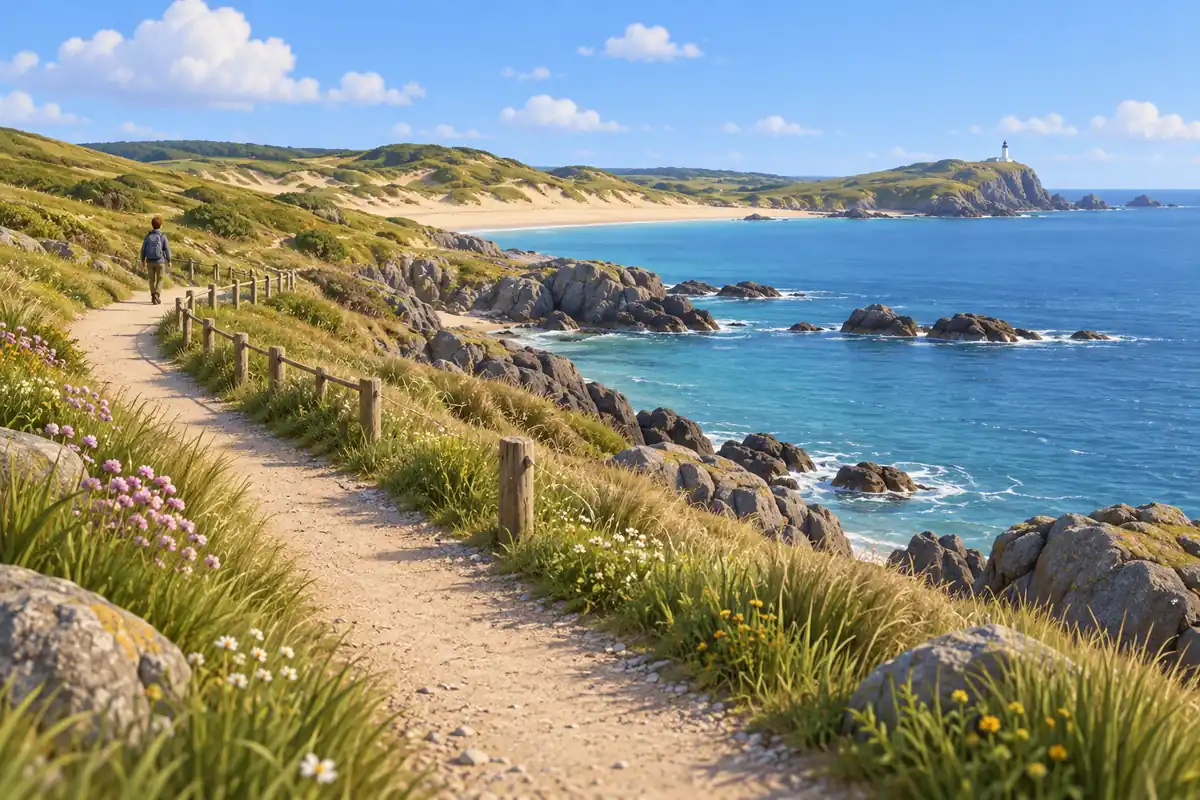
Choose observable details before mood words. “A narrow coastal lane bordered by wind-shaped pines” lets readers picture the place; “a beautiful location” mainly reports the writer’s opinion. Mood adjectives such as welcoming, eerie, or peaceful become stronger when a physical detail supports them.
What is the difference between location adjectives?
Use an adjective only when the place matches its meaning. Coastal requires a relationship to the coast, while urban describes a city or town setting; neither word automatically means crowded or modern. Bustling describes activity, and secluded describes privacy and separation, so the words answer different questions about one place.
A practical editing check is to ask whether the adjective adds geography, activity, physical condition, access, or atmosphere. If two adjectives repeat the same idea, replace one with a concrete noun or sensory detail. “A crowded, bustling, busy station” repeats activity; “a bustling station with three queues beneath a low glass roof” adds evidence.

Conclusion: use adjectives for location precisely
Use adjectives for location to tell readers what a place is like, not to stack generic praise. Choose words for geography, activity, access, or mood, then add one visible detail that proves the description.
Frequently asked questions about adjectives for location
What are adjectives for location?
Adjectives for location describe the physical setting, activity, access, or atmosphere of a place. Examples include coastal for a place near the coast, urban for a city or town, bustling for busy activity, and secluded for privacy away from other places.
Which adjective describes a quiet, private place?
Secluded is a precise choice for a place that is quiet and private, away from people, roads, or buildings. “A secluded garden” gives a different impression from “a quiet garden”: the first stresses separation, while the second describes its sound or atmosphere.
Does urban mean crowded or modern?
No. Urban means of or in a city or town; it does not by itself say that a place is crowded, busy, or newly built. Add a second adjective only when it contributes a separate fact, such as “a historic urban neighborhood” or “a quiet urban courtyard.”
How can I make a location description more specific?
Name the kind of place, choose one adjective tied to a real feature, and add a concrete detail. “A peaceful place” is broad; “a shaded riverside park with a gravel path” gives readers a setting they can picture. Replace repeated mood words with a landmark, surface, sound, or activity.


