Adjectives for marriage describe a relationship’s qualities or a writer’s experience, such as supportive, affectionate, collaborative, strained, or distant. Choose a word that fits a specific quality and support it with an example. “Married” identifies status; it does not say whether a relationship is close, happy, or harmonious.
At a glance
- Choose an adjective for the quality you mean: emotional tone, interaction, commitment, or a reported difficulty.
- Use “married” for marital status; status alone does not describe how partners experience their relationship.
- Support a description with a concrete example, and present subjective words such as “magical” as a speaker’s view.
- “Miscommunication,” “divorce,” “nuptials,” and “separation” are related nouns or processes, not adjectives.
- Synonyms and antonyms depend on the meaning and part of speech being compared.
What Do Adjectives for Marriage Describe?
Adjectives for marriage usually describe a quality of a relationship, an interaction between partners, or the way someone experiences a particular period. Words such as supportive, affectionate, collaborative, contentious, and distant make different claims, so choose the one that matches the detail you can explain.
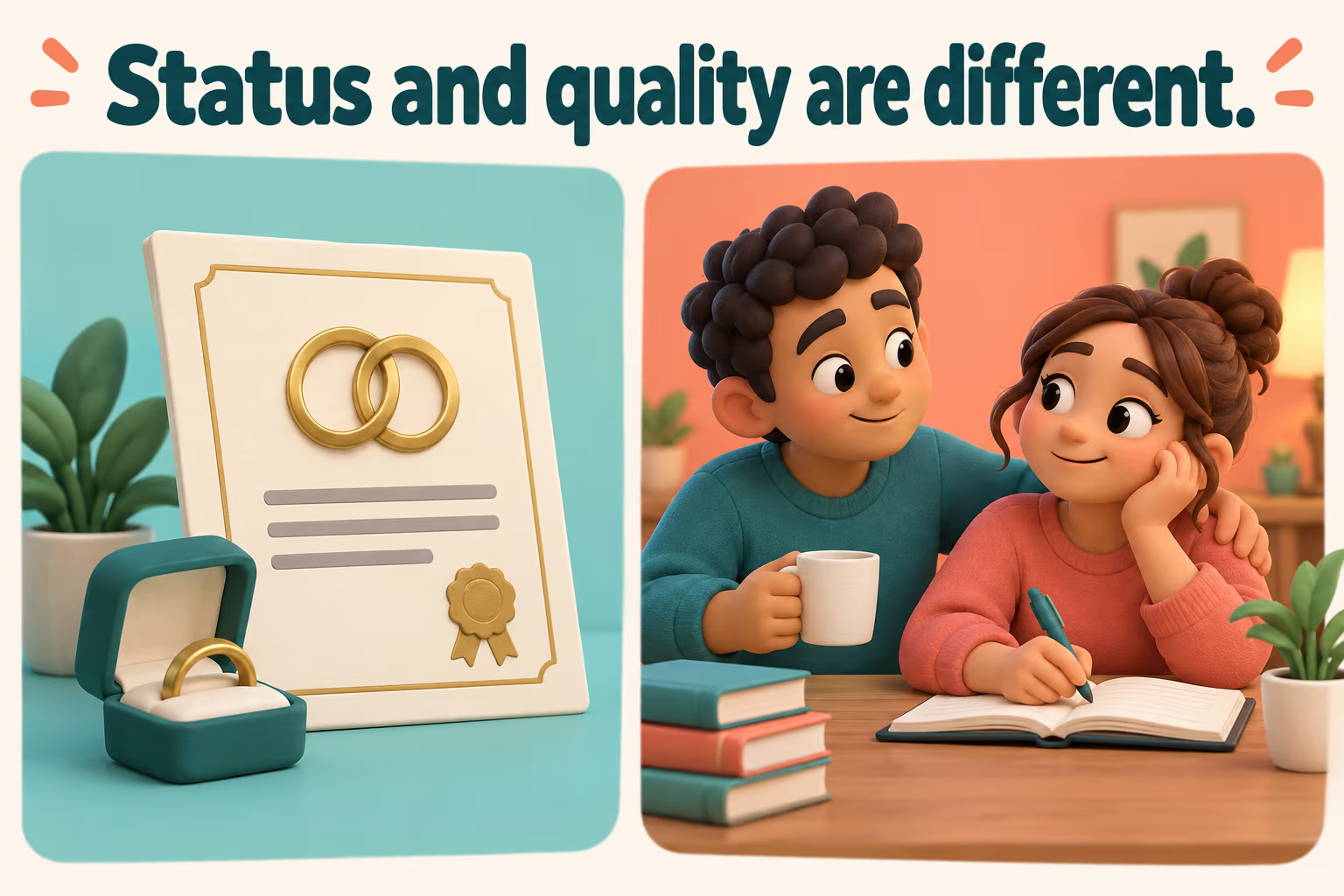
Married identifies a person’s marital status. The Cambridge Dictionary entry for “married” treats it as an adjective about that status; it does not establish whether a partnership is affectionate, satisfying, tense, or close. “Marriage” can refer to a relationship or a ceremony, and its legal and cultural meanings vary. Keep status and relationship experience separate.
How Can You Choose a Precise Adjective?
Start with the quality or experience you want to describe, then connect the word to an example. The table gives possible uses; it does not classify every marriage or tell readers how a relationship should feel.
| What you want to describe | Possible adjectives | Example grounded in a detail | Usage note |
|---|---|---|---|
| Help and cooperation | Supportive, collaborative | “They divided the moving tasks and checked what help each person wanted.” | Use when the example shows assistance or shared work. |
| Warmth or affection | Affectionate, tender, loving | “They describe their relationship as affectionate and often exchange small gestures of care.” | These can reflect the people’s own account; avoid treating one gesture as proof of a permanent quality. |
| Enjoyment or positive feeling | Joyful, blissful, exciting, magical | “They called the celebration joyful.” | These words are subjective and fit a stated perspective or moment. |
| Commitment or trust | Devoted, committed, trustworthy | “They followed through on the plans they had agreed to.” | Describe the period or behavior being discussed; do not promise that a relationship is “unbreakable” or lifelong. |
| Disagreement or tension | Contentious, tense, strained | “They described recent conversations about the move as tense.” | Contentious involves disagreement; it is not by itself a diagnosis or prediction. |
| Distance or change | Distant, disconnected, stagnant | “One partner said they had been communicating less during the past month.” | State who reports the experience and its timeframe instead of assuming what either person feels. |
For a reliable sentence, name a quality, add the example or time period behind it, and identify whose perspective the adjective represents. “They have a collaborative marriage” is clearer when followed by a detail such as “they make household decisions together.” A broad label on its own can hide important context.
Is “Miscommunication” an Adjective for Marriage?
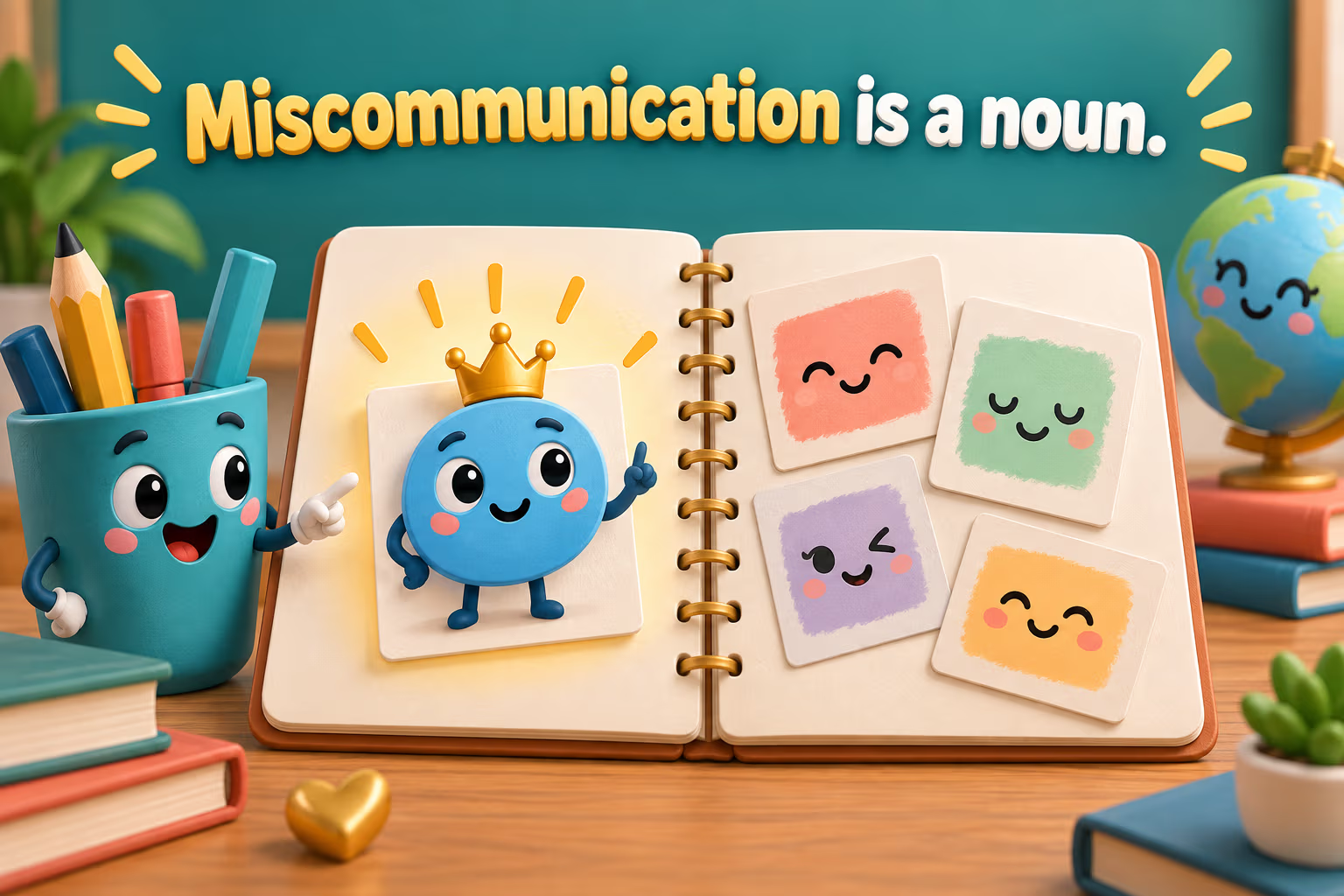
No. Cambridge classifies “miscommunication” as a noun for an unsuccessful exchange of ideas or intentions. It can be useful in a marriage-related sentence, but it does not grammatically describe a marriage as an adjective would. A more precise phrase is “a miscommunication occurred” or “the partners miscommunicated about the appointment.”
| Related word | Usual word class or use | Precise example | Adjective option, when supported |
|---|---|---|---|
| miscommunication | Noun: an unsuccessful exchange | “A miscommunication occurred about the time.” | “The discussion was unclear” describes that discussion, not a partner’s character. |
| divorce | Noun for a legal process; also a verb | “The divorce was finalized.” | Divorced describes marital status: “a divorced person.” |
| separation | Noun for a state or process; separate can be a verb or adjective | “The partners discussed a separation.” | “They are separated” describes a reported status, not a value judgment. |
| married | Adjective describing marital status | “The married partners attended the event.” | Add a separate relationship-quality adjective only if it fits: “a supportive partnership.” |
Cambridge defines “divorce” as a noun and verb, including the official or legal process that ends a marriage. That is a different kind of word from an adjective such as supportive or strained. The source lists below are retained in full; this grammar note helps readers use their entries accurately.
Are Marriage Synonyms and Antonyms Interchangeable?
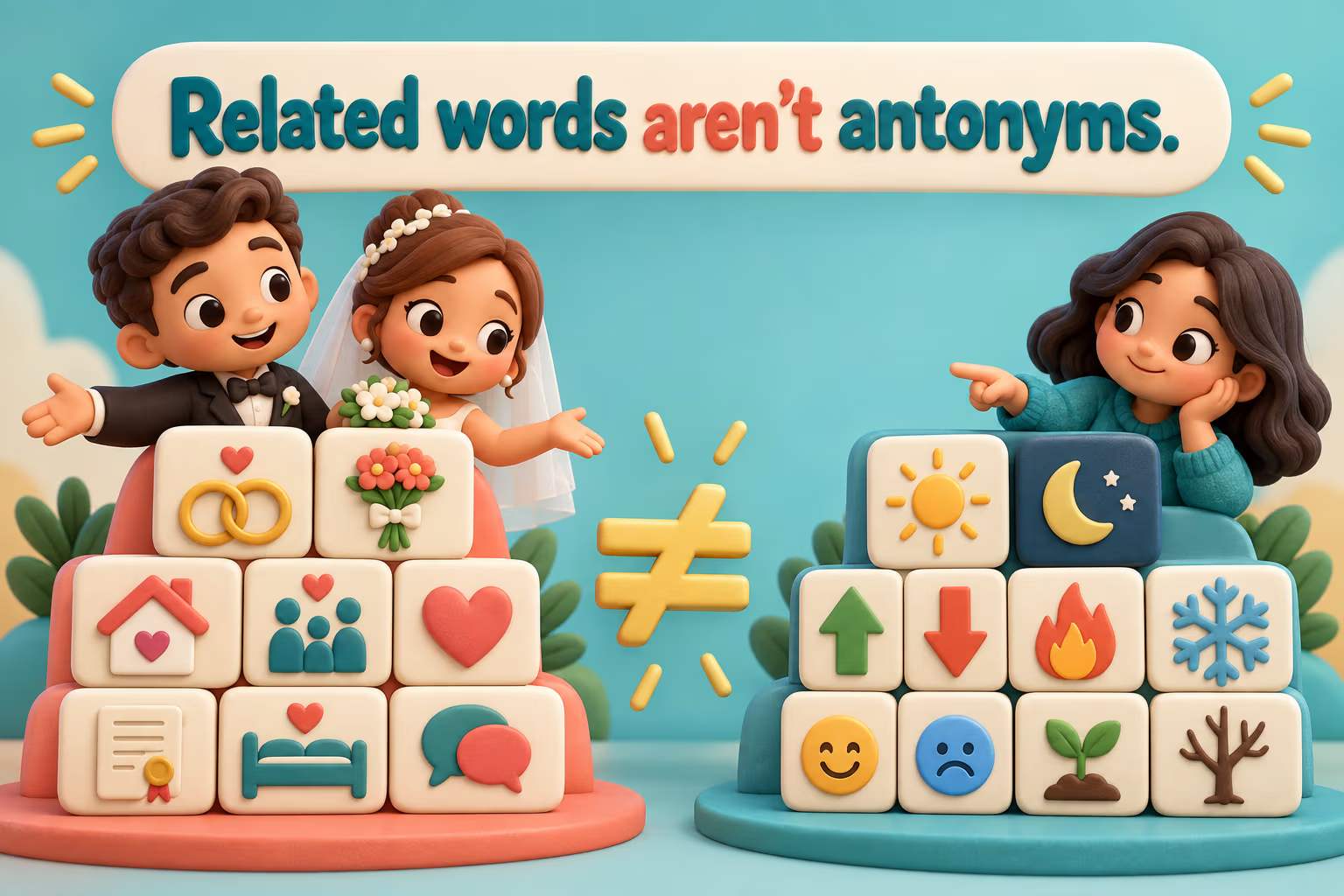
No. Related words may name an institution, partnership, ceremony, disagreement, or ending process. They are not automatically adjective synonyms or direct antonyms. “Matrimony” is a noun for marriage; “nuptials” usually refers to a wedding ceremony; and “divorce” names a process or acts as a verb. “Discord” describes disagreement, not the opposite marital status.
| Term in the original lists | What it most directly names | How to use it precisely |
|---|---|---|
| Matrimony, union, wedlock, partnership | Nouns related to marriage or a shared partnership, with different scopes and tones | Use as a noun in context; do not substitute for an adjective such as committed. |
| Nuptials | A wedding ceremony or celebration | Use for the event, not as a synonym for the ongoing relationship. |
| Divorce, separation, dissolution | Processes, states, or acts connected with ending or living apart | These are not moral judgments or simple adjective antonyms of married. |
| Discord, estrangement | Disagreement or emotional distance | Describe the specific conflict or distance and whose perspective is represented. |
How Can You Describe a Marriage Without Generalizing?
- Choose the subject: are you describing marital status, a relationship quality, a moment, or a process?
- Choose a word with the right meaning and part of speech: for example, married for status, supportive for a quality, and miscommunication for an event noun.
- Add a concrete example: name an action, statement, shared decision, or reported experience that supports the word.
- Limit the claim: add a time period or perspective when relevant, and avoid presenting “perfect,” “sacred,” “lifelong,” or “unbreakable” as facts about all marriages.
Marriage can be described differently by the people in it and by their cultural, religious, and legal contexts. Cambridge’s entry includes same-sex marriage and multiple uses of the word; legal definitions can also vary by jurisdiction. The American Psychological Association’s Inclusive Language Guide recommends appropriately specific language and respect for the terms people use for themselves. This page is a vocabulary guide, not relationship counseling or an assessment of any couple.
For broader words about connection and interaction, see our relationship adjectives guide. The original examples and table below remain unchanged; read their “positive,” “negative,” “synonym,” and “antonym” labels as the source’s organizational choices, and use the context above when selecting a word.
Marriage, a beautiful union of two souls, is a journey filled with love, commitment, and growth. As we navigate through the highs and lows of this sacred bond, we often find ourselves searching for the right words to describe the depth and beauty of our marital relationships. That’s where adjectives come in, allowing us to paint a vivid picture of the emotions and experiences that define our marriages.
In this article, I’ll be exploring a wide range of adjectives that perfectly capture the essence of marriage. From words like “enduring” and “unbreakable” to “adventurous” and “romantic,” each adjective will bring a unique flavor to your descriptions. Whether you’re writing a heartfelt anniversary card or simply looking to express your love, these adjectives will help you articulate the magic of your marital journey.
So, join me as we dive into the world of adjectives for marriage. Get ready to discover the perfect words to convey the love, joy, and connection that make our marriages truly extraordinary. Let’s explore these descriptive words together and bring a new level of depth and meaning to our expressions of love and commitment.
How to Describe marriage? – Different Scenarios
When it comes to describing marriage, different scenarios can evoke different emotions and experiences. As an expert blogger with years of experience, I can help you understand how to describe marriage effectively in various situations. Let’s explore a few scenarios together:
- The Exciting Beginning: The early days of marriage are often filled with excitement, anticipation, and new experiences. Here are some adjectives that capture the essence of this stage:
- The Committed Partnership: As time goes by, the relationship grows and deepens. Here are some adjectives that describe the commitment and strength of a long-term partnership:
- The Magical Moments: In marriage, there are moments of pure magic that make your heart flutter. Here are some adjectives that capture the romance and enchantment:
- The Lifelong Journey: Marriage is a lifelong journey of growth and transformation. Here are some adjectives that encapsulate the depth and significance of this journey:
Describing Words for marriage in English
As someone who has spent years writing about relationships and marriage, I understand the importance of finding the right words to describe the beauty and depth of this lifelong commitment. In this section, I will share a variety of adjectives that can help you describe marriage in different scenarios.
- Exciting: Marriage is an exhilarating journey filled with new beginnings, adventures, and possibilities. It’s a time when two souls come together, embarking on a thrilling path of love and growth. Some adjectives that capture the excitement of this phase include:
- Committed: As marriage progresses, it deepens into a committed partnership built on trust, understanding, and shared values. It’s a union that requires dedication, compromise, and perseverance. Here are a few adjectives that reflect the commitment and steadfastness of a long-term relationship:
- Magical: Throughout a marriage, there are moments that feel truly magical – fleeting instances that remind us of the beauty and wonder of sharing our lives with someone special. These adjectives can help evoke the enchantment of those extraordinary moments:
- Lifelong: Marriage is a lifelong journey that evolves and grows with time. It is a testament to the enduring love and commitment between two people. Here are some adjectives that encapsulate the longevity and endurance of a marriage:
Remember, every marriage is unique, and the adjectives you choose will depend on your own experiences and emotions. Whether you’re describing the exciting beginning, the committed partnership, the magical moments, or the lifelong journey, these words can help you articulate the depth and beauty of your marital relationship.
| Exciting | Committed | Magical | Lifelong |
|---|---|---|---|
| Blissful | Devoted | Enchanting | Everlasting |
| Enchanting | Loyal | Captivating | Timeless |
| Thrilling | Resilient | Serendipitous | Enduring |
| Electric | Trustworthy | Transcendent | Eternal |
Adjectives for marriage
Positive Adjectives for Marriage with 12 Example Sentences
When it comes to describing marriage in a positive light, there are numerous adjectives that can paint a vibrant and joyful picture. Here are twelve examples of positive adjectives that perfectly capture the beauty of a marital relationship:
- Blissful: I feel blissful when I’m with my spouse, as our love fills every moment.
- Supportive: My partner has always been supportive of my dreams and aspirations.
- Loving: Our love for each other grows stronger with each passing day.
- Honest: Honesty is the foundation of our relationship, and it has brought us closer together.
- Harmonious: Our marriage is marked by a harmonious balance of give and take.
- Adventurous: We embrace adventure together, creating unforgettable memories.
- Passionate: The passion we share ignites our love, making every day feel like a new beginning.
- Devoted: We are devoted to each other, standing by one another through thick and thin.
- Joyful: Our marriage is a source of constant joy, bringing laughter and happiness into our lives.
- Secure: Finding security in each other’s arms, we face life’s challenges as a united front.
- Respectful: Mutual respect forms the cornerstone of our relationship.
- Growth-oriented: We continually inspire each other to grow, both individually and as a couple.
Negative Adjectives for Marriage with 5 Example Sentences
While a marital relationship is often filled with love and happiness, it’s essential to acknowledge the challenges that can arise. Here are five examples of negative adjectives that reflect some of the difficulties couples may face:
- Contentious: We sometimes have contentious moments, but we always strive to resolve our conflicts peacefully.
- Distant: There are times when we feel emotionally distant, but we work together to bridge that gap.
- Stagnant: Our relationship can feel stagnant at times, and we make a conscious effort to keep things fresh and exciting.
- Challenging: Marriage can be challenging, but we are committed to overcoming obstacles together.
- Miscommunication: Miscommunication can lead to misunderstandings, but we make it a priority to improve our communication skills.
Remember, these negative adjectives are simply a reminder that marriage, like any relationship, has its ups and downs. It’s how we navigate those challenges that defines the strength of our bond.
By using these adjectives, you can beautifully convey the depth and complexity of a marital relationship. Whether you’re describing the positive aspects or acknowledging the challenges, remember that every marriage is unique. Use the adjectives that resonate with your own experiences and emotions to paint a true and vivid picture of your relationship.
Synonyms and Antonyms with Example Sentences
Synonyms for marriage
When it comes to describing marriage, a rich variety of adjectives can help paint a vivid picture of this beautiful union. Here are a few synonyms that can capture the essence of a marital relationship:
- Matrimony: Matrimony refers to the institution of marriage, with its deep sense of commitment and partnership. Example: “Their enduring matrimony is a shining example of love and support.”
- Union: Union suggests the coming together of two individuals in a harmonious and committed partnership. Example: “Their union is built on a strong foundation of trust and mutual respect.”
- Wedlock: Wedlock emphasizes the legal and formal aspect of marriage, reflecting the solemnity of this lifelong commitment. Example: “They have entered into the sacred bond of wedlock, promising to journey through life together.”
- Nuptials: Nuptials refers to the wedding ceremony or celebration itself, highlighting the joyous and celebratory nature of the occasion. Example: “Their nuptials were a grand affair, filled with laughter and heartfelt vows.”
- Partnership: Partnership conveys the idea of two individuals working together as a team, sharing responsibilities and supporting each other. Example: “Their partnership is founded on mutual understanding and a shared vision for the future.”
Antonyms for marriage
While marriage is often associated with positive feelings and experiences, it’s important to acknowledge that challenges and difficulties can arise. Here are a few antonyms that reflect the contrasting aspects of a marital relationship:
- Divorce: Divorce represents the end of a marriage, highlighting the breakdown of the union and the emotional hardships that may accompany it. Example: “Their divorce brought an end to their tumultuous marriage.”
- Separation: Separation signifies a temporary or permanent state of being apart, indicating a disconnect or disunity in the relationship. Example: “They decided to take a trial separation to reassess their marriage.”
- Discord: Discord refers to conflict and disagreement within a marital relationship, indicating a lack of harmony and understanding. Example: “Their constant arguments and disagreements created a discordant atmosphere in their marriage.”
- Estrangement: Estrangement signifies emotional distance and a lack of connection between spouses, highlighting a breakdown in communication and intimacy. Example: “Over the years, they grew apart, leading to an estrangement within their marriage.”
- Dissolution: Dissolution represents the process of ending a marriage formally, typically through legal means, symbolizing the termination of the marital bond. Example: “The dissolution of their marriage was met with mixed emotions and a sense of relief.”
Remember, every marriage is unique, and the choice of adjectives will depend on individual experiences and emotions. Use adjectives that resonate with your own experiences to describe the depth and beauty of your relationship.
Conclusion
Describing marriage is no easy task, but using adjectives can help paint a vivid picture of the depth and beauty of this sacred union. Throughout this article, we have explored a range of adjectives that can be used to capture the essence of marriage in various scenarios.
From the exhilarating beginning to the committed partnership, the magical moments to the lifelong journey, each marriage is unique and deserves to be described in its own special way. We have provided examples of positive adjectives such as blissful, supportive, loving, and honest, which highlight the harmonious, adventurous, passionate, and devoted aspects of a marital relationship.
However, we must also acknowledge that challenges can arise in any marriage. Moments of contention, emotional distance, and miscommunication can test the strength of the bond. It is through navigating these challenges that we can grow and strengthen our relationships.
I encourage you to use adjectives that resonate with your own experiences and emotions. Choose words that truly capture the essence of your marriage, whether it be the joy, security, respect, or growth-oriented nature of your union. Remember, every marriage is unique, and your choice of adjectives will reflect that uniqueness.
Explore the synonyms and antonyms for marriage that we have provided, and consider alternative ways to describe this sacred bond. Through the power of adjectives, you can create a true and vivid portrayal of your relationship, one that encapsulates the depth and beauty of your marital journey.
Frequently Asked Questions About Adjectives for Marriage
What are adjectives for marriage?
Adjectives for marriage describe a relationship quality or a person’s account of it. Examples include supportive, affectionate, collaborative, strained, and distant. The best choice depends on the quality you mean and the evidence or perspective behind it; “married” names marital status rather than emotional closeness or satisfaction.
What are positive adjectives for marriage?
Possible positive adjectives include supportive, affectionate, loving, respectful, joyful, and collaborative. They describe different qualities, and words such as joyful are subjective. Make the example specific—for instance, partners sharing a decision may support “collaborative”—instead of implying every marriage has the same experience.
Is “miscommunication” an adjective?
No. “Miscommunication” is a noun that names an unsuccessful exchange of ideas or intentions. You can write “a miscommunication occurred” or use the verb “miscommunicated.” To describe a discussion, choose a fitting adjective such as unclear only when that description matches what happened.
Are “divorce” and “separation” antonyms of “marriage”?
They are related terms, but not straightforward adjective antonyms. “Divorce” is a noun or verb for a process or act ending a marriage; “separation” is a noun for a state or process. Use “divorced” or “separated” when describing a reported marital status, without adding a moral judgment.
How can I describe a marriage respectfully?
Use the terms the people use for themselves when you know them, state whose perspective an adjective represents, and support broad claims with a specific example or timeframe. Avoid assuming a marriage is heterosexual, religious, lifelong, or harmonious. A vocabulary adjective cannot measure the quality or future of a relationship by itself.


