
Adjectives for Massage: Choose the Detail You Mean
Useful adjectives for massage include gentle, firm, rhythmic, slow, soothing, relaxing, and invigorating. Choose words that describe pressure, pace, or your own experience. For example, “The massage used gentle pressure and slow, rhythmic movements.” A vivid description should tell readers what happened without promising a medical result.
Massage Describing Words by Category
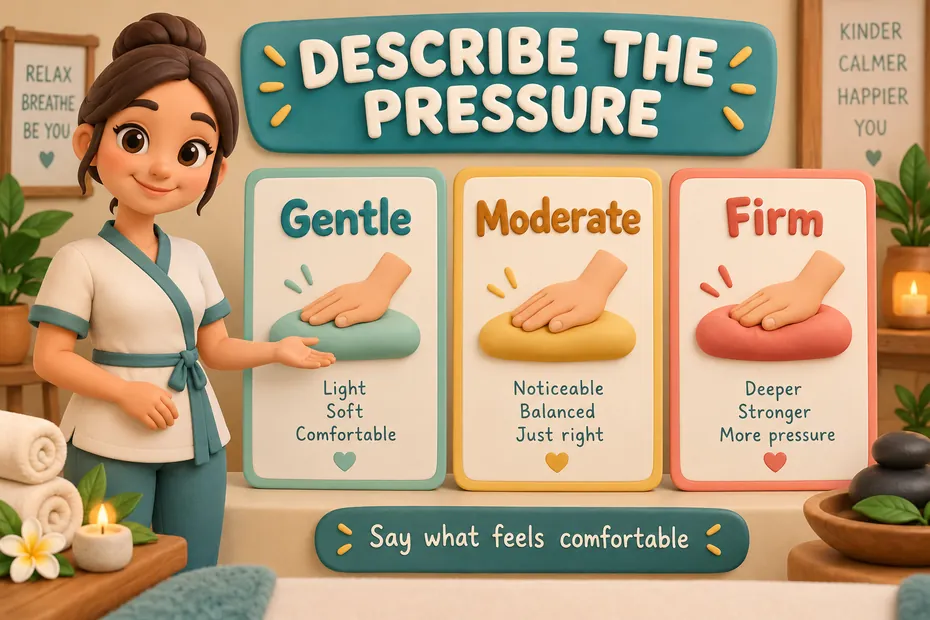
A description becomes clearer when each adjective has a specific job. Gentle describes pressure; rhythmic describes the pattern of movements; relaxing describes how a session felt. Combine one word from two categories rather than stacking near-synonyms such as “soothing, calming, peaceful, relaxing, tranquil” without explaining the experience.
| Detail | Useful adjectives | Original example |
|---|---|---|
| Pressure | gentle, light, moderate, firm | The therapist used light pressure around my shoulders. |
| Pace | slow, steady, brisk, rhythmic | The movements were slow and rhythmic. |
| Personal impression | relaxing, soothing, refreshing, invigorating | I found the session refreshing after a busy afternoon. |
| Setting | quiet, comfortable, warm, peaceful | The quiet room made the appointment feel unhurried. |
| Interaction | attentive, respectful, considerate, clear | The therapist was attentive to my pressure preferences. |
Keep the nouns matched to their modifiers. A quiet room concerns the setting, while a gentle massage concerns the treatment experience. An attentive therapist concerns the person’s behavior. Readers should not have to guess which part of the appointment your adjective describes.
Gentle, Firm, and Intense Are Different Descriptions
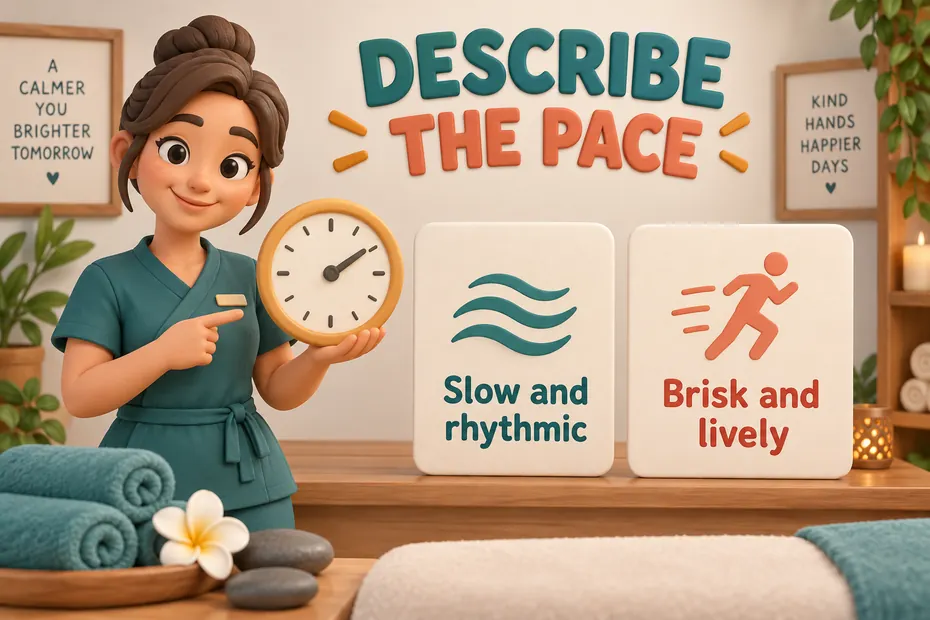
Gentle suggests a light, careful approach. Firm suggests stronger pressure. Intense describes a strong experience but is less precise: it might concern pressure, sensation, or someone’s emotional response. If you mean pressure, say “firm pressure.” If you mean discomfort, describe the discomfort directly rather than treating intense as praise.
In a review, “The pressure was firm but comfortable for me” gives more usable information than “The massage was powerful.” Comfort is personal, so the phrase for me matters. A friend’s preferred pressure is not automatically suitable for you. To communicate during an appointment, say “Please use lighter pressure” or “That area feels uncomfortable.”
Slow, Rhythmic, and Invigorating
Slow concerns speed. Rhythmic concerns a repeated pattern. They can work together: “The therapist used slow, rhythmic movements.” Neither adjective guarantees that the session will feel relaxing to everyone. A person might find a particular pace pleasant, distracting, or uncomfortable depending on the context.
Invigorating describes a feeling of renewed energy. Use it when that is your actual impression: “I found the brisk hand massage invigorating.” For a neutral description of a service, name the pace and technique instead. “Brisk movements” reports an observable feature; “You will feel energized” predicts a result for another person.
Use Therapeutic and Healing Carefully
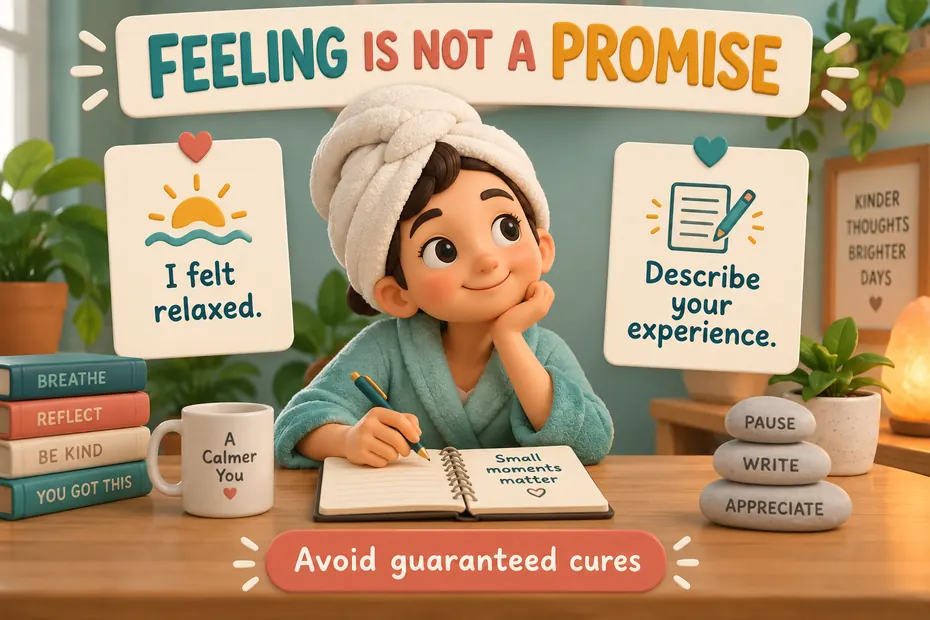
Therapeutic concerns treatment or a beneficial effect, so it carries more weight than a sensory adjective such as gentle. In everyday speech, someone might say a peaceful activity felt therapeutic. In a massage service description, however, readers may interpret the word as a health claim. State the actual service or intended purpose rather than implying a guaranteed outcome.
Clarification for the original benefits wording below: Terms such as healing and therapeutic should not be read as proof that massage cures a condition. NCCIH describes evidence and limitations separately for different uses of massage and advises against postponing medical care because of massage therapy. A pleasant experience and a demonstrated medical benefit are different claims.
For a personal account, prefer “I felt calmer afterward” to “The massage healed my stress.” For service copy, prefer “A session using light pressure and an unhurried pace” to “A guaranteed healing treatment.” These alternatives remain descriptive without turning a subjective impression into a promise.
Before-and-After Description Examples
- Vague: “The massage was amazing.” Specific: “The gentle pressure and steady pace felt soothing to me.”
- Unclear modifier: “The therapist was relaxing.” Specific: “The therapist’s calm explanations helped me feel comfortable.”
- Unsupported promise: “This massage eliminates every ache.” Specific: “Tell the therapist which areas feel uncomfortable and ask about the session’s goals.”
- Overloaded: “It was calming, peaceful, soothing, and relaxing.” Specific: “The quiet room and slow movements made the session feel relaxing.”
For fiction or a journal, sensory details can do more work than extra adjectives: describe the room’s sound, the pace of movements, or a character’s response. For a review, distinguish what you observed from how you felt. For instructions, use plain requests about pressure and comfort rather than decorative language.
Frequently Asked Questions
What are good words to describe a massage?
Gentle, firm, slow, rhythmic, soothing, relaxing, and refreshing are useful starting points. Match the word to the detail you mean: pressure, movement, setting, or personal response. “A gentle massage in a quiet room” is more informative than a long list of positive adjectives with no concrete detail.
What is the difference between soothing and relaxing?
Soothing suggests a calming or comforting effect, while relaxing emphasizes easing tension or feeling at ease. The meanings overlap, so choose one when both would describe the same impression. Add a concrete feature such as light pressure or an unhurried pace rather than repeating several similar words.
Can I describe a massage as intense?
Yes, but explain what was intense. “The pressure felt intense around my shoulders” is clearer than “It was an intense massage.” The adjective alone does not show whether the experience was comfortable. If a session feels uncomfortable, communicate that directly instead of assuming stronger pressure is better.
Does therapeutic mean a massage will cure a problem?
No. The label does not guarantee a cure or establish the evidence for a particular condition. Use specific descriptions and ask a qualified professional about individual concerns. NCCIH advises against using massage to delay medical care. In personal writing, report your own experience without promising the same outcome for others.
Sources for Vocabulary and Careful Claims
- NCCIH: Massage Therapy—What You Need To Know.
- Merriam-Webster: soothing.
- Merriam-Webster: therapeutic.
Looking for the perfect words to describe the blissful experience of a massage? Well, you’ve come to the right place! In this article, I’ll be sharing a list of adjectives that will help you vividly capture the sensations and effects of a massage. Whether you’re a massage therapist looking to enhance your descriptions or someone who simply wants to express their relaxation in words, these adjectives are sure to come in handy. So, let’s dive in and explore the world of descriptive words for massage!
How to Describe massage? – Different Scenarios
When it comes to describing a massage, there are various scenarios that can influence the sensations and effects one may experience. Let’s explore some different scenarios and the adjectives that can be used to describe them:
- Relaxing and Soothing: A massage can provide a sense of deep relaxation and soothing relief. Here are some adjectives that can be used to describe this type of massage:
- Energizing and Invigorating: In some cases, a massage can be invigorating and leave you feeling energized. Here are some adjectives that can be used to describe an energizing massage:
- Therapeutic and Healing: For individuals seeking therapeutic benefits from a massage, it’s essential to choose the right words to describe the experience. Here are some adjectives to consider:
- Deep Tissue and Intense: Deep tissue massages can be quite intense and focus on targeting specific areas of tension and discomfort. Here are some adjectives to capture this experience:
Remember, the choice of adjectives may vary depending on the individual’s preferences and the specific techniques used during the massage. Feel free to use these examples as a starting point and tailor your descriptions to the unique experiences you encounter.
By using descriptive adjectives, you can effectively communicate the sensations and effects of a massage, enhancing your ability to express your relaxation or the therapeutic benefits you’ve received.
Describing Words for massage in English
When it comes to describing a massage, there are various adjectives that can accurately convey the sensations and effects experienced during the session. By using descriptive words, we can paint a vivid picture of the different types of massages and the experiences they offer. Here are some adjectives to help you describe massages:
- Relaxing: A relaxing massage induces a sense of calmness and tranquility. It can ease tension, promote relaxation, and provide a soothing experience.
- Soothing: A soothing massage offers comfort and gentle relief, helping to alleviate stress and create a sense of well-being.
- Energizing: An energizing massage invigorates the body and mind, leaving you feeling refreshed and revitalized. It can boost energy levels and provide a burst of rejuvenation.
- Invigorating: An invigorating massage stimulates circulation, promoting increased blood flow and a rejuvenating effect. It can leave you feeling invigorated and ready to take on the day.
- Therapeutic: A therapeutic massage focuses on addressing specific issues or areas of discomfort in the body. It aims to relieve pain, enhance mobility, and promote healing.
- Healing: A healing massage facilitates the body’s natural healing process, targeting areas of tension or injury to promote recovery and restore balance.
- Deep Tissue: A deep tissue massage applies firm pressure to reach deeper layers of muscle and connective tissue. It can release chronic tension, alleviate muscle soreness, and improve flexibility.
- Intense: An intense massage involves deep pressure and vigorous movements, targeting tight muscles and providing a more vigorous and profound experience.
It’s important to note that the choice of adjectives may vary depending on individual preferences and the specific techniques used during the massage. Each person may have a unique experience and their own perception of the effects of a massage.
By using these descriptive words, we can effectively communicate the sensations and effects of various types of massages. Whether you are seeking relaxation, rejuvenation, or specific therapeutic benefits, there is a massage out there to cater to your needs.
Adjectives for massage
When it comes to describing different types of massages, using the right adjectives can effectively communicate the sensations and effects of the experience. Here are some adjectives that can be used to describe massages, along with example sentences to give you a better understanding of their meaning:
Positive Adjectives for Massage
- Relaxing: The massage was so relaxing that I fell asleep during the session.
- Soothing: The gentle strokes of the massage therapist provided a soothing sensation.
- Energizing: The invigorating massage left me feeling refreshed and full of energy.
- Invigorating: The deep tissue massage provided an invigorating experience, releasing tension in my muscles.
- Therapeutic: The therapeutic massage helped alleviate the pain in my lower back.
- Healing: The healing massage worked wonders for my sore muscles, speeding up the recovery process.
- Rejuvenating: The rejuvenating massage left me feeling younger and more vibrant.
- Balancing: The massage helped restore balance to my mind, body, and soul.
- Nurturing: The nurturing touch of the massage therapist made me feel cared for and relaxed.
- Revitalizing: The revitalizing massage invigorated my senses and improved my overall well-being.
- Calming: The calming massage technique helped me unwind and release stress.
- Pampering: The pampering massage made me feel spoiled and indulged.
- Painful: The deep tissue massage was a bit painful, but it was worth it to relieve the tension in my muscles.
- Uncomfortable: The unfamiliar massage techniques made me feel a little uncomfortable at first.
- Rough: The massage therapist used a rough pressure that wasn’t enjoyable.
- Invasive: The deep tissue massage felt invasive and made me tense up.
- Disappointing: The massage didn’t meet my expectations and left me feeling disappointed.
Remember, the choice of adjectives may vary depending on individual preferences and the specific techniques used during the massage. The key is to find the right words that accurately describe your experience and help others understand the nature of the massage.
Next, we’ll explore the benefits of different types of massages. But before that, let’s take a look at some interesting statistics related to the massage industry:
| Statistics | Data |
|---|---|
| Number of massage therapists in the US | 349,000 |
| Number of massage therapy businesses in the US | 57,000 |
| Revenue generated by the massage industry in the US | $18 billion |
| Percentage of adults in the US who received a massage in the past 12 months | 23% |
Stay tuned for more information on the various types of massages and their specific benefits.
Synonyms and Antonyms with Example Sentences
Synonyms for massage
When it comes to describing a massage experience, there are a variety of synonyms you can use to convey the different sensations and effects. Here are some synonyms that can help you express the benefits and feelings associated with a massage:
- Relaxing: A massage can be incredibly soothing, helping you feel calm and at ease. For example, “I had a relaxing massage that melted away all my stress.”
- Soothing: Many people seek a massage for its soothing qualities, which can help relieve muscle tension and promote relaxation. For example, “The gentle strokes of the massage therapist provided a soothing sensation.”
- Energizing: Some massages are designed to invigorate and energize the body, leaving you feeling refreshed. For example, “After the energizing massage, I felt a surge of energy throughout my entire body.”
- Invigorating: A massage that is invigorating can awaken your senses and leave you feeling revitalized. For example, “The deep tissue massage had an invigorating effect, leaving me feeling renewed.”
- Therapeutic: Many massages are specifically tailored to address certain ailments or conditions, making them therapeutic. For example, “The therapeutic massage targeted the tension in my shoulders and provided much-needed relief.”
- Healing: Massages can have a healing effect on both the body and mind, promoting overall wellness. For example, “The healing touch of the massage therapist helped alleviate my chronic pain.”
Note: The choice of adjective may vary depending on individual preferences and the specific massage techniques used.
Antonyms for massage
While most massages are associated with positive feelings and sensations, it’s important to acknowledge that everyone’s preferences and experiences may vary. Here are some antonyms that can be used to describe less desirable aspects of a massage:
- Painful: Unfortunately, some massages can be painful, especially when targeting deep muscle knots or trigger points. For example, “The therapist used firm pressure, which made the massage feel painful at times.”
- Uncomfortable: Not all massages provide a sense of comfort. Some may leave you feeling uncomfortable, especially if you prefer a lighter touch. For example, “The massage therapist’s technique was too intense for my liking, and I found it uncomfortable.”
- Rough: A rough massage can leave you feeling sore or bruised afterward. It’s important to communicate your preferences to the therapist. For example, “The therapist applied too much pressure during the massage, and it felt uncomfortably rough.”
- Invasive: Certain massage techniques may involve stretching or manipulating the body in ways that some individuals may find invasive. For example, “The deep tissue massage felt too invasive for me, and I preferred a gentler approach.”
- Disappointing: Unfortunately, not all massages live up to expectations. If a massage falls short of what you had hoped for, you might describe it as disappointing. For example, “The massage didn’t meet my expectations, and I left feeling disappointed.”
Remember, individual preferences and experiences can differ, so it’s essential to communicate your needs and preferences to the massage therapist to ensure a satisfying experience.
| Synonyms | Antonyms |
|---|---|
| Relaxing | Painful |
| Soothing | Uncomfortable |
| Energizing | Rough |
| Invigorating | Invasive |
| Therapeutic | Disappointing |
Conclusion
Using adjectives to describe different types of massages is essential in effectively communicating the sensations and effects of the experience. Throughout the article, we have explored a range of positive adjectives, such as relaxing, soothing, energizing, invigorating, therapeutic, healing, rejuvenating, balancing, nurturing, revitalizing, calming, and pampering, that can aptly capture the essence of a massage.
It is important to remember that the choice of adjectives may vary depending on individual preferences and specific massage techniques. While some may find certain adjectives like painful, uncomfortable, rough, invasive, and disappointing to be negative, others may appreciate the honesty and transparency they provide.
To ensure a satisfying experience, it is crucial to communicate your needs and preferences to the massage therapist. By expressing your desired level of pressure, areas of focus, and any specific concerns or goals, you can help them tailor the massage to your liking.
Using descriptive adjectives enables us to convey the unique qualities of each massage, allowing us to better understand and appreciate the benefits it offers. So, next time you book a massage, don’t hesitate to use these adjectives to express exactly what you’re looking for!