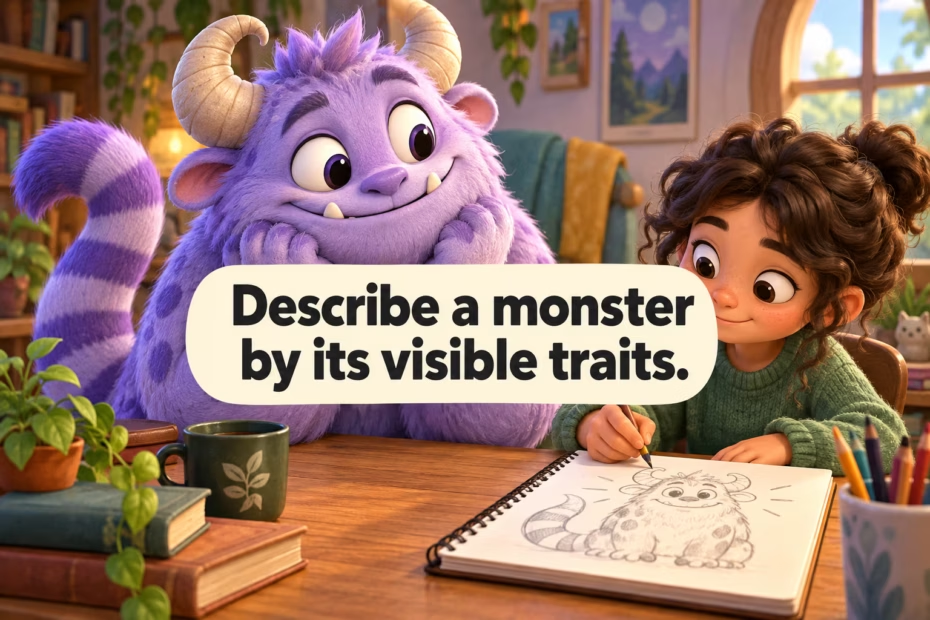
Monster adjectives describe a fictional creature’s visible appearance, behavior, abilities, atmosphere, or story role. Choose a word that fits the scene: “serpentine” describes a winding shape, “eerie” sets a mood, and “venomous” names a specific ability involving venom. Positive and negative labels depend on the creature’s actions and the narrator’s viewpoint.
A useful description is specific about what the reader can see or what the story establishes. The same monster might be towering in size, eerie in atmosphere, protective toward a child, or sinister in a particular scene. Those words describe different features; “positive” and “negative” are not fixed creature categories.

Choose an Adjective for Appearance or Atmosphere
Appearance words describe form, size, movement, or visible condition: gigantic, serpentine, or hideous may fit very different designs. Atmosphere words such as eerie and terrifying describe the effect a scene creates, which can depend on the narrator and reader.
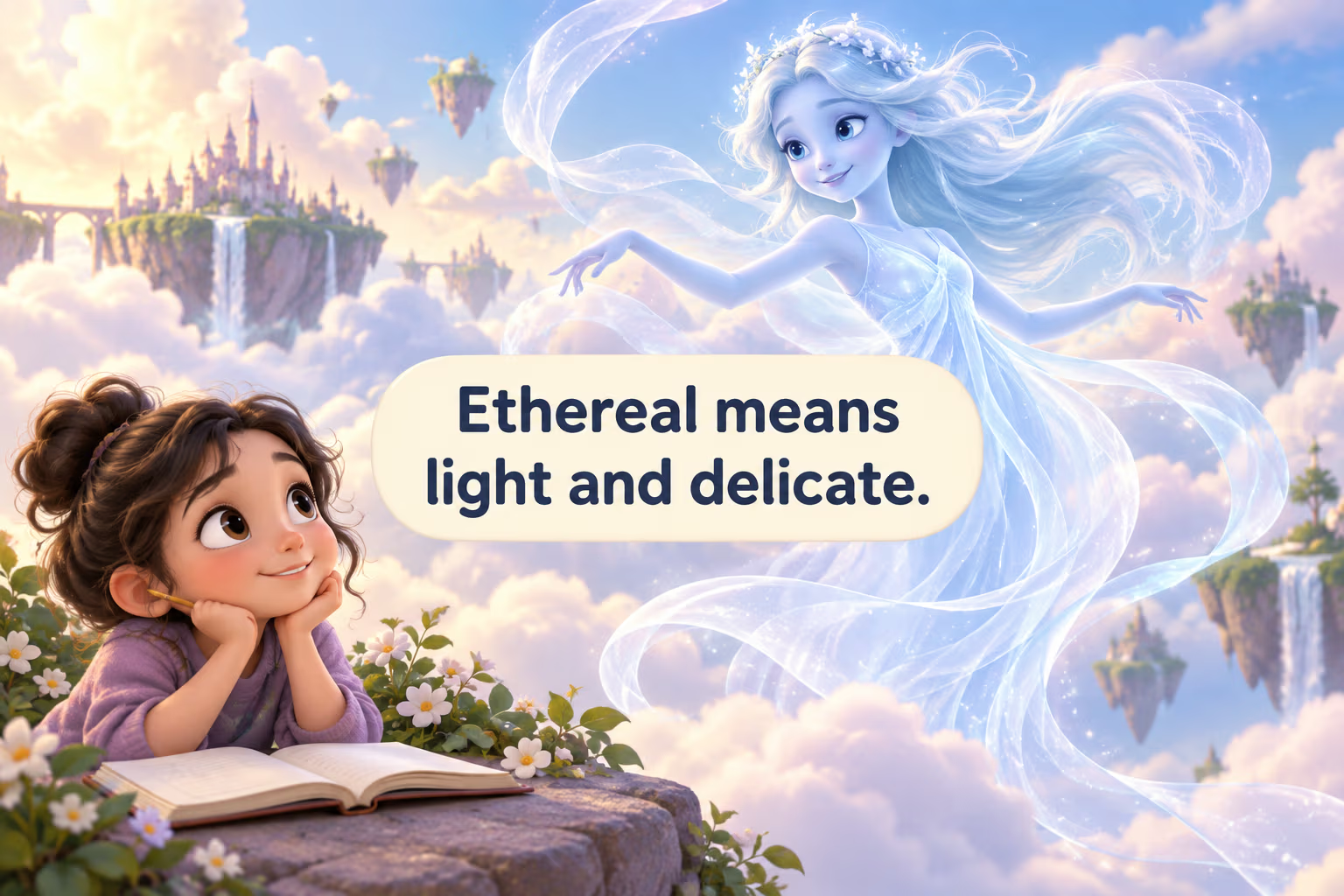
Ethereal means very light and delicate, especially in a way that seems outside the ordinary physical world. A pale, floating figure might look ethereal. The source example in which a monster phases through walls describes a supernatural ability; that action can contribute to an otherworldly impression, but “phases through walls” is not the definition of ethereal. Cambridge’s ethereal entry gives examples of delicate, nonphysical-seeming beauty and sound.
Use Ability Words Precisely
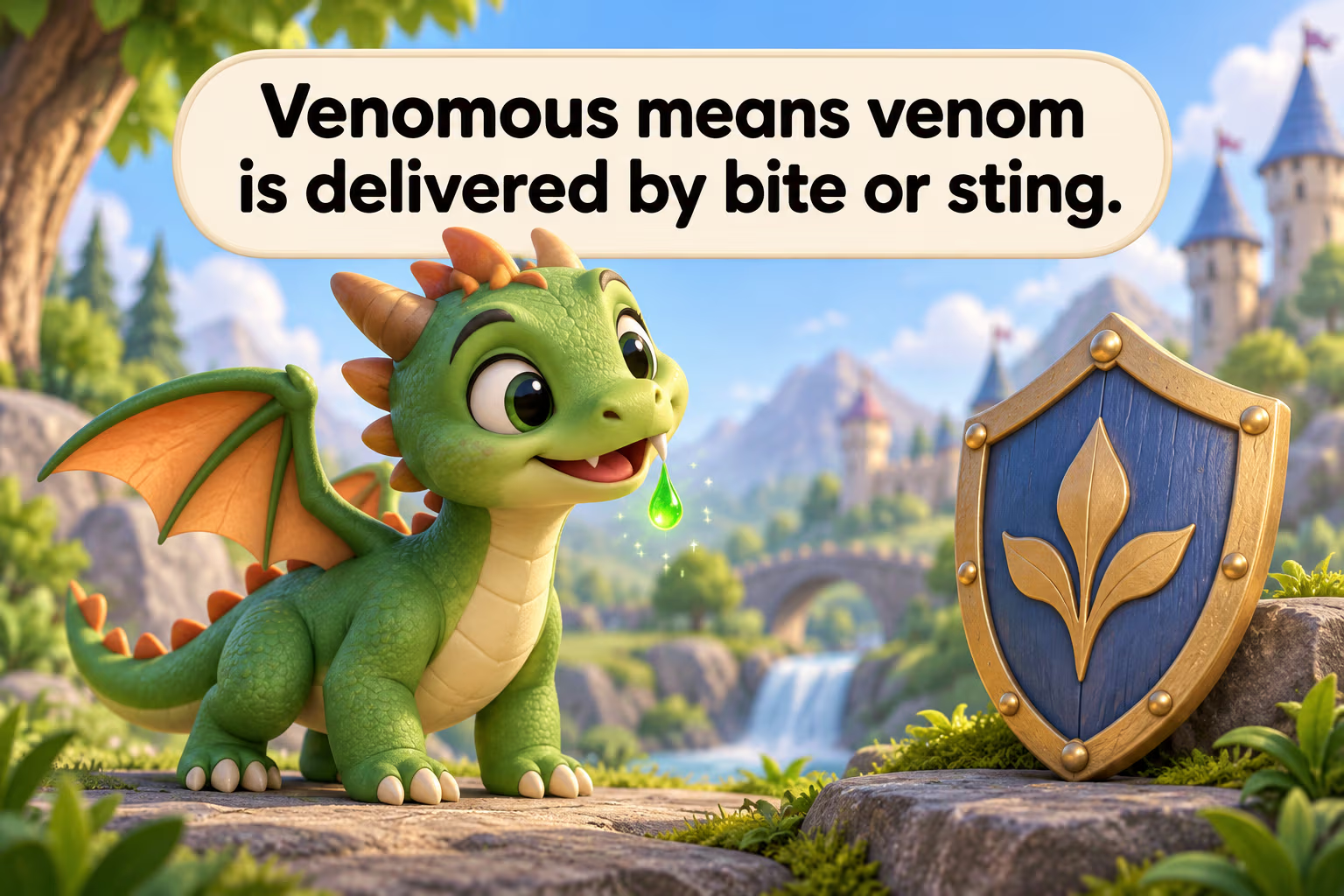
Venomous is more specific than “dangerous” or “toxic”: it describes an animal that produces venom delivered into another body by a bite or sting. The word does not cover every harmful substance or every kind of toxin. A fictional monster may have any power its story gives it, but that invented effect should not be presented as a general fact about real animals.
The retained source includes an example in which a fictional creature’s venomous bite paralyzes a victim. That sentence describes the creature’s imagined ability; venomous itself does not mean “paralyzing,” and venom does not always cause the same effect. Cambridge distinguishes the delivery sense of venomous from broader ideas such as poisonous or toxic.
Separate Creature Nouns from Adjectives
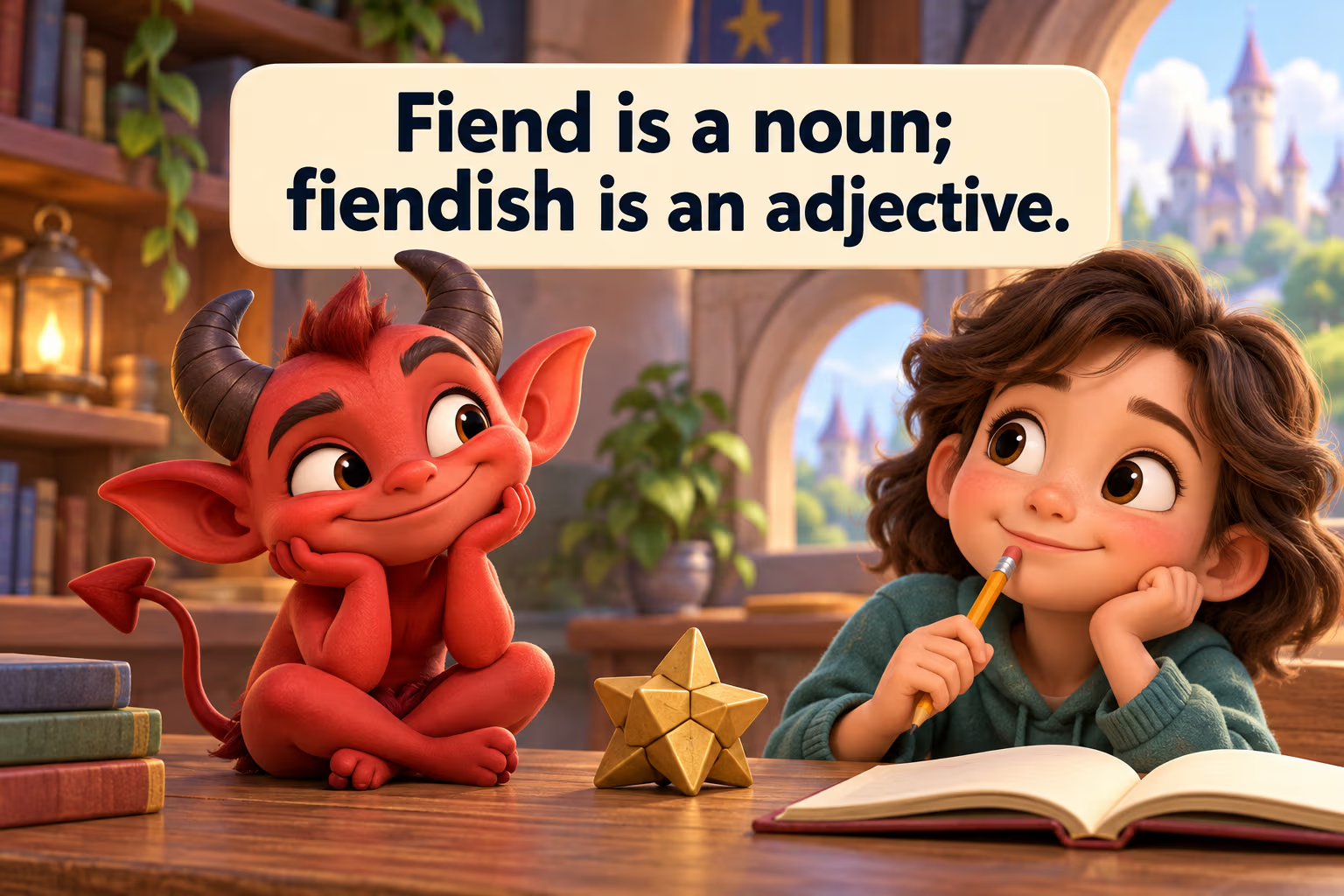
Fiend is a noun: it names an evil or cruel person or being in the relevant story sense. Fiendish is an adjective that can describe an evil or cruel quality, and in other contexts it can mean cleverly difficult. Compare “The fiend guarded the gate” with “The fiendish guardian guarded the gate.” Cambridge lists fiend as a noun and fiendish as an adjective.
Related Creature Words and Contrasting Roles
Words such as beast, creature, fiend, abomination, and monstrosity are nouns with different tones and meanings. They can be related creature words, but they are not all interchangeable adjective synonyms for monstrous. Likewise, an angel, saint, hero, human, or protector may play a contrasting story role; these are not strict dictionary antonyms of monster. The source tables below are kept as written, while this guide names those relationships more precisely.
Monstrous has more than one sense: it can mean like a monster, extremely large or bad, or very cruel. Pick the sense that fits. For a huge building, a cruel decision, or a creature-like face, use context to make the meaning clear. Avoid “monstrous monster” in new writing when a more precise trait such as towering, grotesque, or cruel will do; see Cambridge’s monstrous entry.
These distinctions are a guide for reading the original lists. Every original paragraph, list item, and table follows below unchanged, including repeated adjective groups and the source’s related-word tables. The words are examples for describing invented creatures, not claims about real animals or fixed moral types.
Monsters have always fascinated us with their terrifying presence and mysterious nature. From ancient myths to modern-day movies, these creatures have captured our imaginations and sent shivers down our spines. But how do we effectively describe these monstrous beings? In this article, I’ll be sharing a range of adjectives that will help you vividly depict these creatures in your writing. Whether you’re a writer looking to create a spine-chilling monster or a storyteller aiming to bring your audience to the edge of their seats, these adjectives will add depth and intensity to your descriptions. So, let’s dive into the world of adjectives for monsters and discover how to bring these fearsome beings to life with our words.
When it comes to describing monsters, the right choice of adjectives can make all the difference. From their physical appearance to their behavior and characteristics, these words will help you paint a vivid picture in the minds of your readers. Imagine a towering, hulking creature with glowing red eyes and razor-sharp teeth. Or perhaps a slimy, tentacled beast lurking in the shadows, ready to strike. By choosing the right adjectives, you can create a sense of fear, awe, and fascination that will keep your readers hooked. In this article, I’ll be providing you with a comprehensive list of adjectives for monsters, along with examples of how they can be used effectively in your writing. So, let’s get started and unleash the power of words to bring these monstrous beings to life on the page.
How to Describe monsters? – Different Scenarios
When it comes to describing monsters, it’s important to choose the right adjectives to create a vivid and engaging description. Whether you’re writing a story, creating a game, or just trying to spark imagination, here are some different scenarios and examples of how to describe monsters effectively:
- Appearance
When describing a monster’s appearance, it’s important to provide details that paint a clear picture in the reader’s mind. Here are a few adjectives to help you describe a monster’s appearance:
- Gigantic: The monster stood tall, towering over everything in its path.
- Hideous: Its twisted features and grotesque form made it horrifying to behold.
- Serpentine: The monster slithered effortlessly, its scales glistening in the moonlight.
- Behavior
Describing a monster’s behavior can help convey its nature and evoke emotions in the reader. Here are some adjectives to describe a monster’s behavior:
- Terrifying: The monster roared in fury, sending shivers down everyone’s spines.
- Sly: It moved with cunning and deceit, always one step ahead of its prey.
- Ravenous: The monster’s insatiable hunger drove it to devour everything in its path.
- Abilities
A monster’s abilities can add an element of awe and fascination to your description. Here are a few adjectives to describe a monster’s abilities:
- Monstrous Strength: The monster effortlessly lifted cars and demolished buildings.
- Ethereal: It possessed supernatural powers that allowed it to phase through walls.
- Venomous: Its venomous bite sent its victims into a state of paralysis.
- Environment
Describing the environment in which a monster resides can help set the mood and enhance the reader’s experience. Here are some adjectives to describe a monster’s environment:
- Eerie: The monster’s lair was shrouded in darkness, with whispers echoing through the air.
- Desolate: The monster wandered through a barren wasteland, a solitary figure in a world devoid of life.
- Otherworldly: The monster emerged from a portal, its surroundings pulsating with strange energy.
Describing Words for monsters in English
When it comes to describing monsters, choosing the right adjectives can bring your writing to life. These descriptive words help paint a vivid picture in the reader’s mind, creating a sense of excitement and intrigue. Let’s explore some powerful adjectives that can be used to describe monsters in English:
- Terrifying: These monsters evoke fear and dread. With their menacing appearance and eerie presence, they strike terror in the hearts of those who encounter them.
- Monstrous: This adjective emphasizes the sheer size, strength, or grotesque nature of a monster. It implies that the creature is beyond human comprehension and can create a sense of awe.
- Fierce: If a monster is described as fierce, it suggests that it is aggressive, ferocious, and ready to attack. This word conveys a sense of danger and power.
- Hideous: When a monster is described as hideous, it means that it is extremely ugly or repulsive in appearance. This adjective emphasizes the grotesque and chilling nature of the creature.
- Sinister: This word is used to describe monsters with a sense of evil or malevolence. It conveys the idea that the creature is up to no good and may pose a threat to those around it.
- Otherworldly: Some monsters are so unlike anything we’ve ever seen that they seem to come from another world. This adjective highlights the mysterious, alien nature of these creatures.
- Unstoppable: When a monster is described as unstoppable, it suggests that it cannot be defeated or overcome. This word is often used to convey the immense power and resilience of the creature.
These adjectives provide just a glimpse into the vast array of words that can be used to describe monsters. By choosing the right adjectives, you can create a captivating description that engages your readers and brings your monstrous creations to life on the page.
Examples of Describing Words for Monsters:
Adjectives
- Terrifying
- Monstrous
- Fierce
- Hideous
- Sinister
- Otherworldly
- Unstoppable
Adjectives for monsters
As a seasoned writer, I understand the importance of using accurate and descriptive language to bring monsters to life in our stories. In this section, I’ll provide you with a selection of adjectives that will help you create vivid descriptions of these mythical creatures. We’ll explore both positive and negative adjectives and provide example sentences to illustrate their usage.
Positive Adjectives for Monsters
When describing monsters in a positive light, we can use words that evoke a sense of admiration, awe, or fascination. Here are 12 examples of positive adjectives you can use:
| Adjective | Definition |
|---|---|
| Majestic | Impressive in appearance or action |
| Powerful | Having great strength or influence |
| Graceful | Elegant and smooth in movement |
| Enchanting | Having a magical or charming quality |
| Courageous | Brave and fearless |
| Noble | Exhibiting dignity and honor |
| Mystical | Having a spiritual or otherworldly quality |
| Legendary | Extremely famous and well-known |
| Ferocious | Fierce and aggressive |
| Resilient | Able to recover quickly from difficulties |
| Indomitable | Impossible to defeat or overcome |
| Wise | Showing good judgement and understanding |
Example Sentences:
- The majestic monster towered over the city, its presence commanding attention from all who beheld it.
- With its powerful claws and sharp fangs, the monster struck fear into the hearts of its enemies.
- The graceful monster moved effortlessly through the forest, its movements a symphony of elegance.
- The enchanting monster cast a spell on the crowd, mesmerizing them with its charms.
- The courageous monster faced its fears head-on, always ready to protect its loved ones.
- The noble monster acted with integrity and honor, setting an example for others to follow.
- The mystical monster possessed powers that defied explanation, captivating all who encountered it.
- The legendary monster’s tales have been passed down for generations, inspiring awe and wonder.
- The ferocious monster unleashed its fury, leaving destruction in its wake.
- The resilient monster faced many trials and setbacks, but it always managed to bounce back stronger.
- The indomitable monster stood its ground, refusing to be defeated by any adversary.
- The wise monster imparted its knowledge and guidance to those who sought its counsel.
Negative Adjectives for Monsters
On the other hand, negative adjectives can be used to evoke fear, disgust, or horror when describing monsters. Here are 5 examples of negative adjectives that can be used:
| Adjective | Definition |
|---|---|
| Monstrous | Extremely ugly or frightening |
| Sinister | Giving a feeling of evil or harm |
| Ghastly | Shockingly frightful or horrifying |
| Hideous | Extremely ugly or unpleasant to look at |
| Terrifying | Filling with extreme fear |
Example Sentences:
- The monstrous monster’s appearance sent shivers down the spines of all who caught a glimpse of it.
- The sinister monster lurked in the shadows, its presence foreboding and unsettling.
- The ghastly monster’s twisted visage haunted the nightmares of those who crossed its path.
- The hideous monster’s distorted features repelled all who dared to look upon it.
- The terrifying monster’s roar echoed through the night, striking fear into the hearts of anyone who heard it.
Remember, choosing the right adjectives is crucial in capturing the essence of your monsters and engaging your readers. Experiment with different combinations and let your creativity guide you as you bring these creatures to life on the page.
Synonyms and Antonyms with Example Sentences
Synonyms for monsters
When it comes to describing monsters, having a variety of synonyms at your disposal can make your writing more engaging and descriptive. Here are some synonyms for the word “monster” along with example sentences to help bring your creature to life:
| Synonym | Example Sentence |
|---|---|
| Beast | The beast emerged from the shadows, its eyes gleaming with hunger. |
| Creature | The ancient creature slumbered in the depths of the cave, waiting for its next victim. |
| Fiend | The fiendish monster cackled as it unleashed its terror upon the unsuspecting town. |
| Monstrosity | The towering monstrosity terrorized the city, leaving destruction in its wake. |
| Abomination | The grotesque abomination lurked in the darkness, its presence sending shivers down my spine. |
Antonyms for monsters
While synonyms can help you provide a range of descriptions for monsters, antonyms can provide a contrast by highlighting the absence of monstrous qualities. Here are some antonyms for the word “monster” along with example sentences:
| Antonym | Example Sentence |
|---|---|
| Angel | Unlike the menacing hordes of monsters, the angelic figure radiated warmth and serenity. |
| Saint | The saintly figure stood amidst the chaos, providing solace and hope to those in need. |
| Hero | In the face of danger, the hero valiantly fought against the monstrous forces threatening the world. |
| Human | The creature before me, although strange in appearance, had a trace of humanity in its eyes. |
| Protector | The mighty protector defended the innocent from the clutches of the monstrous creatures. |
By incorporating synonyms and antonyms into your writing, you can build a more nuanced and vivid portrayal of monsters. Experiment with different combinations to find the perfect words that capture the essence of your creature.
Conclusion
Describing monsters in writing can be a challenging task, but by using adjectives effectively, we can bring these creatures to life on the page. Throughout this article, we have explored a variety of synonyms and antonyms for the word “monster,” each offering a unique perspective and adding depth to our descriptions.
By incorporating synonyms like beasts, creatures, fiends, monstrosities, and abominations, we can tap into different aspects of a monster’s nature, whether it be their physical appearance, behavior, or inherent evil. On the other hand, antonyms such as angels, saints, heroes, humans, and protectors provide a contrasting view, highlighting the absence of monstrous qualities and offering a glimpse of light in an otherwise dark world.
Remember, a well-crafted description is crucial in captivating readers and immersing them in the world of your story. By utilizing synonyms and antonyms, we can create a more nuanced and vivid portrayal of monsters, allowing our readers to truly experience the terror or awe that these creatures evoke.
So, the next time you’re writing about monsters, don’t forget to harness the power of adjectives to paint a picture that will leave your readers trembling with fear or marveling in wonder.
Frequently Asked Questions
What does “ethereal” mean when describing a monster?
Ethereal means very light and delicate, often seeming not to belong to the ordinary physical world. A monster that phases through a wall has a supernatural ability; it may also look ethereal if its appearance is light, delicate, or otherworldly.
Does “venomous” mean any poisonous or toxic creature?
No. In its animal sense, venomous refers to producing venom that is delivered into another body by a bite or sting. “Poisonous” and “toxic” are broader terms; do not call every toxin venom or imply every venom has the same effect.
Is “fiend” an adjective?
Fiend is a noun that can name an evil or cruel person or being. Fiendish is an adjective describing a cruel or evil quality, or in some contexts something cleverly difficult. Use the form that fits the sentence.
Are beasts and angels strict synonyms or antonyms for monsters?
They are related terms or contrasting story roles, not necessarily strict lexical synonyms or antonyms. Beast and creature are nouns with their own meanings; angel and protector may describe a role that contrasts with a monster’s role in a particular story.
Can one monster be described with both positive and negative adjectives?
Yes. A creature might be frightening to strangers but protective toward a friend, or beautiful in appearance and cruel in behavior. Choose adjectives for the feature, action, or point of view you mean instead of treating positive and negative labels as permanent categories.


