
Adjectives for Photographs: Meaning & Examples
Adjectives for photographs describe visible qualities such as sharp focus, soft light, muted color, or tight framing, as well as a viewer’s interpretation of mood. Choose words that match the image: “backlit” identifies a lighting condition, while “nostalgic” expresses a response that may differ from one viewer to another.
Quick guide to photograph adjectives
- Use observable words such as sharp, backlit, monochrome, and cropped when you can point to evidence in the frame.
- Use mood words such as serene or dramatic as interpretations, and support them with visual details.
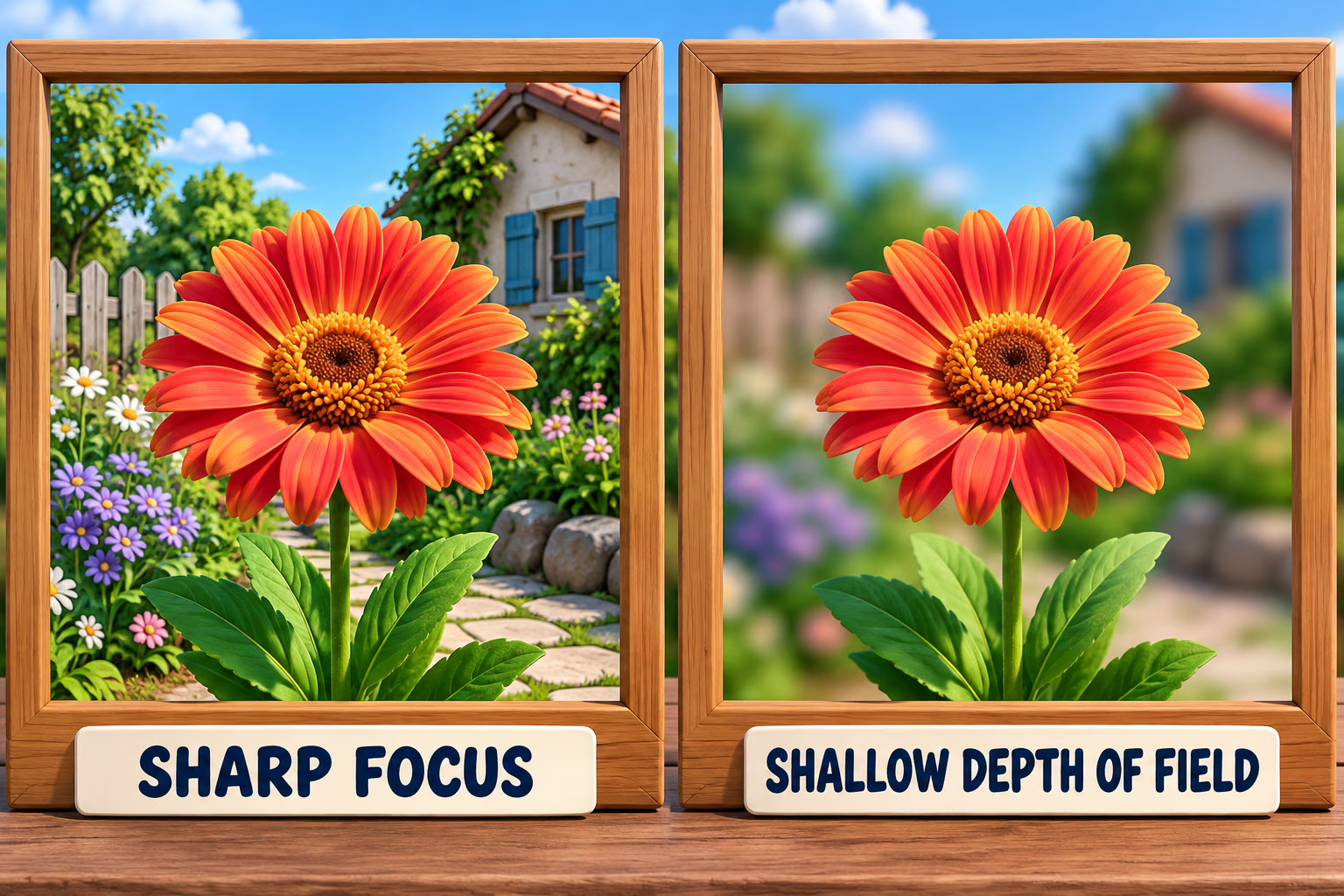
- Focus, resolution, and depth of field describe different image properties.
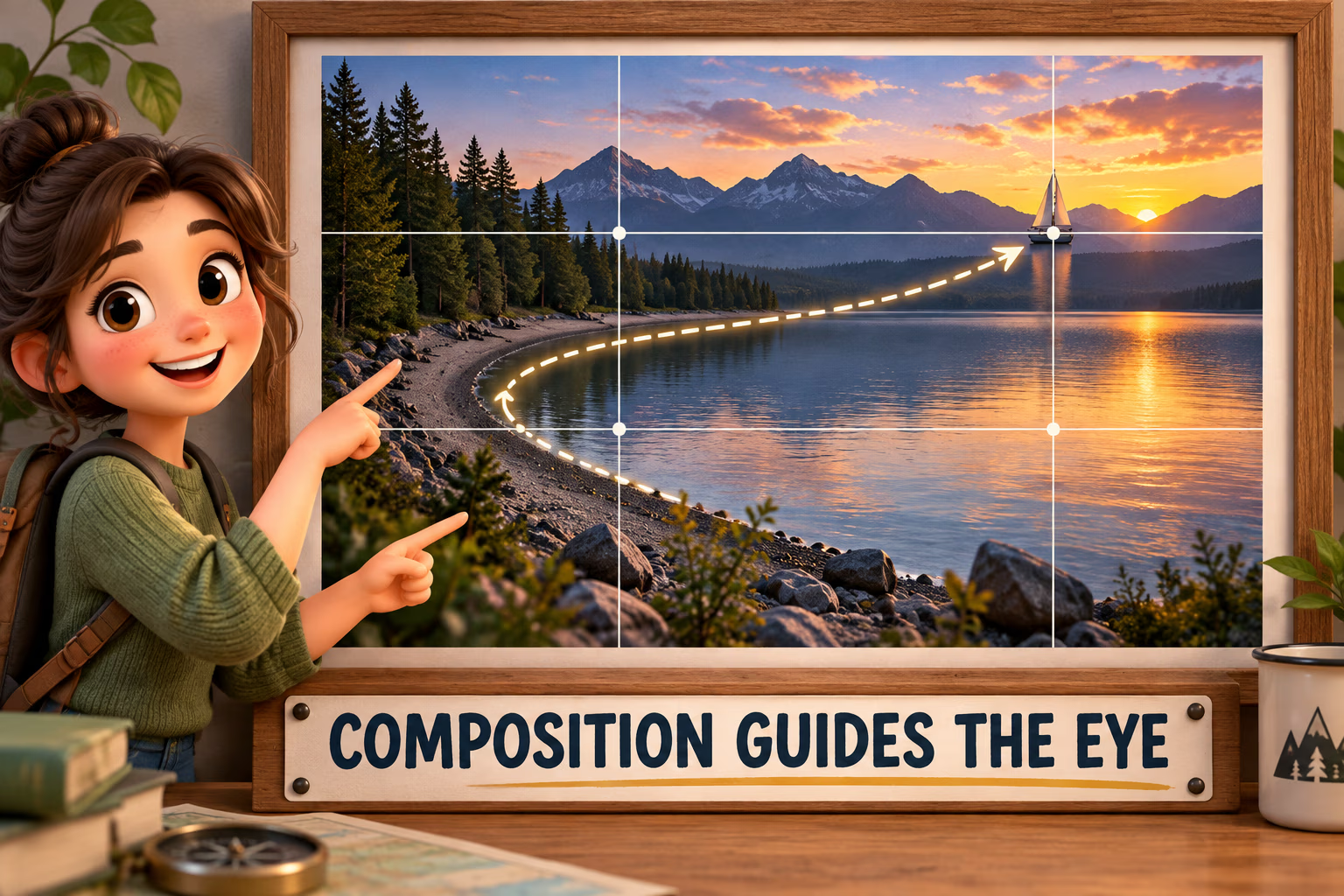
- Composition words describe how subjects and visual elements are arranged in the frame.
- For accessible alt text, describe the informative purpose of the image in context rather than listing adjectives.
How to choose an adjective for a photograph
Start with what a reader could verify by looking at the image, then add a mood or evaluation only when it helps explain your response. Adobe’s photography guides describe composition as arranging visual elements and discuss focus, depth of field, color, contrast, and leading lines as ways to direct attention.
- Name the feature: Is the subject sharply focused, the light diffused, the palette muted, or the frame tightly cropped?
- Check the scope: Say “a blurred background” if only the background is soft; do not call the whole photograph blurry.
- Separate fact from response: “Monochrome” describes color treatment; “haunting” describes an impression.
- Use a concrete noun: “A backlit portrait” or “a tightly framed flower” connects the adjective to the feature.
- Verify the context: Use “candid,” “documentary,” or “staged” only when the circumstances support the label.
Which words describe visible features?
Visible-feature adjectives are easiest to check because they point to a quality in the photograph itself. The table groups common choices by what the reader can inspect; it is a practical vocabulary guide, not a technical rating system.
| Feature | Useful adjectives | Example |
|---|---|---|
| Focus and detail | sharp, crisp, soft-focused, blurred | a sharp eye against a softly blurred background |
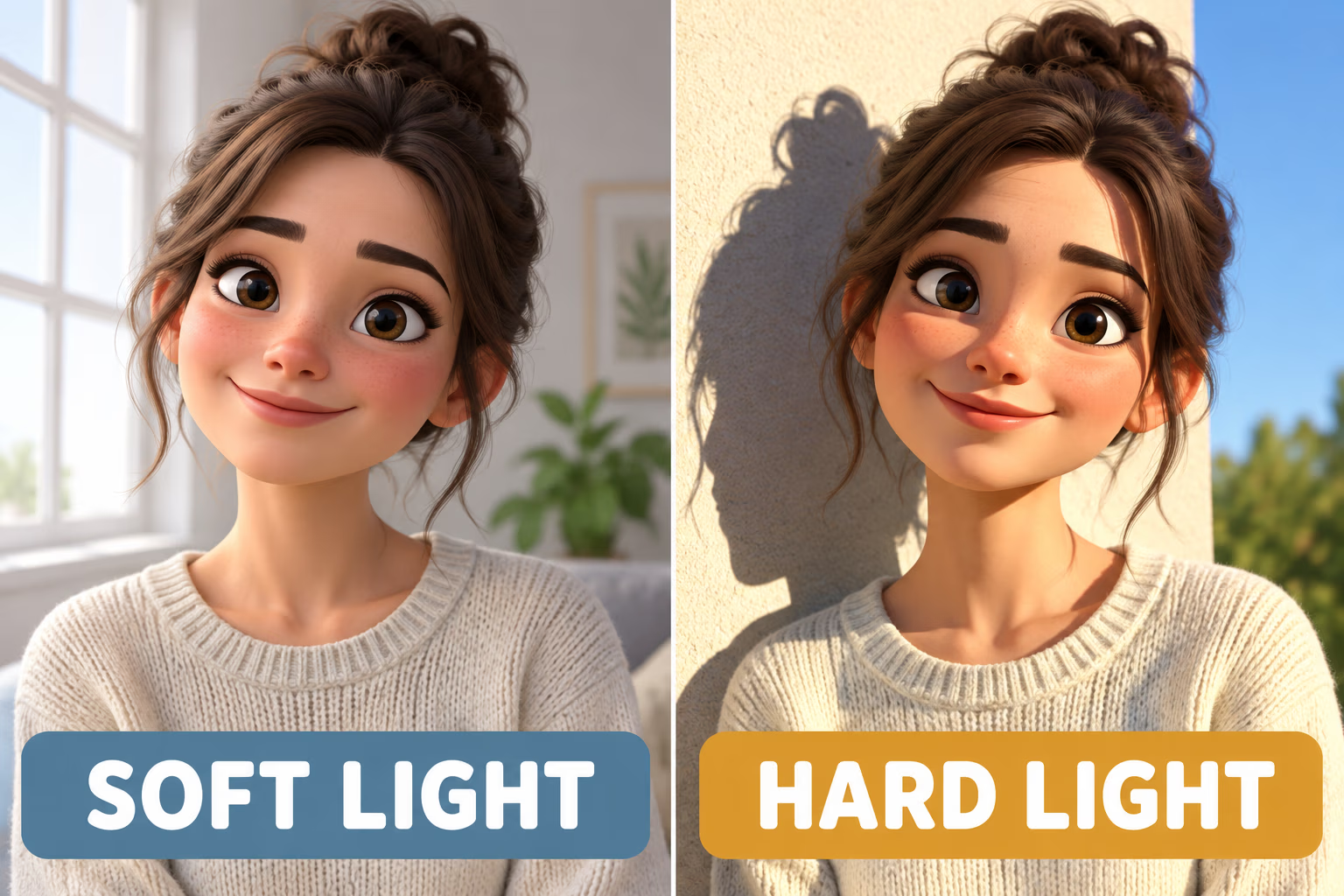
| Light and contrast | backlit, diffused, dim, high-contrast | a backlit figure with a bright outline |
| Color and tone | vivid, muted, monochrome, warm-toned | a muted palette of gray and blue |
| Framing and arrangement | tightly framed, panoramic, symmetrical, balanced | a symmetrical façade centered in the frame |
| Texture and atmosphere | grainy, smooth, hazy, crisp | a grainy night photograph with visible film texture |


How do mood adjectives differ from visual facts?
Mood adjectives report an interpretation rather than a measurable camera or image property. A photograph can look serene, playful, mysterious, or dramatic to a viewer, but those words become clearer when paired with details such as open space, a candid expression, deep shadow, or a limited palette.
For example, “a dramatic portrait” gives a broad reaction; “a dramatic portrait shaped by a single hard side light and deep shadows” explains the evidence behind it. Avoid presenting subjective judgments as universal facts, especially when describing people or culturally significant images.
Common adjective mix-ups
- Sharp vs. high-resolution: Sharp concerns defined focus and edges; high-resolution concerns pixel dimensions or detail capacity. A large file can still be out of focus.
- Soft-focused vs. blurry: Soft-focused often signals an intentional effect; blurry may suggest unwanted loss of clarity. State the cause only when you know it.
- Candid vs. posed: These describe how a photograph was made, not just how relaxed a subject appears. Do not infer circumstances from appearance alone.
- Bright vs. vivid: Bright can refer to illumination or a light tone; vivid usually describes strong, saturated color.
- Synonyms and antonyms: Words such as captivating or unappealing may describe a viewer’s response to a photograph; they are not literal synonyms or opposites of the noun photograph.
Writing useful captions and alt text
A caption can combine a concrete visual description with a clearly signaled interpretation: “A backlit runner crosses a misty bridge at dawn; the empty path gives the scene a quiet mood.” The first clause identifies visible details, while “quiet” makes the writer’s impression explicit.
For informative web images, the W3C Web Accessibility Initiative advises a concise text alternative that conveys the image’s meaning in context. If a graphic contains complex information, provide that information elsewhere on the page too; decorative images may use an empty alt attribute. See the W3C Images Tutorial and its alt-text decision tree.
Photography composition references: Adobe’s composition basics, emphasis and focus, and leading lines.
Original adjective lists and examples
The original article block below is retained verbatim, including all scenarios, 49 list items, the table, and the conclusion. Its synonym/antonym sections classify words by how they can describe a photograph; they do not make those words dictionary synonyms or antonyms of “photograph.”
View the original photograph-adjective article
Capturing the essence of a photograph is an art in itself. As a photographer, I know the importance of using the right adjectives to describe the visual beauty and emotions that a photograph can evoke. In this article, I’ll be sharing a curated list of adjectives that can help you effectively describe and enhance your photographs. Whether you’re a professional photographer or just someone who loves taking pictures, these adjectives will give you the tools to convey the unique qualities of your images.
From breathtaking landscapes to candid portraits, photographs have the power to transport us to different worlds and evoke a wide range of emotions. As I delve into the world of adjectives for photographs, I’ll be providing examples and explanations to help you understand how these descriptive words can bring your images to life. Whether you’re looking to capture the serenity of a sunset or the vibrant energy of a bustling city, these adjectives will help you find the perfect words to describe your photographs and engage your viewers on a deeper level.
How to Describe photograph? – Different Scenarios
When it comes to describing photographs, using the right adjectives is essential to effectively convey the unique qualities of an image. Depending on the scenario, different types of adjectives can be used to bring a photograph to life. Let’s explore some scenarios and the adjectives that can be employed to describe photographs in each of them.
Landscape Photography
- Vast: When capturing wide open spaces or breathtaking landscapes, use this adjective to convey the sense of enormity and grandeur. Example: The photograph showcases a vast expanse of rolling hills.
- Serene: Tranquil scenes can be described as serene, evoking a sense of peace and calm. Example: The photograph captures the serene beauty of a peaceful lake at sunset.
- Majestic: Use this adjective to describe landscapes that exude a sense of regal beauty and awe. Example: The photograph depicts the majestic mountains towering over a picturesque valley.
Portrait Photography
- Expressive: When describing portraits that convey strong emotions or capture a subject’s personality, use this adjective. Example: The photograph beautifully captures the subject’s expressive eyes, reflecting a mix of joy and sadness.
- Stunning: Highlight the exceptional beauty of a subject by using the adjective stunning. Example: The photograph showcases a stunning bride in her elegant wedding gown.
- Charismatic: Use this adjective to describe portraits that exude a captivating and magnetic charm. Example: The photograph captures the subject’s charismatic smile, instantly drawing the viewer into the frame.
- Delicate: When describing photographs of intricate objects or fragile compositions, use the adjective delicate to convey a sense of fragility and fine details. Example: The photograph showcases a delicate arrangement of blooming flowers.
- Surreal: This adjective is ideal for describing photographs that have an otherworldly and dreamlike quality. Example: The photograph creates a surreal atmosphere with its floating objects and vibrant colors.
- Glorious: Use this adjective to describe photographs that capture everyday objects in a breathtaking and magnificent way. Example: The photograph showcases the glorious beauty of a perfectly ripe fruit.
Describing Words for photograph in English
As a photographer, I believe that using the right adjectives to describe a photograph is essential in conveying its beauty, emotions, and unique qualities. Choosing the right words can enhance the viewer’s experience, drawing them in and creating a deeper connection. Let’s explore some describing words in English that can bring photographs to life:
- Breathtaking: When a photograph is truly awe-inspiring, we can describe it as breathtaking. It captures a scene or moment that leaves us speechless and deeply moved.
- Serene: A serene photograph evokes a sense of calm and tranquility. It showcases peaceful landscapes or portraits that exude a sense of inner peace.
- Vibrant: Vibrant photographs are full of life and energy. They use bold and vivid colors to capture attention and create a lively atmosphere.
- Majestic: Majestic photographs portray grandeur and magnificence. They often depict majestic landscapes or subjects that command respect and admiration.
- Intimate: Intimate photographs capture personal moments and emotions. They reveal raw and genuine connections between subjects, inviting viewers to share in their experiences.
- Mysterious: Mysterious photographs spark curiosity and intrigue. They leave room for interpretation and invite viewers to unravel their hidden stories.
- Ethereal: Ethereal photographs have a delicate and otherworldly quality. They transport viewers to dreamlike realms, often featuring soft lighting and ethereal subjects.
- Powerful: Powerful photographs have a strong impact and evoke strong emotions. They tell stories of strength, resilience, and adversity, leaving a lasting impression on the viewer.
These are just a few examples of the adjectives that can be used to describe photographs in English. By choosing the right words, we can engage viewers on a deeper level and make our photographs come alive. Remember, the beauty of photography lies not only in the images themselves but also in the words we use to describe them.
| Adjective | Description |
|---|---|
| Breathtaking | Captivating, leaving viewers speechless |
| Serene | Calm, tranquil |
| Vibrant | Full of life and energy |
| Majestic | Grand, magnificent |
| Intimate | Personal, revealing emotions and connections |
| Mysterious | Intriguing |
Adjectives for photograph
Positive Adjectives for Photograph with 12 Example Sentences
As a photographer, capturing the essence and emotions in a photograph is my passion. Choosing the right adjectives to describe photographs can greatly enhance their visual beauty and impact. Here are some positive adjectives that can be used to bring photographs to life:
- Breathtaking: The sunset over the mountains was absolutely breathtaking.
- Serene: The calm waters of the lake created a serene atmosphere in the photograph.
- Vibrant: The colorful flowers in the garden made the photograph vibrant and lively.
- Majestic: The grandeur of the ancient castle made the photograph look truly majestic.
- Intimate: The close-up shot captured an intimate moment between the couple.
- Mysterious: The misty forest portrayed a mysterious and enigmatic feel.
- Powerful: The photograph of the crashing waves conveyed a powerful sense of nature’s force.
- Whimsical: The playful colors and composition added a whimsical touch to the photograph.
- Enchanting: The moonlit night created an enchanting atmosphere in the photograph.
- Captivating: The gaze of the subject in the portrait was captivating.
- Exhilarating: The action-packed sports photograph was exhilarating to look at.
- Idyllic: The picturesque countryside scene portrayed an idyllic setting.
Negative Adjectives for Photograph with 5 example sentences
While we often focus on the positive aspects of photographs, there are also negative adjectives that can be used to describe certain images. It’s important to remember that these adjectives are not inherently bad, but can be used to convey a specific mood or impression:
- Drab: The dull colors and lack of contrast made the photograph look drab.
- Gloomy: The dark storm clouds in the sky gave the photograph a gloomy atmosphere.
- Cluttered: The busy composition and numerous elements in the photograph appeared cluttered.
- Unflattering: The unflattering lighting cast harsh shadows on the subject’s face.
- Blurry: The photograph was blurry and lacked sharpness, making it difficult to see the details.
Synonyms and Antonyms with Example Sentences
Synonyms for photograph
When it comes to describing photographs, using a variety of adjectives can help capture the essence and evoke emotions. Here are some synonyms that can be used to enhance the description of a photograph:
- Stunning: The photograph of the sunset was absolutely stunning, with vibrant colors that took my breath away.
- Picturesque: The picturesque photograph of a quaint village nestled in the mountains transported me to a different era.
- Breathtaking: The aerial photograph of the city at night was simply breathtaking, with the glittering lights creating a mesmerizing scene.
- Captivating: The photograph of the young girl gazing at a butterfly was truly captivating, as it captured her innocence and curiosity.
- Majestic: The photograph of the snow-covered mountain peak showcased its majestic beauty and grandeur.
- Serene: The photograph of a calm lake surrounded by lush greenery exuded a sense of serenity and tranquility.
- Enchanting: The photograph of a fairytale castle surrounded by blooming flowers was truly enchanting.
- Whimsical: The photograph of a carousel with colorful lights and playful horses had a whimsical charm that brought back childhood memories.
- Intimate: The black and white photograph of a couple sharing a tender moment captured the intimacy of their relationship.
- Exhilarating: The photograph of a surfer riding a towering wave was exhilarating, capturing the thrill and adrenaline of the moment.
Antonyms for photograph
While positive adjectives are commonly used to describe photographs, there are also negative adjectives that can be used to convey specific qualities or characteristics. Here are some antonyms that can be used to describe certain images:
- Drab: The photograph of the abandoned building in black and white portrayed a drab and lifeless atmosphere.
- Gloomy: The photograph of a rainy day in the city had a gloomy vibe, with gray clouds and wet streets.
- Cluttered: The photograph of a messy room showcased its cluttered state, with items scattered all around.
- Unflattering: The photograph taken at an awkward angle was unflattering, highlighting all the imperfections.
- Blurry: The photograph of a moving subject appeared blurry, lacking sharpness and clarity.
Choosing the right adjectives is crucial to effectively describe photographs and engage viewers on a deeper level. By using synonyms and, if necessary, antonyms, you can bring photographs to life and convey the intended emotions and messages.
Conclusion
Using the right adjectives to describe photographs is crucial in enhancing their visual impact and evoking emotions in viewers. Throughout this article, we have explored a range of positive adjectives that can be used to describe photographs, such as stunning, picturesque, breathtaking, captivating, majestic, serene, enchanting, whimsical, intimate, and exhilarating. These adjectives help to create a vivid and engaging experience for the viewer, allowing them to connect with the image on a deeper level.
Additionally, we have also touched upon negative adjectives that can be used to describe certain images, such as drab, gloomy, cluttered, unflattering, and blurry. While these adjectives may not be desirable in all cases, they can be used effectively to convey a specific mood or atmosphere.
By carefully selecting the right words to describe our photographs, we can bring them to life and make them more memorable. Whether it’s a captivating landscape or an intimate portrait, the adjectives we choose have the power to engage viewers and leave a lasting impression. So next time you’re describing a photograph, remember the impact that adjectives can have and choose them wisely.


