Adjectives for Respect: Choose the Word That Fits
When you write about respect, decide what you want the adjective to describe: someone’s behavior, the way another person regards them, or something considered acceptable or worthy. Respectful, respected, and respectable look similar, but they do different jobs.
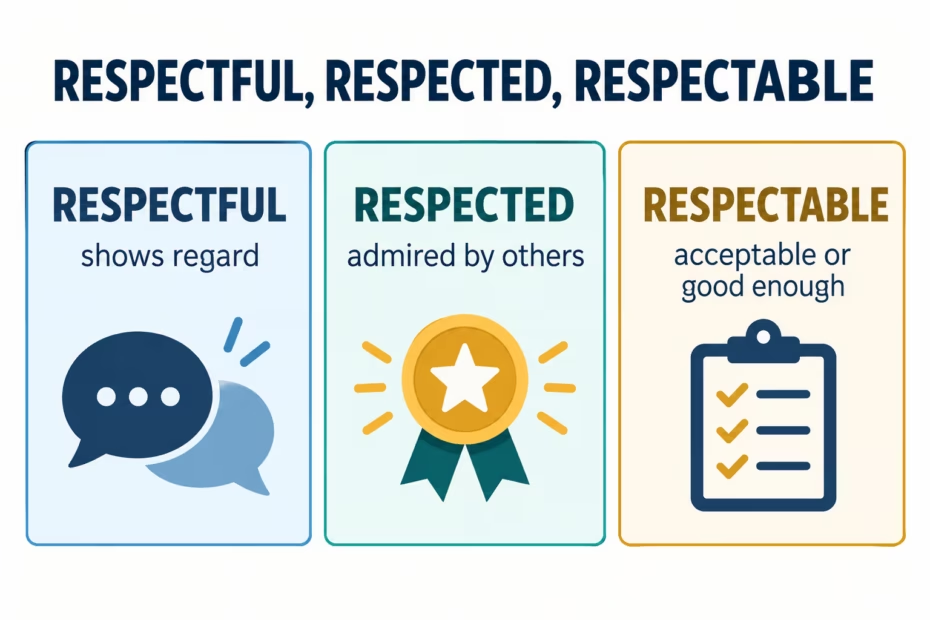
Respectful, respected, or respectable?
| Word | Meaning | Example |
|---|---|---|
| Respectful | Showing politeness, consideration, or regard | She asked a respectful question about the tradition. |
| Respected | Admired or held in high regard by others | The respected teacher welcomed questions from the class. |
| Respectable | Socially acceptable, or good enough in amount or quality | The team earned a respectable score in its first tournament. |
A respectful reply describes the reply’s tone. A respected researcher is regarded highly by other people. A respectable result is acceptable or solid. So “respectful” is usually the best choice when you mean that a person or action shows respect; “respected” describes reputation, and “respectable” has a broader meaning that can involve social approval or an adequate standard.
Adjectives for showing respect
Use an adjective that names the specific way respect appears:
- Considerate: mindful of another person’s needs or feelings. It was considerate of Luis to ask before sharing the photo.
- Courteous: polite and showing respect, even during disagreement. The two speakers remained courteous while debating the proposal.
- Tactful: careful not to offend or embarrass someone. Her tactful feedback focused on how to improve the draft.
- Attentive: listening or paying careful attention. The attentive host made sure each guest could join the conversation.
- Fair-minded: willing to consider people or views impartially. A fair-minded moderator gave both sides time to explain.
- Respectful: showing regard through words or actions. The class held a respectful discussion about different customs.
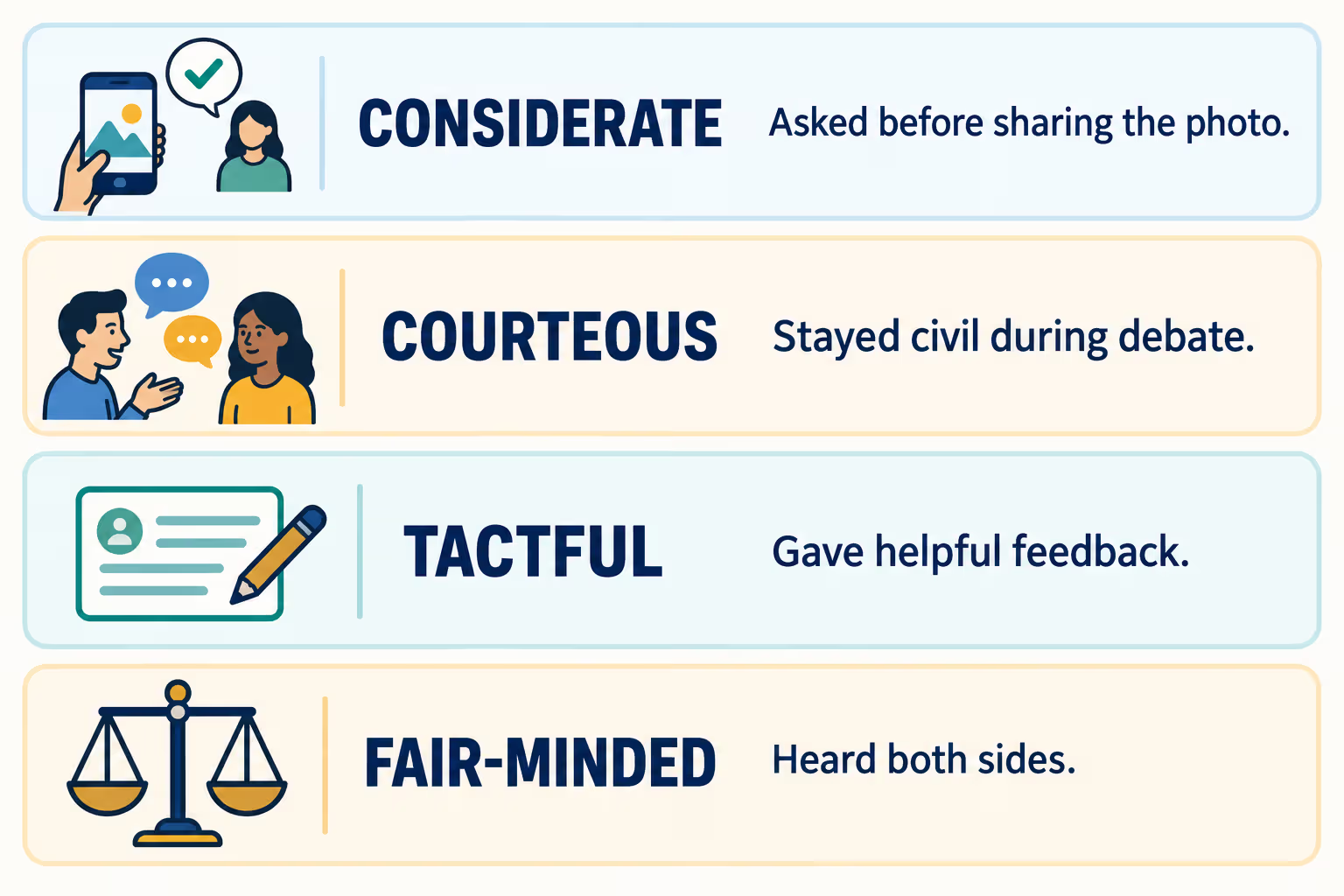
These words are related but not identical: a person can be courteous in manner, considerate of someone’s needs, or fair-minded in how they make a decision. Give readers a concrete action when possible.
Adjectives for someone or something worthy of respect
If you are describing a quality or achievement that earns admiration, consider admirable, principled, reliable, courageous, or dedicated. For example, “Her principled decision was admirable” explains what merits respect. “The respected organization” instead tells us that people generally hold the organization in high regard.
Respected often describes a person, group, profession, publication, or institution with an established reputation. It does not automatically mean everyone agrees with that person or organization. When you can, name the evidence: “a respected doctor who has led community clinics for 20 years” gives readers a reason for the description.
Useful patterns with respect
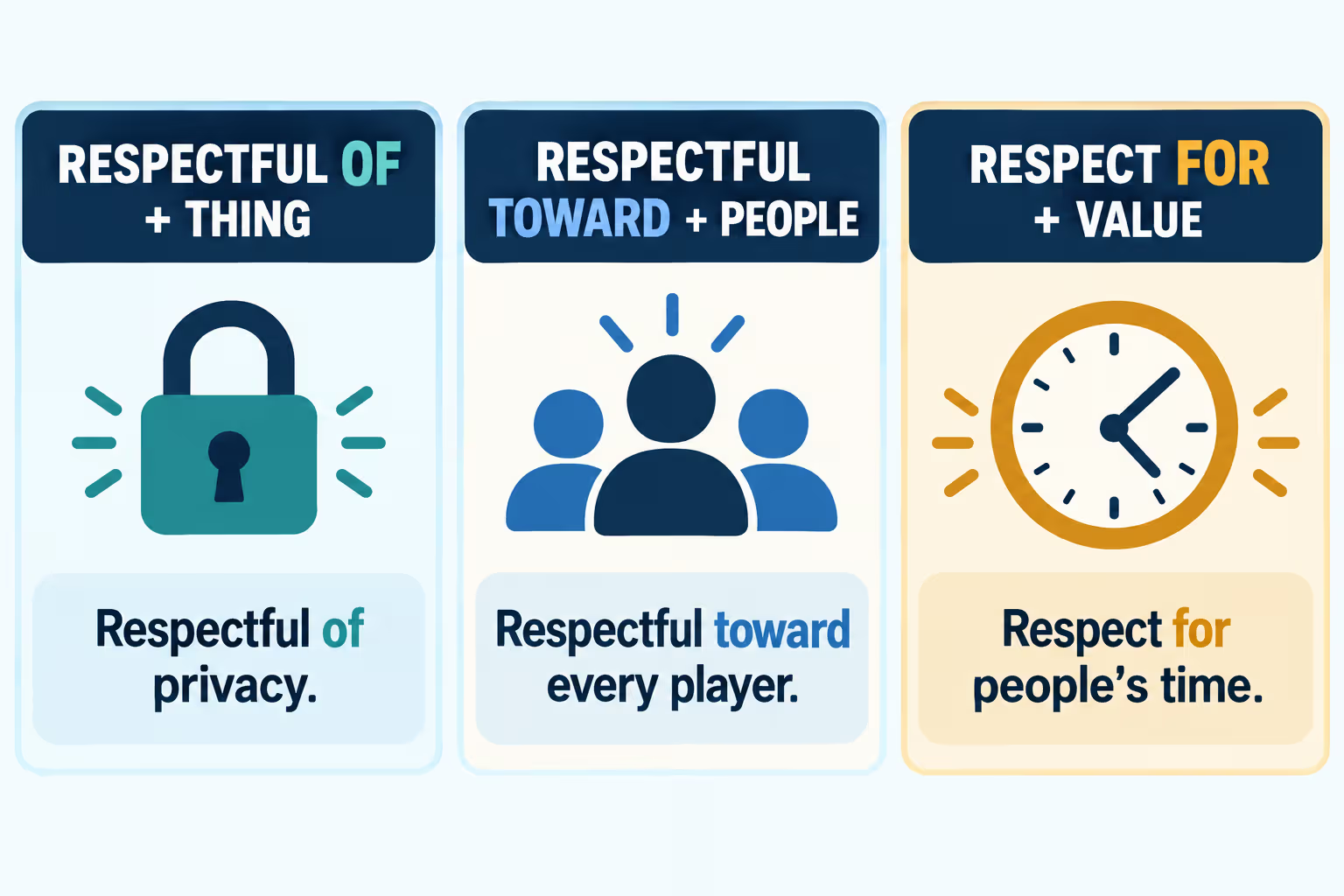
- respectful of + noun: Please be respectful of other people’s privacy.
- respectful toward + person or group: The coach was respectful toward every player.
- respect for + person, right, or idea: The policy shows respect for workers’ time.
- highly/widely respected: She is a widely respected historian.
- a respectable + amount, score, or standard: The project reached a respectable level of accuracy.
Respectful does not mean agreeing with someone. You can disagree respectfully by explaining your view without insults and by acknowledging the other person’s point. Deferential is a more formal word for showing deference, often toward someone with greater authority, experience, or status; it can suggest a stronger difference in rank than “respectful.”
Quick choice guide
- Choose respectful for considerate words, actions, disagreement, or treatment.
- Choose respected when others admire a person or recognize their reputation.
- Choose respectable for something socially acceptable or good enough in amount or quality.
- Choose a more precise adjective—such as courteous, considerate, or principled—when it tells readers exactly what you mean.
Respect is a fundamental aspect of human interaction, and using the right adjectives to describe it can help convey its depth and significance. In this article, I’ll be exploring a wide range of adjectives that capture the essence of respect, along with examples that illustrate their usage. Whether you’re writing a heartfelt tribute, crafting a persuasive speech, or simply seeking to enhance your vocabulary, these descriptive words will add a touch of eloquence and power to your expressions of respect.
From “admiring” to “appreciative,” we’ll delve into adjectives that highlight different facets of respect. Each word carries its own unique connotation, allowing you to precisely convey the type of respect you wish to express. Whether it’s admiration for someone’s accomplishments, appreciation for their character, or reverence for their wisdom, these adjectives will help you articulate your sentiments with clarity and impact. So, let’s dive into the world of adjectives for respect and discover the perfect words to elevate your expressions of admiration and esteem.
How to Describe respect? – Different Scenarios
When it comes to describing respect, there are various adjectives that can be used to convey its depth and significance. Whether you’re writing a tribute, giving a speech, or simply looking to enhance your vocabulary, using the right adjectives can make all the difference. Let’s explore different scenarios where we can describe respect using appropriate adjectives:
- Admiration: When we admire someone, we hold them in high regard and respect their qualities or achievements. Some adjectives that can be used to describe respect in this scenario are:
- Appreciation: Expressing appreciation for someone often includes showing respect for their contributions or actions. Consider using these adjectives to describe respect in this context:
- Reverence: Sometimes, respect can take on a more solemn and reverential tone. Here are some adjectives that capture this aspect of respect:
Remember, the choice of adjective depends on the specific context and the level of respect you wish to convey. By using these examples, you can enhance your expressions of admiration and esteem in various scenarios.
Now that we’ve explored how to describe respect in different scenarios, let’s move on to the next section, where we will delve into the power of using metaphors to describe respect in even more vivid and engaging ways.
Describing Words for respect in English
When it comes to describing respect, there are several adjectives that can effectively convey the sentiment of admiration, appreciation, and reverence. Choosing the right adjective depends on the specific context and the level of respect one wishes to convey. Let’s explore a few examples:
- Deep: Use this adjective to describe a profound and intense level of respect. For example, “I have a deep respect for her unwavering dedication to her craft.” It implies a high level of admiration and reverence.
- Humble: This adjective conveys a respectful attitude that is characterized by modesty and humility. For instance, “I admire her for her humble nature and down-to-earth personality.” It indicates a respectful appreciation for someone who does not seek attention or boast about their achievements.
- Genuine: Use this adjective to describe a sincere and authentic form of respect. For example, “Her genuine respect for others is evident in the way she treats everyone with kindness and empathy.” It implies a respectful attitude that comes from a place of honesty and sincerity.
- Unconditional: This adjective denotes a respect that is without limitations or restrictions. For instance, “He has an unconditional respect for the rights and dignity of every individual.” It implies a respect that is not influenced by external factors or conditions.
- Profound: Use this adjective to convey a deep, thoughtful, and intense level of respect. For example, “I have a profound respect for her ability to overcome challenges and achieve success.” It indicates a respect that goes beyond surface-level admiration.
These are just a few examples of adjectives that can effectively describe respect in different contexts. Remember, the choice of adjective should align with the desired tone and level of respect you want to convey. By using the right words, you can express your admiration, appreciation, and reverence in a meaningful and impactful way.
Now that we’ve explored the power of adjectives in conveying respect, let’s dive into the next section, where we’ll discuss the use of metaphors to describe respect in more vivid and engaging ways. Stay tuned!
Adjectives for respect
Positive Adjectives for Respect with 12 Example Sentences
When it comes to describing respect, there are several positive adjectives that can help convey this important quality. By using these adjectives, we can capture the depth and value of respect in different scenarios. Here are 12 examples of positive adjectives that can be used to describe respect:
- Deep: Showing deep respect means having a profound admiration for someone or something. For example, “I have deep respect for my grandparents for all they have accomplished in their lives.”
- Humble: Describing respect as humble means acknowledging the worth and importance of others without boasting or arrogance. For instance, “He always remains humble, even though he is incredibly talented and successful.”
- Genuine: To convey genuine respect is to express sincere admiration and regard. An example sentence could be, “I have genuine respect for her hard work and dedication to her craft.”
- Unconditional: Describing respect as unconditional signifies having respect regardless of circumstances or actions. For example, “Parents should show their children unconditional respect, teaching them the importance of treating others with kindness.”
- Profound: To describe respect as profound means that it goes beyond surface-level admiration and is deeply meaningful. For instance, “The artist’s work touched my heart and left a profound sense of respect for their talent.”
- Empathetic: An empathetic respect means understanding and acknowledging others’ feelings and experiences. For example, “I have empathetic respect for her as she overcame many challenges to achieve her goals.”
- Eminent: Describing respect as eminent signifies high regard and admiration for someone’s accomplishments and reputation. For instance, “The CEO of the company has earned an eminent respect in the business community for her leadership skills.”
- Courteous: Using the adjective courteous to describe respect means showing politeness, consideration, and good manners. An example sentence could be, “He always treats everyone with courteous respect, making others feel valued and appreciated.”
- Inclusive: An inclusive respect means valuing and appreciating diversity, recognizing the worth of all individuals. For example, “We should foster an inclusive respect for all cultures, embracing the richness they bring to our society.”
- Authentic: To convey authentic respect is to show genuine admiration and appreciation, without pretense or ulterior motives. For instance, “She always speaks from the heart, conveying her authentic respect for others.”
- Admirable: Describing respect as admirable means having high regard for someone’s qualities or achievements. An example sentence could be, “His perseverance and determination are truly admirable, earning him respect from his peers.”
- Noble: Using the adjective noble to describe respect signifies honorable and upright behavior towards others. For example, “The firefighter’s selfless actions are a testament to his noble respect for life and safety.”
Negative Adjectives for Respect with 5 Example Sentences
While we primarily focus on positive adjectives for respect, it’s essential to acknowledge that respect is not always present in every situation. Here are five examples of negative adjectives that can be used to describe a lack of respect:
- Disrespectful: When someone is disrespectful, they show a lack of regard and consideration for others. An example sentence could be, “His rude comments were disrespectful and hurtful.”
Synonyms and Antonyms with Example Sentences
Synonyms for respect
When it comes to describing respect, there are several synonyms that can be used to convey similar meanings. Here are some examples:
| Synonym | Definition | Example Sentence |
|---|---|---|
| Admiration | A feeling of respect and liking for someone or something | I have great admiration for my teacher, who is incredibly knowledgeable. |
| Esteem | A high regard or favorable opinion | I hold my grandparents in high esteem for their wisdom and love. |
| Reverence | Deep respect and admiration | The students showed reverence to their elders by bowing in deference to them. |
| Honor | High respect, esteem, or reverence | The soldier was awarded a medal of honor for his brave actions during the war. |
Remember, using these synonyms allows us to vary our language and make our writing more interesting and engaging.
Antonyms for respect
On the other hand, there are also antonyms, or words with opposite meanings, for respect. These antonyms can be used to describe a lack of respect or disrespect. Here are a few examples:
| Antonym | Definition | Example Sentence |
|---|---|---|
| Disregard | Lack of attention or consideration | His constant disregard for others’ feelings is quite disappointing. |
| Contempt | A feeling of disrespect or scorn | The boss treated his employees with contempt and never appreciated their hard work. |
| Disdain | A feeling of contempt or scorn towards someone or something | She looked at the old book with disdain, not understanding its value. |
| Insolence | Rude and disrespectful behavior | The student showed insolence by talking back to the teacher. |
By understanding these antonyms, we can highlight the importance of respect and help children identify disrespectful behavior.
Throughout this article, we have discussed different adjectives that can be used to describe respect, both positive and negative. As educators, it is essential to teach children about the value of respect and the impact it can have on their relationships and interactions with others.
Conclusion
In this article, we have explored the significance of respect and its impact on our interactions with others. By using positive adjectives, we can effectively convey respect in various situations. Adjectives such as “deep,” “humble,” “genuine,” and “unconditional” allow us to express the depth and sincerity of our respect. Additionally, words like “profound,” “empathetic,” and “eminent” highlight the admiration and regard we have for others.
It is important to note that respect can also be described using negative adjectives such as “disrespectful,” which help us identify behaviors that lack respect. By understanding these synonyms and antonyms for respect, we can enrich our vocabulary and create more engaging and impactful writing.
By incorporating these adjectives into our language, we can cultivate a culture of respect and understanding. Whether it is in our personal relationships or professional environments, using these descriptive words can foster positive interactions and build stronger connections.
Let us strive to embrace respect in our daily lives, and encourage others to do the same. Together, we can create a world where respect is valued and celebrated.


