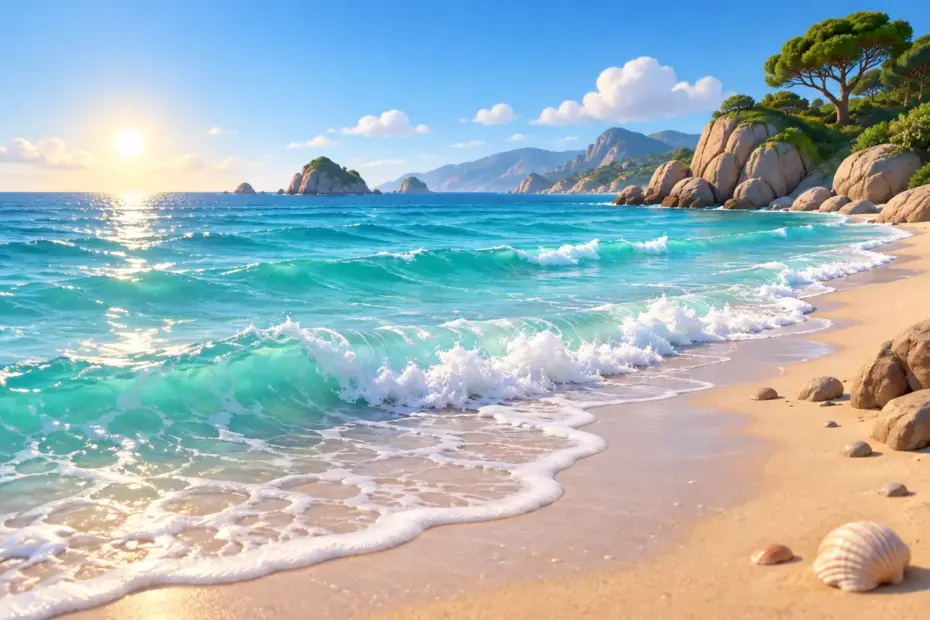
Adjectives for the Sea: Words for Every Mood
Adjectives for the sea work best when they name an observable quality: a glassy surface, choppy waves, turquoise water, or stormy weather. The word should match the scene and its purpose. A travel caption can be evocative; a forecast or safety note should use precise, factual language.
Key facts at a glance
- Calm describes a still sea or one with only small waves; glassy emphasizes a smooth, reflective surface.
- Choppy usually describes many small, irregular wind-driven waves, while rough covers more generally unsettled water.
- Words such as turquoise, silver, and sunlit describe appearance under particular light and viewing conditions.
- Serene and restless express an observer’s impression, not a measured sea state.
- For safety or forecasts, pair descriptive prose with official local conditions rather than treating adjectives as measurements.
Choose a sea adjective by what you observe
Describe the sea through one visible feature at a time: surface texture, wave movement, color, light, or atmosphere. This keeps a sentence accurate when the sea is visually beautiful but physically unsettled.
- Surface: smooth, glassy, rippled, choppy, rough.
- Movement: lapping, rolling, surging, breaking, swirling.
- Color and light: turquoise, slate-blue, silver, sunlit, shadowed.
- Mood: tranquil, restless, ominous, majestic, inviting.
For example, “The turquoise sea looked inviting, but its choppy surface rocked the small boat.” The color and the wave condition are separate observations, so the sentence can describe both without suggesting that clear water is automatically safe.
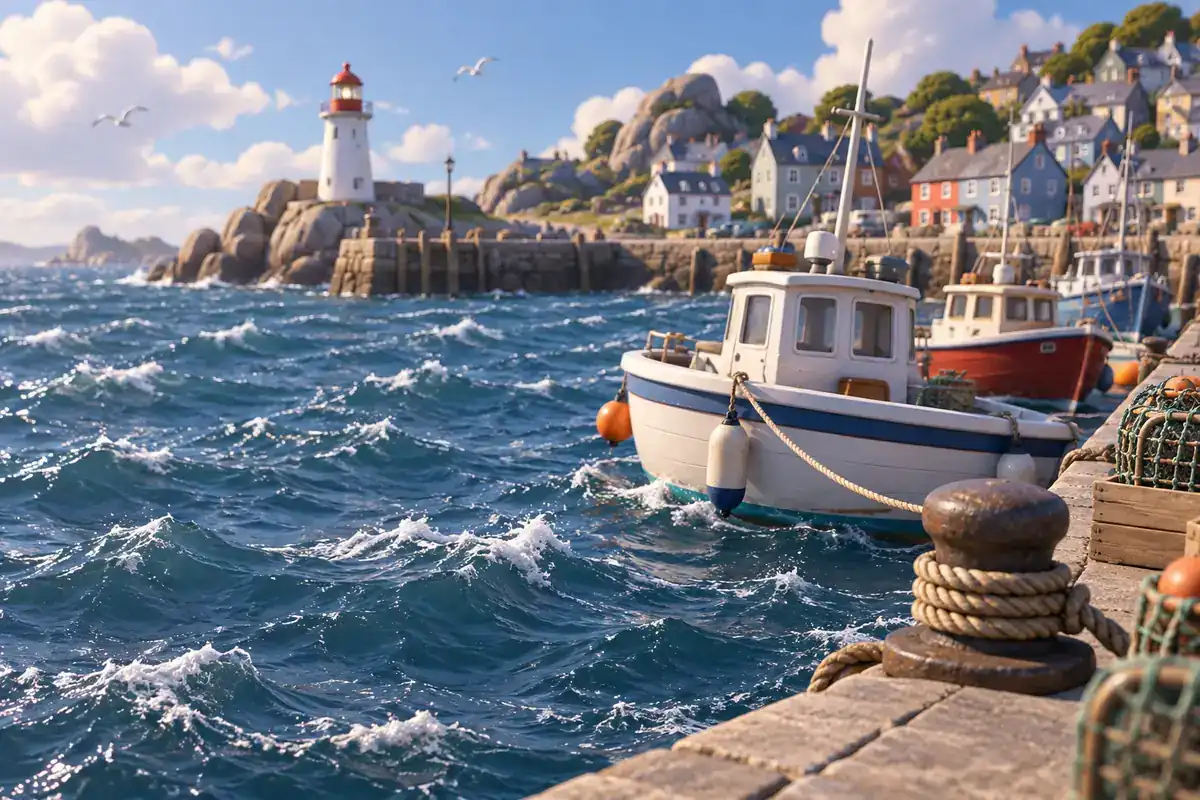
How do calm, choppy, and rough seas differ?
Calm suggests little surface disturbance, choppy points to frequent short waves, and rough is a broader word for unsettled water with stronger winds or larger waves. These terms are useful in general writing, but they are not precise substitutes for a marine forecast.
| Word | What it suggests | Example |
|---|---|---|
| glassy | Very smooth, reflective water | “A glassy sea mirrored the pale morning sky.” |
| rippled | Small waves or slight surface movement | “The rippled sea caught the sunlight.” |
| choppy | Many short, uneven waves | “Wind made the bay choppy by noon.” |
| rough | Unsettled water, often with strong wind or larger waves | “The ferry crossed a rough sea.” |
| storm-tossed | Strong movement associated with a storm | “The storm-tossed sea battered the outer rocks.” |
Usage tip: Choose choppy when the small, irregular wave pattern matters. Choose rough when the general difficulty or discomfort of the conditions matters. Use stormy for the weather or the atmosphere, and turbulent when strong, disorderly movement is the main image.

Which adjectives describe sea color and light?
Color adjectives depend on light, depth, sediment, and the angle from which someone sees the water, so describe the view rather than presenting one shade as permanent. Turquoise, emerald, and deep blue can name visible colors; silver or golden often describes reflected light.
Compare “The sea was blue” with “The late sun turned the shallow water turquoise and the distant water slate-blue.” The second sentence makes the observation more useful by tying color to depth and time of day. Crystal-clear describes transparency, not cleanliness or drinkability, so avoid using it as a water-quality claim.
When are mood words useful for describing the sea?
Tranquil, serene, restless, and ominous communicate a speaker’s response to the scene. They work well in stories, travel writing, and personal descriptions, but they are less informative than physical terms when readers need to understand actual water conditions.
Writers can combine a mood word with evidence: “The sea seemed ominous beneath low clouds as dark waves rolled toward the harbor.” That sentence grounds an interpretation in observable details. In a factual report, prefer those details by themselves: cloud cover, wave pattern, and visibility.
How can you use sea adjectives in a clear sentence?
First name the feature you mean, then choose one adjective that adds information and attach it to the correct noun. A restless sea describes the water’s movement; a salty breeze describes the air; a rocky coast describes the shoreline.
- Decide whether the sentence is about water, waves, light, weather, or mood.
- Select a word that adds a specific detail, such as wind-chopped for surface texture.
- Give a short piece of evidence: “Wind-chopped waves slapped the harbor wall.”
- Check whether your word could imply a safety judgment. If so, make the factual conditions explicit.
One precise adjective usually works better than a stack of near-synonyms. “The calm, tranquil, peaceful, serene sea” repeats a mood; “A calm sea held the last orange light” combines a physical description with a concrete visual detail.
What should descriptive sea words not imply?
Words such as inviting, clear, and beautiful describe appearance or reaction, not whether swimming or boating is safe. Likewise, violent and raging are vivid figurative choices, not measured classifications. For travel advice, navigation, or safety, use current local advisories and marine conditions.
Descriptive language is also viewpoint-dependent: a distant horizon may look smooth even while waves near shore break strongly. Name where the observation takes place—offshore, in a bay, or at the waterline—when that distinction changes the picture.
When it comes to the sea, words often fail to capture its vastness and beauty. But with the right adjectives, we can attempt to paint a vivid picture of this awe-inspiring natural wonder. In this article, I’ll be sharing a selection of descriptive words that will help you convey the essence of the sea. From tranquil to tempestuous, these adjectives will allow you to express the various moods and characteristics of the sea in all its glory.
How to Describe sea? – Different Scenarios
When trying to capture the vastness and beauty of the sea, it can be challenging to find the right words to describe its various moods and characteristics. Luckily, I’m here to help you paint a vivid picture of this natural wonder. Let’s explore how to describe the sea in different scenarios:
1. Calm and Serene
When the sea is calm and serene, it invokes a sense of peace and tranquility. Here are some adjectives to describe this scenario:
- Tranquil: The sea is calm and quiet, creating a soothing atmosphere.
- Serene: The smooth surface of the sea reflects the peacefulness of the surroundings.
- Still: The sea is motionless, without any waves or ripples.
Example: The sea stretched out before me, its tranquil surface reflecting the golden hues of the setting sun.
2. Powerful and Mighty
In some scenarios, the sea can be a force of nature, displaying its power and might. Here are adjectives to describe this scenario:
- Stormy: The sea is turbulent and rough, with crashing waves and strong winds.
- Fierce: The sea roars with intensity, displaying its untamed strength.
- Raging: The sea is in a state of fury, with waves violently crashing against the shoreline.
Example: I stood by the shore, in awe of the sea’s fierce and raging power as waves crashed against the rocky cliffs.
3. Playful and Lively
The sea can also possess a playful and lively nature, especially on sunny days. Here are adjectives to describe this scenario:
- Sparkling: The sea glistens under the sunlight, creating a mesmerizing sight.
- Vibrant: The sea is alive with color and energy, inviting joy and excitement.
- Lively: The sea is full of movement, with waves dancing and splashing against the sand.
Example: Children laughed as they played in the lively sea, their joy matching the sparkling waves that surrounded them.
- Mystical: The sea holds an air of mystery and magic, as if hiding ancient secrets within its depths.
Describing Words for sea in English
The sea is a magnificent and awe-inspiring natural wonder. As an expert blogger with years of experience, I have come across many adjectives that perfectly capture the essence of the sea. In this section, I will share with you a selection of descriptive words that will help you effectively convey the beauty and power of the sea to your students. Take a look at these adjectives and their examples:
- Calm: The sea can be calm, creating a sense of tranquility and peace.
- The sea is calm as glass, reflecting the colors of the sunset.
- The calm sea gently laps against the golden sandy beach.
- Mighty: The sea is mighty, reflecting its immense power and strength.
- The mighty sea crashes against the towering cliffs, creating a spectacle of breathtaking waves.
- The powerful sound of the sea echoes across the shoreline.
- Playful: The sea can be playful, bringing joy and excitement to those who explore its wonders.
- The playful sea invites children to build sandcastles and frolic in its gentle waves.
- Dolphins can be seen leaping and playing in the playful sea.
- Majestic: The sea exudes majesty, captivating all who gaze upon its vastness.
- The majestic sea stretches as far as the eye can see, meeting the horizon in a beautiful union.
- The sun sets over the majestic sea, painting the sky in stunning shades of orange and pink.
- Eternal: The sea has an eternal quality, symbolizing both the passage of time and the vastness of the universe.
- The eternal sea has witnessed countless stories of love and adventure throughout history.
- The stars reflect upon the surface of the eternal sea, creating a mesmerizing scene.
By incorporating these descriptive words into your teaching materials, you can help your students develop a deeper understanding and appreciation for the sea. Whether it’s through storytelling, art activities, or nature walks, these adjectives will allow your students to create vivid images in their minds and express their thoughts about the sea in an engaging and creative way.
Adjectives for sea
The sea is a majestic and eternal force of nature that captivates us with its vastness and beauty. Trying to capture the essence of the sea with words can be challenging, but with the right adjectives, we can paint a vivid picture of its various qualities. In this section, I will explore positive and negative adjectives that can help describe the sea in different scenarios. Let’s dive in!
Positive Adjectives for Sea
The sea has a calming and soothing effect on our senses. Here are twelve positive adjectives that can be used to describe the sea:
| Adjective | Definition |
|---|---|
| Calm | Peaceful and tranquil |
| Serene | Unaffected by disturbance |
| Gentle | Mild and soothing |
| Sparkling | Shining brightly |
| Radiant | Emitting light or warmth |
| Vibrant | Full of energy and life |
| Captivating | Fascinating and enchanting |
| Breathtaking | Astonishingly beautiful |
| Majestic | Impressive and grand |
| Invigorating | Energizing and refreshing |
| Transcendent | Beyond ordinary experience |
| Pristine | Pure and untouched |
Here are some example sentences to illustrate the use of these adjectives:
- The calm sea gently lapped against the shore.
- As I gazed at the serene sea, all my worries melted away.
- The gentle waves kissed the sandy beach.
- The sparkling sea reflected the rays of the sun.
- The radiant sunset painted a picturesque scene over the sea.
- The vibrant coral reefs were teeming with marine life.
- The captivating sea creatures danced gracefully in the water.
- The breathtaking view of the sea took my breath away.
- The majestic waves crashed against the cliffs with great force.
- The invigorating sea breeze filled my lungs with freshness.
- The transcendent beauty of the sea left me speechless.
- The pristine waters of the sea were crystal clear.
Negative Adjectives for Sea
While the sea can be awe-inspiring and breathtaking, it also has its negative aspects. Here are five negative adjectives that can be used to describe the sea:
| Adjective | Definition |
|---|---|
| Treacherous | Dangerous and unpredictable |
| Menacing | Threatening and intimidating |
| Unforgiving | Not showing mercy or compassion |
| Thunderous | Loud and deafening |
| Unsettling | Causing discomfort or unease |
Here are some example sentences to demonstrate the use of these adjectives:
- The treacherous sea made navigation difficult for the sailors.
- The menacing waves crashed violently against the rocks.
- The unforgiving sea claimed the ship and its crew.
- The thunderous roar of the sea could be heard from miles away.
- The unsettling darkness of the deep sea sent shivers down my spine.
By incorporating these descriptive adjectives into teaching materials, we can help students develop a deeper understanding and appreciation for the sea. Whether it’s its serene beauty or its powerful nature, the sea continues to inspire and amaze us.
Synonyms and Antonyms with Example Sentences
Synonyms for sea
When it comes to describing the sea, there are several synonyms that can be used to capture its vastness and beauty. Here are some examples of synonyms for the sea:
| Word | Definition |
|---|---|
| Ocean | A large body of saltwater that covers most of the Earth’s surface. |
| Seas | Large bodies of saltwater that are partially enclosed by land. |
| Waves | Swells or undulations on the surface of the sea caused by the wind. |
| Briny | Salty or containing a high concentration of salt. |
| Marine | Relating to the sea or ocean. |
Example Sentences:
- The ocean is a majestic and mesmerizing body of water.
- The seas of the world are home to a rich diversity of marine life.
- The waves crashing against the shore create a rhythmic and soothing sound.
- The air was filled with the smell of the briny sea.
- The marine ecosystem is teeming with vibrant and colorful marine creatures.
Antonyms for sea
While the sea can be described with awe-inspiring adjectives, there are also antonyms that can be used to explain its contrasting qualities. Here are some antonyms for the sea:
| Word | Definition |
|---|---|
| Land | The solid ground or soil that is not covered by water. |
| Desert | A barren and arid place with little or no vegetation. |
| Dry | Lacking moisture or the presence of water. |
| Inland | Located away from the coast or body of water. |
| Solid | Not liquid or gas; firm and stable. |
Example Sentences:
- The land stretches as far as the eye can see, contrasting with the expanse of the sea.
- The scorching heat of the desert is a far cry from the refreshing breeze of the sea.
- In the dry desert, the idea of the sea’s cool waters feels like a distant dream.
- The bustling city is a stark contrast to the peacefulness of the inland sea.
- The solid ground beneath my feet feels completely different from the ever-shifting sea.
By utilizing these synonyms and antonyms, educators can encourage young learners to explore and develop a deeper understanding of the sea and its various characteristics.
Conclusion
Describing the sea is a challenging task, as its vastness and beauty are difficult to capture with words. In this article, I have provided a selection of adjectives that can be used to describe the sea in different scenarios. These adjectives range from positive to negative, allowing for a comprehensive understanding of the sea’s characteristics.
Additionally, I have introduced synonyms and antonyms for the sea, including words like ocean, seas, waves, briny, and marine. These words can be used interchangeably to add variety and depth to descriptions of the sea. I have also provided example sentences that demonstrate how these words can be used effectively.
Furthermore, I have presented antonyms for the sea, such as land, desert, dry, inland, and solid. These words serve as a contrast to the sea, highlighting its unique qualities and characteristics. Example sentences have been provided to illustrate the differences between the sea and these antonyms.
Educators can utilize these adjectives, synonyms, and antonyms to help students explore and develop a deeper understanding of the sea. By incorporating these descriptive words into lessons and discussions, students can enhance their vocabulary and gain a better appreciation for the sea and its wonders.
Use sea adjectives that fit the evidence
Adjectives for the sea become clearer when they match a specific feature: glassy for a reflective surface, choppy for short uneven waves, and turquoise for a color seen under particular light. Pair mood words with visible details, and use official marine information for forecasts or safety decisions.
Frequently Asked Questions About Adjectives for the Sea
What is a good adjective for a calm sea?
Glassy, still, and tranquil can describe a calm sea, but they emphasize different things. Glassy points to a smooth reflective surface, still to little movement, and tranquil to a peaceful impression. Choose according to what a reader can picture in the moment.
What is the difference between a choppy and rough sea?
A choppy sea has many small, irregular waves, often raised by wind. Rough is broader and can suggest larger waves, stronger winds, or an uncomfortable crossing. The words overlap in casual writing, but choppy gives a more specific picture of short wave patterns.
Can the sea be both beautiful and dangerous?
Yes. Beautiful describes an observer’s reaction or the scene’s appearance, while a separate adjective such as rough or storm-tossed describes unsettled water. A sentence can say “The sunlit sea looked beautiful, though strong waves made the crossing hazardous” without confusing appearance with conditions.
What adjectives describe the sea at sunset?
Try golden, glowing, coppery, or silvered when sunset light changes the water’s appearance. Add a surface word, such as rippling or glassy, if movement matters. These terms describe a particular view; the sea’s color changes with light and location from shore to shore.


