
Adjectives for smoke describe its color, thickness, movement, smell, or effect on the scene. Useful choices include thin, thick, wispy, billowing, gray, dark, acrid, and pungent. Choose words that match the visible or sensory detail you actually mean; a description of appearance alone cannot establish what the smoke contains.
- Choose a modifier that adds intensity, appearance, duration, or another specific feature.
- The noun and its adjective should fit the intended sentence.
- A concrete action or observation supports a descriptive word.
- Expressive language can be useful without becoming a factual measurement.
- One precise adjective is often clearer than several overlapping modifiers.
Adjectives for smoke: words grouped by meaning
| Category | Useful words | Example |
|---|---|---|
| Thickness | thin, thick, dense, wispy | Wispy smoke curled above the embers. |
| Color | gray, white, black, pale, dark | A dark plume drifted across the sky. |
| Movement | curling, drifting, rising, billowing, swirling | Billowing smoke rose above the roof. |
| Smell | acrid, pungent, aromatic, sharp | An acrid smell accompanied the smoke. |
| Scene and effect | lingering, choking, hazy, heavy | Lingering smoke blurred the far doorway. |
What does smoke mean in these examples?
The Cambridge Dictionary entry for smoke supplies the everyday noun meaning. The examples here use that meaning as the starting point, then add a modifier that identifies a particular feature. The purpose is clear descriptive writing rather than a claim that every possible adjective fits every situation.
Which words describe thickness and movement?
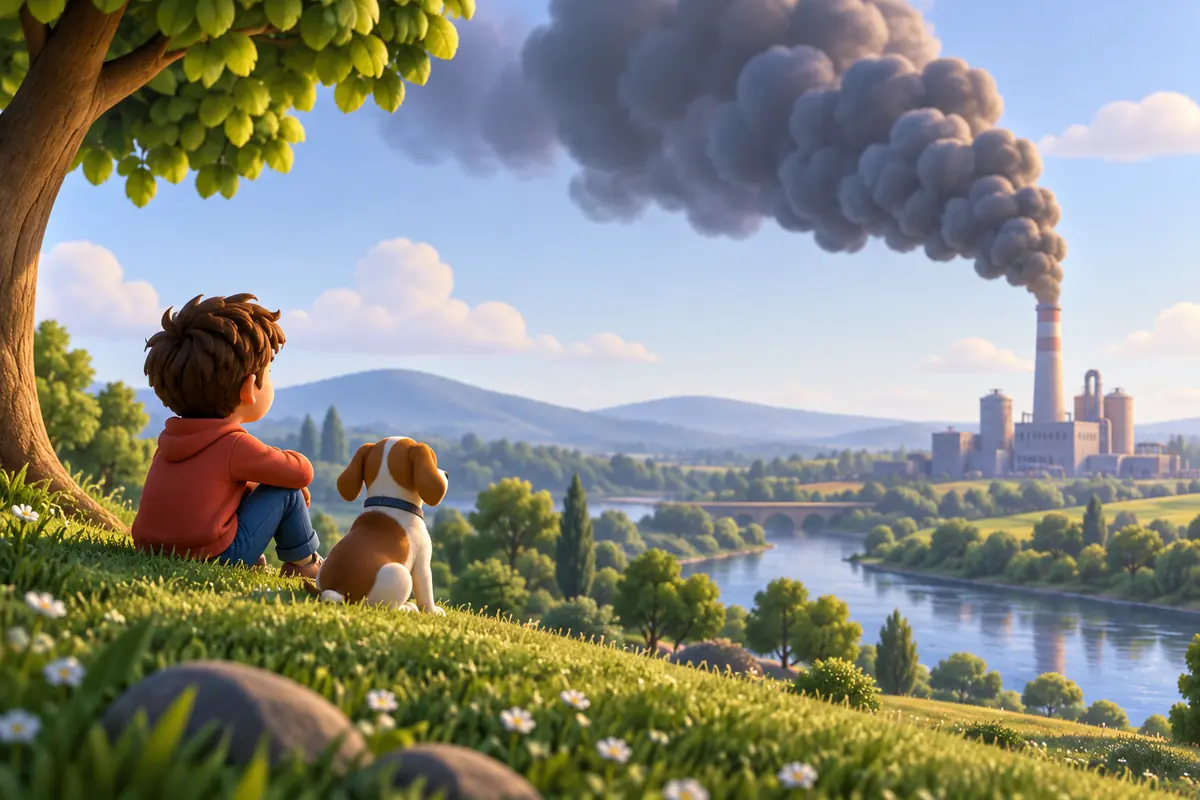
Thin and thick describe apparent density; wispy describes delicate strands. Billowing suggests large rolling masses, while drifting suggests movement with the air. A sentence can combine separate properties: “Thin gray smoke drifted above the chimney.” Choose only the details the scene supports rather than adding every word from a list.
How do color descriptions differ from explanations?
Gray, white, and black describe appearance, but a color word does not identify the fuel, chemical composition, or safety of smoke. Lighting and background can affect how a plume appears. In descriptive writing, record the visible detail. If an explanation matters, rely on verified information rather than guessing from color.
When should you use acrid or aromatic?
Acrid suggests a sharp, unpleasant smell or sensation, whereas aromatic highlights a noticeable, often pleasant fragrance. Pungent emphasizes strength and may be pleasant or unpleasant depending on context. A story can describe “aromatic incense smoke”; an objective account should distinguish the smell someone perceived from assumptions about what produced it.
Example sentences for descriptive writing
- Thin smoke curled from the cooling fire.
- A thick cloud of smoke hid the upper windows.
- Pale smoke drifted over the distant field.
- The wind scattered the wispy smoke.
- A dark plume rose above the chimney.
- The room retained a faint smoky smell.
How do you choose a useful adjective?
Identify the detail you want to communicate, choose a word from that category, and add a concrete context. Then remove any modifier that repeats the meaning without improving the picture. Compare the sentence with and without the adjective: if the reader learns nothing new, a more specific word or action may work better.

Frequently asked questions
Is smoky an adjective for smoke?
Smoky usually describes something containing smoke or having a smoke-related smell or flavor, such as a smoky room or smoky aroma. “Smoky smoke” repeats the idea without adding much information. To describe smoke itself, choose a more specific feature, such as its thickness, color, movement, or perceived smell.
Are steam and smoke the same word?
No. Smoke relates to burning, while the visible cloud commonly called steam relates to water vapor condensing into droplets. A pale cloud is not automatically smoke. If the source is unclear in a factual description, write “a pale cloud” or explain the observation without confidently naming a process you have not established.
Can an adjective follow a linking verb?
Yes. An adjective can appear after a linking verb when the sentence identifies a suitable subject, such as “The feeling was intense” or “The cloud was thick.” With an abstract or uncountable noun, a before-noun phrase may sound more natural. Read the complete sentence rather than judging a word in isolation.
How many descriptive words should I use?
Use the number needed to express distinct details, usually one or two in a short sentence. Several near-synonyms can blur the main image. If the scene needs more detail, give a separate action or observation instead of a longer adjective chain. Each modifier should contribute a meaning the others do not.
Smoke, the elusive and ever-changing phenomenon that has fascinated humans for centuries. Whether it’s billowing from a chimney, wafting from a campfire, or rising from a cigarette, we can’t help but be captivated by its ethereal beauty. But how do we describe this intangible substance? In this article, I’ll delve into the world of adjectives for smoke, providing you with a comprehensive list of words to help you paint a vivid picture with your descriptions. From wispy and swirling to thick and acrid, these adjectives will add depth and nuance to your writing. So, let’s dive in and explore the fascinating world of describing smoke!
Smoke, with its mesmerizing dance and ever-shifting forms, has a language of its own. It can be gentle and wispy, like a delicate veil floating through the air, or dense and suffocating, engulfing everything in its path. In this article, I’ll be your guide as we navigate the realm of adjectives for smoke. Whether you’re a writer looking to add richness to your prose or simply someone seeking to better articulate the characteristics of smoke, this list of descriptive words will be your ally. So, join me as we unravel the secrets of smoke and discover the perfect words to bring its essence to life.
Smoke, an enigmatic presence that has fascinated humanity since time immemorial. Its tendrils curl and twist, creating intricate patterns that captivate our senses. But how do we capture the essence of smoke in words? In this article, I’ll be your linguistic guide, providing you with a curated selection of adjectives to describe smoke. From hazy and ethereal to thick and pungent, these words will help you convey the unique qualities of smoke in your writing. So, let’s embark on this linguistic journey and unlock the power of adjectives to describe the elusive beauty of smoke.
How to Describe smoke? – Different Scenarios
When it comes to describing smoke, there are several scenarios to consider. Each scenario presents a unique portrayal of smoke, whether it’s gentle wisps rising from a flame or thick billows enveloping a room. Let’s explore how to describe smoke in different situations:
1. Campfire Smoke:
- The smoke from a campfire is warm and aromatic.
- It twists and curls in the air, creating a mesmerizing dance.
- The aroma of burning wood fills the surrounding area.
2. Cigarette Smoke:
- Cigarette smoke has a pungent and lingering smell.
- It wafts through the air, hesitating before dissipating.
- The smoke is grayish-blue in color, floating lazily.
3. Wildfire Smoke:
- Thick plumes of smoke engulf the landscape during a wildfire.
- The smoke is acrid and overwhelming, making it hard to breathe.
- The ashes and embers carried by the smoke create a hazy and ominous atmosphere.
4. Smoke from a Burning Building:
- Smoke billows out from a burning building, swirling and choking.
- The dark smoke is dense and suffocating.
- The heat of the flames gives the smoke an intense and menacing presence.
5. Smoke from Incense:
- Incense smoke rises gracefully, like a delicate wisp.
- It has a fragrant and calming scent, creating a serene ambiance.
- The smoke drifts through the air, leaving a trailing aroma in its wake.
By using descriptive words, we can paint a vivid picture of smoke in various scenarios, enabling us to better communicate its essence. Whether it’s the gentle wisps of a campfire or the thick billows of a burning building, each description helps convey the characteristics and emotions associated with smoke.
Remember, the key to effectively describing smoke, or any element, is to choose the right words that accurately capture its form, movement, color, and scent. So, go ahead and experiment with different adjectives to bring your writing to life!
Describing Words for smoke in English
As a writer, I find that using descriptive adjectives is crucial to bringing my writing to life. When it comes to smoke, choosing the right words can transport my readers to different scenes and evoke powerful emotions. In this section, I’ll share with you some descriptive words to help you accurately capture the essence of smoke in your writing.
1. Wispy: When smoke is thin and delicate, resembling strands or wisps, describing it as “wispy” can effectively convey its ethereal and light nature. Imagine a campfire sending up delicate, wispy smoke that dances through the air.
2. Billowing: For smoke that is thick, full, and voluminous, the word “billowing” is perfect. Think of a raging wildfire that sends billowing plumes of smoke into the sky, creating an awe-inspiring spectacle.
3. Hazy: If you want to depict smoke that obscures and blurs shapes and outlines, “hazy” is an excellent choice. Picture a room filled with the hazy smoke of incense, creating an atmosphere of relaxation and mystery.
4. Acrid: When smoke has a strong, pungent odor that irritates the nose and throat, describing it as “acrid” can evoke immediate sensory images. Imagine the acrid smoke wafting from a burning building, signaling danger and urgency.
5. Lingering: Sometimes, smoke can linger in the air, refusing to dissipate quickly. The word “lingering” can be used to portray this quality of smoke that remains for an extended period. Consider the lingering smoke of a snuffed-out candle, filling the room with its subtle presence.
6. Smoky: This might seem obvious, but “smoky” is a straightforward yet effective adjective for describing smoke. It gives a general sense of smoke without specifying its particular qualities. For example, describing the atmosphere of a dimly lit bar as “smoky” immediately sets a specific mood.
These words are just a starting point. Don’t be afraid to experiment with different adjectives to find the perfect ones that bring your writing to life. Remember, the key is to choose descriptive words that accurately capture the form, movement, color, and scent of smoke. So go ahead, let your imagination soar and create vivid smoke-filled scenes through your words.
Adjectives for smoke
Positive Adjectives for Smoke with 12 Example Sentences
When it comes to describing smoke, there are several positive adjectives that can bring your writing to life. Here are 12 example sentences showcasing positive adjectives for smoke:
| Adjective | Example Sentence |
|---|---|
| Ethereal | The ethereal smoke danced through the air. |
| Graceful | The graceful smoke swirled around in mesmerizing patterns. |
| Mystical | The mystical smoke enveloped the entire room. |
| Serene | The serene smoke wafted gently from the chimney. |
| Enchanting | The enchanting smoke filled the room with a magical aura. |
| Whimsical | The whimsical smoke floated lazily in the room. |
| Tranquil | The tranquil smoke created a sense of peace and calmness. |
| Mesmerizing | The mesmerizing smoke captivated everyone’s attention. |
| Effervescent | The effervescent smoke bubbled and rose in the air. |
| Hypnotic | The hypnotic smoke had a mesmerizing effect on everyone. |
| Radiant | The radiant smoke illuminated the room with a warm glow. |
| Resplendent | The resplendent smoke shimmered in the sunlight. |
| Adjective | Example Sentence |
|---|---|
| Choking | The choking smoke made it difficult to breathe. |
| Stifling | The stifling smoke filled the room, making it hard to see. |
| Suffocating | The suffocating smoke engulfed the entire area. |
| Noxious | The noxious smoke emitted a strong, unpleasant odor. |
| Blinding | The blinding smoke obscured visibility, causing confusion. |
Synonyms and Antonyms with Example Sentences
Synonyms for smoke
Smoke is a fascinating element that can be described in various ways. Here are some synonyms for smoke that can be used to add depth and nuance to your writing:
- Fumes: The fumes from the fire filled the room, making it difficult to breathe.
- Vapors: Wisps of gray vapors rose from the chimney, disappearing into the crisp morning air.
- Mist: The mist of smoke wafted through the forest, creating an eerie atmosphere.
- Haze: The city skyline disappeared into a dense haze of smoke, obscuring the view.
- Plume: A plume of smoke billowed from the factory, spreading across the sky.
By using these synonyms, you can paint a vivid picture of smoke and capture the reader’s imagination.
Antonyms for smoke
While smoke can have a mystical and captivating quality, its effects can also be negative. Here are some antonyms for smoke that can help you describe its opposite characteristics:
- Clear: Unlike the smoky room I had been in, the air outside was fresh and clear.
- Pure: The clean mountain air was a stark contrast to the polluted smoke-filled city.
- Fresh: As I stepped outside, I took a deep breath of the fresh, smoke-free air.
- Unpolluted: The countryside offered a refuge from the polluted, smoggy city.
- Crisp: The morning air was crisp and free from the smoky haze that usually hung over the town.
Using these antonyms, you can highlight the negative aspects of smoke and create a stronger contrast in your writing.
Conclusion
In this article, we explored a range of adjectives that can be used to describe smoke. By using synonyms such as “fumes,” “vapors,” “mist,” “haze,” and “plume,” writers can add depth and nuance to their descriptions. These words paint a vivid picture of smoke, allowing readers to visualize its presence and impact. On the other hand, the antonyms for smoke, such as “clear,” “pure,” “fresh,” “unpolluted,” and “crisp,” provide a contrasting perspective, describing the absence or opposite characteristics of smoke.
By incorporating these adjectives into their writing, authors can effectively communicate the positive and negative aspects of smoke. Whether it’s creating an atmosphere in a fictional setting or discussing the environmental effects of smoke, having a diverse range of descriptive words at your disposal can greatly enhance the impact of your writing. So, next time you find yourself needing to describe smoke, remember to choose your adjectives wisely to create a vivid and engaging portrayal.


