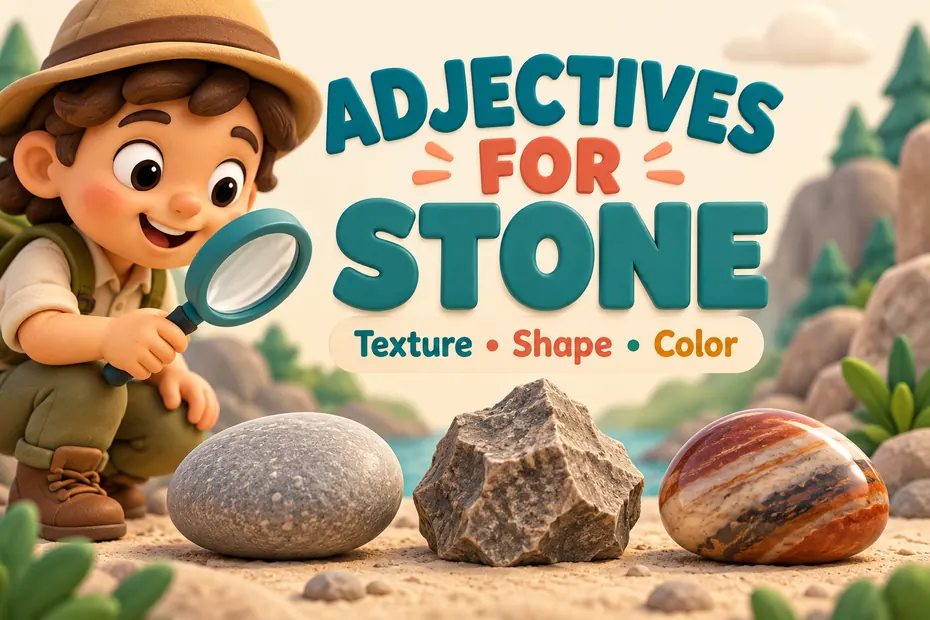
Which adjectives describe a stone clearly?
Smooth, rough, rounded, angular, flat, polished, speckled, and weathered are useful adjectives for stone. Choose words for separate details: “a smooth gray pebble” describes surface and color, while “an angular, speckled stone” describes shape and pattern. A visible description does not by itself identify the stone’s rock type.
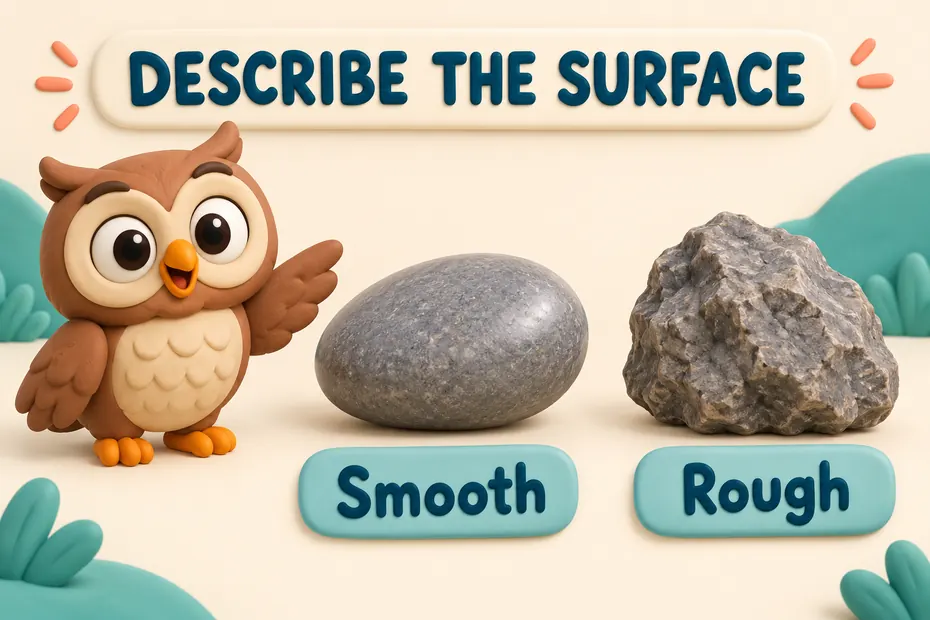
What detail does each adjective add?
Group stone adjectives by what readers can observe. Shape describes the outline; surface texture describes how the outside looks or feels; color and pattern describe appearance; condition describes changes or damage. A precise description combines a few distinct observations instead of treating every appealing adjective as interchangeable.
| Detail | Words to consider | Original sentence |
|---|---|---|
| Surface | Smooth, rough, polished, pitted | The rough stone caught against the cloth. |
| Shape | Rounded, angular, flat, irregular | An angular stone rested beside the rounded pebbles. |
| Color | Gray, reddish, pale, dark | A reddish stone stood out in the gray gravel. |
| Pattern | Speckled, banded, mottled, veined | The speckled stone had tiny pale flecks. |
| Condition | Weathered, chipped, cracked, worn | The chipped stone marked the garden border. |
Some qualities can coexist without contradiction. A stone can have a smooth face and a rough edge, or a flat shape with an irregular outline. Name the part that carries the quality: “The flat stone had a rough underside.” This helps a reader understand an object that a single adjective cannot completely describe.
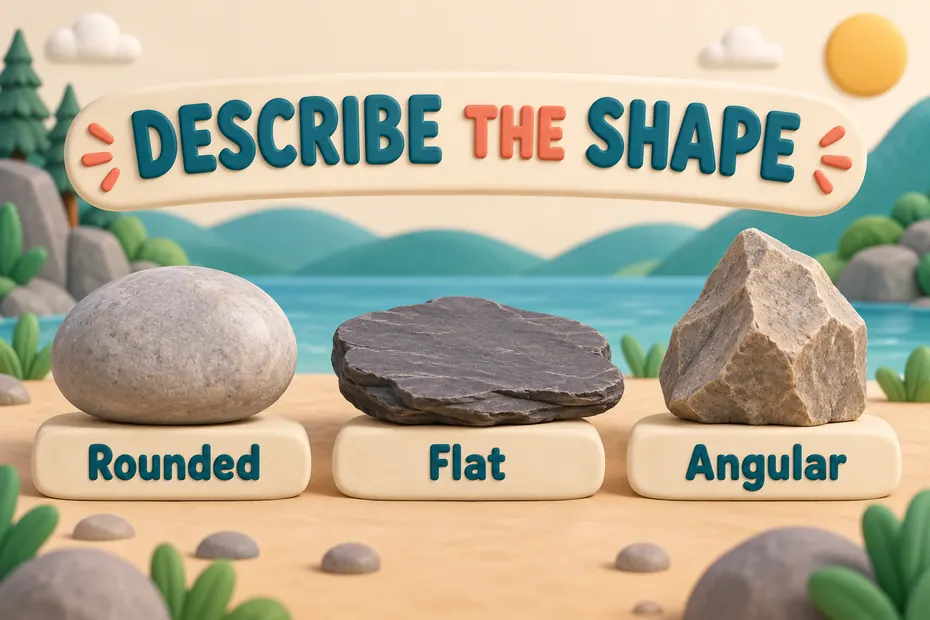
How are smooth, polished, and rounded different?
Smooth describes a surface, polished describes a finish or the result of polishing, and rounded describes a shape. The words may fit the same stone, but they answer different questions. “A rounded pebble” tells readers about its outline; “a polished pebble” directs attention to its finished surface.
- Smooth: The smooth face felt even under her fingertips.
- Polished: The polished stone reflected the shop lights.
- Rounded: The rounded stone rolled toward the stream.
- Flat: A flat stone lay beside the footpath.
- Angular: The angular fragment had several sharp-looking corners.
Do not infer a history from appearance unless you know it. “Smooth” is an observation; “river-worn” adds an explanation about where the stone was shaped. A polished object may have been worked by a person, while a naturally smooth pebble has a different history. For an unidentified object, the observable adjective is the more defensible choice.
When should you use porous or crystalline?
Use technical-sounding adjectives only when the relevant property is known. Porous refers to pores or spaces in a material; crystalline refers to crystal structure or crystals in context. Neither word is simply a more sophisticated replacement for rough or shiny. A photograph may show pits or sparkling grains without establishing every internal property.
The U.S. Geological Survey distinguishes minerals, which have characteristic composition and internal structure, from rocks, which can consist of one or more minerals. In everyday writing, stone often names a piece of rock or a material used for a purpose. “A speckled stone” is an appearance description; “granite” is an identification that requires additional grounds.
Likewise, heavy describes an object’s weight, while dense describes a relationship between mass and volume. A large object can feel heavy because of its size. Unless you have a reason to discuss density, “a heavy stone” is usually the straightforward description for a character struggling to lift an object.
How can you describe stone in different settings?
Match the vocabulary to the purpose of the sentence. A story may emphasize atmosphere; a product description may emphasize finish and dimensions; a field notebook should emphasize observations. Keep imaginative comparisons visibly separate from factual identification so the reader knows what kind of description they are receiving.
| Setting | Example | What it emphasizes |
|---|---|---|
| Nature writing | A pale, rounded stone lay in the shallows. | Appearance and location. |
| Architecture | The doorway had weathered stone blocks. | Condition and use. |
| Object description | The polished gray stone had a white band. | Finish, color, and pattern. |
| Imaginative scene | The jagged stones looked like broken teeth. | A clearly figurative comparison. |
A useful revision method is to replace “beautiful stone” with two concrete details. “A polished dark stone with a thin white vein” allows the reader to picture why the writer finds it attractive. If the sentence is already long, retain the most distinctive detail instead of adding every category from the word bank.
Frequently asked questions about stone adjectives
Are rocky and stony synonyms for hard?
No. Rocky and stony can describe places containing rocks or stones, while hard describes resistance to pressure or scratching in its relevant context. “A rocky path” does not mean exactly the same thing as “a hard surface.” Stony can also describe an unemotional expression, as in “a stony face.”
Can stone itself describe another noun?
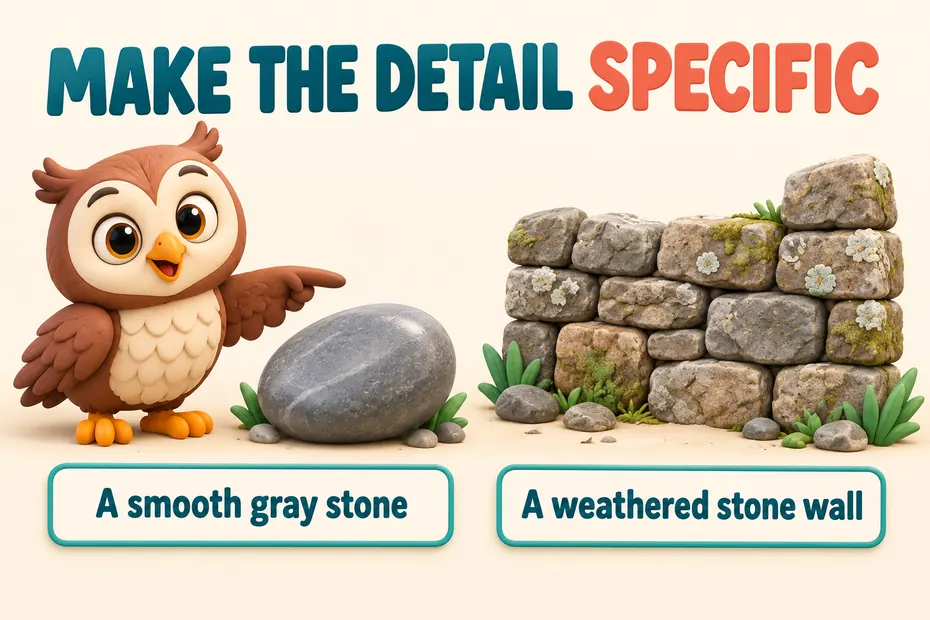
Yes. “A stone wall” identifies the wall’s material. An additional adjective can describe its condition: “a weathered stone wall.” The material word and condition word contribute different information. This differs from “a rough stone,” where stone names the object being described rather than modifying wall.
What is a simple description for children?
“A small, smooth gray stone” is an accessible example. The sentence uses size, surface, and color, which a child can observe on an appropriate object. Invite the learner to select matching words rather than assume all stones are gray or smooth. Different samples may need different descriptions.
Does a shiny stone have to be a gemstone?
No. Shiny describes appearance under particular lighting, not gemstone identity or value. A wet surface or polished finish can reflect light. If you do not know the material, describe the visible quality and avoid an identification claim. “The wet stone gleamed” keeps the observation clear and limited.
Sources for this vocabulary guide
Definitions were checked against Merriam-Webster’s entries for stone and porous. The rock-and-mineral distinction follows the U.S. Geological Survey explanation. All additional descriptive sentences above are original examples.
When it comes to describing stones, the right adjectives can make all the difference in bringing their unique characteristics to life. From the smoothness of a polished marble to the rugged texture of a granite slab, adjectives help us paint a vivid picture of these natural wonders. In this article, I’ll be sharing a curated list of adjectives that will help you accurately and creatively describe different types of stones. Whether you’re a writer looking to add depth to your descriptions or simply someone who appreciates the beauty of stones, this guide will provide you with the words you need to capture their essence.
From the sparkling brilliance of a diamond to the earthy warmth of sandstone, stones come in a wide range of colors, textures, and qualities. By using descriptive adjectives, we can tap into the sensory experience of stones, allowing readers to visualize and connect with these remarkable formations. In this article, I’ll be showcasing a diverse selection of adjectives that will help you convey the unique characteristics of various stones, whether you’re writing a poem, a travelogue, or simply want to enhance your vocabulary. So, let’s dive in and explore the world of adjectives for stone, and discover how these words can transform your descriptions from ordinary to extraordinary.
How to Describe stone? – Different Scenarios
When it comes to describing stones, there are various scenarios in which you may want to use different adjectives to accurately capture their unique characteristics. Whether you’re writing a piece of literature, creating educational content, or simply looking to enhance your vocabulary, using the right adjectives can make all the difference. Let’s explore a few different scenarios and the adjectives that best suit them.
1. Describing the Appearance of Stones
When describing the appearance of stones, it’s important to consider their color, texture, and shape. Here are some adjectives you can use to vividly describe the visual aspects of stones:
- Smooth: A stone with a polished, sleek surface.
- Rough: A stone with an uneven, rugged texture.
- Glossy: A stone with a shiny, reflective finish.
- Matte: A stone with a non-reflective, dull surface.
- Multicolored: A stone with multiple colors or shades.
2. Describing the Texture of Stones
The texture of a stone can greatly impact its feel and overall sensory experience. Here are some adjectives you can use to describe the texture of stones:
- Pebbled: A stone with a small, round texture similar to pebbles.
- Granular: A stone with a grainy texture, often made up of tiny particles.
- Crystalline: A stone with a structured texture, resembling crystals.
- Porous: A stone with small holes or pores on its surface.
- Polished: A stone with a smooth, shiny texture due to being polished.
3. Describing the Weight and Density of Stones
The weight and density of a stone can give an indication of its durability and composition. Here are some adjectives you can use to describe the weight and density of stones:
- Lightweight: A stone that is relatively light and easy to handle.
- Heavy: A stone that is substantial in weight and may require some effort to lift.
- Dense: A stone that is tightly packed and has a high mass per unit volume.
- Solid: A stone that feels sturdy and compact.
- Brittle: A stone that is prone to breaking or shattering easily.
Describing Words for stone in English
When it comes to describing stones, there are various words we can use to paint a vivid picture in our readers’ minds. As a blogger with years of experience, I’ve found that using the right adjectives can enhance the sensory experience and bring the description to life. Let’s explore some describing words for stones in English that will help you create engaging and accurate content for Kindergarten and preschool teachers to teach easy words to kids.
Appearance
When describing the appearance of a stone, it’s important to choose words that evoke visual imagery. Here are some examples:
- Smooth: The stone has a polished surface that feels silky to the touch.
- Rough: The stone has a coarse texture with uneven edges.
- Shiny: The stone reflects light and sparkles.
- Dull: The stone lacks luster and appears matte.
- Veined: The stone has distinct lines or patterns running through it.
Texture
Describing the texture of a stone allows readers to imagine how it might feel to touch. Here are a few words to illustrate different textures:
- Soft: The stone is gentle and smooth to the touch.
- Rugged: The stone has a rough, uneven surface.
- Jagged: The stone has sharp, projecting edges.
- Porous: The stone has small holes or spaces on its surface.
- Glossy: The stone has a shiny, polished texture.
Weight/Density
When discussing the weight or density of a stone, consider words that convey the physical aspect. Here are some examples:
- Heavy: The stone is substantial and weighs a lot.
- Light: The stone is not heavy and can be easily lifted.
- Dense: The stone has a compact structure and feels solid.
- Hollow: The stone has an empty space inside.
Using these adjectives will enable you to create detailed and captivating descriptions of stones. Remember, by engaging the reader’s senses through accurate and diverse vocabulary, you can make your content more enjoyable for young learners.
Adjectives for stone
Positive Adjectives for Stone with 12 Example Sentences
When it comes to describing stones, there are plenty of positive adjectives that can help bring them to life. Here are some examples of positive adjectives you can use to describe the appearance, texture, and weight of stones:
- Smooth: The stone feels smooth and velvety to the touch.
- Glistening: The stone shimmers in the sunlight, reflecting its beauty.
- Polished: The stone has been polished to perfection, giving it a glossy finish.
- Sparkling: The stone sparkles like a diamond, catching the eye.
- Elegant: The stone exudes elegance, with its refined appearance.
- Majestic: The stone has a majestic presence, commanding attention.
- Translucent: The stone allows light to pass through, creating a mesmerizing effect.
- Radiant: The stone emits a radiant glow, showcasing its inner brilliance.
- Captivating: The stone’s unique patterns and colors are captivating to behold.
- Exquisite: The stone is exquisite, displaying intricate details and craftsmanship.
- Lustrous: The stone has a lustrous sheen that adds depth and dimension.
- Solid: The stone feels solid and substantial in the hand, conveying strength.
These positive adjectives can help create engaging and accurate content when teaching young learners about stones.
Negative Adjectives for Stone with 5 Example Sentences
While stones are often admired for their beauty, there are also negative adjectives that can be used to describe them. Here are some examples of negative adjectives you can use to describe stones:
- Rough: The stone feels rough and coarse, lacking a smooth surface.
- Dull: The stone lacks shine or brightness, appearing lackluster.
- Cracked: The stone has visible cracks or fractures, compromising its integrity.
- Bulky: The stone is bulky and heavy, making it difficult to handle.
- Unattractive: The stone is unattractive, lacking aesthetic appeal.
By using these negative adjectives, you can provide a well-rounded view of stones and help young learners develop a deeper understanding of their characteristics.
Remember, using the right adjectives is essential to accurately describe stones and enhance the reader’s sensory experience. So, feel free to mix and match these adjectives to create engaging and accurate content when teaching young learners about stones.
Synonyms and Antonyms with Example Sentences
Synonyms for stone
Synonyms and Antonyms with Example Sentences
When it comes to describing stones, there are numerous synonyms that can be used to add variety and depth to your writing. Here are some examples:
Synonyms for stone
- Rock
- Pebble
- Boulder
- Mineral
- Gem
- Gravel
- Slab
Using these synonyms, you can paint a clearer picture and engage your readers with a more vivid description of stones. For instance, instead of repeatedly using the word “stone,” you can mix in terms like “pebble” or “boulder” to add interest.
- Example sentence: I found a beautiful gem on the beach.
Antonyms for stone
On the other hand, if you want to highlight the absence of stones or create a contrasting effect, using antonyms can be valuable. Consider the following antonyms for stone:
Antonyms for stone
- Empty
- Clear
- Smooth
- Soft
- Lightweight
- Transparent
These antonyms can help you create a balanced and comprehensive description of stones. By incorporating these opposite words, you can effectively highlight the unique characteristics of each stone or include descriptions of spaces where there are no stones present.
- Example sentence: The pathway was smooth and free of any stones.
Adding synonyms and antonyms to your vocabulary will enhance your writing and provide a broader range of descriptive options when talking about stones. By utilizing these words thoughtfully and strategically, you can engage your readers and create a more enriched learning experience for young learners.
Conclusion
Describing stones with adjectives is a powerful tool that allows us to paint vivid pictures with our words. Throughout this article, we have explored the importance of using adjectives to accurately depict the characteristics of different types of stones. By incorporating synonyms and antonyms into our writing, we can add variety and depth to our descriptions.
Using adjectives thoughtfully and strategically not only enhances the reader’s experience but also creates a more enriched learning environment for young learners. It allows them to expand their vocabulary and develop a deeper understanding of the world around them.
So, whether you’re describing a smooth river stone or a rough volcanic rock, remember to choose your adjectives wisely. By doing so, you’ll be able to capture the essence of each stone and transport your readers to a world where they can see, feel, and experience the beauty of these natural wonders.
Incorporating descriptive adjectives into your writing about stones will elevate your descriptions to new heights, making your words come alive and leaving a lasting impression on your readers. So go ahead, experiment with different adjectives, and watch as your writing takes on a whole new level of richness and depth.


