Adjectives for Strawberries: Sensory Words and Examples
Adjectives for strawberries describe what a berry looks, smells, feels, and tastes like, or the way it is used in a dish. The most precise choice names a specific cue—such as glossy, fragrant, firm, tart, or ripe—rather than treating red color as proof of sweetness.
Use the word that matches what you can actually observe. A strawberry may look vivid but taste mild, feel firm but lack aroma, or be pleasantly tart rather than sugary. The examples below group useful adjectives by sense and explain where each one fits.
Quick guide: choose an adjective by what you notice
| What you are describing | Useful adjectives | Example |
|---|---|---|
| Surface and color | red, scarlet, glossy, dimpled, seeded | The glossy strawberries made the tart look inviting. |
| Texture | firm, tender, soft, crisp, pulpy | Choose firm berries when you need neat slices. |
| Flavor | sweet, tart, tangy, mild, juicy | Her tart strawberries balanced the rich cream. |
| Aroma | fragrant, fruity, fresh, faint, perfumed | A fragrant berry can smell ripe before you taste it. |
| Condition | ripe, underripe, overripe, bruised, moldy | Discard moldy fruit and inspect nearby berries. |
| Role in a dish | fresh, sliced, macerated, frozen, roasted | Macerated strawberries release juice for a sauce. |
Which adjectives describe a strawberry’s appearance?
Appearance words tell a reader what the berry looks like, without claiming how it tastes. Strawberries vary in cultivar, shape, size, and mature color, so use a specific observation rather than an absolute rule.
- Scarlet or crimson describes a strong red hue: “Scarlet strawberries dotted the green salad.”
- Glossy describes a shiny surface: “The glossy fruit caught the afternoon light.”
- Dimpled describes the shallow pits around the surface: “The dimpled berries held tiny droplets of water.”
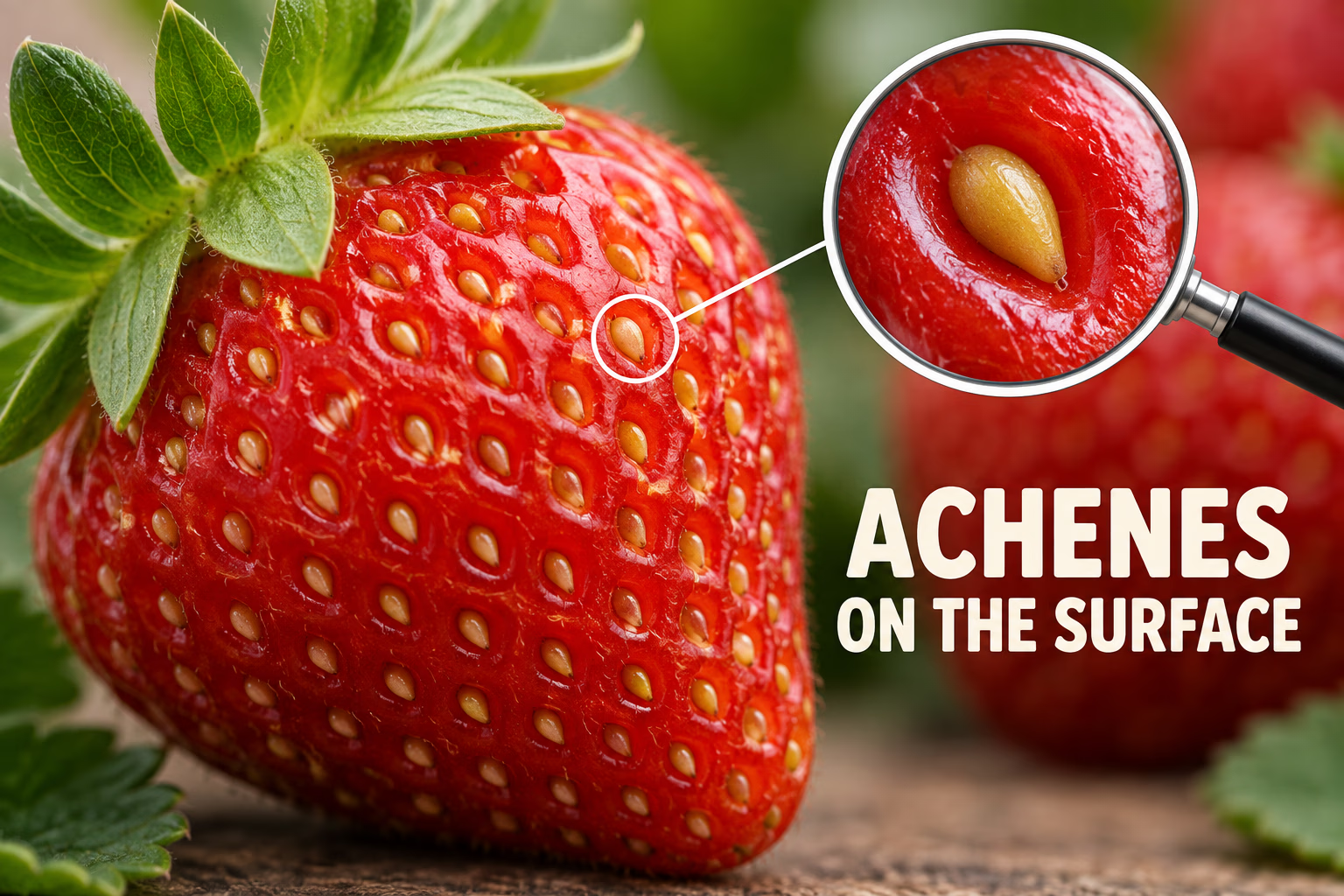
- Seeded describes the visible small achenes on the outside: “Golden achenes speckled the seeded skin.”
- Conical, heart-shaped, or rounded describes form: “She arranged rounded berries around the cake.”
- Uniform and varied describe a group: “The basket held varied sizes, from small berries to broad ones.”
Botanically, the tiny structures commonly called strawberry seeds are achenes, each associated with a seed; the juicy red part is the enlarged receptacle. In everyday writing, “seeds” is clear and familiar, while “achenes” is useful for a science lesson. University of Maryland Extension explains the fruit’s structure.
What words describe strawberry flavor and aroma?
Flavor adjectives work best when they distinguish sweetness from acidity and fruit character. Pair two compatible words when one alone is too broad: “sweet-tart,” “mildly tangy,” or “fruity and fragrant.”
- Sweet: “The sweet berries needed no extra sugar.”
- Tart: “A tart strawberry brightened the creamy filling.”
- Tangy: “The tangy fruit gave the smoothie a lively finish.”
- Mild: “Mild strawberries let the vanilla flavor stand out.”
- Juicy: “A juicy berry left a bright red streak on the cutting board.”
- Fragrant: “Fragrant strawberries filled the kitchen with a fresh, fruity smell.”
- Watery: “The watery slices added color but little concentrated flavor.”
- Overripe: “The overripe berries were soft and best used in a cooked sauce.”
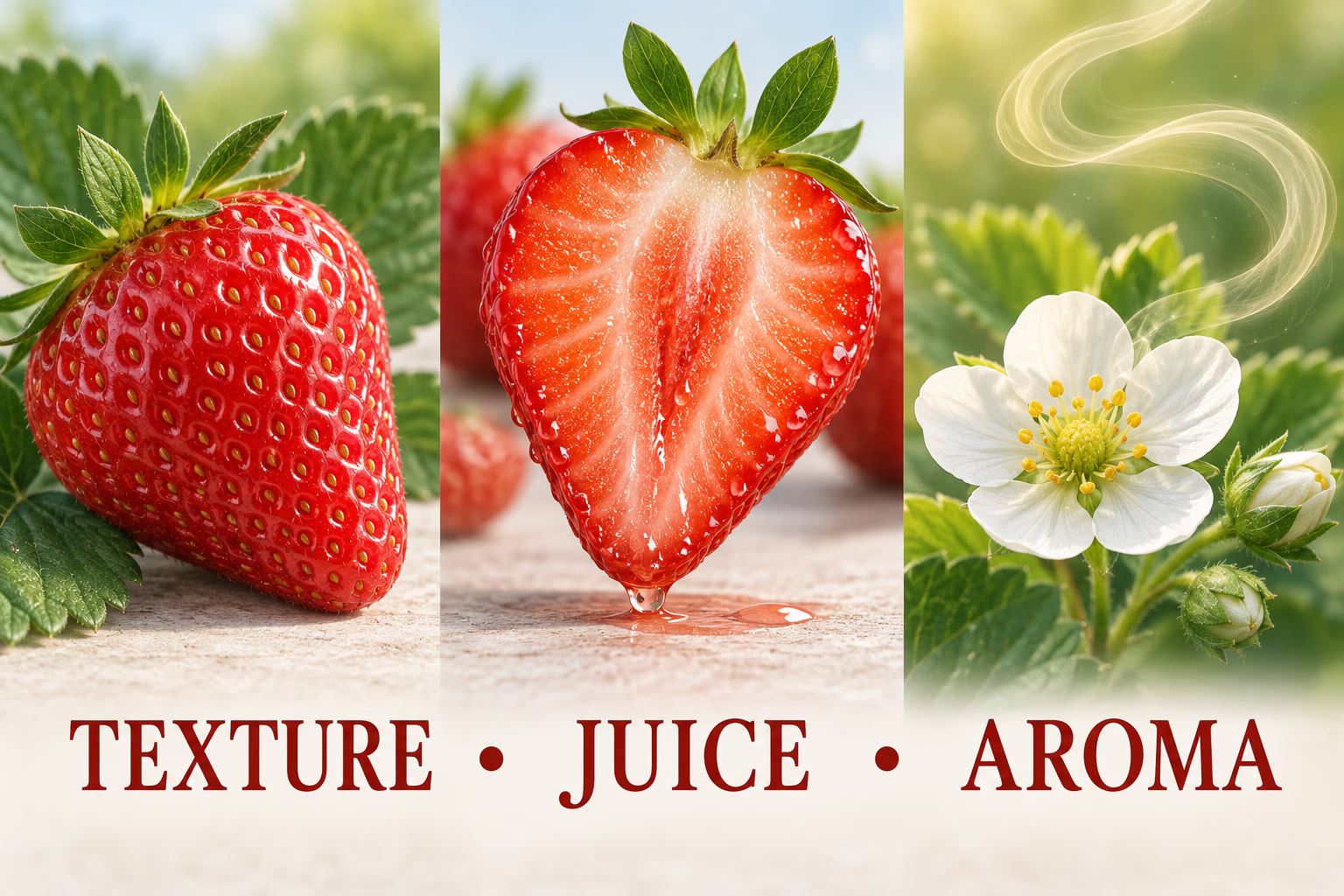
“Sweet” and “fragrant” are not interchangeable: sweetness is a taste, while fragrance is perceived through smell. Aroma also changes how people experience flavor, so a berry can smell intensely fruity without being the sweetest one in the carton.
How do texture words change the description?
Texture adjectives help a reader picture the bite and decide how a strawberry will work in a recipe. Judge the fruit gently because ripe berries bruise easily.
- Firm berries hold their shape for dipping, slicing, and arranging.
- Tender berries yield easily and suit a soft dessert or topping.
- Soft berries may be ripe or beginning to deteriorate; add a condition word if you know which.
- Mushy describes fruit that has lost its structure, often from over-ripeness or damage.
- Mealy describes an unpleasantly dry, grainy bite; it is more precise than simply calling a berry “bad.”
- Fragile describes how easily the fruit bruises during handling, not the taste itself.
For vivid prose, connect the texture to an action: “The firm strawberry kept its clean edges when sliced” is more informative than “The strawberry was nice.”
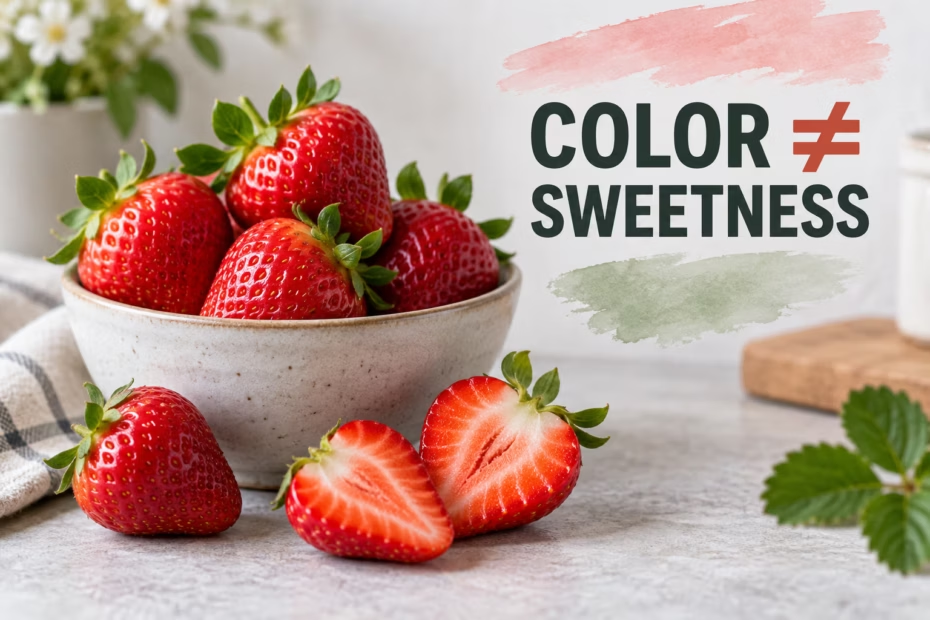
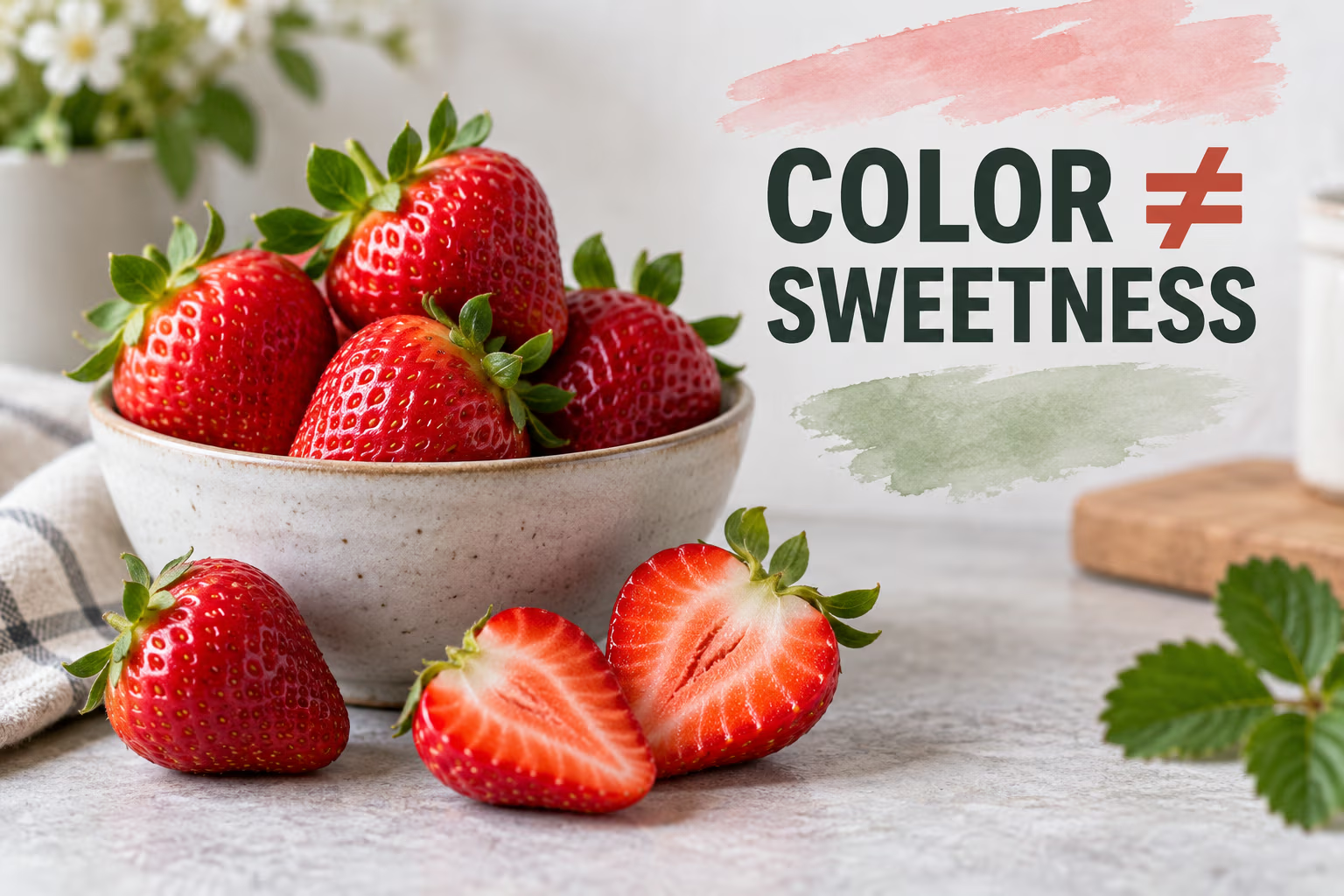
Does a red strawberry always taste sweet?
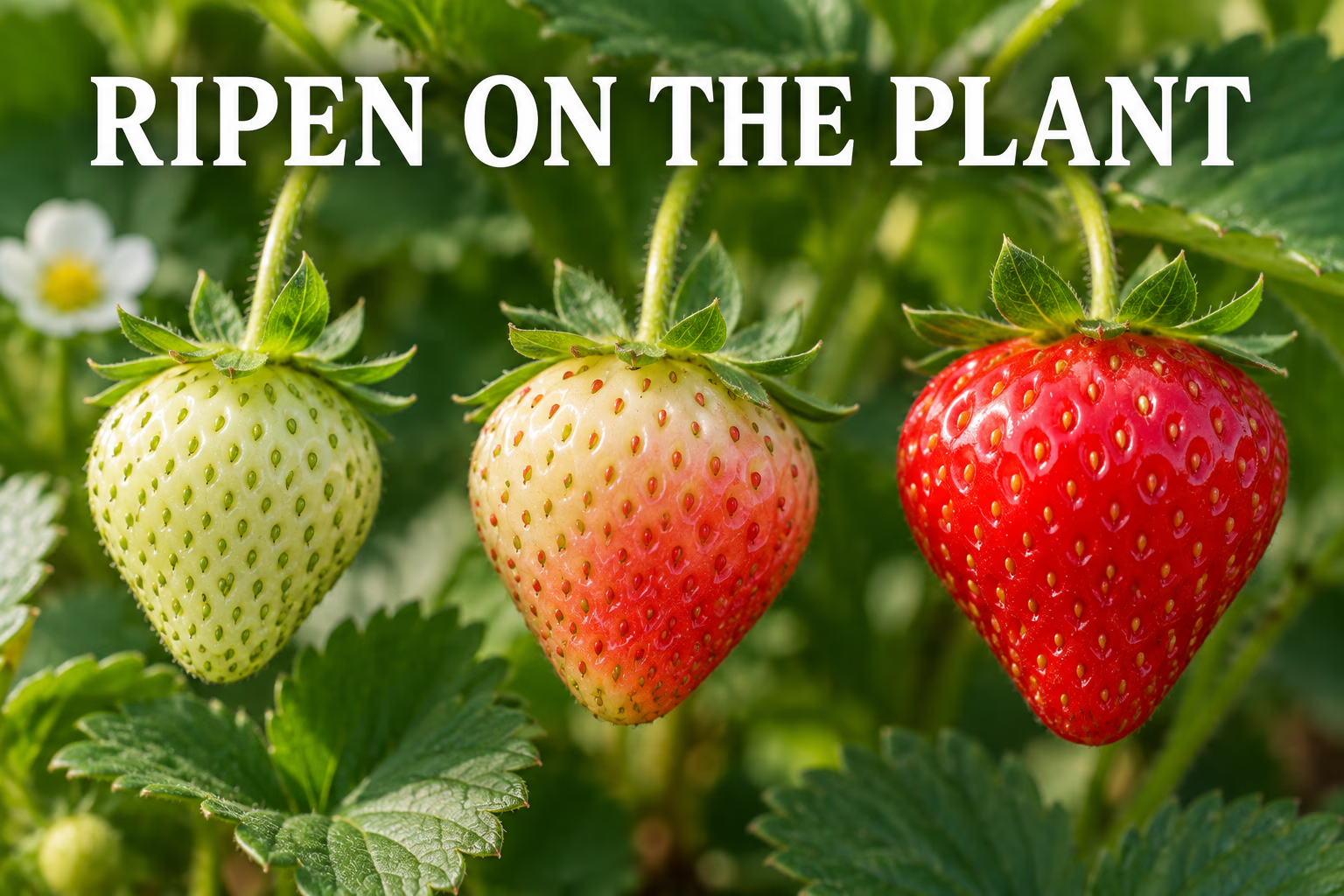
No. Color helps describe ripeness and appearance, but redness alone does not guarantee sweetness, firmness, or shelf life. Cultivar and growing conditions affect color and flavor, and fruit picked before it is fully ripe will not gain the same sweetness after harvest as fruit ripened on the plant.
When selecting or describing strawberries, treat color, aroma, firmness, and taste as separate clues. A uniformly colored berry may still taste mild; a paler variety can be ripe; and a dark or soft berry may be past its best. For writing, “bright red” is an appearance claim, while “sweet” should come from tasting or reliable product information. Maryland Extension notes that berries picked before they are fully red will color further but will not sweeten; NC State Extension describes how ripe color varies by variety.
Adjectives for strawberries in different contexts
| Context | Precise adjective choices | Example sentence |
|---|---|---|
| Shopping or picking | ripe, fresh, fragrant, firm | I chose fragrant, fully colored berries for today’s shortcake. |
| Recipe writing | juicy, tart, sliced, macerated | Fold the sliced strawberries into the yogurt just before serving. |
| Food styling | glossy, scarlet, plump, intact | Place intact, glossy berries around the edge of the tart. |
| Quality description | bruised, soft, underripe, moldy | Remove bruised berries before storing the rest. |
| Creative writing | sun-warmed, jewel-like, fragrant, delicate | Sun-warmed strawberries scented the picnic blanket. |
Common mistakes when describing strawberries
- Calling every berry sweet: use “sweet-tart,” “mild,” or “tart” when those better match the taste.
- Using color as a flavor claim: “red” describes hue; it does not independently prove sweetness.
- Calling a strawberry a botanical berry: in casual speech this is normal, but a science explanation should note that it is an aggregate accessory fruit.
- Using “fresh” to mean “safe”: freshness is a quality impression, not a food-safety guarantee. Discard fruit with visible mold rather than tasting it.
- Mixing the fruit with the dish: “roasted” describes preparation; “juicy” describes the fruit’s texture or impression.
Frequently asked questions
What is the best adjective for strawberries?
“Juicy” is a familiar, vivid choice, but the best adjective depends on the detail: “fragrant” for aroma, “tart” for acidity, “glossy” for appearance, or “firm” for texture. A precise description can pair two cues, as in “fragrant, sweet-tart strawberries.”
What are positive words for strawberries?
Useful positive words include ripe, fragrant, juicy, sweet, tangy, glossy, plump, tender, vibrant, and delicious. Choose words that suit the actual berry; “firm” may be praise when describing fresh fruit for slicing, while “tender” may fit berries meant for a soft dessert.
What are negative adjectives for strawberries?
Words such as sour, watery, bruised, mushy, underripe, overripe, and moldy identify specific drawbacks. “Moldy” signals spoilage; “tart” can simply describe a pleasant flavor, so it is not always negative.
How can I describe strawberries without repeating “sweet”?
Use words for other senses: fragrant or fruity for aroma; juicy, tender, or firm for texture; scarlet, glossy, or dimpled for appearance; and tangy or mildly tart for taste. A sentence can also mention how the fruit behaves in a dish, such as “the sliced berries softened into a bright sauce.”
Are the small dots on strawberries seeds?
In everyday conversation, they are usually called seeds. Botanically, each visible dot is an achene, a small dry fruit containing a seed, while the fleshy red portion is an enlarged receptacle.

I absolutely adore strawberries. The vibrant red color, the sweet and juicy taste, and the refreshing aroma make them a delightful treat. But have you ever wondered how to describe these luscious berries? In this article, I’ll be sharing a list of adjectives that perfectly capture the essence of strawberries. From words that evoke their sweetness to those that highlight their texture, get ready to discover a whole new way to appreciate these delectable fruits.
When it comes to describing strawberries, one word that immediately comes to mind is “juicy.” The moment you take a bite, the burst of juice is simply irresistible. Another adjective that fits these berries like a glove is “plump.” Just looking at their round and full shape, you can almost feel the juiciness in every bite. And let’s not forget about “sweet.” Whether enjoyed on their own or in a dessert, strawberries are known for their natural sweetness that can satisfy any sugar craving.
But don’t just take my word for it. In this article, I’ll be providing examples of each adjective so you can see just how accurately they describe these delightful fruits. So, get ready to explore the world of adjectives for strawberries and enhance your appreciation for these juicy, plump, and sweet treats.
How to Describe strawberries? – Different Scenarios
How to Describe strawberries? – Different Scenarios
When it comes to describing strawberries, there are different scenarios that can help paint a picture of these delightful fruits. Whether you’re talking about their appearance, taste, or how they are enjoyed, here are some adjectives and examples to help you describe strawberries in various contexts:
- Appearance:
- Taste:
- Aroma:
- Enjoyment:
As you can see, strawberries are truly remarkable fruits. They showcase a vibrant red color, offer a sweet and refreshing taste, emit a captivating aroma, and can be enjoyed in various ways. It’s no wonder they are a beloved fruit by people of all ages.
Describing Words for strawberries in English
When it comes to describing strawberries, there are plenty of adjectives that can help capture their unique characteristics. Let me tell you about some words we can use to describe this delightful fruit:
- Vibrant: Strawberries have a vibrant red color that catches the eye. Their bright hue adds a pop of color to any dish or dessert.
- Juicy: Bite into a ripe strawberry, and you’ll experience its juiciness. Each bite releases a burst of refreshing and hydrating flavor.
- Sweet: One of the defining qualities of strawberries is their natural sweetness. These berries can satisfy your sweet tooth without being overly sugary.
- Tangy: Alongside their sweetness, strawberries also have a hint of tanginess. This balanced flavor profile makes them interesting and enjoyable to eat.
- Fragrant: The aroma of strawberries is often described as divine. It’s difficult to resist the enticing scent of these fruits, which adds to their overall appeal.
- Plump: Strawberries are characterized by their plumpness. They have a satisfying fullness that makes them visually appealing and adds to their juiciness.
- Fragile: Despite their robust flavor, strawberries are delicate fruits. Their delicate nature requires careful handling to preserve their shape and prevent bruising.
- Versatile: Strawberries can be enjoyed in a variety of ways. They can be eaten on their own, used as a topping, or incorporated into different recipes like salads, smoothies, and desserts.
- Naturally delicious: Unlike many other fruits, strawberries are naturally delicious and packed with flavor. They require little to no additional sweeteners to be enjoyed.
- Alluring: The vibrant red color, sweet aroma, and juicy texture make strawberries incredibly alluring. They have a way of attracting people of all ages.
| Adjective | Example Sentence |
|---|---|
| Vibrant | The strawberries I picked from the garden were a vibrant shade of red. |
| Juicy | As I bit into the strawberry, the juice dribbled down my chin. |
| Sweet | The strawberries were sweet and perfectly ripe. |
| Tangy | The slightly tangy flavor of the strawberries complemented |
Adjectives for strawberries
Positive Adjectives for Strawberries with 12 Example Sentences
When it comes to describing strawberries, there’s no shortage of positive adjectives to choose from. From their appearance to their taste, strawberries possess a range of qualities that make them truly delightful. Here are some positive adjectives to help you capture the essence of these juicy fruits:
- Vibrant: The vibrant red color of strawberries catches the eye.
- Juicy: With every bite, the juiciness of a strawberry bursts in your mouth.
- Sweet: The sweetness of a ripe strawberry is simply irresistible.
- Tangy: Strawberries have a delightful tangy flavor that adds extra excitement to their taste.
- Fragrant: The fragrance of fresh strawberries is invigorating and alluring.
- Plump: A plump strawberry is a sign of its juiciness and freshness.
- Delicate: Strawberries are delicate fruits that need to be handled with care.
- Versatile: Strawberries are versatile and can be enjoyed in various dishes.
- Naturally delicious: The natural deliciousness of strawberries is hard to beat.
- Irresistible: The allure of strawberries is simply irresistible.
- Summery: Strawberries have a summery flavor that reminds us of sunny days.
- Wholesome: Incorporating strawberries into your diet adds a wholesome and nutritious element.
Let’s explore these adjectives further with some example sentences:
| Adjective | Example Sentence |
|---|---|
| Vibrant | The vibrant red strawberries looked tempting on the plate. |
| Juicy | I savored the juicy strawberry as its flavor exploded. |
| Sweet | The sweet taste of the strawberry lingered on my tongue. |
| Tangy | The tangy strawberry provided a refreshing zing. |
| Fragrant | The fragrance of the strawberries filled the kitchen. |
| Plump | I picked a plump strawberry from the bunch. |
| Delicate | Be careful, these delicate strawberries can bruise easily. |
| Versatile | Strawberries are versatile and can be used in many desserts. |
| Naturally delicious | The naturally delicious flavor of the strawberry delighted my taste buds. |
| Irresistible | I couldn’t resist having another strawberry. |
| Summery | The summery taste of the strawberries reminded me of picnics. |
| Wholesome | Adding strawberries to my breakfast made it more wholesome. |
Negative Adjectives for Strawberries with 5 Example Sentences
While strawberries are mainly known for their positive qualities, there are also a few negative adjectives that can be used to describe them. These adjectives highlight specific characteristics that might not appeal to everyone. Here are some negative adjectives to consider:
- Sour: If strawberries are not fully ripe, they can have a sour taste.
- Watery: Some strawberries tend to be watery, which may dilute their flavor.
- Moldy: When strawberries are not properly stored, they can become moldy and unappetizing.
- Overripe: Overripe strawberries can be mushy and have a fermented aftertaste.
- Bruised: Strawberries can easily get bruised, resulting in unattractive spots on their surface.
| Adjective | Example Sentence |
|---|---|
| Sour | The sour strawberry made me pucker my lips. |
| Watery | The watery strawberries lacked the desired sweetness. |
| Moldy | I had to throw away the moldy strawberries. |
| Overripe | The overripe |
Synonyms and Antonyms with Example Sentences
Synonyms for Strawberries
When it comes to describing strawberries, there are several synonyms that can help us paint a more detailed picture. Here are some alternative words we can use to describe these delicious fruits:
- Berries: Strawberries are a type of berry, so this word can be used interchangeably.
- Ruby: This word captures the vibrant red color of strawberries.
- Juicy: Strawberries are known for their mouthwatering juiciness.
- Sweet: The natural sweetness of strawberries is one of their most appealing qualities.
- Tangy: Strawberries have a subtle tangy flavor that adds a refreshing twist.
- Fragrant: The aroma of fresh strawberries is often described as sweet and fragrant.
- Plump: Strawberries are plump and full, making them visually appealing.
- Delicate: Due to their soft texture, strawberries are considered delicate fruits.
- Versatile: Strawberries can be enjoyed in various ways, from eating them fresh to adding them to desserts and drinks.
- Naturally delicious: This phrase emphasizes the natural and inherently delicious nature of strawberries.
- Alluring: The attractiveness and allure of strawberries make them hard to resist.
Here are a few example sentences showcasing the use of these synonyms:
- I love biting into a juicy strawberry and savoring its sweetness.
- The fragrant aroma of strawberries filled the kitchen as I prepared a homemade pie.
- The ruby-colored strawberries were ripe and plump, perfect for making jam.
- Strawberries are naturally delicious and a healthy snack option.
Antonyms for Strawberries
While strawberries are generally loved for their delightful taste, there are also some characteristics that may not appeal to everyone. Here are a few antonyms that represent the negative aspects of strawberries:
- Sour: Some strawberries can have a slightly sour taste, especially if they are not fully ripe.
- Watery: Occasionally, strawberries can have a watery texture, which may reduce their overall appeal.
- Moldy: If strawberries are not stored properly or if they are overripe, they can develop mold.
- Overripe: Overripe strawberries can become mushy and lose their desirable texture.
- Bruised: Strawberries that have been mishandled or are overly ripe can develop bruises, affecting their appearance and texture.
Try to avoid using these antonyms when describing strawberries positively. However, they can be useful when discussing potential drawbacks or negative aspects. Here are a few example sentences showcasing the use of these antonyms:
- I took a bite of the strawberry, but it tasted sour and not as sweet as I had hoped.
- The watery texture of the strawberries made them less enjoyable to eat.
- Unfortunately, the strawberries I bought were moldy and had to be thrown away.
- These overripe strawberries are too mushy to use in my dessert recipe.
- I noticed a few bruised strawberries in the pack, so I carefully selected the intact ones for my fruit salad.
By using these synonyms and antonyms, we can paint a more accurate and comprehensive picture of strawberries, highlighting both their positive qualities and potential drawbacks.
Conclusion
Describing strawberries using adjectives allows us to capture their essence in a more vivid and engaging way. Throughout this article, we have explored various adjectives that can be used to describe strawberries in terms of their appearance, taste, aroma, and overall enjoyment.
By using synonyms and antonyms, we have expanded our vocabulary to paint a more detailed picture of strawberries. From the vibrant red color to the juiciness, sweetness, tanginess, and fragrance, we have discovered a multitude of positive qualities that make strawberries so appealing. Additionally, we have acknowledged that strawberries may not be for everyone, with negative adjectives highlighting characteristics such as sour taste, watery texture, moldiness, mushiness, and bruising.
By incorporating these adjectives into our descriptions, we can provide a comprehensive view of strawberries, encompassing both their positive attributes and potential drawbacks. Whether we are writing about a luscious strawberry dessert or describing the freshness of a freshly picked strawberry, these adjectives allow us to convey the unique and delightful qualities of this beloved fruit. So, the next time you reach for a strawberry, remember the array of adjectives at your disposal to capture its true essence.


