Adjectives for Sunrise: 30+ Words & Examples
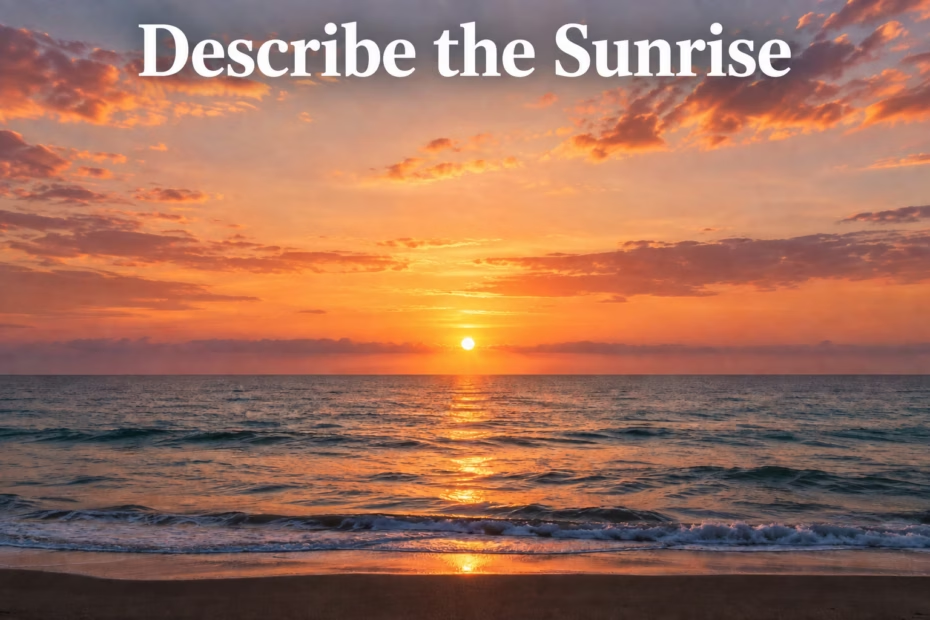
Adjectives for sunrise describe visible details such as color, light, clouds, and atmosphere, as well as the observer’s mood. Choose a word that matches what the scene actually shows: golden for warm light, misty for visible fog, or serene for a calm impression.
- Color: pink, amber, scarlet, pale, or golden.
- Light: radiant, soft, dim, dazzling, or diffused.
- Weather and sky: cloudy, misty, clear, hazy, or cloud-veiled.
- Mood: peaceful, hopeful, dramatic, or melancholy; these are subjective responses.
- Precise timing: dawn is the broader period of morning light before sunrise; conventional sunrise marks the Sun’s upper edge at the horizon.
How do you choose the right sunrise adjective?
Start with one observable detail, then add a mood word only if it serves your sentence. “A pale pink sky brightened over the harbor” gives readers evidence; “a magical morning” gives them the narrator’s response. Either can work, but separating observation from interpretation makes the description more precise.
| What you notice | Useful adjectives | Example |
|---|---|---|
| Sky color | pink, coral, amber, crimson, lavender | Coral clouds stretched above the eastern ridge. |
| Brightness | dim, soft, muted, radiant, dazzling | Soft light reached the trail before the Sun appeared. |
| Cloud cover | cloud-veiled, streaked, clear, overcast | A cloud-veiled sunrise turned the horizon copper. |
| Air and visibility | misty, hazy, crisp, foggy | A misty sunrise softened the far hills. |
| Movement | rising, emerging, spreading, glowing | Light spread across the water in a bright band. |
| Personal response | serene, hopeful, solemn, dramatic | The quiet shoreline gave the morning a serene mood. |
Adjectives do not all describe the same kind of quality. Golden and cloudy point to details a viewer can observe, while glorious and melancholy evaluate or interpret the scene. Naming the category helps you avoid stacking several near-synonyms that add no new information.
Which words describe sunrise color and light?
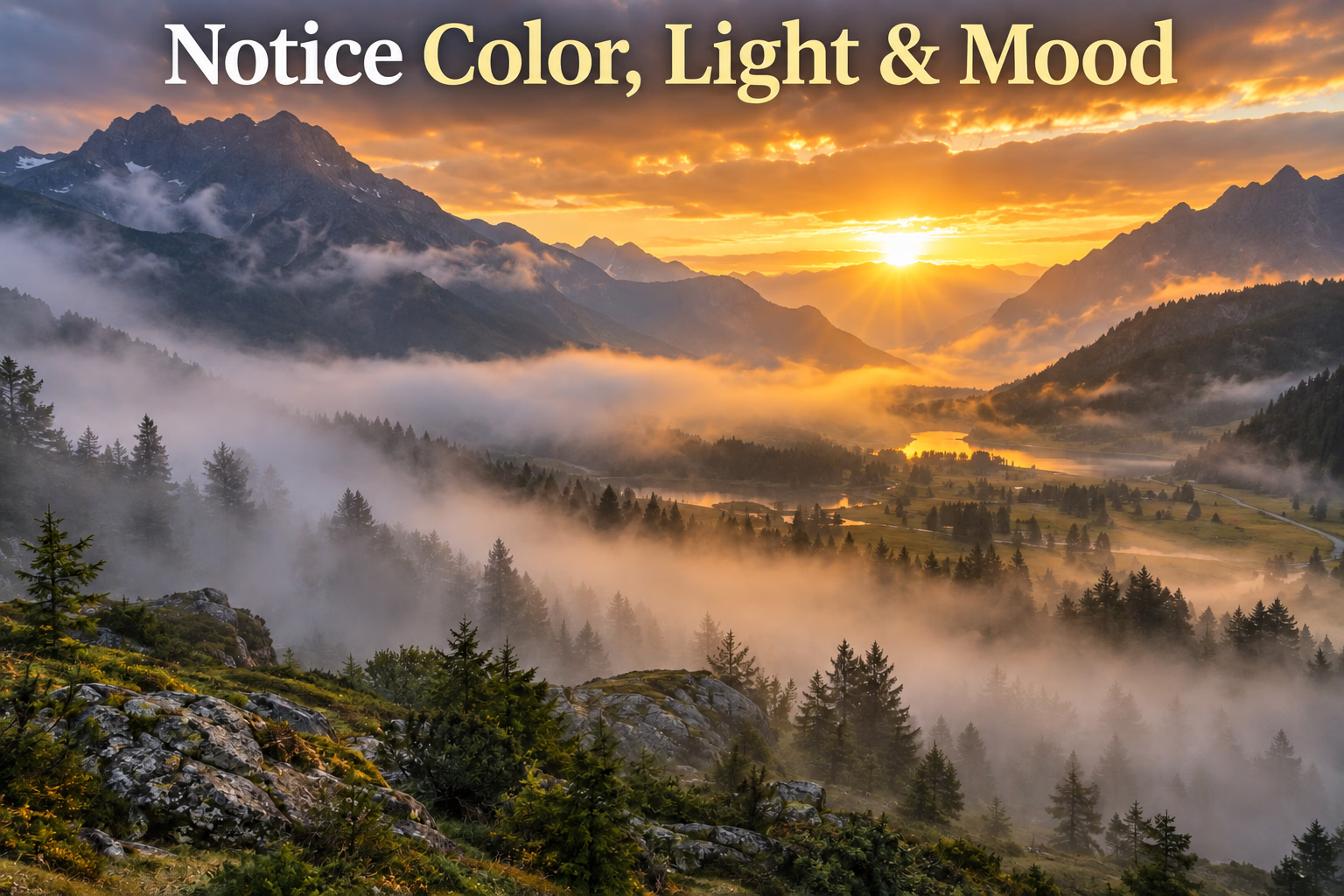
Use color adjectives for the sky or clouds and light adjectives for brightness, softness, or direction. A single sunrise can shift from lavender and blue to rose, amber, and gold, but the sequence and intensity vary with clouds, air conditions, viewing angle, and location.
- Color words: rose, rosy, pink, peach, coral, orange, amber, golden, crimson, scarlet, purple, lavender, blue, silvery.
- Brightness words: pale, dim, muted, soft, gentle, bright, glowing, radiant, brilliant, dazzling.
- Cloud descriptions: streaked, cloud-veiled, cloudless, overcast, flame-colored, backlit.
- Surface and distance: hazy, misty, foggy, clear, distant, reflective.
Prefer the exact color you see over a grander but less accurate label. “A thin amber band under gray clouds” gives a clearer picture than “a spectacular sunrise.” If the color is subtle, pale, faint, or muted may be more precise than vibrant.
What words describe sunrise mood or atmosphere?
Mood adjectives describe how a sunrise feels to the observer, not a quality that every person must experience. Peaceful, hopeful, majestic, lonely, and dramatic can all fit, depending on the setting and the writer’s point of view.
| Intended effect | Adjectives | Example sentence |
|---|---|---|
| Quiet and restful | calm, serene, tranquil, still | The still sunrise settled over the empty beach. |
| Fresh beginning | hopeful, renewing, promising, invigorating | A hopeful sunrise warmed the windows after a long night. |
| Scale and grandeur | majestic, magnificent, spectacular, awe-inspiring | A majestic sunrise edged above the mountain range. |
| Unease or sadness | somber, bleak, lonely, ominous | A bleak sunrise filtered through low, gray clouds. |
Magical, exquisite, and glorious are expressive but broad. Keep them when you want a personal or lyrical voice; for a report, travel caption, or classroom description, name the light, cloud, or color that led you to that judgment.
How does dawn differ from sunrise?
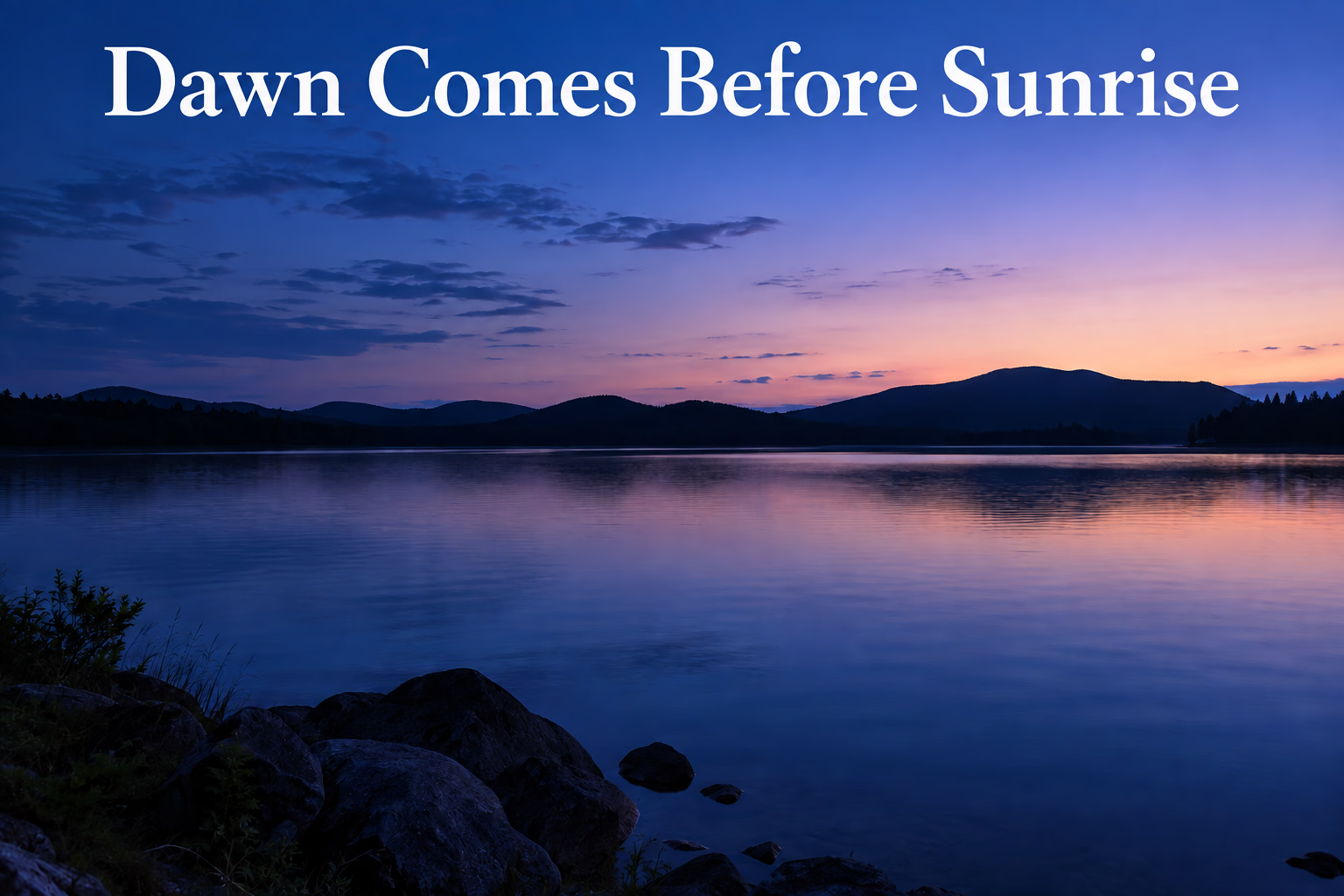
Dawn usually refers to the morning light or period before sunrise, while sunrise conventionally marks the instant when the Sun’s upper edge appears at the horizon. In everyday writing the words sometimes overlap, but a precise description should distinguish the gradual brightening from the horizon event.
The U.S. Naval Observatory describes twilight as the period before sunrise and after sunset when scattered sunlight illuminates the atmosphere. The National Weather Service places morning civil twilight between the Sun being 6 degrees below the horizon and sunrise. That means blue, dim, or faintly lit may describe early dawn even before the Sun is visible.
For example, “We walked at dawn, then watched the sunrise” names a broad time and the later event separately. “The sunrise was purple” can be natural in casual prose, but it may refer to the whole changing sky rather than the precise instant when the Sun first meets the horizon.
How can you describe different sunrise scenes?
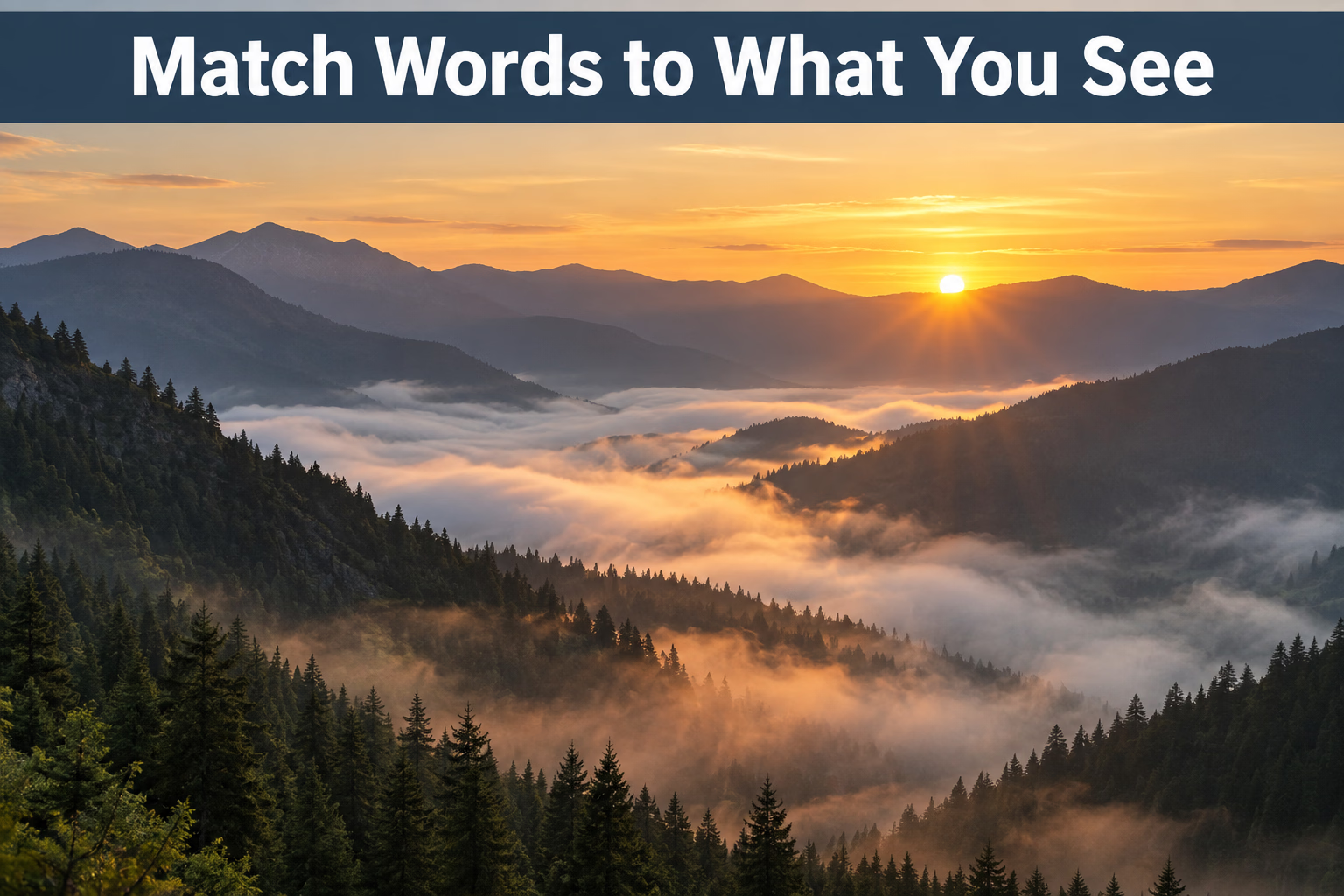
Choose scene-specific words and use conditional details: a beach sunrise can be reflective, a city sunrise can be hazy, and a mountain sunrise may look misty or distant. These are possibilities, not fixed properties of each location.
| Setting | Details to observe | Example |
|---|---|---|
| Beach or lake | Reflection, water movement, horizon, cloud color | A copper sunrise rippled across the calm bay. |
| Mountains | Ridge line, shadows, fog, layers of distance | Rose light reached the snowy ridge first. |
| City | Windows, rooftops, traffic, haze, long shadows | A hazy sunrise softened the glass towers. |
| Countryside | Fields, dew, mist, trees, visible wildlife | A misty sunrise hung over the dew-bright field. |
Before choosing an adjective, ask what the noun modifies: the sky can be pink, the light can be soft, the horizon can be hazy, and the mood can be hopeful. This simple check prevents mismatches such as calling the Sun “misty” when the mist is actually in the air or valley.
Can sunrise be described as blinding?
Blinding can describe intense glare in a scene, but never use it as an invitation to look directly at the Sun. NASA says it is unsafe to look directly at the Sun without specialized solar-viewing protection, except during the brief total phase of a total solar eclipse. Ordinary sunglasses are not solar-viewing protection.
For safer, clearer prose, describe the effect of glare on surroundings instead of a person staring at the Sun: “The low sunrise glare washed out the road markings, so the driver lowered the visor.” Other critical or subdued words such as dull, dreary, and bleak describe the observer’s judgment or a weather condition; they do not make every sunrise objectively negative.
Are dawn, daybreak, and twilight synonyms for sunrise?
Dawn and daybreak are related morning terms, but they can name a period rather than the exact sunrise instant. Morning covers a wider part of the day, and twilight also occurs after sunset; for precise timing, use sunrise for the event and morning twilight or dawn for the preceding light.
Sunset is the clearest counterpart to sunrise as the evening horizon event. Dusk and nightfall refer to the transition toward night, while darkness describes an absence or lack of light. These words are useful contrasts, but they are not all grammatical or exact opposites in every sentence.
Frequently asked questions about adjectives for sunrise
What is one good adjective for sunrise?
Golden is a familiar choice when warm yellow light is visible. If the horizon is pink, choose rosy; if fog softens the view, choose misty. The strongest word depends on an observable feature, so there is no single adjective that fits every sunrise.
What are positive adjectives for sunrise?
Radiant, serene, hopeful, glorious, and magnificent often express admiration or calm. They describe a writer’s response, not an objective quality shared by all viewers. Pair a mood word with a specific detail, such as “a serene sunrise over still water.”
What are negative adjectives for sunrise?
Bleak, dreary, somber, and overcast can create a subdued or unfavorable impression. Use weather words such as overcast for visible conditions and mood words such as somber for interpretation. Blinding can describe glare but should not suggest looking at the Sun.
How can I describe a sunrise in one sentence?
Name a visible feature, choose a precise adjective, and add an action or setting: “Pale gold light spilled across the harbor beneath a streaked pink sky.” This sentence identifies color, movement, location, and cloud shape without relying on several vague superlatives.
Is “sunrise” an adjective?
Sunrise is usually a noun, as in “the sunrise was pink.” It can also modify another noun in a compound such as “sunrise walk” or “sunrise colors.” In most descriptive sentences, an adjective such as pink, misty, or radiant describes the sunrise.
Conclusion: choose precise adjectives for sunrise
The most useful adjectives for sunrise connect a word to something visible or to a clearly stated mood. Begin with color, light, cloud, mist, or reflection; add an emotional word only when it advances the scene. Use dawn for the wider pre-sunrise period, sunrise for the horizon event, and never encourage readers to look directly at the Sun.
Sources and terminology
The U.S. Naval Observatory’s rise, set, and twilight definitions explains the conventional horizon event and twilight. The National Weather Service’s twilight guide distinguishes civil, nautical, and astronomical twilight. NASA’s eclipse-viewing safety guidance explains why direct solar viewing requires specialized protection. For general word meanings, see Merriam-Webster on sunrise and Cambridge Dictionary on dawn.
Earlier sunrise examples and adjective lists
The original examples, tables, and lists are retained below. Their positive and negative labels are editorial viewpoints, and the synonym and antonym groups are related words rather than exact equivalents in every context.

Safety note: The source block below is reproduced exactly for preservation. Its “blinding” example must not be read as advice to look directly at the Sun. NASA warns against unprotected direct solar viewing; use “blinding” only for light affecting the surroundings or the observer’s perception without recommending that anyone stare at the Sun. Also read “dawn,” “daybreak,” and “twilight” as related terms, not exact synonyms for the sunrise instant.
As a lover of nature’s beauty, I am always captivated by the breathtaking sight of a sunrise. The way the sun slowly emerges from the horizon, painting the sky with vibrant colors, is truly awe-inspiring. In this article, I’ll be sharing a collection of adjectives that perfectly capture the essence of a sunrise, along with examples to help you visualize the scene.
When describing a sunrise, words like “radiant,” “glorious,” and “mesmerizing” come to mind. These adjectives convey the sheer beauty and brilliance of the sun as it illuminates the world. Imagine a golden sun rising above the horizon, casting its warm rays across the landscape, and creating a spectacle that leaves you speechless.
From “serene” and “tranquil” to “majestic” and “exquisite,” there is an array of adjectives that can be used to paint a vivid picture of a sunrise. Whether you’re a writer seeking to evoke emotions or simply someone who appreciates the wonders of nature, these adjectives will help you convey the magic of a sunrise in all its glory. So, let’s dive into the world of descriptive words and explore the beauty of a sunrise together.
How to Describe sunrise? – Different Scenarios
Now that we have explored the mesmerizing qualities of a sunrise, let’s dive into the diverse scenarios in which we can encounter this breathtaking phenomenon.
- A Beach Sunrise
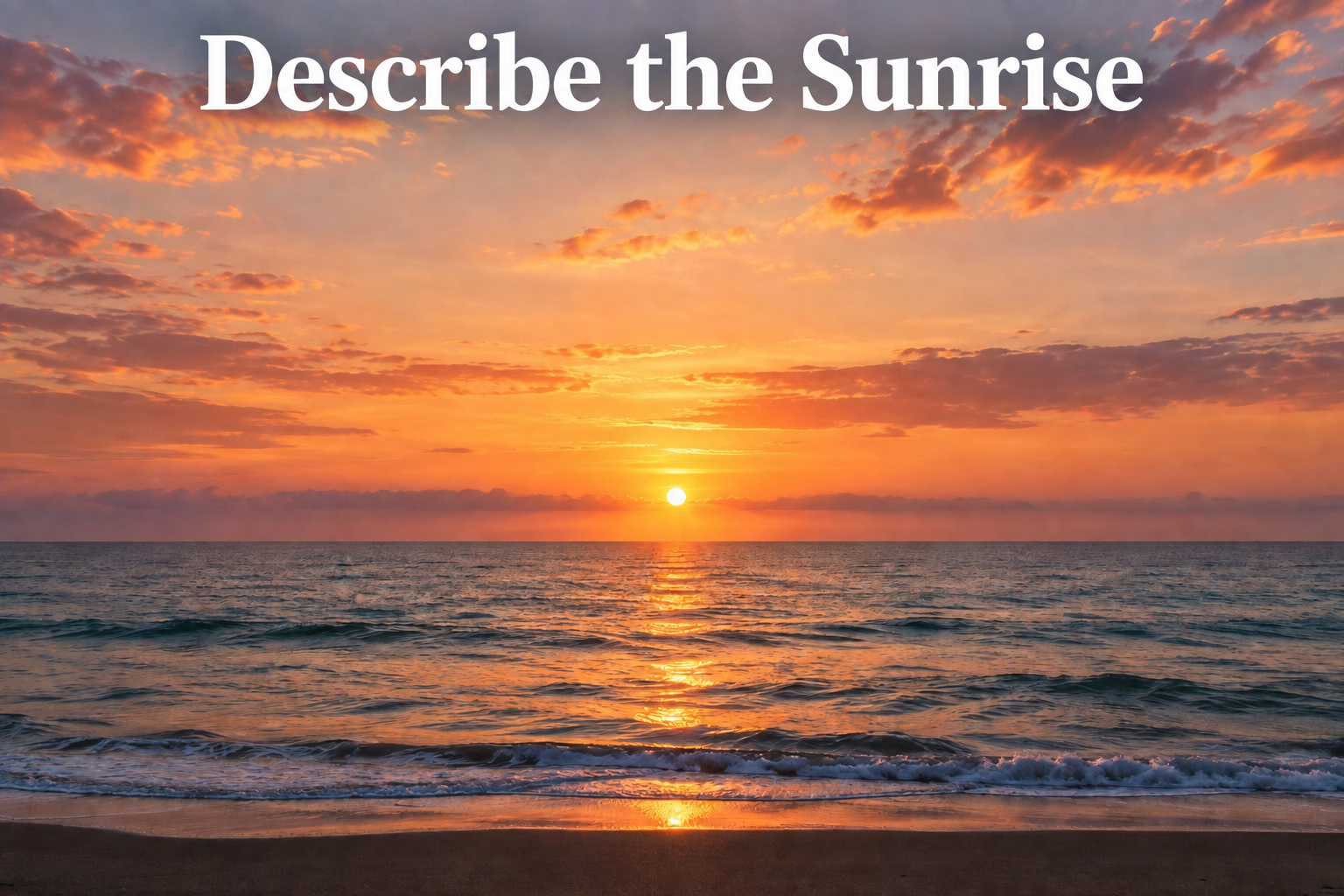
Imagine standing on the soft sand, with gentle waves crashing in the distance and a cool breeze sweeping through your hair. As the sun timidly peeks above the horizon, the sky becomes painted in hues of pink, orange, and gold. The reflection of the sun’s rays on the shimmering water creates a mesmerizing dance of light. The air feels crisp, and the tranquility of the moment is almost palpable.
- A Mountain Sunrise
Picture yourself atop a serene mountain peak, surrounded by towering trees and vast expanses of untouched nature. As the first rays of daylight break through the veil of darkness, they bathe the landscape in a warm, golden glow. The majestic mountains are illuminated, casting long shadows that stretch across the valleys. The tranquility and majesty of this scene are nothing short of extraordinary.
- A City Sunrise
In the heart of a bustling city, a sunrise takes on a different character. As the sun begins to rise, it casts its gentle glow upon towering skyscrapers and urban landscapes. The city starts to awaken, with the first rays of sunshine reflecting off the windows of buildings. The soft light adds a touch of magic to the city, contrasting against the steel and glass structures. It’s a moment of harmony between nature and human innovation.
- A Countryside Sunrise
In the peaceful countryside, a sunrise becomes an exquisite display of nature’s splendor. Picture rolling hills and lush green fields, as the sun gradually appears on the horizon. The soft, warm light transforms the landscape, illuminating every blade of grass and flower petal. The birds sing their morning melodies, completing the enchantment of this peaceful moment.
Remember, these scenarios are just a few examples of how a sunrise can be experienced. The beauty of describing a sunrise lies in the endless possibilities and the emotions it evokes. Whether it be on a beach, in the mountains, in the city, or in the countryside, each sunrise is unique and offers its own magical elements.
Next, we’ll explore some specific adjectives that can be used to vividly depict a sunrise in each of these scenarios. Stay tuned for the upcoming section where we dive into the details.
Describing Words for sunrise in English
When it comes to capturing the essence of a breathtaking sunrise, the right words can make all the difference. As a writer, it’s important to use descriptive adjectives that paint a vivid picture in the reader’s mind. In this section, I will explore a variety of words that can be used to depict the beauty and majesty of a sunrise.
Radiant: A sunrise can often be described as radiant, as the sun’s rays burst forth, illuminating the sky and turning it into a glorious display of colors.
Golden: As the sun rises above the horizon, it casts a golden glow that blankets everything in its warm embrace. This adjective perfectly captures the awe-inspiring moment when the world is bathed in a soft, golden light.
Spectacular: Few things can rival the sheer spectacle of a sunrise. The merging of light and darkness creates a dramatic transformation, filling the sky with vibrant hues and casting a spellbinding spell over the world below.
Serene: A sunrise has the power to bring a sense of tranquility and calm. As the sun slowly ascends, the world seems to awaken in a peaceful harmony, making it the perfect time to reflect and appreciate the beauty of nature.
Magical: There is a certain element of magic that comes with witnessing a sunrise. The way the colors dance across the sky and the sense of wonder it evokes make it a truly enchanting experience.
Let’s take a look at some examples of how these adjectives can be used to describe a sunrise in different settings:
| Scenario | Describing Word |
|---|---|
| Beach sunrise | Radiant |
| Mountain sunrise | Golden |
| City sunrise | Spectacular |
| Countryside sunrise | Serene |
Finding the right words to describe a sunrise is essential in capturing its beauty and evoking the emotions it inspires. By using these descriptive adjectives, you can transport your readers to the exact moment when the world comes alive with the brilliance of a sunrise. So, next time you witness this natural wonder, take a moment to soak it in, and let the words flow as you attempt to capture its magic.
Adjectives for sunrise
Positive Adjectives for Sunrise
When describing a sunrise, there are many positive adjectives that can aptly capture its beauty and evoke a sense of wonder. Here are some examples of positive adjectives that can be used to describe a sunrise, along with example sentences:
| Adjective | Example Sentence |
|---|---|
| Radiant | The sunrise painted the sky in a radiant hue of pink and orange. |
| Golden | The golden rays of the rising sun reflected off the water, creating a breathtaking view. |
| Spectacular | The sunrise over the mountains was truly spectacular, with vibrant colors spreading across the horizon. |
| Serene | The serene sunrise cast a peaceful glow over the stillness of the lake. |
| Magical | As the sun rose, it brought with it a magical display of colors that filled the sky. |
| Breathtaking | Witnessing the breathtaking sunrise, I couldn’t help but be in awe of nature’s beauty. |
| Inspiring | The inspiring sunrise filled me with a renewed sense of hope and positivity. |
| Mesmerizing | The mesmerizing sunrise captivated me, as I watched the sky change its colors. |
| Enchanting | The enchanting sunrise painted the world in soft pastel shades, creating a dreamlike atmosphere. |
| Blissful | The blissful sunrise signaled the start of a beautiful day ahead. |
| Captivating | The captivating sunrise held my gaze as it transformed the sky into a stunning masterpiece. |
| Exhilarating | The exhilarating sunrise energized my spirit and set a positive tone for the day. |
Negative Adjectives for Sunrise
While sunrises are usually associated with positivity and beauty, there are also negative adjectives that can be used to describe certain aspects of a sunrise. Here are a few examples of negative adjectives that can be used, along with example sentences:
| Adjective | Example Sentence |
|---|---|
| Grim | The sunrise on that gloomy morning had a grim and eerie atmosphere. |
| Dreary | The dreary sunrise was obscured by thick fog, casting a gray shadow over the landscape. |
| Dull | The dull sunrise lacked the vibrant colors usually seen at this time of day. |
| Blinding | The blinding sunrise made it difficult to look directly at the sun. |
| Inconvenient | The inconveniently early sunrise made it hard for me to get a full night’s sleep. |
Remember, when using adjectives to describe a sunrise, it’s important to choose words that accurately capture the essence of the experience and convey the emotions it evokes. Whether it’s a radiant, golden sunrise over the ocean or a captivating, magical sunrise in the mountains, finding the right words can help paint a vivid picture of this awe-inspiring natural phenomenon.
Synonyms and Antonyms with Example Sentences
Synonyms for sunrise
One of the best ways to capture the beauty of a sunrise is by using descriptive and evocative adjectives that can paint a vivid picture in the reader’s mind. Here are some synonyms for sunrise that can help you find the right words to describe this magical moment:
| Synonym | Definition | Example Sentence |
|---|---|---|
| Dawn | The first light of day before the sun rises. | The dawn painted the sky with hues of pink and orange. |
| Daybreak | The time of sunrise, when the sky begins to brighten. | The gentle rays of daybreak greeted us with warmth. |
| Morning | The period of time from sunrise to noon. | We enjoyed a serene morning walk by the lake. |
| Sunrise | The moment when the sun appears above the horizon. | The vibrant colors of the sunrise took my breath away. |
As you can see, each synonym brings its own unique connotation to the description of a sunrise. Experimenting with these different words can help you find the perfect adjective to capture the essence of this special moment.
Antonyms for sunrise
While sunrises are often associated with beauty and serenity, there are also antonyms that describe less ideal situations related to the sun’s appearance in the morning sky. Here are some antonyms for sunrise:
| Antonym | Definition | Example Sentence |
|---|---|---|
| Sunset | The time when the sun disappears below the horizon in the evening. | The colors of the sunset filled the sky with warmth. |
| Nightfall | The time when night begins and darkness takes over. | Nightfall brought a sense of peace and tranquility. |
| Dusk | The period of fading light after sunset. | The sky turned various shades of pink and purple at dusk. |
| Twilight | The soft, diffused light that occurs before sunrise and sunset. | The calmness of twilight enveloped the landscape. |
| Darkness | The absence of light. | The darkness of the early morning made it hard to see. |
Using antonyms for sunrise can add depth and contrast to your writing, allowing you to evoke different moods and emotions associated with the absence or presence of light.
Remember, choosing the right words is essential when describing a sunrise. Whether you opt for synonyms that evoke beauty and tranquility or antonyms that paint a contrasting picture, your adjectives can transport your readers to the magical world of a sunrise.
Conclusion
Describing a sunrise is an art that requires careful selection of words. In this article, I have explored various adjectives and synonyms that can be used to paint a vivid picture of the beauty and wonder of a sunrise.
From the gentle hues of dawn to the vibrant colors of daybreak, each word carries its own unique connotation, allowing writers to convey different emotions and atmospheres. By using synonyms such as morning and sunrise itself, we can add depth and variety to our descriptions.
On the other hand, antonyms like sunset, nightfall, dusk, twilight, and darkness can provide contrast and create a sense of balance in our writing. They can also be used to evoke a different mood or setting.
Remember, the right choice of words can transport readers to the magical world of a sunrise. So, whether you’re writing a poem, a story, or simply capturing a moment in time, the adjectives you choose will make all the difference.
So go ahead, dive into the vast array of adjectives for sunrise, and let your words illuminate the beauty of a new day.


