How to Describe a T-Shirt Clearly
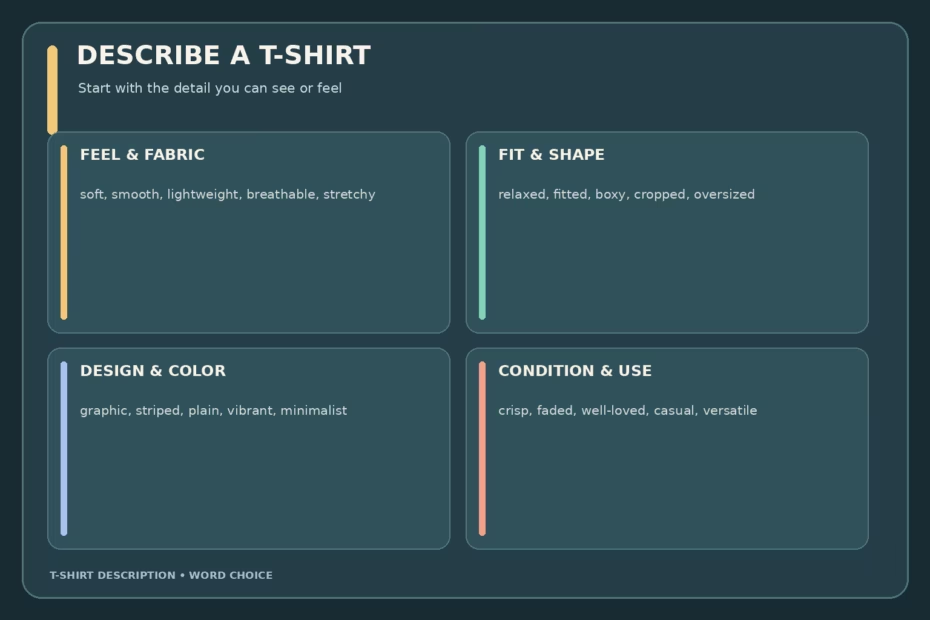
Choose an adjective that tells a reader something specific about the shirt. Is it soft to the touch, oversized in its cut, striped in its pattern, or faded from wear? A precise description is more useful than a string of general compliments. The word t-shirt is also written T-shirt or tee; all three refer to the familiar short-sleeved knit top.
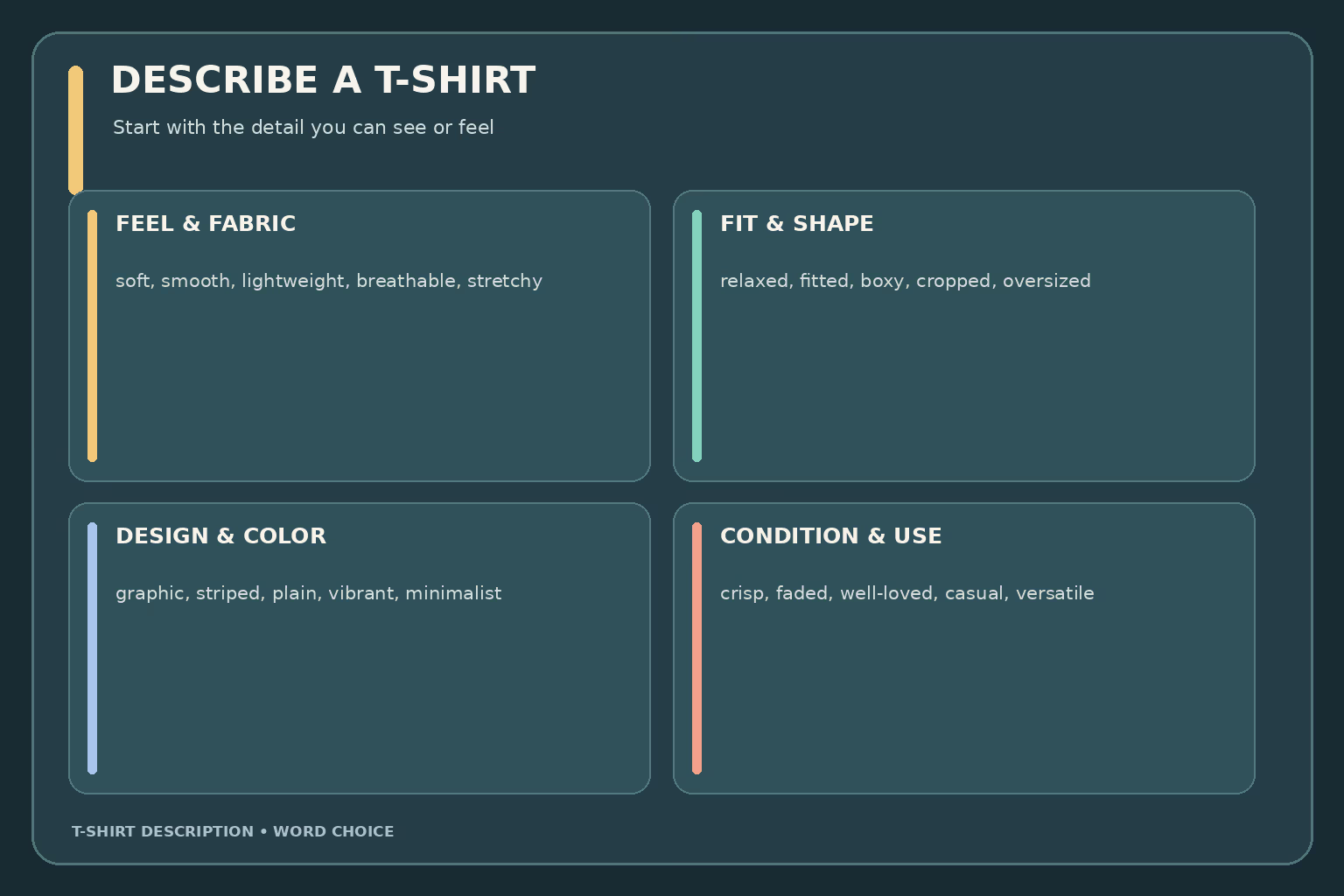
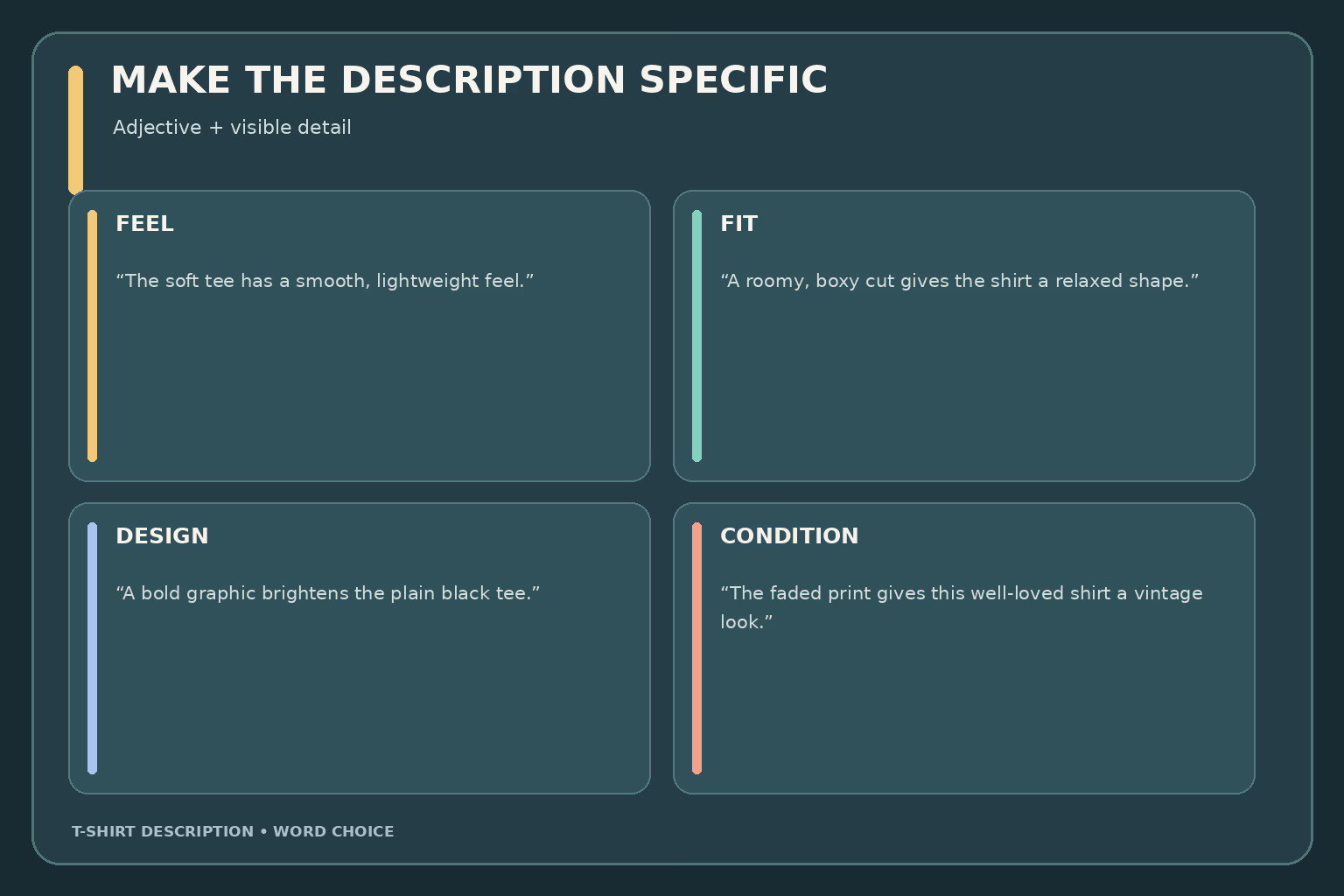
For example, “a soft, lightweight cotton tee with a relaxed fit” gives information about feel, weight, fiber, and shape. “A bold graphic shirt” points to its design. If you do not know the fiber or construction, describe what you can observe instead of guessing.
Adjectives for T-Shirt Fabric, Feel, and Weight
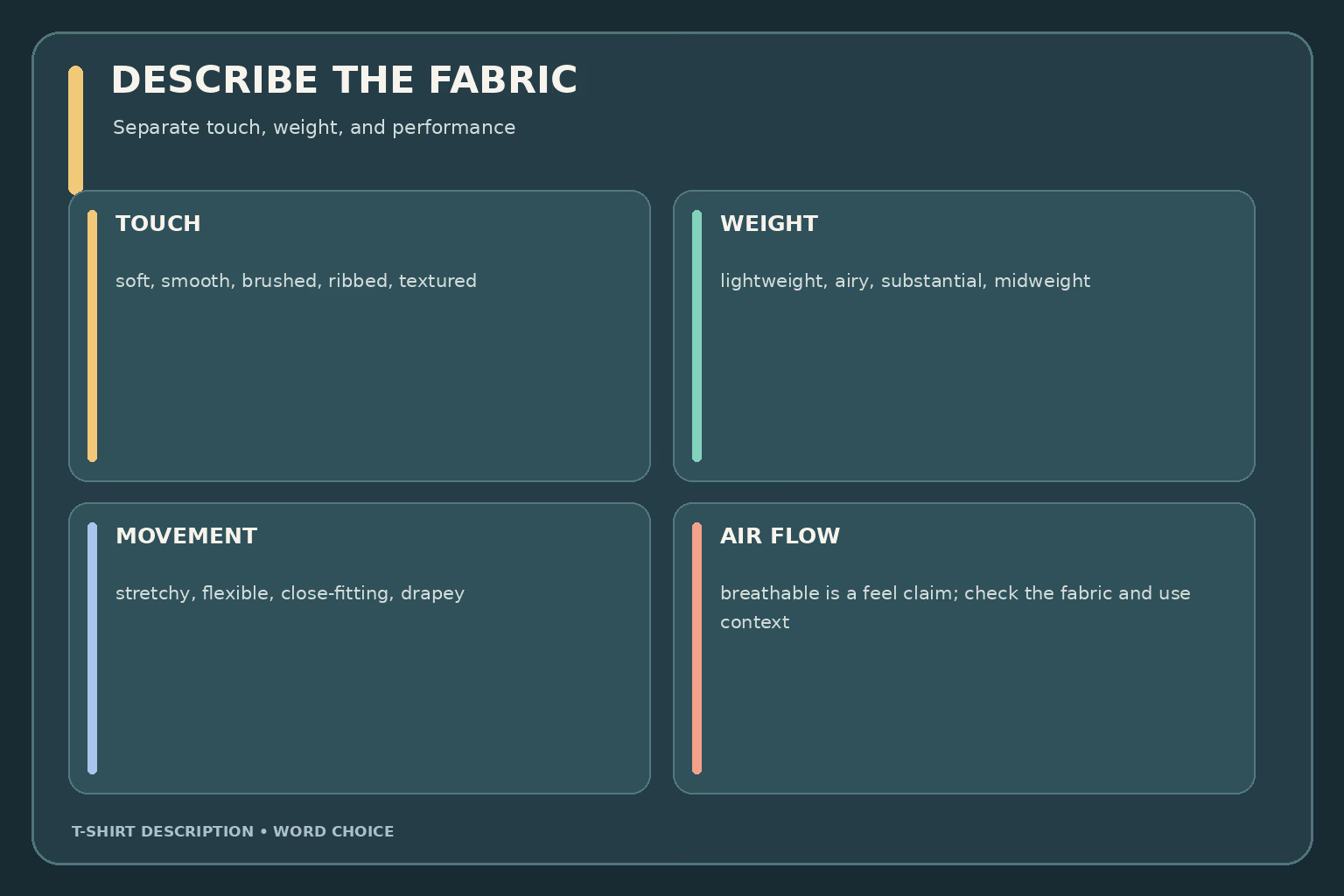
These adjectives focus on how a shirt feels or hangs. Some describe a personal impression, while others suggest a performance feature; use the latter only when the fabric or label supports the claim.
- Soft: pleasant and gentle to the touch. “The soft tee feels comfortable against my skin.”
- Smooth: even in surface texture, without a noticeable nap. “The smooth fabric works well under a jacket.”
- Lightweight: low in weight and often comfortable for layering. “She packed a lightweight shirt for the trip.”
- Substantial: comparatively weighty or sturdy in feel. “The substantial knit keeps its shape through the day.”
- Stretchy: able to extend when pulled. “A stretchy blend moves easily during a workout.”
- Textured: having a surface you can notice by sight or touch. “The textured ribbed collar gives the tee extra detail.”
- Breathable: allowing air to pass through in a way that can affect comfort. “This breathable top feels less stuffy on a warm walk.”
- Coarse: rough or less smooth to the touch. “The coarse fabric felt scratchy against his neck.”
- Clingy: tending to follow the body’s shape closely. “The clingy shirt was less comfortable in humid weather.”
- Stiff: not soft or flexible. “The stiff new tee softened after several washes.”
Adjectives for T-Shirt Fit and Shape
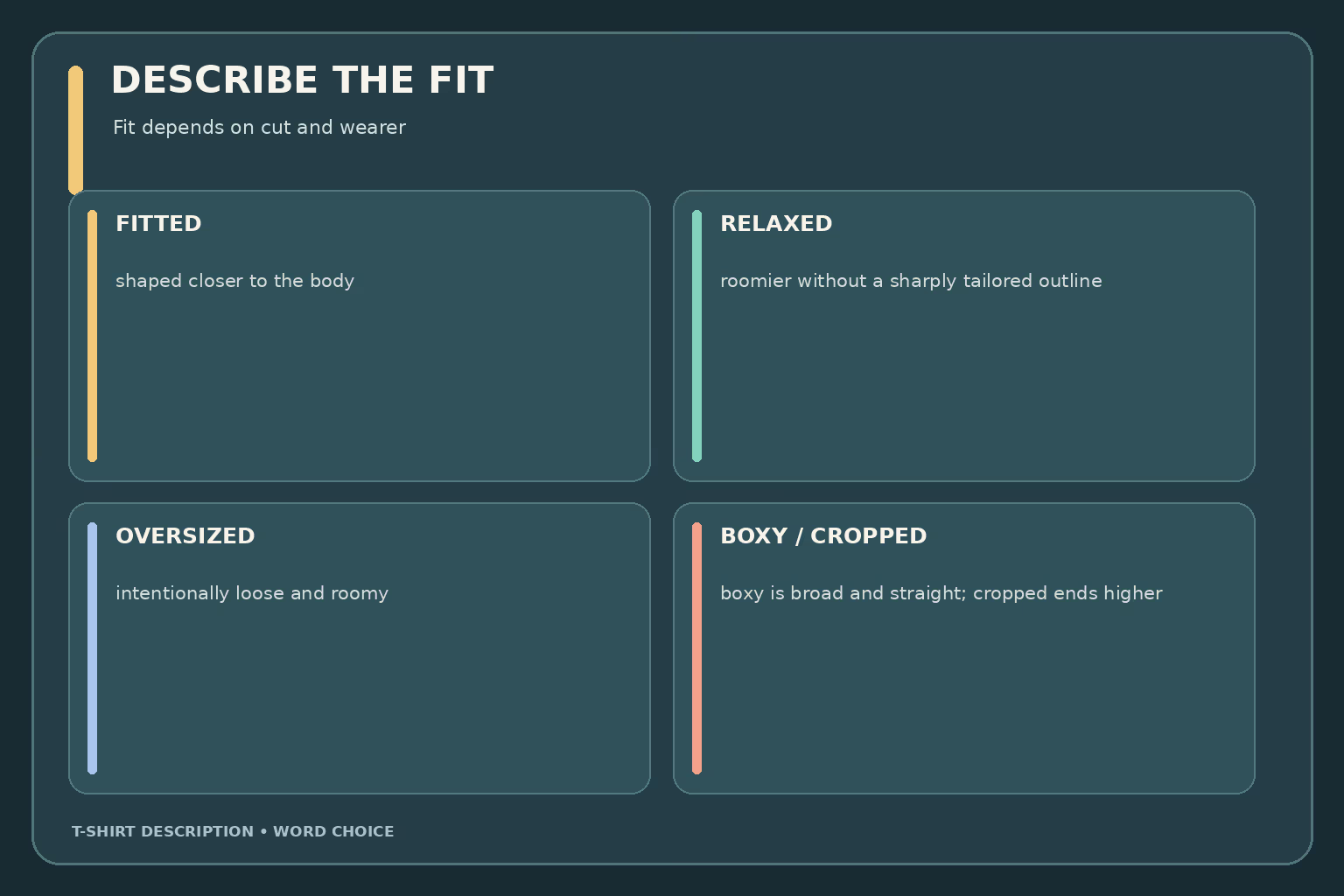
Fit words describe a garment in relation to a body, so the same shirt can fit differently on different people. Size labels alone do not describe the cut. If fit matters, pair the adjective with a detail such as sleeve length, shoulder seam, body width, or hem.
- Fitted: cut to sit closer to the body. “A fitted tee looked neat beneath the cardigan.”
- Relaxed: comfortable and less close-cut. “The relaxed shirt left room to move.”
- Oversized: intentionally larger and roomier than a standard fit. “He wore an oversized tee with rolled sleeves.”
- Boxy: broad and relatively straight rather than tapered. “The boxy silhouette paired well with high-waisted jeans.”
- Cropped: shorter in length, ending above a conventional hip-length hem. “A cropped tee complemented the high-rise trousers.”
- Loose: not tight against the wearer. “The loose shirt felt easy on a hot afternoon.”
- Snug: close to the body without necessarily being uncomfortable. “The snug sleeves showed the shirt’s slim cut.”
- Longline: designed with a longer body length. “The longline tee reached below the hips.”
Adjectives for T-Shirt Color, Pattern, and Design
Design adjectives make a description easier to picture. Name the visible feature, then add a word about its style or effect.
- Graphic: printed with a prominent image, lettering, or symbol. “The graphic tee features a hand-drawn mountain scene.”
- Striped: marked with lines of color. “A navy-and-white striped shirt gave the outfit a classic look.”
- Plain: simple and without a prominent print or decoration. “A plain white tee is easy to layer.”
- Vibrant: strongly colored and visually lively. “The vibrant orange shirt stood out in the crowd.”
- Muted: subdued rather than bright. “A muted green tee suited the understated outfit.”
- Minimalist: simple in design, with few decorative details. “The minimalist shirt had a small chest logo.”
- Playful: lighthearted in mood or appearance. “A playful cartoon print made the shirt cheerful.”
- Vintage-inspired: designed to evoke an earlier style. “The vintage-inspired lettering looked intentionally worn.”
- Eye-catching: likely to attract attention. “Its eye-catching geometric print became the outfit’s focal point.”
Positive and Negative Words for a T-Shirt
Positive adjectives can help recommend a shirt, while critical adjectives explain what does not work for a particular person or occasion. Be specific so the judgment has a reason.
Positive: comfortable, versatile, durable, stylish, flattering, colorful, well-made, easy-care, distinctive, practical.
Critical: scratchy, flimsy, faded, misshapen, restrictive, oversized, clingy, wrinkled, bland, uncomfortable.
These evaluations depend on preference and use. One person may want a roomy oversized tee for lounging; another may find it too baggy. “The fabric feels scratchy at the collar” explains a reaction better than “It is bad.” If you describe durability, stain resistance, or moisture control, base the wording on product information or a clearly identified experience.
Build a More Useful T-Shirt Description
A reliable pattern is fit + fabric feel + design detail + context. For instance: “The relaxed, lightweight tee has a small striped chest graphic and works well under an open shirt.” A product listing might instead say: “A fitted black T-shirt with a smooth finish and a crew neckline.” Each adjective contributes a distinct detail.
For fiber descriptions, check the garment label. For care, follow the instructions attached to the shirt: washing and drying guidance depends on the specific fabric, dye, finish, and construction. The Federal Trade Commission explains that covered garments have care-label requirements and that textile labels disclose fiber content. That is a better basis for factual claims than guessing from appearance alone.
Quick Questions
What are good adjectives for a comfortable T-shirt?
Soft, lightweight, breathable, stretchy, relaxed, and smooth can work when they accurately describe the garment. They refer to different qualities, so choose the one that fits what you notice.
How do I describe a T-shirt’s fit?
Use words such as fitted, relaxed, loose, oversized, boxy, cropped, or longline. Add a detail about the body length, sleeves, or cut when greater precision matters.
What adjective describes a shirt with a picture on it?
Graphic is a common choice for a T-shirt with a prominent printed image, symbol, or lettering. You can be more specific with floral, striped, logo-printed, illustrated, or typographic.
What is a word for a T-shirt that is not plain?
Try printed, patterned, graphic, colorful, embellished, or decorative, depending on what makes it distinctive. A precise word helps readers picture the design.
Sources
- Cambridge Dictionary: T-shirt (word form and meaning).
- Federal Trade Commission: Calling It Cotton (truthful fiber-content descriptions).
- Federal Trade Commission: Clothes Captioning (care-label guidance).
- Federal Trade Commission: Textile Fiber Rule (fiber disclosure overview).

Hey there! Looking for the perfect words to describe your favorite t-shirt? Well, you’ve come to the right place! In this article, I’ll be sharing a list of adjectives that will help you paint a vivid picture of your t-shirt, whether it’s a cozy graphic tee or a sleek, fitted top. From soft and comfortable to vibrant and eye-catching, these adjectives will surely capture the essence of your beloved garment.
How to Describe t shirt? – Different Scenarios
When it comes to describing a t-shirt, there are many adjectives you can use to paint a vivid picture. Whether you are a fashion enthusiast, a designer, or simply someone who appreciates a good t-shirt, it’s always helpful to have a variety of words to choose from. In this section, I will discuss different scenarios and provide examples of how to describe a t-shirt in each situation.
Casual and Comfortable Settings
In casual and comfortable settings, you might want to describe a t-shirt as:
- Cozy: A t-shirt that feels warm, soft, and snug.
- Relaxed: A loose-fitting t-shirt that gives a comfortable and laid-back vibe.
- Breathable: A t-shirt made of fabric that allows air to pass through, keeping you cool and comfortable.
- Versatile: A t-shirt that can be easily styled and worn with different outfits.
Stylish and Trendy Occasions
If you’re attending a stylish or trendy event, you might describe a t-shirt as:
- Graphic: A t-shirt with eye-catching designs or prints that make a bold statement.
- Sleek: A well-fitted t-shirt that looks polished and sophisticated.
- Fashion-forward: A t-shirt that reflects the latest trends and sets you apart from the crowd.
- Statement: A t-shirt with a powerful message or slogan that expresses your personality or beliefs.
Vibrant and Eye-Catching Designs
When describing t-shirts with vibrant and eye-catching designs, consider these adjectives:
- Colorful: A t-shirt with a wide range of bright and vivid colors.
- Playful: A t-shirt with fun and whimsical patterns or designs.
- Bold: A t-shirt that uses strong and striking colors or patterns to make a statement.
- Unique: A t-shirt with a one-of-a-kind design that grabs attention.
Remember, these are just a few examples of how you can describe a t-shirt in different scenarios. Depending on the context and your personal preferences, you can mix and match these adjectives or come up with your own creative descriptions. The goal is to find words that accurately capture the essence of the t-shirt and help others visualize it in their minds.
Describing Words for t shirt in English
When it comes to describing a t-shirt, there are a variety of adjectives that can be used to capture its unique features and characteristics. Whether you’re talking about the fabric, design, or style, using descriptive words can help others visualize the t-shirt in their minds. Let’s explore some adjectives that can be used to describe a t-shirt in English:
- Cozy: A cozy t-shirt is one that feels warm and comfortable against the skin. It’s perfect for those relaxed, lazy days when you want to feel at ease.
- Breathable: A breathable t-shirt is made of a fabric that allows air to circulate, keeping you cool and comfortable throughout the day. It’s an ideal choice for those hot summer months.
- Versatile: A versatile t-shirt is one that can be worn in a variety of settings and paired with different outfits. It’s a wardrobe staple that you can dress up or down, depending on the occasion.
- Graphic: A graphic t-shirt features a bold and eye-catching design, usually with a picture, symbol, or text. It’s a great way to make a statement and show off your personality.
- Sleek: A sleek t-shirt has a smooth and polished appearance. It’s often associated with a modern and minimalist style, perfect for those who prefer a clean and refined look.
- Fashion-forward: A fashion-forward t-shirt is one that is on-trend and ahead of the curve. It reflects the latest fashion trends and is perfect for those who want to make a bold fashion statement.
- Colorful: A colorful t-shirt is one that is vibrant and full of bright hues. It’s a great way to add a pop of color to your outfit and stand out from the crowd.
- Playful: A playful t-shirt features fun and whimsical designs, often with playful characters or patterns. It’s perfect for those who want to add a touch of playfulness to their outfit.
- Bold: A bold t-shirt is one that makes a strong and powerful statement. It often features strong colors, patterns, or slogans, catching the attention of those around you.
- Unique: A unique t-shirt is one-of-a-kind and unlike anything else you’ll find. It’s perfect for those who want to express their individuality and stand out from the crowd.
Adjectives for t shirt
When it comes to describing a t-shirt, there are a variety of adjectives that can help paint a vivid picture. From the material and design to the overall style and fit, these descriptive words capture the essence of a t-shirt. Let’s explore some positive and negative adjectives that can be used to skillfully describe a t-shirt.
Positive Adjectives for T-Shirt with Example Sentences
- Comfortable: This t-shirt is so soft and cozy, making it perfect for all-day wear.
- Breathable: The fabric used in this t-shirt allows for excellent airflow, keeping you cool on hot days.
- Versatile: With its simple design, this t-shirt can be easily paired with jeans or a skirt for any occasion.
- Graphic: The vibrant and eye-catching print on this t-shirt adds a fun and trendy element to any outfit.
- Sleek: The smooth and polished appearance of this t-shirt gives it a sophisticated and elegant look.
- Fashion-forward: This t-shirt features a trendy design, making it a stylish choice for fashion-conscious individuals.
- Colorful: The bright and vibrant colors of this t-shirt make it a playful and eye-catching wardrobe staple.
- Playful: With its playful patterns and designs, this t-shirt is sure to add a touch of whimsy to your ensemble.
- Bold: The bold graphic on this t-shirt makes a statement, showing off your unique personality.
- Unique: This t-shirt stands out from the crowd with its one-of-a-kind design and attention to detail.
- Stylish: Pair this t-shirt with your favorite accessories to create a stylish and on-trend outfit.
- Trendy: Stay up-to-date with the latest fashion trends by wearing this t-shirt with its trendy design.
- Uncomfortable: This t-shirt has a rough texture, making it uncomfortable to wear for long periods.
- Restrictive: The tight fit of this t-shirt limits your movement and may not be ideal for active wear.
- Faded: The colors on this t-shirt have faded over time, giving it a dull and worn-out appearance.
- Poorly-made: This t-shirt has loose threads and uneven stitching, indicating a lack of quality craftsmanship.
- Ill-fitting: The sizing of this t-shirt is off, resulting in an unflattering and baggy fit.
Synonyms and Antonyms with Example Sentences
Synonyms for t shirt
When it comes to describing a t-shirt, there are many synonyms that can be used to add variety and depth to your descriptions. Here are some alternative words that you can use instead of “t-shirt”:
- Shirt: This is a simple and straightforward alternative to “t-shirt.” For example, you can say, “I’m wearing a plain white shirt today.”
- Top: This word can be used interchangeably with “t-shirt” in many casual contexts. You can say, “She paired her jeans with a trendy top.”
- Tee: This is a shortened form of “t-shirt” and is commonly used in more informal settings. For example, you can say, “I love wearing graphic tees.”
- Blouse: This word is often used to refer to a more formal or dressier type of shirt. For example, you can say, “She wore a satin blouse to the party.”
Using these synonyms can help you diversify your vocabulary when describing different types of t-shirts.
Antonyms for t shirt
Sometimes, it’s helpful to describe what a t-shirt is not. Here are some antonyms that you can use to contrast with the concept of a t-shirt:
- Sweater: Unlike a t-shirt, a sweater is a knitted garment that is typically thicker and warmer. For example, you can say, “I prefer wearing cozy sweaters in the winter instead of t-shirts.”
- Blazer: A blazer is a more formal and structured jacket, often worn for business or professional occasions. For example, you can say, “He wore a navy blazer instead of a t-shirt to the meeting.”
- Dress: While a t-shirt is a casual top, a dress is a one-piece garment that covers the entire body. For example, you can say, “She opted for a summer dress instead of a t-shirt for the outdoor event.”
- Hoodie: A hoodie is a sweatshirt with a hood attached, offering more warmth and coverage than a t-shirt. For example, you can say, “He wore a hoodie to stay cozy, instead of just a t-shirt.”
By using antonyms, you can provide a clear contrast and help readers visualize the different options beyond a regular t-shirt.
Remember, using a variety of synonyms and antonyms can enhance your descriptions and make your writing more engaging and diverse.
Conclusion
In this article, I have provided a comprehensive list of adjectives that can be used to describe a t-shirt in various scenarios. By using these descriptive words, you can paint a vivid picture in the minds of your readers, making your writing more engaging and diverse.
Throughout the article, we explored a range of synonyms and antonyms for the word “t-shirt,” including “shirt,” “top,” “tee,” “blouse,” “sweater,” “blazer,” “dress,” and “hoodie.” By incorporating these alternative words into your descriptions, you can add depth and variety to your writing.
Describing a t-shirt using different adjectives not only helps others visualize it, but it also allows you to showcase your creativity and linguistic skills. It’s important to remember that words have the power to captivate and engage readers, and by choosing the right adjectives, you can make your descriptions truly come to life.
So, whether you’re writing a product description, a fashion blog post, or simply expressing your personal style, don’t be afraid to explore the vast array of adjectives available to describe a t-shirt. Enhance your descriptions, captivate your audience, and make your writing truly stand out.


