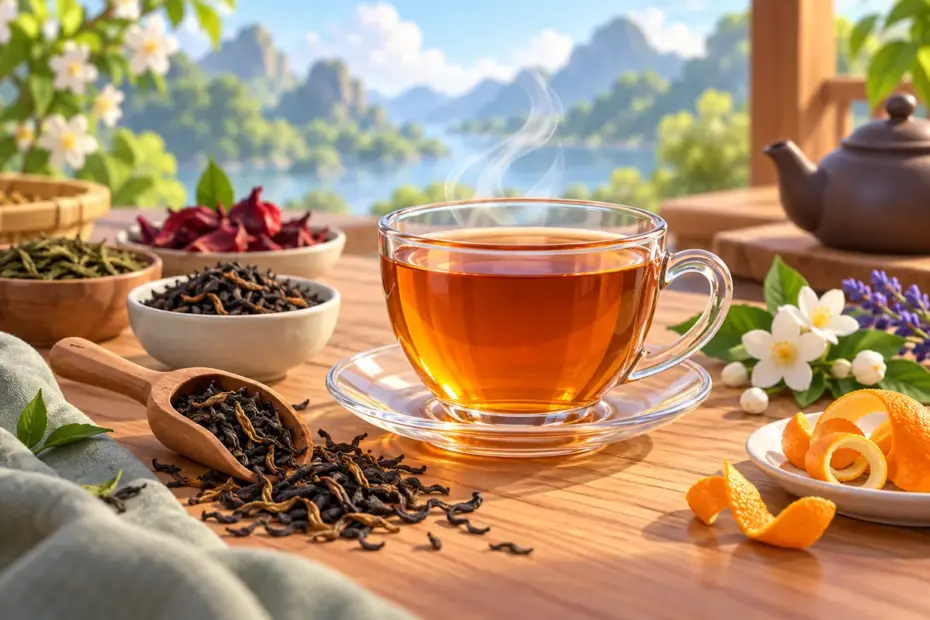
Adjectives for Tea: 18 Words for Flavor & Aroma
Useful adjectives for tea include floral, grassy, malty, brisk, astringent, sweet, delicate, and full-bodied. Choose words for the feature you notice: floral and smoky describe aroma or flavor, while astringent describes a drying mouthfeel. One cup can combine several notes, and the best description records your experience rather than claiming every tea tastes the same.
- Aroma and flavor: floral, grassy, smoky, earthy, citrusy, nutty, malty.
- Taste and intensity: sweet, bitter, brisk, robust, delicate, mellow, refreshing.
- Mouthfeel: astringent, smooth, full-bodied, light-bodied.
- Key distinction: aroma, taste, and mouthfeel are different parts of a tasting description.
- Writing tip: say what you noticed and how the cup was prepared.
What adjectives are used to describe tea?
Tea tasters describe aroma, flavor, liquor color, strength, and mouthfeel rather than relying on a single label. The Tea and Herbal Association of Canada recommends noticing aroma, body, and character; Sri Lanka’s Tea Board glossary includes terms such as malty, brisk, and pungent in tea evaluation. (Tea and Herbal Association of Canada: tea tasting vocabulary; Sri Lanka Tea Board: Tea Tasting Division)
| Adjective | What it describes | Example sentence |
|---|---|---|
| Floral | An aroma or flavor that suggests flowers. | “The floral tea smelled faintly of jasmine.” |
| Citrusy | A lemon-, orange-, or other citrus-like note. | “A citrusy aroma lifted the green tea.” |
| Grassy | A fresh, green-plant-like smell or taste. | “The grassy tea reminded me of fresh leaves.” |
| Earthy | A soil-, wood-, or forest-like aroma or flavor. | “The earthy tea had a deep, woody aroma.” |
| Smoky | An aroma or taste associated with smoke or roasting. | “The smoky cup paired well with the savory meal.” |
| Malty | A rich, grain- or malt-like flavor note. | “The malty black tea tasted rounded and warm.” |
| Nutty | An aroma or flavor reminiscent of nuts. | “The nutty finish remained after each sip.” |
| Brisk | A bright, lively character; in tea tasting it can include slight astringency. | “The brisk breakfast tea tasted lively with milk.” |
| Astringent | A drying or puckering sensation in the mouth. | “The over-steeped cup felt astringent on my tongue.” |
| Sweet | A naturally perceived sweet taste or aroma, not necessarily added sugar. | “The warm infusion had a mild, honey-like sweetness.” |
| Bitter | A basic taste that can be light or strong. | “The bitter edge softened when I shortened the steep.” |
| Robust | Strong in flavor or character. | “A robust black tea stood up well to milk.” |
| Delicate | Light or subtle in flavor and aroma. | “The delicate white tea needed a clean, gentle description.” |
| Mellow | Mild and smooth rather than sharp or forceful. | “The mellow tea had no harsh edge.” |
| Refreshing | A personal impression of a clean, reviving drink. | “She found the chilled mint infusion refreshing.” |
| Smooth | An even, gentle mouthfeel without a rough impression. | “The smooth tea felt soft across the palate.” |
| Full-bodied | Substantial weight or thickness in the mouth. | “The full-bodied tea left a rich sensation.” |
| Light-bodied | Less weight or thickness in the mouth. | “The light-bodied tea felt airy beside the dessert.” |
How do you choose the right tea adjective?
First identify the sense you are describing. Floral and smoky usually describe aroma or flavor; sweet and bitter name tastes; astringent and full-bodied describe mouthfeel. The Taiwan tea-flavor wheel separates aroma, basic taste, mouthfeel, and finish, which helps tasters choose a more exact word. (Taiwan tea-flavor wheel)
These terms describe observations, not guaranteed properties of a whole tea category. A tea’s origin, processing, leaf grade, freshness, water, and steeping can change the cup. Sri Lanka’s Tea Board describes tea tasting as a specialized evaluation of flavor characteristics and leaf appearance; taste one prepared sample before calling all black tea robust or all green tea grassy. (Sri Lanka Tea Board: Tea Tasting Division)
It also helps to separate similar words. Bitter is a taste; astringent is the drying sensation that can accompany a tea. Brisk often suggests liveliness and may include some astringency, while robust usually refers more broadly to strength. None of these terms automatically means a tea is defective; note whether the intensity suits the style and your preference.

How do you use tea adjectives in a sentence?
Put an adjective before the noun (“a floral green tea”) or after a linking verb (“the cup tastes brisk”). Hyphenate a compound adjective before a noun when it works as one unit: “a full-bodied black tea.” After the verb, write “the black tea is full bodied” without the hyphen in standard style.
For a useful tasting note, combine one aroma word with one mouthfeel or intensity word: “The tea smelled grassy and felt light-bodied.” Include preparation details when they matter: “After a longer steep, the tea tasted more bitter and astringent.” Avoid lists of elaborate flavor notes unless you can explain what you sensed.
- “The floral aroma reminded me of fresh blossoms.”
- “This malty tea has a robust flavor but a smooth finish.”
- “The first infusion was delicate; a longer steep made it stronger.”
- “The smoky scent was clear, though the cup itself was light-bodied.”

Frequently asked questions about adjectives for tea
What adjectives can describe tea?
Tea can be floral, grassy, smoky, earthy, malty, brisk, sweet, bitter, delicate, robust, smooth, or full-bodied. Choose words for a specific sense: aroma, taste, intensity, or mouthfeel. A short note such as “floral aroma and light body” is more informative than several unconnected compliments.
What does astringent tea mean?
Astringent describes a dry or puckering sensation in the mouth. It is different from bitterness, which is a basic taste. Some teas have a pleasant lively astringency, while an over-steeped cup may feel harsh; describe the sensation and brewing context rather than treating the word as automatically negative.
Does floral tea contain flowers?
Not necessarily. Floral can describe an aroma or flavor reminiscent of flowers, even when flowers are not listed as ingredients. Some teas are scented or blended with blossoms, so check the ingredient label if you need to know what is in the cup rather than relying on a tasting adjective.
How can beginners describe tea?
Start with simple observations: color, aroma, taste, and mouthfeel. Try one familiar word for each, such as “golden,” “floral,” “slightly sweet,” and “smooth.” Taste before reading a package description, then note the water temperature or steep time if those details change your impression.
Tea, that comforting and versatile beverage, has a myriad of flavors and aromas to delight our senses. As a tea enthusiast, I have explored the vast world of teas and discovered a plethora of adjectives to describe their unique characteristics. In this article, I’ll be sharing some of the most captivating and mouth-watering adjectives that can be used to describe tea, along with examples to help you envision the experience.
From delicate and floral to robust and earthy, the adjectives used to describe tea can transport us to different regions, cultures, and moments in time. Whether you prefer a soothing cup of chamomile or a bold and invigorating matcha, there is an adjective that perfectly captures the essence of your favorite tea. So, join me on this aromatic journey as we explore the world of adjectives for tea and enhance our appreciation for this beloved beverage.
So, let’s dive in and discover the diverse and descriptive adjectives that will elevate your tea-drinking experience to new heights.
How to Describe tea? – Different Scenarios
When it comes to describing tea, there are various scenarios in which we can use adjectives to capture its unique characteristics. Let’s explore different scenarios and the adjectives we can use to describe tea in each of them.
- A Morning Pick-Me-Up: Start your day with a cup of tea that energizes you and awakens your senses. Here are a few adjectives to describe a refreshing and invigorating morning tea:
- Relaxation and Zen: In the afternoon or during moments of relaxation, tea can provide comfort and a sense of calm. Here are some adjectives to describe a soothing and tranquil tea:
- Indulgence and Dessert: Tea can also be a delightful accompaniment to indulgent treats or desserts. Here are a few adjectives to describe a rich and satisfying tea:
- Exploring New Flavors: If you’re a tea enthusiast who loves trying new flavors, here are some adjectives to describe unique and adventurous teas:
Describing Words for tea in English
Tea, with its diverse flavors and aromas, can be described using a variety of adjectives. In this section, I’ll provide you with a list of descriptive words that can be used to convey the unique qualities of different types of tea.
1. Refreshing Teas
If you’re looking for a tea that will invigorate your senses and awaken your taste buds, consider using adjectives such as:
- Crisp: A tea that is fresh and lively, with a hint of tanginess.
- Zesty: A tea that has a bright and vibrant flavor, reminiscent of citrus.
- Energizing: A tea that provides a boost of energy and revitalization.
2. Soothing Teas
For moments when you need a little relaxation and tranquility, there are adjectives that beautifully describe soothing teas:
- Calming: A tea that has a soothing effect on the mind and body.
- Mellow: A tea that is smooth and gentle, with a subtle sweetness.
- Serenity: A tea that brings a sense of peacefulness and harmony.
3. Rich Dessert Teas
Indulge your sweet tooth with these adjectives that capture the decadence of dessert teas:
- Velvety: A tea that has a smooth and luxurious mouthfeel.
- Decadent: A tea that is rich and indulgent, like a dessert.
- Luscious: A tea with a deliciously sweet and creamy flavor.
4. Unique Adventurous Teas
For the more adventurous tea enthusiasts, there are adjectives that describe teas with unique and unexpected flavors:
- Exotic: A tea that offers a taste of faraway lands and intriguing ingredients.
- Spicy: A tea with a bold and fiery flavor, perfect for those who enjoy a little heat.
- Adventurous: A tea that pushes boundaries and allows you to explore new taste sensations.
Remember, the beauty of tea lies in its versatility. There is an adjective to capture the essence of any type of tea, depending on the scenario and the desired experience. So go ahead and experiment with different descriptive words to enhance your tea-tasting journey.
Adjective Examples for Tea:
- Refreshing
- Soothing
- Rich Dessert
- Unique Adventurous
Adjectives for tea
Tea, with its diverse flavors and aromas, can be described using a variety of adjectives. These descriptive words capture the unique qualities of different types of tea and help us express our preferences and experiences. Whether it’s a refreshing tea to energize us in the morning or a soothing tea to wind down in the evening, there’s an adjective to convey the essence of any tea. In this section, I’ll provide you with positive and negative adjectives for tea, along with example sentences to illustrate their usage.
Positive Adjectives for Tea
When it comes to positive adjectives for tea, there are numerous words to choose from. These adjectives highlight the delightful aspects of tea, enhancing our enjoyment. Here are twelve examples along with their meanings and usage in sentences:
| Adjective | Meaning | Example Sentence |
|---|---|---|
| Aromatic | Having a pleasant and fragrant smell | The aromatic blend of chamomile and lavender provides a soothing experience. |
| Delicate | Subtle and refined in flavor | The delicate white tea leaves create a light and refreshing brew. |
| Floral | Fragrant and reminiscent of flowers | I love the floral notes in this jasmine green tea. |
| Fruity | Tasting like different fruits | The fruity infusion of berries gives this tea a burst of flavor. |
| Smooth | Silky and pleasant on the palate | The smooth and creamy texture of this oolong tea is delightful. |
| Invigorating | Energizing and refreshing | This invigorating blend of green tea and mint is perfect for mornings. |
| Mellow | Smooth, mild, and soothing | I enjoy sipping on a mellow chamomile tea before bedtime. |
| Refreshing | Revitalizing and cooling | The refreshing taste of this iced tea is perfect for hot summer days. |
| Robust | Strong and full-bodied | The robust flavor of this black tea pairs well with milk and sugar. |
| Silky | Smooth and velvety in texture | I love how the silky mouthfeel of this matcha tea lingers on the palate. |
| Subtle | Delicate and nuanced in taste | The subtle hints of earthiness in this pu-erh tea make it truly unique. |
| Zesty | Full of zest or tanginess | The zesty notes of citrus add a refreshing twist to this herbal tea. |
Negative Adjectives for Tea
While tea is generally loved for its positive qualities, there are times when certain adjectives may be used to describe a less desirable experience. Here are five examples of negative adjectives for tea, along with their meanings and example sentences:
| Adjective | Meaning | Example Sentence |
|---|---|---|
| Bitter | Sharp and unpleasant in taste | The bitter aftertaste of this green tea takes some getting used to. |
| Stale | Lacking freshness or taste due to age | I couldn’t drink the stale tea that had been sitting in the pot for hours. |
| Weak | Lacking in strength or flavor | The weak infusion of this tea leaves me wanting more robustness. |
| Watery | Thinned down and lacking body | The watery consistency of this tea makes it less enjoyable than I anticipated. |
| Harsh | Rough or unpleasant on the palate | The harsh flavor of this herbal blend is not to my liking. |
Synonyms and Antonyms with Example Sentences
Synonyms for tea
When it comes to describing the various types and flavors of tea, there are several synonyms that can help us convey our preferences and experiences. Here are some synonyms for tea, along with example sentences:
| Synonym | Example Sentence |
|---|---|
| Brew | I love to relax with a hot brew of tea in the afternoon. |
| Infusion | The delicate infusion of chamomile tea fills the room with a soothing aroma. |
| Cuppa | Would you like a cuppa tea with your scones? |
| Steep | Be sure to steep the tea leaves for at least five minutes to unleash their full flavor. |
| Beverage | Tea is a popular beverage enjoyed by people all over the world. |
| Herbal Blend | This herbal blend of tea combines soothing chamomile, mint, and lavender. |
| Tisane | A tisane, also known as herbal tea, is caffeine-free and perfect for bedtime. |
| Leaf Tea | The rich and bold flavor of loose leaf tea is unmatched by tea bags. |
| Red Bush | Rooibos tea, also called red bush, is a popular caffeine-free alternative to traditional tea. |
| Breakfast Tea | A cup of English breakfast tea provides a strong and invigorating start to the day. |
Antonyms for tea
Just as there are positive qualities associated with tea, there are also negative aspects that some people may experience. Here are some antonyms for tea, highlighting less desirable characteristics:
| Antonym | Example Sentence |
|---|---|
| Bitter | The black tea was overbrewed and had a bitter taste. |
| Stale | The tea in my pantry had gone stale and lacked flavor. |
| Weak | The green tea was brewed too lightly, resulting in a weak taste. |
| Watery | The tea was diluted with too much water, making it watery. |
| Harsh | The strong oolong tea had a harsh and overpowering flavor. |
By using these adjectives, we can effectively communicate our preferences and experiences with different types of tea. Whether you enjoy a delicate and floral infusion or prefer a robust and invigorating cup, the right adjectives can help you describe tea with precision and accuracy.
Conclusion
Describing tea with adjectives is a powerful way to convey our preferences and experiences with this beloved beverage. Throughout this article, we explored a variety of synonyms and antonyms for tea, each offering a unique perspective on its flavors, aromas, and qualities.
By using adjectives like “brew,” “infusion,” “cuppa,” and “beverage,” we can paint a vivid picture of our tea-drinking experiences. These words capture the essence of tea, whether it’s a comforting cup of black tea or a refreshing glass of iced tea.
On the other hand, adjectives like “bitter,” “stale,” “weak,” and “watery” help us express our dislikes or disappointments with certain teas. These words allow us to communicate our preferences and ensure that we find the perfect cup of tea that suits our taste buds.
So, the next time you enjoy a cup of tea, remember the power of adjectives. Use them to describe your tea, share your experiences, and connect with other tea enthusiasts. Happy tea drinking!


