
Adjectives to describe a teenager can name learning habits, social qualities, or personal growth: curious, diligent, empathetic, creative, reflective, and resilient are useful choices. Match a word to a specific person and situation, then support it with an observable example. Teenagers vary widely, so describe individuals rather than treating one list as a profile of everyone.
Key Facts / At a Glance
- Choose a descriptor for a person and context, such as curious in a lesson or collaborative on a group project; an age label alone does not show that someone has a particular trait.
- Cambridge Dictionary explains empathetic as understanding how someone else may feel and reflective as thinking carefully and quietly.
- The CDC describes physical, emotional, and social changes during ages 11–17 and notes that teens may experience a range of emotions. Its guidance supports describing the individual and moment rather than assuming a fixed profile for every teenager.
- Independent and rebellious are not interchangeable: making more decisions independently does not by itself show opposition to rules. Describe the actual choice or disagreement.
- The preserved sections called “synonyms” and “antonyms for teenagers” contain adjectives that describe or contrast traits; those adjectives are not literal synonyms or antonyms of the noun teenager.
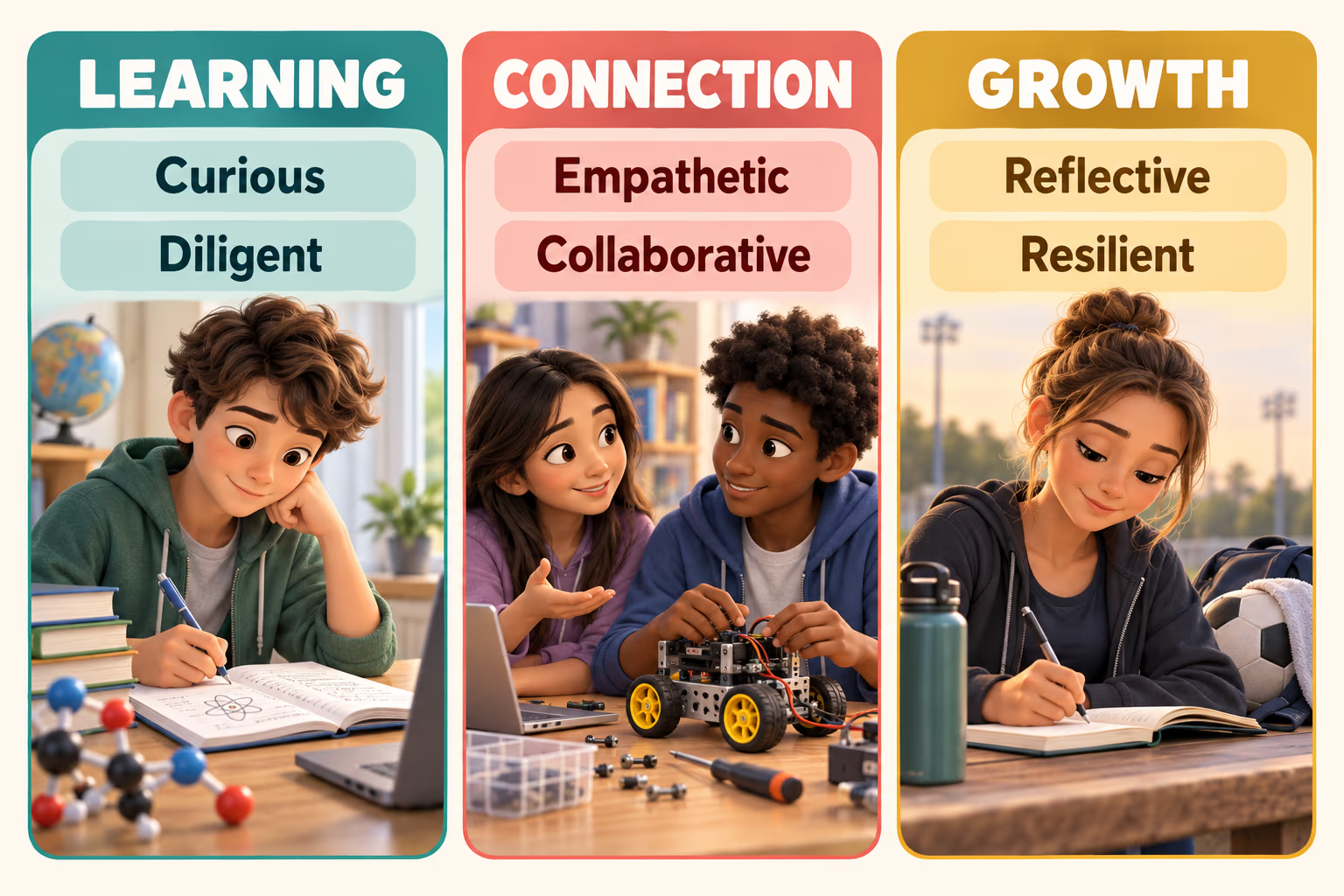
How to Choose Adjectives to Describe a Teenager
Start with a setting or action, then choose the word that best describes it. The definitions below are concise paraphrases of Cambridge Dictionary entries; the examples show observable situations rather than claims about all teenagers.
| Adjective | What it describes | Example |
|---|---|---|
| Curious | Interested in learning or finding out more | After the museum visit, Imani asked how the old printing press worked. |
| Diligent | Careful and persistent in effort | Leo checked each source before submitting his history project. |
| Engaged | Attentive and actively involved | Priya stayed engaged in the discussion and built on a classmate’s idea. |
| Collaborative | Willing to work with others toward a shared task | The collaborative group divided the research and reviewed the final slides together. |
| Empathetic | Able to imagine how another person feels | When Sam felt nervous before the recital, Noor listened and asked what might help. |
| Creative | Using original or unusual ideas | Rae found a creative way to turn the spare boxes into a model city. |
| Ambitious | Strongly motivated to reach a goal | After finishing the first course, Eli set a goal to learn another language. |
| Reflective | Thoughtful; inclined to consider an experience carefully | After the game, Morgan reflected on what the team could try next time. |
| Resilient | Able to recover or keep going after difficulty | After revising her first draft, Asha used the feedback to improve the next one. |
| Independent | Making some choices or completing tasks without help | With the deadline written down, Mateo planned his study time independently. |
| Reserved | Quiet or not quick to share thoughts with a group | Although reserved in large groups, Jules contributed thoughtful comments in a pair. |
| Impulsive | Acting suddenly without much planning or thought about effects | Calling one rushed choice impulsive is more precise than applying the label to a whole person. |
| Moody | Experiencing or showing changing moods | For a neutral account, describe the specific change you observed instead of using “moody” as a general label. |
For learning settings, see our guide to positive adjectives for students and our examples of describing words for school. For a broader list of positive terms, explore positive adjectives with examples.
Teenagers are a unique and vibrant group, full of energy, curiosity, and potential. As a language expert, I’m here to help you explore the world of adjectives that perfectly capture the essence of these remarkable individuals. In this article, we will dive into a collection of descriptive words specifically tailored for teenagers, accompanied by real-life examples that bring these words to life. So whether you’re a parent, teacher, or simply interested in understanding the teenage experience, join me as we uncover the adjectives that paint a vivid picture of this dynamic stage of life.
From the exuberant and adventurous to the introspective and creative, teenagers encompass a wide range of personalities and traits. In this comprehensive guide, I’ll share with you a curated list of adjectives that will help you better understand and describe the teenagers in your life. Whether you’re looking to capture their enthusiasm, resilience, or individuality, these adjectives will serve as powerful tools to express their unique qualities. So let’s embark on this linguistic journey together and discover the perfect words to paint a colorful portrait of teenagers.
How to Describe teenagers? – Different Scenarios
As an experienced writer, I understand the importance of using descriptive words to capture the essence of teenagers. Whether you’re a teacher, parent, or simply curious about the fascinating world of teenagers, mastering the art of describing them is key. In different scenarios, you can highlight different aspects of their personalities, allowing you to paint a complete picture. Here are some tips on how to describe teenagers in various situations:
1. In the Classroom:
When teenagers are in the classroom, they exhibit a range of characteristics and behaviors. Take a look at this table for some adjectives that can be used to describe them in an educational setting:
| Adjective | Example Sentence |
|---|---|
| Curious | “The teenager is eager to learn.” |
| Engaged | “She actively participates in class discussions.” |
| Inquisitive | “He asks thoughtful questions.” |
| Diligent | “She is focused and diligent in her studies.” |
| Collaborative | “They work cooperatively on group projects.” |
2. During Social Interactions:
Teenagers are often found engaging in various social activities. Here is a definition list of some descriptive words that can be used to portray teenagers’ social attributes:
Curious: Interested in exploring new ideas, places, and opportunities.
Outgoing: Confident and extroverted, enjoying the company of others.
Empathetic: Understanding and sensitive to the emotions and experiences of others.
Loyal: Committed and trustworthy, always standing by their friends.
Charismatic: Charming and able to captivate the attention of others.
3. In Personal Growth and Development:
Teenagers go through a significant period of personal growth and development. Use the following adjectives to capture their journey of self-discovery:
| Adjective | Example Sentence |
|---|---|
| Resilient | “Despite facing challenges, he remains strong and determined.” |
| Reflective | “She spends time introspecting and contemplating her actions.” |
| Creative | “He expresses his thoughts and emotions through art and writing.” |
| Ambitious | “She has clear goals and is driven to achieve them.” |
| Independent | “He is self-reliant and makes decisions on his own.” |
Describing Words for teenagers in English
As an expert blogger with years of experience, I know the importance of using descriptive words to capture the essence of teenagers. When it comes to describing teenagers, it is essential to choose the right adjectives that accurately convey their unique qualities and behaviors. In this section, I will provide you with a comprehensive list of describing words for teenagers in English, along with examples to help you better understand how to use them.
- Energetic: Teenagers are known for their boundless energy and enthusiasm. They are always on the go, participating in various activities and exploring new opportunities.
- Curious: Teenagers have a natural sense of curiosity. They are eager to learn and discover new things. They ask questions and seek answers to broaden their knowledge.
- Independent: As adolescents, teenagers strive for independence. They crave freedom and want to make their own decisions. They are often self-reliant and take responsibilities for their actions.
- Creative: Teenagers have a vibrant imagination and love expressing themselves creatively. They enjoy art, music, and other forms of artistic expression to showcase their uniqueness.
- Sociable: Teenagers are social beings who thrive on interactions with their peers. They enjoy spending time with friends and engaging in group activities.
- Resilient: Teenagers often face challenges and setbacks, but they possess remarkable resilience. They bounce back from adversity and learn valuable lessons from their experiences.
- Inquisitive: Teenagers are inquisitive by nature and actively seek knowledge and understanding. They have a thirst for learning and constantly question the world around them.
- Ambitious: Teenagers have dreams and aspirations for their future. They are driven to succeed and work hard to achieve their goals.
Remember, when using these describing words, ensure they fit the specific context and are applied accurately. Each teenager is unique, so it’s important to select the appropriate adjectives that truly capture their individuality.
Now that you have a better understanding of the describing words for teenagers in English, you can effectively convey their characteristics and behaviors in your writing or when working with them in various settings.
Adjectives for teenagers
Adjectives for Teenagers
As a writer and educator, I often find myself searching for the right words to accurately describe the unique qualities and behaviors of teenagers. Using the appropriate adjectives can help us capture the essence of these young individuals and convey their characteristics effectively. In this section, I will provide you with a list of descriptive words for teenagers, along with examples, to assist you in your writing or when working with them in various settings.
Positive Adjectives for Teenagers
When describing teenagers, it is essential to highlight their positive qualities. Here are some adjectives that can help you do just that:
| Adjective | Example Sentence |
|---|---|
| Ambitious | Sarah is an ambitious teenager who always strives for excellence. |
| Creative | Jack’s creative mind allows him to come up with unique solutions. |
| Empathetic | Emma is an empathetic teenager who understands and cares about others. |
| Independent | Alex is an independent teenager who takes responsibility for his own actions. |
| Resilient | Despite facing challenges, Mia remains resilient and bounces back. |
| Intelligent | Matthew’s intelligence shines through in all his academic pursuits. |
Negative Adjectives for Teenagers
While it’s important to focus on the positive aspects of teenagers, we also need to acknowledge that they can display negative behaviors at times. Here are a few adjectives that describe negative traits:
| Adjective | Example Sentence |
|---|---|
| Rebellious | Mark has a rebellious streak and often challenges authority. |
| Moody | Jennifer can be quite moody, experiencing frequent mood swings. |
| Impulsive | Jake tends to make impulsive decisions without considering the consequences. |
| Lazy | Kate has a lazy attitude towards her schoolwork; she rarely puts in any effort. |
| Inconsiderate | Tim can sometimes be inconsiderate and forgets about other people’s feelings. |
Remember, using these adjectives in your writing can help bring your descriptions to life and create a more vivid picture of teenagers. Use them thoughtfully, and adapt them based on the specific individual you’re describing.
Now that we have explored both positive and negative adjectives for teenagers, let’s move on to the next section where we will focus on adjectives that describe their appearance.
Synonyms and Antonyms with Example Sentences
Synonyms for teenagers
When describing teenagers, it’s important to choose the right words that accurately capture their unique qualities and behaviors. Here are some synonyms that can be used to depict teenagers in different scenarios:
- Adventurous: Teenagers are often known for their daring spirit and love for exploring new things. For example, they might engage in adventurous activities such as hiking, rock climbing, or traveling to unfamiliar places.
- Ambitious: Teenagers are filled with aspirations and goals, always striving to achieve success in various aspects of life. Whether it’s excelling academically, pursuing a passion, or planning for the future, teenagers are driven by ambition.
- Creative: Many teenagers possess a natural aptitude for creativity. Whether it’s through art, music, writing, or other forms of expression, their innovative minds allow them to think outside the box and come up with original ideas.
Table: Synonyms for Teenagers
| Synonym | Definition | Example Sentence |
|---|---|---|
| Adventurous | Willing to take risks; bold and daring | Sarah’s adventurous nature led her to try skydiving. |
| Ambitious | Having a strong desire to achieve success | Jake is an ambitious teenager who dreams of becoming a doctor. |
| Creative | Having the ability to think imaginatively | Emily’s creative mind allows her to paint vibrant and unique artworks. |
Antonyms for teenagers
Antonyms, or opposite words, can be useful for describing teenagers by highlighting contrasting qualities. Here are some antonyms that can be used to portray teenagers with different characteristics:
- Reserved: While some teenagers are outgoing and expressive, others tend to be more reserved, preferring a quieter and calmer approach to social interactions.
- Cautious: While teenagers often have a sense of adventure, there are also those who lean towards caution and prefer to carefully think through their actions before taking any risks.
- Conventional: While some teenagers may have a rebellious streak and seek unconventional paths, others conform to societal norms and prefer to follow established rules and traditions.
Table: Antonyms for Teenagers
| Antonym | Definition | Example Sentence |
|---|---|---|
| Reserved | Quiet and not showing emotions | Mark is a reserved teenager who prefers reading over socializing. |
| Cautious | Careful and hesitant | Amy is a cautious teenager who always analyzes the risks before trying something new. |
| Conventional | Following traditional ways | David is a conventional teenager who values family and respects cultural traditions. |
By using a variety of synonyms and antonyms, we can paint a detailed and accurate picture of teenagers, showcasing their diverse qualities and behaviors. Remember to select words thoughtfully and adapt them based on the specific individual being described, ensuring an engaging and informative description.
Conclusion
Describing teenagers can be a challenging task, but by using the right adjectives, we can effectively capture their unique qualities and behaviors. Throughout this article, I have provided a comprehensive list of synonyms and antonyms that can be used to describe teenagers, along with example sentences to illustrate their usage.
By selecting the appropriate words, we can paint a detailed and accurate picture of teenagers, showcasing their diverse characteristics and behaviors. It is important to choose words thoughtfully and adapt them based on the specific individual being described.
Remember, using descriptive words not only enhances our writing but also helps us better understand and connect with teenagers in various settings. Whether we are writing about them or working with them, these adjectives enable us to effectively communicate their essence.
So, the next time you need to describe a teenager, refer back to this list and choose the adjectives that best capture their unique qualities. By doing so, you’ll be able to portray teenagers in a way that is both accurate and engaging.
Use Teenager Descriptors With Context
A useful description says what a person did, where it happened, and which word fits that evidence. “Mina asked three follow-up questions during the lab” supports curious; “Mina is curious” may be a fair summary if it reflects a repeated pattern. One moment rarely tells the whole story. The CDC’s teen guidance describes varied physical, emotional, and social changes and encourages adults to support teens as they think for themselves, so avoid turning a changing situation into a permanent label.
Some adjectives carry judgment. Impulsive refers to acting without much planning or considering effects; explain the particular choice rather than using it as a blanket description. Moody can sound dismissive, so a factual description such as “his mood changed quickly during the conversation” may be clearer. Words such as lazy can also hide the circumstances: say whether a task was delayed, unfinished, or declined, and include the relevant context when it is known.
Use independent when someone handles a choice or task with less help. Reserve rebellious for a supported description of resistance to rules or authority; disagreement, a different preference, or growing self-direction does not automatically justify it. Choose reserved for a quieter style without assuming that the person is unfriendly or lacks ideas.
In grammar, a synonym can replace a word with a similar meaning, while an antonym expresses an opposite. Curious, ambitious, and reserved describe a teenager; they cannot replace the noun teenager. Likewise, the opposites in the original list contrast one possible trait with another, rather than giving antonyms of “teenager.” The original lists and examples remain below for reference.
Frequently Asked Questions About Adjectives for Teenagers
What are good adjectives to describe a teenager?
Useful choices include curious, diligent, creative, empathetic, reflective, and resilient, when they fit the person and situation. For example, curious may describe someone asking questions about a new topic, while collaborative may fit a shared project. Use a concrete example so the adjective explains an observed quality rather than a stereotype.
How can I describe a teenager without stereotyping?
Name the setting, action, and specific quality: “Kai patiently explained the instructions to his teammate” is more precise than assuming all teenagers are patient or impatient. Use one or two adjectives supported by evidence, and remember that a person may act differently across classes, friendships, family settings, and days.
Are these words synonyms for the noun “teenager”?
No. Words such as curious, creative, and independent are adjectives that can describe a teenager; they do not replace the noun. A synonym for teenager would be another noun with a similar meaning. In this article, “synonyms” means related descriptive traits, and that heading is clarified while its original content remains.
What is the difference between independent and rebellious?
Independent describes making choices or handling tasks with less help. Rebellious suggests resistance to rules or authority and carries a stronger judgment. A teenager can make more decisions independently without opposing rules. Describe the actual choice or disagreement before deciding whether either adjective accurately fits the situation.
Is “moody” a good word to describe a teenager?
Moody can describe changing moods, but it may sound dismissive when used as a broad label. If the situation matters, report what you observed, such as a quick change from cheerful to upset during a conversation. This wording is more specific and avoids treating one moment as a permanent personality trait.
Which adjectives work well for a school or classroom description?
Curious, engaged, diligent, collaborative, and reflective can describe different classroom behaviors. Choose based on evidence: a student asking relevant questions may be curious, while a group sharing tasks may be collaborative. For more options, use our student-adjectives guide, and keep the description tied to a real example.


