
Adjectives for Teeth: Words for Color, Shape & Condition
Adjectives for teeth can describe visible color, alignment, shape, surface, or condition, but one word should not be treated as a dental diagnosis. Words such as bright, crowded, chipped, or stained help a writer create a precise picture; a dentist must assess pain, damage, and oral health.
Key facts at a glance
- Choose a tooth adjective for one observable feature, such as color, alignment, or shape.
- Natural tooth color varies; “white” or “bright” does not prove a tooth is healthy.
- Stained describes discoloration, while chipped and cracked describe visible structural damage.
- Dental vocabulary can be more precise than a broad label such as “bad teeth.”
- A sudden color change, pain, or visible damage calls for professional dental assessment.
Which adjectives describe teeth?
Useful adjectives for teeth name a specific visible quality: color, alignment, shape, or surface. A word such as crowded describes spacing, while stained describes color; neither word alone explains the cause or diagnoses a dental condition.
Color and appearance: bright, ivory, yellowed, stained, discolored, translucent, glossy, dull. Alignment and spacing: straight, aligned, crowded, crooked, gapped, overlapping, prominent, rotated. Shape and surface: even, uneven, rounded, pointed, chipped, cracked, worn, smooth, rough.
Choose neutral wording when appearance is personal or sensitive. “Slightly uneven front teeth” is more specific and respectful than a judgment such as “ugly teeth.” For a story, pair a descriptive adjective with context: “Her bright smile showed a small gap between the front teeth.”
How do color and surface words differ?
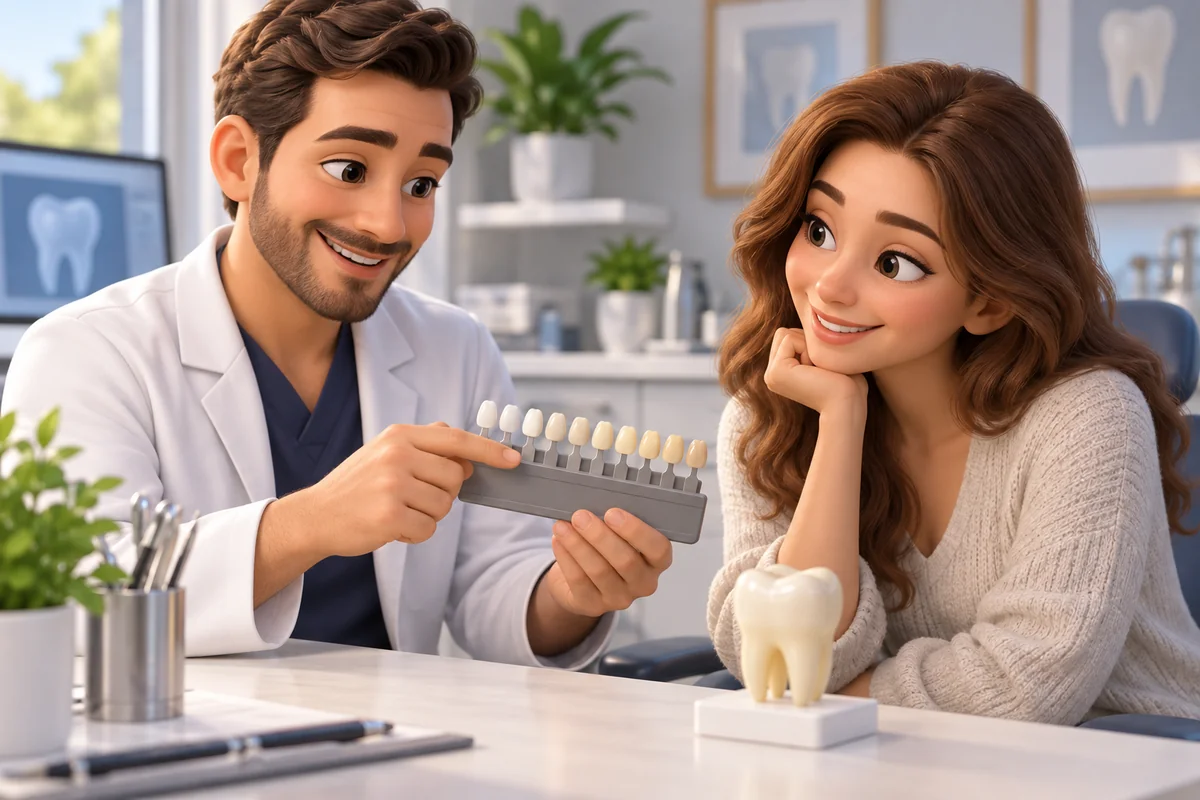
Color terms describe what a tooth looks like; surface terms describe what appears on or within it. The American Dental Association distinguishes extrinsic stains on the enamel surface from intrinsic discoloration within the tooth. Those are useful technical distinctions, but a writer should not infer the cause from a photograph alone.
| Adjective | Describes | Example |
|---|---|---|
| ivory | A natural off-white color | The ivory teeth looked natural in the portrait. |
| stained | Visible surface or internal discoloration | The tea-stained teeth appeared darker near the edges. |
| translucent | Light passing partly through the tooth | The artist painted the tooth edges as slightly translucent. |
| glossy | A smooth-looking surface that reflects light | Glossy enamel caught the studio light. |
| chipped | A small piece missing from an edge | A chipped incisor showed after the fall. |
The ADA notes that staining may be extrinsic or intrinsic and that whitening products do not act on every type in the same way. Use discolored as a broad description when the cause is unknown; avoid assigning a cause such as poor hygiene, decay, or injury without evidence.
Which words describe alignment, shape, or damage?
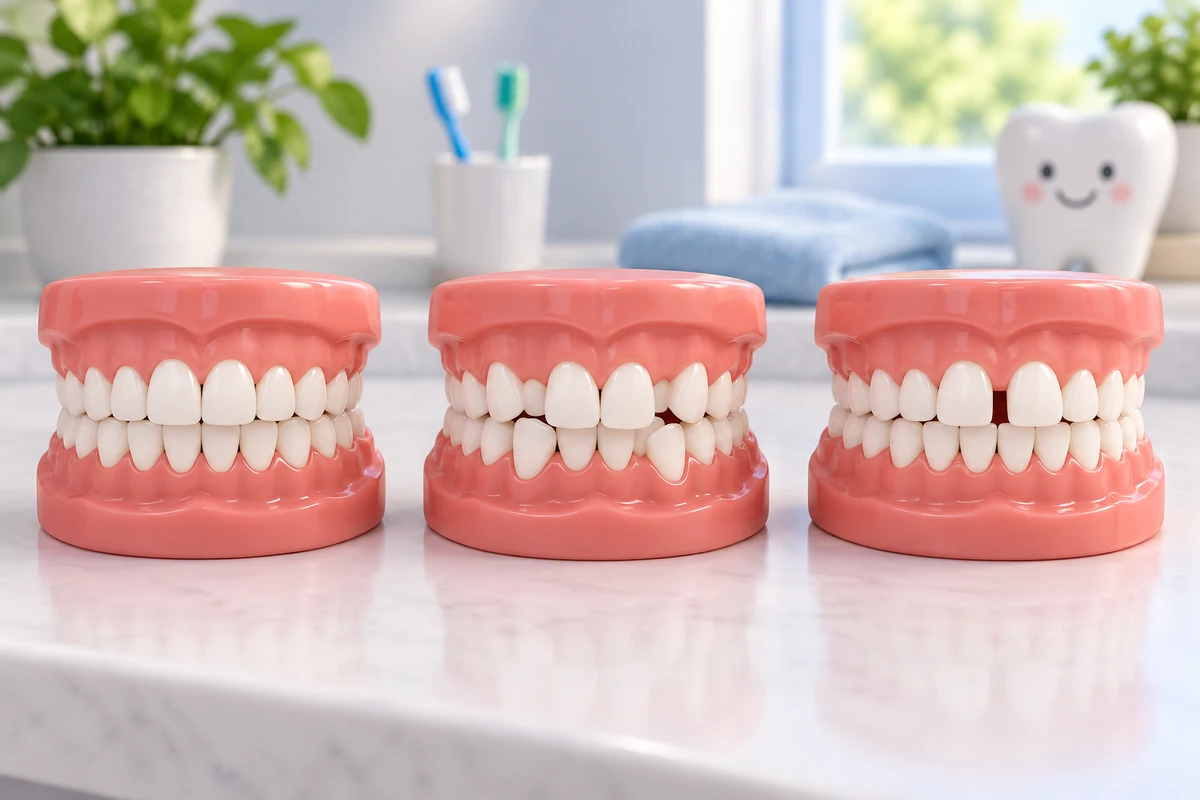
Alignment words show how teeth sit in the arch; shape words describe outlines and edges; damage words name visible changes. Crooked is common, while misaligned is more formal. Chipped usually indicates a small break; cracked suggests a fracture line, but an examination is needed to determine severity.
- Alignment: straight, crowded, spaced, gapped, overlapping, rotated.
- Shape: broad, narrow, rounded, pointed, even, uneven.
- Condition: chipped, cracked, worn, stained, discolored.
In technical writing, prefer terms used in dental records only when the meaning is understood. The ADA dental glossary defines terms such as enamel and plaque; these nouns identify tissues or deposits, not interchangeable adjectives for a smile.
How can you describe teeth accurately and respectfully?
Describe only the feature relevant to the sentence, and separate appearance from health. “The photo shows slightly yellowed teeth” reports a visible quality; “the person has unhealthy teeth” makes a medical judgment that color alone cannot support. Natural tooth color varies, and a bright smile is not a diagnosis.
If writing about a real person, avoid presenting cosmetic differences as defects. If someone has pain, injury, a new change in color, or other symptoms, describe the observation and encourage professional care rather than recommending a treatment. Cleveland Clinic’s overview of tooth discoloration notes that causes vary and that color differences do not automatically mean something is wrong.
Example sentences with adjectives for teeth
- The portrait showed her naturally ivory teeth and a relaxed smile.
- Two crowded teeth overlapped slightly near the back of the arch.
- The chipped edge was visible when he laughed.
- Bright overhead lighting made the glossy teeth look almost white.
- The dentist examined one newly discolored tooth after the accident.
These examples show how a concrete adjective makes a sentence more informative. When the cause is uncertain, describe the visible feature rather than guessing at treatment or health status.
Frequently asked questions
What are positive adjectives for teeth?
Depending on the context, writers may use bright, clean-looking, even, smooth, glossy, ivory, or well-aligned. These words describe appearance and should not be treated as proof of oral health. Natural tooth color varies, so use neutral language when describing a real person’s smile.
What adjectives describe teeth that are not straight?
Common choices include crooked, crowded, overlapping, rotated, gapped, or misaligned. Use the word that matches the visible spacing or position: “gapped” suggests spaces, while “crowded” suggests teeth overlap or lack room. A dentist determines whether a bite or alignment needs treatment.
How can I describe yellow or stained teeth accurately?
Use yellowed or stained when those words match the visible color, or discolored when the cause is unknown. Tooth discoloration may come from surface stains or factors within a tooth, so appearance alone cannot identify its cause. Avoid assuming that a particular shade proves poor care.
Can adjectives diagnose a dental problem?
No. Words such as chipped, cracked, worn, or discolored describe visible features; they do not establish the cause or severity. A dental professional can assess symptoms and examine the tooth. Sudden changes, pain, or injury warrant professional advice rather than a guess based on appearance.
Conclusion
Use “adjectives for teeth” with context: identify the intended meaning, name the feature accurately, and show how the word functions in its sentence.
Have you ever wondered how to describe teeth? Whether you’re a dentist, a dental hygienist, or simply someone who wants to expand your vocabulary, having a range of adjectives to describe teeth can be incredibly useful. In this article, I’ll be sharing a variety of descriptive words that can be used to paint a vivid picture of teeth. From pearly white to crooked and chipped, these adjectives will help you accurately convey the condition, appearance, and characteristics of teeth. So, let’s dive in and explore the world of adjectives for teeth!
When it comes to describing teeth, there are numerous adjectives that can capture their different aspects. From their color and shape to their condition and alignment, each adjective adds a unique layer of detail to your descriptions. For example, you might use words like “sparkling,” “gleaming,” or “pearly white” to describe well-maintained and healthy teeth. On the other hand, you could use adjectives like “crooked,” “chipped,” or “stained” to depict teeth that may require dental intervention. By using these adjectives effectively, you’ll be able to provide a clear and vivid description of teeth in various contexts.
How to Describe teeth? – Different Scenarios
When it comes to describing teeth, it’s important to have a range of adjectives that accurately convey their condition, appearance, and characteristics. Whether you’re a dentist, dental hygienist, or simply interested in expanding your vocabulary, here are some helpful adjectives to describe teeth in different scenarios:
1. Well-Maintained Teeth:
When teeth are well-maintained and healthy, there are several adjectives that can be used to describe them. These include:
- Pristine: Teeth that are clean, well-cared for, and in excellent condition.
- Sparkling: Teeth that shine and reflect light, indicating good oral hygiene.
- Gleaming: Teeth that have a polished, bright appearance, often associated with regular dental cleanings.
- Radiant: Teeth that have a healthy, glowing appearance, signaling overall oral health.
- Immaculate: Teeth that are spotless, free from any stains or discoloration.
2. Teeth Requiring Dental Intervention:
In some cases, teeth may require dental intervention or treatment. When describing such teeth, consider using the following adjectives:
- Damaged: Teeth that are broken, cracked, or chipped.
- Decayed: Teeth that have cavities or are in a state of decay.
- Discolored: Teeth that are stained or have a yellowish or brownish tint.
- Misaligned: Teeth that are not properly aligned or are crooked.
- Missing: Teeth that are absent or have been extracted.
Remember, each adjective adds a unique layer of detail to your descriptions. By using a variety of adjectives, you can effectively describe teeth in different scenarios and accurately convey their condition and appearance.
Examples:
| Well-Maintained Teeth | Teeth Requiring Dental Intervention |
|---|---|
| Pristine | Damaged |
| Sparkling | Decayed |
| Gleaming | Discolored |
| Radiant | Misaligned |
| Immaculate | Missing |
Now that you have a better understanding of how to describe teeth in different scenarios, you can confidently use these adjectives to expand your vocabulary and effectively communicate about teeth. Remember to choose the appropriate adjectives based on the condition and appearance of the teeth you are describing.
Describing Words for teeth in English
When it comes to describing teeth, having a range of adjectives at your disposal is essential. With the right words, you can accurately convey the condition, appearance, and health of teeth in various situations. Let’s explore some examples of adjectives that can help you describe teeth effectively.
Well-maintained Teeth:
- Bright: Teeth that are shiny and have a vibrant color.
- Pearly White: Teeth that are white like pearls, indicating excellent oral hygiene.
- Sparkling: Teeth that gleam and sparkle, suggesting great dental care.
- Straight: Teeth that are aligned in a perfectly even manner.
- Smooth: Teeth that have a sleek and polished surface.
Teeth Requiring Dental Intervention:
- Decayed: Teeth that have cavities or decay, in need of dental treatment.
- Discolored: Teeth that have lost their natural color, indicating staining or damage.
- Chipped: Teeth that have a broken or damaged part.
- Crooked: Teeth that are misaligned or not positioned properly.
- Missing: Teeth that are absent or have been lost.
Each adjective adds a unique layer of detail to your descriptions, allowing you to paint a vivid picture of the teeth you are describing. By expanding your vocabulary of adjectives for teeth, you can effectively communicate the condition and appearance of teeth in various contexts.
Remember, the words you choose can have a powerful impact on how people perceive teeth. Whether you are describing a perfect smile or discussing dental issues, having a diverse range of adjectives can help you convey your message accurately and engagingly.
Let’s take a look at some examples of these adjectives in action.
Example 1:
Mary has a sparkling smile that lights up the room. Her teeth are pearly white, perfectly straight, and smooth to the touch. It’s evident that she takes great care of her oral health.
Example 2:
John had neglected his oral hygiene for years, resulting in decayed and discolored teeth. His smile was marred by chipped and crooked teeth, indicating the need for immediate dental intervention.
As you can see, the choice of adjectives can create a vivid and accurate portrayal of teeth. Whether you’re describing good dental health or highlighting dental issues, using the right adjectives can help you convey your message effectively.
Adjectives for teeth
As a dental expert, I understand the importance of using the right adjectives to describe teeth in various scenarios. The choice of words can make a significant impact on how we perceive teeth. From describing well-maintained and healthy teeth to highlighting those that may require dental intervention, here are some adjectives to expand your vocabulary and effectively describe teeth.
Positive Adjectives for Teeth
When describing teeth in a positive light, we can use adjectives that emphasize their beauty, health, and cleanliness. Here are twelve examples of positive adjectives for teeth:
| Adjective | Definition |
|---|---|
| Dazzling | Extremely bright and radiant |
| Pearly | Resembling the color and texture of pearls |
| Sparkling | Giving off flashes of light |
| Perfect | Flawless in appearance and alignment |
| Shimmering | Glowing softly and gently |
| Brilliant | Exuding brightness and clarity |
| Healthy | Exhibiting good oral health and vitality |
| Well-maintained | Being properly cared for and kept in good condition |
| Gleaming | Reflecting light with a smooth and polished surface |
| Radiant | Emitting a warm and glowing glow |
| Striking | Captivating and attention-grabbing |
| Lustrous | Having a rich and glossy shine |
Use these adjectives to bring your descriptions of teeth to life, whether it’s in a children’s book or an engaging conversation with your little ones.
Negative Adjectives for Teeth
On the other hand, there are times when we need to describe teeth in a less favorable light. These adjectives can convey the need for dental intervention or highlight tooth problems that may require attention. Here are five examples of negative adjectives for teeth:
| Adjective | Definition |
|---|---|
| Decayed | Showing signs of rotting or decomposition |
| Stained | Discolored or marked with spots or blemishes |
| Crooked | Misaligned or not straight |
| Missing | Absent or lacking teeth |
| Chipped | Damaged or broken, usually with a small piece missing |
While it’s important to teach children about the importance of maintaining good oral hygiene, these adjectives can serve as useful tools in explaining the potential consequences of neglecting dental care.
Remember, each adjective adds a unique layer of detail to your descriptions. By using a variety of adjectives, you can paint a vivid picture and engage your young audience in a fun and educational way.
Synonyms and Antonyms with Example Sentences
Synonyms for Teeth
When it comes to describing teeth, there are several synonyms that can help you paint a vivid picture. Here are some examples:
| Synonym | Definition |
|---|---|
| Pearly whites | A term often used to describe teeth that are shiny and white. |
| Chompers | A playful way to refer to teeth. It emphasizes the function of teeth for biting and chewing. |
| Smiles | Referring to teeth as “smiles” highlights their role in expressing happiness and joy. |
| Ivory | This synonym evokes a sense of elegance and beauty, comparing teeth to the smoothness and color of ivory. |
| Grinners | An informal term that focuses on teeth that are visible when someone is smiling or grinning. |
Here are a few sentences to help you understand how these synonyms can be used:
- “She flashed her pearly whites, revealing a perfect smile.”
- “The kids were excited to show off their chompers after brushing their teeth.”
- “We could see their smiles from across the room, full of happiness and excitement.”
- “His teeth were as smooth and lustrous as ivory, creating a stunning contrast with his dark skin.”
- “The grinners in the picture reminded us of the joy and laughter we shared.”
Antonyms for Teeth
In addition to synonyms, antonyms can also be useful in describing teeth. Antonyms are words that have opposite meanings. Here are a few antonyms for teeth:
| Antonym | Definition |
|---|---|
| Gaps | Refers to spaces or missing teeth in the mouth. |
| Toothless | Describes a mouth without any teeth. |
| Uneven | Indicates teeth that are not aligned or are not the same size. |
| Yellowed | Describes teeth that have a yellow or discolored appearance. |
| Rotten | Refers to teeth that are decayed or damaged. |
Let’s look at some example sentences that include these antonyms:
- “Her smile revealed a few gaps between her teeth, adding character to her appearance.”
- “Grandpa’s toothless grin always made us giggle during family gatherings.”
- “The uneven teeth made her hesitant to smile, but they gave her a unique charm.”
- “He had neglected his oral hygiene, resulting in yellowed teeth that were in need of professional cleaning.”
- “The foul smell from his rotten teeth was a clear indicator of his neglected dental health.”
By using a combination of synonyms and antonyms, you can create engaging and descriptive narratives that effectively capture the essence of teeth.
Conclusion
In this article, I have discussed the significance of using appropriate adjectives to describe teeth in various situations. By incorporating descriptive words, we can create a vivid portrayal of teeth that captures their unique qualities. Throughout the article, I have provided a range of synonyms and antonyms that can be utilized to paint a comprehensive picture of teeth.
From terms like “pearly whites” and “chompers” to “smiles,” “ivory,” and “grinners,” these synonyms offer a diverse selection to choose from. On the other hand, antonyms such as “gaps,” “toothless,” “uneven,” “yellowed,” and “rotten” provide contrasting descriptions that can add depth to our narratives.
By combining these synonyms and antonyms, we have the ability to construct engaging and descriptive stories that effectively capture the essence of teeth. Whether we are writing a dental blog, a fictional piece, or simply describing someone’s smile, the right adjectives can truly bring our words to life.
So, remember to choose your adjectives wisely when describing teeth, as they can make all the difference in creating a compelling and engaging narrative.


