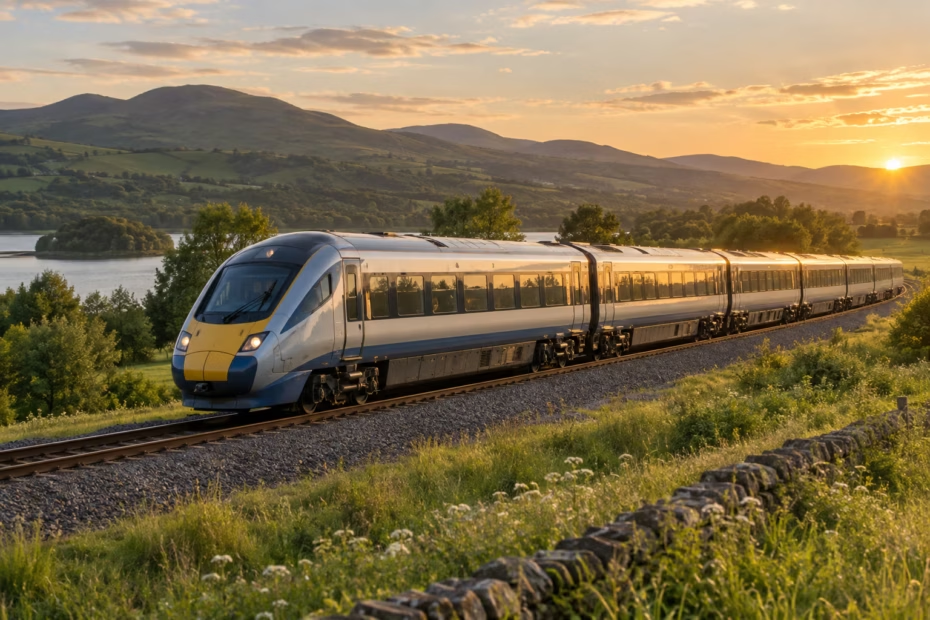
Quick answer: A train can be sleek, powerful, crowded, punctual, or scenic, depending on whether you are describing its appearance, movement, service, passengers, or route. Choose a word that tells readers what you actually noticed, then add a concrete detail.
Choose an adjective that matches the detail
“Train” can refer to the whole vehicle, while your sentence may be about its exterior, interior, motion, service, or the passenger experience. Start by deciding which detail matters. Sleek points to a smooth, streamlined appearance; smooth usually describes a ride; and punctual describes whether a service keeps to its schedule. These words are not interchangeable, even though each can create a positive impression.
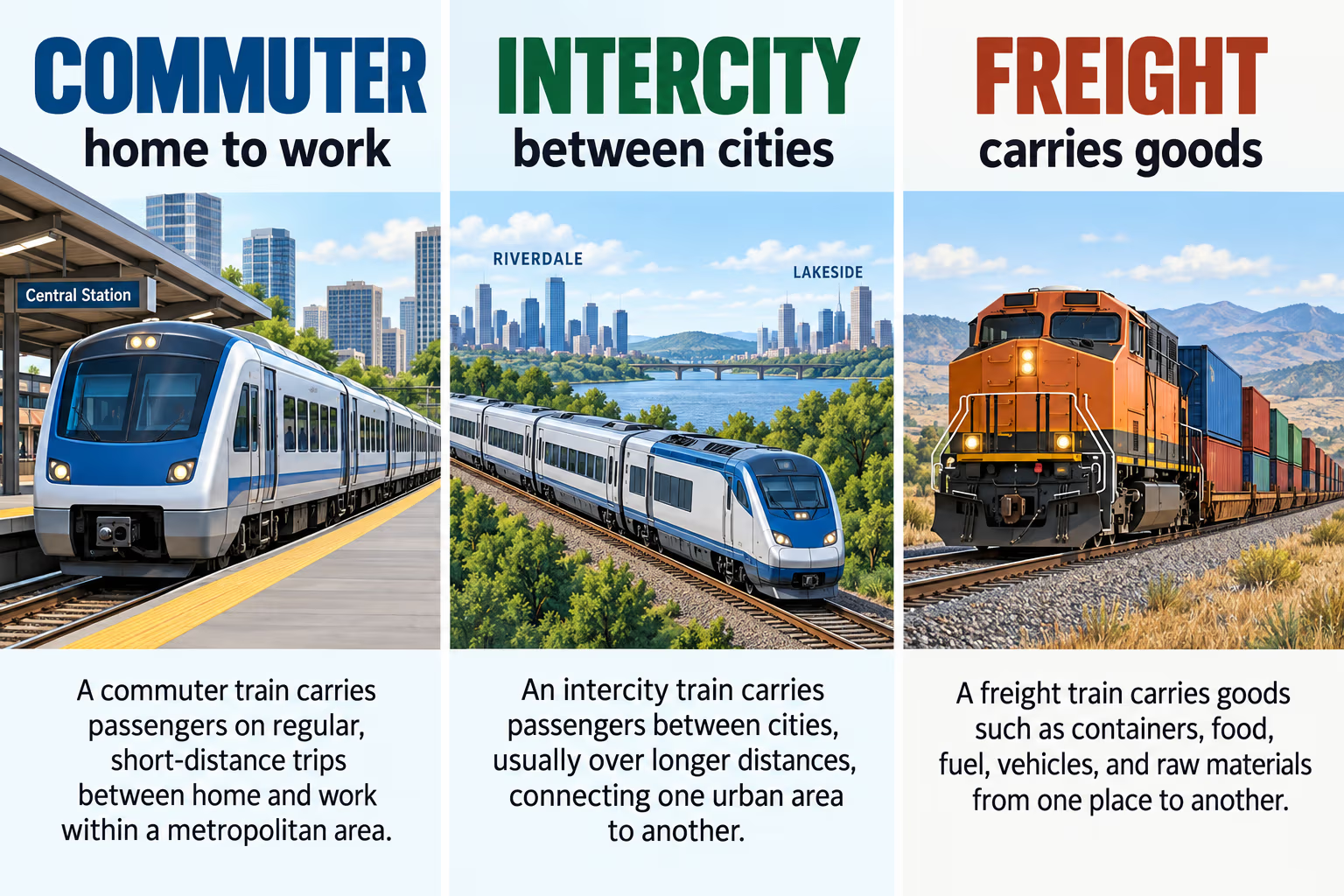
Some phrases name a kind of service rather than express an opinion. A commuter train is associated with travel between home and work, while intercity describes travel between cities. Cambridge defines those terms in its entries for commuter train and intercity. In a sentence, these labels help readers understand the trip before you add descriptive language.
Adjectives for a train by what you are describing
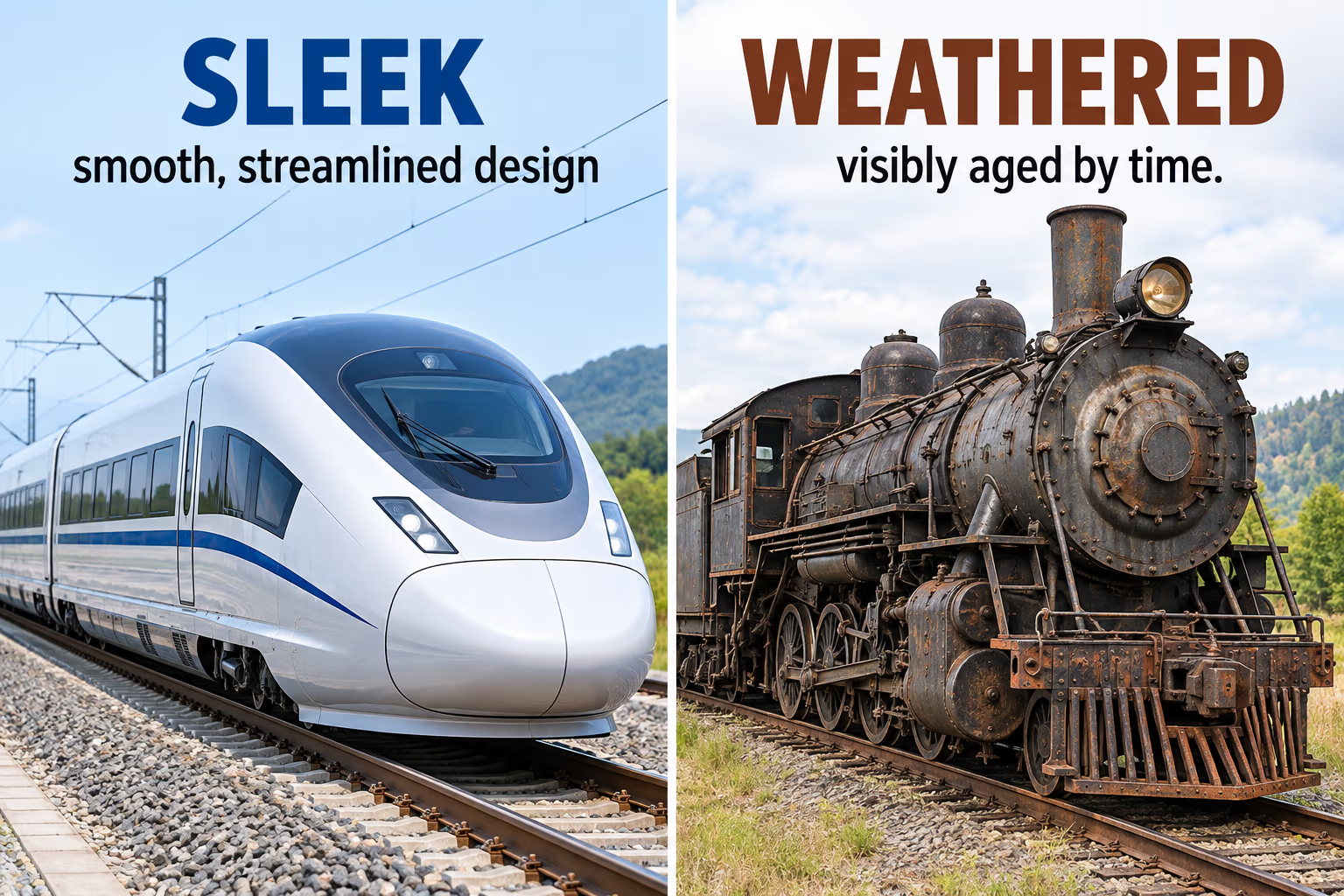
- Appearance: sleek (smooth and streamlined), polished (clean and shiny), colorful (brightly decorated), vintage (from or styled after an earlier period), weathered (marked by age or exposure), imposing (large and commanding), compact (small and space-efficient), and modern (showing a contemporary design).
- Size and capacity: long, short, heavy, roomy, spacious, packed, and crowded. Use roomy or spacious for a carriage with generous passenger space; use crowded when people or belongings make it feel full.
- Movement and sound: swift, steady, smooth, rattling, rumbling, noisy, and quiet. These words describe what a rider hears or feels. “The train moved steadily” describes motion; “the ride felt smooth” describes the experience.
- Comfort and condition: comfortable, clean, well-maintained, stuffy, cramped, worn, and uncomfortable. These are useful when you can point to a feature such as seating, temperature, space, or visible wear.
- Service and schedule: punctual, reliable, frequent, direct, delayed, and infrequent. They describe the service or journey, not necessarily the train’s physical condition. Prefer “the service was delayed” if the delay is what you mean.
- Route and mood: scenic, coastal, mountainous, urban, peaceful, nostalgic, and adventurous. These can describe the route or the feeling a journey creates, so give a clue about the landscape or experience.
How train adjectives change by context
One adjective can be helpful in one context and too vague in another. Fast is easy to understand, but swift can sound more literary. Busy may suggest a lively station or frequent service; crowded makes a clearer claim about limited passenger space. Old is neutral, while historic suggests significance and antique usually suits a collectible object better than an ordinary train in service.
Likewise, powerful is most precise when you mean the locomotive seems strong or has forceful acceleration. If you mean that it travels quickly, choose fast or swift. If you mean it moves without jolting, use smooth. Add evidence after the adjective: a quiet cabin, a rattling window, wide seats, or a view of the coast makes a description more vivid.
Example sentences for different train descriptions
- Appearance: “The sleek silver train curved around the station platform.”
- History: “A weathered steam locomotive stood beside the restored station.”
- Ride: “The smooth ride let us read without holding the page steady.”
- Sound: “The rattling carriage made conversation difficult.”
- Capacity: “We found a spacious carriage with room for our bags.”
- Service: “The punctual train arrived before the rain began.”
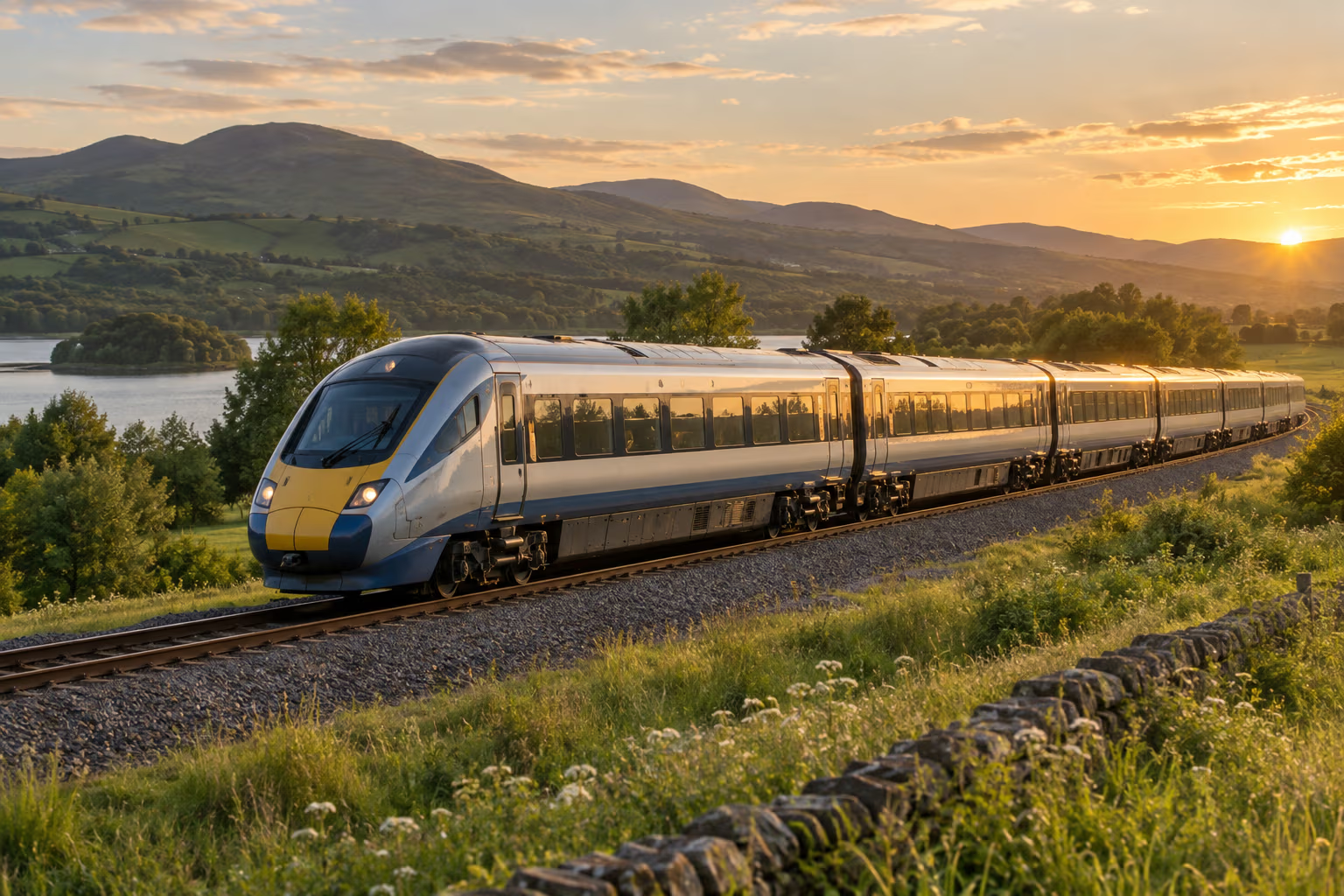
- Route: “A scenic train passed lakes, forests, and small hillside towns.”
- Mood: “The quiet overnight train felt peaceful after a busy day.”
- Problem: “The delayed service left commuters waiting on the platform.”
- Freight: “A long freight train carried containers through the valley.”
Build a more precise description
Rather than stacking several general adjectives, pair one strong word with a specific noun or observation. “A beautiful, amazing, wonderful train” gives readers little to picture. “A polished blue locomotive pulled a rattling line of freight cars” identifies both what looks striking and what can be heard. For travel writing, you might say, “The comfortable intercity train climbed through a scenic mountain route.”
Use a comparison only when the relationship is clear: faster than the local service, quieter than the older carriage, or more spacious than the crowded coach. Avoid treating an adjective as a fact that applies to every train of a certain kind. A commuter service may be crowded at one time and quiet at another; a scenic route may look different in rain or darkness.
Frequently asked questions
What are positive adjectives for a train?
Comfortable, punctual, reliable, smooth, spacious, clean, scenic, and sleek are positive choices. Pick one that accurately fits the train or the trip.
What are negative adjectives for a train?
Delayed, crowded, noisy, cramped, stuffy, uncomfortable, and unreliable can express criticism. Explain the specific issue so the description remains useful.
Is “fast” an adjective for a train?
Yes. Fast describes a train or service that travels at high speed. Swift is a more formal or literary alternative; smooth describes how the ride feels, not how quickly the train goes.
What is a good adjective for a train ride?
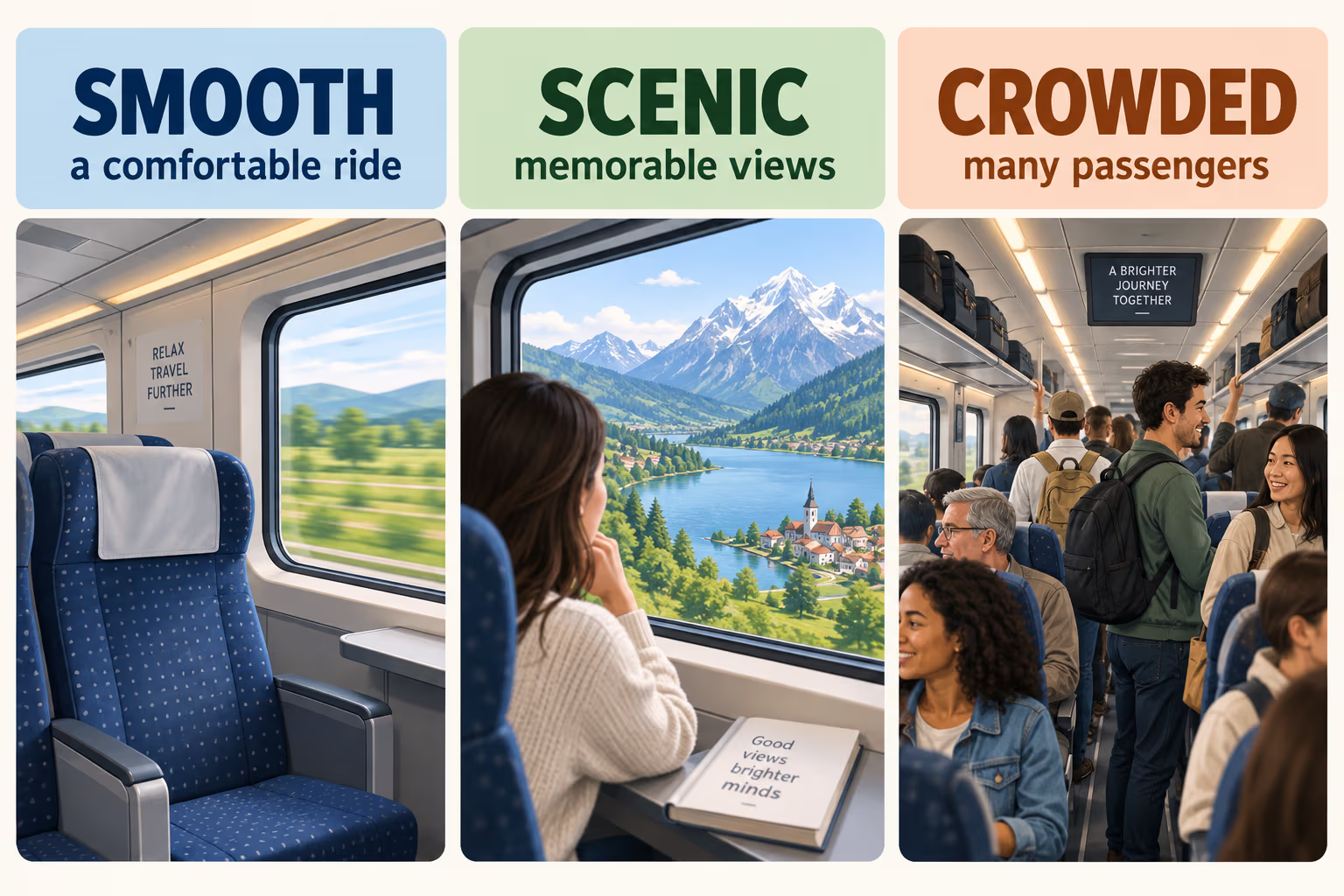
Use smooth or comfortable for an easy ride, scenic for attractive views, crowded for a carriage with many passengers, or rattling for noticeable movement or sound.
Can “commuter” describe a train?
Yes. In commuter train, the word identifies a train service associated with regular trips between home and work. It names the service type rather than judging its quality.
Welcome to my article on adjectives for train! Trains have been a fascinating mode of transportation for centuries, and we often find ourselves in awe of their power and beauty. In this article, I’ll be sharing a variety of adjectives that can be used to describe trains, along with examples to help you better understand their usage.
From sleek and modern high-speed trains to vintage steam locomotives, trains come in all shapes and sizes. They evoke a sense of adventure, nostalgia, and efficiency. Whether you’re a train enthusiast or simply curious about the different ways to describe these magnificent machines, this article will provide you with a comprehensive list of adjectives that can be used to paint a vivid picture of trains in your writing.
So, let’s hop aboard this linguistic journey and explore the world of adjectives for train! Whether you’re writing a poem, a travelogue, or simply want to enhance your vocabulary, these adjectives will help you bring your descriptions to life. Get ready to embark on a thrilling ride through the world of trains and their captivating qualities.
How to Describe train? – Different Scenarios
When it comes to describing trains, there are various scenarios and aspects to consider. As a writer, it’s important to create a vivid picture in the reader’s mind, and using the right adjectives can help achieve that. Let’s explore different scenarios and the adjectives that can best describe them:
- Speedy Trains
- Classic Trains
- Scenic Trains
- Busy Trains
- Luxurious Trains
Describing Words for train in English
When it comes to describing trains, there are various words that can vividly paint a picture in the reader’s mind. Whether you’re writing a children’s story or a travel blog, using the right adjectives can make all the difference. Let’s explore some describing words for trains in English:
- High-speed: Trains that zoom across the tracks at incredible speeds are often described as high-speed trains. These trains are known for their efficiency and ability to cover long distances in a short amount of time. Examples include the Shinkansen in Japan or the TGV in France.
- Classic: Classic trains evoke a sense of nostalgia and charm. They often have vintage designs and luxurious compartments. Think of the Orient Express or the iconic steam trains of the past. These trains are perfect for creating a unique and elegant setting in your writing.
- Scenic: Scenic trains are all about the breathtaking views they offer. From winding tracks through mountains to coastal routes with stunning ocean views, these trains provide an unforgettable journey. The Rocky Mountaineer in Canada or the Glacier Express in Switzerland are prime examples of scenic trains.
- Busy: For a bustling and energetic atmosphere, busy trains are the way to go. These trains are often packed with people, creating a vibrant and lively setting. They are commonly associated with commuting during rush hour in big cities like Tokyo or London.
- Luxurious: Luxurious trains provide the epitome of comfort and elegance. From plush seating to gourmet meals, these trains offer a truly extravagant experience. The Venice Simplon-Orient-Express and the Maharajas’ Express in India are renowned for their opulence.
Remember, the choice of describing words will depend on the specific context and purpose of your writing. Consider the scene you want to set and the emotions you want to evoke in your readers. By using the right adjectives, you can transport your readers into the world of trains and make your writing come alive.
Adjectives for train
Positive Adjectives for Train with 12 Example Sentences
When it comes to describing trains, there are plenty of positive adjectives that can help bring them to life. Here are twelve examples of positive adjectives that can be used to vividly describe trains:
- Sleek: The high-speed train glided effortlessly along the tracks.
- Majestic: The classic steam train chugged its way through the picturesque countryside.
- Breathtaking: The scenic train journey offered breathtaking views of the mountains.
- Efficient: The busy commuter train arrived right on time.
- Luxurious: The first-class train carriage was adorned with plush seats and elegant decor.
- Powerful: The locomotive pulled the heavy cargo train effortlessly.
- Smooth: The express train provided a smooth and comfortable ride for the passengers.
- Innovative: The futuristic bullet train showcased cutting-edge technology.
- Historic: The vintage train took passengers on a journey back in time.
- Reliable: The regional train service had a reputation for its reliable schedule.
- Spacious: The double-decker train offered ample room for passengers to stretch their legs.
- Iconic: The famous train was instantly recognizable with its distinctive design.
These adjectives can help paint a vivid picture of the different characteristics and qualities of trains in various contexts.
Negative Adjectives for Train with 5 Example Sentences
While trains are often associated with positive attributes, there are also negative adjectives that can be used to describe certain aspects of trains. Here are five examples of negative adjectives for trains:
- Crowded: The rush-hour train was packed with commuters, leaving little room to move.
- Noisy: The freight train rumbled past, producing a deafening roar.
- Uncomfortable: The old, worn-out seats of the local train made for an uncomfortable journey.
- Delayed: The train was delayed by an hour due to technical issues.
- Rundown: The neglected train station had peeling paint and broken windows.
It’s important to note that these negative adjectives do not necessarily apply to all trains, but rather specific situations or conditions.
By using the appropriate adjectives, we can effectively convey the characteristics and experiences of different trains, whether positive or negative, to engage our readers and paint a vivid picture in their minds.
Synonyms and Antonyms with Example Sentences
Synonyms for train
When it comes to describing trains, using a variety of synonyms can enhance your writing and engage your readers. Here are some synonyms for train along with example sentences that showcase their usage:
| Synonym | Example Sentence |
|---|---|
| Railroad | I traveled on the picturesque railroad through the mountains. |
| Locomotive | The powerful locomotive pulled the freight train effortlessly. |
| Railway | The high-speed railway connected the two bustling cities. |
| Choo-choo | The children’s eyes filled with excitement as they heard the distant sound of the choo-choo. |
Antonyms for train
Sometimes, using antonyms can add contrast and depth to your descriptions. Here are some antonyms for train along with example sentences:
| Antonym | Example Sentence |
|---|---|
| Plane | Compared to the cramped train cabin, the spaciousness of the plane was a welcome change. |
| Car | After a long journey on the train, I was glad to stretch my legs in the comfort of my own car. |
| Boat | The train ride was scenic, but I longed for the tranquility of a peaceful boat trip. |
| Bicycle | Embracing an eco-friendly lifestyle, I decided to ditch the train and travel by bicycle instead. |
Using these synonyms and antonyms, you can add variety and richness to your descriptions of trains. Remember to choose the right words based on the specific characteristics and experiences you want to convey, and captivate your readers with vivid and engaging descriptions.
Conclusion
In this article, we explored the world of adjectives for trains, discovering how they can be used to create vivid and engaging descriptions. We discussed the power of synonyms and antonyms in expanding our vocabulary and adding depth to our writing. By using a variety of descriptive words, we can paint a more detailed picture of trains, captivating our readers and immersing them in the experience.
Throughout the article, we provided a comprehensive list of synonyms for the word “train” and showcased their usage through example sentences. We also explored antonyms for “train” and demonstrated how they can be used to create contrast and highlight different aspects of this mode of transportation.
By incorporating these adjectives into our writing, we can bring trains to life on the page, allowing readers to visualize the sights, sounds, and emotions associated with this fascinating form of travel. So, whether you’re writing a travel blog, a fictional story, or an informative article, remember to harness the power of adjectives to make your descriptions of trains truly unforgettable.


