When it comes to the weather, wind is one of those elements that can be both powerful and soothing. It has the ability to whip through the trees, rustle leaves, and even make your hair dance in the breeze. But how do we describe this invisible force of nature? In this article, I’ll be sharing a list of adjectives that can be used to describe wind, along with examples to help you understand their usage. So, whether you’re a writer looking to add depth to your descriptions or simply curious about the different qualities of wind, this article is for you. Let’s dive in and explore the fascinating world of adjectives for wind.
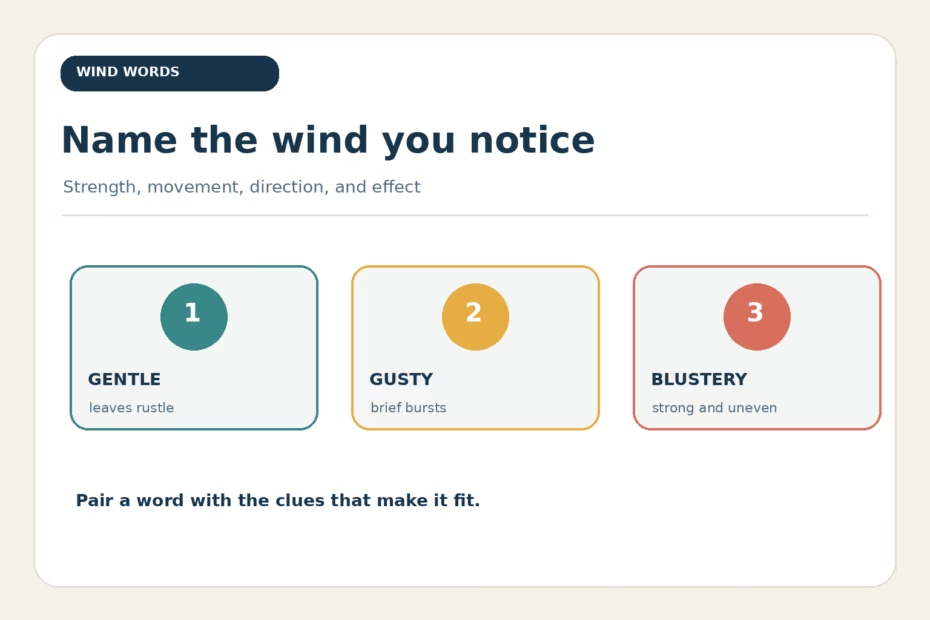
The first adjective that comes to mind when describing wind is “blustery.” This word perfectly captures the wild and gusty nature of a strong wind. Imagine standing on a cliff, feeling the blustery wind whip against your face, making it difficult to keep your balance. Another adjective that can be used to describe wind is “gentle.” This word paints a picture of a soft, caressing breeze that gently kisses your skin on a warm summer day. Picture yourself sitting in a hammock, feeling the gentle wind sway you back and forth as you relax. These are just a couple of examples, and there are many more adjectives to explore. So, let’s continue our journey and discover the various ways we can describe wind.
How to Describe wind? – Different Scenarios
When it comes to describing wind, there are several adjectives you can use to paint a vivid picture. Let’s explore some different scenarios and the adjectives that best capture the essence of wind in each situation.
1. A Blustery Day
On a blustery day, the wind is strong and forceful, creating a lively and energetic atmosphere. Here are a few adjectives that capture the power of the wind on such days:
- Fierce: The wind howls and roars, showing its fierce nature.
- Gusty: Gusts of wind sweep through the air, causing chaos and excitement.
- Mighty: The wind’s strength is mighty, moving objects with ease.
2. A Gentle Breeze
In contrast to a blustery day, a gentle breeze brings a sense of calm and tranquility. It softly caresses your skin and creates a peaceful environment. Here are some adjectives to describe this gentle wind:
- Whispering: The wind whispers through the trees, creating a soothing melody.
- Mild: The wind is mild and delicate, like a gentle touch on your cheek.
- Swaying: The wind sways the leaves and flowers, creating a graceful dance.
3. A Whirling Tornado
While tornadoes are dangerous, they have their own unique characteristics. Here are some adjectives to describe the wind in this extreme scenario:
- Destructive: The wind in a tornado is destructive, tearing through everything in its path.
- Roaring: The wind roars like a monster, sounding ominous and powerful.
- Unpredictable: The wind in a tornado is unpredictable, changing direction without warning.
By using these adjectives, you can effectively convey the different qualities of wind in various scenarios. Remember, the key is to choose words that bring your descriptions to life and create a vivid image in the reader’s mind.
If you’re looking for more adjectives to describe wind, don’t be afraid to experiment and explore. There are countless words that can capture the many facets of wind, allowing you to create engaging and descriptive narratives.
Describing Words for wind in English
When it comes to describing wind, there are many words that can help us paint a vivid picture of its characteristics. Whether it’s a gentle breeze or a powerful gust, choosing the right adjectives can make our descriptions come alive. Let’s explore some descriptive words for wind in English:
- Whispering – On a calm summer evening, the wind may gently whisper through the trees, creating a soothing and peaceful atmosphere.
- Chilly – During the winter months, the wind can take on a chilly quality, sending shivers down our spines and making us reach for our warmest coats.
- Blustery – Picture a windy autumn day with leaves rustling and swirling around. The wind is strong and forceful, making its presence known with every gust.
- Refreshing – A cool breeze on a hot summer day can be incredibly refreshing, bringing relief and a sense of rejuvenation.
- Strong – Sometimes, the wind can be so strong that it becomes difficult to stand upright. It can push against us with great force, reminding us of its power.
- Gusty – When the wind comes in quick and intense bursts, it is considered gusty. It can come and go abruptly, catching us off guard.
- Destructive – In extreme cases, wind can turn into a destructive force. Tornadoes and hurricanes are known for their fierce winds that can cause significant damage.
- Howling – Imagine the sound of wind roaring through a narrow alley or a mountain pass. It can be deafening and haunting, giving the impression of a mournful howl.
- Soothing – When the wind blows gently and rhythmically, it can have a soothing effect on our minds and bodies, helping us relax and unwind.
- Whirling – Tornadoes are a prime example of wind whirling and spinning violently. They are awe-inspiring and terrifying at the same time.
Remember, using descriptive words for wind can help create a more engaging and immersive experience for your readers. Let your imagination flow and choose the perfect adjectives to bring your wind descriptions to life.
| Descriptive Word | Example Sentence |
|---|---|
| Whispering | *The wind whispered through the tall |
Adjectives for wind
Positive Adjectives for Wind with Example Sentences
When describing wind, there are several positive adjectives that can help paint a vivid picture. Here are a few examples:
- Gentle – The gentle breeze rustled through the leaves, creating a soothing sound.
- Refreshing – The refreshing wind blew against my face, bringing relief on a hot summer day.
- Invigorating – The invigorating wind filled my lungs as I raced down the hill on my bike.
- Energizing – The energizing wind whipped around me, making me feel alive and full of energy.
- Playful – The playful wind danced with the kites in the sky, making them soar high above.
- Whispering – The whispering wind carried my words and shared them with the trees.
Negative Adjectives for Wind with Example Sentences
While wind can be pleasant, it can also be fierce and harsh. Here are some negative adjectives to describe the less favorable side of wind:
- Blustery – The blustery wind knocked over chairs and swept leaves off the ground.
- Chilly – The chilly wind sent shivers down my spine as I walked along the beach.
- Unpredictable – The unpredictable wind changed direction suddenly, causing havoc at the picnic.
- Raging – The raging wind threatened to pull the roof off the old, creaky house.
- Destructive – The destructive wind tore through the town, leaving a trail of destruction in its wake.
Children can have fun using these adjectives to describe the wind in their stories or drawings.
Synonyms and Antonyms with Example Sentences
Synonyms for wind
When it comes to describing the wind, there are several synonyms that can help us paint a vivid picture. Here are some words that can be used as alternatives to “wind”:
- Breeze
- Gust
- Zephyr
- Draft
- Gale
For example:
- The gentle breeze rustled through the leaves of the trees.
- A sudden gust of wind swept through the open field.
- The delicate zephyr whispered through the meadow.
Antonyms for wind
Just as there are synonyms, there are also antonyms – words that have the opposite meaning of “wind.” Here are some antonyms for wind:
- Stillness
- Calm
- Serenity
For example:
- There was an eerie stillness in the air.
- The sea was so calm, not a breath of wind could be felt.
- The garden was a picture of serenity, without a hint of breeze.
Using synonyms and antonyms can add depth and variety to our descriptions of the wind. By choosing the right word, we can create powerful and evocative imagery that brings our writing to life. Remember, these words can also be a great vocabulary-building exercise for children. Encourage them to use these new words in their stories or drawings to describe the wind in different ways.
Conclusion
In this article, we have explored various adjectives that can be used to describe wind in different scenarios. From a blustery day to a gentle breeze, and even a whirling tornado, we have discovered descriptive words like “fierce,” “whispering,” and “destructive” that perfectly capture the essence of wind in each situation.
Additionally, we have expanded our vocabulary by introducing new terms such as “breeze,” “gust,” and “zephyr” to describe different types of wind. We have also explored antonyms like “stillness,” “calm,” and “serenity,” which provide a contrasting perspective to the movement and power of wind.
By incorporating these adjectives into our descriptions, we can add depth and variety to our writing, making it more engaging and vivid. Furthermore, we have highlighted how children can have fun using these words in their stories or drawings, encouraging them to explore their creativity and expand their language skills.
So, the next time you encounter the wind, whether it’s a gentle caress or a forceful gust, remember the adjectives we have discussed and let your words paint a vivid picture of this natural phenomenon.
How to choose adjectives for wind
The list above gives you a wide vocabulary for wind, from gentle and breezy to ferocious and whirling. To choose accurately, look for clues about four things: strength, steadiness, direction, and effect. The leaves, flags, dust, water, or loose objects in a scene can show how the air is moving. Pairing one clear clue with one adjective is usually more vivid than piling on several similar words.
Choose a word for strength and pattern
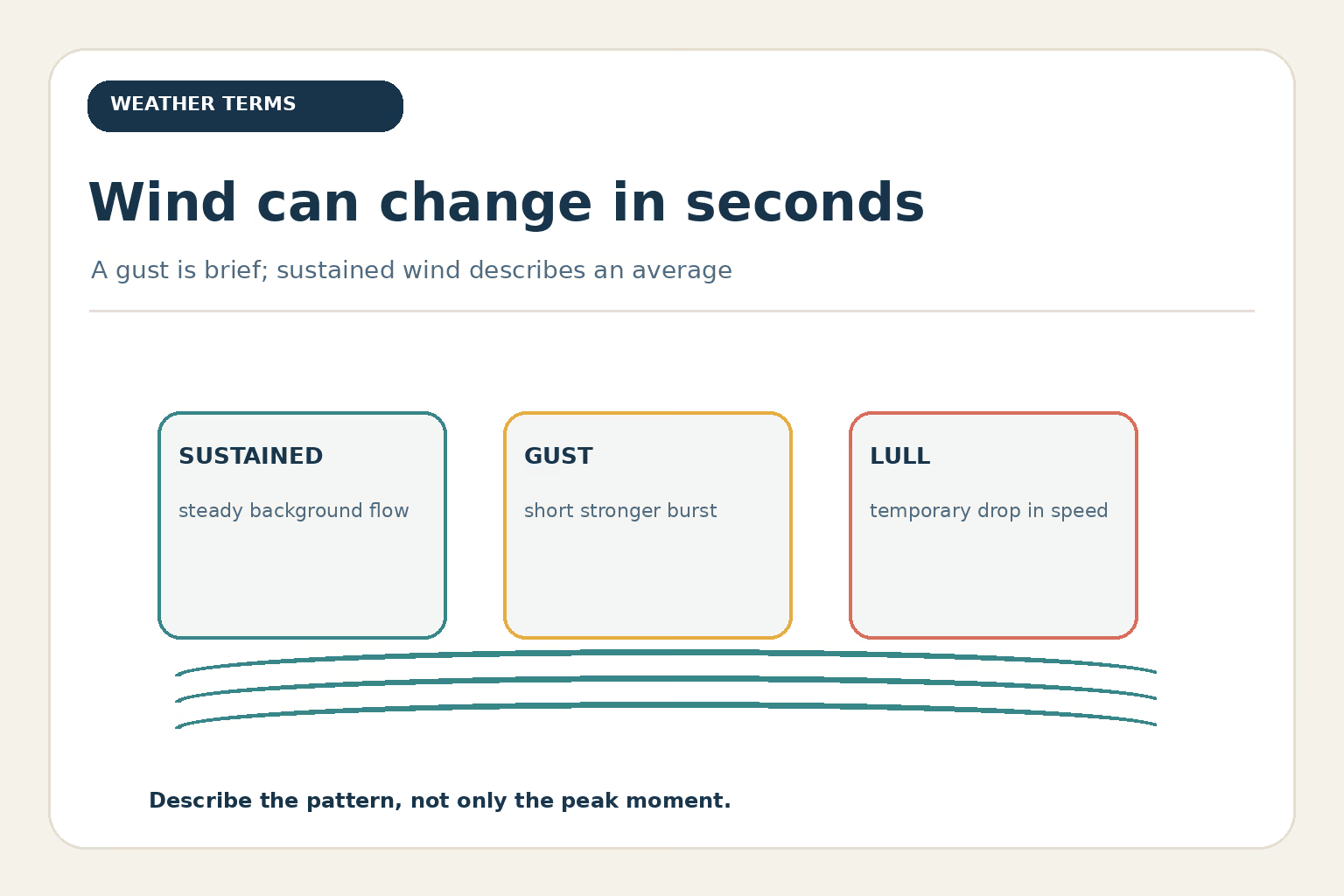
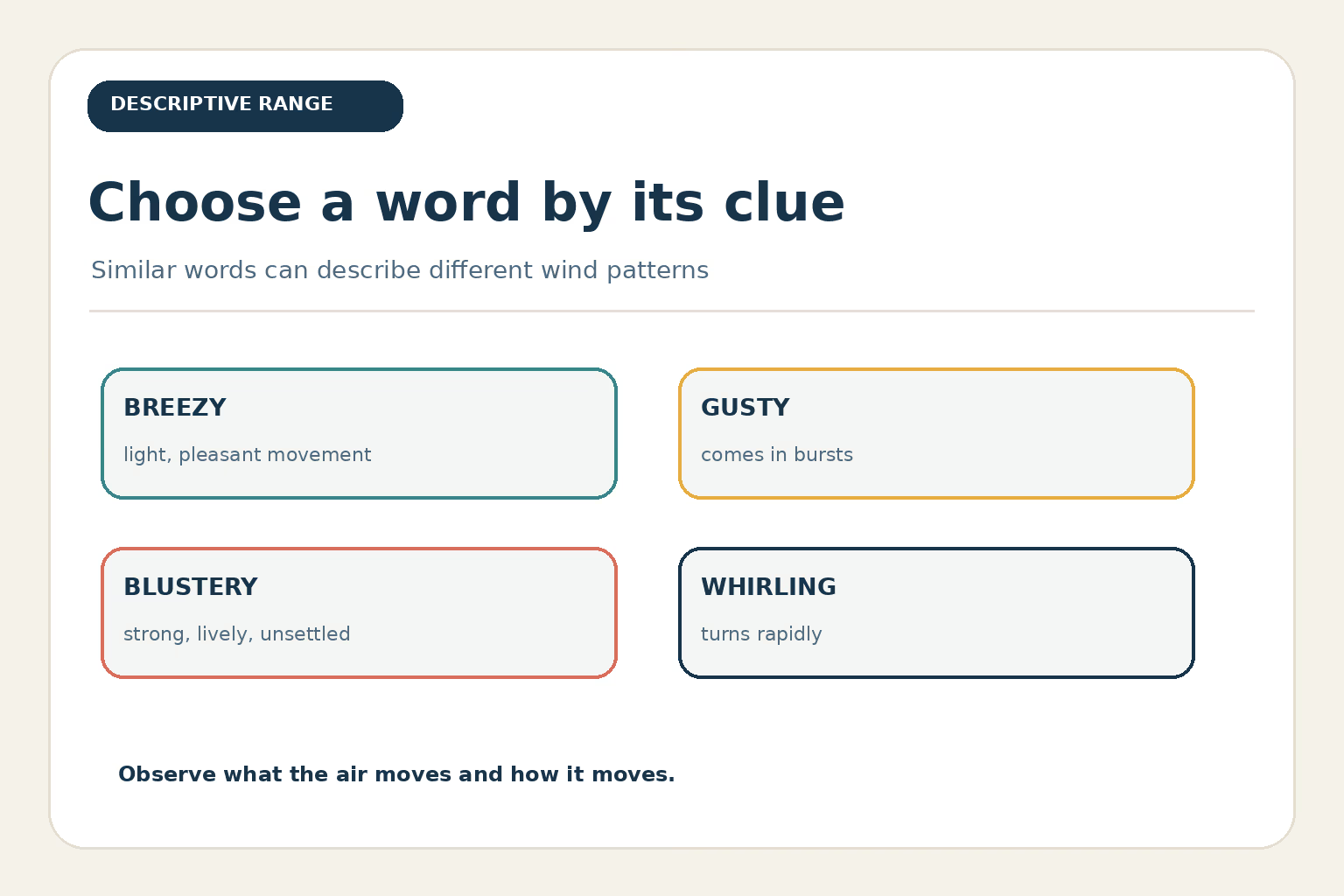
Light, gentle, and soft suggest a mild wind. Breezy often has a pleasant or refreshing feel, while blowy is informal and less precise. Steady describes a wind that continues without much change; gusty describes one that arrives in short bursts. Blustery suggests strong, lively, unsettled conditions, and fierce or howling raises the intensity. These words express impressions rather than exact speeds, so use a forecast or measurement when a number matters.
Weather reports separate sustained wind from a gust. The National Weather Service defines sustained wind using an average over a two-minute period, while a gust is a brief fluctuation or increase in speed. For a story, this difference gives you a useful choice: “a steady wind bent the grass” describes ongoing force, while “a sudden gust scattered the papers” focuses on a short burst. Read the National Weather Service entry for sustained wind and its weather glossary for definitions.
Describe direction and effect
Direction words can make a description more exact. In weather terminology, a north wind comes from the north and blows toward the south; the name tells you where it comes from. You can also describe an effect: a chilling wind numbs exposed skin, a rustling breeze moves leaves, and a scouring wind drives sand or snow across an open place. Some words, such as cold, describe how the wind feels rather than its measured speed or the air temperature alone. Add a detail to show what the observer experiences.
For a practical bridge between numbers and description, the Beaufort scale pairs wind ranges with visible effects on land and sea. At lower strengths, leaves rustle or small twigs move; stronger conditions move branches and can make walking difficult. The scale is an estimate based on observed effects, not a menu of literary adjectives. See the National Weather Service Beaufort Wind Scale when you want to connect a scene’s signs with an approximate wind strength.
Keep tornado language precise
Whirling and swirling describe circular movement and can suit leaves or dust being carried around. A tornado, however, is a specific rotating column of air associated with a thunderstorm, not simply another adjective for very strong wind. If a scene involves a tornado, describe the event accurately and do not use terms such as tornadic as an everyday synonym for gusty. NOAA’s tornado overview explains the distinction.
A simple pattern for vivid examples
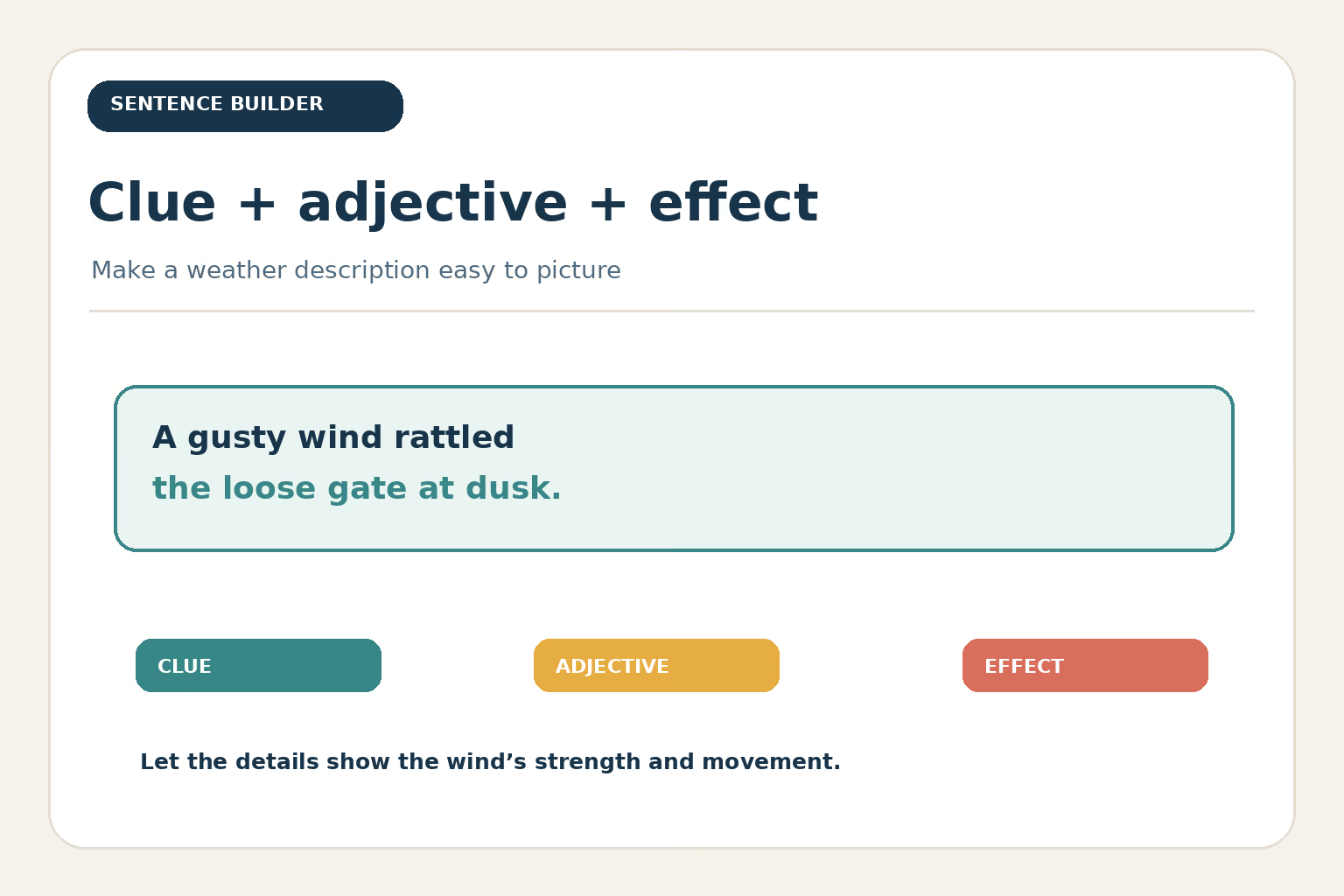
Try clue + adjective + effect. For example: “A gusty wind rattled the loose gate at dusk.” Gusty tells us the wind rises and falls; the rattling gate gives the reader evidence. Or write: “A gentle breeze carried the scent of pine across the porch.” The adjective signals low intensity, while the scent shows what the air moved. For a more factual description, include a reported speed or direction and keep the adjective in a supporting role.
Quick questions
What is a good adjective for a soft wind? Try gentle, light, mild, or breezy. Choose breezy for a refreshing tone and gentle for a calmer one.
What is the difference between gusty and blustery? Gusty emphasizes changing speed and short stronger bursts. Blustery gives a broader impression of strong, unsettled weather.
What adjectives describe a very strong wind? Depending on the scene, use powerful, fierce, howling, or violent. For factual communication, pair the word with a verified speed or official warning rather than relying on a dramatic adjective alone.
Notice what the wind does, then choose a word that matches the evidence and tone. That small step makes a weather report clearer and a creative description easier to picture.


