
Adjectives for Windows: Choose Words That Show What You Notice
A window can be described by its size, shape, frame, movement, glass, view, or effect on a room. The most helpful adjective identifies one of those features. “A bright room” gives an impression; “a tall, south-facing window made the room bright at noon” tells readers what created it. The lists below include visual descriptions, practical vocabulary, and examples for stories, home descriptions, and product copy.
Window Adjectives by Feature
Size, shape, and position
Large, small, tall, narrow, wide, and oversized describe scale. Arched, round, rectangular, octagonal, and angled describe shape. High-set, low, corner, bay, and panoramic give more detail about placement or form. If exact size matters, add a measurement; “wide” can mean different things in a small cottage and a lobby.
- A tall, narrow window flanked the front door.
- The arched window echoed the curve of the old stone entry.
- A wide, low window framed the garden from the breakfast nook.
Style, frame, and construction
Traditional, contemporary, ornate, minimal, industrial, and rustic express a design impression. Support an impression with a visible feature: an “ornate window” might have carved trim, while a “minimal window” might have a slim frame and few divisions. Material words such as wooden, aluminum-framed, vinyl-framed, and steel-framed are more concrete when the material is known.
Some terms name familiar opening styles as well as describe them: sliding, casement, double-hung, awning, and fixed. A casement window is hinged at the side; a double-hung window has two vertically moving sashes; a fixed window does not open. Use the correct style name when you know it, since words such as “swinging” or “movable” are less precise.
Glass, light, and view
Clear, tinted, frosted, textured, reflective, and stained describe glass appearance. Bright, sunlit, shaded, and light-filled describe the light in or around a window, not necessarily a measured property of the glazing. Scenic, overlooking, garden-facing, and street-facing tell readers what lies beyond it.
For example, “a frosted bathroom window admits diffuse daylight while preserving privacy” is more specific than “a nice window.” Avoid using soundproof, draft-free, or energy-efficient based on looks alone. Those claims require product information, ratings, or an inspection. A window rating label may report separate values such as U-factor, solar heat gain coefficient, and visible transmittance; one adjective cannot stand in for all of them.
Cleanliness, age, and condition
Spotless, streaky, dusty, and smudged describe cleanliness. New, historic, weathered, restored, and well-maintained describe age or upkeep, though “historic” is best reserved for a window with a documented or clearly relevant period context. Cracked, chipped, warped, loose, and fogged point to visible conditions; not all of them reveal the cause or seriousness of a problem.
Compare “an old window” with “a weathered wood frame with peeling paint.” The second description tells a reader what appears old without assuming the glass, hardware, and frame all share the same condition.
Positive, Neutral, and Critical Window Descriptions
| Tone | Useful adjectives | Example |
|---|---|---|
| Positive | elegant, expansive, sunlit, polished, graceful | An expansive window brought the garden into view. |
| Neutral | fixed, rectangular, frosted, double-hung, east-facing | A rectangular, east-facing window brightened the hallway in the morning. |
| Critical | cloudy, drafty, rattling, streaked, damaged | The rattling sash interrupted the quiet room. |
Context can change the tone. A small window might feel charming in a cottage or limiting in a dark office. Plain may mean simple and unobtrusive, not unattractive. If a description makes a judgment, show the detail behind it: “The plain white frame kept attention on the view.”
Window Description Examples
- For a home listing: “A bright, south-facing bay window overlooks the landscaped courtyard.”
- For a story: “Rain traced crooked lines down the narrow attic window.”
- For a classroom: “The tall windows made the room feel airy without distracting students from the board.”
- For a renovation note: “The original timber frame is weathered, with a loose latch and one cracked pane.”
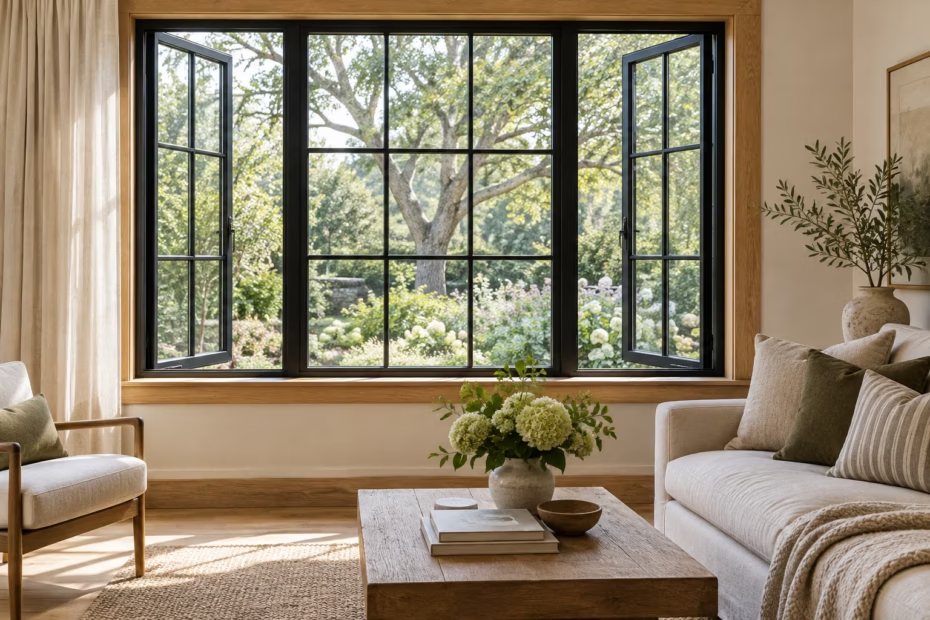
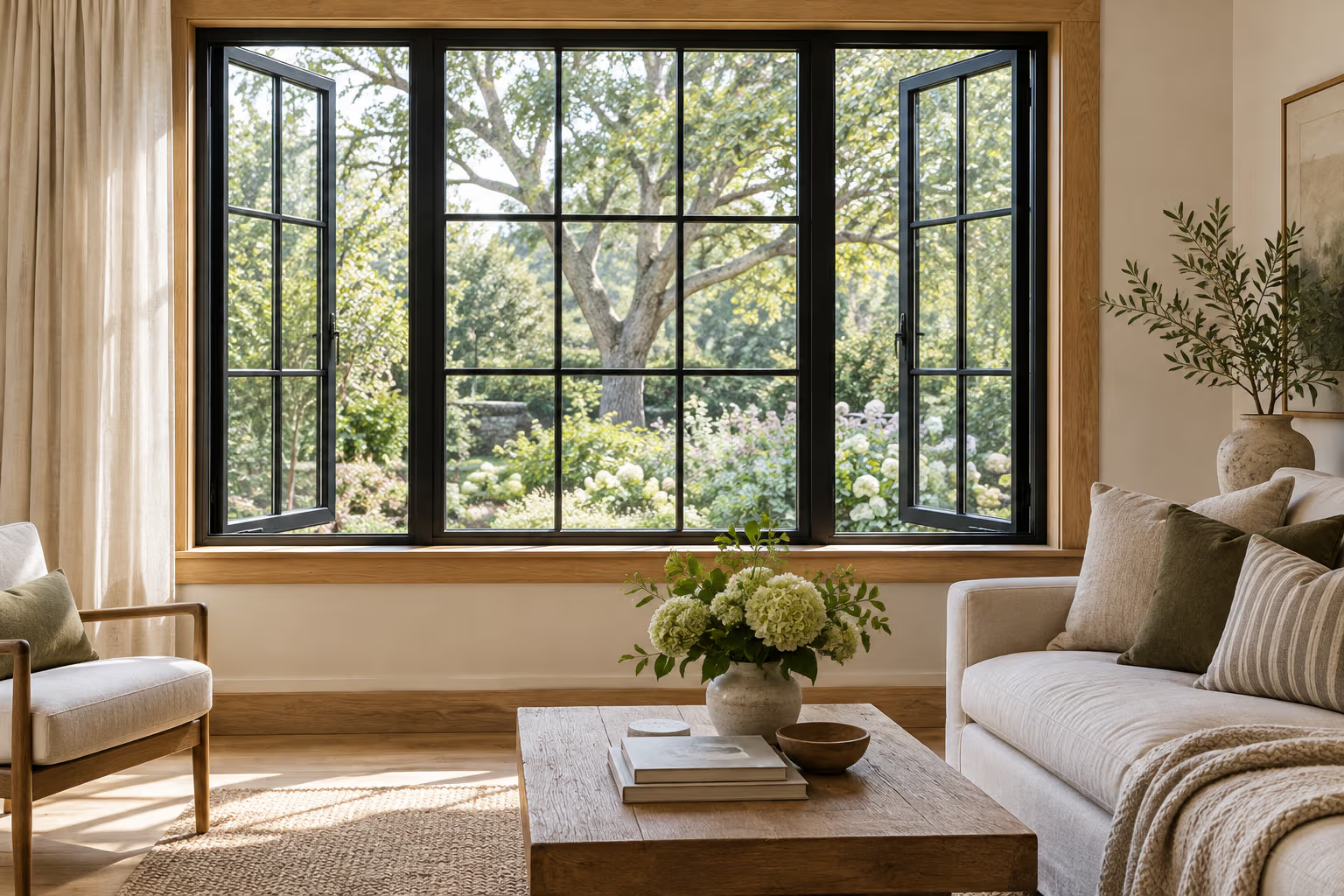
- For interior design: “Sheer curtains softened the hard outlines of the black-framed windows.”
- For a product description: “This fixed, triple-pane unit has a white vinyl frame; consult its label for certified performance values.”
A simple pattern is form + material or style + light or view: “a tall, wood-framed window facing the orchard.” Add a condition or mood only if it helps. Two or three accurate details usually create a clearer picture than a long row of near-synonyms.
Choosing the Right Adjective
- Name the feature. Is the sentence about shape, glass, movement, condition, or the scene outside?
- Prefer observable details. “Frosted” and “arched” are more concrete than “beautiful.”
- Separate fact from impression. “Double-hung” names a style; “elegant” gives an opinion.
- Use evidence for performance claims. Check a product label or qualified inspection before describing energy, air, water, or sound performance.
- Read the sentence aloud. Remove repeated ideas such as “large and expansive” unless the distinction matters.
Federal energy guidance explains that window performance depends on factors including U-factor and solar heat gain coefficient, and the suitable balance varies by climate. The National Fenestration Rating Council describes additional label measures such as visible transmittance and air leakage. These measured ratings are useful for choosing products; descriptive adjectives help readers picture appearance and experience.
Quick Reference: Words to Describe a Window
| Feature | Adjectives | Example phrase |
|---|---|---|
| Size and shape | wide, tall, arched, narrow, panoramic | a tall arched window |
| Style and operation | fixed, sliding, casement, double-hung | a white double-hung sash |
| Glass | clear, frosted, tinted, reflective, textured | clear glass with a garden view |
| Light and view | sunlit, shaded, bright, garden-facing | a bright, garden-facing window |
| Condition | spotless, weathered, streaky, cracked, restored | a restored oak frame |
| Mood and style | elegant, cozy, dramatic, simple, inviting | an inviting reading nook |
For the clearest description, choose adjectives that match what you can see or verify, then add the detail that makes the window distinctive.
Sources and Further Reading
- U.S. Department of Energy: Window Types and Technologies
- U.S. Department of Energy: Purchasing Energy-Efficient Residential Windows, Doors, and Skylights
- National Fenestration Rating Council: Residential Product Certification
- Fenestration and Glazing Industry Alliance: NAFS Overview
The original article follows, retained in full. This guide adds examples and clarifies how to choose window adjectives for different features and contexts.
Windows are not just functional openings in our homes; they also add beauty and character to our living spaces. Whether you have large, panoramic windows that offer breathtaking views or small, cozy windows that let in just the right amount of light, the right adjectives can help you describe and appreciate their unique qualities. In this article, I’ll share a list of descriptive adjectives that you can use to bring your windows to life. From elegant and expansive to quaint and charming, these adjectives will help you paint a vivid picture of your windows and create a more engaging atmosphere in your writing. So, let’s dive in and explore the world of adjectives for windows!
When it comes to describing windows, there is a wide range of adjectives that can capture their various characteristics. From the shape and size to the materials and functionality, each window has its own story to tell. By using descriptive adjectives, you can convey the mood and ambiance that your windows create in a more vivid and compelling way. So, whether you’re a writer looking to add depth to your descriptions or a homeowner wanting to showcase the unique features of your windows, this article will provide you with a comprehensive list of adjectives to choose from. From sleek and modern to traditional and timeless, these adjectives will help you find the perfect words to describe your windows and make them truly shine.
How to Describe window? – Different Scenarios
When it comes to describing windows, there are various scenarios and factors to consider. Effective window descriptions can really bring them to life and create a more engaging atmosphere. Here are some different scenarios in which you can describe windows:
- In a Historical Setting: If you’re writing about windows in a historical context, you can use adjectives that highlight their unique architectural features. For example:
- In a Natural Setting: When describing windows in a natural setting, draw attention to the view and the connection with nature. Consider using adjectives that describe the landscape or the effects of natural light. For example:
- In a Modern Setting: Describing windows in a contemporary setting requires adjectives that convey a sleek and minimalist aesthetic. Consider using words that reflect clean lines and functional design. For example:
- In a Cozy Setting: When describing windows in a cozy setting, focus on creating a warm and inviting atmosphere. Use adjectives that evoke a sense of comfort and coziness. For example:
Remember, your choice of adjectives should align with the specific context and purpose of your writing. By using descriptive words that capture the unique qualities of windows, you can create a vivid and engaging description that brings them to life.
In the next section, I’ll provide you with a comprehensive list of adjectives that can be used to describe windows in different scenarios. Stay tuned!
| Adjective | Meaning |
|---|---|
| Elegant | Gracefully stylish or refined |
| Expansive | Covering a wide area or range |
| Quaint | Attractively unusual or old-fashioned |
| Charming |
Describing Words for window in English
Windows play a significant role in shaping the atmosphere and character of a room. Descriptive adjectives are key to bringing windows to life and creating a more engaging experience for readers. In this section, I’ll provide you with a range of adjectives that can be used to describe windows in English.
- Spacious: Windows that are large and allow ample natural light to fill the room can be described as spacious.
- Gleaming: A window that is clean, well-maintained, and reflects sunlight can be described as gleaming.
- Spectacular: When a window offers breathtaking views or showcases stunning scenery, it can be described as spectacular.
- Elegant: Windows with decorative frames, intricate designs, or stylish curtains can be described as elegant.
- Inviting: Windows that create a warm and welcoming ambiance, making you feel like you want to step into the room, can be described as inviting.
- Airy: Windows that allow for a gentle breeze to flow into the room, creating a fresh and breathable atmosphere, can be described as airy.
- Panoramic: A window that provides a wide, sweeping view of the surroundings can be described as panoramic.
- Cosy: Windows with curtains that create a snug and comfortable feel, perfect for curling up with a book or enjoying a cup of tea, can be described as cosy.
- Stylish: Windows that have a trendy and fashionable appearance, enhancing the overall aesthetic of the room, can be described as stylish.
- Statement: Unique and eye-catching windows that become a focal point of the room and make a bold statement can be described as statement windows.
By using these descriptive adjectives, you can capture the essence and qualities of windows in different settings and create a more engaging and vivid experience for readers. Remember to choose adjectives that align with the specific context and purpose of your writing.
Next, I’ll provide you with a more comprehensive list of adjectives for describing windows, so stay tuned!
Adjectives for Windows
| Spacious | Gleaming | Spectacular |
|---|---|---|
| Elegant | Inviting | Airy |
| Panoramic | Cosy | Stylish |
| Statement |
Adjectives for window
Positive Adjectives for Window with 12 Example Sentences
When it comes to describing windows, there are a plethora of positive adjectives that can bring them to life. Here are 12 examples of positive adjectives for windows:
- Spacious: The spacious window in the living room allows ample natural light to fill the space.
- Gleaming: The gleaming window panes add a touch of elegance to the room.
- Spectacular: The spectacular floor-to-ceiling window offers stunning views of the surrounding landscape.
- Elegant: The elegant bay window in the bedroom adds a touch of sophistication to the decor.
- Inviting: The inviting window seat is the perfect spot to curl up with a good book on a rainy day.
- Airy: The airy windows in the kitchen create a fresh and breezy atmosphere while cooking.
- Panoramic: The panoramic windows in the dining area provide breathtaking views of the city skyline.
- Cosy: The cosy window nook is an ideal space for sipping a cup of tea and enjoying the view.
- Stylish: The stylish window treatments add a modern touch to the room’s design.
- Statement: The statement window at the entrance showcases the architectural beauty of the building.
- Charming: The charming arched window in the study adds character to the space.
- Unobstructed: The unobstructed window in the bedroom allows for clear views of the starry night sky.
Negative Adjectives for Window with 5 Example Sentences
While windows can be a focal point of a room, negative adjectives can also be used to describe them in certain contexts. Here are 5 example sentences using negative adjectives for windows:
- Drafty: The drafty window in the old house allowed cold air to seep in during the winter.
- Dirty: The dirty window obscured the view and needed a thorough cleaning.
- Cracked: The cracked window pane had to be replaced to prevent further damage.
- Opaque: The opaque window in the bathroom provided privacy but blocked natural light.
- Narrow: The narrow window in the basement offered limited natural light and a restricted view.
Remember, when using adjectives to describe windows, it’s important to choose words that align with the specific context and purpose of your writing. Whether they are positive or negative, these adjectives can create a more engaging and vivid experience for your readers.
Synonyms and Antonyms with Example Sentences
Synonyms for window
When it comes to describing windows, there are plenty of synonyms that can add variety and depth to your writing. Here are some examples of synonyms for the word “window”:
- Fenestra: This Latin word can add an elegant touch to your writing when referring to a window.
- Porthole: This term is often used to describe the small, round windows found on ships and submarines.
- Aperture: Use this word when you want to convey the idea of an opening or hole that lets in light or air.
- Casement: This term refers to a hinged window that swings open like a door.
- Sash: Use this synonym when describing a window with a framed glass panel that moves up and down, or side to side.
- Skylight: A skylight is a window positioned in the roof to allow natural light to enter a room from above.
- Transom: This word is used to describe a small window above a door or larger window.
- Bay window: A bay window is a large, projecting window that extends outward from a building, creating a cozy nook or extra space.
- French window: Also known as French doors, this type of window consists of one or more full-length glass panels that can be opened like a door.
Using these synonyms can help diversify your writing and make it more engaging for your readers. Now, let’s explore some antonyms for the word “window”.
Antonyms for window
Antonyms provide a way to describe the opposite qualities of a window. Here are a few antonyms for the word “window”:
- Wall: When you want to describe a space that lacks a window, you can refer to it as a wall.
- Blind: A blind is a covering used on a window to block out light or provide privacy.
- Shuttered: This term refers to windows that are closed off with protective shutters.
- Sealed: Use this antonym to describe windows that are securely closed, preventing air or light from entering.
- Solid: When a window is replaced with a solid wall, it eliminates the opening for light and air.
Using antonyms can help create contrast and emphasize the absence of a window in certain contexts. Here are some example sentences to further illustrate the use of synonyms and antonyms:
| Sentence |
|---|
| The fenestra in the ancient castle provided a breathtaking view. |
| The small submarine had a circular porthole for the crew to see outside. |
| I opened the casement window to let in the fresh morning breeze. |
| The sash window in the old Victorian house was beautifully crafted. |
| The artist painted the room with natural light from the skylight above. |
| The graceful arched transom flooded the entryway with sunlight. |
| I sat by the bay window and enjoyed the view of the blooming garden. |
| The room was flooded with sunlight streaming in through the French windows. |
| The dark room lacked any wall to let in natural light. |
| The old house was shuttered, giving it a mysterious and abandoned look. |
| I closed the blind to block out the bright streetlights outside. |
| The windows were securely sealed, keeping out the cold winter air. |
| The hallway had no natural light since it was replaced with a solid wall. |
Conclusion
Descriptive adjectives are a powerful tool in bringing windows to life and enhancing the overall atmosphere in writing. By using positive adjectives like spacious, gleaming, spectacular, and elegant, we can create a more engaging and captivating description of windows. These adjectives help paint a vivid picture in the reader’s mind, making the writing more immersive and enjoyable.
In addition to the range of adjectives discussed, we also explored synonyms and antonyms for the word “window.” Synonyms such as fenestra, porthole, and casement add variety and depth to our writing, while antonyms like wall and shuttered create contrast and highlight the unique qualities of windows.
By incorporating these adjectives, synonyms, and antonyms into our writing, we can make our descriptions more vibrant and captivating. Whether we are describing a cozy bay window or a stylish French window, the use of these descriptive words helps to create a more memorable and impactful piece of writing.
So, next time you’re writing about windows, remember to choose your adjectives wisely. Let your words bring the windows to life and transport your readers into a world of beauty, elegance, and charm.


