Adjectives for Work: 32 Words & Examples
Adjectives for work describe a person’s habits, skills, approach, or results. Choose a word that matches observable evidence: reliable for consistent follow-through, analytical for careful examination, or collaborative for productive work with others. In a résumé or interview, connect the adjective to a specific action and outcome.
At a glance
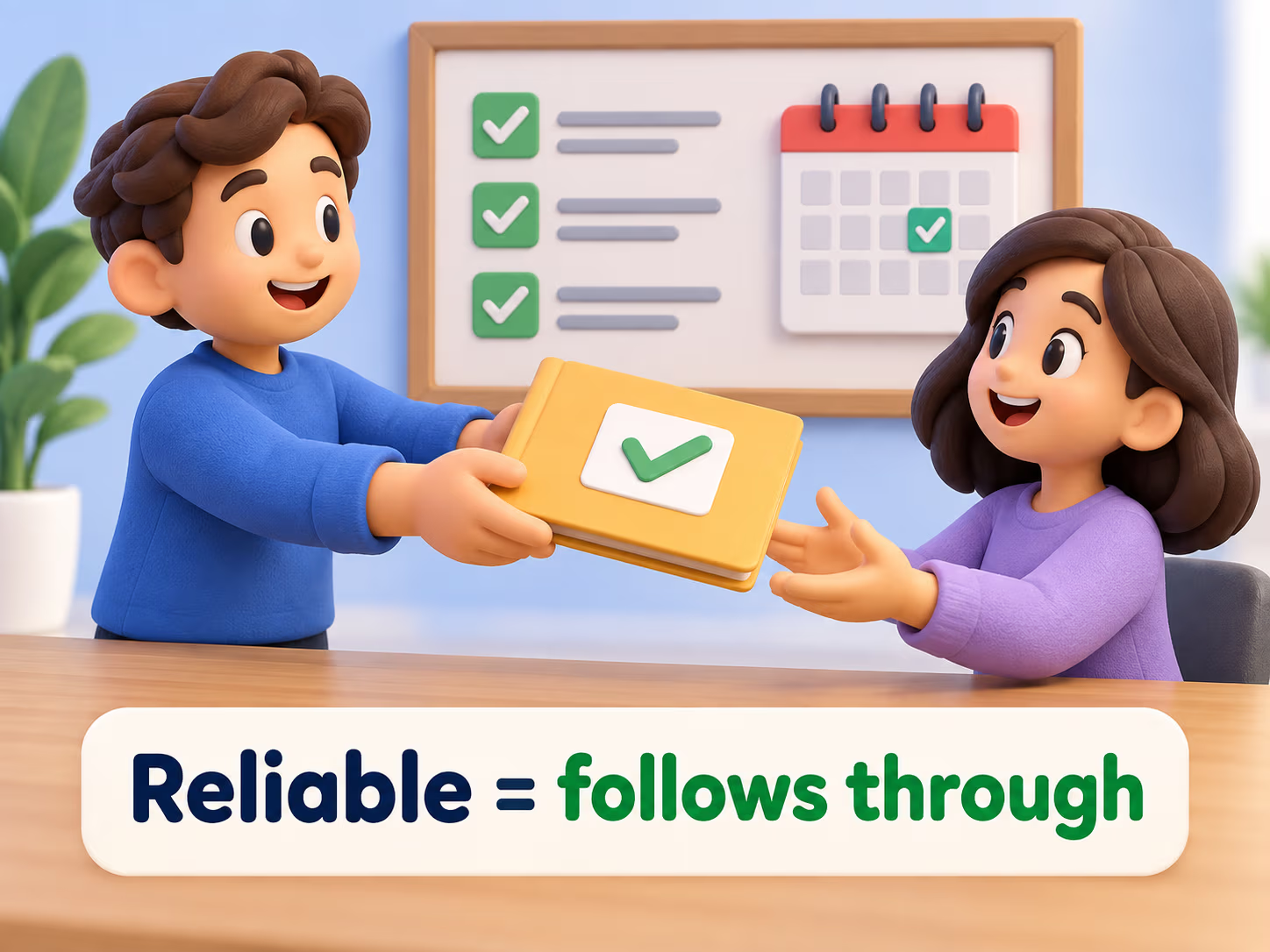
- Use diligent for careful, sustained effort and dependable for consistency in obligations.
- Efficient describes accomplishing work with little waste; it does not automatically mean the result is effective.
- Analytical points to systematic examination, while detail-oriented emphasizes noticing particulars.
- Use collaborative for work done productively with others; use independent when someone works effectively alone.
- Specific examples are more informative than broad labels such as “hard worker” or “unambitious.”
How to Choose an Adjective for Work
Start with what happened, then select the adjective that best names the behavior or result. A project delivered on the agreed date may support reliable; a process redesigned to reduce repeated steps may support efficient; a pattern discovered in a report may support analytical.
- Name the situation. Identify the task, project, or interaction rather than making a claim about someone’s whole personality.
- Describe the observable action. For example, the person documented a handoff, tested several solutions, or coordinated a cross-team schedule.
- Choose the narrowest accurate word. A person who spots inconsistencies is attentive or detail-oriented; that alone does not prove broad analytical skill.
- Add the result or scope. State what improved, what was completed, or who benefited. Do not invent a percentage when no measurement exists.
For application materials, use an adjective sparingly and let the accomplishment carry the claim: “I am organized” is less specific than “I reorganized the shared calendar so three teams could see deadline changes.” Harvard FAS career guidance similarly recommends active verbs and accomplishment context. O*NET describes work styles such as dependability, cooperation, and attention to detail as tendencies relevant to work—not as a complete or universal measure of a person.
Positive Adjectives for Work by Skill
Positive work adjectives become more useful when grouped by the strength they describe. The categories below distinguish work quality, execution, problem solving, and interaction rather than treating every favorable word as interchangeable.
| What you want to describe | Useful adjectives | Example grounded in behavior |
|---|---|---|
| Care and accuracy | careful, meticulous, thorough, detail-oriented | “She checked the invoice totals against the purchase orders before approval.” |
| Follow-through | reliable, dependable, conscientious, diligent | “He sent the weekly status report on the agreed day and flagged delays early.” |
| Use of time and resources | efficient, organized, productive, methodical | “They grouped similar requests and cleared the backlog without skipping review.” |
| Ideas and solutions | creative, resourceful, inventive, analytical | “She compared three approaches and adapted an existing tool to solve the access problem.” |
| Change and learning | adaptable, flexible, versatile, curious | “He learned the revised workflow and updated the team guide before launch.” |
| Working with people | collaborative, cooperative, considerate, communicative | “They summarized the design trade-offs so engineering and support could agree on a handoff.” |
| Initiative and leadership | proactive, decisive, responsible, supportive | “She raised the dependency risk early and proposed two workable options.” |
These are not fixed personality types. O*NET’s work-style descriptions, for example, define dependability in terms of reliable, responsible, consistent work obligations and cooperation as a willingness to assist others. A person may show one strength in one context without showing every related trait everywhere.

What Is the Difference Between Similar Work Adjectives?
Related adjectives overlap but emphasize different evidence. The contrast matters when a résumé, review, reference, or story needs to say exactly how the work was done.
| Word pair | Difference | Choose it when the evidence shows… |
|---|---|---|
| Efficient / effective | Efficiency concerns resources and waste; effectiveness concerns whether the intended result was achieved. | Use efficient for streamlined effort and effective for a solution that worked. A fast process can still miss its goal. |
| Diligent / dependable | Diligence emphasizes careful effort; dependability emphasizes consistency in meeting commitments. | Use diligent for sustained, careful work; dependable for reliably delivering across occasions. |
| Analytical / detail-oriented | Analytical work examines information systematically; detail orientation notices and checks particulars. | Use analytical for comparing evidence or finding patterns, and detail-oriented for catching a mismatch or omission. |
| Creative / resourceful | Creativity develops original ideas; resourcefulness finds workable ways forward with available means. | Use creative for a novel concept and resourceful for adapting tools or constraints to solve a practical problem. |
| Collaborative / cooperative | Both concern working with others; collaborative often emphasizes shared contribution, while cooperative emphasizes willingness to work together. | Use the word that matches the actual role in the joint task. |
| Proactive / responsive | Proactive describes acting before a problem or request; responsive describes acting appropriately after new information or a request. | Use proactive for anticipating a risk and responsive for a timely follow-up. |
“Efficient” is not always the strongest praise. If a worker completes tasks quickly but errors rise, fast may be accurate while efficient is not. If a team reaches the goal but uses substantial extra effort, it may be effective without being efficient.
How to Describe Challenging Work Habits Fairly
Describe a specific pattern and its impact rather than reducing a colleague to a negative adjective. “The handoff arrived two days late on three projects” gives a clearer basis for improvement than “unreliable”; “the plan did not change after the requirements changed” identifies inflexibility in a particular situation.
- State the behavior: what was missed, delayed, unclear, or repeated?
- Describe the context: was the task, deadline, authority, or priority clear?
- Name the impact: what did the behavior affect?
- Separate pattern from one event: a single mistake does not establish a stable trait.
- Offer a useful next step: specify the communication, review, or planning change that could help.
Words such as careless, lazy, and unambitious can sound moralizing and may hide workload, unclear instructions, access barriers, or competing priorities. In formal feedback, behavior-based phrasing is fairer and more actionable. A candid self-description can still acknowledge a skill to improve: “I used to respond too quickly before checking the full brief; now I confirm the requirements before estimating work.”

How to Use Work Adjectives in a Résumé or Interview
Use an adjective as a concise summary, then prove it with an action and result. A practical structure is: trait + action + scope or outcome. Keep each detail accurate and relevant to the role.
- Résumé: “Organized a six-person launch checklist that made owners and deadlines visible across two teams.”
- Interview: “I am adaptable; when the client changed the reporting format, I learned the new template and updated the team’s review steps.”
- Performance feedback: “You are thorough: your release checks caught two missing translations before deployment.”
- Networking: “I’m collaborative” is clearer when followed by the kind of shared work you enjoy or have done.
Do not stack several adjectives where one example would be stronger. “Dedicated, passionate, hardworking, and motivated” repeats a general impression; one verified accomplishment tells the reader more. Harvard FAS career resources recommend active verbs and concrete accomplishment context, which can carry meaning that a string of adjectives cannot.
Frequently Asked Questions About Adjectives for Work
What is a strong adjective for a reliable employee?
Dependable or reliable fits a person who consistently meets commitments. Give a concrete example—such as keeping agreed deadlines or communicating a risk early—because one adjective cannot establish a long-term pattern by itself.
Is “hardworking” a good word for a résumé?
Hardworking is understandable but broad. Replace it with an action and result where possible, such as “completed a backlog of 40 records while maintaining the required review checks.” Use numbers only when they are accurate and relevant.
What is a professional way to describe a weakness?
Name a specific behavior, explain its work impact, and show what you are changing. “I sometimes take on too many requests at once; I now confirm priorities and deadlines before committing” is more useful than labeling yourself “disorganized.”
Are “efficient” and “effective” synonyms?
They are related, but they are not interchangeable in every context. Efficient means using resources well with little waste; effective means producing the intended result. A process can be one without fully being the other.
How many adjectives should I use to describe my work?
Usually one precise adjective alongside a specific example is enough. Several broad compliments can sound repetitive; a concise action, its scope, and its outcome make the description easier to evaluate.
Conclusion
The best adjectives for work name a specific strength or challenge that the evidence supports. Choose a precise word, distinguish related traits such as efficiency and effectiveness, and connect the description to an action or result. Keep the focus on behavior and context so the language is clear, fair, and useful.
When it comes to describing our work, finding the right words can make all the difference. Whether we’re talking about our job, our skills, or our overall work ethic, adjectives play a crucial role in painting a vivid picture of who we are as professionals. In this article, I’ll be sharing a comprehensive list of adjectives that can help you accurately and effectively describe your work. From positive attributes that highlight your strengths to more nuanced qualities that showcase your versatility, these adjectives will provide you with the tools to articulate your professional identity with confidence. So, let’s dive in and explore the world of adjectives for work, backed up with real-life examples that will inspire you to showcase your best self in the professional realm.
How to Describe work? – Different Scenarios
When it comes to describing our work, it’s important to choose the right adjectives that accurately reflect our skills, accomplishments, and work ethic. Whether you’re updating your resume, having a job interview, or networking with professionals in your field, using effective adjectives can help you articulate your professional identity with confidence. Let’s explore different scenarios and the adjectives that can be used to describe work in each one:
1. Describing your work experience on a resume:
- Highlighting your achievements: When describing your work experience on a resume, it’s crucial to showcase your accomplishments and the impact you made in your previous roles. Consider using adjectives such as:
2. Talking about your skills during a job interview:
- Emphasizing your abilities: During a job interview, it’s important to highlight your skills and demonstrate how they align with the requirements of the position. Some adjectives to consider are:
3. Networking with professionals in your field:
- Showing your professionalism: When networking with professionals in your field, it’s important to present yourself in a positive and professional manner. Consider using adjectives such as:
Describing Words for work in English
When it comes to describing our work, using the right adjectives is crucial. Adjectives provide a powerful way to showcase our skills, accomplishments, and work ethic. Whether you’re updating your resume, preparing for a job interview, or networking with professionals, choosing the right words can make a significant impact.
Describing your work experience:
- Efficient: I streamlined processes and increased productivity by implementing new systems.
- Resourceful: I consistently found creative solutions to challenges, saving time and money.
- Adaptable: I quickly adjusted to changing priorities, ensuring projects were completed on time.
Highlighting your skills:
- Analytical: I have a keen eye for detail and excel in data analysis.
- Innovative: I continuously seek new ways to improve processes and drive innovation.
- Collaborative: I thrive in a team environment and value collaboration with colleagues.
Portraying professionalism:
- Organized: I manage multiple tasks effectively and maintain a well-structured workflow.
- Dedicated: I am committed to delivering high-quality work and meeting deadlines.
- Confident: I approach challenges with a positive mindset, knowing I can overcome them.
Remember, it’s essential to back up these adjectives with specific examples from your work experience. By using descriptive words in a thoughtful manner, you can present yourself as a competent professional ready to make a significant impact.
Adjectives play a vital role in showcasing your skills, achievements, and work ethic. By choosing the right words strategically, you can effectively articulate your professional identity and leave a lasting impression on potential employers or professional connections. So, take the time to carefully select adjectives that accurately represent your work and demonstrate your capabilities.
Instead of using generic terms, incorporate specific adjectives that highlight the unique aspects of your work. This will help you stand out from the competition and present yourself as a valuable asset. Remember, the words you choose have the power to shape how others perceive you, so choose wisely.
Selecting the right adjectives is a critical step in describing your work effectively. Utilize the examples provided above, tailor them to your specific experiences, and present yourself with confidence and professionalism. By doing so, you’ll be well on your way to showcasing your unique abilities and securing future opportunities.
Adjectives for work
As a professional, it’s essential to use the right adjectives to accurately describe your work and skills. These descriptive words can make a significant impact when updating your resume, preparing for a job interview, or networking with professionals. Let’s explore some positive and negative adjectives that can effectively depict your work and examples of how to use them.
Positive Adjectives for Work
When describing your work in a positive light, it’s crucial to choose adjectives that highlight your skills, accomplishments, and work ethic. Here are 12 examples of positive adjectives to use:
| Adjective | Example Sentence |
|---|---|
| Diligent | I am diligent in completing tasks ahead of schedule. |
| Innovative | I am an innovative problem solver when faced with challenges. |
| Reliable | My colleagues rely on me because I am dependable. |
| Efficient | I consistently find efficient ways to streamline processes. |
| Versatile | I have a versatile skill set that allows me to adapt to new roles. |
| Proactive | I take a proactive approach to anticipating and resolving issues. |
| Creative | I bring a creative perspective to every project I work on. |
| Resourceful | I find resourceful solutions to complex problems. |
| Collaborative | I thrive in collaborative work environments. |
| Adaptable | I am adaptable and can quickly adjust to new circumstances. |
| Organized | I am highly organized, ensuring tasks are completed efficiently. |
| Detail-oriented | My attention to detail ensures accurate and precise work. |
By using these positive adjectives to describe your work, you can present yourself as a competent professional ready to make a significant impact.
Negative Adjectives for Work
While it’s important to focus on positive qualities, there may be times when expressing negative aspects of your work is necessary, such as describing challenges you have overcome or areas of improvement. Here are 5 examples of negative adjectives to use:
| Adjective | Example Sentence |
|---|---|
| Inconsistent | I struggled with being inconsistent in meeting deadlines. |
| Disorganized | My workspace used to be disorganized, leading to inefficiency. |
| Inflexible | I have learned to be more flexible in adapting to change. |
| Impatient | I used to be impatient, but I have developed better time management skills. |
| Inattentive | In the past, I have been inattentive to small details, but I have worked on improving this aspect. |
When using these negative adjectives, it’s important to follow up with specific examples of how you have addressed or overcome these challenges. This demonstrates growth and a willingness to improve.
Remember, choosing the right adjectives is a powerful tool to shape how others perceive you and can help you stand out from the competition. Use these descriptive words thoughtfully and back them up with specific examples from your work experience.
Synonyms and Antonyms with Example Sentences
Synonyms for Work
When describing work or skills, it’s important to choose the right words to accurately depict your abilities and make a positive impression. Here are some synonyms for the word ‘work’ that can help you emphasize your professional capabilities:
- Efficient: I am efficient in completing tasks and meeting deadlines.
- Productive: I have a strong track record of being productive in my work.
- Dedicated: I am dedicated to delivering high-quality results.
- Detail-oriented: I pay close attention to details in my work.
- Resourceful: I am able to find creative solutions to problems.
- Dependable: I am a dependable team member, always delivering on my commitments.
- Adaptable: I am adaptable and can easily adjust to new situations.
- Innovative: I bring innovative ideas to the table and think outside the box.
- Collaborative: I enjoy working collaboratively with others in a team environment.
- Proactive: I take proactive measures to ensure tasks are completed efficiently.
Antonyms for Work
In addition to using positive adjectives, it can be beneficial to highlight your skills by using antonyms, or opposite words, to showcase a well-rounded skill set. Here are some antonyms for the word ‘work’ that can help you further describe your abilities:
- Lazy: I am not a lazy worker and always put in my best effort.
- Inefficient: I strive to be efficient and avoid being inefficient in my work.
- Unproductive: I consistently strive to be productive and avoid being unproductive.
- Careless: I am not a careless worker and pay attention to detail in all my tasks.
- Unreliable: I pride myself on being reliable and trustworthy in my work.
- Inflexible: I am not inflexible and can adapt to changing work environments.
- Unimaginative: I bring imagination and creativity to my work.
- Siloed: I am not siloed in my work and enjoy collaborating with others.
- Reactive: I try to be proactive rather than reactive in my work.
- Unambitious: I am ambitious and always seek opportunities to grow and excel in my career.
Remember, when describing your work and skills, it’s important to not only choose the right words but also provide specific examples from your work experience. This will help you present yourself as a competent professional ready to make a significant impact.
Conclusion
Choosing the right adjectives to describe work and skills is crucial in professional settings. By utilizing synonyms and antonyms for the word ‘work’, individuals can effectively convey their abilities and leave a positive impression. It’s essential to provide specific examples from work experience to support these adjectives and showcase one’s competence.
In today’s competitive job market, it’s imperative to stand out and differentiate oneself. Using descriptive words thoughtfully can help individuals present themselves as competent professionals ready to make a significant impact. Employers and colleagues are more likely to take notice when one’s language accurately reflects their skills and accomplishments.
Remember, the words we choose to describe our work can shape how others perceive us. So, it’s important to select adjectives that accurately represent our capabilities and achievements. By doing so, we can enhance our professional image and increase our chances of success.
By utilizing the right adjectives and providing examples, individuals can effectively showcase their skills and leave a lasting impression in the professional world. So, take the time to choose your words wisely and let your work speak for itself.