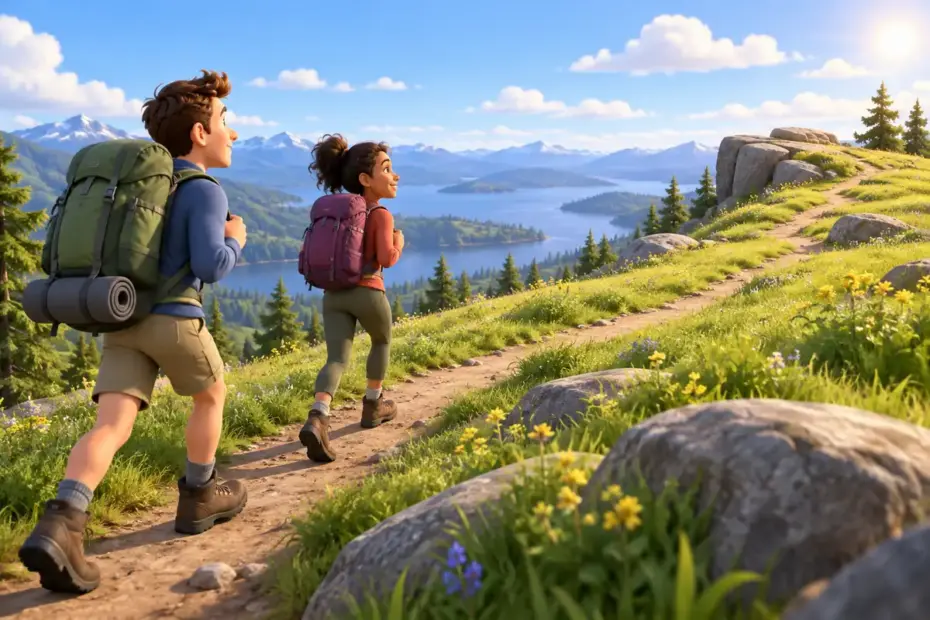
Acclivity in a Sentence: Meaning and Examples
An acclivity is an upward slope, especially one along a hill or path. In “The trail climbed a gentle acclivity toward the lookout,” the noun names the rising section of ground. The word is formal and uncommon; uphill slope or incline is clearer in everyday conversation.
Key facts at a glance
- Acclivity is a formal noun meaning an upward slope or the state of sloping upward.
- It can describe a gentle rise as well as a steep hill; steepness is not part of the basic definition.
- The plural is acclivities.
- Declivity means a downward slope, while incline is the more familiar everyday word.
What does acclivity mean?
Cambridge Dictionary defines acclivity as an upward slope or the fact of sloping upward, and marks the word formal. The noun can refer to a particular rising stretch of land or, less commonly, to the upward inclination itself. It does not require a mountain or an especially steep grade.
Use acclivity when a precise or literary tone suits the writing. In ordinary directions, uphill slope, rise, or incline is more familiar: “The path rises toward the bridge” is often simpler than “The path follows an acclivity.”
How do you use acclivity in a sentence?
Acclivity is a countable noun, so it commonly appears with an article or possessive: an acclivity, the acclivity, or the trail’s acclivity. The plural is acclivities. Adjectives such as gentle and steep describe its degree.
| Pattern | Example | Use |
|---|---|---|
| a gentle acclivity | The village road follows a gentle acclivity above the river. | A modest upward slope |
| a steep acclivity | The hikers paused halfway up the steep acclivity. | A demanding rise |
| climb/mount an acclivity | We climbed the acclivity to reach the old lookout. | Movement uphill |
| acclivity of + place | The eastern acclivity of the ridge caught the morning sun. | One side or rising section of terrain |
Examples of acclivity in a sentence
- A short acclivity led from the meadow to the cabin.
- The cyclist shifted into a lower gear before the acclivity.
- Wildflowers grew along the gentle acclivity above the stream.
- The old fort stood on an acclivity overlooking the valley.
- Rainwater ran quickly down the trail’s steeper acclivity.
- From the road, the garden’s acclivity looked steeper than it felt on foot.
- The path crossed a small acclivity before leveling near the gate.
Acclivity, incline, slope, and declivity
Acclivity specifies an upward slope and sounds formal. Incline and slope are more common and can describe terrain in either direction when context makes direction clear. Declivity is the formal counterpart for a downward slope.

| Word | Direction | Typical tone | Example |
|---|---|---|---|
| acclivity | Upward | Formal, uncommon | The acclivity ended near the ridge. |
| incline | Usually upward, depending on context | Common | The road has a long incline. |
| slope | Upward or downward | Common, general | The slope of the path became gentler. |
| declivity | Downward | Formal, uncommon | The trail descended along a wooded declivity. |
Cambridge’s example of a gentle acclivity shows that the word itself does not mean “steep.” Add steep only when the slope is actually sharp. That distinction prevents an unnecessary implication about the difficulty of a route.
When is acclivity the right word?
Choose acclivity when the upward direction is important and the formal register fits, such as in landscape description or literary writing. For a hiking sign, map instruction, or casual conversation, uphill path or incline is usually easier to understand.

Because many readers do not encounter the word often, use a nearby cue such as upward, climb, or rise the first time it appears. This makes the meaning recoverable without changing the sentence’s precise tone.
Frequently asked questions about acclivity
What is an example of acclivity in a sentence?
“A gentle acclivity carried the footpath from the meadow to the ridge” is one example. Acclivity names the rising section of ground, and gentle describes its degree. The sentence does not imply that every acclivity is steep. It names the direction and degree separately.
Is acclivity always steep?
No. Acclivity means an upward slope, not a particular steepness. Cambridge’s dictionary includes an example of gentle acclivities. Add an adjective such as steep, gradual, or gentle when the slope’s degree matters. The noun itself only states the upward direction.
What is the difference between acclivity and declivity?
An acclivity rises upward, while a declivity slopes downward. Both are formal, uncommon nouns. Use them when the direction is useful to a precise description; for everyday directions, uphill slope and downhill slope are clearer. Direction is the key distinction.
Is acclivity a common word?
Acclivity is formal and uncommon compared with slope or incline. It can suit literary, geographic, or carefully descriptive writing, but a familiar alternative helps readers understand quickly. If you use it, a nearby verb like climbed or rose clarifies the direction.
Original article content
Usage note: The source describes acclivity as necessarily steep. Dictionary examples also use the word for a gentle upward slope, so the revised guide treats steepness as optional detail.
Have you ever found yourself struggling to describe the steepness of a hill or slope? The term “acclivity” is a word that can help you precisely convey this concept.
Acclivity refers to an upward slope or incline, often describing a hill or terrain that rises at a significant angle. This word is particularly useful when you want to communicate the challenging nature of ascending a steep surface.
7 Examples Of Acclivity Used In a Sentence For Kids
- The acclivity we climbed was very steep.
- The path went up the acclivity to reach the top.
- We hiked up the acclivity to see the beautiful view.
- Climbing the acclivity was tiring but fun.
- Watch out for loose rocks on the acclivity.
- The acclivity was covered in green grass and flowers.
- We held hands as we walked up the acclivity together.

14 Sentences with Acclivity Examples
- During our weekend trek, we faced a steep acclivity that tested our endurance.
- The path to the library is an acclivity that students often struggle to climb on hot days.
- Attempting to climb the rocky acclivity without proper gear can be dangerous for inexperienced hikers.
- The acclivity near the college campus offers a stunning view of the city below.
- Many students choose to take the stairs instead of the elevator to get a workout from the acclivity.
- The acclivity on the trail led to stunning views of the sunrise over the hills.
- The acclivity on the mountain trail challenged the stamina of even the fittest of students.
- It is crucial to pace yourself when climbing a challenging acclivity to avoid exhaustion.
- The professor urged the students to take breaks while climbing the acclivity to prevent dehydration.
- The college campus is situated on an acclivity, providing breathtaking views of the surrounding area.
- The steep acclivity on the path to the cafeteria can be avoided by taking a longer route.
- The sprinter struggled to maintain her speed as she reached the acclivity on the track.
- Many students enjoy the challenge of conquering the acclivity during their morning jog.
- Climbing the steep acclivity during the monsoon season can be slippery and risky for students.

How To Use Acclivity in Sentences?
Acclivity is used in a sentence to describe an upward slope or incline. When incorporating this word into a sentence, follow these simple guidelines for beginners:
- Identify the Meaning: Before using the word acclivity, make sure you understand its definition as an upward slope or incline.
- Contextual Understanding: Consider the context in which you want to use acclivity. Is it a physical incline, or are you using it metaphorically?
- Construction: Place the word acclivity appropriately in your sentence. It is usually used as a noun, so it can be the subject or object of a sentence.
Example sentence: “The hikers struggled to climb the steep acclivity of the mountain.”
- Word Choice: When replacing synonyms like slope, hill, or climb with acclivity, ensure that it fits seamlessly into the sentence without altering the overall meaning.
- Practice: Practicing using acclivity in sentences will help you become more comfortable incorporating it into your vocabulary.
By following these steps and practicing, you can effectively use acclivity in a sentence with confidence. Remember to always consider the meaning and context to ensure your sentence accurately conveys an upward slope or incline.

Conclusion
In conclusion, sentences with the keyword “acclivity” refer to inclines or slopes that ascend upwards. These sentences often describe steep uphill terrain or the act of climbing a hill. Examples include, “The hikers struggled to ascend the acclivity,” or “The cyclists faced a challenging acclivity on their ride.”
Overall, sentences with “acclivity” highlight vertical elevation changes in a clear and descriptive manner, emphasizing the difficulty or steepness of the incline being discussed. This word is useful for painting a vivid picture of physical landscapes or conveying the effort required to navigate uphill terrain.


