Across in a Sentence: Meaning and Quick Answer
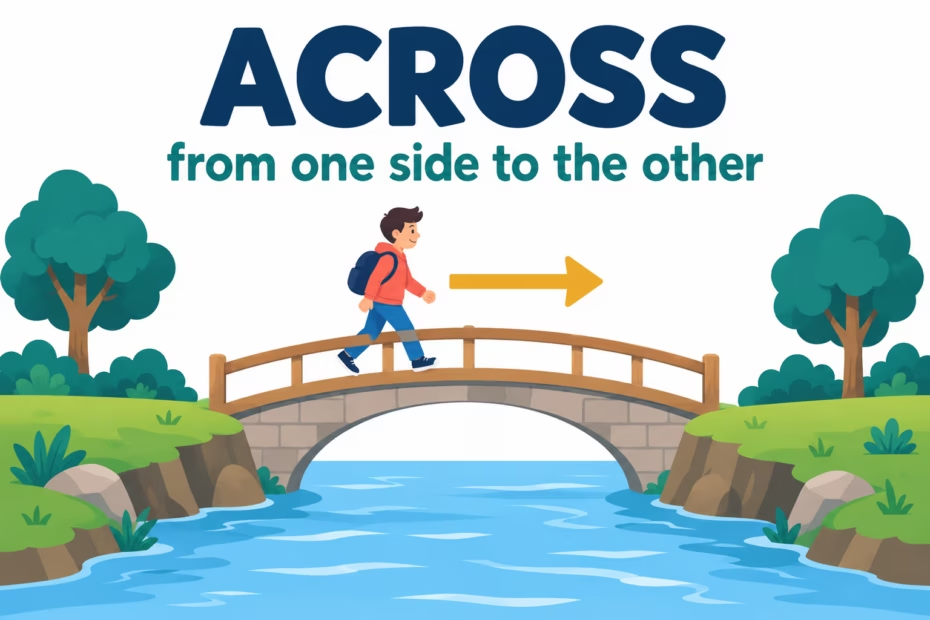
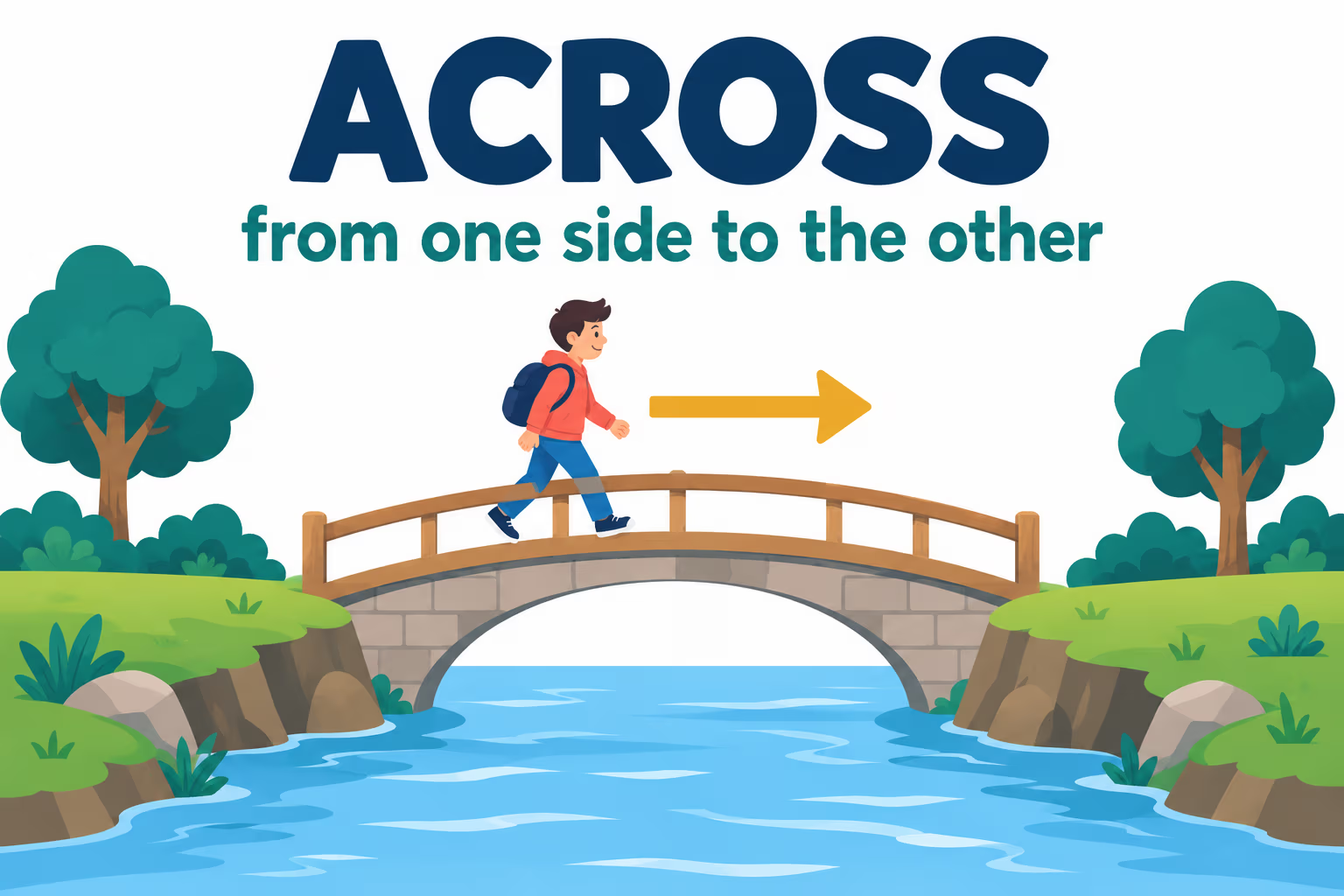
Across usually means “from one side to the other” or “on the opposite side.” For example, We walked across the bridge describes movement from one end of the bridge to the other. Depending on context, across can also describe something that stretches over a surface, happens throughout an area, or measures from one side to another.
How to Use Across in a Sentence
Across has several related meanings. It is commonly a preposition followed by a noun phrase, as in across the road, or an adverb with the destination understood, as in We swam across. The noun or place after the preposition helps tell readers what is being crossed, where something is, or how far it extends.
1. Movement from one side to the other
This is the most familiar use. A person or thing travels across a surface, route, boundary, or area and reaches the other side. The object after across names the space being crossed.
- The hikers walked across the meadow before sunset.
- A footpath runs across the field to the station.
- She carried the boxes across the room one at a time.
- The ferry takes passengers across the bay in twenty minutes.
- After checking for traffic, the children walked across the courtyard to meet their teacher.
In the last example, crossed the courtyard is more natural than crossed across the courtyard, because the verb cross already includes the idea of going from one side to another. Say walked across the courtyard or crossed the courtyard; avoid doubling both forms.
2. Position on the opposite side
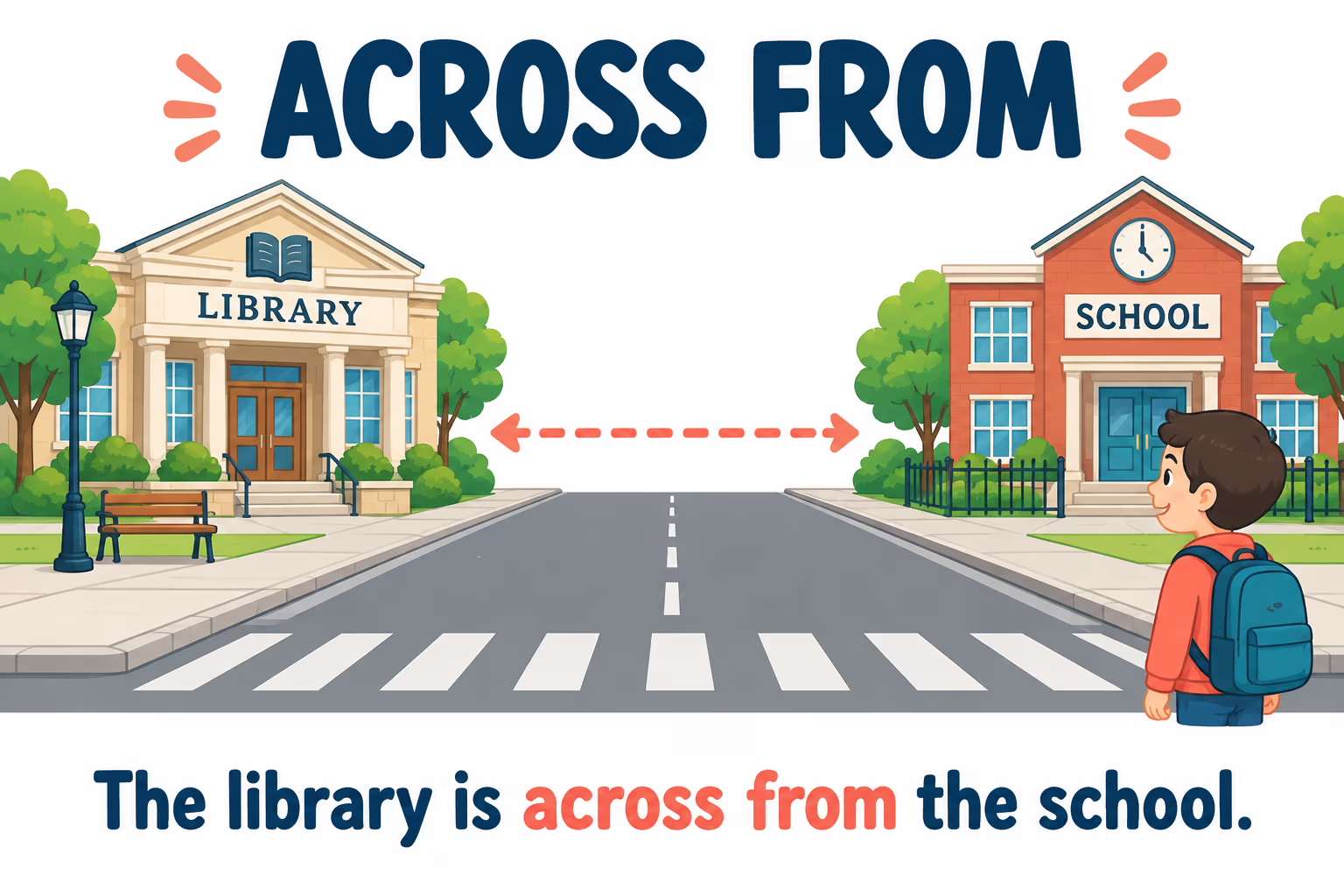
When there is no movement, across can locate something on the other side of a street, room, river, or similar boundary. The phrase across from is especially clear when identifying what lies opposite something else.
- The pharmacy is across the street from the clinic.
- Our seats were across the aisle from the stage.
- She recognized her cousin across the room.
- The little café sits across from the library.
3. Something that stretches from side to side
Use across when an object, line, or feature extends over a surface from one side toward the other. In these examples, it describes the span or placement rather than someone travelling.
- A narrow crack ran across the ceiling.
- He drew a blue line across the map.
- Sunlight fell across the kitchen floor.
- A wooden beam stretches across the doorway.
4. Throughout a place, group, or system
In figurative or broad geographic uses, across can mean “in many parts of” or “among different sections of.” It describes a wide reach, not necessarily one literal trip from edge to edge.
- Libraries across the county are sharing the new program.
- The policy applies across all departments.
- Her research compares teaching methods across several countries.
- The alert was sent to residents across the region.
5. Width or measurement
After a number or measurement, across can state how wide something is from one side to the other: The stream is three metres across. This pattern is common in descriptions of a river, room, table, or other measurable space.
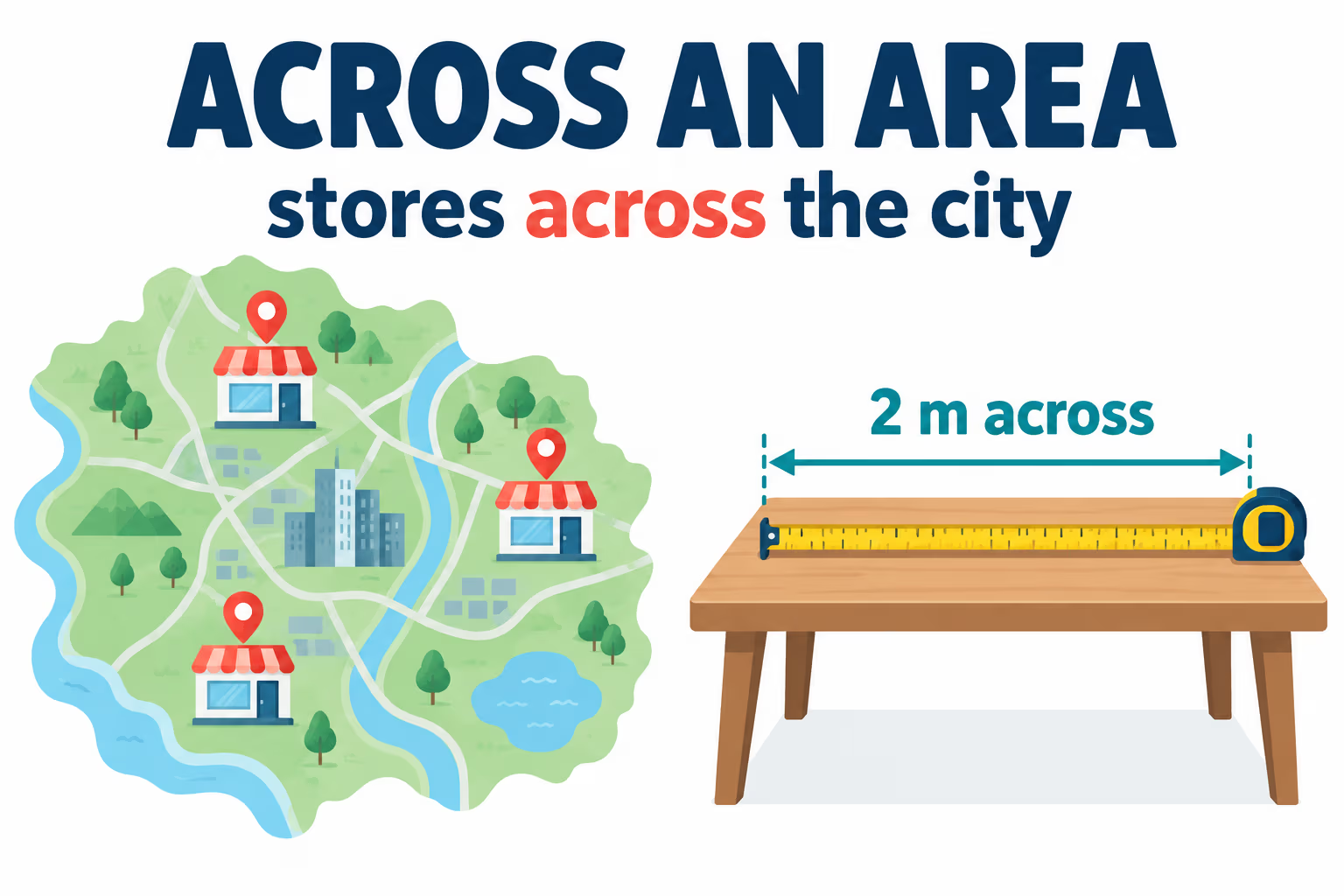
- The garden path is about a metre across.
- The screen measures 55 centimetres across.
- At its narrowest point, the channel is only six metres across.
Across vs. Through vs. Over
Choose the preposition that matches the path or relationship you mean. Across focuses on moving from one side to the other; through emphasizes being inside a space while moving within it; and over often highlights a path above or across an obstacle. The exact choice depends on the scene.
| Word | Main idea | Example |
|---|---|---|
| across | From one side to the other | They cycled across the bridge. |
| through | Inside and from one part to another | They cycled through the forest. |
| over | Above or across an obstacle, often with an up-and-down path | The ball sailed over the fence. |
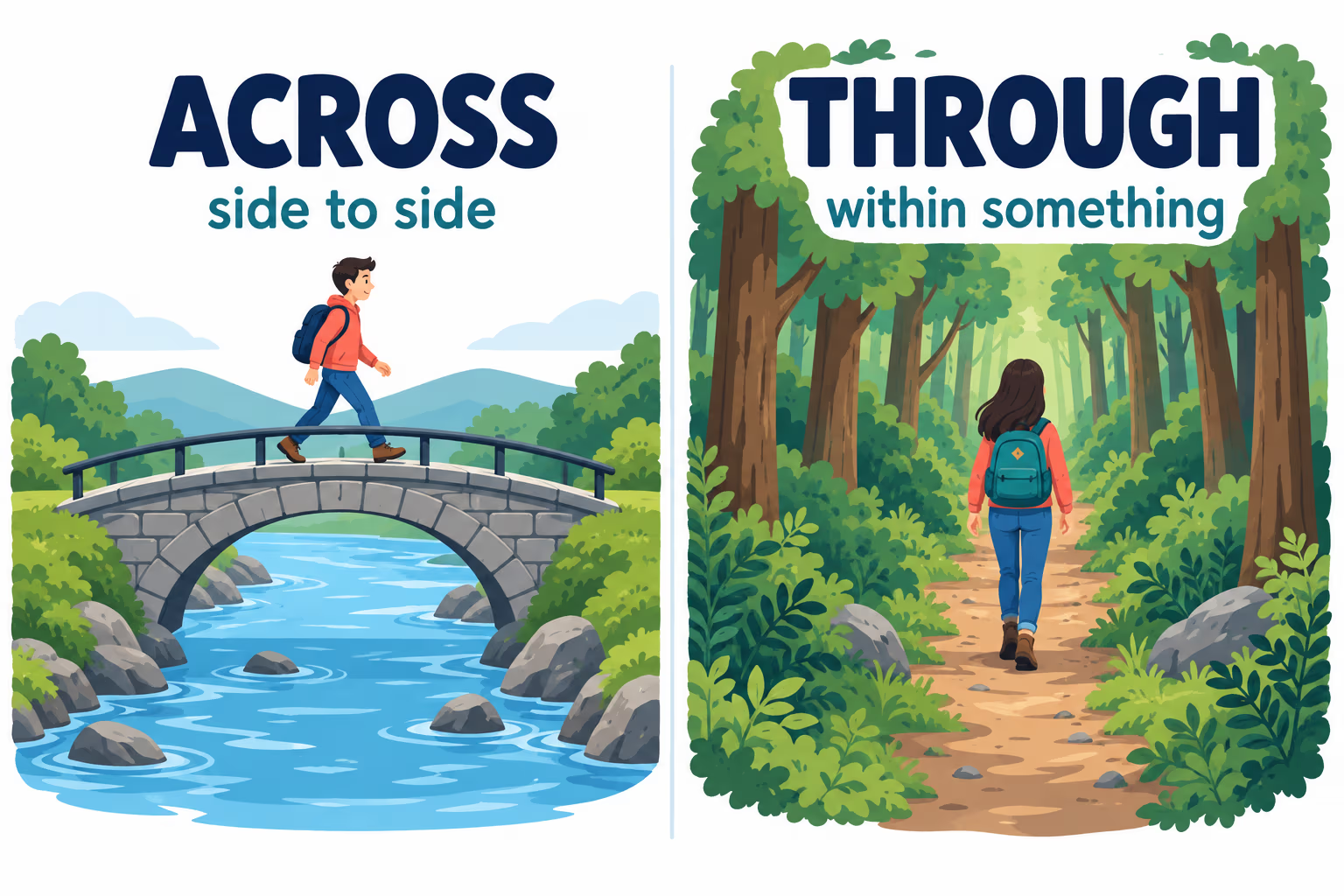
A bridge across a river spans the water; a path through a forest puts the traveler among the trees. You may also say over the bridge when focusing on the route above the water. Cambridge’s grammar guide to across, over, and through explains that across often marks side-to-side movement or position, while through is preferred when movement happens within a surrounding area such as a forest.
Natural Sentence Patterns with Across
- Verb + across + place: The dog ran across the lawn.
- Verb + across: We reached the river and swam across. The destination is understood from context.
- Across from + noun: The bus stop is across from the museum.
- Across + broad area: Clinics across the province joined the network.
- Measurement + across: The pond is roughly 40 metres across.
- Come across + object: I came across an old photograph while cleaning. Here, come across means “find or encounter by chance,” rather than travel from one side to another.
- Come across as + description: He came across as calm during the interview. This means “seemed” or “gave an impression.”
A note on choosing the whole phrase
Across shows scope or position, but it does not replace every preposition. For example, people usually participate in activities, even when those activities take place across campus. Likewise, you might connect with professionals across several industries or explore opportunities across industries. Keep the verb’s usual partner word and use across to show the range.
More Example Sentences Using Across
- A flock of geese flew across the marsh at dawn.
- We spread a blanket across the sand.
- There is a bakery across from the train station.
- The volunteers delivered meals across the neighborhood.
- A low stone wall runs across the garden.
- The hikers could see snow-covered peaks across the valley.
- Teams across the company contributed ideas.
- Can you slide the tray across the table?
- The walkway is four feet across.
- News of the storm spread quickly across the island.
Frequently Asked Questions
What is a simple sentence with across?
The children ran across the playground. Here, across the playground tells where they ran and suggests they moved from one side toward the other.
Is across a preposition or an adverb?
It can be either, depending on how it is used. In She walked across the bridge, it is a preposition with the bridge as its object. In She walked across, it is an adverb and the destination is understood.
What does across from mean?
Across from means opposite or on the other side of a place. For example, The café is across from the hotel locates the café opposite the hotel.
What is the difference between across and through?
Across emphasizes crossing from one side to another, while through emphasizes movement within a space. You walk across a bridge and hike through a forest.
Can across describe width?
Yes. A measurement followed by across can describe width: The pond is 12 metres across. This means it measures 12 metres from one side to the other.

“Explaining the preposition ‘across’ is like painting an image of motion in words. When you want to highlight a traversal from one side to another, ‘across’ is the linguistic bridge you need. This versatile preposition signifies movement or position spanning from a point on one side to a corresponding point on the other side.”
“Whether you are picturing something physically crossing a boundary or metaphorically relating to overcoming obstacles, ‘across’ offers a concise and efficient way to express this idea. So, next time you want to depict a journey from one end to the other, remember the power of ‘across’ to vividly connect points in your sentences.”
7 Examples Of Across Used In a Sentence For Kids
- I saw a cat across the street.
- The rainbow stretched across the sky.
- We walked across the bridge to reach the other side.
- The squirrel ran quickly across the park.
- The ball rolled across the grass.
- The butterflies flew across the garden.
- The ants marched across the sidewalk.

14 Sentences with Across Examples
- Students in India often come across a variety of challenges when applying for internships.
- It is important for college students to network with professionals across different industries.
- Joining a study group can help students work across different subjects more efficiently.
- Many students enjoy participating across various extracurricular activities on campus.
- College students should strive to expand their knowledge across different academic disciplines.
- Study abroad programs provide opportunities for students to learn across different cultures.
- Attending career fairs can help students connect across various job opportunities.
- Working part-time can help students gain experience across different industries.
- It is crucial for students to communicate effectively across different departments within the college.
- Being able to collaborate across different teams is a valuable skill for college projects.
- Utilizing online resources can help students access information across different topics.
- Cross-departmental collaboration can lead to innovative solutions across various academic projects.
- Students should strive to build a diverse network across different student organizations.
- Engaging in community service projects can help students make a positive impact across various neighborhoods.

How To Use Across in Sentences?
Across is used to indicate movement or direction from one side to the other. It is typically followed by a location, such as a street, country, or area. For example, “I walked across the bridge” or “She traveled across Europe.”
When using across in a sentence, make sure to place it directly before the location you are referring to. This helps clarify where the movement or direction is occurring. For instance, “The cat ran across the street” clearly shows the path of the cat’s movement.
It is essential to differentiate across from similar words like “through” or “over.” While “through” implies movement within something, across specifically denotes movement from one side to another. Similarly, “over” generally signifies movement above something, while across focuses on movement from one side to the opposite side.

In summary, when using across in a sentence:
– Ensure it is followed by a location to indicate the direction of movement.
– Use it before the location for clarity.
– Distinguish it from other spatial prepositions like “through” and “over.”
By incorporating across correctly in your sentences, you can express movement or direction in a clear and concise manner.
Conclusion
In conclusion, the keyword “sentences with across” has been utilized in various examples to illustrate the diverse ways it can be incorporated into writing. From simple phrases like “She walked across the street” to more complex structures such as “Despite the language barrier, they communicated effectively across cultures”, these sentences showcase the flexibility and richness of the word “across” in conveying movement, relationships, and challenges.
Understanding the nuances of how to construct sentences using “across” opens up opportunities to add depth and variety to written communication. By incorporating this keyword thoughtfully and purposefully, writers can effectively convey spatial relationships, transitions, and connections in a way that is clear, engaging, and impactful.


