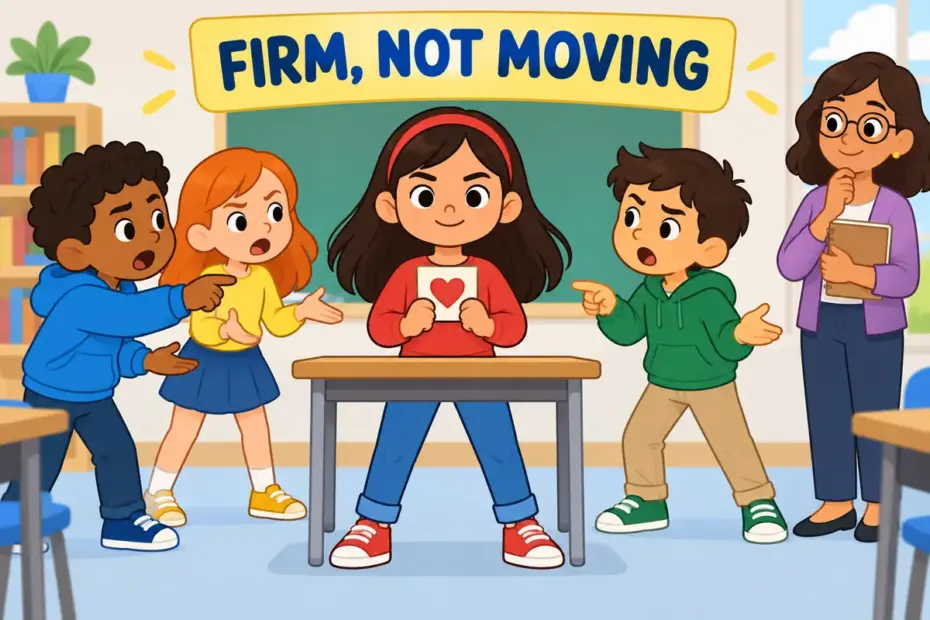
Adamant describes someone who refuses to change their mind, however much others argue. To use adamant in a sentence, put it after a linking verb and before that or about: “She was adamant that the deadline could not move.” The adjective rarely comes before a noun, and it usually reports a stated position rather than a personality.
Adamant at a glance
- Adamant is an adjective meaning firmly unwilling to change a stated position.
- It normally follows a linking verb: be, remain or stay adamant.
- The dominant patterns are adamant that and adamant about.
- Adamant usually reports one firm stand rather than a whole character.
- The commonest error is using it as a noun; the noun is adamancy.
What does adamant mean?
Adamant is an adjective meaning firmly unwilling to change an opinion or decision, especially when others are pressing for a change. The Cambridge entry for adamant records that core sense of unyielding resolve. It differs from stubborn in tone: adamant points to a position held on one question, while stubborn describes a general refusal to be moved. Where the focus is on effort toward a goal rather than resistance to argument, determined is the warmer adjective.
| Sense | Plain meaning | Example sentence |
|---|---|---|
| Refusing to change a decision | Holding firm against persuasion | The coach was adamant that the match would go ahead. |
| Refusing to accept a claim | Rejecting an argument outright | She remained adamant that the figures were wrong. |
| Insisting on a requirement | Treating a demand as non-negotiable | Management was adamant about the two-week notice. |
Adamant is not a compliment by default. It praises firmness only when the reader already agrees with the stand; otherwise it hints at rigidity, which is why stubborn and inflexible so often shadow it. It also does not mean angry or loud, because a person can be adamant in a calm, quiet sentence.
How do you use adamant in a sentence?
Adamant does not take an object. It links to a person or group through a linking verb, then names the position with a that-clause or a preposition.
| Pattern | Example | What it signals |
|---|---|---|
| be adamant that | She was adamant that the fee was unfair. | The firmest and commonest pattern. |
| be adamant about | They were adamant about the deadline. | A demand stated as a topic, not a full clause. |
| remain or stay adamant | The union remained adamant after talks. | Firmness maintained over time. |
| adamant + refusal or opposition | His adamant refusal surprised the board. | A rare noun-modifying use, best kept to set phrases. |
| adamant in | The minister was adamant in her defence. | Firmness attached to a stance or action. |
When the position is reasonable rather than heated, firm is the softer adjective, since a firm no ends a discussion without the hint of rigidity. Keep the pattern after a linking verb: the people are adamant, not the decision.

Adamant in a sentence: examples across contexts
Adamant keeps one meaning across registers but shifts in warmth. Each sentence below names the person or body holding the position and the point they will not surrender.
| Context | Example sentence | Why this works |
|---|---|---|
| Classroom | The teacher was adamant that phones stay in bags. | A classroom rule stated as non-negotiable. |
| Workplace email | Our manager is adamant about the Friday handover. | A recurring deadline presented as fixed. |
| News report | The mayor remained adamant that the route would not change. | Public firmness maintained under questioning. |
| Legal writing | The claimant was adamant that the signature was forged. | A witness position held under pressure. |
| Family conversation | Dad was adamant about leaving before dawn. | Everyday insistence on a shared plan. |
| Retail complaint | The customer was adamant that the receipt was valid. | Firmness in a dispute over evidence. |
| Sports report | The captain stayed adamant that the team could recover. | Confidence expressed as steady resolve. |
| Academic writing | The author is adamant that the sample was representative. | A methodological stand inside a paper. |
| Political commentary | Ministers were adamant in rejecting the report. | Formal firmness in a public stance. |
Across all nine, adamant attaches to a person or body, never to the decision itself. Saying the decision was adamant reverses the pattern: the decision was firm, and the people were adamant.
Adamant vs stubborn
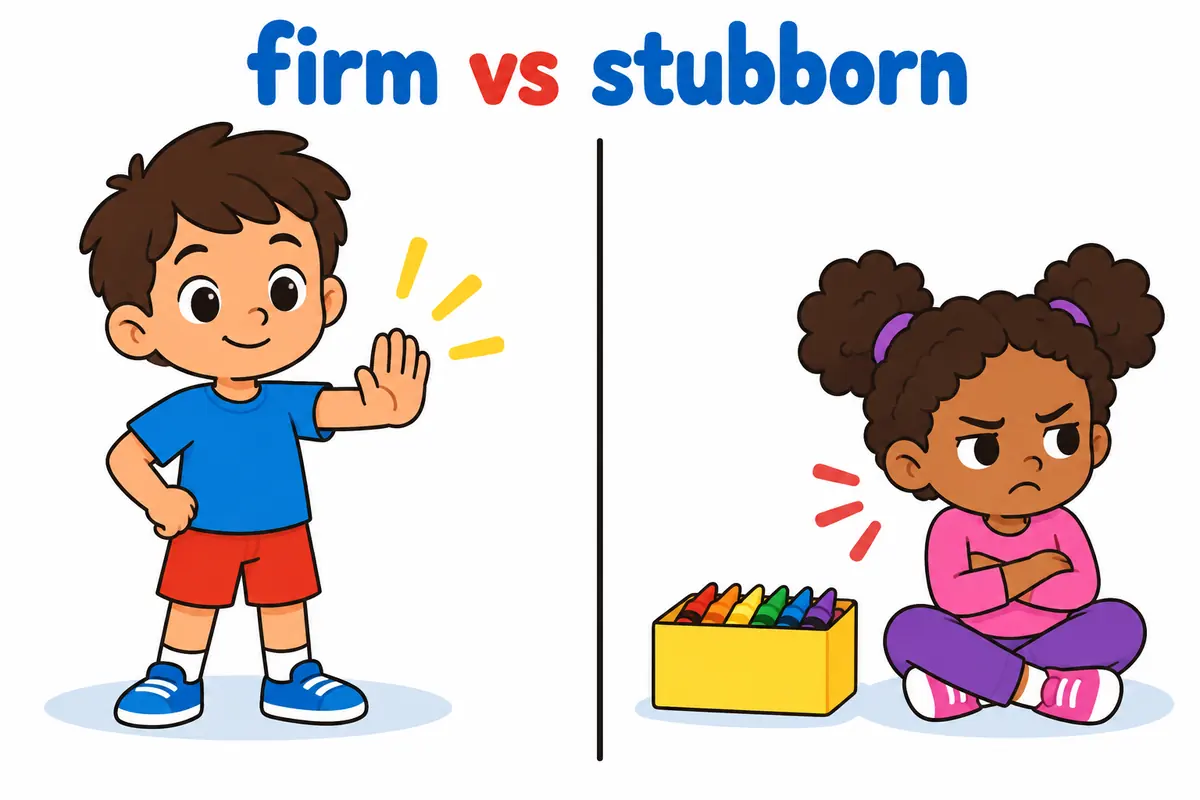
Adamant and stubborn both describe someone who will not move, and the difference is mostly one of attitude. Adamant stays close to the specific argument; stubborn widens into a character trait and usually carries disapproval.
| Attribute | adamant | stubborn |
|---|---|---|
| Scope | One stated position | A general trait |
| Tone | Neutral to positive | Usually negative |
| Typical structure | adamant that or adamant about | stubborn refusal or stubborn as a mule |
| What it praises | Firmness against pressure | Nothing; it criticises |
| Close substitutes | firm, resolute | obstinate, pig-headed |
| Common register | News, management, formal speech | Everyday speech |
Verdict: call a person adamant when the firmness is about a single, arguable point, and stubborn when the refusal has hardened into a habit. If the writer approves of the resolve, resolute is the safer and steadier word. A related word, insistent, keeps the pressure but drops the argument, because an insistent caller repeats a request rather than refusing to abandon it.
Word forms and grammar of adamant
Adamant is an adjective, and it builds an adverb and a rare noun. The table also lists the noun form learners invent by mistake.
| Form | Part of speech | Example |
|---|---|---|
| adamant | adjective | She was adamant about the date. |
| adamantly | adverb | He adamantly denied the charge. |
| adamancy | noun, rare | Her adamancy postponed the vote. |
| adamantine | adjective, different sense | An adamantine resolve met every objection. |
| adamant | noun, historical | Old texts call the hardest stone an adamant. |
Do not build adamance or adamantness. The adverb is adamantly, which modifies a verb such as denied or insisted, so it never follows a linking verb. The noun, when one is needed at all, is adamancy.
Common mistakes with adamant
- Incorrect:
She was adamant to leave early.Correct: She was adamant that she would leave early. Rule: Adamant does not take an infinitive; use a that-clause or about. - Incorrect:
The rule was adamant about noise.Correct: The teacher was adamant about noise. Rule: People and bodies are adamant; rules and decisions are firm or strict. - Incorrect:
He was adamant of his position.Correct: He was adamant about his position. Rule: Use about for a topic, not of. - Incorrect:
Her adamant surprised us.Correct: Her adamancy surprised us. Rule: Adamant is an adjective, so the noun form is adamancy. - Incorrect:
She was adamantly that the plan would work.Correct: She was adamant that the plan would work. Rule: The adverb cannot follow a linking verb; that slot needs the adjective.
Practice using adamant
Work through the six items, then check the reason beside each answer.
- Fill the gap: The principal was ______ that the trip would continue.
- Choose the better word: The toddler refused every spoonful, a (stubborn / adamant) habit.
- Correct the error: The referee was adamant of the score.
- Build a sentence: use be adamant that about a family plan for the weekend.
- Spot the register: which belongs in a staff memo — The director was adamant about the deadline, or The director just would not budge?
- Rewrite with the adverb: She was adamant that she had locked the door. Use adamantly.
Answers
- adamant — a that-clause follows a linking verb and the adjective.
- stubborn — a repeated habit is a trait, which is stubborn’s job.
- The referee was adamant about the score — use about for a topic, not of.
- Model answer: Mum was adamant that we leave by eight.
- The director was adamant about the deadline — a memo suits the formal adjective.
- She adamantly insisted that she had locked the door — the adverb needs a verb to modify.
The bottom line
Use adamant in a sentence to report that someone will not change a stated position, and keep it after a linking verb such as be, remain or stay. Two nuances decide most sentences: the adjective describes a person or body, not a rule, and its tone depends on whether the reader shares the stand. Where the firmness is about a plan rather than a dispute, firm or determined reads more warmly.
Frequently asked questions about adamant
Is adamant positive or negative?
Adamant is neutral on its own and turns positive or negative depending on the reader’s view. Firmness on a point you support reads as strength, while the same refusal on a trivial matter reads as rigidity. That is why firm and stubborn sit at either end of it.
What is the difference between adamant and stubborn?
Adamant describes firmness about one specific position, while stubborn describes a lasting trait of refusing to move. Adamant can be neutral or admiring, but stubborn almost always criticises. A person can be adamant about a single deadline and still be flexible everywhere else.
Can adamant be used before a noun?
It can, but mainly in fixed phrases such as an adamant refusal or adamant opposition. The natural position is after a linking verb, as in she was adamant that the date stood. Before a noun, firm or resolute usually sounds more idiomatic.
What is the adverb of adamant?
The adverb is adamantly, as in he adamantly denied the claim. It modifies a verb such as denied, insisted or refused. Do not use it after a linking verb, because was adamantly is wrong: that position needs the adjective adamant.
Have you ever come across someone who was so firm in their beliefs or decisions, refusing to be swayed no matter what? This unwavering determination and refusal to change one’s mind is what we call being “adamant.”
When someone is adamant about something, they are immovable in their stance and are not easily persuaded or influenced. It signifies a strong sense of conviction and determination that makes it clear they will not budge from their position.
7 Examples Of Adamant Used In a Sentence For Kids
- I am adamant about finishing my dinner before having dessert.
- She was adamant that she wanted to wear her favorite dress to the party.
- He remained adamant that he did not want to share his toys with anyone.
- The little girl was adamant that she wanted to play outside even though it was raining.
- The boy was adamant that he wanted to read his favorite story before going to bed.
- She was adamant that she wanted to paint her room pink instead of blue.
- He was adamant that he wanted to wear his superhero cape to school every day.
14 Sentences with Adamant Examples
- Adamant about finishing the assignment before the deadline.
- She was adamant that she would not participate in the group project.
- The professor was adamant about students attending all lectures.
- He was adamant in his decision to switch majors.
- She was adamant that she would not take any shortcuts in studying for the exam.
- The students were adamant about holding a protest against a new campus policy.
- He was adamant in his belief that practical experience was more valuable than theoretical knowledge.
- She was adamant that she would not join any extracurricular activities.
- The group was adamant about demanding better facilities in the campus dormitories.
- He was adamant in his determination to secure an internship at a top company.
- She was adamant that she would not compromise on her academic integrity.
- The professor was adamant about enforcing strict attendance policies.
- The students were adamant in their decision to boycott the upcoming college event.
- He was adamant in his refusal to use any unreliable sources for his research paper.
How To Use Adamant in Sentences?
To use the word “Adamant” in a sentence, you can follow these simple steps:
-
Understand the meaning: “Adamant” is an adjective that describes someone who is determined, firm, or resolute in their beliefs or actions. It signifies a strong stance on a particular issue or decision.
-
Identify the context: Think of a situation where someone is unwavering and unyielding in their opinion or refusal to change their mind.
-
Construct the sentence: Here’s an example sentence using “Adamant”:
- “Despite the opposition, she remained adamant about her decision to pursue her dreams.”
-
Practice using it: Try incorporating the word “Adamant” in various sentences to get comfortable with its usage.
-
Remember the nuance: When using “Adamant,” convey a sense of unwavering determination or firmness in your tone and context.
In summary, to use “Adamant” effectively in a sentence, consider the meaning, context, and tone to accurately convey someone’s strong determination or unwavering stance. Keep practicing to improve your grasp of using this powerful word in your everyday communication.
Conclusion
In conclusion, the examples of sentences with the keyword “adamant” show a strong and unwavering stance on various subjects. Whether it’s expressing a refusal to compromise, a firm belief, or a determined opinion, being adamant conveys a sense of resoluteness and determination. These sentences demonstrate a clear and decisive position on matters, without room for doubt or wavering.
Overall, using the word “adamant” in sentences helps to convey a sense of unwavering conviction and certainty in one’s views or decisions. It signifies a firm commitment to a particular course of action or belief, making it a powerful term that conveys strength and determination in communication.