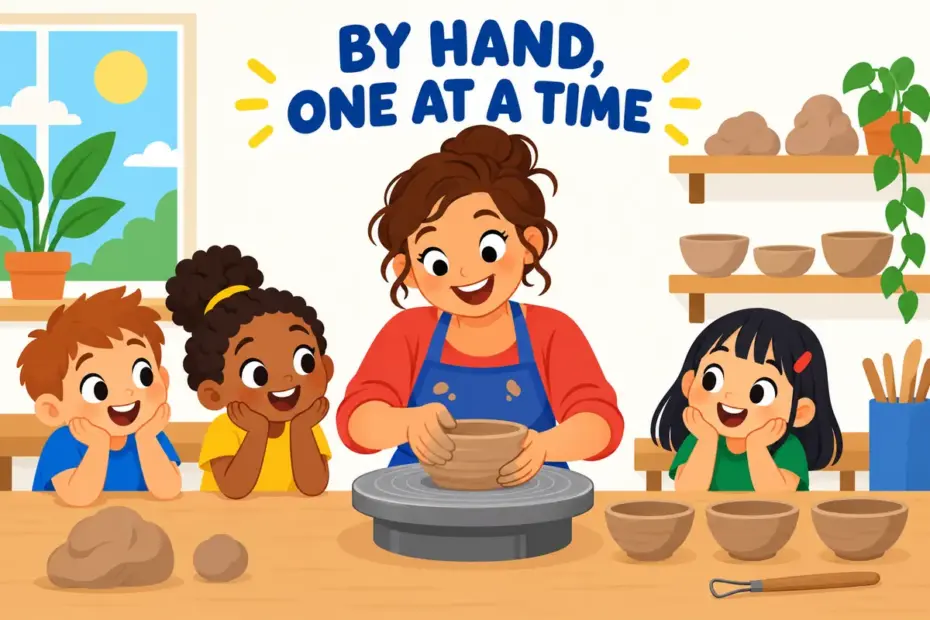
An artisan is a skilled craftsperson who makes things by hand, with trained judgement instead of a factory line. To use artisan in a sentence, place it before the noun it describes or after a linking verb: The village artisan repaired the chair with hand-cut joints. Position decides whether it names a person or describes a product.
Artisan at a glance
- Artisan is a countable noun; its forms are artisan and artisans, with artisanal as the related adjective.
- The noun names a skilled maker of things, while the front position describes goods made by hand in small batches.
- It usually follows a or the, or sits directly before a product noun, as in an artisan baker.
- Artisan belongs to food writing, reviews, tourism and marketing rather than everyday chat.
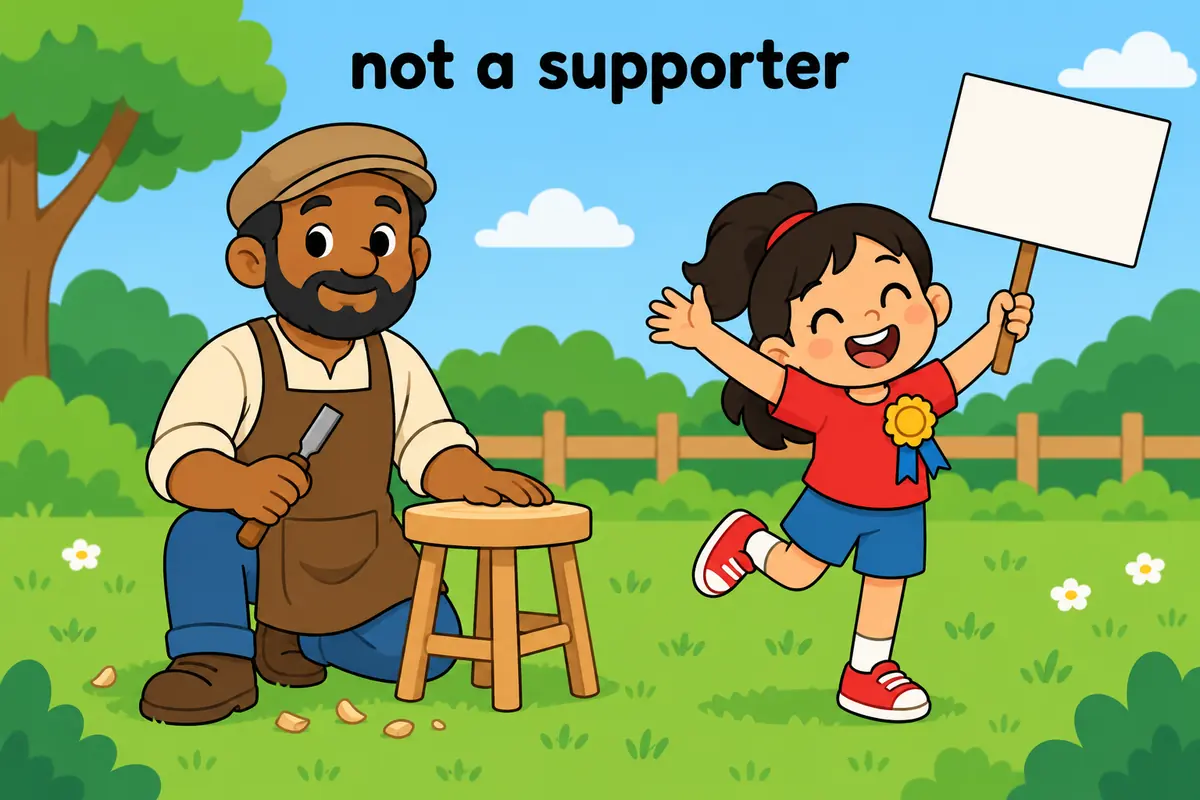
- The commonest error is confusing artisan with partisan, which means a supporter of a party or cause.
What does artisan mean?
Artisan is a countable noun meaning a skilled worker who makes things by hand using trained judgement rather than a production line. The Cambridge entry for artisan covers both the worker and the goods, and the second use is where most confusion starts. An artisan makes a small number of items carefully, while a maker can be anyone or anything that produces a result, including a machine.
| Sense | Plain meaning | Example sentence |
|---|---|---|
| Skilled maker | A person who crafts goods by hand | The artisan shaped each bowl on a foot-powered wheel. |
| Small-batch producer | A worker who makes limited amounts to a high standard | A local artisan supplies the bakery with sourdough. |
| Describing use | Placed before a noun to mark hand-made goods | The shop sells artisan cheese and stone-ground flour. |
One limitation matters in marketing. Artisan is not a legal grade, so artisan bread may still come from a large kitchen, and the word signals method and scale rather than an official certificate. Where only the material matters, hand-made or small-batch is the more honest choice, and where a worker is meant, a trained a trained craftsman is often the clearer phrase.
How do you use artisan in a sentence?
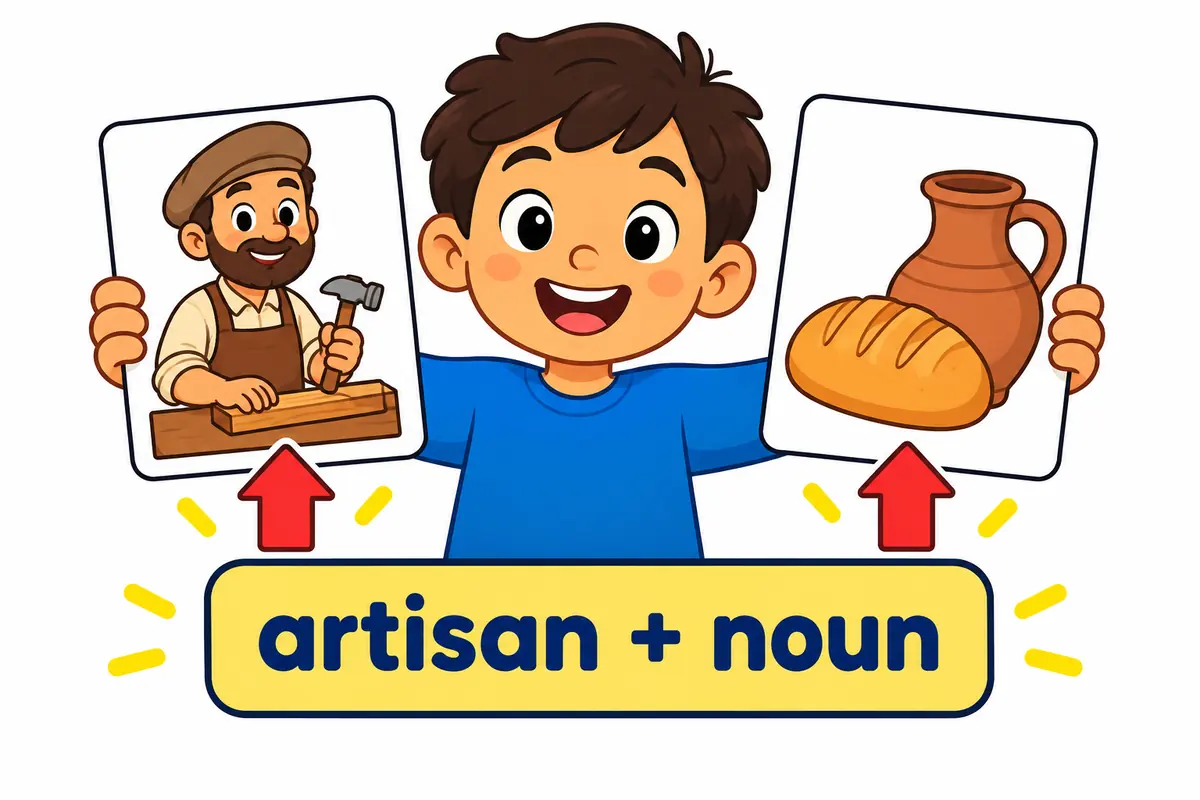
Position decides the job: after an article it stays a noun, and directly before a product noun it behaves like an adjective. Four patterns cover nearly every real sentence, and the describing use is the one that has grown fastest in shops and menus.
| Pattern | Example | What it signals |
|---|---|---|
| a or the + artisan + verb | The artisan repaired the chair with hand-cut joints. | Names a person as the subject of a concrete action. |
| artisan + product noun | She runs an artisan bakery near the station. | Describes how the goods are made, not a job title. |
| adjective + artisan | A skilled artisan can read the grain of the wood. | An adjective before artisan stresses training. |
| plural artisans | Artisans from six villages brought their work to the fair. | Groups makers, common in tourism and trade writing. |
Readers who need a countable equivalent for a good worker often choose a skilled professional, but artisan keeps the emphasis on the hand and the small batch. In job adverts the plain phrase skilled worker often replaces artisan, and in older trade contexts tradesman does a similar job.
Artisan in a sentence: examples across contexts
Artisan changes register more than it changes meaning. The nine sentences below keep the same word while moving from a classroom to a marketing page, and each one names the work it describes.
| Context | Example sentence | Why this works |
|---|---|---|
| Classroom | The class watched an artisan carve a wooden spoon from a single block. | A concrete action shows the skill instead of naming it. |
| Workplace email | We have booked an artisan to run the pottery session on Friday. | Names a person as a service provider. |
| Food writing | The menu lists artisan bread baked before dawn each day. | The front position describes how the food was made. |
| News report | Artisans in the old quarter say rising rents are pushing them out. | A plural subject signals a group with a shared interest. |
| Tourism brochure | Visitors can buy artisan jewellery straight from the workshop. | Pairs the word with a product and a place. |
| Marketing copy | Our artisan soaps are stirred and cut by hand in small batches. | Describes method and scale, not an official grade. |
| Academic prose | Medieval artisans controlled the guild, which set prices and training rules. | Uses the historical occupational sense. |
| Conversation | There is an artisan coffee place on the corner now. | The describing use has spread into everyday speech. |
| Job advert | Wanted: an artisan with five years of cabinet-making experience. | Treats the word as a trade title with a required skill. |
Only the historical and job-advert sentences use artisan as a plain occupation; the rest lean on the describing use, which is now the faster-growing one.
Artisan vs craftsman and maker
Artisan overlaps with two near-synonyms and is interchangeable with neither. A craftsman is defined by a named trade, a maker by the simple act of producing something, and artisan by the craft and the small batch together.
| Attribute | artisan | craftsman | maker |
|---|---|---|---|
| Core meaning | Skilled hand-maker of goods | Skilled worker in a traditional trade | Anyone who produces something |
| Emphasis | Craft, design and small batches | Trade skill and trained hands | The act of producing |
| Typical pairings | artisan bread, artisan cheese | master craftsman, a craftsman’s tools | cake maker, film-maker |
| Register | Food, tourism, marketing | Trade, heritage, job adverts | Neutral and very broad |
| Implies hand work | Usually yes | Yes | No, a machine can be a maker |
Verdict: choose artisan for hand-made goods sold on craft, craftsman for a named trade, and maker for the neutral, broad term, and keep partisan, a supporter of a cause, well away from all three.
Word forms and grammar of artisan
Artisan inflects like a regular noun, and its adjective artisanal has become common on packaging. The table also lists the rarer adverb and the collective noun learners meet in essays.
| Form | Part of speech | Example |
|---|---|---|
| artisan | noun, singular | An artisan signed the base of the pot. |
| artisans | noun, plural | The market hosts forty artisans each Sunday. |
| artisan | describing word before a noun | They sell artisan honey at the farm gate. |
| artisanal | adjective | The cheese has an artisanal rind and a tangy crumb. |
| artisanally | adverb, rare | The tiles were artisanally glazed in small batches. |
| artisanal | adjective used of a method, not a person | Artisanal mining still uses hand tools. |
The adjective describes goods and methods, never people: a worker is an artisan, and the goods are artisanal. That split is the fastest way to tell the two forms apart in a draft.
Common mistakes with artisan
- Incorrect:
The artisan was making for thirty years.Correct: The artisan had worked for thirty years. Rule: artisan is a countable noun naming a person, so it needs a complete verb and no dangling object. - Incorrect:
She is very partisan at making jewellery.Correct: She is a skilled artisan who makes jewellery. Rule: partisan means a supporter of a party or cause, not a craftsperson. - Incorrect:
We bought an artisan.Correct: We bought an artisan rug. Rule: standing alone the word means a person, so a product noun must follow in the describing use. - Incorrect:
The factory uses artisan machines.Correct: The factory uses artisanal methods. Rule: artisans are people, so the adjective for hand-made style is artisanal. - Incorrect:
Many artisan was at the fair.Correct: Many artisans were at the fair. Rule: the plural is artisans, and the verb agrees with it.
Practice using artisan
Work through the six items, then read the reasoning rather than the key alone.
- Fill the gap: The ______ turned a plain log into a smooth bowl.
- Choose the better word: We met a (artisan / artisanal) who repairs violins.
- Correct the error: The artisan made of wood.
- Build a sentence: use artisan in front of a product noun about bread.
- Spot the register: which belongs in a news report, Artisans in the old quarter face rising rents, or The artisan dude totally hooked me up?
- Rewrite with the adjective: The workshop makes hats by hand. Use artisanal.
Answers
- artisan: the gap needs the person who shaped the bowl.
- artisan: a violinist is a person, so the noun is required, not the adjective.
- The artisan made the bowl of wood, or The chair was made by an artisan: the bare verb made needs a complete phrase.
- Model answer: The stall sells artisan bread baked in a wood oven.
- Artisans in the old quarter face rising rents: a news report avoids dude and the loose phrasing.
- The workshop makes artisanal hats by hand: the adjective describes the goods and the method.
The bottom line
Use artisan in a sentence for a skilled maker of goods or, in front of a product noun, for goods made by hand in small batches. The two nuances that decide most sentences are that the noun names a person while the adjective describes a method, and that the word is a style claim rather than a legal grade. An expert may know the theory, but only the trained hand earns the name.
Frequently asked questions about artisan
Is artisan a noun or an adjective?
Artisan is mainly a noun, as in a skilled artisan, but it also sits before a product noun in an adjective-like role, as in artisan bread. The front position describes style and method rather than naming a person, which is why artisan cheese means cheese made in small batches by hand.
What is the difference between an artisan and a craftsman?
Artisan stresses craft, design and small-scale production, while craftsman stresses long training in a named trade. A cabinet-maker called a craftsman is defined by the trade; the same worker called an artisan is defined by the careful, hand-made character of the work and the limited output.
Can an artisan product be made by machine?
Strictly, no, because the word points to hand work and small batches. In marketing the term has loosened, so artisan may appear on factory goods. Where accuracy matters, hand-made or small-batch states the claim plainly, and artisan remains a description of style rather than a certificate of origin.
Is artisanal the same as artisan?
They share a root but do different jobs. Artisan is the person or the front-position label, while artisanal is a full adjective for goods, methods and qualities, as in artisanal soap. Use artisanal when the noun is a thing or a method, and artisan when the noun is a person.
Have you ever savored the delicate flavors of a handcrafted pastry or admired the intricate details of a custom-made piece of jewelry? This is the essence of artisan craftsmanship – the skillful creation of unique, high-quality goods by a skilled artisan.
An artisan is a highly skilled craftsman or craftswoman who specializes in creating handmade products using traditional techniques. From pottery to woodworking, artisanal creations often showcase exceptional quality, attention to detail, and a deep appreciation for the craft.
7 Examples Of Artisan Used In a Sentence For Kids
- Artisans are skilled people who make beautiful handcrafted items.
- An artisan uses their creativity to create unique pieces of art.
- You can find an artisan selling their crafts at a market.
- My aunt is an artisan who makes pottery.
- The artisan carefully painted the design on the handmade scarf.
- It’s fun to watch an artisan at work, shaping clay into a sculpture.
- I want to learn how to be an artisan and create my own art one day.
14 Sentences with Artisan Examples
- Artisans often showcase their skills at college fests to promote traditional crafts.
- College students can support local artisans by purchasing handmade products.
- Learning about different artisans and their crafts can inspire students to pursue creative hobbies.
- Some colleges organize workshops where artisans teach students their craft techniques.
- College students studying design or fashion can collaborate with artisans to create unique products.
- Visiting artisan markets can expose students to a variety of handmade artifacts.
- Social media platforms can help students connect with artisans and explore their work.
- Understanding the dedication and hard work of artisans can encourage students to value handmade products.
- College projects can involve working with artisans to incorporate traditional techniques into modern designs.
- Students can volunteer to assist artisans in organizing exhibitions and events to showcase their work.
- Appreciating the skills of artisans can lead students to develop a deeper appreciation for art and craft.
- Engaging with the stories behind each artisan can broaden students’ perspectives on the importance of preserving traditional crafts.
- College students can help raise awareness about the challenges artisans face in sustaining their livelihoods.
- Attending talks or seminars by artisans can provide students with insights into the passion and effort that goes into creating handmade products.
How To Use Artisan in Sentences?
Artisan is a powerful tool used in Laravel for performing a variety of tasks such as running migrations, seeding databases, and clearing caches. To use Artisan, open your command line interface and navigate to your project’s root directory.
To see a list of available commands, simply type php artisan in the command line. This will display a list of common Artisan commands that you can use.
One of the most commonly used Artisan commands is php artisan migrate. This command is used to run any outstanding database migrations, ensuring that your database structure is up to date.
Another important command is php artisan make:model ModelName -m, which creates a new model along with a migration file for that model. This is useful for adding new tables to your database easily.
You can also use Artisan to generate controllers, views, and even resourceful routes with the make command. For example, php artisan make:controller MyController will create a new controller named MyController for you.
Lastly, you can always get more information on how to use a specific Artisan command by typing php artisan help command_name. This will give you detailed information on the command’s usage and options.
Overall, Artisan is a versatile and powerful tool that can help streamline your development process in Laravel.
Conclusion
In conclusion, artisan crafts are characterized by their unique and high-quality nature, often reflecting the skill and creativity of the maker. Artisan products are distinguished by the meticulous attention to detail and the use of traditional techniques that set them apart from mass-produced items. These sentences exemplify the appreciation and admiration for the artistry and craftsmanship that artisans bring to their work, emphasizing the value of handmade and individualized products in a world dominated by commercial goods. By supporting artisans, we not only invest in quality goods but also help preserve valuable traditions and promote sustainable practices in the production of goods.