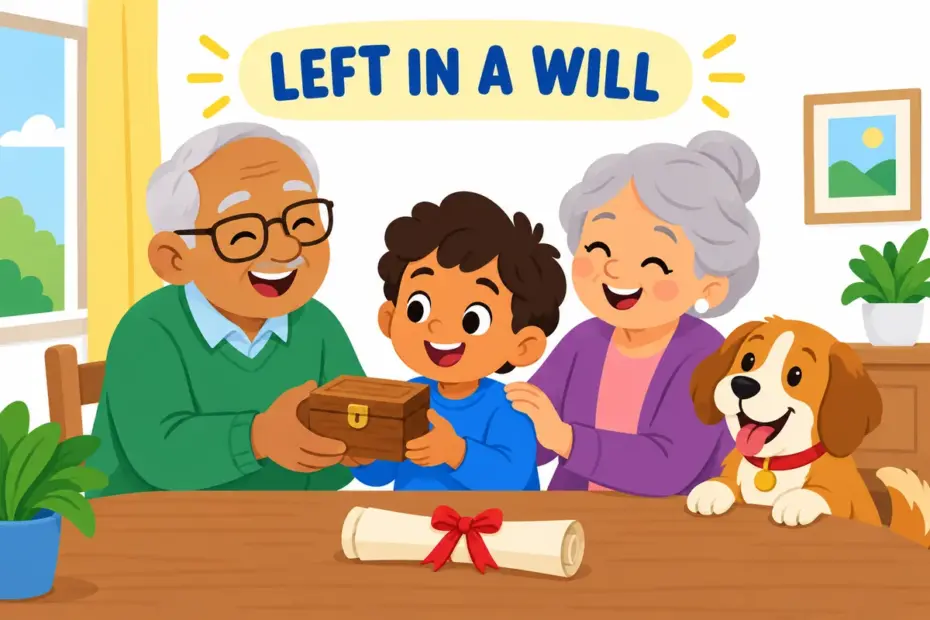
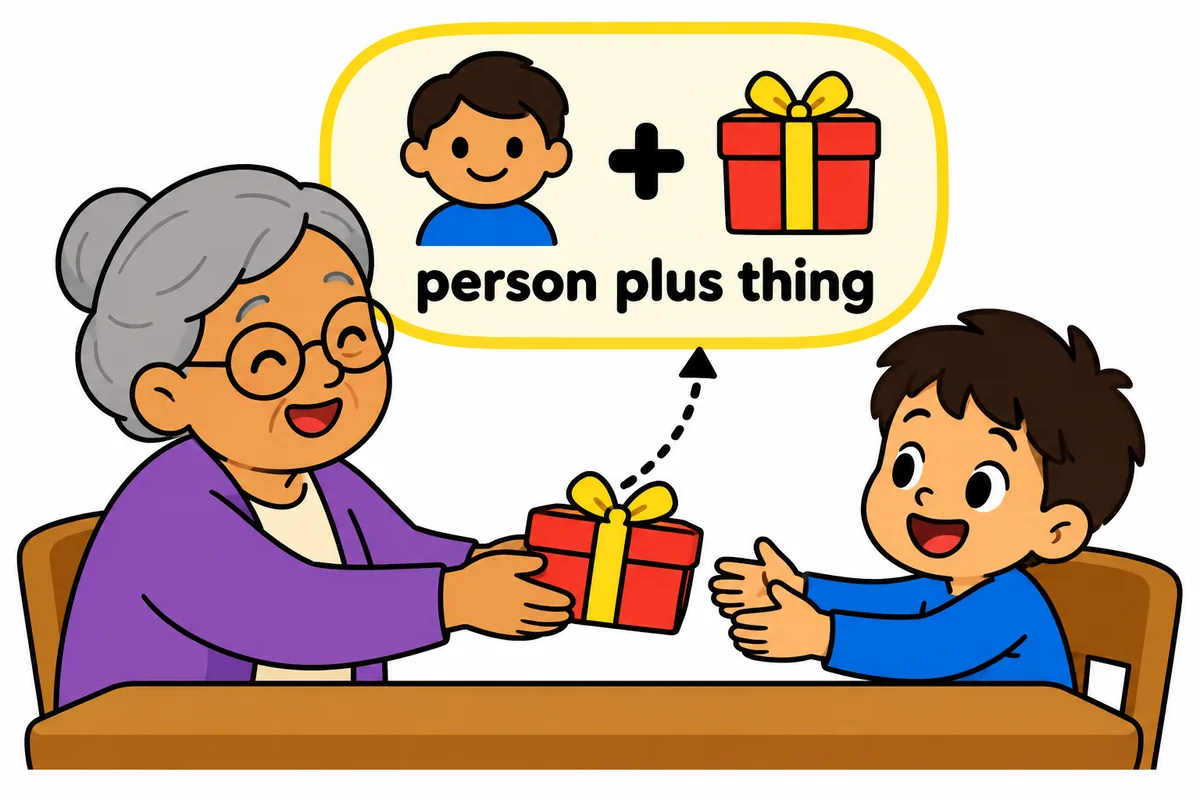
Bequeath means to leave money or property to someone in a will. To use bequeath in a sentence, give it a person and a thing: “She bequeathed her library to the school.” The verb is formal and legal, so it belongs in wills and tributes rather than casual talk.
Bequeath at a glance
- Bequeath is a verb; its forms are bequeaths, bequeathed, bequeathing and the noun bequest.
- It is ditransitive, so it names both a thing and a person: bequeath something to someone.
- A second, figurative sense means to hand something down to later generations.
- Typical subjects are testators, ancestors, founders and estates.
- Bequeath is formal and legal, closely tied to wills.
- The commonest error is confusing it with bestow, which describes a gift given during life.
What does bequeath mean?
Bequeath is a verb meaning to leave money or property to someone in a will, or, figuratively, to hand something down to those who come after. The Cambridge entry for bequeath records both the legal and the figurative senses. To endow a scholarship can describe either a lifetime gift or a legacy, while bequeath is strictly after death.
| Sense | Plain meaning | Example sentence |
|---|---|---|
| Leave by will | Give money or property after death | She bequeathed her library to the school. |
| Hand down a legacy | Pass on a quality or tradition | The founders bequeathed a habit of thrift. |
Bequeath is not used for gifts made while you are alive; those are given, donated or gifted. The document that carries a bequest is a will, and the verb only takes effect after death. Using bequeath for a living handover, as in he bequeathed her flowers, is a register error even when the grammar looks fine.
How do you use bequeath in a sentence?
Bequeath is ditransitive, so it can take two objects. The everyday order names the thing and puts the person after to, while the double-object order names the person first and suits formal or literary writing.
| Pattern | Example | What it signals |
|---|---|---|
| bequeath + thing + to + person | She bequeathed her library to the school. | the standard, clearest order |
| bequeath + person + thing | She bequeathed the school her library. | double-object order; more formal |
| bequeath + thing | He bequeathed a modest sum. | recipient is understood or withheld |
| be bequeathed to + person | The estate was bequeathed to the museum. | passive; institution as recipient |
| bequeath + abstract noun | They bequeathed a lasting peace. | the figurative legacy sense |
In ordinary speech, leave does the same work with less formality, as in she left the house to her nephew, and it is the safer choice in conversation.
Bequeath in a sentence: examples across contexts
Each example shows one of the senses, and the note explains the nuance the verb adds.
| Context | Example sentence | Why this works |
|---|---|---|
| Legal writing | The testator bequeathed the farm to her eldest son. | Uses the precise probate register. |
| News report | The collector bequeathed his paintings to the nation. | Names the thing and the institution. |
| Family talk | Grandmother bequeathed us her recipe book. | Double-object order in a warm setting. |
| Academic history | The founders bequeathed a tradition of open debate. | Uses the figurative legacy sense. |
| Formal tribute | He bequeathed to the field a method still used today. | Thing first, recipient after, emphatic. |
| Charity writing | The estate was bequeathed to a wildlife trust. | Passive keeps the charity in focus. |
| Conversation | She left her piano to the local school. | Chooses the plainer verb for speech. |
| Business writing | The founder bequeathed a culture of thrift. | Abstract noun as the bequest. |
| Obituary | She bequeathed both a fortune and a reputation. | Compounds two bequests in one verb. |
Bequeath vs bestow
Both verbs involve giving, but the timing and the legal weight keep them apart, and mixing them misleads the reader about when the gift happens.
| Attribute | Bequeath | Bestow |
|---|---|---|
| Core meaning | Leave something in a will | Give something as a gift or honour |
| Timing | After the giver dies | During the giver’s life |
| Typical object | Money, property, a legacy | A title, award or blessing |
| Register | Legal and formal | Formal and ceremonial |
| What it implies | A document and an estate | Generosity or an official act |
Choose bestow when a gift or honour is given in life and bequeath when it is left after death; a knighthood is bestowed, while a farm is bequeathed.
Word forms and grammar of bequeath
The forms are regular, and the noun bequest is common in legal and charitable writing.
| Form | Part of speech | Example |
|---|---|---|
| bequeath | base verb | Many donors bequeath a share of their estate. |
| bequeaths | third-person singular | He bequeaths his tools to his apprentice. |
| bequeathed | past and past participle | She bequeathed the house to the trust. |
| bequeathing | present participle | Bequeathing a legacy takes careful drafting. |
| bequest | noun | The bequest funded a new library wing. |
| bequeathal | noun (rare) | The bequeathal was registered with the court. |
For the figurative sense of passing something down, hand down is more everyday, as in a story handed down through generations, while bequeath keeps the legal flavour.
Common mistakes with bequeath
Using bequeath for a living gift. Incorrect: He bequeathed her flowers on her birthday. Correct: He gave her flowers on her birthday. Rule: bequeath takes effect after death, so living gifts use give, donate or present.
Confusing bequeath with bestow. Incorrect: The king bequeathed a knighthood on the soldier. Correct: The king bestowed a knighthood on the soldier. Rule: a gift or honour given in life is bestowed, not bequeathed.
Using the noun where the verb belongs. Incorrect: She bequest her estate to the museum. Correct: She bequeathed her estate to the museum. Rule: bequest is the noun and bequeath is the verb.
Forcing the wrong word order. Incorrect: She bequeathed to the school her library. Correct: She bequeathed her library to the school, or She bequeathed the school her library. Rule: keep the thing before to, or place the person first in the double-object order.
Using it for a routine transfer. Incorrect: The company bequeathed the files to the new office. Correct: The company transferred the files to the new office. Rule: bequeath implies death and an estate, so ordinary handovers need transfer or hand over.
Practice using bequeath
Six exercises test the two object patterns, the timing rule and the noun. Write your answers first.
- Fill in the blank: The collector ______ his paintings to the gallery.
- Choose the better verb: The queen ______ a medal on the young scientist. (bequeathed / bestowed)
- Correct the error: She bequest her cottage to her niece.
- Build a sentence using bequeath with the person named first.
- Spot the register: which belongs in a will? (a) I am leaving you my watch. (b) I bequeath my watch to my grandson.
- Fill in the blank: The village inherited a generous ______ from a former teacher.
Answers
- bequeathed. The past tense names the thing first and the recipient after to.
- bestowed. A medal given during life is bestowed; bequeathing happens after death.
- She bequeathed her cottage to her niece. The verb form is bequeathed, not the noun bequest.
- One good answer: He bequeathed his apprentice his tools. The double-object order puts the person before the thing.
- (b). The will uses the precise legal verb; the first option is conversational.
- bequest. The noun names the gift left in the will.
The bottom line
To use bequeath in a sentence, name a thing and a person, because the verb is ditransitive. The usual order puts the thing first and the person after to, while the double-object order stresses the recipient. Remember that bequeath takes effect after death and that its noun is bequest; for gifts and honours given in life, bestow is the matching verb.
Frequently asked questions about bequeath
What is the difference between bequeath and bestow?
Bequeath means to leave money or property in a will, so it takes effect after death. Bestow means to give something as a gift or honour during life, such as bestowing an award. A farm is bequeathed, while a medal is bestowed.
What is the noun form of bequeath?
The noun is bequest, meaning the money or property left in a will, as in a generous bequest to the museum. The rare form bequeathal also appears in legal records. Keep bequest as the noun and bequeath as the verb to avoid errors in formal writing.
Can bequeath take two objects?
Yes. Bequeath is ditransitive, so it can be followed by the thing and then the person, as in she bequeathed her library to the school. It also allows the person first, as in she bequeathed the school her library, which sounds more formal. The to-construction is the clearer choice in most writing.
Is bequeath formal or informal?
Bequeath is formal and legal, tied closely to wills and estates. In everyday speech, people usually say leave instead, as in she left me her piano. Use bequeath in wills, tributes and formal writing, and leave in ordinary conversation; its legal weight is what separates it from the plainer verb.
Have you ever pondered the idea of leaving a cherished possession or gift to someone in your will? This act of bestowing personal items or assets upon others after one’s passing is known as bequeathing.
When you bequeath something, you are making a deliberate decision to pass on a part of your legacy to someone, often with sentimental value or significance attached. The act of bequeathing can create a lasting impact by allowing your possessions to continue to hold meaning and provide comfort or benefit to your chosen recipient after you’re gone.
7 Examples Of Bequeath Used In a Sentence For Kids
- My grandmother will bequeath me her old jewelry one day.
- The king decided to bequeath his crown to his daughter.
- He will bequeath his favorite toy to his little sister.
- The magician will bequeath his magic wand to the young wizard.
- The teacher will bequeath knowledge and wisdom to her students.
- The wise old owl will bequeath his book of riddles to the young owl.
- The kind princess will bequeath her kingdom to the brave prince.
14 Sentences with Bequeath Examples
- Bequeath not all your study materials to your juniors when you pass out of college to help them with their academics.
- It is customary in many Indian colleges for seniors to bequeath their project notes to their juniors to assist them in their research work.
- Many successful alumni choose to bequeath a portion of their earnings to their alma mater as a token of appreciation for the education they received.
- As a responsible student, you should bequeath any unused stationery or textbooks to underprivileged students who cannot afford them.
- Before graduating, consider creating a scholarship fund to bequeath to deserving students who face financial constraints in pursuing higher education.
- In some Indian colleges, it is common for students to bequeath their academic achievements to their younger siblings, inspiring them to excel in their studies.
- When leaving college, make sure to bequeath your valuable notes and study guides to your classmates who might benefit from them in upcoming exams.
- It is a kind gesture to bequeath your cultural knowledge and skills to your peers by organizing workshops and cultural events in college.
- Many college clubs and societies bequeath leadership roles to dedicated members who have shown exceptional commitment and passion for the organization.
- To promote a sense of community among students, it is encouraged to bequeath your time and energy to organizing social events and volunteering opportunities.
- Before graduating, consider bequeathing your personal growth experiences to incoming students by sharing your insights and wisdom with them.
- Some educational institutions bequeath awards and honors to students who have demonstrated outstanding academic excellence and leadership qualities.
- As a college student, you have the opportunity to bequeath a legacy of positive change by initiating social projects and campaigns to benefit the community.
- Remember to bequeath your love for learning and discovering new knowledge to your peers by fostering a culture of curiosity and intellectual exploration in college.
How To Use Bequeath in Sentences?
To use the word Bequeath in a sentence, you can follow these simple steps. Begin your sentence by identifying someone or something that is giving or leaving something behind. For example, “My grandmother decided to bequeath her antique jewelry to me in her will.” In this sentence, the subject (grandmother) is the one doing the giving, and the object (antique jewelry) is what is being passed down.
Next, include the word Bequeath in your sentence in place of simpler terms like “give” or “leave.” This will add a more formal or legal tone to your sentence. For example, “The wealthy philanthropist planned to bequeath a portion of her estate to various charities.”
It’s important to note that the word Bequeath is typically used in the context of wills, inheritance, or legal matters involving the passing down of possessions or assets. Make sure your sentence reflects this context to ensure proper usage of the word.
In summary, when using the word Bequeath in a sentence, remember to identify the giver and receiver, replace simpler terms with Bequeath for a more formal tone, and maintain the appropriate context related to wills or inheritance. With these guidelines in mind, you’ll be able to incorporate the word Bequeath effectively into your writing.
Conclusion
In estate planning, the act of bequeathing assets through written sentences in a will is crucial for ensuring a smooth transfer of possessions to intended beneficiaries. These sentences that bequeath belongings not only dictate who receives what but also help avoid potential disputes after the individual’s passing. By clearly outlining wishes in sentences with bequeath, individuals can provide a sense of security and direction for their loved ones regarding the distribution of their estate.
Furthermore, sentences with bequeath play a vital role in upholding an individual’s legacy and ensuring their commitments are honored even after they are gone. By specifying in sentences who should inherit certain items or assets, individuals can leave behind a lasting impact on their family, friends, or charitable organizations. Therefore, crafting sentences with bequeath in a will is a thoughtful and proactive way to safeguard one’s wishes and provide reassurance to loved ones during a difficult time.


