
Call for means to demand or require something, or to ask for it publicly. To use call for in a sentence, name what is needed straight after the phrase: “The storm damage calls for urgent repairs.” The phrasal verb is inseparable, so nothing ever slips between call and for.
Call for at a glance
- Call for is a transitive, inseparable phrasal verb; only the verb call inflects.
- Its two main senses are requiring something and asking for it in public.
- A less common sense means to call at a place in order to collect somebody.
- The usual subjects are a situation, a task, protesters, residents or a report.
- The commonest error is splitting the phrase, as in call the situation for action.
What does call for mean?
Call for is a phrasal verb meaning to require or demand something, or to ask for it openly. The Cambridge entry for call for keeps the require sense and the public-demand sense together, and both put the needed thing after for. A third sense describes going to collect somebody, as in I will call for you at eight.
| Sense | Plain meaning | Example sentence |
|---|---|---|
| Require | Make something necessary | This recipe calls for two eggs and no butter. |
| Demand publicly | Ask for something in an organised way | Residents called for a new crossing. |
| Collect somebody | Call at a place to pick someone up | I will call for the children after school. |
The three senses share one shape but not one strength. Requiring something is impersonal and neutral, demanding it publicly carries pressure and often a demand for action, and collecting somebody is quiet and practical. Where the meaning is a formal need, require a licence states it more precisely, and when a task carries hidden consequences, entail extra cost is the sharper phrase.
How do you use call for in a sentence?
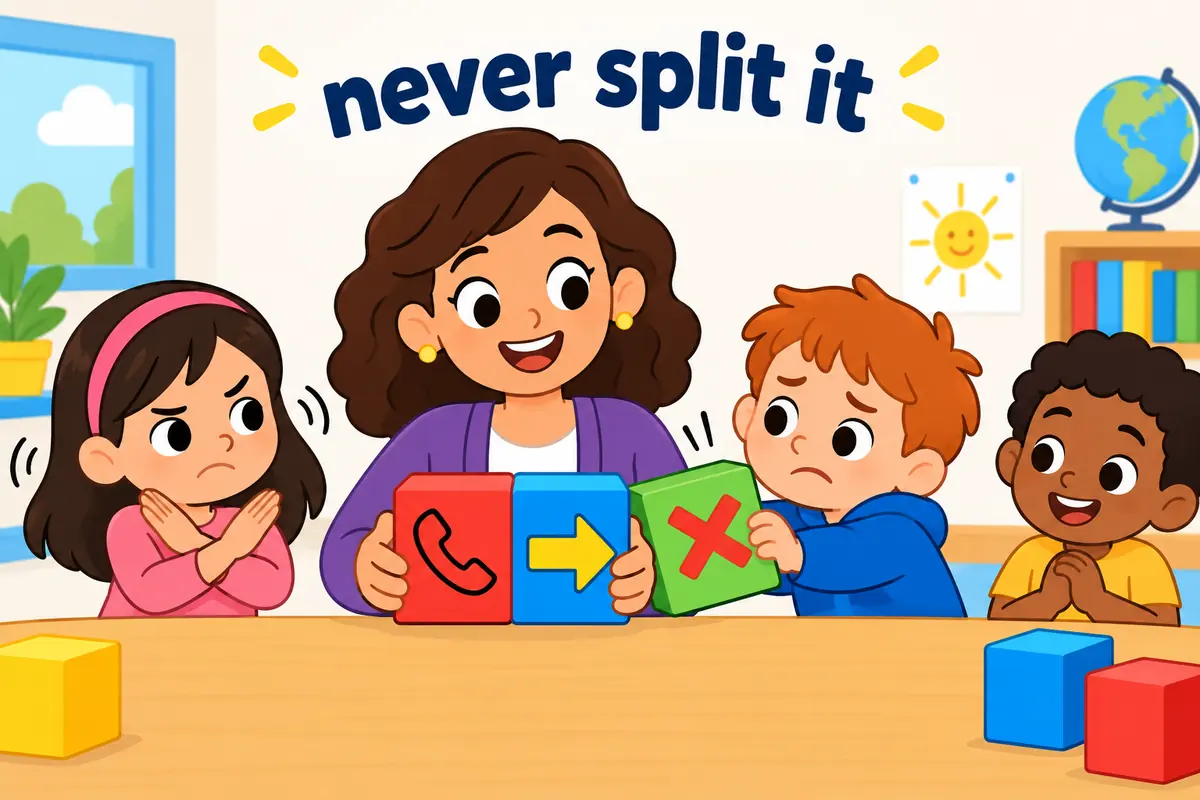
Keep the two words together and put the needed thing immediately after for: subject + call for + object. Because the phrase is inseparable, the object can never move between call and for, and no pronoun can replace it there. Separate phrasal verbs such as call back later or call in a specialist allow a split, which is exactly why learners overgeneralise the pattern.
| Pattern | Example | What it signals |
|---|---|---|
| situation + call for + noun | The crisis calls for calm leadership. | An impersonal need, the commonest shape. |
| group + call for + noun | Parents called for smaller classes. | An organised public demand. |
| be called for | Firm action was called for. | Passive voice, used to avoid naming who demands. |
| call for + somebody | She will call for us at noon. | The collect sense, practical and everyday. |
| not called for | Such rudeness was not called for. | Judges an action as unnecessary. |
Call for in a sentence: examples across contexts
Call for shifts from a recipe card to a protest banner without changing form. The eight sentences below show both senses and each one names what is required or demanded.
| Context | Example sentence | Why this works |
|---|---|---|
| Recipe | The dressing calls for oil, lemon and a pinch of salt. | The require sense is literal and easy to check. |
| Workplace email | This delay calls for a short written update. | Names the response a situation needs. |
| News report | Residents called for an inquiry into the flooding. | The public-demand sense with a clear target. |
| Protest | The crowd called for the plan to be withdrawn. | Shows organised pressure from a group. |
| Medical note | The symptoms call for an urgent scan. | A professional need stated without drama. |
| Sports report | The coach called for patience in the second half. | An instruction phrased as a requirement. |
| Academic prose | Such a claim calls for stronger evidence. | Keeps the judgement impersonal and measured. |
| Everyday plan | I will call for you just before seven. | Uses the collect sense in ordinary speech. |
Call for vs call off
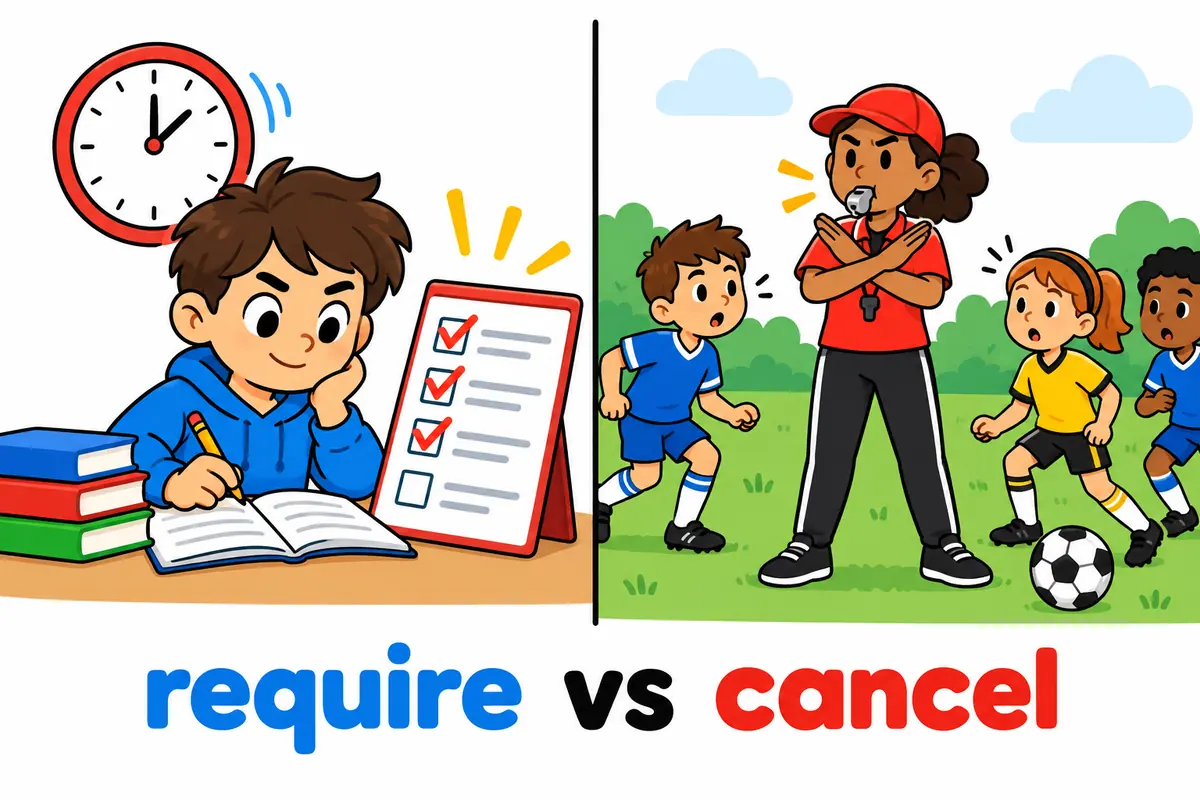
One particle separates two opposite ideas. Call for means require or demand, while call off means cancel entirely, so a plan that is called for is needed and a plan that is called off has stopped.
| Attribute | call for | call off |
|---|---|---|
| Core meaning | Require or demand | Cancel or stop |
| Typical subject | A situation, a task, a group | An organiser, an official, the weather |
| Typical object | Action, calm, evidence, a meeting | A match, a search, a wedding |
| Effect on an event | Presses it forward | Ends it |
| Registers | Neutral to formal | Neutral and informal |
Verdict: use call for when something is needed or demanded, and call off when something already planned is cancelled; confusing the two reverses the meaning of the whole sentence.
Word forms and grammar of call for
Only the verb call changes; for stays fixed. The table shows the forms, including the passive and the negative, which is where learners most often split the phrase.
| Form | Part of speech | Example |
|---|---|---|
| call for | phrasal verb, base form | These figures call for caution. |
| calls for | third person singular | The job calls for patience. |
| called for | past and past participle | The referee called for a break. |
| calling for | present participle | They are calling for a recount. |
| call for somebody | phrasal verb, collect sense | He called for his sister at nine. |
| call the plan for | non-standard | Write call for the plan, never split. |
Common mistakes with call for
- Incorrect:
The situation calls action for.Correct: The situation calls for action. Rule: Call for is inseparable, so the object stays after for. - Incorrect:
They called the minister for to resign.Correct: They called for the minister to resign. Rule: Nothing sits between the verb and its particle. - Incorrect:
The team called off for more practice.Correct: The team called for more practice. Rule: Call off means cancel, which is the opposite of requiring something. - Incorrect:
The recipe calls for to add two eggs.Correct: The recipe calls for two eggs. Rule: The phrase takes a noun or a to-infinitive after the whole unit, never a to after for.
Practice using call for
Work through the five items, then read the reason beside each answer.
- Fill the gap: The damage ______ a full inspection before term starts.
- Choose the better word: The organisers (called for / called off) the parade because of the storm.
- Correct the error: The report calls the government for an apology.
- Build a sentence: use call for about a class that needs more books.
- Spot the register: which suits a news bulletin — voters called for a recount, or voters wanted a recount, like, badly?
Answers
- calls for — the damage makes the inspection necessary, and the phrase stays whole.
- called off — the storm cancelled the parade, so call off is the meaning required.
- The report calls for a government apology — the object follows the whole phrase, never sits inside it.
- Model answer: The crowded class calls for thirty more reading books.
- Voters called for a recount — a bulletin wants the formal phrasal verb, not casual filler.
The bottom line
Use call for in a sentence when something is required or publicly demanded, and keep the two words together with the object following for. The two facts that prevent most errors are that the phrasal verb is inseparable and that call off, one particle away, means cancel. When a situation makes an action necessary, a formal option such as warrant a closer look works alongside it.
Frequently asked questions about call for
Is call for one word or two?
It is always two words. Call for is a phrasal verb made of the verb call and the particle for, and the two are written separately. As a noun, the spelling changes to the single word call, as in a call for applications, but the verb form never joins up.
Can you split call for?
No. Call for is inseparable, so the object cannot move between the verb and the particle. You write call for a doctor, never call a doctor for. That is different from separable phrasal verbs such as call back, where call the patient back and call back the patient are both correct.
What is the difference between call for and call on?
Call for means require or demand something. Call on usually means to visit somebody or to invite a person to speak, as in the chair called on the treasurer. The two particles point in different directions, so only call for takes the meaning of a need or a public demand.
Is call for formal or informal?
Call for sits in the middle. The require sense is neutral and appears in recipes, emails and reports, while the public-demand sense is standard in news writing. Spoken English also uses it for collecting somebody. Only the collect sense feels informal, and even then it is perfectly polite.
Have you ever come across the phrase “call for” in your reading or conversations and wondered what it meant? In English, the expression “call for” is commonly used to indicate a need for or demand of something specific or to require a particular action.
Often found in instructions, requests, or suggestions, “call for” sets the tone for a directive or a necessary course of action. Understanding how to properly use this phrase can greatly enhance your ability to convey requirements or ask for assistance clearly and effectively.
7 Examples Of Call For Used In a Sentence For Kids
- Call for the raindrops to dance on the roof.
- Sunflowers call for the sunshine to grow tall.
- Birds call for the wind to carry them high in the sky.
- Plants call for water to help them grow big and strong.
- Trees call for the birds to come and sing in their branches.
- The ocean calls for the waves to splash and play.
- Flowers call for the bees to come and collect nectar.
14 Sentences with Call For Examples
- Call for a meeting with your study group to discuss the upcoming project deadline.
- Make sure to call for a mentor’s guidance when choosing your major in college.
- Call for a study break when feeling overwhelmed with assignments and exams.
- It is important to call for academic integrity in all your assignments.
- Call for a campus security escort if you feel unsafe walking back to your dorm late at night.
- Remember to call for volunteers for the college event planning committee.
- Don’t hesitate to call for extra help from your professors or tutors if you are struggling with a subject.
- Call for a plagiarism check on your research paper before submitting it.
- Call for early registration for important workshops and seminars on campus.
- Always call for a second opinion when making a major decision about your academic career.
- It’s essential to call for a study session with classmates to prepare for the upcoming exams.
- Call for a meeting with the student council to address campus issues that are affecting student life.
- Don’t forget to call for a mental health professional if you are feeling overwhelmed or stressed.
- Remember to call for a review session with your professor before taking the final exam.
How To Use Call For in Sentences?
To use Call For in a sentence, you need to understand that this phrase is generally used when referring to a demand or requirement for something. Here’s a helpful guide on how to use it correctly:
-
Subject + Call For + Object: When constructing a sentence with Call For, start with the subject, followed by the phrase itself, and then the object that is being demanded or required. For example, “The situation calls for immediate action.”
-
Understand the context: Make sure to understand the context in which you are using Call For. Whether it’s a need for action, a requirement for change, or a demand for a particular behavior, ensure that the sentence accurately reflects the situation.
-
Use the correct tense: Depending on the situation, you may need to adjust the verb tense when using Call For. Be mindful of whether the demand or requirement is in the present, past, or future tense.
-
Stay concise and clear: When using Call For, aim to be concise and clear in your sentence construction. Avoid using it in a vague or ambiguous manner to ensure that your message is effectively communicated.
-
Practice makes perfect: Like with any new phrase, practice using Call For in sentences to become more comfortable with its usage. The more you practice, the more confident you will become in incorporating it into your writing and speaking.
By following these guidelines and practicing regularly, you can master the correct usage of Call For in sentences.
Conclusion
In conclusion, the use of sentences with a call for draws attention to a specific action or response desired from the audience. These sentences are clear and direct, prompting the listener or reader to take a particular course of action or consider a particular viewpoint. Whether it’s urging for change, seeking support, or voicing a concern, sentences with a call for can be powerful tools in communication.
By incorporating sentences with a call for in your writing or speech, you can effectively convey your message and make a compelling case for your stance. This linguistic device adds emphasis and urgency, encouraging others to engage with your ideas and potentially inciting action. Overall, sentences with a call for are persuasive and impactful, driving the intended message home and inspiring a response from your audience.


