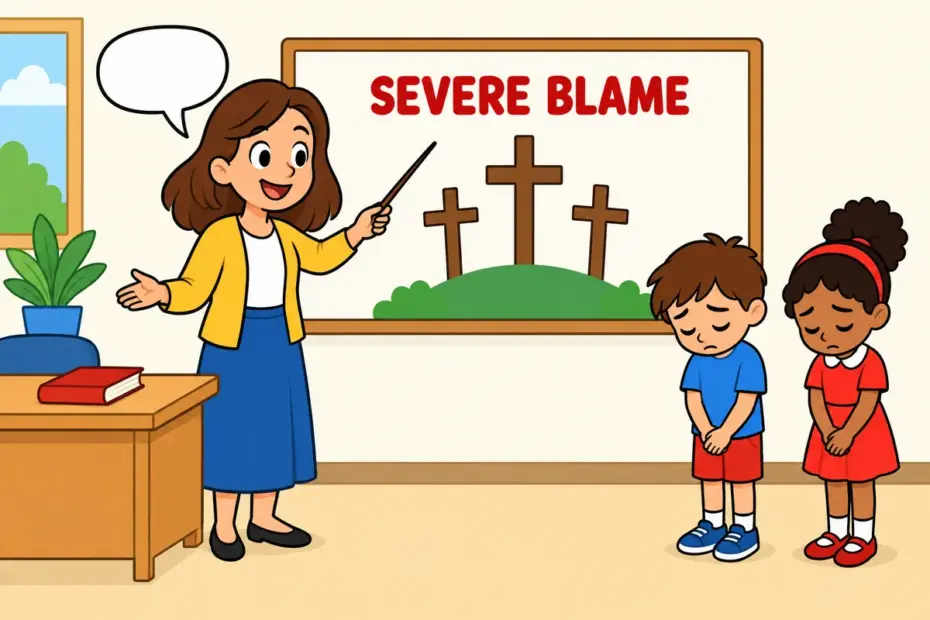
Chastise means to blame or punish someone severely for a fault, and it almost always names both the person and the offence. To use chastise in a sentence, put the person after the verb and the fault after for: “The referee chastised the captain for arguing.” The verb is transitive, so somebody is always being chastised.
Chastise at a glance
- Chastise is a transitive verb; its forms are chastises, chastised and chastising.
- The dominant pattern is chastise + person + for + the fault.
- It belongs to formal speech and writing, where scold is the everyday alternative.
- Common collocates are severely, publicly, roundly and for failing.
- The commonest learner error is dropping the object or confusing chastise with chastity.
What does chastise mean?
Chastise is a transitive verb meaning to rebuke or punish someone severely for doing something wrong. The Cambridge entry for chastise records both a verbal sense and a disciplinary sense, and the line between them matters: one person criticises, the other imposes a penalty. When a sentence only points out a small slip, admonish a colleague is the gentler verb, because chastise carries the idea of strong blame.
| Sense | Plain meaning | Example sentence |
|---|---|---|
| Rebuke severely | Reprimand someone in strong terms | The editor chastised the reporter for the invented quote. |
| Impose a penalty | Punish a person or group with a sanction | The league chastised the club with a transfer ban. |
| Blame oneself | Reproach yourself for a mistake | He chastised himself for ignoring the warning signs. |
How do you use chastise in a sentence?
| Pattern | Example | What it signals |
|---|---|---|
| chastise + person | The teacher chastised the class. | the object is the person blamed |
| chastise + person + for + noun | She chastised him for the delay. | names the fault with for |
| be chastised + for | The firm was chastised for poor safety. | the passive keeps the fault in focus |
| chastise + person + with + noun | The judge chastised the driver with a fine. | names the penalty with with |
| chastise + oneself | He chastised himself for the missed chance. | private, reflexive regret |
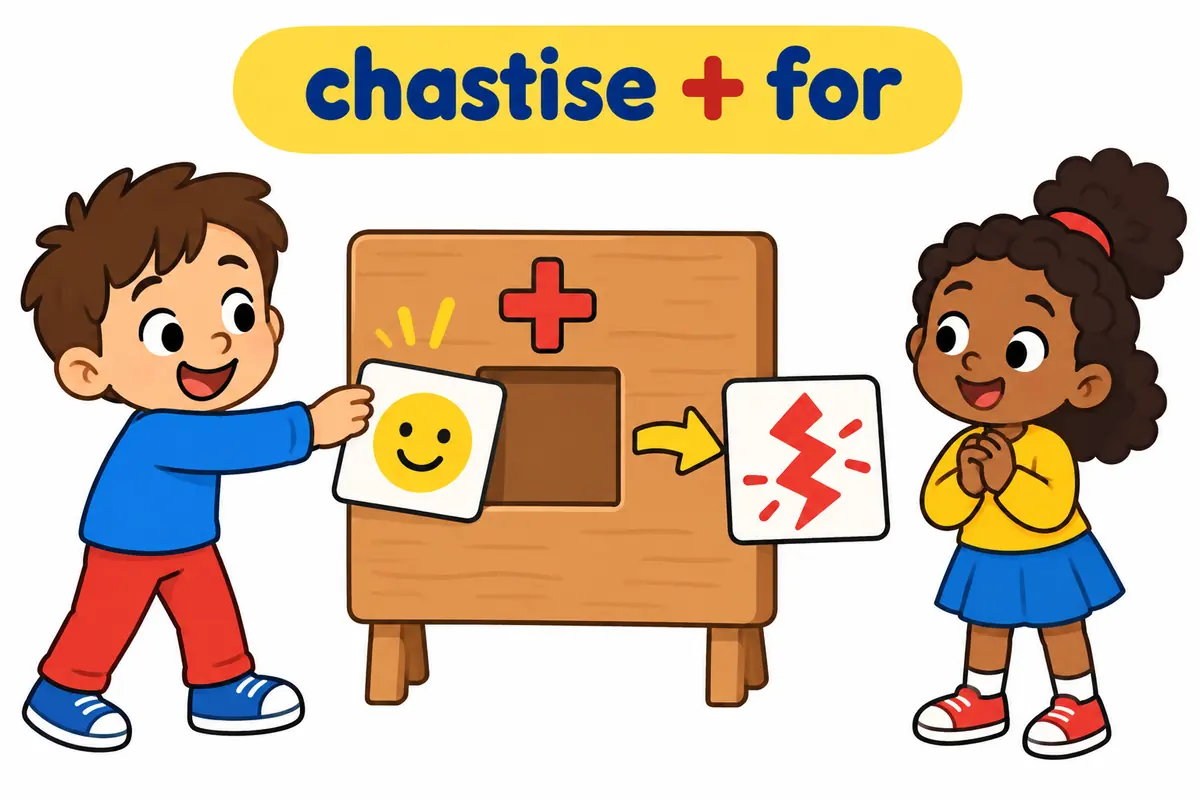
Chastise in a sentence: examples across contexts
| Context | Example sentence | Why this works |
|---|---|---|
| Classroom | The head teacher chastised the class for running in the corridor. | a school setting and a named fault |
| Workplace email | The manager chastised the whole team for missing the deadline. | formal tone and a clear offence |
| News report | Critics chastised the council for delaying the repair. | public blame in journalistic register |
| Sport | The captain was chastised for arguing with the referee. | the passive keeps attention on the action |
| Home | My grandmother chastised us for leaving the gate open. | warm spoken register with a specific slip |
| Legal writing | The tribunal chastised the employer for ignoring the safety report. | measured, official blame |
| Academic prose | Reviewers chastised the authors for overstating the results. | scholarly criticism of a method |
| Conversation | You do not need to chastise me for a typo. | informal, mildly reproachful tone |
Chastise vs punish
| Attribute | Chastise | Punish |
|---|---|---|
| Core meaning | blame or rebuke in strong terms | impose a penalty for an offence |
| What it targets | conduct and reputation | freedom, money or rights |
| Typical setting | school, sport, news and formal criticism | courts, rules and parental authority |
| Strength of effect | severe words with little cost | a real consequence with a lasting effect |
| What it implies | the fault has been named out loud | a rule was broken and a price is paid |
| Typical object | a person or group being blamed | a person or group paying the price |
Choose chastise when the point is the telling-off, and choose punish the offender when the point is the consequence.
Word forms and grammar of chastise
| Form | Part of speech | Example |
|---|---|---|
| chastise | base verb | Editors often chastise reporters. |
| chastises | third-person singular | The coach chastises players who argue. |
| chastised | past tense | The mayor chastised the contractor. |
| chastised | past participle | The ministry was chastised for the delay. |
| chastising | present participle | Chastising the staff in public rarely helps. |
| chastisement | noun | The rebuke was a mild chastisement. |
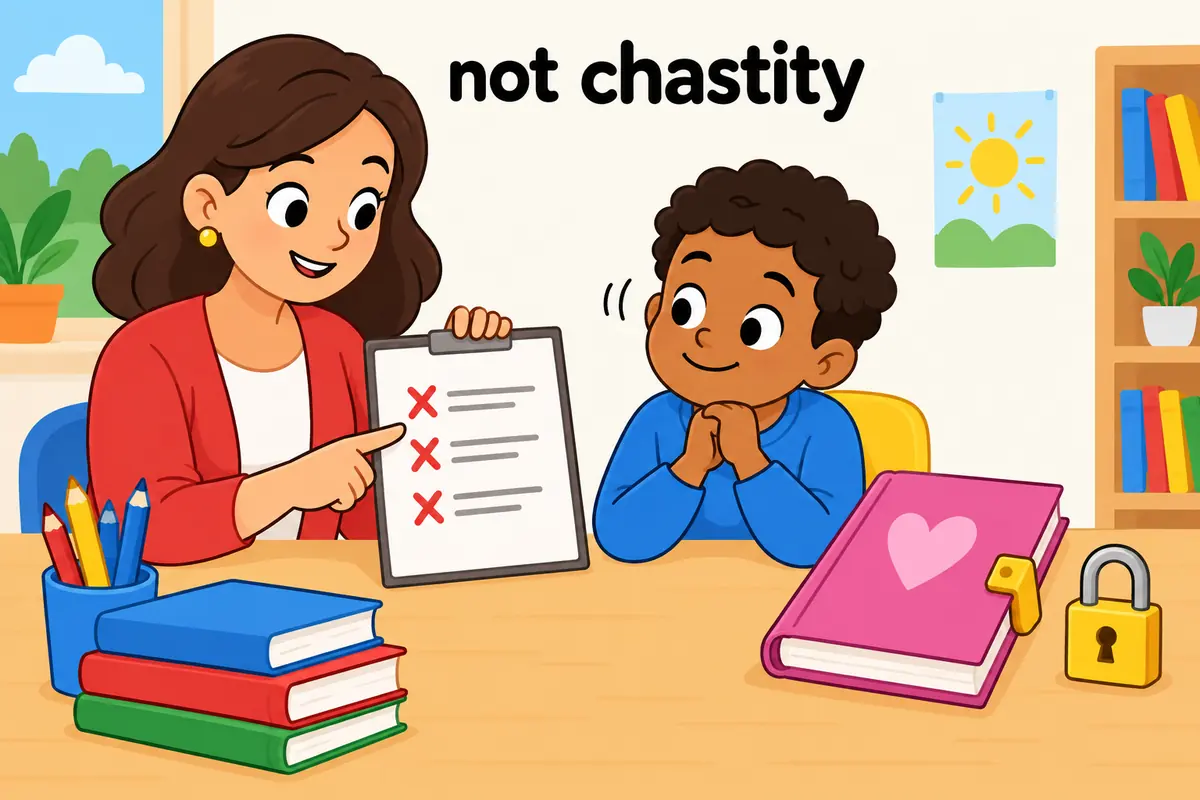
The noun is chastisement. Chastity is an unrelated word about self-restraint, and it shares no meaning with the verb despite the similar spelling.
Common mistakes with chastise
Incorrect: The teacher chastised.Correct: The teacher chastised the class. Chastise is transitive, so it needs an object.Incorrect: She chastised on him for the error.Correct: She chastised him for the error. The person is the direct object, with no preposition before it.Incorrect: He was chastised to leave early.Correct: He was chastised for leaving early. Use for with a fault and with with a penalty.Incorrect: The groom was chastised about his chastity.Correct: The groom was chastised for the rude remark. Chastity is a different noun.Incorrect: The nurse chastised the patient for a mild cough.Correct: The nurse noted the patient with a mild cough. Reserve chastise for genuine blame.Incorrect: The boss chastised to the team.Correct: The boss chastised the team. Never place to before the object.
Practice using chastise
- Fill in the blank: The principal ___ the pupils for skipping assembly.
- Choose the better word: The referee ___ the player for dissent. (chastised / praised)
- Correct the error: The coach chastised on the striker for a late tackle.
- Build a sentence: use be chastised for about a delayed payment.
- Spot the register: which sentence belongs in an email to a head teacher? (a) The kids got told off. (b) The class was chastised for repeated lateness.
- Fill in the blank: She ___ herself for not saving the file.
Answers
- chastised – the past tense matches a finished event.
- chastised – the word means blamed, while praised is its opposite.
- The coach chastised the striker for a late tackle – the person is the direct object, so on disappears.
- The contractor was chastised for late payment – the passive plus for names the fault.
- Sentence (b) – chastised suits formal school correspondence, while told off is spoken.
- chastised – the reflexive object oneself is allowed with this verb.
The bottom line
To use chastise in a sentence, place the person as a direct object and the fault after for, as in the referee chastised the captain for arguing. A newspaper may rebuke an official, but a school usually reprimand a pupil. Critics castigate the leadership far more harshly than they chastise one officer. The verb is transitive, formal and stronger than scold, so it suits school, sport and official criticism. It is not chastity, and it is not a general word for punishment; choose punish when a real penalty is imposed.
Frequently asked questions about chastise
Is chastise stronger than scold?
Chastise is stronger and more formal than scold. Scold suggests a quick, everyday telling-off, often to a child. Chastise carries public, serious blame and appears in news reports, school notices and sports writing. If you are describing a mild correction at home, scold or tell off reads more naturally.
What is the noun form of chastise?
The noun is chastisement, meaning a severe rebuke or the penalty that follows one. It keeps the same root and the same formal register, as in a public chastisement. Chastity is a different noun about self-restraint and shares no meaning with the verb, despite the similar spelling.
Does chastise always mean physical punishment?
Chastise can mean to punish, but it need not involve physical force. Most modern uses describe strong words, a formal rebuke or a penalty such as a fine or a ban. A coach chastises a player with criticism, and a league chastises a club with a sanction, so the word covers words and penalties.
Which preposition follows chastise?
The usual preposition is for, which introduces the fault, as in chastised for arriving late. To name a penalty rather than a fault, use with, as in chastised with a fine. Never place on or to before the person, because chastise takes a direct object: chastised the team, not chastised to the team.
Have you ever been scolded or reprimanded for making a mistake? This is essentially what it means to chastise someone – to criticize or discipline them for their actions. Chastising is a form of correction or punishment designed to help someone learn from their errors and improve their behavior.
When someone is chastised, they are typically made aware of their wrongdoing and may be subjected to verbal or written criticism. This form of correction can vary in intensity, from a gentle reminder to a harsh reprimand, and is often delivered with the intent of helping the person understand the consequences of their actions.
7 Examples Of Chastise Used In a Sentence For Kids
- Chastise means to correct someone when they do something wrong.
- It is important to chastise with love and kindness.
- Parents sometimes chastise their children to help them learn.
- Teachers may gently chastise students who are not following the rules.
- We should never chastise others in a hurtful way.
- It is okay to chastise someone if it is done with good intentions.
- Remember, it is always best to chastise someone in a respectful manner.
14 Sentences with Chastise Examples
- Chastise your friend if they keep procrastinating on their assignments.
- It is not professional to chastise your group members during presentations in front of the class.
- The professor might chastise you if you are consistently late for lectures.
- Don’t be afraid to chastise yourself for not managing your time effectively.
- It is important to chastise plagiarism in academic work.
- The senior students may chastise newcomers for not following college traditions.
- Your peers may chastise you for disturbing the class by talking loudly.
- Chastise yourself if you do not take advantage of the resources available in the college library.
- It is essential for students to chastise themselves if they do not take their studies seriously.
- Your parents may chastise you for not keeping your dorm room clean.
- The college administration may chastise students for violating the dress code.
- Sometimes, it is necessary for professors to chastise students for inappropriate behavior in the classroom.
- It is important to chastise group members who do not contribute equally to group projects.
- Don’t be surprised if your classmates chastise you for not participating in extracurricular activities.
How To Use Chastise in Sentences?
To Chastise someone means to scold or reprimand them for their actions. When using Chastise in a sentence, it is important to convey a sense of disapproval or criticism towards the person’s behavior.
Here is a simple guide on how to use Chastise in a sentence for beginners:
- Identify the action or behavior that you want to criticize or disapprove of.
- Use Chastise in your sentence to express your disapproval clearly. For example:
- “The teacher chastised the student for talking in class.”
- “She felt embarrassed when her parents chastised her for not completing her homework.”
- Make sure the context of your sentence clearly conveys that the person is being scolded or reprimanded.
- Remember to use Chastise in the correct tense that fits the context of your sentence (e.g., past tense, present tense).
- Practice using Chastise in various sentences to become more comfortable with incorporating it into your vocabulary.
By following these simple steps, you can effectively incorporate the word Chastise into your sentences to convey a sense of disapproval or criticism towards someone’s actions or behavior.
Conclusion
In conclusion, the act of chastising others involves reprimanding or scolding them for their behavior or actions. It is a form of correction or discipline aimed at promoting better conduct. Through chastisement, individuals are held accountable for their mistakes and are encouraged to learn from them. Parents often use chastisement to teach their children right from wrong, while leaders may chastise their subordinates to maintain discipline within a group or organization. However, it is important to approach chastisement with empathy and understanding, as overly harsh or frequent criticism can lead to negative outcomes and strained relationships.
Ultimately, chastisement serves as a tool for guidance and improvement, reminding individuals of the consequences of their actions and helping them grow and develop. When done constructively and with the best interests of the individual in mind, chastisement can lead to positive change and personal development.


