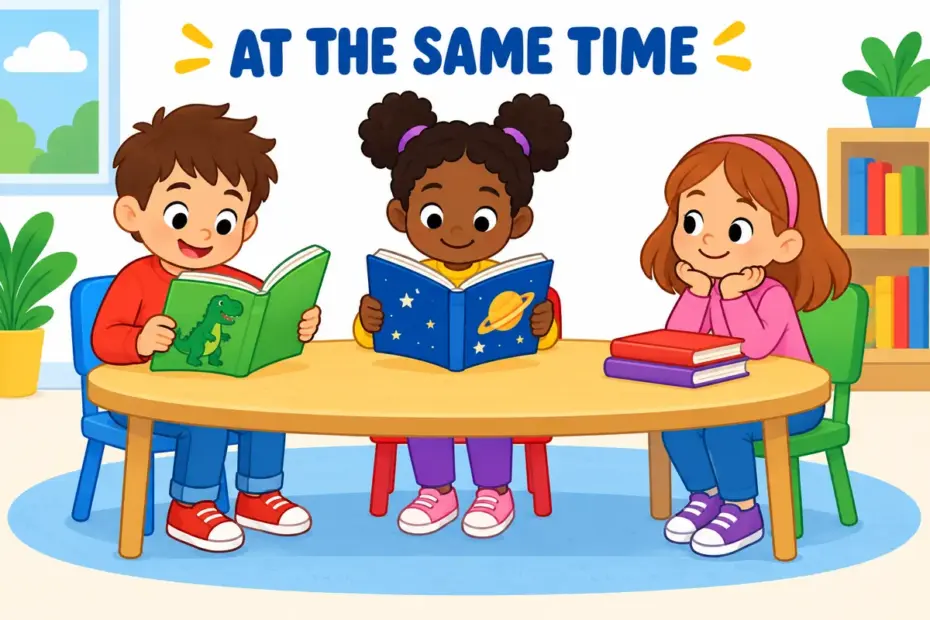
Concurrent means happening or existing at the same time as something else. To use concurrent in a sentence, name the two things that overlap and often add with: “She ran two concurrent projects.” The adjective suits schedules, legal terms and computer systems, where several events run side by side.
Concurrent at a glance
- Concurrent is an adjective; it describes events, jobs, sentences or processes that overlap in time.
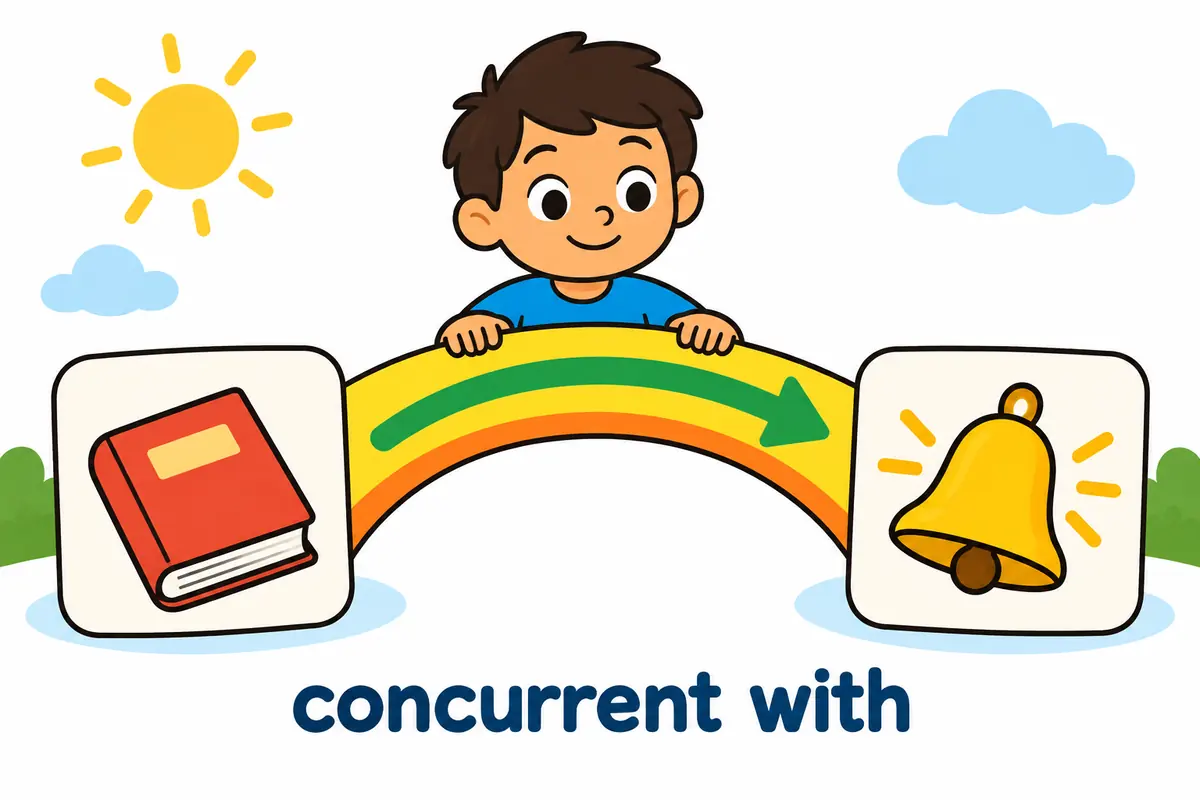
- It often takes with: concurrent with the election.
- It describes overlap, while consecutive means one after another with no overlap.
- The adverb is concurrently, and the noun is concurrence.
- The commonest error is using concurrent for events that follow in sequence, which are consecutive.
What does concurrent mean?
Concurrent is an adjective meaning existing or happening at the same time as something else. The Cambridge entry for concurrent gives the same-time sense, and the Merriam-Webster entry for concurrent adds the legal use for sentences served together. Where two events share a starting point by chance rather than by plan, coincident events is the more precise adjective. Two things in tandem with a colleague run together by design, which is the idea at the heart of concurrent.
| Sense | Plain meaning | Example sentence |
|---|---|---|
| Overlapping in time | Happening at the same time as something else | He held two concurrent posts for a year. |
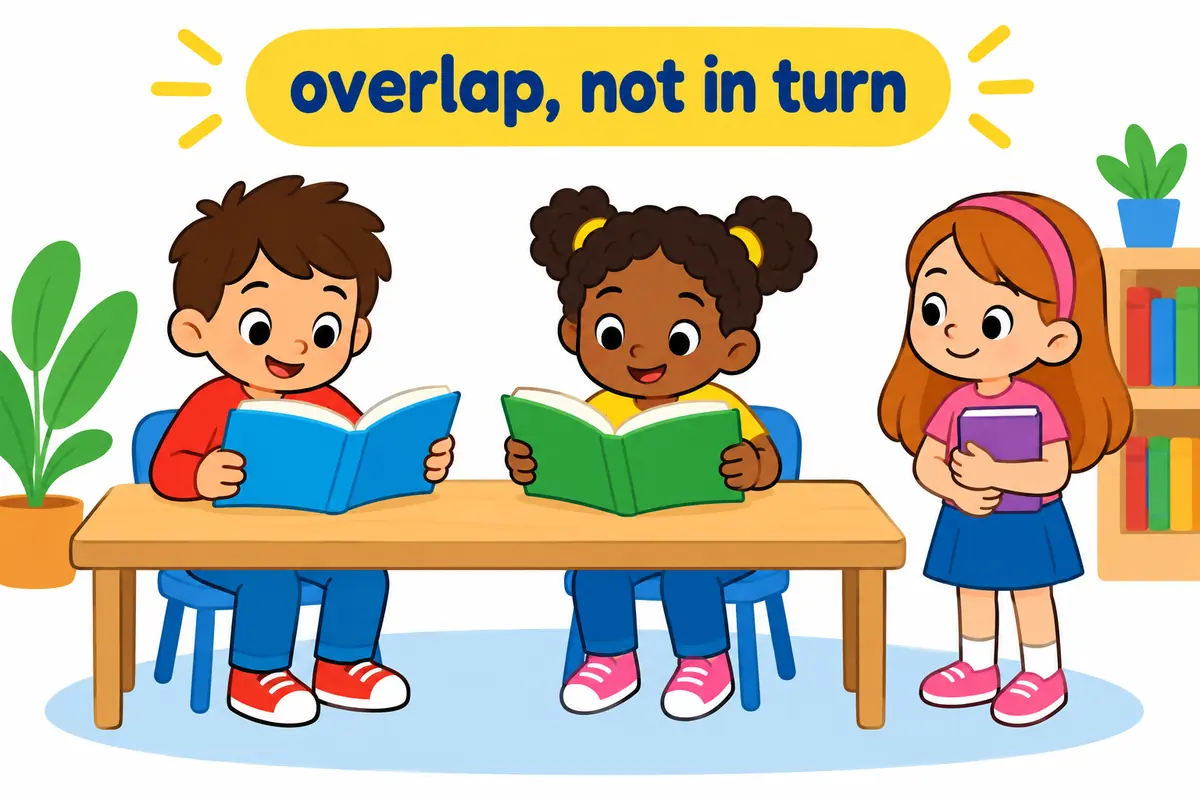
| Legal | Sentences served at the same time, not in turn | The judge imposed concurrent three-year terms. |
| Computing | Tasks progressing together on one system | The server handles concurrent requests without delay. |
One limitation is worth stating plainly. Concurrent does not mean identical or related; it means only that the two things share a stretch of time. Two unrelated roadworks can be concurrent, and where the timing is the whole point, at the same time is the plainer phrase.
How do you use concurrent in a sentence?
Concurrent is an adjective, so it sits before a noun or follows a linking verb such as be, run or remain. Five patterns cover almost every real sentence, and the with phrase is the one technical writers use most.
| Pattern | Example | What it signals |
|---|---|---|
| concurrent + plural noun | The clinic runs three concurrent trials. | Several things overlap and are named together. |
| be concurrent with + noun | The repairs were concurrent with the festival. | Pins one event to another in time. |
| concurrent + noun + and + noun | Concurrent heat and drought ruined the crop. | Two conditions overlap and combine. |
| run concurrently (adverb) | The two courses run concurrently in the spring. | The adverb modifies the verb, not a noun. |
| concurrent sentences (fixed) | Concurrent sentences kept him out of prison. | Legal shorthand for terms served together. |
Concurrent in a sentence: examples across contexts
Concurrent keeps the same meaning of overlap wherever it appears; only the field changes. The nine sentences below move from a school timetable to a computing log, and each one names the two things that run together.
| Context | Example sentence | Why this works |
|---|---|---|
| Classroom | Two concurrent quizzes kept the class fully occupied. | A concrete pair of activities makes the overlap visible. |
| Workplace email | The audit is concurrent with the stock count, so please wait. | The with phrase names the second commitment precisely. |
| News report | Concurrent strikes halted both rail lines on Monday. | Overlapping industrial action explains the disruption. |
| Legal writing | The court ordered concurrent sentences of two years. | Uses the fixed legal sense rather than the general one. |
| Computing | The app supports concurrent users without slowing down. | Names the system’s capacity to overlap tasks. |
| Medical research | Investigators paused enrolment in the concurrent studies. | Two trials running at once can share a safety review. |
| Transport planning | Concurrent roadworks narrowed the bridge for a month. | Shows how overlap creates a combined delay. |
| Conversation | I am juggling concurrent deadlines this week. | The first person shows the everyday use of the adjective. |
| Academic writing | Concurrent warming and fishing pressure reduced the catch. | Two forces acting together explain one outcome. |
Notice that every example can be tested with the question at the same time as what. If no second event exists, concurrent is the wrong adjective.
Concurrent vs simultaneous
Concurrent and simultaneous both describe overlap, and the difference is one of precision. A simultaneous translation happens at the very same instant as the speech, while concurrent events may run together over days or years. For tasks that follow the same clock, synchronous lessons is the technical term.
| Attribute | concurrent | simultaneous |
|---|---|---|
| Core meaning | Overlapping during the same period | Occurring at exactly the same moment |
| Time span | Can be long, days or years | Usually an instant or a single act |
| Typical subject | Projects, sentences, processes | Actions, sounds, broadcasts |
| Preposition | Commonly takes with | Commonly takes with, but less formal |
| Register | Technical, legal and formal | Neutral and general |
Verdict: choose concurrent when the overlap lasts a period of time, and simultaneous when two things happen at the very same instant.
Word forms and grammar of concurrent
Concurrent shares its root with the verb concur with the finding, which means to agree. The noun concurrence of events and the adverb concurrently complete the family.
| Form | Part of speech | Example |
|---|---|---|
| concurrent | adjective | The two festivals were concurrent. |
| concurrently | adverb | The hearings proceeded concurrently. |
| concurrence | noun | A rare concurrence of holidays emptied the office. |
| concur | verb, different meaning | The judges concur with the earlier ruling. |
| concurring | adjective | The concurring opinion added a caveat. |
| consecutive | adjective, opposite meaning | Three consecutive delays exhausted the staff. |
Keep concurrent for overlap and consecutive for sequence; the two words differ by four letters and describe opposites.
Common mistakes with concurrent
The same five slips recur, and most of them come from confusing concurrent with consecutive. Each item shows the wrong sentence, the repair and the rule behind it.
- Incorrect:
The team attended three concurrent meetings in a row.Correct: The team attended three consecutive meetings in a row. Rule: A row is a sequence, so consecutive, not concurrent, is correct. - Incorrect:
The two projects were concurrent of each other.Correct: The two projects were concurrent with each other. Rule: The adjective pairs with with, never of. - Incorrect:
He worked concurrent on both reports.Correct: He worked concurrently on both reports. Rule: The adverb concurrently modifies the verb worked. - Incorrect:
Her two concurrent jobs were one after the other.Correct: Her two consecutive jobs were one after the other. Rule: One after the other states sequence, the opposite of overlap. - Incorrect:
The dates are concurrent, so we can attend both singly.Correct: The dates are not concurrent, so we can attend both singly. Rule: Overlapping dates clash; a sentence must not contradict the word’s meaning.
Practice using concurrent
Work through the six items, then read the reasoning rather than only the answer.
- Fill the gap: The museum held two ______ exhibitions, so visitors chose one each day.
- Choose the better word: Two alarms rang at the very same second, a (concurrent / simultaneous) event.
- Correct the error: The lessons run concurrent every Monday and Tuesday.
- Build a sentence: use be concurrent with about a school fair and a road closure.
- Spot the register: which belongs in a court report — the judge imposed concurrent sentences, or the judge let the sentences run together?
- Rewrite with the adverb: Two trials were concurrent at the clinic. Use concurrently instead.
Answers
- concurrent — the exhibitions overlap in time, which is the meaning the gap needs.
- simultaneous — same-second timing is an instant, the defining feature of simultaneous.
- The lessons run concurrently every Monday and Tuesday — the adverb modifies the verb run.
- Model answer: The school fair was concurrent with the road closure on the high street.
- The judge imposed concurrent sentences — a court report uses the fixed legal phrase.
- Two trials ran concurrently at the clinic — the adverb replaces the adjective and the verb carries the timing.
The bottom line
Use concurrent in a sentence when two or more things overlap in time, and add with to name the second event. The two nuances that decide most sentences are these: concurrent covers an overlap that may last days or years, while simultaneous means the very same instant, and the opposite of concurrent is consecutive. Where the overlap is by chance rather than design, coincident is the sharper word.
Frequently asked questions about concurrent
What does concurrent mean in law?
In law, concurrent describes sentences or terms that run at the same time rather than one after another. Two concurrent five-year sentences are served together, so the total is five years. The opposite arrangement is consecutive, where each term begins only when the previous one ends.
Can concurrent be used for people?
Usually not. Concurrent describes events, processes, jobs or sentences that overlap in time, not people themselves. Two colleagues working at once are working concurrently, and two appointments at the same hour are concurrent. Calling the colleagues concurrent would confuse the reader, because the adjective attaches to the activity rather than the person.
What is the opposite of concurrent?
The opposite is consecutive, meaning one event follows another with no overlap. Sequential carries the same sense in technical writing. If two classes run concurrently they happen at the same hour, while consecutive classes occupy different hours back to back. The single-letter difference between the two words is why learners mix them up.
Is concurrently one word?
Yes. Concurrently is a single adverb, and it means at the same time or together. It modifies a verb, as in the trials ran concurrently, so writers should not split it or write in concurrently. The noun concurrence and the adjective concurrent complete the family, all sharing the same root as the verb concur.
Do you ever find yourself struggling to understand the meaning of the word “concurrent”? In simple terms, concurrent refers to two or more events or situations that happen at the same time.
In various contexts, whether it’s in technology, project management, or law, the concept of concurrent can have significant implications. Understanding how to identify and manage concurrent occurrences is essential for efficient operations and decision-making.
7 Examples Of Concurrent Used In a Sentence For Kids
- The sun and the moon are concurrent in the sky.
- Birds chirping and flowers blooming are concurrent signs of spring.
- Eating breakfast and brushing teeth are concurrent morning activities.
- Reading a book and drinking milk are concurrent bedtime routines.
- Drawing and coloring are concurrent activities for kids.
- Singing and dancing are concurrent activities during a party.
- Smiling and waving are concurrent ways to greet someone.
14 Sentences with Concurrent Examples
- Concurrent enrollment allows students to take classes at two different institutions simultaneously.
- It is important to manage your time effectively when juggling concurrent assignments from different professors.
- Attending a concurrent workshop on time management can help improve academic performance and reduce stress.
- Balancing a part-time job with a concurrent internship can provide valuable work experience for college students.
- Utilizing concurrent study sessions with peers can enhance understanding of complex course material.
- Online platforms offer concurrent access to educational resources from universities around the world.
- Participating in a concurrent exchange program can broaden students’ cultural perspectives and language skills.
- Utilizing concurrent technology in group projects can streamline collaboration among team members.
- Joining a concurrent club or organization can help students develop leadership skills and expand their network.
- Attending a concurrent career fair can provide opportunities for internships and job placements.
- Students can benefit from concurrent mentorship programs to receive guidance from experienced professionals within their field of study.
- Planning concurrent study abroad programs can allow students to experience different cultures while completing their degree requirements.
- Completing a concurrent capstone project can showcase students’ skills and knowledge in their chosen area of study.
- Incorporating concurrent physical activities, such as yoga or meditation, into daily routines can help improve mental well-being and concentration levels.
How To Use Concurrent in Sentences?
Concurrent is used to describe events or actions that are happening at the same time. When using this word in a sentence, make sure to correctly identify the activities that are occurring simultaneously. For example, “The team worked on two concurrent projects to meet the deadline.”
To use the word concurrent effectively, pay attention to the context in which it is being used. This will help ensure that your sentence is clear and conveys the intended meaning. For instance, “Her ability to manage multiple tasks concurrently impressed her colleagues.”
When writing a sentence with the word concurrent, consider using it in a way that emphasizes the simultaneous nature of the events or actions being described. For instance, “The company implemented a system that allowed for concurrent processing of customer orders, resulting in faster service.”
Remember that concurrent is an adjective that adds detail to the sentence by highlighting the idea of things happening at the same time. Practice using it in different contexts to become more comfortable with incorporating it into your writing.
Conclusion
In conclusion, sentences with the keyword “concurrent” often illustrate events or actions that happen simultaneously or in conjunction with each other. These sentences convey the idea of two or more things occurring at the same time. Understanding the concept of concurrent events is crucial for effective communication, as it helps to clearly convey the relationship and timing between different actions or processes.
By incorporating sentences with the term “concurrent” into conversation or writing, individuals can accurately describe situations where multiple events happen concurrently. This not only enhances the clarity of the message but also provides a succinct way to highlight the simultaneous nature of these events. As such, utilizing sentences featuring the keyword “concurrent” can improve the precision and efficiency of communication in various contexts.


