Adjectives for luxury work best when they identify what feels exceptional: comfort, materials, design, service, or scale. “Luxurious” is the broadest choice, while “opulent,” “sumptuous,” “lavish,” and “elegant” add different cues; none is a reliable substitute for every other word.
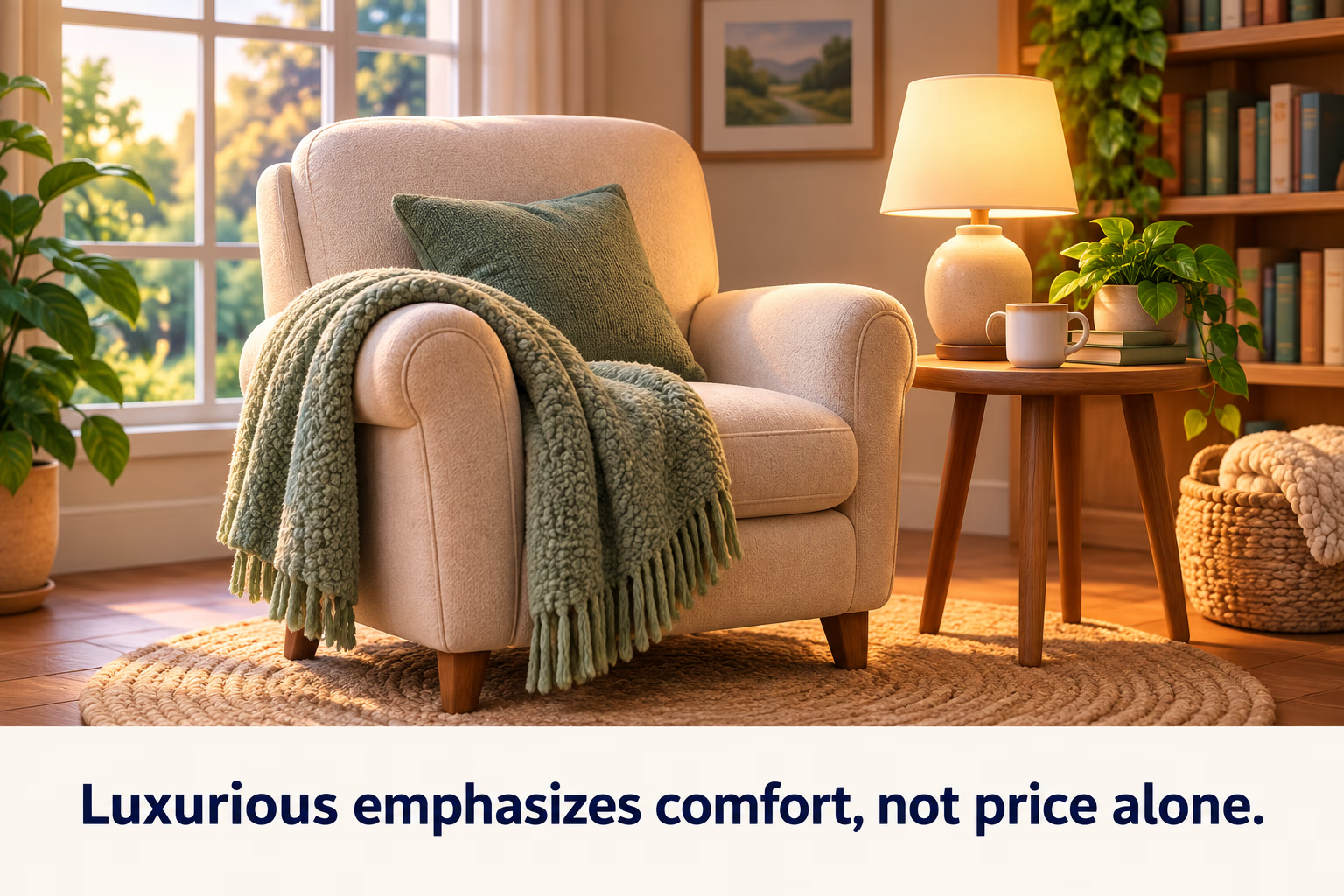
Use luxurious for pronounced comfort or expensive, pleasurable surroundings.
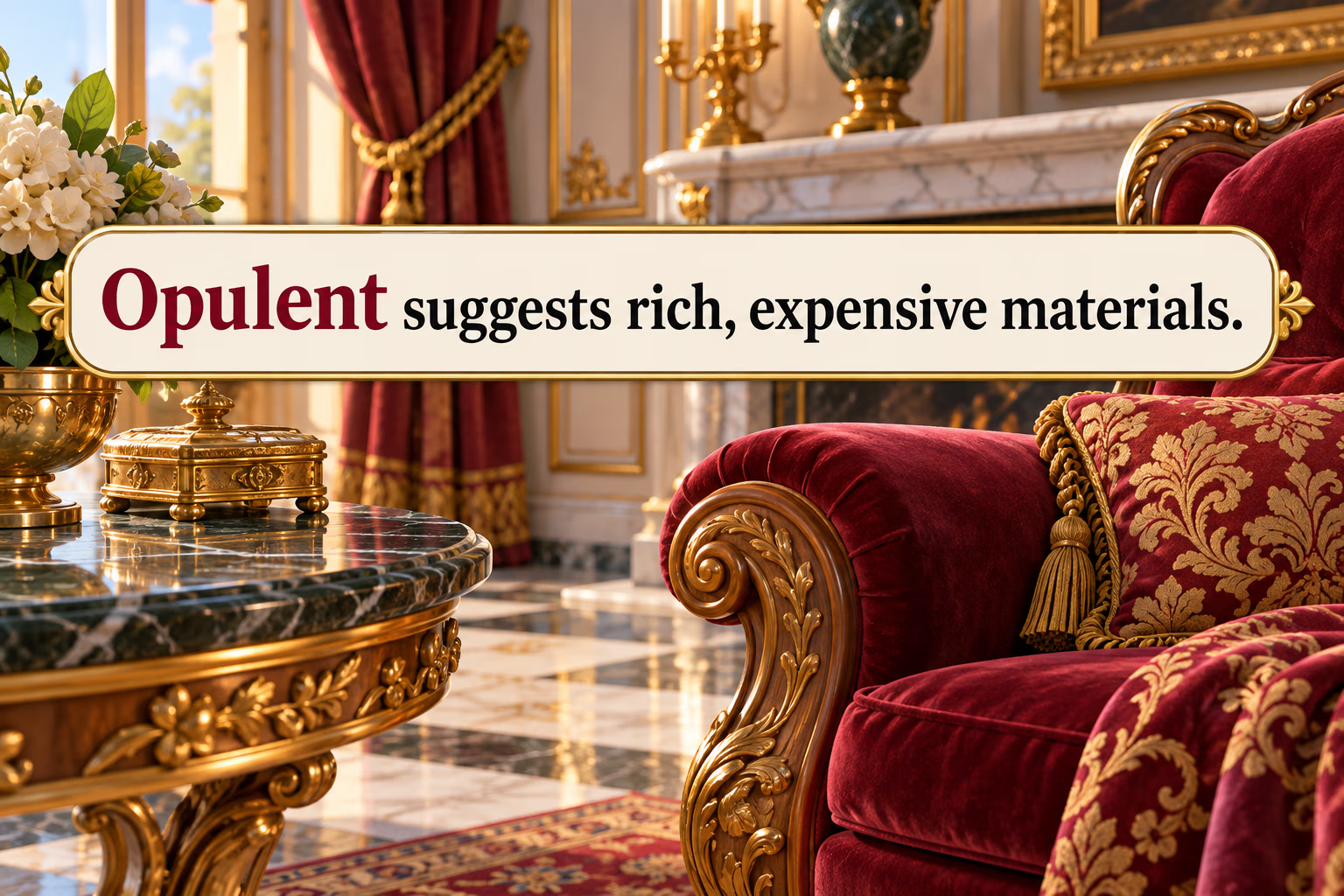
Use opulent when costly materials or rich decoration are visible.
Use sumptuous for an impressive meal, interior, or sensory experience.
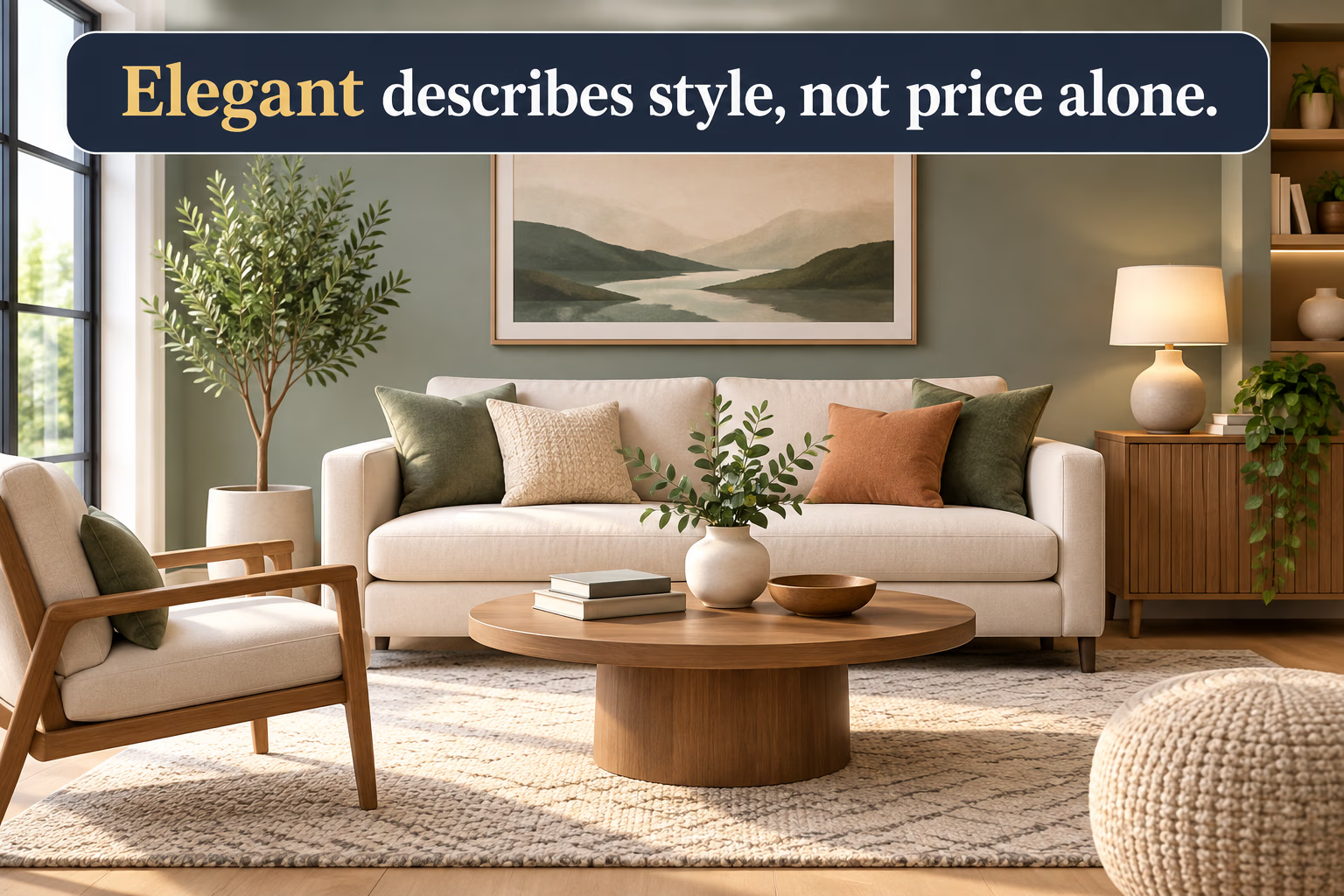
Use elegant for attractive, well-designed style even when price is not the point.
Use lavish for generous scale or spending; it can suggest excess.
Choose a luxury adjective for the detail it describes.
Start with the feature the sentence describes, then choose a word whose meaning fits that noun. Oxford Learner’s Dictionaries describes luxury as enjoying special, often expensive things and describes “luxurious” as very comfortable or containing expensive things; comfort and cost can overlap, but one does not prove the other.
What you mean
Useful adjectives
Example sentence
Comfort or pleasure
luxurious, plush, indulgent
“The hotel’s plush lounge made the wait feel comfortable.”
Rich, costly materials
opulent, sumptuous, richly appointed
“Opulent silk panels framed the suite’s tall windows.”
Balanced, graceful design
elegant, refined, polished
“An elegant brass lamp gave the room a clear focal point.”
Large scale or generous spending
lavish, grand, extravagant
“They hosted a lavish dinner with several courses.”
Custom work or restricted access
bespoke, tailored, exclusive
“The tailor made a bespoke jacket to the customer’s measurements.”
High-end market positioning
premium, upscale, luxury
“The listing calls it a premium package and specifies the included services.”
What do the most useful luxury adjectives mean?
“Opulent” points to visible wealth or costly materials; “sumptuous” often describes something impressive to see, touch, or taste; and “lavish” highlights scale or abundance. Oxford defines opulent in relation to expensive materials, sumptuous as very expensive and impressive, and lavish as large or impressive and usually costly.
Opulent suggests rich, expensive materials.
“Luxurious” is useful when comfort is central: a soft bed, quiet suite, spacious bath, or attentive service can feel luxurious because of the experience, not simply because a price is high. Oxford’s entry for luxurious includes both comfort and expensive contents.
Luxurious emphasizes comfort, not price alone.
“Elegant” and “refined” emphasize taste, finish, or restraint. They can suit a simple, carefully designed room just as well as an expensive one. Oxford uses elegant for attractive style and design, so it should not be treated as a synonym for “costly.”
Elegant describes style, not price alone.
Which adjective fits a product description?
Name the product feature before making a luxury claim. Describe a sofa as plush if the upholstery is soft, a watch as elegant if its design is graceful, or a hand-finished cabinet as refined if its detail and finish support that judgment. A factual detail makes persuasive copy more useful than a pile of overlapping praise.
Use “premium” or “exclusive” carefully. “Premium” signals a high-end tier and works best alongside verifiable specifics such as the material, included service, or warranty. “Exclusive” should describe limited access, a private offer, or restricted availability—not imply superior quality by itself.
What connotations should writers watch?
Lavish: often positive for a feast or celebration, but may imply more spending or display than necessary.
Opulent: formal and visually rich; it may be too grand for understated design.
Sumptuous: expressive and often formal; it fits meals, fabrics, rooms, and sensory experiences better than routine features.
Exclusive: can sound selective or status-focused; use it only when access is genuinely restricted.
Elegant: describes style and design, not a verified price point or objective quality grade.
The original A–Z section below is preserved as a broad source list. Its entries span different meanings and include words that are not positive synonyms for luxury, so check a word’s definition and context before using it in product copy.
Frequently asked questions
What is a good general adjective for luxury?
“Luxurious” is the most flexible general adjective when something is very comfortable or provides expensive, pleasurable surroundings. Choose a more specific word when the sentence is about design (“elegant”), expensive decoration (“opulent”), or scale (“lavish”).
What is the difference between elegant and opulent?
“Elegant” emphasizes attractive style or design; “opulent” emphasizes wealth, costly materials, or rich decoration. A room can be elegant without being ornate, and an opulent room is usually more visibly abundant.
Does luxurious always mean expensive?
No. “Luxurious” can describe comfort as well as expensive contents. A quiet, spacious, comfortable room may feel luxurious even when a sentence does not state its price; support commercial claims with specific, verifiable details.
Is lavish always a compliment?
No. “Lavish” can praise an impressive celebration or generous hospitality, but its association with scale and spending can also suggest excess. Use “elegant” or “refined” when you mean restraint rather than abundance.
The original A–Z source list follows unchanged, including its existing image tags and all letter sections.
Luxury is a word that has many different connotations. For some, it may evoke images of wealth and opulence, while for others it may simply mean something that is pleasant and enjoyable. However, there is one common thread that runs through all definitions of luxury: quality. When something is luxurious, it is of the highest quality and provides a sense of comfort or satisfaction.
There are many different adjectives that can be used to describe luxury items. Some of the most common include: exquisite, majestic, sumptuous, and lavish. However, this list is by no means exhaustive. Other adjectives that can be used to describe luxury items include: elegant, sophisticated, premium, and refined. Luxury items can be found in many different areas of life, from fashion and automobiles to travel and dining. In general, anything that provides a sense of comfort or enjoyment can be considered luxurious.
Adjective For Luxury
When it comes to luxury, there are a lot of adjectives that can be used to describe it. Here are just a few of the most commonly used adjectives for luxury:
Glamorous: Luxury items are often glamorous and exciting. They might be sparkly or shiny, and they definitely stand out from the crowd.
Exotic: Luxury items often come from far-flung corners of the world, giving them an air of mystery and intrigue.
Opulent: Luxury items are often very opulent, meaning they are extravagantly decorated and luxurious.
Classy: Luxury items often have a certain je ne sais quoi that makes them appear classy and chic.
Sophisticated: Luxury items are often seen as being sophisticated and high-end. They might be understated or sleek, but they ooze quality.
A
Absolute
Abundant
Academic
Accustomed
Agreeable
Alexandrian
Alleged
American
Arcadian
Aristocratic
Artificial
Asiatic
Asleep
Attainable
Attendant
Authentic
B
Barbarian
Barbaric
Beautiful
Bitter
Blatant
Bodily
Bought
Boundless
Bracerie
Briny
Bygone
C
Campanian
Careless
Certain
Cheap
Chief
Civilized
Coarse
Comfortable
Common
Comparative
Conceivable
Considerable
Continuous
Conventional
Cosmopolitan
Costly
Coveted
D
Dangerous
Dazzling
Delicious
Desirable
Doubtful
Dreamed
E
Eastern
Edible
Effete
Elegant
Enormous
Enviable
Esteemed
European
Everyday
Exalted
Excessive
Exclusive
Expensive
Exquisite
Extra
Extraordinary
Extravagant
F
Fake
Fascinating
Fashionable
Fatal
Fausto
Fearful
Fearsome
Feminine
Fit
Flat
Forbidden
Foreign
Forgotten
Foul
Fragrant
Frozen
Futile
G | H
Gastronomic
Globular
Gracious
Greatest
Gross
Growing
Habitsome
Harmless
Healthful
Healthier
Heartless
Heavy
High
Human
I
Idle
Ignoble
Illegal
Imaginable
Immemorial
Immoral
Imperial
Incipient
Increasing
Indian
Indigested
Indispensable
Inestimable
Inevitable
Inexpensive
Inexpressible
Inglorious
Innocent
Insolent
Instrumental
Intellectual
Italian
K | L
Kingly
Lavish
Lazy
Light
Little
Loose
Luscious
Luxuriesthe
M
Mannered
Maritime
Mayor
Meaningless
Mere
Mild
Minor
Moderate
Modern
Modest
Mysterious
N | O
Native
Natural
Near
New
Newfangled
Occasional
Odd
Oriental
P
Pampered
Parisian
Pastoral
Perfect
Periodical
Perishable
Perpetual
Personal
Pet
Physical
Pitiful
Plutocratic
Poignant
Poor
Positive
Possible
Post
Present
Previous
Prime
Principal
Private
Proffered
Prolonged
Promised
Proud
Pure
Q | R
Quiet
Rare
Real
Refined
Regal
Religious
Roman
Royal
S
Sad
Savage
Scarce
Scientific
Sedate
Selfish
Semi
Senseless
Sensual
Sensuous
Shameful
Simpler
Simply
Single
Slightest
Small
Soft
Soiled
Sole
Solid
Solitary
Southern
Stagnant
Strange
Subsequent
Sumptuous
Sundry
Superflous
Superfluous
Superior
Sustainable
Sweet
Sybarite
Sybaritic
T
Tawdry
Timeless
Traditional
Tropical
Troublesome
Twin
Twofold
U
Unaccustomed
Unasked
Unattainable
Unbecoming
Unbridled
Unbroken
Uncalled
Uncommon
Undreamable
Unheard
Universal
Unknown
Unmanly
Unnecessary
Unpardonable
Unrestrained
Unrivalled
Unseasonable
Untasted
Unusual
Unwanted
Unwished
Unwonted
Useless
Usual
V
Vain
Valued
Vegetable
Veritable
Vicious
Visible
Visionary
Voluptuous
Vulgar
W
Wanton
War
Warm
Watery
Weakening
Welcome
Wholesome
Wicked
Wished
Woeful
Final verdict
In conclusion, adjectives for luxury items must be carefully chosen in order to accurately describe the item while also appealing to the target audience. The adjectives should evoke positive feelings and a sense of exclusivity. Some popular adjectives used to describe luxury items include “opulent,” “glamorous,” “extravagant,” and “lavish.”
However, it is important to avoid using clichés or overused adjectives. Ultimately, the goal is to create an accurate and compelling description that will resonate with potential customers. With careful consideration, adjectives can be used to emphasize the luxuriousness of an item and attract high-end buyers.
Robin founded StartsWithy in 2022 to make English words easier to understand and use. Robin oversees our 30,000+ guides, checks meanings and grammar against trusted dictionaries such as Cambridge, Oxford Learner’s and Collins, and is accountable for every correction we make.