In stories, a monster is usually an imaginary frightening creature, often large or strange. Treat the examples here as fictional writing choices, not labels for real groups of people. To make a description clear, separate what a reader can observe from what the creature is called and from how a character feels about it.
Sort Words by What They Describe
Start with a detail you can point to, then choose a word that fits. Purdue OWL’s guide to writing compelling characters recommends selecting physical and environmental details that help readers picture a character. In fantasy, the same practice makes an invented creature easier to imagine.
Kind of word
Examples
How to use it
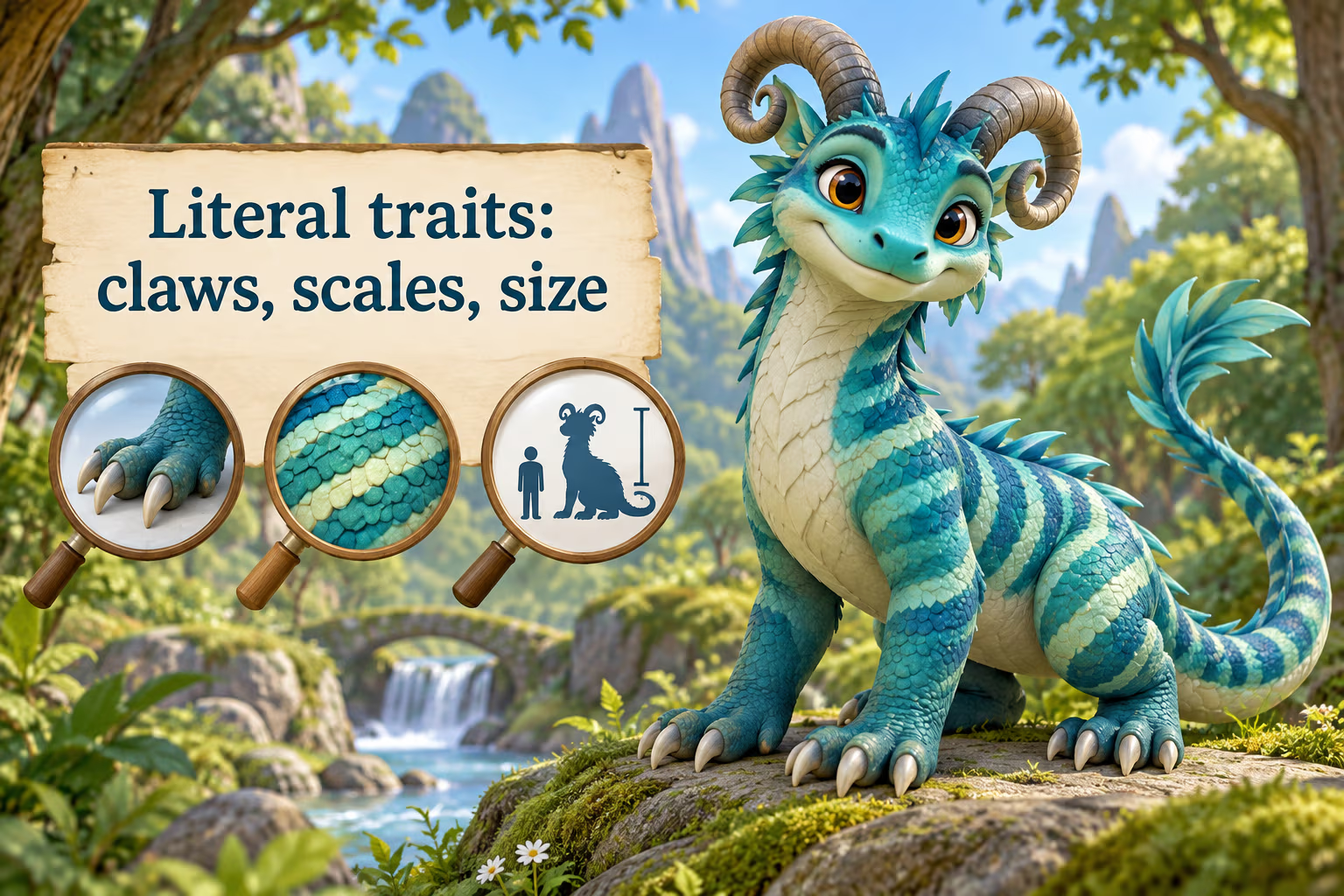
Literal traits
scaly, tentacled, towering, pale
Use when that visible feature or size is part of the scene.
Behavior or ability
ravenous, sly, flying, venomous
Show the action or ability in the story; use venomous for venom delivered by a bite or sting, not as a general synonym for dangerous.
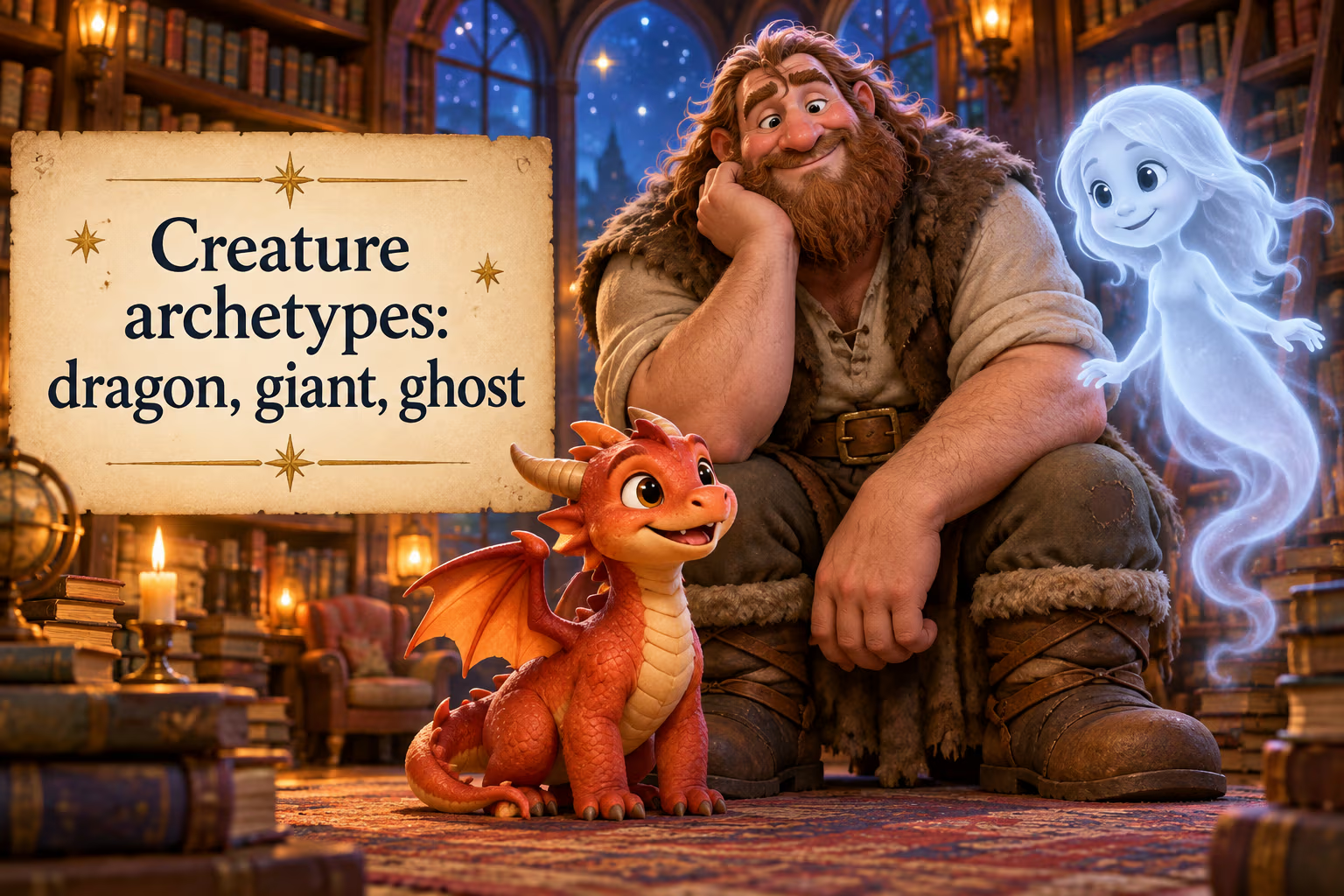
Creature archetypes (nouns)
dragon, giant, ghost, beast
Here, these words name creature types. Word class depends on use: giant can name a creature or modify a noun, as in “a giant creature.”
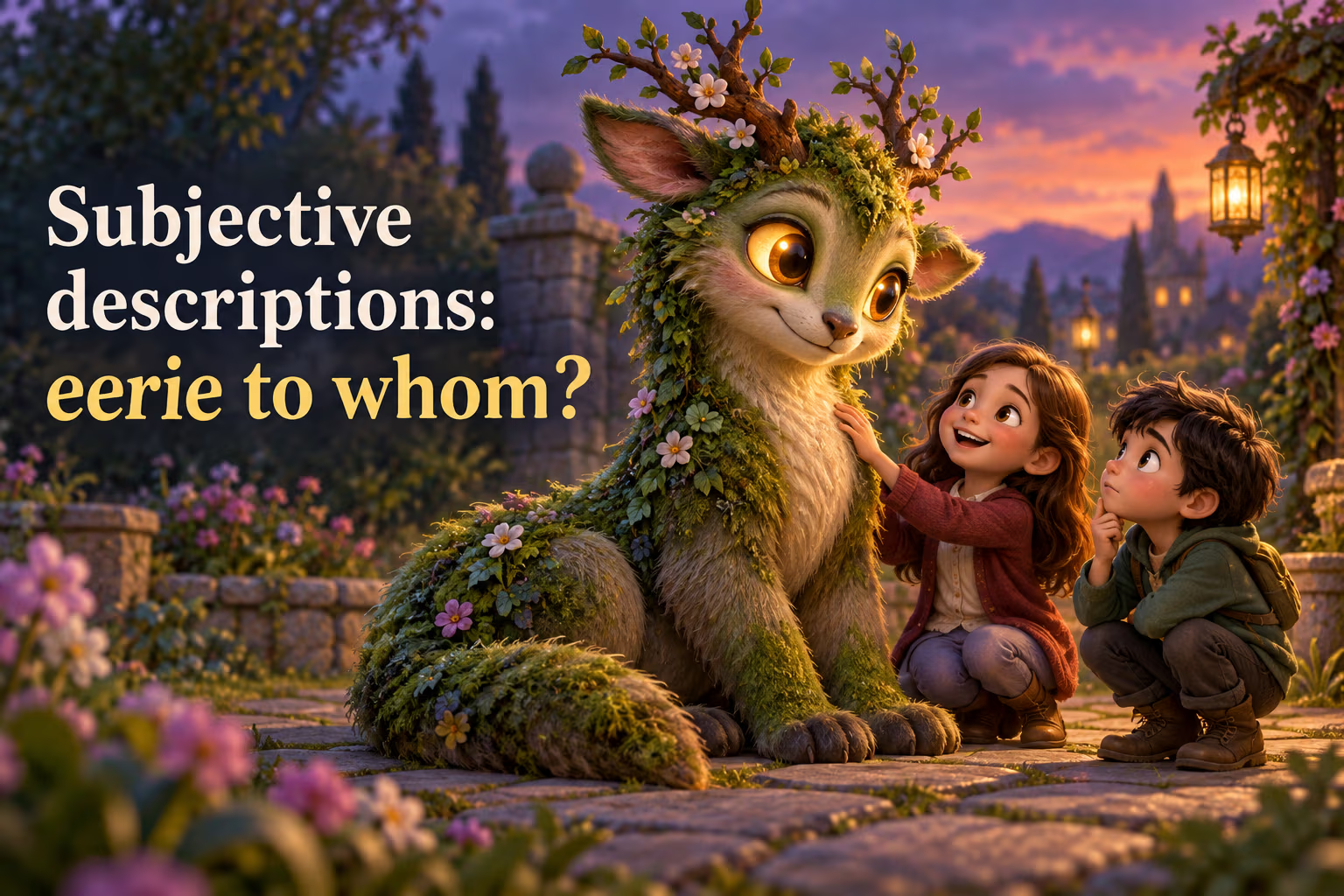
Subjective descriptions
frightening, eerie, ugly, noble, monstrous
These express an impression or judgment. Make clear whose view it is and what in the story supports it.
English has separate word classes, including nouns, verbs, and adjectives; a word’s role depends on how it works in a sentence. The inherited A–Z bank is a broad set of candidates, so check an entry before using it as an adjective. For example, anger and botanist are nouns in their ordinary uses, while annihilate and appear are verbs. Keep every original entry as a source list, then select words that fit your sentence.
Prompt: Can you point to this clue, name a creature type, or explain whose opinion the word expresses?
Example: “The long-tailed, scaled creature left silver tracks in the snow; to the gatekeeper it looked eerie, but the lost child called it gentle.” Long-tailed and scaled describe visible traits, creature names it broadly, and eerie and gentle show different characters’ impressions.
Use the original A–Z list below as a source of ideas, not as a claim that every entry is an adjective or that every monster shares the same traits. Keep descriptions grounded in the fictional scene and the point of view of the person telling it.
Adjectives are adjectives that describe monsters. Monsters are usually described as adjectives such as “scary“, “ugly“, “frightening” and so on. In this article, you will learn about some other adjectives for monster that you can use to describe these creatures. Some of the adjectives in this list may be more general terms that can also be used to describe other creatures, such as “evil” or “dangerous“.
However, others are more specific to monsters, such as “slimey” or “tentacled“. Whatever adjectives you choose to use, remember that they should help give your reader a clear picture of the creature you are describing.
Adjective For Monster
Adjectives are words that describe, modify or intensify a noun or pronoun. In the English language, there are many adjectives that can be used to describe a monster. Some of the most commonly used adjectives for monsters include: frightening, dangerous, hideous, large, and powerful. These adjectives all help to give the reader a better idea of what the monster looks like and how it might behave.
In addition to these adjectives, there are also a number of other words that can be used to describe a monster, depending on its specific features. For example, a monster with large teeth might be described as ferocious, while a monster with shiny skin might be described as slimy. Ultimately, the adjectives that are used to describe a monster will depend on its individual characteristics.
A
Abhorred
Abhorrent
Abortive
Abusive
Accomplished
Accursed
Active
Adorable
Affrightful
Afraid
Aggressive
Agreeable
Akin
Alien
Alive
Amphibious
Ancient
Anger
Angry
Anguished
Annihilate
Anomalous
Antediluvian
Appalling
Appear
Aquatic
Arch
Architectural
Artful
Asinine
Asleep
Atrocious
Average
Awful
B
Bad
Baddest
Barbarous
Bawdy
Beastly
Beautiful
Believable
Berserk
Biggest
Black
Blind
Bloodcurdling
Blooded
Bloodthirsty
Bloody
Bold
Botanist
Brainless
Bright
Brilliant
Brindled
Brutal
Bulky
Bullies
Busy
C
Canadian
Captive
Capture
Carnivorous
Certain
Chauvinistic
Cheater
Chief
Chinese
Classic
Clever
Clumsy
Cold
Colorful
Colourful
Comic
Complete
Concoct
Conspirator
Conspire
Consummate
Control
Conventional
Corsican
Cosmic
Costly
Countless
Cowardly
Crafty
Crazy
Creature
Creepy
Criminal
Cringe
Crooked
Cruel
Cruelty
Cunning
Cursed
D
Damned
Dangerous
Dark
Dastardly
Dead
Death
Decapitate
Deformed
Deified
Deliberate
Demon
Depraved
Desperate
Despicable
Destructive
Determined
Detestable
Devastating
Devilish
Devouring
Diabolical
Direful
Disappearance
Disappointed
Disguise
Disgusting
Distinguished
Disturbing
Divine
Dominant
Doomed
Dragon
Dramatic
Dread
Dreadful
Dubious
Dumb
Dutch
Dyed
E
Eager
Easiest
Eccentric
Edificial
Elusive
Enchanted
Enormous
Enraged
Escape
Escribable
Evil
Exaggerated
Execrable
Extinct
Eyed
Eyesore
F
Fabled
Fabulous
Faced
Fair
Familiar
Fantastic
Fascinating
Faultless
Favorite
Fearful
Fearsome
Female
Feminine
Ferocious
Fide
Fiend
Fiendish
Fierce
Folklore
Forceful
Foreign
Formidable
Foul
Freak
Fresh
Frightening
Frightful
Furious
Furry
G
Gargantuan
Gasp
German
Ghastly
Giant
Gigantic
Goblin
Golden
Goose Bumps
Gothic
Grand
Graven
Greater
Greatest
Greek
Green
Greyish
Grim
Grisly
Grotesque
Growling
Grown
Gruesome
H
Hag
Hair Raising
Hairy
Handed
Hard
Hardened
Harm
Hate-Monger
Haunt
Headed
Hearted
Heartless
Heavy
Heinous
Hellbent
Heraldic
Hideous
Hopeful
Horrendous
Horrible
Horrid
Huge
Human
Humanoid
Hypocritical
Hysteria
I
Iconic
Idle
Imaginary
Immense
Imminent
Impalpable
Impossible
Improbable
Impudent
Inauspicious
Incorrigible
Indescribable
Infamous
Infernal
Influence
Inhuman
Insolent
Insufficient
Invisible
J | K
Jealous
Jeer
Judicial
Kidnapping
Killer
Killing
Kindless
L
Large
Lecherous
Legal
Legendary
Legerdemain
Lethal
Limbed
Literal
Little
Lonely
Lore
Lovecraftian
Luminous
Lunatic
Lycanthrope
M
Macabre
Machiavellian
Mad
Maim
Main
Male
Malevolence
Malicious
Maniac
Manipulate
Maraud
Marine
Marvellous
Masked
Materialized
Mean
Melancholy
Melodramatic
Menace
Menacing
Metaphysical
Microscopical
Mighty
Milkwhite
Minded
Mindless
Minor
Miserable
Misshapen
Momentary
Monster
Monstrous
Mouthed
Murderous
Mutilate
Mysterious
N
Nasty
Nemesis
Nice
Nightmare
Noble
Nondescript
Notorious
O
Obdurate
Obliterate
Obscure
Obvious
Occasional
Odd
Old
Olden
Organic
Outlandish
P
Pantheistic
Peculiar
Perfect
Perfidious
Perished
Perjured
Persecution
Poisonous
Poor
Possessed
Potent
Powerful
Prehistoric
Prey
Primitive
Principal
Proverbial
Prowl
Q | R
Queerest
Quest
Quiver
Random
Rangy
Rare
Ravenous
Real
Red
Reign
Remarkable
Repel
Repugnant
Repulsive
Responsible
Revolting
Ridiculous
Ritualistic
Rival
Rogue
Rugged
Ruthless
S
Sagacious
Savage
Scared
Scary
Scoundrel
Scream
Screeching
Selfish
Sexist
Sexual
Shadowy
Shapeless
Shiver
Shrieking
Sick
Silent
Single
Sinister
Sized
Skull
Slay
Sleazy
Slimy
Snooping
Sociopath
Sodden
Somber
Splendid
Spooked
Spooky
Spy
Stalking
Starry
Stealth
Strange
Surly
T
Terrible
Terrific
Terrifying
Terror
Thief
Thorough
Thug
Tiny
Torture
Traditional
Transformation
Treacherous
Tremendous
Tremors
Trickery
Tricks
Troublesome
Twin
Twofold
Typical
U
Ugly
Ultimate
Unbelievable
Unblest
Unclean
Uncouth
Uncultured
Unfilial
Unfortunate
Ungrateful
Unhoused
Unintelligible
Unknowable
Unknown
Unleash
Unmitigated
Unnatural
Unpleasant
Unprincipled
Unscrupulous
Unseemly
Unseen
Unstoppable
Untameable
Untractable
Untrustworthy
Unusual
Unutterable
Unwieldy
Unworthy
Usual
Utopian
Utter
V
Vanish
Vast
Venomous
Veritable
Vicious
Vilest
Voracious
W | Y
Wail
Wasdreadful
Weak
Weird
Whimsical
Wicked
Wild
Willies
Wince
Winged
Worst
Wounded
Wretch
Wrongdoing
Young
youthful
Final verdict
In conclusion, adjectives are an important tool for writers when it comes to describing a monster. By carefully selecting adjectives, writers can create a vivid and terrifying picture of the creature that they have conjured up. While there are many adjectives that can be used to describe a monster, some of the most effective ones are: hideous, nightmarish, grotesque, and bloodthirsty. By using these adjectives, writers can ensure that their monster is truly horrifying.
Use the original A–Z bank selectively. It includes nouns, verbs, phrases, and entries tied to real identities or diagnoses, so check each word in a dictionary and in its sentence before using it as an adjective. In the earlier creature-archetype examples, dragon, giant, ghost, and beast name creature types; word class depends on sentence use. Avoid using nationality, gender, housing status, disability, or diagnosis as shorthand for “evil” or “monstrous.” The source list’s final claim that selected words will “ensure” a monster is horrifying is not a guaranteed effect: a description depends on scene details and point of view, and readers may react differently.
Robin founded StartsWithy in 2022 to make English words easier to understand and use. Robin oversees our 30,000+ guides, checks meanings and grammar against trusted dictionaries such as Cambridge, Oxford Learner’s and Collins, and is accountable for every correction we make.