The best adjectives for a nurse describe a work behavior that a reader can recognize, such as attentive listening, accurate documentation, or calm communication. For a résumé, connect the descriptor to a specific action and result; for a patient-facing bio, favor plain language that feels respectful and does not promise a particular outcome.
A useful pattern is descriptor + observable action + context: “Attentive nurse who confirmed medication questions with each patient before discharge.” The example shows what attentive means without implying that one adjective proves clinical competence or guarantees a result.
Quick guide
Use caring and empathetic for respectful interactions, then give an example of listening or responding.
Use organized, observant, or thorough for a documented work habit, not as a substitute for a credential.
Use collaborative for a specific handoff or team action; avoid suggesting nurses work alone.
Describe identity, age, nationality, or diagnosis only when relevant and appropriate, never as a measure of job performance.
Match every descriptor to the intended setting: résumé, recommendation, biography, or patient feedback.
Which Adjectives Describe Nursing Skills?
Skill-related adjectives are most credible when they point to observable work rather than make broad claims about personality. These examples pair a word with evidence a résumé writer or recommender can verify; the wording should still reflect the person’s actual role and experience.
Adjective
What it can describe
Evidence-based example
Attentive
Listening and follow-through
“Attentive in discharge teaching; checked understanding with a follow-up question.”
Compassionate
Respectful, responsive care
“Compassionate communicator who made space for a patient’s questions.”
Thorough
A repeatable work process
“Thorough with chart reviews and handoff details.”
Organized
Managing competing tasks
“Organized shift coordinator who kept the unit’s task board current.”
Collaborative
Working with colleagues
“Collaborative team member who shared relevant updates during handoff.”
Adaptable
Responding to changing conditions
“Adaptable during a schedule change while keeping the agreed handoff plan clear.”
Advocacy-minded
Raising a patient’s stated concern
“Raised the patient’s questions with the care team and documented the response.”
Choose only examples that are accurate, permitted to share, and free of identifying patient details. Résumé bullets should not disclose private health information; a generalized situation is enough to make the behavior concrete.
How Can You Use Nurse Adjectives in a Résumé?
A résumé adjective works best when it modifies a specific contribution instead of standing alone in a skills list. A reviewer can assess “careful with medication-reconciliation documentation” more readily than “excellent nurse,” because the first phrase names an observable practice.
Pick one accurate descriptor. Check that it fits the job and is supported by your experience.
Name the action. Use a strong verb such as coordinated, documented, explained, reviewed, or escalated.
Add the setting or task. Give enough context to distinguish the contribution without disclosing a patient’s identity.
State a verifiable result when you have one. Use a measured outcome only if you can substantiate it; never invent percentages or clinical effects.
Check scope and wording. List licenses and certifications accurately in their own section, and use role titles consistent with the jurisdiction and employer.
Standalone claim
More useful wording
“Compassionate and caring nurse”
“Used plain language and paused for questions during discharge teaching.”
“Highly organized”
“Tracked admissions, handoff notes, and follow-up tasks on a shared unit checklist.”
“Excellent clinical judgment”
“Recognized a change from the documented baseline and promptly followed the unit’s escalation process.”
“Hardworking, dedicated, and tireless”
“Completed scheduled rounds and documented outstanding handoff items before shift change.”
The rewrites describe actions, not a guarantee of safe or effective care. Avoid turning a routine duty into an unsupported performance claim, and do not add numbers unless records support them.
Are Some Adjectives Better for a Nurse Biography?
A short professional biography usually benefits from two or three relevant descriptors, each tied to the nurse’s role or approach. “Patient, clear, and collaborative” is more useful when followed by the setting and the kind of communication the nurse provides; a biography is not a clinical endorsement.
For a colleague recommendation, cite a witnessed example and its work context. For a patient review, describe your own interaction (“the nurse explained each step and listened to my questions”) instead of making claims about diagnosis, technical skill, or results you cannot assess.
What Words Should You Use Carefully?
Words such as competent, qualified, and skilled can sound like judgments about formal ability. The National Council of State Boards of Nursing explains that scope decisions depend on a nurse’s education, licensure, competence, and the applicable jurisdiction’s nurse-practice law and rules; an adjective alone cannot establish any of those facts (NCSBN scope-of-practice framework). State credentials and experience precisely rather than implying authorization through flattering wording.
The American Nurses Association’s 2025 Code of Ethics centers dignity, respect, relationships, and accountability across nursing contexts. Accordingly, avoid reducing a nurse to nationality, race, religion, age, appearance, or a mental-health label. Avoid describing someone as “tireless” or “self-sacrificing” as if accepting unsafe working conditions were a professional virtue; concrete conduct is more useful than praise that normalizes overwork.
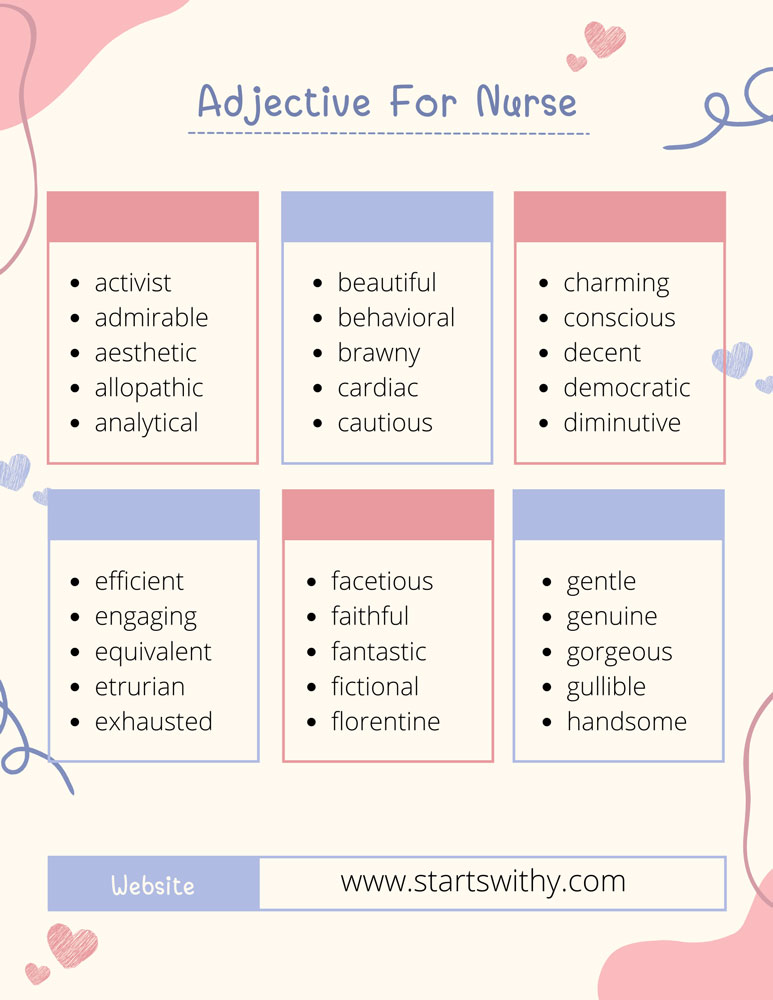
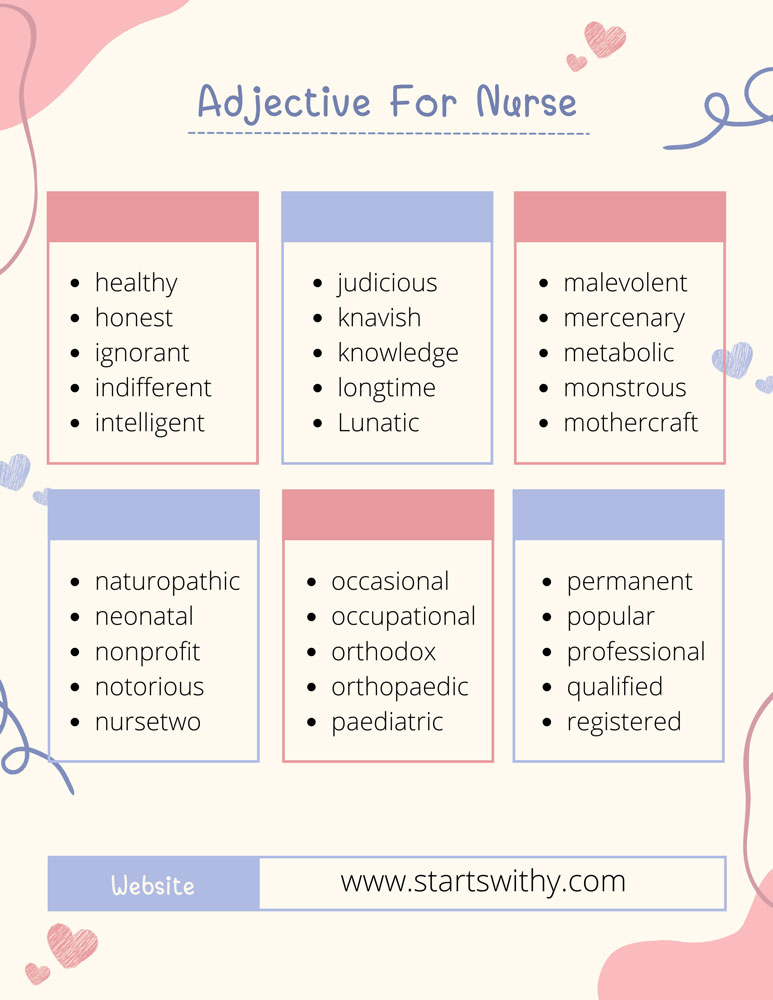
The A–Z source directory below is retained as supplied, but it is not a vetted list of recommended nurse descriptors. It mixes relevant traits with job terms, clinical specialties, national or cultural identities, misspellings, and words that can be offensive or dehumanizing. In particular, entries are not endorsements: readers should not use racial slurs, outdated labels, or identity categories as performance adjectives. Select an accurate, respectful word for the specific person and purpose; remove harmful entries before republishing this list elsewhere.
Frequently Asked Questions About Adjectives for a Nurse
What are five positive words to describe a nurse?
Attentive, compassionate, organized, collaborative, and thorough can describe useful work qualities when evidence supports them. Pair each word with a specific action, such as listening carefully, coordinating a handoff, or checking documentation. The adjective alone does not establish a nurse’s credentials or clinical competence.
How do I describe a nurse on a résumé?
Use one relevant adjective with an action, context, and verifiable result if available. For example, say “organized shift coordinator who maintained a clear handoff checklist,” provided the statement reflects your actual responsibilities. Keep licenses, credentials, and measurable outcomes accurate and separate from general personality descriptors.
Can I call a nurse competent or qualified?
Use competent or qualified only when you can support the claim and the context makes its meaning clear. Education, licensure, experience, competence, and local scope rules are distinct considerations. An adjective in a résumé or review cannot verify that a person is authorized to perform a particular clinical activity.
Which adjectives should I avoid when describing nurses?
Avoid slurs, outdated identity labels, stereotypes, and claims about character that you cannot observe. Words such as “tireless” can also praise excessive workloads rather than describe a useful skill. Prefer respectful language tied to specific conduct, and remove patient identifiers from any example.
When writing a resume, adjectives are your best friend. They enhance your experiences and highlight your accomplishments. However, with so many adjectives to choose from, it can be difficult to know which ones will really pack a punch. That’s why we’ve compiled a list of the best adjectives for nurse resumes, so you can find the perfect words to describe your skills and experiences.
Whether you’re an experienced registered nurse or a recent nursing school graduate, these adjectives will help you create a strong, impactful resume. From compassionate and caring to detail-oriented and organized, these adjectives will show employers that you’re the perfect candidate for the job. So, what are you waiting for? Start writing your nurse resume today!
Adjective For Nurse
The adjectives used to describe a nurse can have a significant impact on the way that patients and their families view the profession. In many cases, the adjectives chosen can determine whether or not patients feel comfortable trusting their care to a nurse. For this reason, it is important to choose adjectives that reflect the positive aspects of nursing.
Some adjectives that could be used to describe a nurse include: caring, competent, compassionate, dedicated, hardworking, and skilled. These adjectives convey the message that nurses are professional and capable caregivers who are committed to providing high-quality care. When used appropriately, they can help to improve the public’s perception of nursing.
A
Absent
Active
Activist
Actual
Admirable
Admiring
Advanced
Aesthetic
Affected
Affectionate
Afraid
African
Aged
Alert,
Alleged
Allopathic
Alternate
Amateur
B
Amazed
Amiable
Analytical
Ancient
Angelical
Angered
Angry
Annual
Antikary
Anxious
Appalled
Arab
Arabian
Argentinean
Arína
Aristocratic
Armenian
Asleep
Assistant
Atheist
Attendantthe
Attentive
Attractive
Australian
Austrian
Authoritative
Auxiliary
Average
B
Baked
Bearded
Beastly
Beautiful
Beforeo
Behavioral
Belgian
Best
Betwixt
Bewildered
Bibliomaniacal
Black
Blind
Blonde
Bogus
Boldest
Brave
Brawny
Breed
British
Brown
Brutal
Burly
Busy
C
Callow
Canadian
Capable
Cardiac
Cardiovascular
Careful
Careless
Casual
Cautious
Celebrated
Certain
Certified
Charge
Charming
Cheerful
Cheery
Chief
Chinese
Chiropractic
Christian
Civil
Civilian
Classy
Clever
Clinical
Colonial
Colored
Compassionate
Competent
Complaisant
Confidential
Conscientious
Conscious
Considerate
Constant
Convincing
Corrupt
Courteous
Credulous
Crippled
Critical
Crowded
Crucial
Cruel
Cuban
Cursed
Cynical
D
Daffy
Damned
Dandyish
Daring
Daythe
Dead
Dear
Deathsan
Deceased
Decent
Dedicated
Defenceless
Delighted
Democratic
Dental
Dependent
Deputy
Detailed
Detest
Devilish
Devoted
Diagnostician
Diethe
Diminutive
Dire
Distempered
Distinguished
Dogsled
Domestic
Dominican
Double
Drab
Drunken
Dry
Dual
Dubious
Dusky
Dutch
E
Eager
Eagle-Eyed
Earthly
Eccentric
Efficient
Elderly
Elite
Eminent
Endless
Engaging
English
Enlightened
Epidemiological
Equivalent
Erudite
Eskimo
Esthetic
Ethic
Etrurian
European
Evil
Excellent
Exceptional
Excitable
Exhausted
Experienced
Extra
Extreme
Exultant
Eyed
F
Faced
Facetious
Fair
Faithful
Fake
Famous
Fantastic
Fashionable
Fashioned
Fat
Fearless
Feeble
Fellow
Female
Fictional
Fifth
Filipino
Fine
Fit
Flexible
Florentine
Florist
Fond
Foolish
Foreign
Forensic
Forthcoming
Foster
Frank
Frantic
French
Frequent
Fresh
Friendly
Frightened
Funny
Futile
Future
G
Garbed
Genial
Gentle
Gentlemanly
Gentler
Genuine
German
Gerontological
Ghanaian
Glad
Godless
Gorgeous
Grad
Graduate
Grand
Grave
Greek
Guilty
Gullible
H
Haired
Haitian
Handsome
Handsthe
Happy
Hard-Working
Hardworking
Hateful
Healthy
Hearted
Hearty
Heavilythe
Heroic
Hillbilly
Hired
Holy
Homeopathic
Homoeopathic
Honest
Honorary
Horrid
Hoss
Humble
Humored
Hysterical
I
Icu
Ideal
Idle
Iggorent
Ignorant
Immigrant
Impersonal
Inattentive
Inclined
Inclusive
Incompetent
Incorporated
Incorrigible
Incredible
Independent
Indian
Indifferent
Indigenous
Indignant
Individual
Indulgent
Inexperienced
Infectious
Infernal
Ingenuous
Initial
Injudicious
Intake
Intelligent
Intensive
Intent
Interesting
Invalid
Invaluable
Irish
Israeli
Italian
J | K
Japanese
Jewish
Judicious
Junior
Kenyan
Kind
Kindly
Knavish
Knitted
Knowledgeable
Knowthe
Korean
L
Large
Latin
Lay
Lazy
Lead
Learned
Lebanese
Licensed
Livid
Longtime
Lovely
Lunatic
M
Mad
Magnanimous
Mainstream
Malaysian
Male
Malevolent
Maternal
Meddling
Mediaeval
Medical
Mental
Mercenary
Mere
Merrilythe
Messy
Metabolic
Mexican
Mighty
Milanese
Milesian
Military
Minded
Misinformed
Missionary
Mock
Modern
Modest
Monstrous
Monthly
Moorish
Moral
Mothercraft
Mountainous
Multiple
Murderous
Musical
Myriad
N
Narcissistic
Native
Natural
Naturopathic
Naval
Nazi
Nearest
Negress
Negro
Neonatal
Nepalese
Neurosurgical
Nice
Nigerian
Nursetwo
Nightcapped
Noan
Nonprofit
Normal
Northern
Norwegian
Noted
Notorious
Nuclear
Numerous
O
Obdurate
Obscure
Observant
Obstetric
Occasional
Occupational
Odious
Old
Oral
Orderly
Ordinary
Original
Orthodox
Orthopaedic
Ospital
Outside
Overstretched
Overwhelmed
P
Paediatric
Pakistani
Pale
Palestinian
Pallid
Pandemic
Parish
Passive
Patient
Pedantic
Pedatric
Pediatric
Perfect
Perioperative
Permanent
Pesky
Pet
Philippine
Phlegmatic
Physiciansnegro
Podbourne
Poetical
Polish
Polite
Pontifical
Poor
Popular
Positive
Potential
Powerful
Practical
Pragmatic
Precious
Pregnant
Prejudiced
Present
Pretended
Primary
Principal
Prodigal
Professional
Proficient
Prominent
Promising
Proper
Prospective
Prosperous
Protestant
Psychiatric
Psychic
Pulmonary
Puzzled
Q
Quack
Quadrupled
Qualified
Quick
Quiet
R
Radical
Rajputni
Rare
Real
Realistic
Redoubtable
Regimental
Registered
Regular
Rehab
Reluctant
Renegade
Renowned
Reputed
Resident
Respected
Respiratory
Responsible
Retired
Reverend
Reviving
Rich
Roman
Rotten
Rough
Royal
Rugged
Rural
Russian
Rustick
S
Sacred
Sagacious
Sainted
Salaried
Scholastic
Scientific
Scottish
Sedate
Selfish
Sencible
Senior
Sensible
Seraphic
Serviceable
Seventh
Sexual
Shady
Shameful
Shaven
Short
Shrill
Sick
Silent
Silly
Sincere
Single
Sixth
Sizeable
Skilful
Skilled
Skillful
Skinned
Skinny
Slain
Sleepy
Soft
Sole
Solicitous
Solitary
Spanish
Specialised
Specialist
Specialized
Squamish
Stalwart
Standby
Standin
Startled
Stellar
Stern
Stolid
Stout
Strange
Strapping
Stupid
Stylish
Subtle
Successful
Suicidal
Supposed
Surgical
Swedish
Sweet
Swiss
Syrian
T
Tender
Tenth
Terrified
Tested
Thee
Theological
Thin
Thracian
Thy
Tibetan
Tired
Traditional
Trained
Travelled
Treacherous
Treasured
Truthful
Turble
Turkish
Typical
U
Unaccommodating
Unbelievable
Uncaring
Uncertified
Undead
Unfaithful
Unfit
Unfortunate
Unhappy
Unionized
Unlucky
Unnamed
Unobtrusive
Unprincipled
Unprofessional
Unqualified
Unseemly
Unsuspecting
Untrained
Unwearied
Upper
Urgent
Useful
Useless
V
Vain
Valiant
Venerable
Venereal
Venetian
Venezuelan
Veteran
Veterinary
Veterinaryanimal
Victorian
Villainous
Vocational
W | Y | Z
Wandering
War
Watchful
Wealthy
Weary
Weird
Well-Trained
West
Western
Wet
Wherefore
Whiskered
Wicked
Willing
Wisest
Wonderful
Worn
Worthy
Wrong
Yore
Youthful
Zimbabwean
Final verdict
In conclusion, adjectives for nurse can include compassionate, caring, devoted, empathetic, and patient. These adjectives accurately describe the qualities that make a great nurse. Nurses are often the unsung heroes of the medical field, but their importance cannot be overstated. The next time you see a nurse, be sure to tell them how much you appreciate their hard work and dedication.