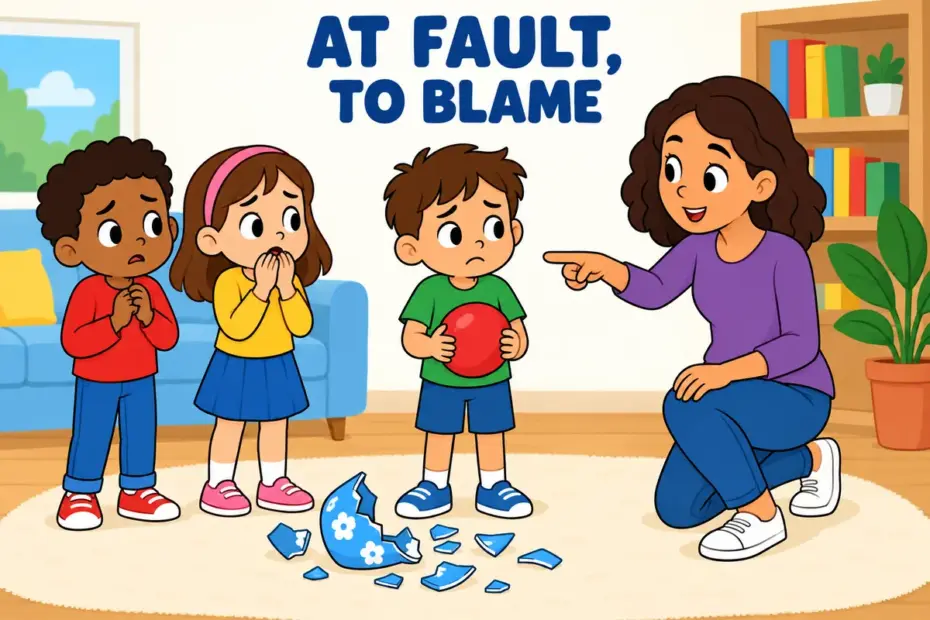
Culpable is an adjective meaning deserving blame for something wrong. To use culpable in a sentence, name the person and the fault, and follow the adjective with for: “The driver was culpable for the crash.” It belongs mainly to legal and formal writing, where it signals moral or legal fault rather than mere responsibility.
Culpable at a glance
- Culpable is an adjective; the related forms are culpably, culpability and the noun culprit.
- The dominant pattern is be culpable for + a fault or outcome.
- Culpable appears in legal, ethical and formal writing rather than in ordinary chat.
- Common collocations are found culpable, held culpable and morally culpable.
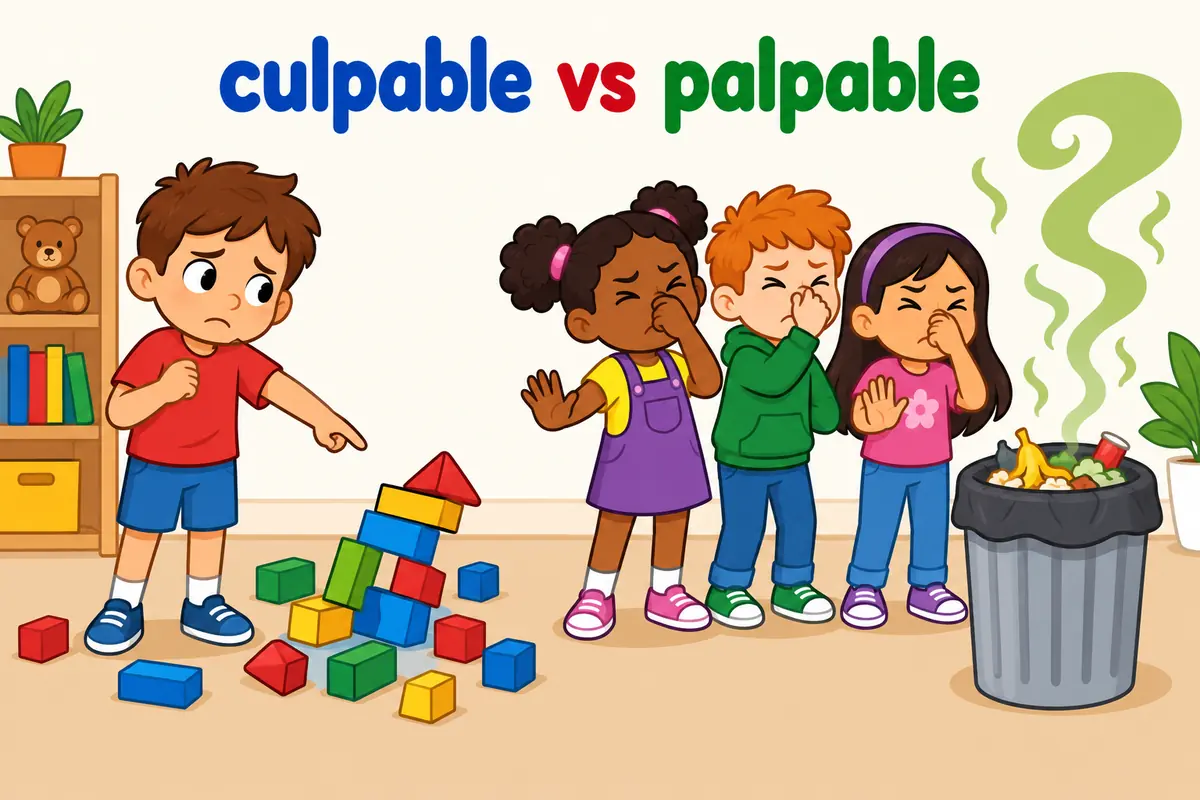
- The commonest error is confusing culpable with palpable, which means obvious or tangible.
What does culpable mean?
Culpable is an adjective meaning deserving blame or censure for a wrong act. The Cambridge entry for culpable records that sense, and it is narrower than responsible: a person can be responsible for a task without being culpable, because culpable always implies fault. It also differs from guilty in scope, since guilt names a formal finding, while culpable describes blameworthiness that need not have been judged in a court. For a legal duty, especially one about money, liable is the more precise choice.
| Sense | Plain meaning | Example sentence |
|---|---|---|
| Deserving blame | At fault for something wrong | The manager was culpable for ignoring the warning. |
| Legally blameworthy | Judged responsible for an offence | The court found the two directors culpable. |
One limitation matters. Culpable is not a neutral word for responsibility. Calling a colleague culpable for a missed deadline accuses them of fault, so in workplace writing blame or at fault is often the plainer, safer choice. The word also does not fit events that cannot be blamed, such as a storm or a design fault nobody chose.
How do you use culpable in a sentence?
Culpable follows a linking verb such as be, become or remain, and then names the fault with for. The five patterns below cover most real sentences. Some legal writing uses culpable of before an offence, but for is the safe choice in ordinary prose.
| Pattern | Example | What it signals |
|---|---|---|
| be culpable for + noun | She was culpable for the loss. | Names the fault the person is answerable for. |
| find / hold + person + culpable | The inquiry found them culpable. | Reports a conclusion without naming the offence. |
| culpable + noun | A culpable oversight delayed the repair. | Attributes blame to the act itself. |
| culpable in + matter | The clerk was culpable in the fraud. | Names the affair the person was caught up in. |
| less / more culpable than | The lookout was less culpable than the planner. | Compares two degrees of blame. |
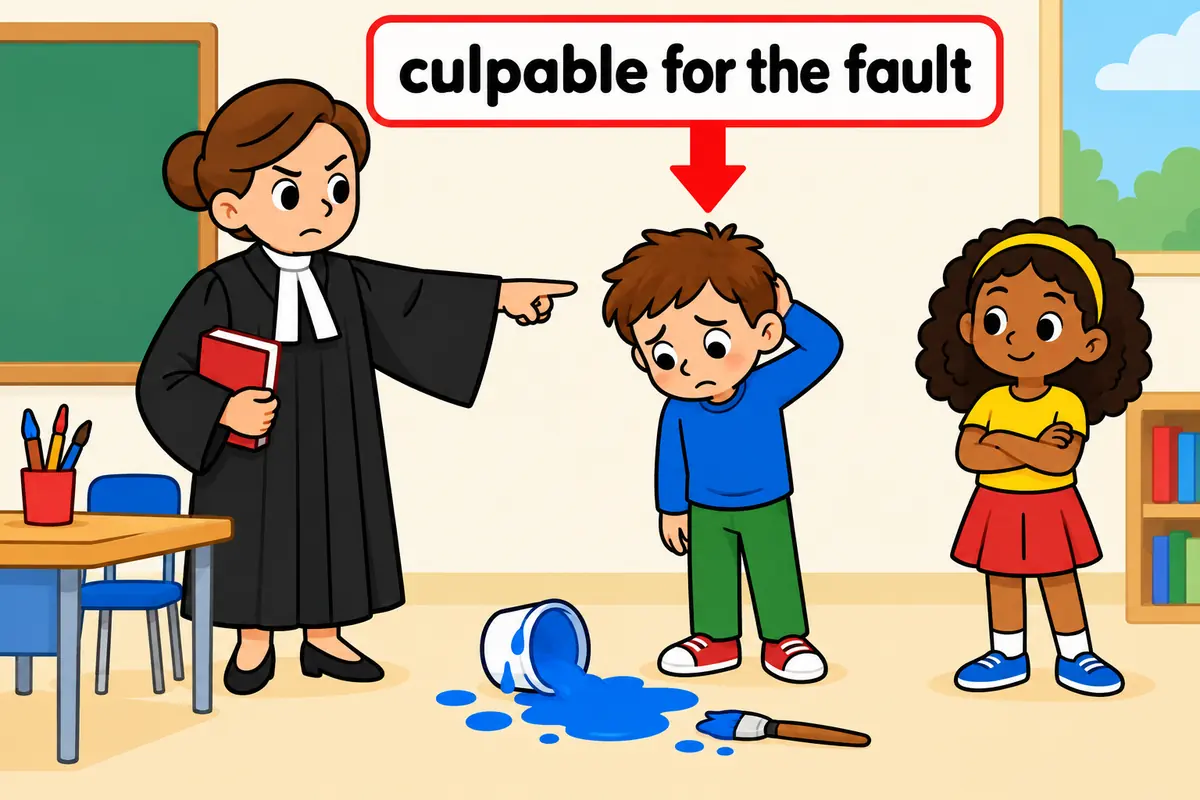
Culpable in a sentence: examples across contexts
Culpable keeps the same meaning across registers, but the formality of its company changes. Each sentence below names the person and the fault, which is what the word requires.
| Context | Example sentence | Why this works |
|---|---|---|
| Workplace email | The report found no single team culpable for the delay. | For is followed by the outcome, and no names are blamed. |
| Legal writing | The tribunal held the contractor culpable for the unsafe work. | Held plus culpable reports a formal finding. |
| News report | Investigators described the officers as culpable in the cover-up. | In links the person to the affair rather than the act. |
| Ethics essay | Voters may be culpable for electing a leader they were warned about. | Extends blame beyond courts into moral argument. |
| Classroom | The teacher said both boys were culpable and set a joint task. | Shared blame is expressed with a plural subject. |
| HR memo | A manager who ignores a complaint is culpable for the outcome. | Shows the fault belongs to a role, not a person. |
| History essay | Historians still debate whether the general was culpable for the defeat. | Frames blame as a question rather than a verdict. |
| Audit note | Neither department was culpable, yet the loss was real. | Separates responsibility for harm from blame. |
| Conversation | I felt culpable even though I had done nothing wrong. | Reports a feeling of blame the evidence does not support. |
The last two rows are the interesting ones. Blame can exist without a culprit, and a person can feel culpable without being so.
Culpable vs guilty and liable
Culpable overlaps with guilty and liable but is interchangeable with neither. Guilty names a formal verdict; liable describes a legal duty; culpable judges blame.
| Attribute | culpable | guilty | liable |
|---|---|---|---|
| Core meaning | Deserving blame | Judged to have committed an offence | Legally bound to pay or answer |
| Needs a verdict | No, it can be an opinion | Yes, a formal finding | No, it describes exposure |
| Typical consequence | Censure or fault | Conviction or punishment | A duty to compensate |
| Register | Formal and ethical | Legal and everyday | Legal, often financial |
| Example | The report called the officer culpable. | The jury found her guilty. | The firm is liable for the damage. |
Verdict: choose culpable for blame, guilty for a verdict, and liable for a legal duty such as paying for harm.
Word forms and grammar of culpable
Culpable is an adjective, so it modifies a person or an act and never takes a direct object. The related noun culpability names the quality, while culprit names the person, and both are commoner in formal writing than in speech.
| Form | Part of speech | Example |
|---|---|---|
| culpable | adjective | The driver was culpable. |
| culpably | adverb | The firm acted culpably. |
| culpability | noun | The inquiry measured each officer’s culpability. |
| culprit | noun, the person | Police soon found the culprit. |
| palpable | adjective, different meaning | The tension was palpable. |
Common mistakes with culpable
- Incorrect:
The plan was culpable for the delay.Correct: The planner was culpable for the delay. Rule: Culpable describes a person or their act, not an inanimate plan. - Incorrect:
He was culpable of the mistake.Correct: He was culpable for the mistake. Rule: Use for with the fault; culpable of is rare legal wording. - Incorrect:
Her guilt was culpable to everyone.Correct: Her guilt was palpable to everyone. Rule: Palpable means obvious; culpable means blameworthy. - Incorrect:
The bad weather was culpable.Correct: Nobody was culpable for the storm. Rule: Natural events cannot be culpable; only people or their acts can. - Incorrect:
He accepted his culpable.Correct: He accepted his culpability. Rule: The noun is culpability, so the adjective cannot stand where a noun is needed.
Practice using culpable
Work through the six items, then read the reasons rather than only the answers.
- Fill the gap: The inquiry found the foreman ______ for the collapse.
- Choose the better word: The company is (culpable / guilty) in the moral sense, though no court has ruled.
- Correct the error: The leaking roof was culpable for the damage.
- Build a sentence: use be culpable for about a classmate who ignored a safety rule.
- Spot the register: which fits a tribunal finding — the driver was culpable for the collision, or the driver was, like, totally at fault?
- Rewrite with the noun: The board judged her culpable. Use culpability instead.
Answers
- culpable — for introduces the fault, and the foreman is the person blamed.
- culpable — no verdict exists, so guilty would overstate the finding.
- The landlord was culpable for the damage — a roof cannot be blamed; a person can.
- Model answer: Ravi was culpable for the accident because he skipped the check.
- The driver was culpable for the collision — a tribunal avoids slang and filler.
- The board measured her culpability — the noun takes an article and a verb such as measure.
The bottom line
Use culpable in a sentence to say that a person deserves blame for a wrong act, and follow it with for to name the fault. Two nuances decide the choice: culpable implies fault, so it is stronger than responsible, and it needs no verdict, which separates it from guilty. When legal responsibility about money is the issue, liable states exactly what you mean.
Frequently asked questions about culpable
What does culpable mean in simple words?
Culpable means deserving blame for a wrong act. If someone is culpable, they are at fault, and the word implies that they could and should have acted differently. It is stronger than responsible, which can be neutral, and it does not require a court to have reached a verdict.
Is culpable the same as guilty?
They overlap but are not identical. Guilty usually names a formal verdict after a trial or admission, while culpable describes blameworthiness and can be an opinion rather than a finding. A report may call an official culpable even when no court has convicted anyone, so the words are not interchangeable.
What is the difference between culpable and liable?
Culpable is about fault and blame, while liable is about legal responsibility, often a duty to pay for harm. A company can be liable for damage without anyone being culpable, and a person can be culpable morally without being liable in law. Choose the word that matches what you are asserting.
Can culpable describe a thing rather than a person?
Culpable almost always describes a person or that person’s own act, such as a culpable oversight. It does not fit natural events or neutral objects, so nobody is culpable for a storm. When you mean that something is obvious, the correct adjective is palpable.
Have you ever wondered what it means to be truly responsible for something? When someone is deemed “culpable,” it signifies that they are guilty of some form of wrongdoing or fault.
In legal terms, being culpable means being held accountable for one’s actions, often implying that the person has committed a crime or made a serious mistake. Understanding the concept of culpability is essential in determining the appropriate consequences in various situations.
7 Examples Of Culpable Used In a Sentence For Kids
- The dog was not **culpable for chewing the teacher’s homework.
- The cat looked culpable when the flower vase fell and broke.
- Sam felt culpable for eating his sister’s chocolate without asking.
- The bird seemed culpable for making a mess on the car windshield.
- Sarah realized she was culpable for drawing on the walls with crayons.
- The student admitted he was culpable for spilling paint on the classroom floor.
- The bunny appeared culpable for nibbling on the book’s corner.
14 Sentences with Culpable Examples
- Students who cheat on exams are culpable of academic dishonesty.
- Sharing a friend’s assignment as your own makes you culpable for plagiarism.
- Not citing sources properly in your research paper can make you culpable of intellectual theft.
- Skipping classes regularly can make you culpable of poor attendance.
- Ignoring important deadlines for assignments can render you culpable of academic negligence.
- Showing up late for exams without a valid reason may make you culpable of irresponsible behavior.
- Not participating in group projects can make you culpable of lack of teamwork.
- Using someone else’s ideas without giving credit can render you culpable of intellectual dishonesty.
- Failing to seek help when struggling with coursework can make you culpable of academic negligence.
- Harming or vandalizing school property can make you culpable of misconduct.
- Overlooking safety regulations in laboratories can render you culpable of negligence.
- Sharing sensitive information about exams with others can make you culpable of academic dishonesty.
- Being involved in any form of cheating during exams can make you culpable of academic misconduct.
- Failing to follow instructions given by professors can render you culpable of irresponsibility.
How To Use Culpable in Sentences?
To use the word Culpable in a sentence, it is important to understand its meaning and how it can be applied correctly. The word Culpable is an adjective that means deserving blame or censure for a wrong or offense.
When constructing a sentence with Culpable, it is helpful to identify a situation where someone is responsible or at fault for something negative. For example, “The company was found Culpable for the environmental pollution as they did not follow the regulations.”
Another way to use Culpable in a sentence is by stating someone’s acknowledgment of their own wrongdoing. For instance, “She admitted that she was Culpable for the mistake and apologized sincerely.”
In legal contexts, Culpable is often used to describe the level of guilt or responsibility of a person involved in a crime or offense. An example of this would be, “The defendant was deemed Culpable for the fraud scheme and faced severe consequences.”
Overall, when using Culpable in a sentence, remember to carefully consider the context and ensure that it accurately conveys the sense of responsibility or blameworthiness associated with the word.
Conclusion
In conclusion, the examples of sentences with “culpable” demonstrate the concept of being guilty or deserving blame for a wrongful act. These sentences highlight instances where someone is held accountable for their actions and must acknowledge their responsibility for the repercussions of their behavior.
By examining these sentences, it becomes clear that acknowledging one’s culpable actions is crucial for personal growth, accountability, and the restoration of trust in relationships. Understanding and accepting culpability can lead to learning from mistakes, making amends, and ultimately fostering a more ethical and responsible approach to decision-making and interactions with others.