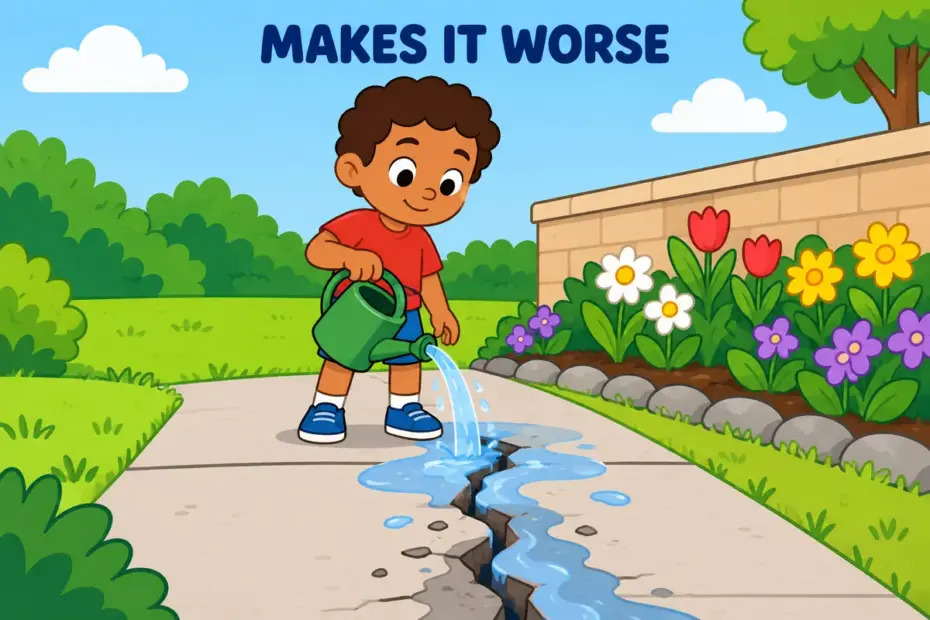
Exacerbate means to make an already bad situation worse, not to create the problem in the first place. To use exacerbate in a sentence, put it before the thing it worsens: “Late repairs exacerbated the flooding.” The verb is transitive, so it always needs something that gets worse.
Exacerbate at a glance
- Exacerbate is a transitive verb; its forms are exacerbates, exacerbated and exacerbating.
- The pattern is exacerbate + the problem, as in exacerbate the shortage.
- The trouble is usually the object, while the cause can be named as the subject.
- The noun exacerbation appears most often in medical writing for a flare-up.
- The commonest error is confusing exacerbate with exasperate, which means to annoy.
What does exacerbate mean?
Exacerbate is a transitive verb meaning to make a problem, bad situation or negative feeling worse. The Cambridge Dictionary entry for exacerbate records this sense of adding to an existing trouble. The table separates the senses learners meet, and the first is by far the most common. Where the writer only means to make something more severe, aggravate is the near synonym.
| Sense | Plain meaning | Example sentence |
|---|---|---|
| Worsen a problem | Make a bad situation more serious | The closure exacerbated the housing shortage. |
| Inflame a feeling | Make a difficult emotion sharper | The delay exacerbated everyone’s anxiety. |
| Flare a condition | Medicine: make a symptom worse | Dust exacerbated his asthma that spring. |
One limitation matters here. Exacerbate does not mean to cause or to create, because the problem must already exist. It is also formal and technical, so in everyday speech make worse is usually the better choice. Above all, it does not mean to annoy: that is exasperate, and the two are easily confused in writing. A second setback can even compound a difficulty that was already present.
How do you use exacerbate in a sentence?
Put the problem after the verb and, when it helps, name the cause as the subject. The five patterns below cover almost every natural sentence.
| Pattern | Example | What it signals |
|---|---|---|
| exacerbate + problem noun | Heavy rain exacerbated the delays. | The problem is the direct object. |
| cause + exacerbate + problem | The cuts exacerbated an existing shortage. | Both the cause and the worsened thing appear. |
| be exacerbated by + cause | The injury was exacerbated by early training. | Passive voice keeps the problem in focus. |
| exacerbate + feeling | The silence exacerbated her anxiety. | Abstract feelings can be worsened too. |
| exacerbate the risk / tension | The ruling exacerbated tensions between neighbours. | Common collocations in formal prose. |
Beginners often write a cause with no object, as in the rain exacerbated, which leaves the sentence hanging. The verb always demands to know what got worse, so name the problem before you finish the thought. Where the tone is plain, the everyday verb worsen will do the same work.

Exacerbate in a sentence: examples across contexts
Exacerbate changes register more than meaning. The nine sentences below keep the verb the same while moving from a classroom to a council report, and each one names the problem that gets worse.
| Context | Example sentence | Why this works |
|---|---|---|
| Classroom | Missing breakfast exacerbated the pupils’ tiredness. | Names the existing problem made worse. |
| Workplace email | The late order exacerbated an already tight schedule. | Links the cause to a concrete problem. |
| News report | The drought exacerbated food shortages across the region. | Formal subject and a clear object. |
| Legal writing | The delay exacerbated the harm to the tenant. | Uses the passive-friendly formal register. |
| Medical writing | Cold air exacerbated her breathing difficulty. | Applies the verb to a symptom. |
| Public policy | The fare rise exacerbated pressure on household budgets. | Names both the cause and the strain. |
| Technical writing | Poor ventilation exacerbated the build-up of fumes. | Uses exacerbate for a technical process. |
| Conversation | Shouting only exacerbated the argument. | Keeps the verb but keeps the tone plain. |
| History essay | The treaty exacerbated tensions it was meant to calm. | Shows an ironic, well-known pattern. |
In every sentence the problem is named and the cause arrives first. That order is why exacerbate reads as precise rather than vague, and it is the pattern to copy.
Exacerbate vs exasperate
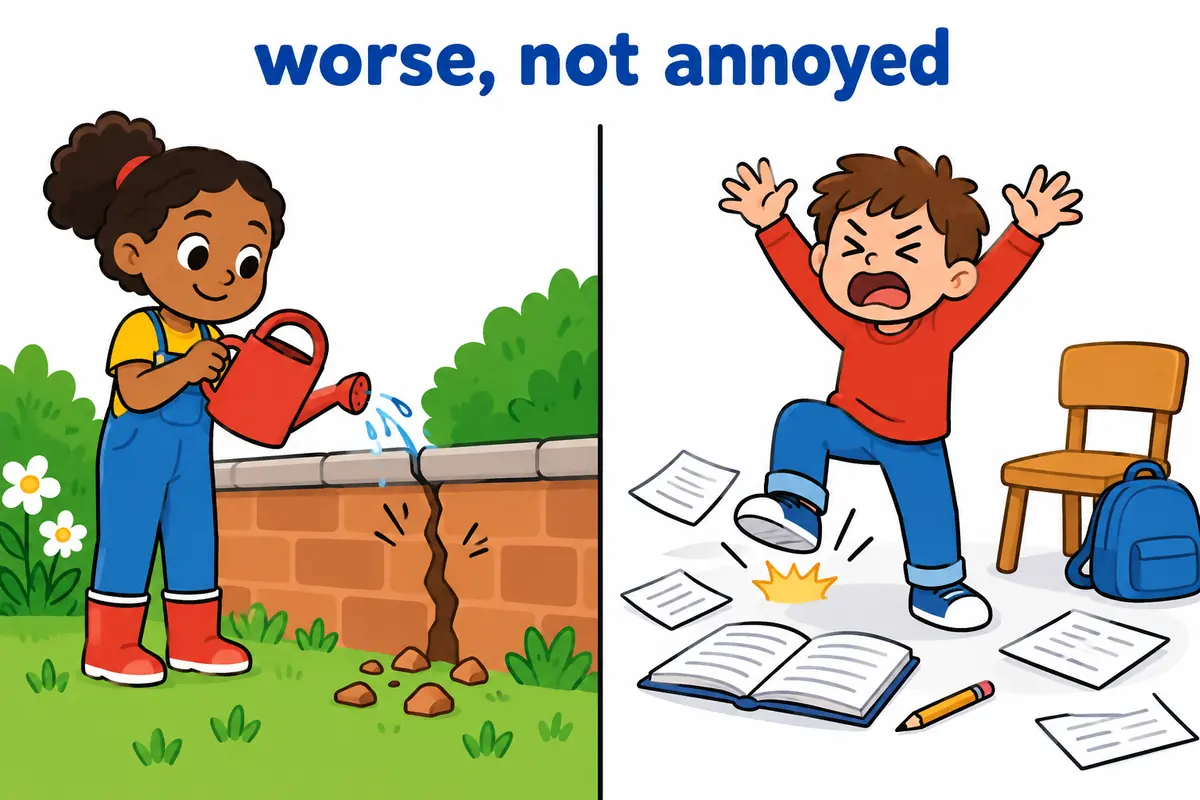
Exacerbate and exasperate sound almost the same and mean completely different things. Exacerbate worsens a problem; exasperate irritates a person. The table separates them on the points that decide a sentence.
| Attribute | exacerbate | exasperate |
|---|---|---|
| Core idea | Make a problem worse | Make a person annoyed |
| Typical object | A problem, shortage or symptom | A person or a group |
| What it affects | A situation | Somebody’s patience |
| Register | Formal and technical | Neutral to formal |
| Common subject | A cause such as cuts, weather or delay | A person or a repeated behaviour |
| Result | The problem deepens | The person loses patience |
Verdict: use exacerbate when a problem grows worse, and exasperate when somebody is driven to irritation; only one of the two can take a situation as its object.
Word forms and grammar of exacerbate
Exacerbate inflects regularly, and its present participle exacerbating is common before a noun, as in exacerbating factors. The noun exacerbation is mostly medical. The table also lists the forms learners build by mistake.
| Form | Part of speech | Example |
|---|---|---|
| exacerbate | verb, base form | Dust can exacerbate asthma. |
| exacerbates | verb, third person singular | Delay exacerbates the cost. |
| exacerbated | verb, past and past participle | The flood exacerbated the shortage. |
| exacerbating | verb, present participle | Exacerbating factors made recovery slow. |
| exacerbation | noun, chiefly medical | The winter brought a severe exacerbation. |
| exacerbatement | noun, non-standard | Avoid it; use exacerbation instead. |
The invented noun exacerbatement is a clear learner error, because English already has exacerbation. The shorter, established form is the one to use in every register.
Common mistakes with exacerbate
- Incorrect:
The team exacerbated.Correct: The team exacerbated the delay. Rule: The verb is transitive, so the problem being worsened cannot be left out. - Incorrect:
He was exacerbated by the noise.Correct: He was exasperated by the noise. Rule: A person is exasperated (annoyed), not exacerbated; only situations get worse. - Incorrect:
The flooding exacerbated because of the storm.Correct: The storm exacerbated the flooding. Rule: Exacerbate takes a direct object; it never stands alone with a because-clause. - Incorrect:
The new rules exacerbated.Correct: The new rules exacerbated the backlog. Rule: Name what worsened, or the sentence is incomplete. - Incorrect:
Bad weather exacerbated that the roads closed.Correct: Bad weather exacerbated the road closures. Rule: The verb takes a noun phrase, never a that-clause.
Practice using exacerbate
Work through the six items, then read the reasoning rather than only the answer.
- Fill the gap: The sudden heat ______ the drought in the valley.
- Choose the better word: The constant delays (exacerbated / exasperated) the waiting passengers.
- Correct the error: The argument exacerbated because nobody would listen.
- Build a sentence: use be exacerbated by about an injury made worse by running.
- Spot the register: which belongs in a medical report — cold air exacerbated her symptoms, or the cold made them way worse?
- Rewrite with the noun: The condition worsened in winter. Use exacerbation.
Answers
- exacerbated — the heat worsened the drought, so the problem is the object of the verb.
- exasperated — the passengers were irritated, and a person is exasperated rather than exacerbated.
- The argument intensified because nobody would listen — exacerbate needs a named problem as its object.
- Model answer: The knee injury was exacerbated by running too soon after the race.
- Cold air exacerbated her symptoms — a medical report uses the technical verb and avoids informal emphasis.
- The winter brought an exacerbation of the condition — the noun names the flare-up itself.
The bottom line
Use exacerbate in a sentence when an existing problem grows worse, and keep the problem as the object of the verb. The two points that settle most sentences are these: exacerbate needs something to worsen, so it is transitive, and it is easily swapped by mistake with exasperate, which means to annoy. Where a plainer word fits, intensify or worsen will often serve your reader better.
Frequently asked questions about exacerbate
Does exacerbate mean cause?
No. Exacerbate means to make an existing problem worse, so the problem must already be there. If the trouble did not exist before, choose cause or create. The distinction matters in reports, where exacerbate implies a condition was already under strain.
Can people be exacerbated?
Not in standard English. People are exasperated when they are annoyed, while situations are exacerbated when they get worse. Write the noise exasperated the neighbours, and write the noise exacerbated the tension, and the two sentences then mean different things.
What is the noun of exacerbate?
Exacerbation is the noun, and it is most common in medical writing for a flare-up of a condition. It also appears generally for a worsening of a situation. A longer form, exacerbatement, is not standard English and should be avoided in every register.
Is exacerbate too formal for everyday talk?
Exacerbate is formal and technical, so in conversation make worse is usually better. It earns its place in reports, essays and notices, where a single precise verb saves a clause. Choosing it in a text message tends to sound stilted rather than impressive.
Ever found yourself using a word that seemed daunting at first, like “exacerbate,” and wondered what it really means? “Exacerbate” is a verb that signifies making a problem, bad situation, or negative feeling even worse.
It’s easy to come across scenarios where small misunderstandings can exacerbate tensions between people, or where a lack of communication can exacerbate an already stressful situation. Let’s delve into how exactly this word can be used in everyday conversations.
7 Examples Of Exacerbate Used In a Sentence For Kids
- Too much sugar can exacerbate a toothache.
- Not getting enough sleep can exacerbate tiredness.
- Fighting with friends can exacerbate sad feelings.
- Not wearing warm clothes in winter can exacerbate feeling cold.
- Playing in the sun for too long can exacerbate sunburn.
- Eating too much junk food can exacerbate stomachache.
- Not drinking enough water can exacerbate thirst.
14 Sentences with Exacerbate Examples
- Exacerbate the situation by procrastinating on your assignments until the last minute.
- The lack of sleep can exacerbate your ability to focus during exams.
- Avoiding seeking help when you’re struggling in a subject can exacerbate the academic challenge.
- Skipping classes and not taking notes will only exacerbate your learning experience.
- Trying to juggle multiple extracurricular activities can exacerbate your stress levels.
- Ignoring your mental health can exacerbate feelings of anxiety and depression.
- Not managing your time effectively can exacerbate the pressure of deadlines.
- Comparing yourself to others can exacerbate feelings of inadequacy.
- Neglecting to maintain a healthy work-life balance can exacerbate burnout.
- Allowing distractions to interrupt your study sessions will exacerbate your productivity.
- Putting off seeking help from professors can exacerbate your confusion with course material.
- Overcommitting to social activities can exacerbate your academic performance.
- Failing to keep track of important deadlines can exacerbate your time management issues.
- Engaging in excessive partying and drinking can exacerbate your ability to focus in class.
How To Use Exacerbate in Sentences?
To exacerbate means to make a problem, bad situation, or negative feeling worse. When using this word in a sentence, it is important to consider the context and the impact of one’s actions on the situation being described.
Here is a guide for beginners on how to use exacerbate in a sentence effectively:
-
Identify the problem or situation that is getting worse.
- Example: “Her constant criticism only served to exacerbate the tension between them.”
-
Use exacerbate in the correct form based on the subject and tense of the sentence.
- Example: “The lack of rain has only exacerbated the drought conditions in the region.”
-
Consider the consequences of the action that is making the situation worse.
- Example: “His impulsive reaction only exacerbated the conflict with his colleagues.”
-
Be mindful of the tone and implications of using exacerbate in your sentence.
- Example: “Ignoring the problem will only exacerbate the issues in the long run.”
By following these guidelines, beginners can effectively use exacerbate in a sentence to convey the idea of making something worse. Remember to choose your words thoughtfully and consider the impact of your actions on the situation at hand.
Conclusion
In summary, the use of inflammatory language in political debates can exacerbate tensions and hinder productive discussions. When individuals resort to personal attacks and emotional appeals, it only serves to escalate conflicts and make it difficult to find common ground. Furthermore, such behavior can alienate others and create a toxic atmosphere that is not conducive to reaching agreements or finding solutions.
It is important for individuals engaged in debates to focus on respectful discourse and stay mindful of their language choices to prevent exacerbating already contentious situations. By using neutral and constructive language, it is possible to facilitate meaningful exchanges and promote understanding, even in the face of disagreements.


