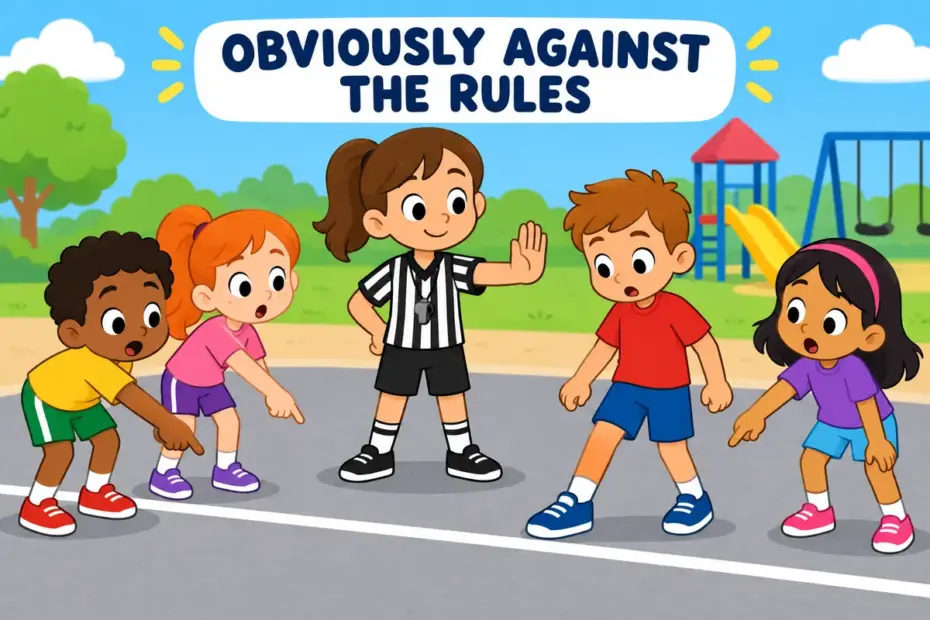
Flagrant is an adjective describing an act that is obviously and shockingly wrong, especially a breach of a rule or a law. To use flagrant in a sentence, attach it to the offence rather than to the person: “The referee stopped play for a flagrant foul.” The word always carries blame, so it never means merely obvious.
Flagrant at a glance
- Flagrant is an adjective; its adverb is flagrantly and its rare noun is flagrancy.
- It means openly and shockingly bad, used of wrongdoing rather than of neutral facts.
- Its natural nouns are violation, breach, foul, abuse and disregard.
- It belongs to journalism, law, sport and formal complaint rather than to casual talk.
- The commonest error is using flagrant as a grander word for obvious.
What does flagrant mean?
Flagrant is an adjective meaning conspicuously and scandalously wrong, applied to an act that breaks a rule or a standard. The Cambridge entry for flagrant records this sense of obvious and shocking wrongdoing, and the key point is the blame it carries. Where a writer only means that something is plain to see, glaring is the neutral word.
| Use | Plain meaning | Example sentence |
|---|---|---|
| A violation or breach | An open breaking of a rule or agreement | The report found a flagrant breach of the safety code. |
| A foul or offence | A shockingly clear piece of cheating in sport or law | The player was sent off for a flagrant foul. |
| Disregard or abuse | Shameless refusal to respect a duty | They showed flagrant disregard for the deadline. |
One limitation is worth stating plainly. Flagrant is not a neutral synonym of obvious, and it cannot describe an honest mistake. A glaring error may simply be easy to spot, but a flagrant error implies that someone ignored a clear rule. The word also rarely describes a person as a lasting trait; it judges an act, not a character.
How do you use flagrant in a sentence?
Flagrant is an attributive adjective, so it usually sits before the noun and names the offence. The patterns below cover ordinary use, and the noun it chooses is what keeps the blame clear.
| Pattern | Example | What it signals |
|---|---|---|
| flagrant + violation or breach | The firm was fined for a flagrant breach of contract. | The commonest shape, naming a broken rule. |
| flagrant + foul or offence | She was fouled in a flagrant and dangerous way. | Carries the word into sport and law. |
| flagrant + disregard or abuse | Their flagrant disregard for the rules upset everyone. | Names an open refusal to respect a duty. |
| be flagrant | The breach was flagrant and repeated. | Predicate use in reports and judgments. |
| more flagrant | This second breach is more flagrant than the first. | Comparative with more, never flagranter. |
The register clue is that flagrant suits a complaint, a match report or a legal finding. In a friendly note, the same word sounds like an accusation, so writers reach for unfair or against the rules instead.
Flagrant in a sentence: examples across contexts
Flagrant keeps its condemning force as it moves between registers, and each sentence below names the rule that was broken. That naming is what stops the word from sounding like empty outrage.
| Context | Example sentence | Why this works |
|---|---|---|
| Classroom | The teacher called it a flagrant breach of the class agreement. | Attaches the word to a clear, named rule. |
| Sports report | The forward escaped a red card despite a flagrant foul. | Suits the accepted language of match reports. |
| Workplace email | We cannot ignore such a flagrant disregard for the schedule. | Makes a formal complaint about conduct. |
| News report | Investigators described a flagrant abuse of public trust. | Names the wrong and its seriousness. |
| Legal writing | The court found a flagrant violation of the licensing terms. | Fits the register of findings and rulings. |
| Consumer review | Charging twice was a flagrant overreach. | Judges a business practice as plainly wrong. |
| Complaint letter | This is a flagrant breach of the agreement we signed. | States the offence without exaggeration. |
| Commentary | Calling that a mistake is generous; it was flagrant. | Uses the predicate form for emphasis. |
Notice how few of these sentences say who did it. Flagrant keeps the attention on the wrongdoing, which is why it belongs to complaint and reporting rather than to gossip.
Flagrant vs blatant
Blatant and flagrant both describe obvious wrongdoing, and the blatant page keeps the two apart. Blatant stresses that the act is done without any attempt to hide it, so the shame of the offender is the point. Flagrant stresses that the act is a serious, shocking breach, so the weight of the offence is the point.
| Attribute | flagrant | blatant |
|---|---|---|
| What it stresses | The seriousness of the breach | The openness and shamelessness |
| Typical noun | violation, breach, foul | lie, attempt, disregard |
| Implies a rule | Always | Usually, but not always |
| Implies a person’s nerve | No | Often |
| Register | Formal, legal, journalistic | Neutral to formal |
Verdict: choose flagrant when the point is how serious and blameworthy an offence is, and blatant when the point is that someone made no effort to hide it. Two further words are worth keeping apart: egregious ranks the offence as exceptionally bad, and brazen describes the offender’s nerve rather than the act.
Word forms and grammar of flagrant
Flagrant has a working adverb and a rare noun. The forms below also show the comparison, which regularly trips learners who try to add an ending that the word will not take.
| Form | Part of speech | Example |
|---|---|---|
| flagrant | adjective | a flagrant breach of the rules |
| flagrantly | adverb | The club flagrantly ignored the spending cap. |
| flagrancy | noun, rare | The judge noted the flagrancy of the delay. |
| more flagrant | comparative | This breach is more flagrant than the last. |
| flagranter | non-standard | Avoid; long adjectives take more. |
Common mistakes with flagrant
- Incorrect:
There was a flagrant rainbow after the storm.Correct: There was a brilliant rainbow after the storm. Rule: Flagrant carries blame, so it cannot describe something neutral and beautiful. - Incorrect:
She made a flagrant slip of the tongue.Correct: She made an obvious slip of the tongue. Rule: Flagrant implies a broken rule, not a harmless mistake. - Incorrect:
He is a flagrant man.Correct: He showed flagrant disregard for the rules. Rule: Flagrant judges an act, not a person’s lasting character. - Incorrect:
The breach was flagranter than the last one.Correct: The breach was more flagrant than the last one. Rule: Long adjectives form the comparative with more. - Incorrect:
The team won flagrant.Correct: The team flagrantly broke the cap. Rule: The adverb is flagrantly, and it modifies the act rather than following the verb as a complement.
Practice using flagrant
Work through the six items, then read the reasoning rather than only the answer.
- Fill the gap: The inquiry described the payments as a ______ breach of the funding rules.
- Choose the better word: His polite note was a (flagrant / glaring) contradiction of what he told us earlier.
- Correct the error: The sunset over the harbour was flagrant.
- Build a sentence: use flagrant with the noun disregard about a missed safety check.
- Spot the register: which belongs in a match report – a flagrant foul stopped the game, or a totally outrageous foul?
- Rewrite with the adverb: The firm ignored the ban. Use flagrantly instead.
Answers
- flagrant – the payments broke a clear funding rule, so the breach is blameworthy.
- glaring – the contradiction is easy to see, but a polite note breaks no rule, so flagrant is too strong.
- The sunset over the harbour was spectacular – flagrant carries blame and cannot describe neutral beauty.
- Model answer: The team showed flagrant disregard for the mandatory safety check.
- A flagrant foul stopped the game – a report keeps the formal adjective and names the offence.
- The firm flagrantly ignored the ban – the adverb modifies the verb ignored.
The bottom line
Use flagrant in a sentence when an act breaks a rule openly and seriously enough to deserve blame. The two nuances that decide most sentences are these: flagrant always implies wrongdoing, so it is not a grander word for obvious, and it describes the offence rather than the offender. Where you only mean that something is clear to see, overt or glaring is the fairer choice, and where the outrage is the point, scandalous is closer.
Frequently asked questions about flagrant
What kinds of things can flagrant describe?
Flagrant describes acts that break a rule or standard: violations, breaches, fouls, abuses and acts of disregard. It commonly appears with nouns such as breach, violation, foul and disregard, and it can also stand after the verb be. It does not describe neutral facts, scenery or honest mistakes, because it always imports blame.
Does flagrant always mean illegal?
No. Flagrant means openly and seriously wrong against some standard, which may be a rule, a code or an agreed norm rather than a law. A flagrant foul in sport and a flagrant breach of a workplace policy are both clear, even though neither is illegal. The word judges the breach, leaving the question of legality to the courts.
What is the adverb form of flagrant?
The adverb is flagrantly, and it usually modifies a verb that names the offence, as in the club flagrantly ignored the cap. The rare noun is flagrancy, which appears in formal writing about the seriousness of a breach. There is no standard comparative adverb, so constructions such as more flagrantly are used rather than a single inflected form.
What does a flagrant foul mean?
In basketball and some other sports, a flagrant foul is a contact foul judged unnecessary or excessive rather than part of normal play. Officials may review it and impose a stronger penalty, sometimes including ejection. The sporting use keeps the word’s core sense: the offence is obvious, serious and blameworthy, not merely accidental.
Have you ever come across a situation where someone’s actions were so obviously wrong or offensive that you couldn’t believe it? That’s the essence of a “flagrant” act – when something is brazenly and shockingly evident in its wrongdoing.
“Flagrant” describes something that is outrageously noticeable, glaringly unlawful, or boldly conspicuous in its violation of norms or standards. It’s a term used to depict actions or behavior that are so unmistakably improper or offensive that they can’t be ignored.
7 Examples Of Flagrant Used In a Sentence For Kids
- The boy was flagrant when he stole his friend’s toy.
- The chef made a flagrant mistake by adding too much salt to the dish.
- The student received a flagrant warning for running in the school hallway.
- The teacher corrected the flagrant spelling error in the student’s homework.
- The football player received a flagrant foul for pushing another player.
- The dog made a flagrant mess by tearing up the pillows.
- The baby’s laugh was flagrant and contagious.
14 Sentences with Flagrant Examples
- Flagrant cheating during exams will result in severe consequences in the college.
- The professor caught a student making a flagrant attempt to plagiarize their assignment.
- The student’s flagrant disregard for deadlines led to a lower grade on their project.
- It is considered flagrant disrespect to talk back to teachers in Indian classrooms.
- The student’s flagrant use of their phone during lectures irritated the professor.
- The college strictly prohibits any flagrant acts of discrimination or harassment on campus.
- The student’s flagrant violation of the dress code resulted in them being sent home.
- The college committee is investigating the flagrant misuse of funds by the student council.
- Skipping classes without a valid reason is a flagrant waste of educational opportunities.
- The college takes a flagrant stance against substance abuse and drug use among students.
- The professor was shocked by the flagrant display of disrespect by a student during class.
- The college handbook clearly outlines the consequences of flagrant academic dishonesty.
- Acting in a flagrant manner during college events reflects poorly on the entire student body.
- The college administration is working to address the flagrant safety concerns on campus.
How To Use Flagrant in Sentences?
Flagrant means something that is glaringly bad, offensive, or outrageous. To use this word in a sentence, follow these simple steps:
-
Identify the context: Look for a situation where something is very obvious or shamelessly wrong. This will help you determine when to use the word Flagrant.
-
Construct the sentence: Now that you have identified the context, think about a sentence where you can describe the situation using Flagrant. For example, “The player made a flagrant foul during the game.”
-
Place the word: In your sentence, place Flagrant in a position that makes sense and emphasizes the severity of the action or behavior you are describing.
-
Ensure understanding: Make sure the sentence conveys the meaning clearly to your audience. If needed, provide more context or explain the situation to help others understand why you used the word Flagrant.
-
Practice: Lastly, practice using the word Flagrant in different sentences to become more comfortable with its usage. This will help you incorporate it smoothly into your everyday vocabulary.
Remember that using new words like Flagrant may feel awkward at first, but with practice, you will become more confident and proficient in expressing yourself effectively.
Conclusion
In conclusion, flagrant acts are blatant and obvious violations of rules or norms. They stand out due to their clear wrongdoing and lack of subtlety. When someone commits a flagrant offense, they are not discreet or subtle in their actions—they openly, boldly, and shamelessly disregard accepted standards. Examples of flagrant behavior include cheating in a game, breaking the law in a conspicuous manner, or engaging in unethical practices without attempting to conceal them. Flagrant actions are typically met with disapproval and often lead to consequences due to their overt nature. It is essential to avoid engaging in flagrant behavior to maintain trust, integrity, and respect within society and professional settings.


