“From there” is a phrase that points onward from a place, point, or stage already mentioned. It can describe movement from a location or introduce the next action in a sequence, so the surrounding sentence tells readers whether “there” is literal or figurative.

Have you ever wondered how to connect ideas or events in a clear and concise manner? Enter the transitional phrase “from there.” This simple phrase serves as a bridge to smoothly transition from one point to another in writing or speech.
“From there” is a versatile phrase that signifies a progression or continuation in the narrative. It directs the reader or listener to the next logical step or idea, maintaining a smooth flow of information. With its straightforward and effective usage, “from there” can enhance the coherence and organization of your thoughts and expressions.
What does “from there” mean?
“From there” has two closely related uses: it can mean “starting at that place,” or it can mean “starting at that point in a process, story, or explanation.” In both cases, from marks a point of departure and there points back to a location or stage supplied by context. Cambridge Grammar gives the location pattern in “From there, it’ll take you about half an hour to our house,” describing the structure as a preposition followed by an adverb.
| Use | What “there” refers to | Example |
|---|---|---|
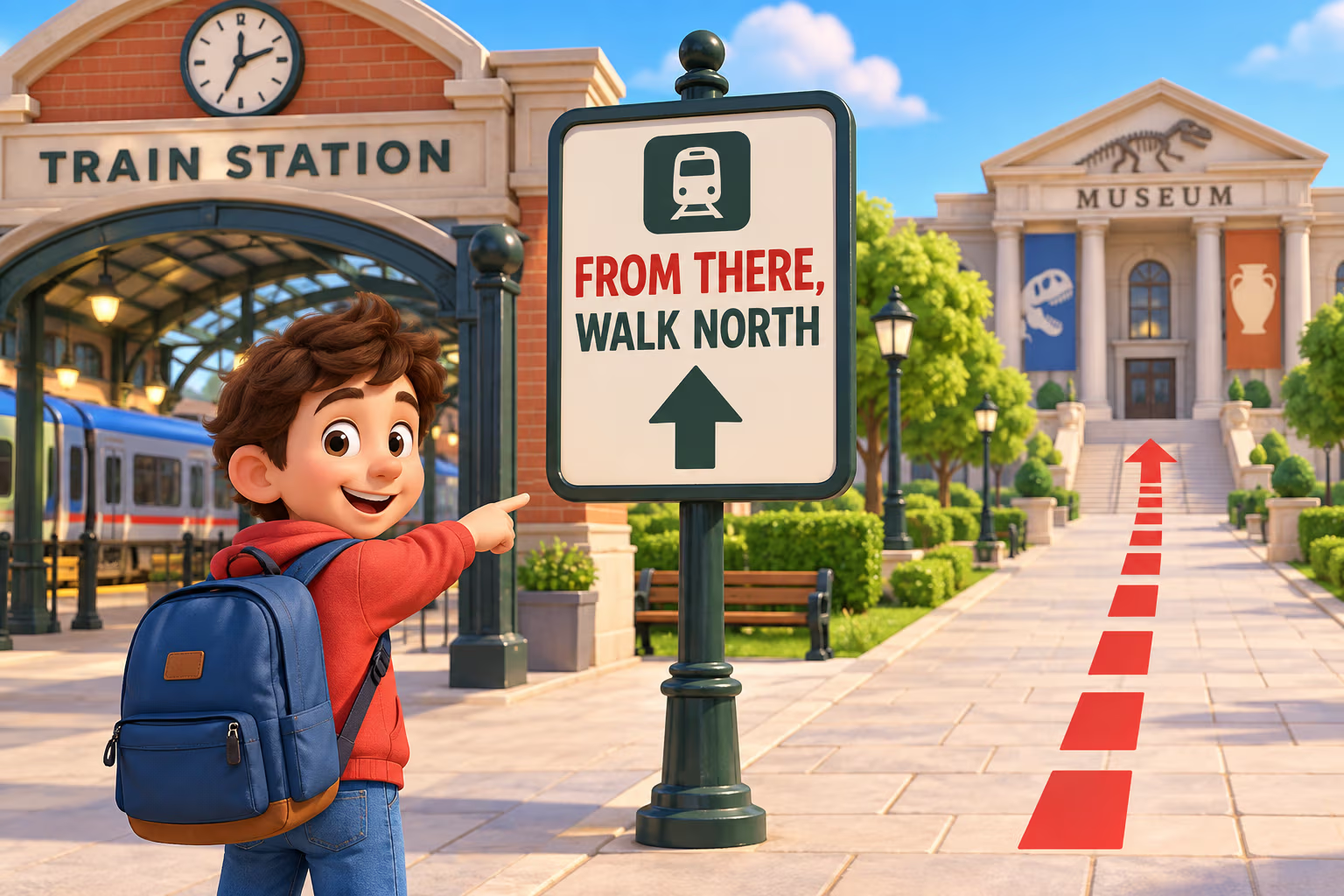
| Place | A location already named or understood | We reached the station; from there, we walked to the museum. |
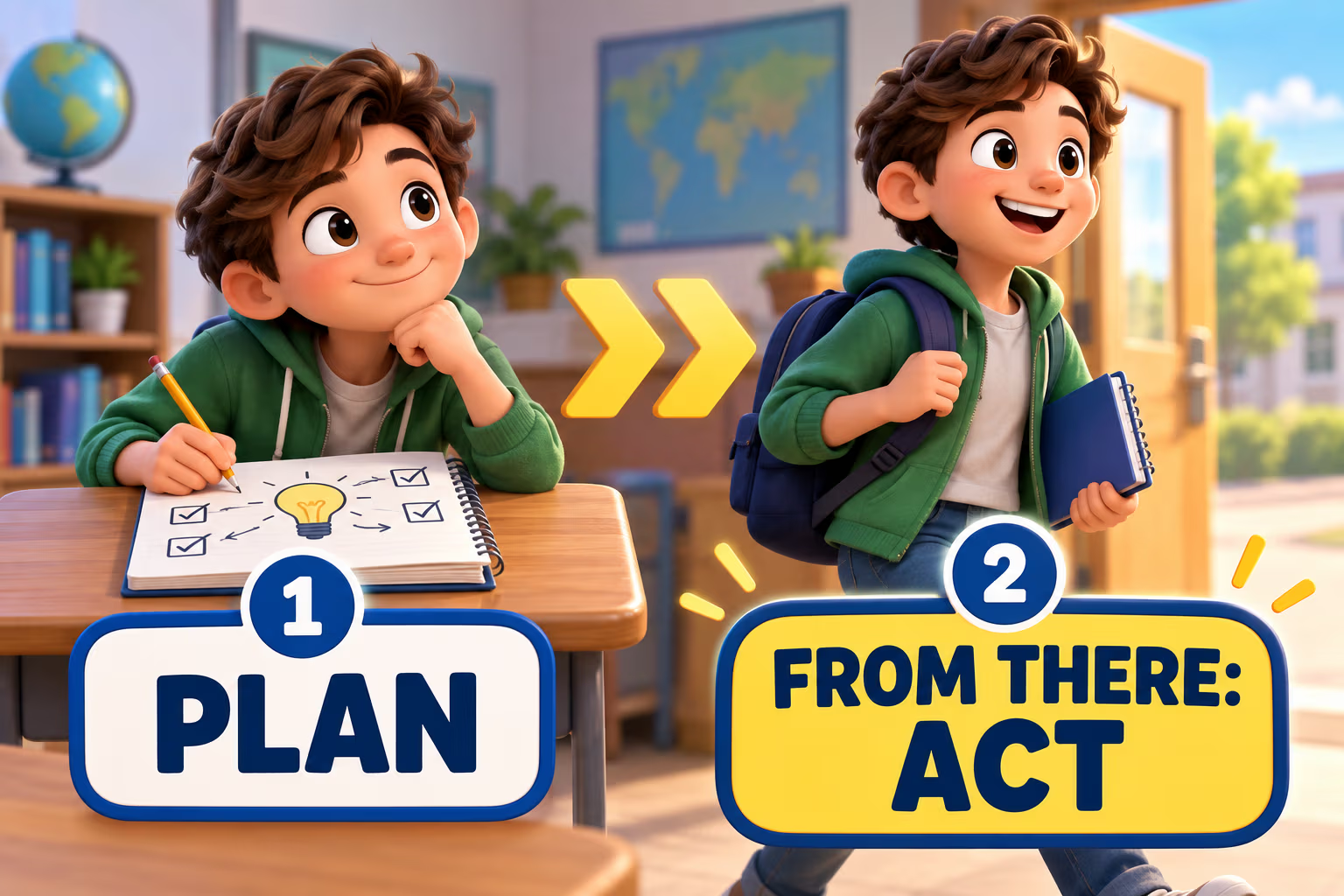
| Sequence | A point in a plan, story, or explanation | First, outline the idea. From there, draft the introduction. |
| Progression | An earlier stage that leads to a later result | The class tested one design and, from there, improved the prototype. |
The sequence use is common in instructions and narratives, but “from there” does not itself prove that the next event is a consequence. Use therefore or as a result when you mean “for that reason”; use “from there” when you mean “starting at that point” or “next in the sequence.”
How do you use “from there” naturally?
Name or establish the starting place or stage before using “from there.” Readers should not have to guess what there points to. The phrase may appear at the beginning or in the middle of a sentence; it does not have to be the first words.
- Identify the reference point: “We checked in at the visitor center.”
- State the next movement or step: “From there, we followed the blue trail.”
- Check the relationship: If you mean location or sequence, “from there” fits; if you mean a reasoned result, use a causal connector such as “therefore.”
Compare the meanings: “From the station, walk north” describes a physical route; “We agreed on the topic, and from there we divided the research” describes a sequence. In “We missed the train; therefore, we took a taxi,” the second action is a consequence, so therefore is more exact.
Does “from there” need a comma?
A comma is often helpful after “from there” when the phrase opens a sentence and a pause or clear boundary improves readability: “From there, we walked to the museum.” With a very short opening phrase, punctuation can depend on emphasis and house style; Government of Canada writing guidance notes that short introductory adverbials of place can omit a comma unless clarity or emphasis calls for one. Inside a sentence, set the phrase off only when the syntax or intended pause calls for it.
“From there” is two words and is not interchangeable with therefore, one word meaning “for that reason.” Cambridge Grammar classifies “from there” as a prepositional phrase pattern; Purdue OWL likewise notes that introductory phrases often take commas, while brief introductory prepositional phrases may not need one.
Frequently Asked Questions About “From There”
Can “from there” refer to an idea rather than a place?
Yes. In “We chose a working title, and from there the outline took shape,” there points to a stage in the process, not a physical location. The earlier clause supplies the reference point, and the phrase introduces what followed.
Is “from there” the same as “therefore”?
No. “From there” means “starting at that place or point,” while therefore means “for that reason.” Use “We left the station and walked from there” for a location; use “The road was closed; therefore, we turned back” for a consequence.
Can “from there” appear in the middle of a sentence?
Yes. “We toured the library and from there continued to the archive” places the phrase inside the sentence. It may also be set off with commas when the writer wants a pause: “We toured the library and, from there, continued to the archive.”
What should come before “from there”?
Give readers a clear location, decision, stage, or point in the discussion. “From there, we continued” is understandable only if the preceding context tells the reader where or at what stage “there” is.
Is “from there” formal or informal?
“From there” is neutral and works in conversation, instructions, and general prose. In formal writing, check that its reference is specific and that it means movement or sequence rather than an unstated cause; replace it with “therefore” only when you mean a reasoned consequence.
7 Examples Of From There Used In a Sentence For Kids
- From there, the little bird flew to its nest.
- I picked some flowers from there to give to my friend.
- The cat jumped down from there with a big leap.
- From there, the sun sets behind the mountains every evening.
- The ball rolled from there all the way to the other side of the playground.
- We can see the river flowing from there all the way to the sea.
- From there, we watched the fireworks light up the sky.
14 Sentences with From There Examples
- From there, I went straight to the library to study for my upcoming exams.
- I attended an event at the campus auditorium, and from there I headed to the canteen for a quick snack.
- After finishing my classes for the day, from there I went to the sports complex to play basketball with my friends.
- I met a new friend in my psychology class, and from there we started studying together and formed a study group.
- From there, I joined a social club on campus to meet more people with similar interests.
- I bought my textbooks from the college bookstore, and from there I spent the rest of the evening organizing my study materials.
- From there, I attended a career fair on campus to explore internship opportunities.
- I went to a student council meeting, and from there I volunteered to organize a fundraising event for a local charity.
- I participated in a debate competition and from there I gained more confidence in public speaking.
- From there, I enrolled in a coding workshop to enhance my technical skills.
- I watched a documentary screening at the student center, and from there I got inspired to join a sustainability initiative on campus.
- After finishing a group project presentation, from there I went for a celebratory dinner with my classmates.
- I attended a workshop on time management strategies, and from there I implemented new study habits to improve my productivity.
- From there, I joined a study abroad program to gain international exposure and experience a new culture.
How To Use From There in Sentences?
To use From There in a sentence, follow these simple steps:
-
Identify the starting point: From There typically refers to a previous location, idea, or statement that serves as the beginning of the discussion. It is used to indicate a connection between the previous point and the upcoming topic.
-
Introduce the transition: When using From There, make sure to start your sentence with this phrase. This will signal to your audience that you are moving on or building upon a previous point.
-
Provide context: After using From There, provide context to help your readers understand the relationship between the two points. This can include explaining how the current topic relates to the previous one or why you are transitioning in this way.
-
Continue with your main point: Once you have used From There and provided context, continue with your main point or discussion. This can include introducing new information, sharing an opinion, or expanding on the topic at hand.
-
Clarify the connection: After using From There and expanding on your main point, it can be helpful to clarify the connection back to the original starting point. This will ensure that your audience follows your thought process and understands the progression of your ideas.
By following these steps, you can effectively use From There in a sentence to transition between points and guide your readers through your writing.
Conclusion
In conclusion, sentences with “from there” are commonly used to indicate a point of origin or starting place in a narrative, explanation, or sequence of events. They serve to provide context and guide the reader through a chronological or logical progression. By using “from there,” writers can smoothly transition between ideas and maintain coherence in their writing.
Whether used in storytelling, instructions, or analysis, sentences containing “from there” help establish a clear timeline and help readers understand the progression of events or ideas. They act as a signpost to orient readers and emphasize the relationship between different parts of the text. Overall, incorporating “from there” into sentences enhances clarity and structure in writing, making it easier for audiences to follow along and grasp the intended message.


