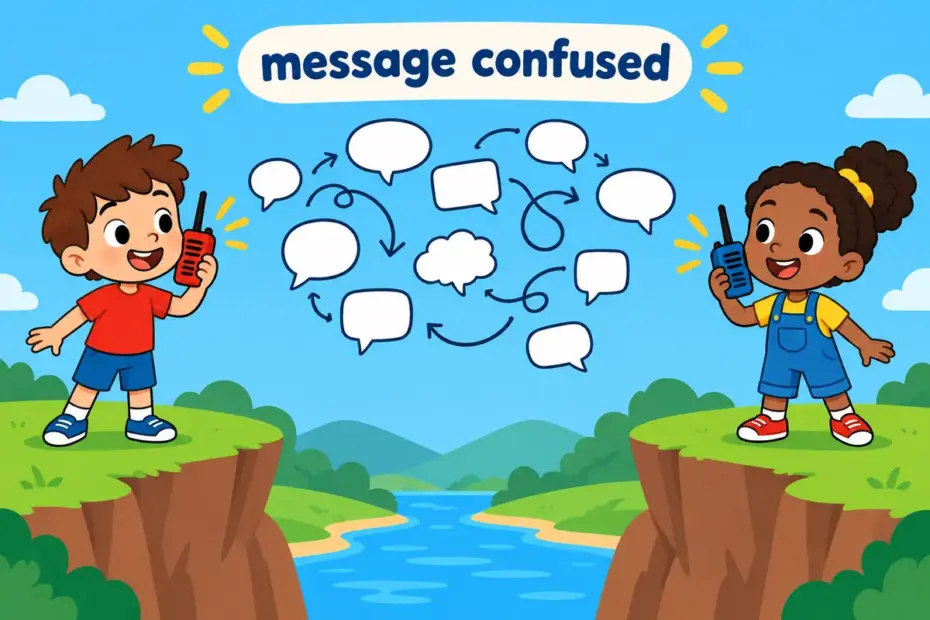
Garble is a verb meaning to reproduce a message, sound or text in a confused and distorted way, so its meaning becomes unclear. To use garble in a sentence, name the source and the thing muddled: “Static garbled the radio message.” The word often appears in the passive, as in the instructions were garbled.
Garble at a glance
- Garble is a regular verb; its forms are garbles, garbled and garbling.
- Its adjective garbled is far more common than the verb itself.
- The usual pattern is a source garbles something, or something is garbled.
- Typical partners are message, instructions, name, signal and account.
- The commonest error is confusing garble with babble, which means to talk like a baby.
What does garble mean?
Garble is a verb meaning to distort a message, signal or piece of text so that it arrives confused, and it usually describes an accidental fault rather than a deliberate one. The Cambridge entry for garble centres on that muddled reproduction, and the senses below keep the spoken, written and reported versions apart.
| Sense | Plain meaning | Example sentence |
|---|---|---|
| Distort a spoken message | Make words unclear or wrong | The radio garbled the coordinates. |
| Mix up text or data | Scramble the order or content | The scanner garbled the address. |
| Reproduce inaccurately | Report something wrongly | The rumour was garbled by repetition. |
One limitation matters. Garble does not mean to lie, and it does not mean to invent. A garbled account is a real account spoiled in the telling, so the speaker intended to pass on the truth. Where the words were never clear to begin with, jumble the words is the plainer description.
How do you use garble in a sentence?
The verb is transitive, so a noise, a machine or a careless retelling garbles something. The passive is extremely common, because the damaged message usually matters more than the fault that damaged it, and the adjective garbled works in the same way before a noun.
| Pattern | Example | What it signals |
|---|---|---|
| source + garble + object | Noise garbled the recording. | Names the fault and the thing spoiled. |
| be garbled | The message was garbled. | Passive; the damaged text is the subject. |
| garble + object + into | He garbled the name into something unrecognisable. | Shows the result of the distortion. |
| garbled + noun | a garbled account | The adjective describes the spoiled thing. |
| garble + up (informal) | Do not garble up the quote. | Colloquial; stresses careless handling. |
Where the damage is to a quotation rather than a signal, mangle a quote is the stronger verb, because it adds a sense of rough handling that garble does not carry.
Garble in a sentence: examples across contexts
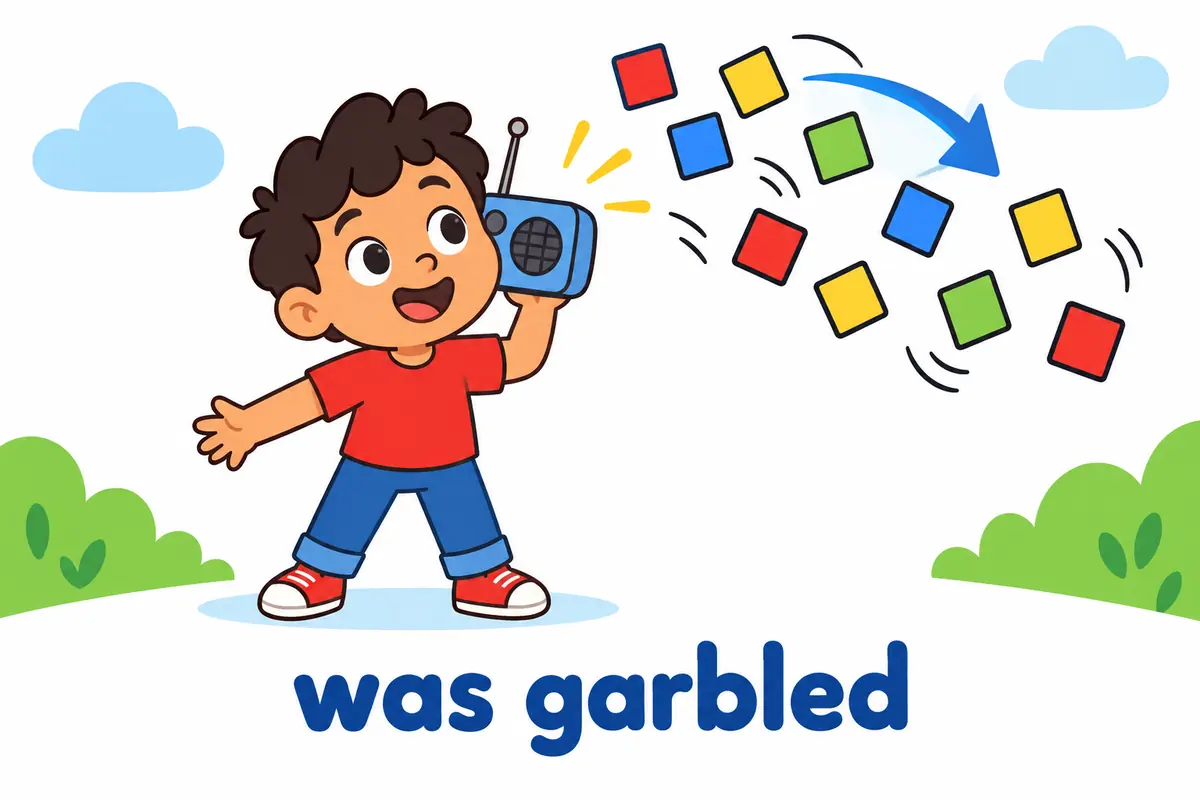
Garble suits technology, reporting and everyday retelling, and the fault is always accidental. Each sentence below names the source of the distortion, which is the detail that keeps the verb precise.
| Context | Example sentence | Why this works |
|---|---|---|
| Technology | Poor signal garbled the voicemail beyond recognition. | Names the technical fault and its effect. |
| News report | The witness account was garbled by three retellings. | Makes repetition the cause of the damage. |
| Workplace email | The instructions arrived garbled, so we asked for a resend. | States the consequence in the same breath. |
| Aviation | Static garbled the tower’s reply to the pilot. | Keeps the spoken-message sense concrete. |
| Conversation | I garbled his name when I made the introduction. | First person use, natural in speech. |
| Computing | The transfer garbled the file’s header. | Applies the verb to data rather than speech. |
| Historical writing | The scribe garbled the place name in two copies. | Shows the written sense in an old setting. |
| Diary entry | My message was garbled, and she heard the wrong time. | Links the fault to a real consequence. |
| Legal note | The transcript was garbled where the recording failed. | Uses the passive in a formal register. |
The spoken and written senses share one grammar, and the passive in the legal sentence shows how naturally the damaged text becomes the subject of the report.
Garble vs babble
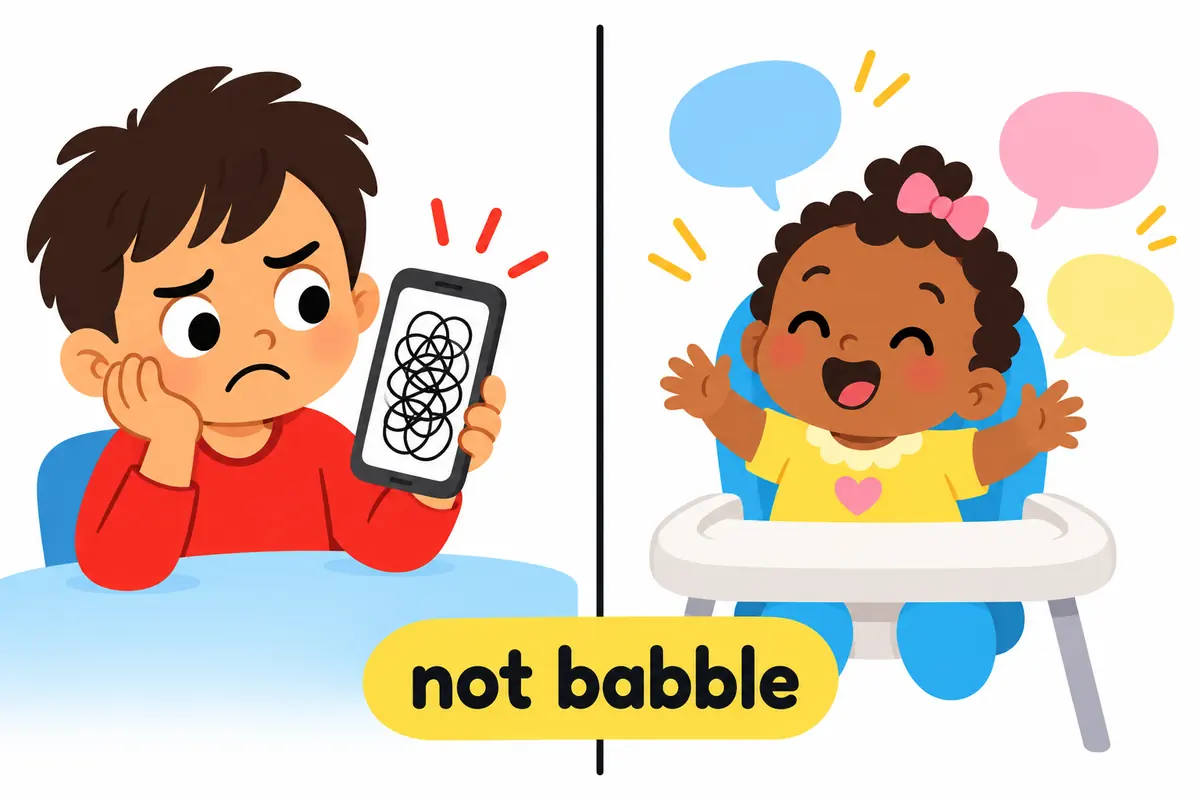
The two verbs sound alike and mean very different things. Garble damages a real message, while babble describes talk that never had clear meaning. A garbled sentence once made sense, whereas babble nonsense never did.
| Attribute | garble | babble |
|---|---|---|
| Core meaning | Spoil a message in passing it on | Talk without clear words |
| Was there a real message | Yes, before it was damaged | No, the sound is meaningless |
| Typical source | Static, a machine, retelling | A baby, a stream, a confused speaker |
| Intent | Usually accidental | None; the talk is content-free |
| Register | Neutral to technical | Neutral to literary |
Verdict: choose garble when a real message is spoiled, babble when the sound never carried meaning. Distort the facts is the wider term, because facts can be twisted on purpose while garble almost always happens by accident.
Word forms and grammar of garble
Garble is a regular verb with a very common adjective, and it has no useful noun. The table lists the real forms and marks the look-alike that learners mix in by mistake.
| Form | Part of speech | Example |
|---|---|---|
| garble | verb, base | Distance can garble a shouted order. |
| garbles | verb, third person | The codec garbles low tones. |
| garbled | verb, past and participle | The operator garbled the number. |
| garbling | verb, present participle | The software is garbling the dates. |
| garbled | adjective | a garbled message |
| babble | verb, different meaning | The baby babbled happily. |
The adjective is the form most writers actually need, and a garbled message is the everyday phrase that carries the whole idea in two words.
Common mistakes with garble
- Incorrect:
The radio garbled.Correct: The radio garbled the message. Rule: Garble is transitive, so it needs something to distort. - Incorrect:
She garbled that she was late.Correct: Her message was garbled, so we heard that she was late. Rule: The verb takes a noun phrase, never a that-clause. - Incorrect:
The baby garbled in the cot.Correct: The baby babbled in the cot. Rule: Meaningless baby talk is babble, not garble. - Incorrect:
He garbled the report on purpose.Correct: He distorted the report on purpose. Rule: Garble implies accident; deliberate twisting is distort. - Incorrect:
The garble of the message confused us.Correct: The garbling of the message confused us. Rule: Garble is a verb, so a noun slot needs the gerund garbling.
Practice using garble
Work through the six items, then read the reasons rather than only the keys.
- Fill the gap: Weak signal ______ the final part of the recording.
- Choose the better word: The baby (garbled / babbled) softly before falling asleep.
- Correct the error: The radio garbled.
- Build a sentence: use be garbled about a phone message.
- Spot the register: which belongs in a technical report — the header was garbled in transit, or the header got all mangled up?
- Rewrite with the adjective: The noise garbled the announcement. Use garbled instead.
Answers
- garbled — the signal is the source and the recording is the object.
- babbled — a baby makes content-free sounds, which is babble.
- The radio garbled the message — the transitive verb needs an object.
- Model answer: The phone message was garbled, so we could not hear the address.
- The header was garbled in transit — a report uses the precise passive, not mangled up.
- The announcement was garbled — the adjective describes the damaged thing directly.
The bottom line
Use garble in a sentence when a real message, signal or text is spoiled in the passing, and name what caused the damage. Two details decide most sentences: the verb is transitive, so it needs an object, and it implies an accident rather than a lie. Where the meaning was never clear, babble is the better verb.
Frequently asked questions about garble
Is garble a verb or an adjective?
Garble is primarily a verb, as in the static garbled the call. Its past participle doubles as a very common adjective, as in a garbled message. The adjective is the form most people meet first, which is why some learners wrongly treat garbled as a separate word with a different meaning.
What does garbled mean?
Garbled describes something reproduced in a confused or distorted way, so that its meaning is lost or altered. A garbled phone call, a garbled address and a garbled quote are all damaged versions of something that once made sense. The adjective almost always points to accidental distortion rather than deliberate deception.
What is the difference between garble and babble?
Garble spoils a real message, while babble is talk that never carried meaning. A garbled instruction was once clear and then got muddled, whereas a baby’s babble is simply content-free sound. Only garble implies that something worth hearing was lost along the way.
Can garble be used as a noun?
Not in standard modern English. Garble works as a verb, and its -ing form garbling can fill a noun slot, as in the garbling of the message. A bare garble as a noun sounds wrong, so rewrite with garbling, distortion or jumble when a noun is needed.
Have you ever struggled to understand a message because it was muddled or jumbled? This confusing and unclear form of communication is known as “garble.” Garble occurs when information is distorted, making it difficult to comprehend accurately.
Garble can manifest in various forms, such as through spoken or written communication. It often leads to misinterpretations, misunderstandings, and ultimately hinders effective interactions. With the prevalence of garbled information in daily communication, it is essential to strive for clarity and coherence to ensure accurate understanding.
7 Examples Of Garble Used In a Sentence For Kids
- The machine made a funny sound and started to garble my words.
- I tried to tell a joke, but I accidentally garbled the punchline.
- The radio signal was weak, causing the music to garble.
- My little sister likes to garble her nursery rhymes while singing.
- The old phone connection started to garble during our conversation.
- The computer screen glitched and the words became garbled.
- The fast-talking auctioneer began to garble his words as he tried to speak quickly.
14 Sentences with Garble Examples
- Garble the instructions for your final exam could cost you valuable marks.
- Make sure to avoid any garble in your research paper to ensure clarity and accuracy.
- It’s important to proofread your assignments to catch any garble before submitting them.
- When giving a presentation, speak clearly to avoid any garble in your message.
- Group projects can become confusing if there is garble in communication between team members.
- Take the time to organize your study materials to avoid garble when revising for exams.
- Misinterpretation due to garble in emails can lead to misunderstandings with professors.
- It’s crucial to construct coherent arguments in essays to avoid garble in your writing.
- Asking for clarification can help prevent garble in understanding complex concepts.
- Use reliable sources for your assignments to prevent garble in the information you present.
- Practice good time management to avoid garble when balancing academic and personal responsibilities.
- Develop strong note-taking skills to minimize garble when studying for exams.
- Participating in study groups can help clarify any garble in course material.
- Utilize resources like tutoring services to get assistance with any garble in difficult subjects.
How To Use Garble in Sentences?
Garble is a verb that means to confuse or mix up something, making it hard to understand or interpret. When using Garble in a sentence, it is important to remember its meaning and context in order to communicate effectively.
Here’s a simple guide on how to use Garble in a sentence for beginners:
- Identify the main message you want to convey.
- Think of a situation where information can be mixed up or confused.
- Use Garble to describe the action of mixing up the information.
- Ensure that the sentence makes sense and effectively conveys the confusion or mixing up of information.
Example sentence using Garble:
“The message was garbled during the phone call, making it difficult for me to understand what was being said.”
In this sentence, the word “garbled” is used to describe how the message was confused or mixed up during the phone call. By using Garble in this context, the reader can understand that the information was not clear or easy to comprehend.
Overall, using Garble in a sentence can help convey situations where information is jumbled or confusing. By following this guide and practicing with different scenarios, beginners can effectively incorporate Garble into their communication to express confusion or mixing up of information.
Conclusion
In conclusion, when sentences are garbled, they become unclear and difficult to comprehend. Garbled sentences often result from errors in transmission or misunderstanding of language, making communication ineffective and confusing. For example, “The garbled message received by the team caused confusion and delayed the project’s progress” highlights the negative impact of garbled sentences in practical situations.
To avoid misunderstandings and ensure effective communication, it is essential to strive for clarity and coherence in all sentences. Employing proper grammar, structure, and appropriate vocabulary can help prevent garbling and enhance the overall quality of communication. By recognizing and rectifying garbled sentences, individuals can promote clear and concise exchange of information, fostering better understanding and smoother interactions in various contexts.


