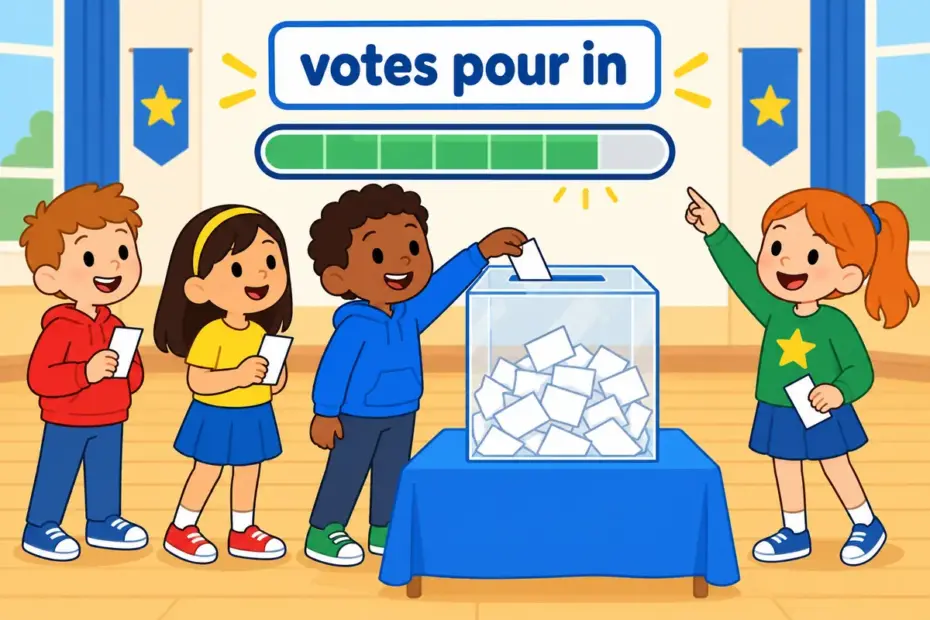
Garner is a verb meaning to collect or gain something, especially support, votes, awards or praise. To use garner in a sentence, name the thing being won and keep the verb transitive: “The proposal garnered wide support.” The word is formal and belongs to news and reports more than to casual speech.
Garner at a glance
- Garner is a transitive verb; its forms are garners, garnered and garnering.
- The two senses are to collect something and to earn or gain it.
- Its objects are almost always abstract: support, votes, attention, praise, momentum.
- Garner suits news, business and academic writing more than conversation.
- The commonest error is confusing it with gather, which needs no sense of reward.
What does garner mean?
Garner is a transitive verb meaning to collect or accumulate something, or to gain it through effort or merit. The Cambridge entry for garner places it in written news and reports, and you can gather a crowd with no reward involved, which is why the two verbs are not twins. Press reports use the first sense, where results are counted, far more often than the second.
| Sense | Plain meaning | Example sentence |
|---|---|---|
| Collect | Bring things together over time | The appeal garnered thousands of small donations. |
| Gain or earn | Receive something through merit | Her film garnered praise on three continents. |
| Muster support | Attract backing from people | The plan garnered the votes it needed. |
One limitation matters here. Garner is not a synonym for find or hold: a bank does not garner cash that was already its own, and a shelf does not garner dust. It always implies that something was brought in, counted or awarded.
How do you use garner in a sentence?
Garner is transitive, so an object always follows it, and that object is usually abstract. To accumulate savings describes slow growth over time, while garner points to what other people give. Three patterns cover almost every published use.
| Pattern | Example | What it signals |
|---|---|---|
| subject + garner + abstract object | The campaign garnered support. | Backing is attracted and counted. |
| subject + garner + number + object | The post garnered 4,000 shares. | A measurable total is reported. |
| be garnered + by/from | Praise was garnered from every critic. | Passive voice foregrounds the reward. |
| subject + garner + praise or an award | The play garnered two prizes. | Merit turns into recognition. |
Writers who want a plainer tone to collect signatures is often the better phrase because it describes the same work without the editorial polish.

Garner in a sentence: examples across contexts
Garner stays put while the register around it moves from a school notice to a corporate filing. The nine sentences below each name what was collected, which is the detail the verb demands.
| Context | Example sentence | Why this works |
|---|---|---|
| Classroom | The book drive garnered three full boxes of stories. | A concrete tally makes the verb easy to picture. |
| Workplace email | The new schedule garnered strong support from staff. | An abstract object suits the formal register. |
| News report | The bill garnered the votes it needed late on Tuesday. | Political reporting uses the voting sense daily. |
| Business writing | The product garnered attention before it shipped. | Pre-launch interest is a common object. |
| Academic prose | The study garnered criticism for its small sample. | Criticism is gained as readily as praise. |
| Sports writing | The keeper garnered praise for two late saves. | Performance is converted into recognition. |
| Nonprofit report | The appeal garnered enough to fund a second van. | A financial outcome follows the verb. |
| Culture review | The film garnered awards on the festival circuit. | Prizes are the classic object of garner. |
| Conversation | His joke garnered a laugh and nothing more. | Spoken use is rare but not impossible. |
Garner vs gather
Garner and gather share a meaning at the edges, but their typical objects pull them apart. To amass a fortune stresses sheer quantity and usually names money or goods, while garner prefers praise, votes and attention.
| Attribute | garner | gather |
|---|---|---|
| Core job | Gain support, praise or awards | Bring people or things together |
| Typical object | Abstract: support, votes, attention | Concrete or abstract: a crowd, wood, data |
| Sense of reward | Usually present | Absent |
| Register | Formal, journalistic | Neutral |
| Passive use | Common in reports | Less common |
| What it implies | Others gave or awarded | Someone assembled |
Verdict: use gather whenever you assemble something yourself, and garner when the point is that backing, praise or a total was won.
Word forms and grammar of garner
Garner inflects regularly, and the noun that learners sometimes expect does not exist in everyday use. The table also flags the near miss that spellcheck will not catch.
| Form | Part of speech | Example |
|---|---|---|
| garner | verb, base form | Reforms rarely garner instant praise. |
| garners | verb, third person singular | The campaign garners support in rural areas. |
| garnered | verb, past and past participle | The essay garnered a national prize. |
| garnering | verb, present participle | It is slowly garnering attention abroad. |
| garner | noun, archaic | A garner once meant a granary, now rare. |
| garner / gardener | non-standard confusion | Incorrect: The greenhouse garnered tomatoes. |
Common mistakes with garner
- Incorrect:
The tree garnered many apples this year.Correct: The tree produced many apples this year. Rule: Garner needs a human giver or a countable reward, not a natural harvest. - Incorrect:
She garnered to lead the team.Correct: She garnered enough support to lead the team. Rule: The verb needs a noun object before any infinitive. - Incorrect:
The results were garnered by the students.Correct: The students gathered the results. Rule: When someone assembles things by hand, use gather, not garner. - Incorrect:
He garnered a cold from the trip.Correct: He caught a cold on the trip. Rule: Garner implies something worth gaining, so ailments take catch. - Incorrect:
The movie garner many awards.Correct: The movie garnered many awards. Rule: A finished past event takes the past form garnered.
Practice using garner
Work through the six items, then read the reasoning rather than only the answer.
- Fill the gap: The petition ______ more than ten thousand signatures.
- Choose the better word: The volunteers (garnered / gathered) fallen branches after the storm.
- Correct the error: The clinic garnered to raise funds all summer.
- Build a sentence: use garner about a school play that won praise.
- Spot the register: which suits a news report — the drive garnered support, or the drive got a lot of people on board?
- Complete the object: the speech managed to garner ______ across the hall.
Answers
- garnered — signatures are a countable reward gained over time.
- gathered — the volunteers physically assembled the branches, so no reward is implied.
- The clinic campaigned to raise funds all summer — garner needs a noun object, not an infinitive.
- Model answer: The school play garnered praise from every visiting parent.
- The drive garnered support — a report avoids the conversational got on board.
- support — the verb needs an abstract noun as its object, never a person or an infinitive.
The bottom line
Use garner in a sentence when a person, campaign or work gains something that others give, and keep the object abstract and countable. The two nuances that settle most sentences are these: the verb is transitive, so support or praise must always follow it, and it carries a sense of reward that plain gather does not. To earn respect implies the worth was deserved, a claim garner leaves open.
Frequently asked questions about garner
Why do reporters say garner support?
Garner support compresses a whole process into two words: a campaign attracted backing that can then be counted. The verb is neutral about how the support was won, which suits a reporter who must not imply praise or blame. That neutrality is exactly why the phrase appears so often in political writing.
Does garner mean the same as earn?
They overlap when the gain is deserved, as in a film that garnered an award, but earn always asserts that the reward was merited. Garner only reports that recognition arrived. A scandal can garner criticism the subject did not deserve, and there earn would be the wrong choice.
Is garnered a real word?
Yes, garnered is the standard past and past participle, as in the proposal garnered wide support. It is the form news desks use most often. The present participle garnering is equally standard, while a base form in a finished sentence, as in the movie garner awards, is simply a tense error.
Can garner take a person as its object?
It usually does not. Garner takes the reward, not the receiver, so you garner support rather than garner a supporter. A phrase such as the speech garnered her is unfinished, because it leaves the actual gain unnamed. Add the thing gained, such as the speech garnered her respect.
Are you looking to enhance your writing skills and make your sentences more compelling? One tactic to achieve this is by using the word “garner.” Garner means to acquire or gather something, such as information, attention, or support, through effort and skill. By incorporating this versatile verb into your sentences, you can convey the idea of collecting or obtaining something successfully.
In writing, using “garner” can help you express how you accumulate concepts, recognition, or evidence in a concise and impactful manner. Whether you are crafting an academic essay, a persuasive email, or a creative story, including this word can elevate your language and effectively communicate your ideas to your readers.
7 Examples Of Garner Used In a Sentence For Kids
Garner all the pencils in the box.
Can you garner all the crayons in one place?
Let’s garner all the toys in the toy chest.
Try to garner all the books on the shelf.
We must garner all the blocks in the bin.
Help me garner all the markers in the pouch.
Remember to garner all the stickers in the drawer.
14 Sentences with Garner Examples
- Students can garner knowledge from various sources such as textbooks, online resources, and lectures.
- Attending workshops and seminars can help students garner practical skills and insights for their professional development.
- Group study sessions are a great way for college students to garner different perspectives and improve their understanding of challenging subjects.
- Participating in extracurricular activities can help students garner valuable leadership experience and interpersonal skills.
- Seeking feedback from professors can help students garner insights on how to improve their academic performance.
- Utilizing the library resources effectively can help students garner relevant information for their research projects.
- Engaging in internships can help students garner real-world experience and make valuable professional connections.
- Actively participating in class discussions can help students garner a deeper understanding of the course material.
- Creating a study schedule can help students garner better time management skills and improve their academic performance.
- Joining study groups can help students garner different study techniques and strategies for effective learning.
- Completing assignments on time can help students garner good grades and maintain a strong academic record.
- Attending career fairs can help students garner job opportunities and network with potential employers.
- Asking questions during lectures can help students garner a clearer understanding of complex concepts.
- Seeking guidance from career counselors can help students garner insights into different career paths and opportunities.
How To Use Garner in Sentences?
To use the word Garner in a sentence, simply follow these steps:
-
Understand the meaning: First, make sure you understand the definition of “Garner,” which means to gather or collect something, especially information or support.
-
Choose the context: Think about the message you want to convey and when using the word “Garner” would be appropriate. It is commonly used in situations where you want to emphasize the act of collecting or accumulating something.
-
Construct the sentence: Next, construct a sentence where you can insert the word Garner to accurately convey your message. For example, “She was able to garner enough votes to win the election.”
-
Review and edit: After forming your sentence, read it over to ensure that the word Garner is fitting within the context and makes sense.
-
Practice makes perfect: The more you practice using the word Garner in different sentences, the more comfortable you will become with incorporating it into your vocabulary.
By following these simple steps, you can effectively incorporate the word Garner into your writing and speech. Remember that practice is key to mastering the usage of new vocabulary words.
Conclusion
In conclusion, the various examples of sentences with “garner” illustrate how this word is used to convey the idea of collecting or gathering something, whether it be support, attention, or awards. By examining how different contexts utilize this word, it becomes clear that “garner” is a versatile term that can be applied to a wide range of situations where accumulation or acquisition is involved.
From discussions about garnering votes in an election to garnering recognition for one’s achievements, the examples presented demonstrate how “garner” is an effective tool for emphasizing the process of obtaining something. Whether it’s garnering praise for a job well done or garnering feedback on a new idea, this word is adept at highlighting the act of accumulating or obtaining resources, support, or recognition.


