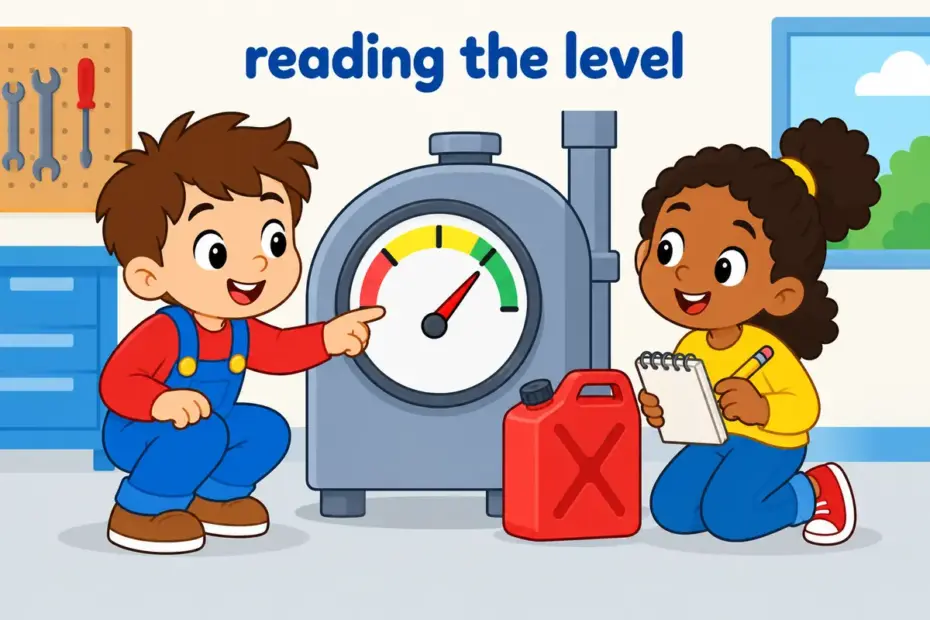
Gauge means to measure, estimate or judge something, so the sentence The poll tried to gauge public mood reports an attempt to find where people stood. As a noun, a gauge is the instrument or standard that does the measuring. The verb takes its object directly, with no preposition.
Gauge at a glance
- Gauge is a verb meaning to measure or judge, and a noun naming an instrument or standard.
- The verb takes its object directly: gauge the mood, gauge the distance.
- The noun also names a fixed width or thickness, as in a railway gauge.
- The word is neutral in register and common in business and technical writing.
- The commonest error is misspelling it guage and confusing it with gouge.
What does gauge mean?
Gauge is a verb meaning to measure, estimate or form a judgement about something, and a noun naming the instrument, scale or standard used to do it. The Cambridge entry for gauge records both, and the senses divide between finding a reading and the tool that gives it. In business writing the verb is often a softer word for assess, because it allows a rough reading of signs rather than a precise number.
| Sense | Plain meaning | Example sentence |
|---|---|---|
| Measure or judge | Estimate an amount, level or feeling (verb) | The nurse gauged the swelling by eye. |
| Instrument | A device that shows a measurement (noun) | The fuel gauge was already on empty. |
| Fixed width | A standard size or thickness (noun) | The model is built to a narrow gauge. |
| Criterion | A way of judging something (noun) | Turnout is a poor gauge of enthusiasm. |
Gauge does not mean to force or to cut something out, and it is not a rough synonym for guess. Where you want a plain verb for a rough calculation, estimate is safer; gauge works best when a judgement is read from signs. The spelling is the other trap, because guage appears in otherwise careful writing, and the misspelling is the single most common error with this word.
How do you use gauge in a sentence?
Gauge works as both a verb and a noun, and the patterns split cleanly between the two, so the part of speech usually tells you which pattern to expect. Five patterns cover most real sentences. As a verb it never takes a preposition before its object; as a noun it often appears in the phrase a gauge of.
| Pattern | Example | What it signals |
|---|---|---|
| gauge + noun | Analysts gauge demand from advance orders. | As a verb, it takes its object directly. |
| gauge + whether or how | It is hard to gauge whether the plan will work. | The clause names the question being tested. |
| gauge + noun + by + means | She gauged the distance by counting fence posts. | By names the method used. |
| be gauged from + evidence | Interest can be gauged from the number of calls. | Passive voice puts the evidence first. |
| a gauge of + noun | Silence is a poor gauge of agreement. | As a noun, it judges what something reveals. |
Gauge in a sentence: examples across contexts
Gauge moves easily between the workshop and the meeting room, and it keeps the sense of reading a level from evidence. The sentences below show that range, from a technical manual to a team email, and each one makes clear whether the word is working as a verb or a noun.
| Context | Example sentence | Why this works |
|---|---|---|
| Workshop | The engineer gauged the pressure before opening the valve. | As a verb, it names a careful reading. |
| Workplace email | We can gauge interest from the replies so far. | The evidence follows from, which is the passive habit. |
| News report | The poll tried to gauge public mood before the vote. | Names the question without claiming a precise figure. |
| Science writing | Researchers gauge the depth of the ice with sound waves. | The instrument and the method are both named. |
| Business report | Customer calls are a useful gauge of dissatisfaction. | Here it is a noun judged against an outcome. |
| Conversation | It is hard to gauge how she really feels. | The how-clause keeps the judgement open. |
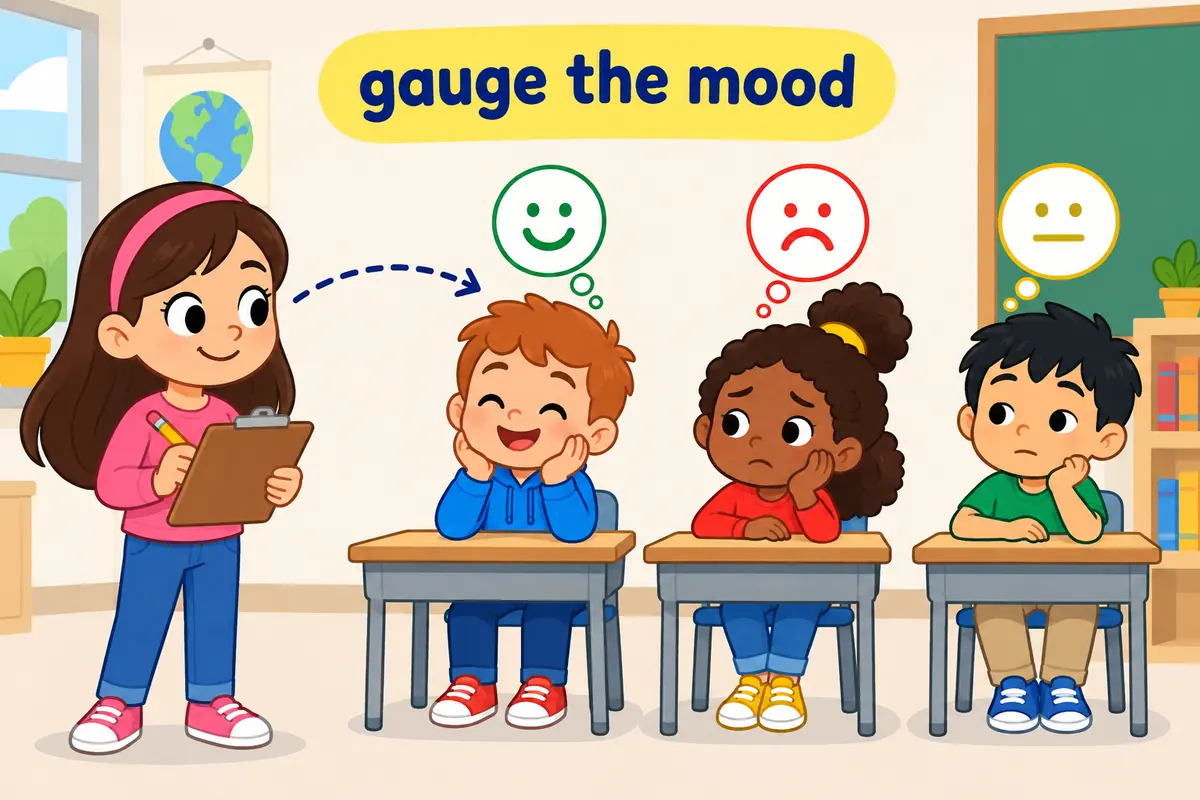
| Sports report | The coach gauged the mood of the squad after defeat. | The object is a feeling rather than a number. |
| Technical manual | Check the pressure gauge before each run. | The noun names the instrument itself. |
| Academic writing | Response time can be gauged from the logs. | Passive voice keeps the measure impersonal. |
Gauge vs gouge
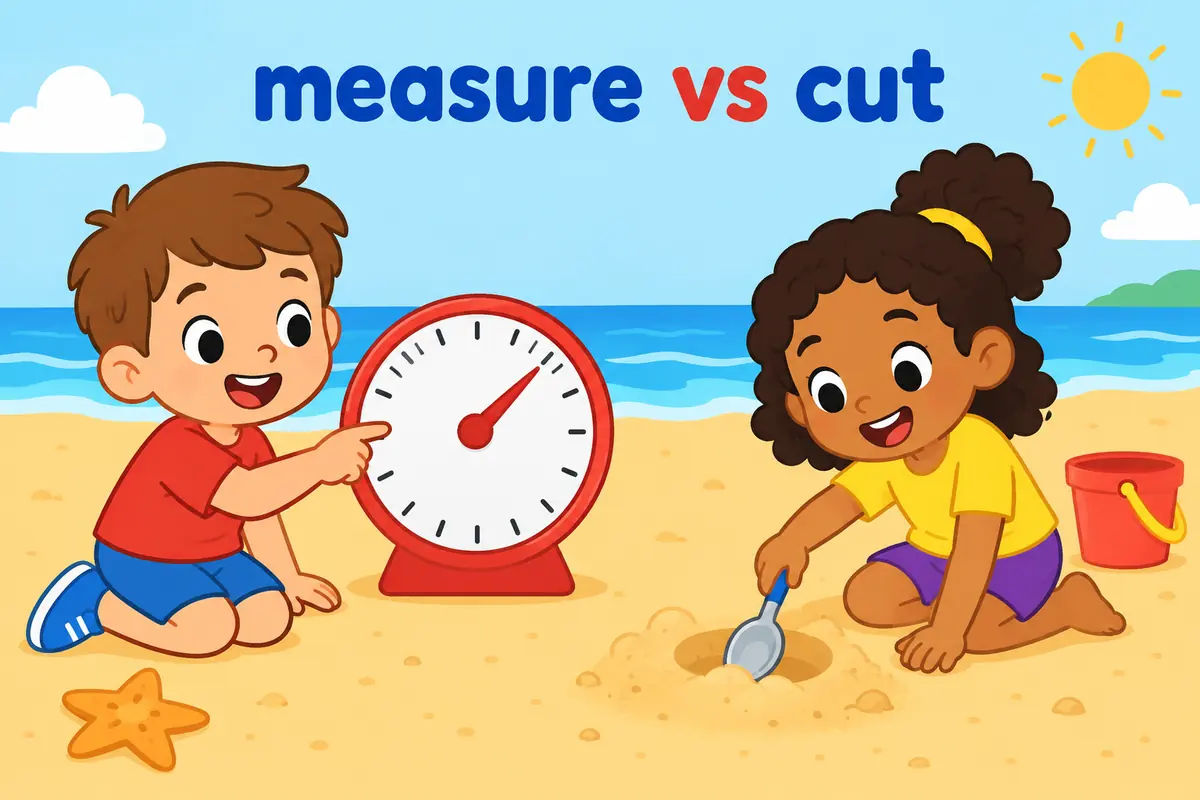
Gauge and gouge differ by a single letter and by nothing else in spelling, which is why they are confused. One measures or judges; the other cuts or overcharges.
| Attribute | gauge | gouge |
|---|---|---|
| Meaning, verb | Measure or judge | Cut or scoop out; overcharge |
| Meaning, noun | An instrument or standard | A chisel; a deep cut |
| Spelling | Ends in -uge, from an old word for a measuring rod | Ends in -ouge, with the o of out |
| Typical object | The mood, the distance, demand | A hole, a channel, a customer |
| Register | Neutral, technical and everyday | Informal when it means overcharge |
Verdict: gauge measures or judges, while gouge cuts or overcharges, and the extra o is the only thing that separates them on the page.
Word forms and grammar of gauge
Gauge is regular in its verb forms, and the spelling stays the same as a noun. The table sets out the forms, including the misspelling that marks a careless draft, and the related verb calibrate, which is what you do to a gauge to keep it accurate.
| Form | Part of speech | Example |
|---|---|---|
| gauge | verb, base form | They gauge temperature from the reading. |
| gauges | verb, third person singular | The meter gauges how much water is used. |
| gauged | verb, past and past participle | She gauged the room before speaking. |
| gauging | verb, present participle | He is still gauging the reaction. |
| gauge | noun | The pressure gauge needs replacing. |
| guage | misspelling | Avoid guage; the correct spelling is gauge. |
Common mistakes with gauge
- Incorrect:
We need to gauge about the public mood.Correct: We need to gauge the public mood. Rule: Gauge takes its object directly, with no about. - Incorrect:
Please guage the depth of the water.Correct: Please gauge the depth of the water. Rule: The correct spelling is gauge, with a before the g. - Incorrect:
He gouged the team’s confidence before the match.Correct: He gauged the team’s confidence before the match. Rule: Gouge means to cut or overcharge, not to judge. - Incorrect:
The gauge of the rain was heavy.Correct: The rainfall was heavy. Rule: Gauge is the instrument or standard, not the amount it shows.
Practice using gauge
Work through the six items, then check the reason rather than only the answer.
- Fill the gap: Managers use the weekly figures to ______ demand.
- Choose the better word: The survey tried to (gauge / gouge) the mood of the staff.
- Correct the error: Please guage the temperature before you start.
- Build a sentence: use a gauge of about loud applause as a sign of approval.
- Spot the register: which belongs in a technical manual, check the pressure gauge before opening the valve, or have a quick look at the thingy that tells the pressure?
- Rewrite with the noun: She gauged the distance by eye. Use gauge as a noun instead.
Answers
- gauge — the verb takes its object directly, and demand is that object.
- gauge — to measure a mood is gauge; gouge means to cut or overcharge.
- Please gauge the temperature before you start — the correct spelling has a before the g.
- Model answer: Loud applause is a poor gauge of how good the talk was.
- Check the pressure gauge before opening the valve — a manual keeps the precise noun and no slang.
- She made a rough gauge of the distance with her eye — the noun names the estimate.
The bottom line
Use gauge in a sentence to say that someone measures or judges something, and keep the object directly after the verb. Two nuances decide most sentences: as a noun the word names the instrument or standard rather than the amount it shows, and the spelling gauge must not be written guage. When you only need a rough verb, estimate is the plainer choice.
Frequently asked questions about gauge
Is gauge a verb or a noun?
Gauge is both. As a verb it means to measure or judge, as in gauge the mood. As a noun it names the instrument or standard, as in a pressure gauge or a gauge of success. The spelling stays the same in every role.
What is the difference between gauge and gouge?
Gauge means to measure or judge, and its noun names an instrument. Gouge means to cut or scoop out, and informally to overcharge. The words differ by one letter and share no meaning, so a missing o turns a careful measurement into a carving tool.
How do you spell gauge correctly?
Write gauge, with a before the g: g-a-u-g-e. The common misspelling guage reverses those two vowels and appears in otherwise careful drafts. A memory aid is that a gauge measures a unit, and unit begins with u. If you can recall that gauge contains the letter sequence aug, as in August, the order stays fixed.
Can gauge mean to estimate?
Yes. To gauge is often to form a rough judgement from signs rather than to read an exact instrument. A manager can gauge demand from orders, and a speaker can gauge the mood of a room. When the estimate is very rough, estimate is the plainer verb.
Ever wondered how to accurately measure or assess something? By using a tool known as a gauge, you can precisely determine dimensions, levels, or quantities. Gauges come in various forms, designed for specific purposes such as measuring pressure, distance, or thickness.
They are efficient devices that provide accurate readings, aiding in tasks such as construction, engineering, or cooking. Understanding how to properly utilize a gauge can ensure precise results in a wide array of applications. Let’s delve into the world of gauges and discover how they simplify the act of measurement.
7 Examples Of Gauge Used In a Sentence For Kids
- You can gauge how much water is in the pot.
- Use a ruler to gauge the length of your pencil.
- Look at the thermometer to gauge the temperature outside.
- Let’s use a scale to gauge how heavy the book is.
- Can you gauge how much flour we need for baking?
- We can gauge how tall you are by measuring against the wall.
- The teacher will gauge how well you know the alphabet.
14 Sentences with Gauge Examples
- Please use the measuring tape to gauge the dimensions of the room before buying furniture.
- As a college student, it is important to gauge the depth of your understanding of the subject before exams.
- Remember to gauge the amount of time you spend on each task to ensure efficient study sessions.
- It is essential to gauge your financial situation before making any big purchases as a college student.
- Use a thermometer to gauge the temperature of the water before conducting any experiments in the lab.
- Make sure to gauge the interest of your classmates before proposing a group project idea.
- It is helpful to gauge the interest of your audience before giving a presentation in college.
- When conducting research, it is important to gauge the credibility of your sources.
- As a college student, you should gauge the level of difficulty of each assignment before starting to prioritize tasks.
- Consider using a pedometer to gauge the number of steps you take each day for better health and fitness.
- Utilize a weighing scale to gauge the portion sizes of your meals and practice healthy eating habits.
- Before investing in a new hobby, take the time to gauge your level of interest and commitment.
- Use a speedometer to gauge your driving speed and ensure you stay within the legal limits.
- It’s important to gauge the reaction of your professors during class discussions to understand their perspectives.
How To Use Gauge in Sentences?
Gauge is a verb that means to estimate or measure the size, amount, or degree of something. When using gauge in a sentence, it is important to consider its context and ensure that it is being used correctly.
Here are some tips on how to use gauge in a sentence effectively:
-
Identify the proper context: Determine whether you are using gauge to measure physical dimensions, assess a situation, or estimate a quantity.
-
Choose the right subject: Ensure that the subject of your sentence is appropriate for the action of gauge. For example, you can gauge the temperature, the distance, or someone’s reaction.
-
Use gauge with precision: Be specific when describing what you are measuring or estimating. For instance, instead of saying “I need to gauge the size of this room,” you could say “I need to gauge the length and width of this room.”
-
Pay attention to the verb tense: Gauge can be used in past, present, or future tense depending on the context of your sentence. For example, “She gauged his interest in the project” (past tense), “I am gauging the level of interest” (present tense), or “Tomorrow, I will gauge the impact of the new policy” (future tense).
By following these guidelines, you can effectively incorporate the word gauge into your sentences with clarity and precision.
Conclusion
In conclusion, sentences using the keyword “gauge” demonstrate a versatile use of the term. Whether referring to the measurement of something tangible like temperature or the estimation of a situation’s gravity, the term “gauge” appropriately conveys the act of assessing or measuring. From determining the depth of a river to evaluating the seriousness of a problem, the word “gauge” offers a straightforward and effective way to communicate the process of making measurements or estimations.
The variety of contexts in which “gauge” can be utilized showcases its practicality and relevance in everyday language. Its ability to succinctly denote the act of evaluating or estimating makes it a useful tool for clear and concise communication across various topics and disciplines.


