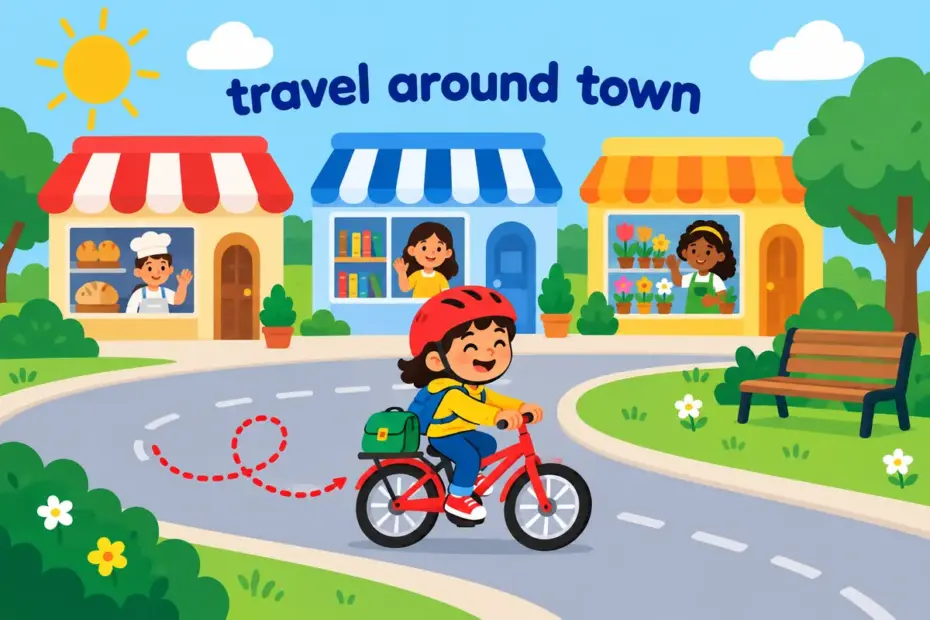
Get around is a phrasal verb with three everyday senses: to travel from place to place, to avoid a rule or problem, and, with to, to finally do something. To use get around in a sentence, give it the right ending: “She gets around town by bike,” “they got around the ban,” and “I finally got around to calling.”
Get around at a glance
- Get around is an informal phrasal verb; its forms are gets around, got around and getting around.
- The travel sense is intransitive and often takes a place: get around town.
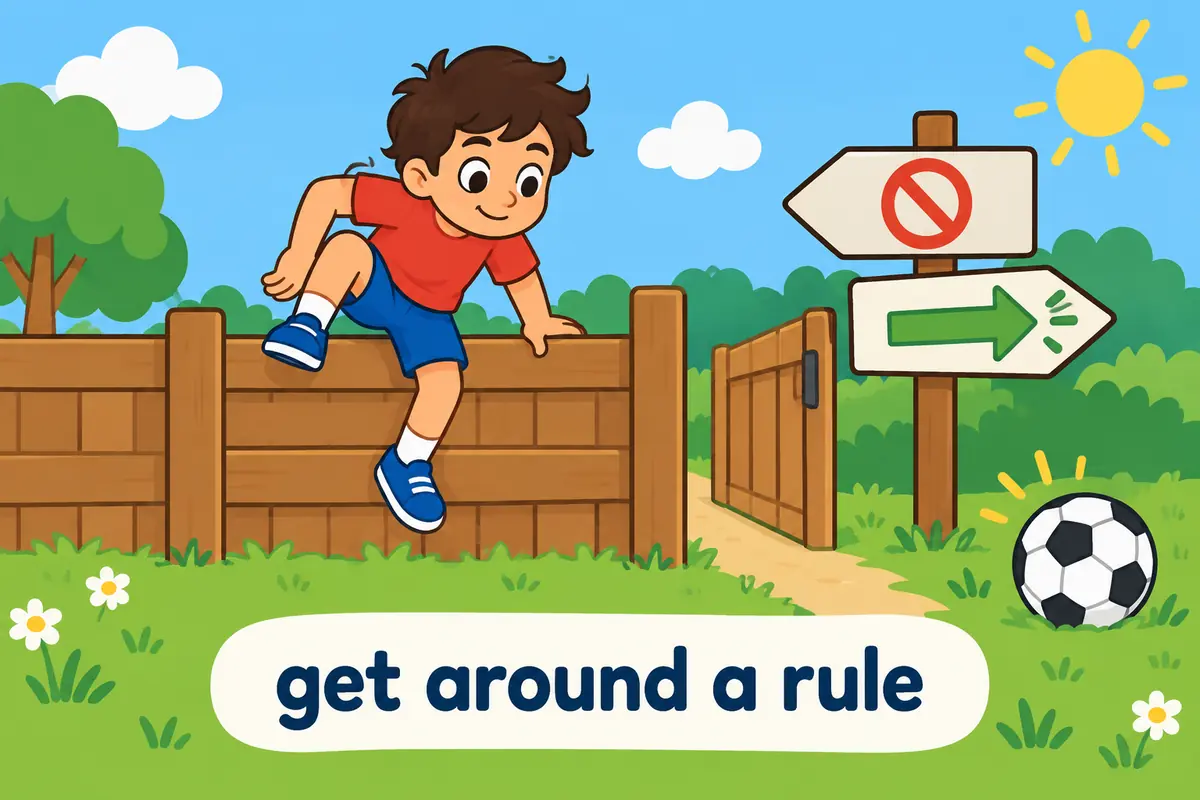
- The avoidance sense takes a direct object after around: get around a rule.
- Get around to is a fixed three-part phrase and is followed by a gerund, as in get around to replying.
- The commonest error is writing get around doing, which needs the word to.
What does get around mean?
Get around means to move from place to place, to find a way past an obstacle, or to become known among people. The Cambridge entry for get around also records the sense of persuading someone and the fixed phrase get around to, which means to reach a task at last. Context and the word after around show which sense is intended.
One limitation is worth naming. Get around is informal, so a report should usually prefer travel, avoid, overcome or circulate. It also does not mean to reach a single destination; that is get to. A sentence such as I get around the office by bus describes moving about the area, not arriving at one address.
| Sense | Plain meaning | Example sentence |
|---|---|---|
| Travel about | Move from place to place | Without a car, it is hard to get around the village. |
| Avoid an obstacle | Find a way past a rule or problem | They got around the parking rule by sharing one permit. |
| Become known | Spread among people, of news | The news got around the school within an hour. |
| Persuade someone | Win someone over by charm | She can get around her grandfather when nobody else can. |
| Get around to | Finally find time for a task | I finally got around to mending the gate. |
How do you use get around in a sentence?
Match the ending to the sense. The travel sense needs no object, the avoidance sense takes a noun straight after around, and the task sense always adds to before a gerund. The verb is inseparable, so nothing can come between get and around.
| Pattern | Example | What it signals |
|---|---|---|
| get around + place | Tourists get around the old town on foot. | movement within an area |
| get around + rule or problem | The firm got around the ban with a loophole. | circumventing an obstacle |
| get around to + gerund | He never got around to answering the letter. | reaching a delayed task |
| get around + person | She got around the editor and won the commission. | persuading someone gently |
| get around, no object | Word got around that the shop was closing. | news spreading among people |
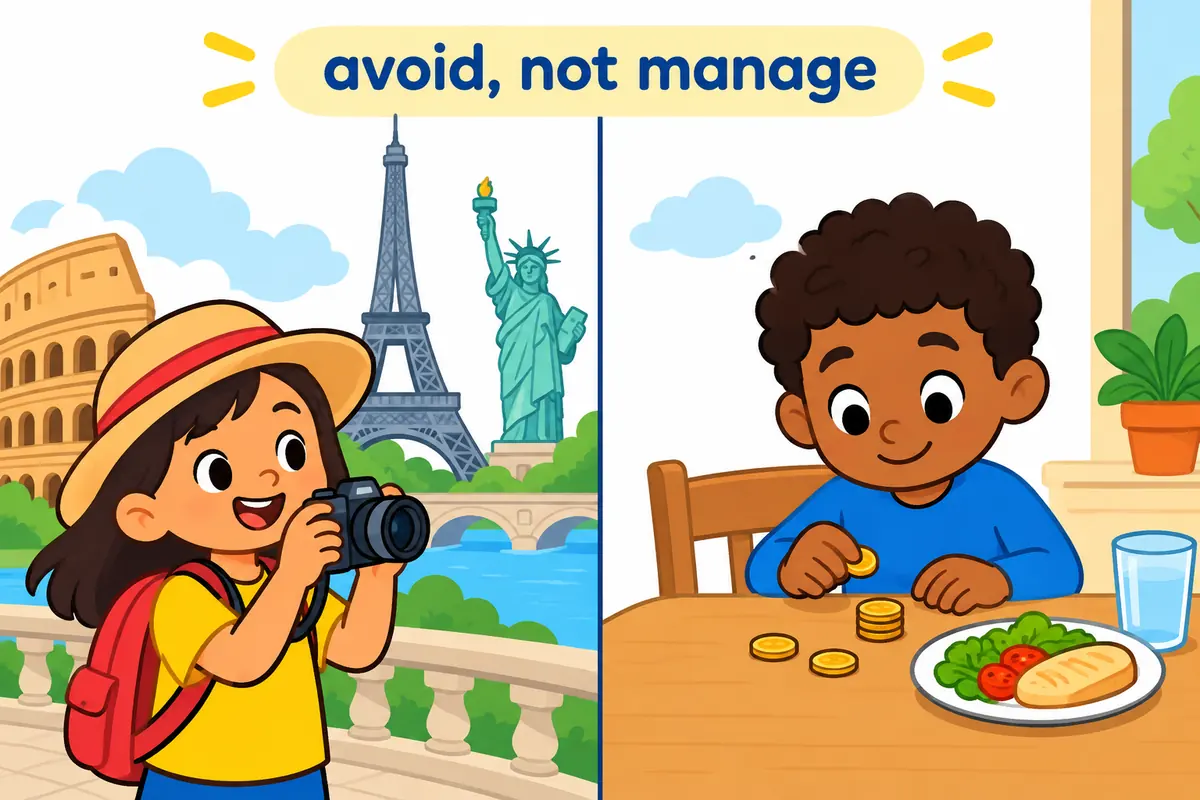
The word is inseparable: write get around the problem, never get the problem around. Compare the related idea in get by, which is about managing with limited means rather than moving about.
Get around in a sentence: examples across contexts
Get around appears in casual speech most often, but it can also carry a precise idea in writing. The nine sentences below move from a playground to a newsroom, keeping the same phrasal verb.
| Context | Example sentence | Why this works |
|---|---|---|
| Classroom | The new girl soon got around the whole playground and made friends. | Uses the travel sense with a place. |
| Workplace email | We can get around the delay by sending the file in two parts. | Applies the avoidance sense to a practical problem. |
| News report | Rumours got around the plant before the official announcement. | Shows the spreading-news sense with no object. |
| Travel writing | Visitors get around the island by ferry and scooter. | Names the means of moving about. |
| Legal writing | The clause was designed to stop companies getting around the rule. | Keeps the gerund form after the avoidance sense. |
| Project notes | I finally got around to checking the figures last night. | Uses the fixed to-phrase for a delayed task. |
| Family conversation | Nobody can get around Aunt May when she has made up her mind. | Shows the persuade sense with a person. |
| Sports report | The defender got around the goalkeeper and scored. | Uses the avoidance sense in a physical setting. |
| Marketing memo | Good news gets around faster than any advertisement. | Keeps the proverb-like spreading sense. |
Two other around phrases are easy to confuse with this one. To look around a district is to explore it, and to turn around is to face the opposite way; neither means moving about freely.
Get around vs get by
Get around and get by both describe coping with daily life, and learners often swap them. Get around is about movement or avoidance; get by is about surviving on limited money or skill. The table separates them.
| Attribute | get around | get by |
|---|---|---|
| Core meaning | Move about, avoid, or reach a task at last | Manage with the resources you have |
| Typical object | A place, a rule, a person | Usually none: get by on a small wage |
| Focus | Movement or obstacles | Adequacy and survival |
| Fixed phrase | get around to doing something | get by on very little |
| Tone | Informal and practical | Informal and slightly stoic |
Two other phrasal verbs sit nearby. Get along means to have a good relationship, and get into means to enter or to become interested. Verdict: choose get around for movement or evasion, get by for managing with little, and get along for friendship.
Word forms and grammar of get around
Get around changes only its first word, because get is the verb that inflects. The particle around stays fixed, and the whole phrase is inseparable. Related phrases with the same verb and a different particle carry quite different meanings.
| Form | Part of speech | Example |
|---|---|---|
| get around | phrasal verb, base form | They get around the city by tram. |
| gets around | third person singular | She gets around the rules quite legally. |
| got around | past and past participle | We got around the shortage with a loan. |
| getting around | present participle | Getting around without a car takes planning. |
| get around to | fixed phrase plus gerund | He got around to apologising at last. |
| get back | different particle | I got back to her the next day. |
Keep the particle fixed. Get back means to return or to reply, and swapping the particle changes the meaning entirely.
Common mistakes with get around
- Incorrect:
I finally got around doing my homework.Correct: I finally got around to doing my homework. Rule: The fixed phrase is get around to plus a gerund. - Incorrect:
She got around of the rule.Correct: She got around the rule. Rule: Around is a preposition here and needs no of. - Incorrect:
The rumour got around to the whole school.Correct: The rumour got around the whole school. Rule: The spreading-news sense takes no to. - Incorrect:
He got around to persuade me.Correct: He got around me and persuaded me. Rule: Get around plus a person means to win them over; get around to takes a gerund for a delayed task. - Incorrect:
The children get around to school by bus.Correct: The children get to school by bus. Rule: Get around means moving about an area, not travelling to one destination.
Practice using get around
Work through the six items, then read the reasons rather than only the answers.
- Fill the gap: In a hill town it is easiest to ______ on foot.
- Choose the better word: With one small salary, the family (gets around / gets by).
- Correct the error: We finally got around fixing the leaking tap.
- Build a sentence: use get around + rule about a clever way to enter a quiz.
- Spot the register: which belongs in a formal report — the team overcame the restriction, or the team got around the restriction?
- Rewrite with a formal verb: They got around the ban. Use avoid or overcome.
Answers
- get around — the travel sense with no object and a place understood.
- gets by — the family manages with little; gets around would mean travel or evasion.
- We finally got around to fixing the leaking tap — the phrase needs to before the gerund.
- Model answer: He got around the rule by entering as part of a team.
- The team overcame the restriction — a formal report avoids the informal phrasal verb.
- They overcame the ban — overcome is the formal equivalent of the avoidance sense.
The bottom line
Use get around in a sentence for moving about a place, for avoiding a rule or problem, or, with to and a gerund, for finally reaching a task. Two nuances decide most sentences: the phrase is inseparable, so nothing goes between get and around, and it is informal, so formal writing prefers travel, avoid or overcome. When you mean managing with very little, get by is the better phrase.
Frequently asked questions about get around
What does get around mean?
Get around has three common senses. It can mean to travel from place to place, as in she gets around by bike; to avoid a rule or problem, as in they got around the ban; or to become widely known, as in the news got around. The words after around show which sense is meant.
What does get around to mean?
Get around to means to finally find time for something, and it is always followed by a gerund. You say I got around to replying, not I got around to reply. The phrase suggests the task was delayed, so it often appears with finally or at last.
Is get around the same as get round?
They are the same phrasal verb with a regional spelling of the particle. British English often uses get round, while American English prefers get around. The meanings of travel, avoidance and the fixed to-phrase are identical, so a writer should simply match the variety being used.
Is get around formal or informal?
It is informal and belongs in speech, email and light journalism. In a report, choose a precise verb instead: travel or move about for the travel sense, avoid or overcome for the avoidance sense, and circulate for news that spreads. The formal options are clearer and carry no hint of slang.
“Finding ways to navigate through various obstacles or challenges effortlessly is an essential skill. To ‘get around’ a situation means to strategically overcome it, maneuvering through difficulties with finesse and adaptability.”
Whether it’s physically moving from one place to another or creatively solving a problem, knowing how to ‘get around’ effectively can lead to successful outcomes. The term encapsulates the idea of finding alternative routes, approaches, or solutions to reach desired goals, without being completely blocked or deterred by obstacles.
7 Examples Of Get Around Used In a Sentence For Kids
- You can get around by walking, running, or riding a bicycle.
- Birds get around by flying from tree to tree.
- Cars and buses help people get around town easily.
- Remember to always look both ways before you get around the street.
- Some animals get around by hopping, like kangaroos.
- It is important to wear helmets and pads when you get around on a skateboard or scooter.
- People use boats to get around on water.
14 Sentences with Get Around Examples
- If you want to explore the city easily, get around by using the local buses.
- One of the best ways to get around campus is by riding a bike.
- To save money on transportation, consider using public transportation to get around.
- Get around the city by downloading a reliable navigation app on your phone.
- It’s important to know the best routes to get around the campus efficiently.
- To attend various events on campus, you’ll need to know how to get around quickly.
- Don’t be afraid to ask seniors for tips on how to get around the college campus.
- Make sure you plan your schedule wisely to get around the campus without feeling rushed.
- Utilize campus shuttles to get around when you’re running late for class.
- Take advantage of walking tours to get around and learn more about the college’s history.
- Remember to keep track of your expenses when you get around the city to avoid overspending.
- Get around campus safely by sticking to well-lit paths in the evening.
- Explore nearby cafes and restaurants by finding convenient ways to get around.
- To save time during exam season, find the quickest ways to get around the library.
How To Use Get Around in Sentences?
To use Get Around, start by opening the app on your phone. Enter your current location and your desired destination to find the best transportation options available. Once you’ve chosen your preferred method of transportation, follow the directions provided to reach your destination.
If you’re driving, simply input your destination and let Get Around provide you with turn-by-turn navigation to guide you along the way. Make sure to follow traffic laws and stay alert while driving.
For those using public transportation, Get Around can help you find the nearest bus stop or train station and provide you with the most efficient route to your destination. Pay attention to arrival times and any potential delays that may affect your journey.
If you prefer walking or biking, Get Around can suggest safe and scenic routes to help you reach your destination on foot or by bike. Take note of any pedestrian or bike lanes to ensure a smooth and enjoyable travel experience.
Remember to always check for real-time updates on traffic conditions and public transportation schedules within the Get Around app to make informed decisions about your travel plans. With its user-friendly interface and comprehensive options, Get Around makes it easy for beginners to navigate their way around town.
Conclusion
In conclusion, using various means to “get around” obstacles or challenges is a common practice in everyday life. Whether it’s finding alternative routes to reach a destination or circumventing limitations, individuals often employ creative solutions to navigate difficulties effectively. By adapting and being resourceful, people can overcome barriers and achieve their goals.
From seeking alternate transportation methods to exploring unconventional approaches, the ability to “get around” impediments demonstrates resilience and problem-solving skills. By thinking outside the box and remaining open to new possibilities, individuals can find ways to maneuver through obstacles and ultimately succeed in various aspects of their lives.


