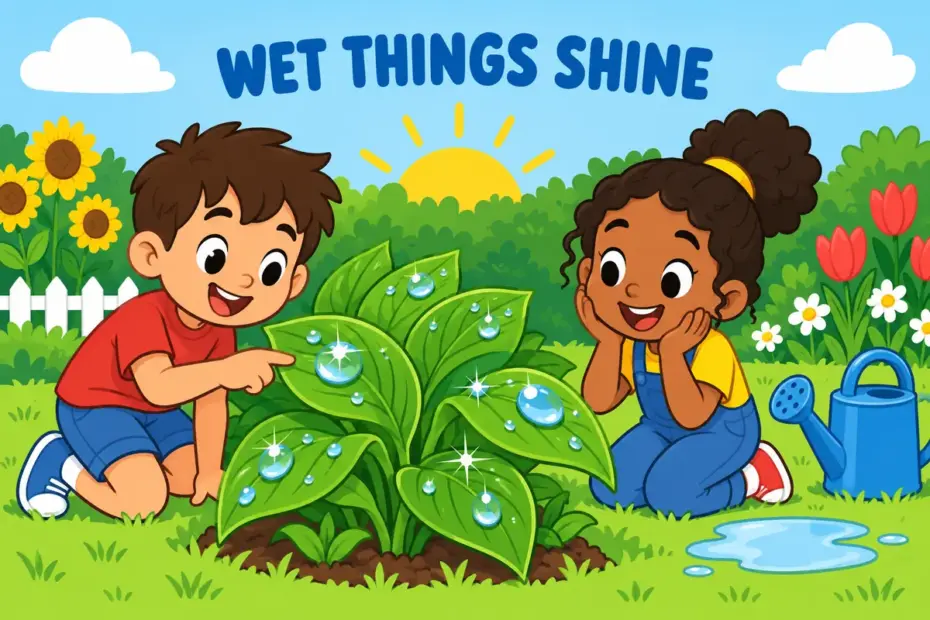
Glisten means to shine with light reflected from a wet or smooth surface, usually in small points. To use glisten in a sentence, name the surface and add with plus what makes it shine: “Her eyes glistened with tears.” The verb is intransitive, so it never takes a direct object.
{W} at a glance
- Glisten is an intransitive verb; its forms are glistens, glistened and glistening.
- The dominant pattern is glisten with plus the source of the shine, as in glisten with dew.
- The verb belongs to descriptive writing about weather, water, skin and eyes.
- Common collocations are glisten in the sun and glisten with sweat or tears.
- The commonest learner error is giving glisten an object, as in glisten the glass.
What does glisten mean?
Glisten is an intransitive verb meaning to shine softly because light is reflecting from a wet or smooth surface. The Cambridge Dictionary entry for glisten records this sense, and the word almost always implies moisture, polish or tears. A second, related use describes eyes that shine with a strong feeling, as in eyes glistening with pride.
The usual subject is something that catches light in tiny points: dew, rain, frost, sweat, polished metal or a wet street. Where the shine is hard and bright rather than damp, a gleam of light is the closer word, because glisten keeps the surface wet or smooth.
| Sense | Plain meaning | Example sentence |
|---|---|---|
| Wet surface | Shine with reflected light from moisture | The leaves glistened after the rain. |
| Smooth surface | Shine from polish or a sleek finish | The new car glistened under the lights. |
| Eyes | Shine because of a strong feeling | Her eyes glistened with unshed tears. |
One limitation is worth noting. Glisten is not the same as be shiny in general, because it needs small points of reflected light and a wet or smooth surface. A dry wall that reflects colour is not glistening; it is simply bright.
How do you use glisten in a sentence?
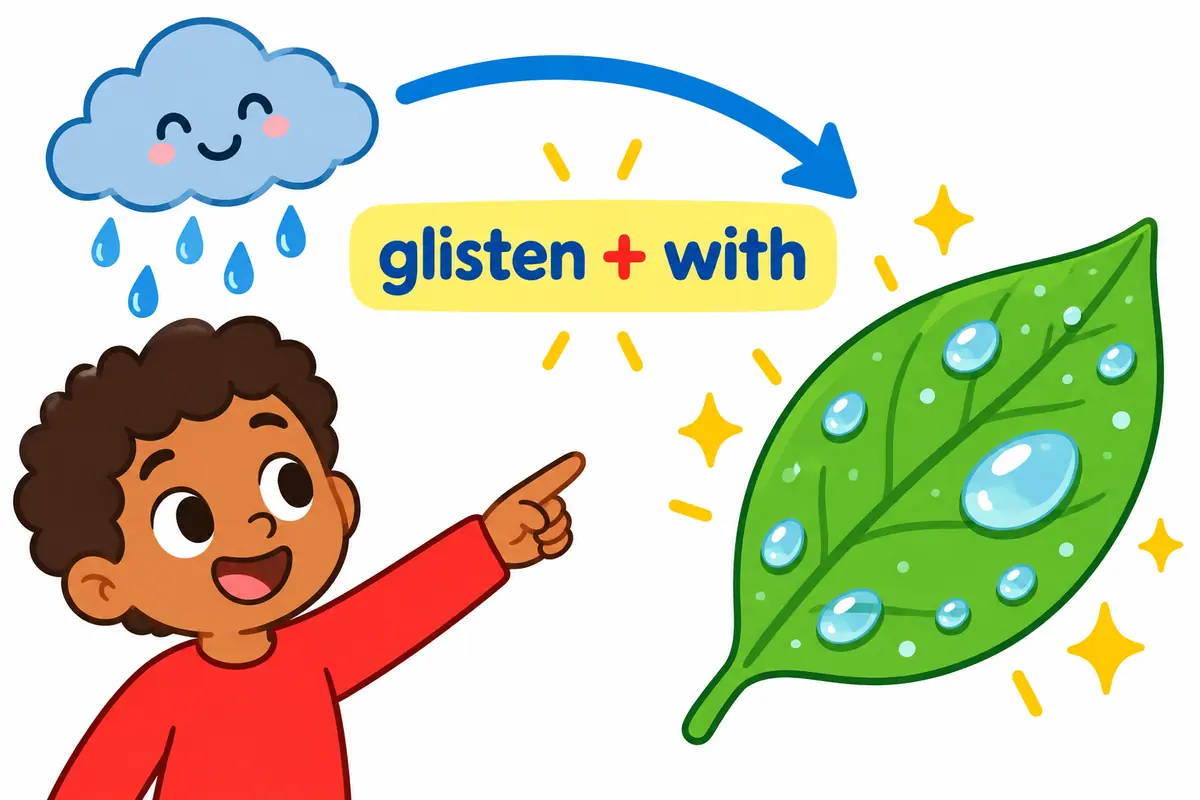
Glisten takes with for the source of the shine and in for the setting: the grass glistens with dew, and the harbour glistens in the morning sun. Because the verb is intransitive, the shining thing is always the subject. When the sparkle is strong and dry, sparkle in the dark is the better fit.
| Pattern | Example | What it signals |
|---|---|---|
| glisten with + noun | The path glistened with rain. | the source of the moisture |
| glisten in + noun | The lake glistened in the sun. | the setting or light |
| glisten as a bare verb | The frost glistened all morning. | no object, just a state |
| glistening + noun | She brushed her glistening hair. | the participle used as an adjective |
| glisten + object | Incorrect: The rain glistened the road. | the verb cannot take an object |
Glisten in a sentence: examples across contexts
| Context | Example sentence | Why this works |
|---|---|---|
| Nature writing | The grass glistened with early dew. | names the wet surface and its source. |
| Classroom | After the rain, the playground glistened. | keeps the word concrete and observable. |
| News report | The streets glistened as the storm passed. | adds atmosphere without slowing the report. |
| Literary prose | Her eyes glistened with quiet pride. | links the shine to an emotion. |
| Sports writing | Sweat glistened on the runner’s forehead. | uses the wet-skin sense vividly. |
| Travel writing | The harbour glistened at sunset. | pairs the verb with a light setting. |
| Conversation | The cake glistened with warm jam. | applies the shine to food. |
| Advertising copy | The polished counter glistened under the lamps. | stresses a clean, smooth finish. |
| Weather report | Pavements will glisten with frost tonight. | combines moisture and light precisely. |
Glisten vs glitter
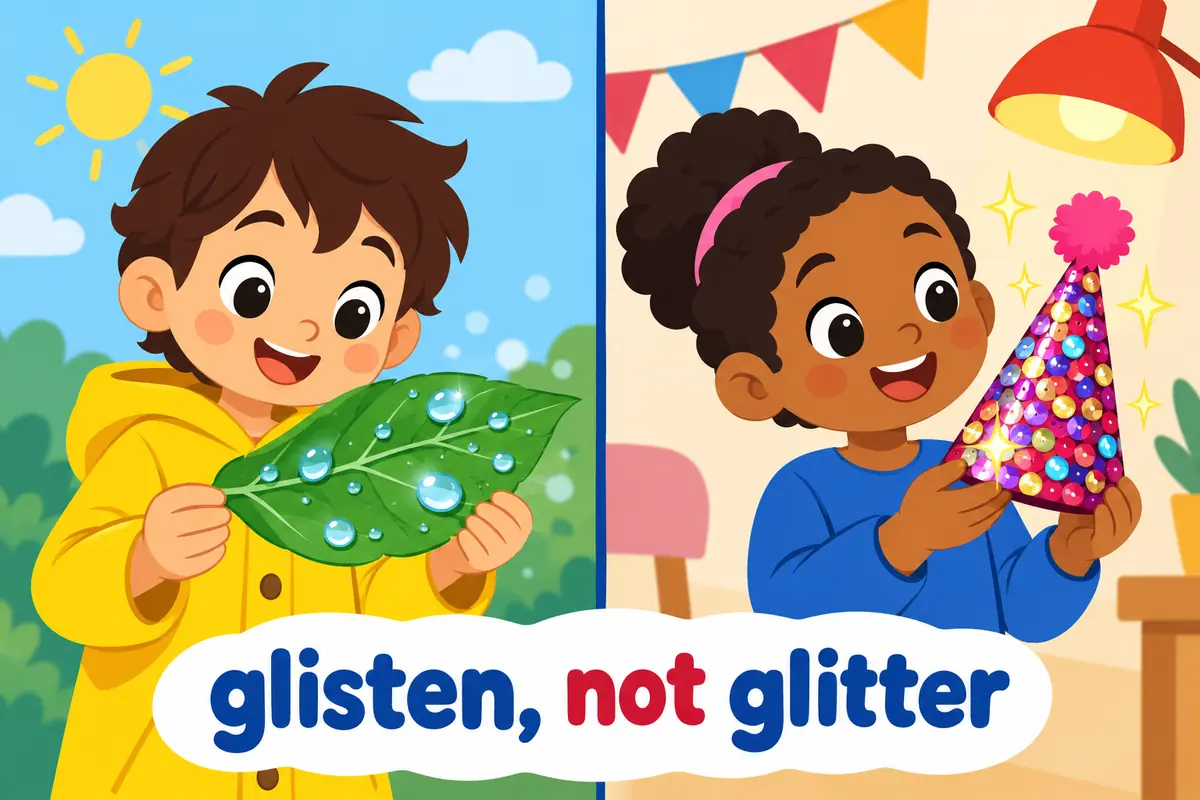
Glisten and glitter both describe shining, but the texture differs. Glisten is a soft, wet sheen, while glitter like sequins is a hard, bright sparkle that comes from many small points of light. A wet leaf glistens; a sequined costume glitters. When the shine seems to ripple and shift, shimmer on water captures that movement better than either.
| Attribute | Glisten | Glitter |
|---|---|---|
| Main meaning | Shine softly from a wet surface | Sparkle brightly from many points |
| Typical surface | Dew, rain, tears, polished metal | Sequins, tinsel, frost, gold leaf |
| Quality of light | Soft and steady | Hard and twinkling |
| Association | Moisture and calm | Festivity and display |
| Register | Descriptive and literary | Everyday and commercial |
| Common partner | glisten with dew | glitter with gold |
Verdict: choose glisten for a soft, wet sheen and glitter for a bright, hard sparkle, so a rain-soaked street glistens while a party dress glitters.
Word forms and grammar of glisten
| Form | Part of speech | Example |
|---|---|---|
| glisten | base verb | Wet stones glisten after rain. |
| glistens | third-person singular | The lake glistens at dawn. |
| glistened | past tense | The leaves glistened in the sun. |
| glistening | participle and adjective | She stared at the glistening road. |
| a glisten | rare noun | A glisten of sweat covered his brow. |
| glistering | archaic adjective | The glistering armour caught the light. |
The adjective glistening pavement is common before nouns, while the older form glistering armour survives only in poetic or historical prose. Distant points of light twinkle in the sky, which is different from a wet surface that glistens.
Common mistakes with glisten
The rain glistened the window.The window glistened with rain. Glisten is intransitive, so it cannot take a direct object.Her dress glistened with sequins in the light.Her dress glittered with sequins in the light. Hard, dry sparkle belongs to glitter, not glisten.The dry sand glistened in the sun.The dry sand shimmered in the sun. Glisten needs a wet or polished surface.He glistened the car before the show.He polished the car until it glistened. Glisten describes a state, not an action you perform on something.The stars glistened in the sky.The stars twinkled in the sky. Distant points of light twinkle; wet surfaces glisten.
Practice using glisten
- Fill in the blank: The garden ______ with dew at sunrise.
- Choose the better word: The sequined costume (glistened / glittered) under the stage lights.
- Correct the error: The rain glistened the pavement.
- Build a sentence: Use glisten with tears to describe a happy goodbye.
- Spot the register: Which sentence belongs in a nature guide? A) The lake was super shiny. B) The lake glistened in the early light.
- Fill in the blank: Sweat ______ on his forehead as he ran.
Answers
- glistens — the singular subject garden takes the third-person ending.
- glittered — sequins give a hard, dry sparkle, which is the job of glitter.
- The pavement glistened with rain. — make the wet surface the subject, because glisten takes no object.
- Model answer: His eyes glistened with tears as the train pulled away. — glisten with names the emotion behind the shine.
- B — the guide needs the precise descriptive verb rather than a vague everyday phrase.
- glistened — the past time setting requires the past tense.
The bottom line
To use glisten in a sentence, make the wet or smooth surface the subject and add with for the source of the light, as in the grass glistens with dew. The verb is intransitive, so it never takes an object and never means polish. Choose glitter for hard, dry sparkle and shimmer when the shine seems to move. Glisten stays the natural choice for rain, frost, sweat and tears.
Frequently asked questions about glisten
Is glisten a verb or an adjective?
Glisten is mainly a verb, as in the leaves glisten after rain. Its present participle glistening works as an adjective before nouns, as in glistening pavement. A rare noun form, a glisten, also exists, as in a glisten of sweat.
What preposition follows glisten?
Glisten commonly takes with for the source of the shine, as in glisten with dew, and in for the setting or light, as in glisten in the sun. Both patterns keep the verb intransitive and place the shining surface in the subject position.
Can glisten describe a person’s eyes?
Yes. Eyes glisten when they shine with tears or strong feeling, as in her eyes glistened with pride. The sense works because tears make the eye surface wet, so the shine matches the core meaning of light reflecting from moisture.
Is glisten transitive or intransitive?
Glisten is intransitive, so it never takes a direct object. You write that a surface glistens, not that something glistens a surface. The passive is impossible too, because there is no object to promote to the subject position. Keep the shining surface as the subject and the sentence stays correct.
Have you ever noticed how the sunlight can make surfaces appear to glisten and sparkle? This is due to the reflection of light off a smooth, shiny surface, creating a beautiful visual effect. This phenomenon is known as glisten.
When something glistens, it is emitting a bright, shimmering light that catches the eye and adds a touch of magic to the scene. Whether it’s water glistening in the sun or dewdrops glistening on a leaf, this effect adds a sense of beauty and wonder to our surroundings.
7 Examples Of Glisten Used In a Sentence For Kids
- In the morning, the dew on the leaves glistens in the sunlight.
- The shiny marble floor glistens after it is mopped clean.
- The glitter on the birthday card glistens when you move it.
- The pretty princess’s tiara glistens in the light.
- The river glistens as the sun sets over the water.
- The snow glistens like diamonds in the winter sun.
- The star on top of the Christmas tree glistens brightly at night.
14 Sentences with Glisten Examples
- Glisten of sweat could be seen on the faces of students as they rushed to submit their assignments before the deadline.
- The morning sun made the dew on the grass glisten like diamonds, creating a peaceful scene on campus.
- The new library windows were so clean that they would glisten in the afternoon sun, enticing students to study there.
- The fresh coat of paint on the classroom walls made them glisten under the fluorescent lights, brightening up the learning environment.
- The glittering lights of the city skyline at night would glisten in the distance, tempting students to take a break from their studies.
- The clear waters of the nearby lake would glisten under the midday sun, providing a relaxing spot for students to unwind after classes.
- The metallic finish on the new sports car parked on campus made it glisten in the sunlight, catching the eye of every passing student.
- The shimmering sequins on the costumes for the college dance performance would glisten under the stage lights, adding to the magic of the event.
- The polished marble floors in the university’s main hall would glisten as students walked by, reflecting the grandeur of the institution.
- The fresh snowfall outside the college campus would glisten in the moonlight, creating a serene and picturesque winter scene for students to admire.
- The glossy pages of the latest fashion magazine would glisten with vibrant colors and trendy designs, inspiring college students to experiment with their style.
- The crystal-clear screens of the new laptops in the college computer lab would glisten as students typed away on their assignments, enjoying the modern technology at their fingertips.
- The sweet aroma of freshly baked pastries from the college cafe would waft through the air, tempting students with their golden crusts that glisten with sugar.
- The twinkling stars in the night sky above the college campus would glisten like diamonds, offering a peaceful backdrop for students to relax and gaze at between study sessions.
How To Use Glisten in Sentences?
To use the word “Glisten” in a sentence, it is important to keep in mind its meaning and context.
Glisten means to shine with a sparkling light, typically from something wet or oily. In a sentence, the word “Glisten” can add vivid imagery and convey a sense of beauty or cleanliness.
Here are a few examples of how to use “Glisten” in a sentence:
1. The morning dew made the grass blades glisten in the sunlight.
2. Her eyes glistened with tears as she listened to the heartfelt speech.
3. The freshly washed car’s paintwork glistened under the streetlights.
4. The diamonds on her necklace glistened like stars in the night sky.
5. The snow on the mountain peak glistened in the early morning light.
When incorporating Glisten into a sentence, it is essential to ensure that it fits naturally and enhances the description or visual imagery being portrayed. Experiment with different contexts and scenarios to make the most of using the word “Glisten” in your writing.
Conclusion
In conclusion, the word “glisten” refers to the way something shines or sparkles with a soft, reflected light. Objects that glisten often capture attention and create a sense of beauty and allure. For example, the sun’s rays can make the surface of a lake glisten like diamonds, while fresh morning dew can cause blades of grass to glisten like emeralds.
Whether it’s a delicate dewdrop on a flower petal or the shimmering snow on a winter’s day, the use of “glisten” in descriptive sentences evokes vivid imagery and adds depth to the scene being described. Through the use of this word, writers can effectively bring their readers into a world where even the simplest of things can become dazzling and captivating.


