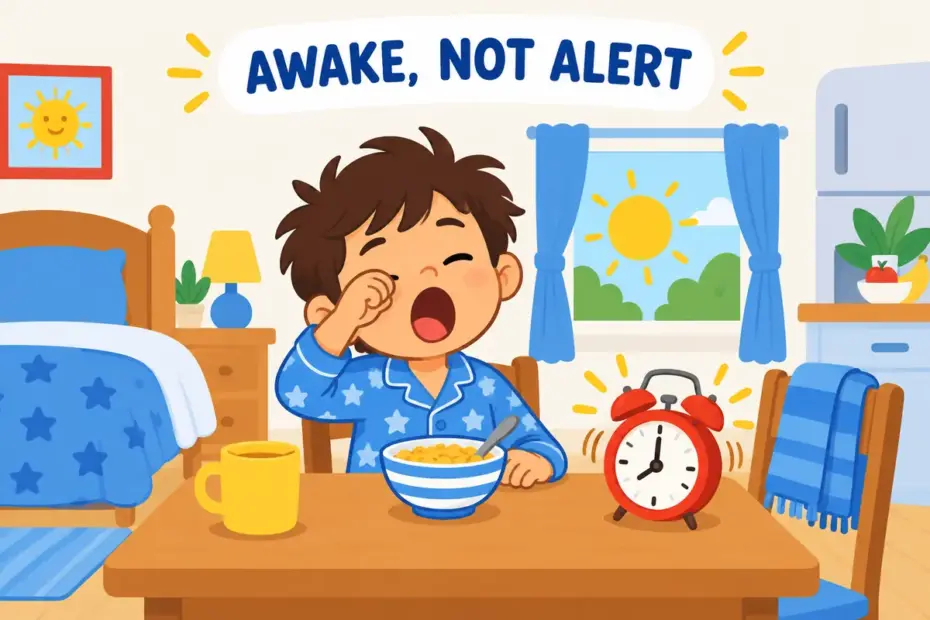
Groggy means weak, unsteady and mentally foggy, usually just after waking, illness, medicine or a long night. To use groggy in a sentence, say how the person feels and what caused it: She felt groggy after the flight. The adjective normally follows feel, sound or look rather than naming a lasting trait.
Groggy at a glance
- Groggy is an adjective describing the dazed, unsteady feeling after sleep, illness, medicine or alcohol.
- It usually follows linking verbs such as feel, look, seem and remain.
- The cause often appears in the patterns groggy after and groggy from.
- Groggily is the adverb and grogginess is the noun; both are common in written description.
- The commonest error is using groggy for ordinary tiredness, which sleepy or tired serves better.
What does groggy mean?
Groggy is an adjective meaning weak, unsteady and slow to think, usually because of sleep, illness, medicine or alcohol. The Cambridge entry for groggy centres on that after-waking daze, and the examples below separate its three overlapping uses. The word describes a temporary state, never a personality. A person who is dazed may also look confused, but dazed does not require a cause the way groggy does.
| Sense | Plain meaning | Example sentence |
|---|---|---|
| After waking | Slow and unsteady for a short time after sleep | He was still groggy when the alarm rang a second time. |
| After medicine or illness | Dazed because of treatment, fever or anaesthetic | The patient felt groggy for an hour after the procedure. |
| Figurative start | Something slow or uncertain at the beginning | The team made a groggy start to the second half. |
Groggy is not a medical diagnosis and it does not mean permanently tired. It names a short interval between sleeping and being fully awake, which is why it pairs so naturally with still, just and barely.
How do you use groggy in a sentence?
Groggy behaves like most feeling adjectives: it follows a linking verb, and a cause or a consequence can follow the adjective. The five patterns below cover nearly every natural sentence.
| Pattern | Example | What it signals |
|---|---|---|
| feel / look / sound / seem + groggy | Sam looked groggy at breakfast. | The default pattern, describing a visible state. |
| be still groggy | She was still groggy at noon. | Emphasises that the daze has not worn off. |
| groggy from / after + cause | I was groggy from the painkillers. | Names what produced the feeling. |
| too groggy to + verb | He was too groggy to drive. | Shows the practical consequence. |
| groggy + noun | She answered in a groggy voice. | Attributive use before a noun such as voice, morning or start. |
Writers who need a stronger word for plain sleepiness often choose drowsy, because groggy implies disorientation rather than a wish to sleep.
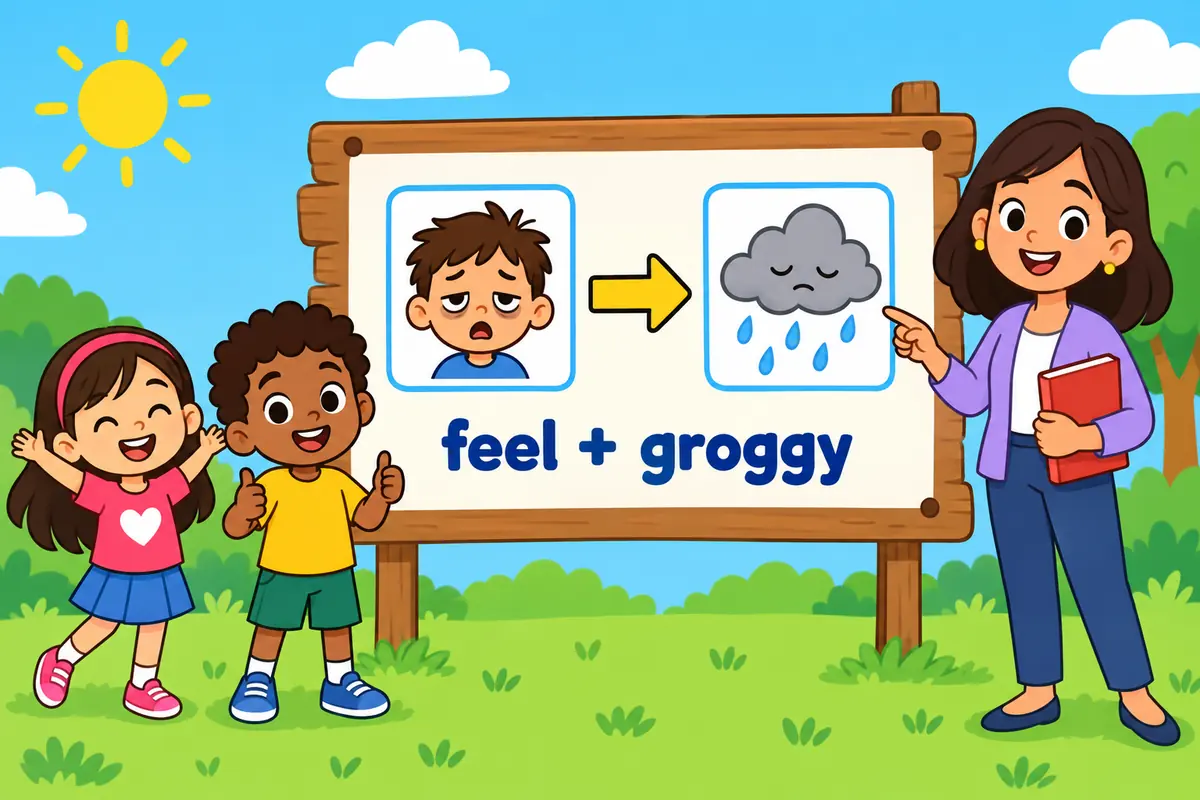
Groggy in a sentence: examples across contexts
Groggy keeps the same meaning but shifts its setting easily. The nine sentences below move from a bedroom to a hospital ward, and each one supplies the cause or the consequence that makes the state real.
| Context | Example sentence | Why this works |
|---|---|---|
| Home morning | I was groggy until my second cup of tea. | A familiar routine gives the daze a clear endpoint. |
| Workplace email | Apologies for the slow reply; I am still groggy after the night shift. | Explains a delay without overstating it. |
| News report | Rescuers found the hikers groggy but unharmed. | Pairs the state with a reassuring contrast. |
| Medical note | The patient remained groggy two hours after the anaesthetic. | Uses the clinical after-treatment sense precisely. |
| Travel writing | Jet-lagged and groggy, we missed the first train. | Links the feeling to a cause readers recognise. |
| Sports report | The keeper looked groggy after the collision. | Describes a visible state without diagnosing. |
| School setting | After the sleepover, the children were groggy at assembly. | A gentle, everyday cause for the daze. |
| Fiction | He woke groggy, unsure which room he was in. | Adds disorientation to the physical feeling. |
| Everyday conversation | Give me a minute; I am still groggy. | The first-person pattern that survives in speech. |
Only the conversational sentence uses the first person, and even there the cause is left implicit. Written uses tend to supply the reason, which is what keeps the adjective from sounding vague.
Groggy vs drowsy
Groggy and drowsy overlap, and the difference is one of readiness. A drowsy person is close to sleep; a groggy person is awake but not yet clear-headed. The table sets the two apart on the attributes that decide most sentences.
| Attribute | groggy | drowsy |
|---|---|---|
| Core feeling | Dazed and unsteady | Sleepy and heavy-eyed |
| Usual cause | Waking, medicine, illness, alcohol | Sleepiness, boredom, warmth |
| Ready to sleep | No, slow rather than sleepy | Yes, close to falling asleep |
| Typical verbs | feel, look, be, remain | feel, get, become |
| Typical length | Minutes to a couple of hours | Until sleep arrives |
| Opposite idea | Alert, clear-headed | Wide awake |
Verdict: choose groggy when the person is awake but foggy, and sleepy or drowsy when the body is asking for sleep.
Word forms and grammar of groggy
Groggy inflects like a regular two-syllable adjective, and its adverb and noun are both worth knowing because they carry the same daze into other sentence positions.
| Form | Part of speech | Example |
|---|---|---|
| groggy | adjective | I feel groggy this morning. |
| groggier | comparative adjective | The second morning was groggier than the first. |
| groggiest | superlative adjective | That was the groggiest I have ever felt. |
| groggily | adverb | He groggily reached for the alarm. |
| grogginess | noun | Grogginess wore off after a shower. |
| unsteady | adjective, related sense | She felt unsteady on the stairs. |
The spelling changes the y to an i before the endings, so groggier and groggily each keep a single g in the middle and two at the join.
Common mistakes with groggy
- Incorrect:
I have groggy.Correct: I feel groggy. Rule: Groggy is an adjective, so it needs a linking verb rather than have. - Incorrect:
After woke up, I was groggy.Correct: After waking up, I was groggy. Rule: The preposition after takes a gerund, not a past-tense verb. - Incorrect:
He is groggy every afternoon because the class is boring.Correct: He is sleepy every afternoon because the class is boring. Rule: Groggy is a waking daze, not ordinary boredom or sleepiness. - Incorrect:
The meeting left me groggy with fatigue.Correct: The meeting left me weary with fatigue. Rule: Long effort produces weariness, while groggy points to sleep, illness or medicine. - Incorrect:
She woke up groggey.Correct: She woke up groggy. Rule: The word ends in double g then y, with no e before the y.
Practice using groggy
Work through the six items, then read the reasoning beside each answer.
- Fill the gap: After the long flight, the whole family felt ______.
- Choose the better word: By nine o’clock the toddler was (groggy / drowsy) and ready for bed.
- Correct the error: He was too groggy for driving to work.
- Build a sentence: use groggy from about a patient who has just had medicine.
- Spot the register: which belongs in a hospital note — the patient remained groggy, or the patient was super out of it?
- Rewrite with the adverb: He answered the phone in a daze. Use groggily instead.
Answers
- groggy — the cause is travel and the effect is a waking daze.
- drowsy — the child is ready to sleep, not disoriented.
- He was too groggy to drive to work — the pattern is too + adjective + to + verb.
- Model answer: The patient was groggy from the cough medicine for most of the morning.
- The patient remained groggy — clinical writing keeps a measured tone and avoids slang.
- He groggily answered the phone — the adverb modifies the verb answered.
The bottom line
Use groggy in a sentence for the short, foggy interval when somebody is awake but not yet clear-headed. The two details that decide most sentences are these: the adjective follows a linking verb such as feel or look, and it usually names a cause with from or after. When the person simply needs sleep, tired is the more accurate word.
Frequently asked questions about groggy
Is groggy a formal word?
Groggy belongs to neutral and informal English, and it appears most often in speech and in light reporting. A medical note would prefer drowsy or sedated, and a formal essay would choose disoriented. That means groggy is safe in conversation and in feature writing, but it can sound too casual in a clinical or academic document.
What is the adverb form of groggy?
The adverb is groggily, as in he groggily reached for the light. It describes how an action is performed while somebody is still in that waking daze. The noun is grogginess, which names the condition itself. All three forms share the same meaning, so only the sentence position changes.
Does groggy mean the same as sleepy?
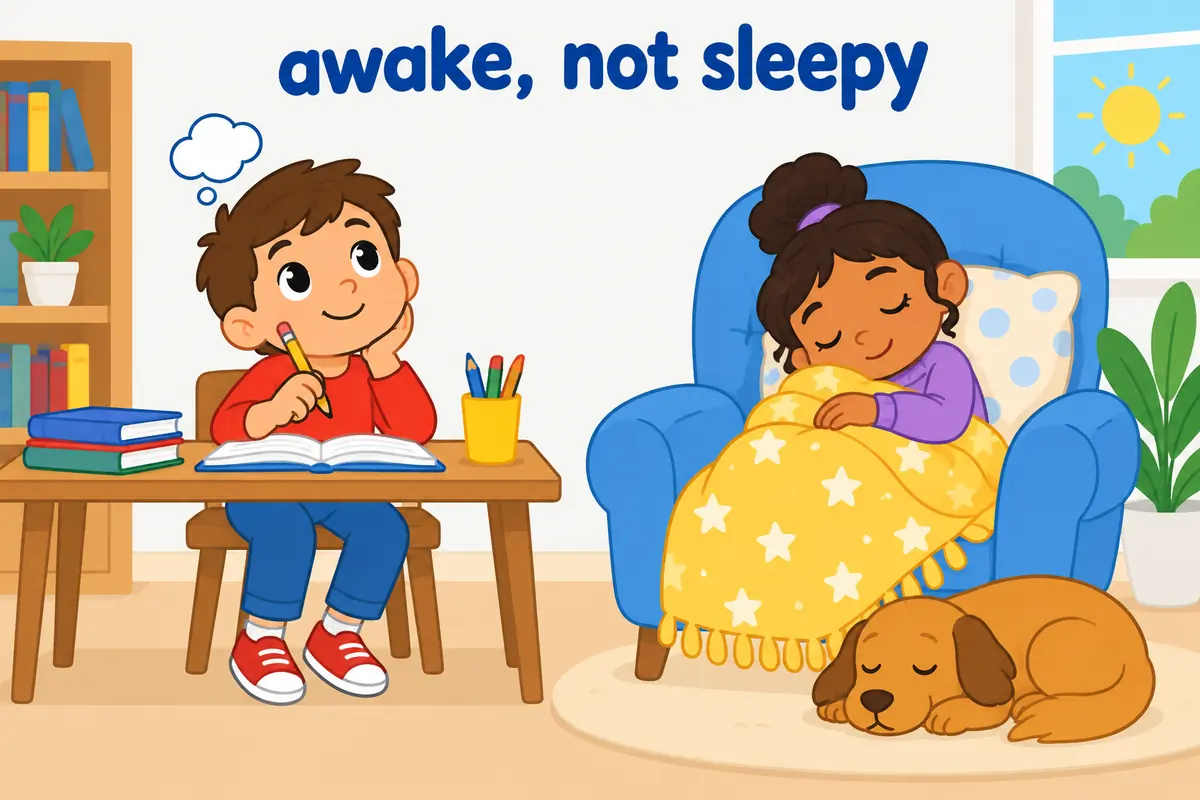
No. A sleepy person is ready to fall asleep, while a groggy person is awake but slow and unsteady. Sleepiness comes from a need for rest, and grogginess usually follows sleep, illness, medicine or alcohol. The distinction matters in medical writing, where the two words point to different observations and different next steps.
Can you say I am groggy?
Yes. I am groggy is natural because am works as a linking verb, just like feel and look. In speech the two are interchangeable, though I feel groggy sounds slightly softer because it describes a sensation rather than a fixed state. Written English tends to prefer feel in the first person for exactly that reason.
Ever woken up feeling dazed and disoriented? That hazy state where your mind is slow to function and your body feels heavy is what we call being groggy.
When you experience grogginess, it can make simple tasks feel like a Herculean effort. Your cognitive functions are sluggish, and your reactions are delayed. Grogginess typically occurs after sleep, but can also be brought on by certain medications or illnesses.
7 Examples Of Groggy Used In a Sentence For Kids
- Groggy means feeling sleepy and confused.
- I felt groggy when I woke up this morning.
- It’s important to get enough sleep so you don’t feel groggy.
- After a long nap, you might feel groggy.
- Drinking plenty of water can help you feel less groggy.
- Sometimes a good stretch can help shake off that groggy feeling.
- Eating a healthy breakfast can make you feel less groggy in the morning.
14 Sentences with Groggy Examples
- After pulling an all-nighter studying for exams, I woke up feeling groggy.
- Walking into the 8 am lecture feeling groggy is not the best way to start the day.
- Trying to stay awake in a boring lecture made me feel even more groggy.
- The rainy weather outside made me feel extra groggy during my morning classes.
- Waking up to multiple missed calls from my group members made me feel groggy and panicked about the group presentation.
- Celebrating a friend’s birthday late into the night left me feeling groggy during my early morning classes.
- Not having a proper breakfast before the morning lecture left me feeling groggy and unfocused.
- Taking a quick power nap between study sessions helped me shake off the groggy feeling.
- The overwhelming workload during exam season left me feeling constantly groggy and exhausted.
- Recovering from a late night at a college festival, I stumbled into the cafeteria feeling groggy and in dire need of caffeine.
- Skipping my morning cup of chai left me feeling extra groggy during my first lecture.
- Listening to a long-winded professor while feeling groggy was a recipe for disaster.
- Hitting the snooze button multiple times made me feel more groggy than ever during my morning routine.
- Waking up late for a crucial assignment submission had me feeling groggy and running on adrenaline to get it done in time.
How To Use Groggy in Sentences?
Groggy means to be dazed, disoriented, or weak, usually as a result of illness, exhaustion, or a strong medication. When using the word Groggy in a sentence, it is important to provide context so that the meaning is clear to the reader.
To use Groggy in a sentence, follow these steps:
-
Identify a situation where someone is feeling dazed, disoriented, or weak. This could be due to lack of sleep, illness, or the effects of medication.
-
Think of a concise way to describe this state using the word Groggy. For example, “After pulling an all-nighter studying for exams, Jane woke up feeling Groggy and unfocused.”
-
Make sure that the sentence conveys the intended meaning clearly. Consider adding details to paint a more vivid picture for the reader.
-
Proofread your sentence to ensure there are no spelling or grammatical errors.
Remember, practice makes perfect when using new vocabulary words like Groggy. Try incorporating it into your writing or speech more often to become comfortable with its usage.
Conclusion
In conclusion, feeling groggy can affect your energy levels and mental clarity, making it difficult to concentrate and be productive. Symptoms of grogginess, such as drowsiness and sluggishness, can be caused by factors like lack of sleep, poor diet, or medication side effects. It’s essential to address the root cause of grogginess to improve your overall well-being and daily performance.
To combat grogginess, consider establishing a consistent sleep routine, eating a balanced diet, staying hydrated, and exercising regularly. If grogginess persists despite these lifestyle changes, it may be beneficial to consult a healthcare professional to rule out any underlying medical conditions. By prioritizing your physical and mental health, you can minimize feelings of grogginess and feel more alert and focused throughout the day.